


Someone yells “grab the bow line,” and you just stand there. Or “watch the starboard,” and now you’re checking both sides at once like it’s a test you didn’t study for.
Boats run on their own vocabulary, not to trip anyone up, but because pointing at things and hoping for the best doesn’t work the same way once you’re on water instead of land.
Learn the basic terms so directions stop sounding like static, manuals start making sense, and you’re no longer the only person on board who missed the memo.
Exterior Parts of a Boat
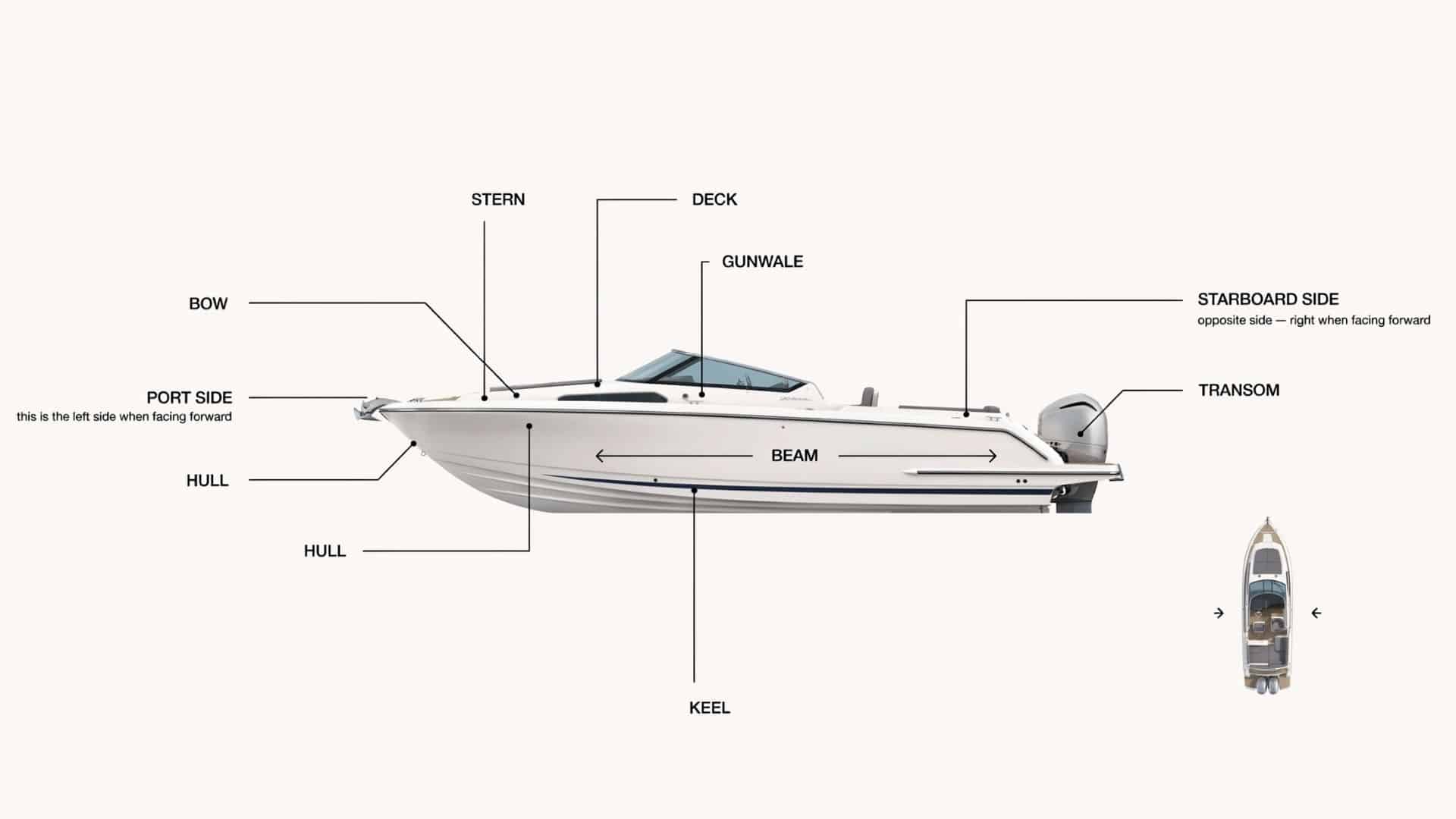
The exterior parts of a boat are the components you’ll notice first. From the bow and stern to the hull and deck, each part has a specific role in how the boat moves, stays balanced, and performs on the water.
Bow
It’s the front of the boat. Usually narrow and pointed, built that way so it cuts through water instead of pushing straight against it. If someone on board says “up front,” this is exactly what they mean by it.
Stern
The back end, in the opposite direction of the bow. Usually wider and flatter, and on most smaller boats, this is where the motor lives.
Port
Port is the left side of the boat, but only when you’re facing forward toward the bow. Turn around, and it doesn’t flip. Port stays port no matter which way you happen to be standing.
Starboard
Starboard is the right side, same rule as port. Sailors settled on these terms instead of left and right specifically because left and right change depending on which way a person is facing. Port and starboard don’t.
Hull
This is the shell, the part that actually sits in the water and keeps everything above it dry and afloat. What it’s shaped like, what it’s made of, all of that depends entirely on what the boat’s meant to do.
Keel
Running along the bottom from bow to stern, the keel works almost like a spine. It gives the hull its strength and helps the boat resist rolling when the water gets choppy.
Deck
The deck is what you’re actually standing on, the flat surface on top of the hull. Small boats might just have one open deck. Bigger boats stack several on top of each other.
Beam
Beam is the width of the boat, measured at its widest point. Wider usually buys you more stability and more room on deck. But it can also slow you down a little.
Gunwale
Pronounced as “gunnel,” this is the upper edge where the hull meets the deck. It stiffens the whole structure and gives you something to grab or lean gear against.
Transom
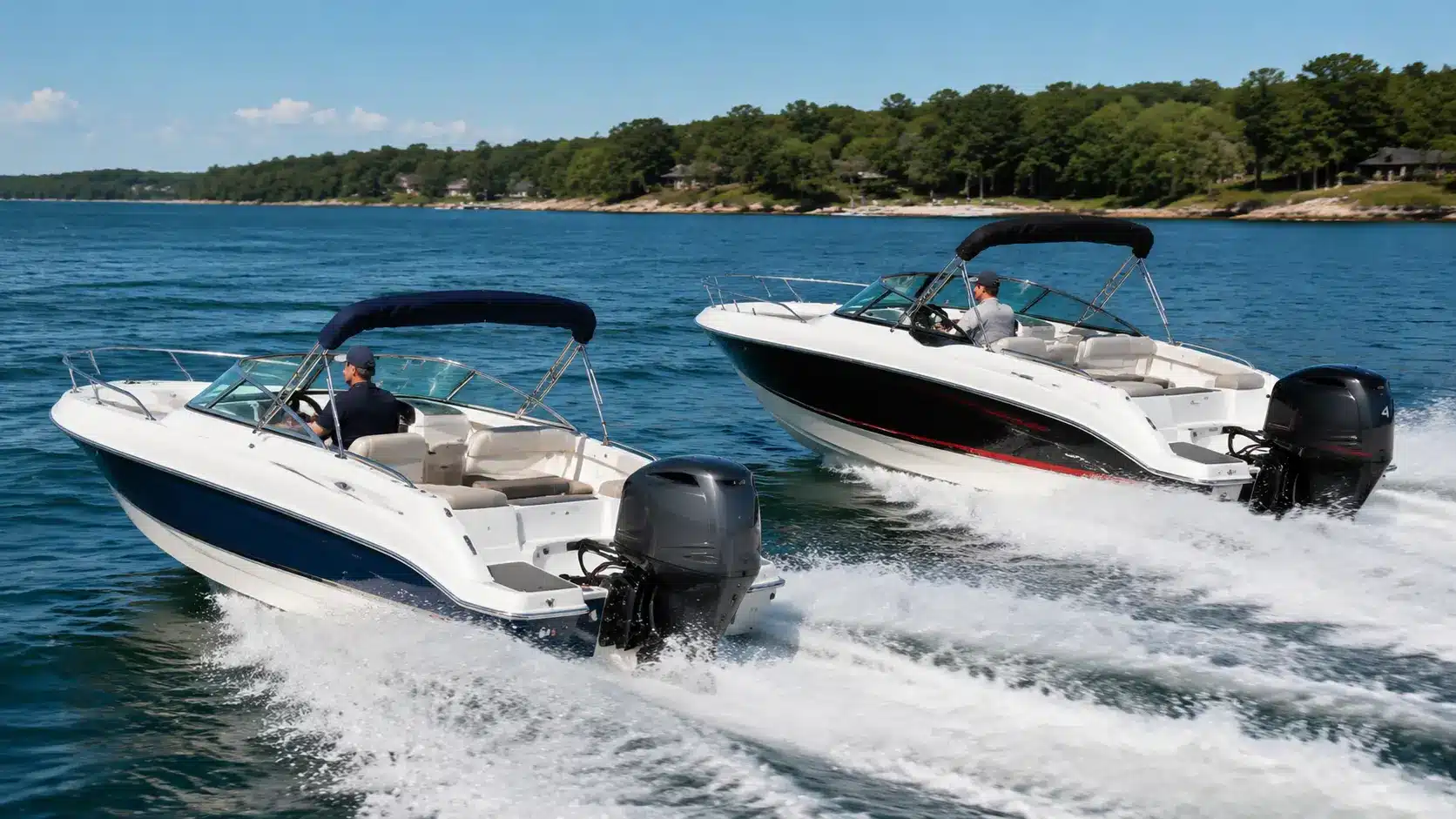
The flat section at the stern. On most powerboats, this is where the outboard motor bolts on, and it’s also what ties the two sides of the hull together at the back.
Cleat
A metal fitting, usually mounted on the gunwale or deck, that a rope or line wraps around and holds fast. Docking, anchoring, tying off fenders, all of it runs through a cleat first.
Waterline
The line where the hull meets the surface of the water when the boat is sitting normally, loaded with its usual gear and passengers. It’s the reference point for measuring how deep a boat sits and how much boat is left above the surface.
Interior Parts of a Boat
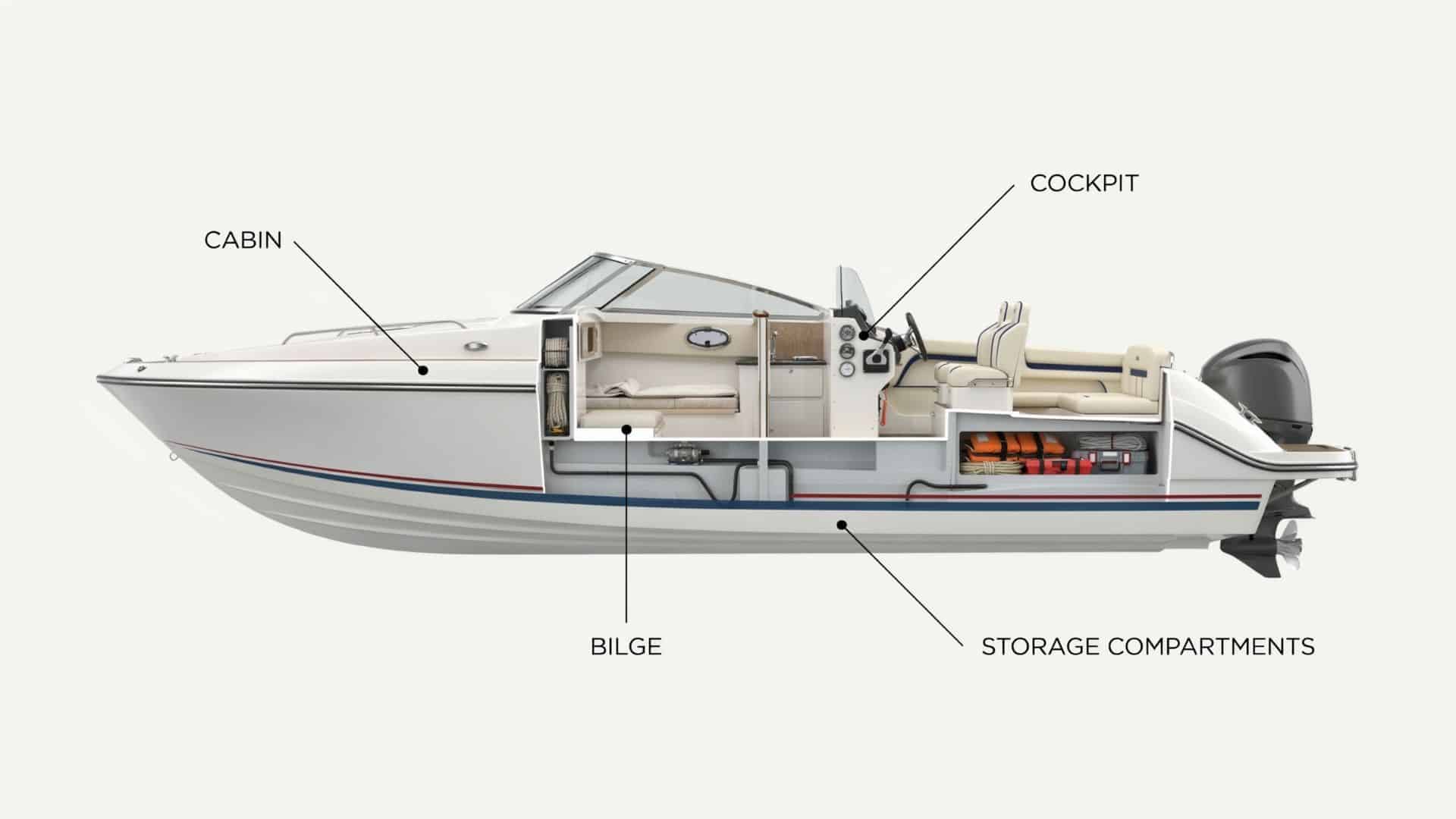
Inside the boat, you’ll find the areas designed for operating, storing equipment, and keeping passengers comfortable. While the layout varies by boat type, these are some of the most common interior parts you’ll come across.
Cockpit
The open area where people sit or stand while the boat’s running. On smaller boats, this usually doubles as where the helm lives.
Cabin
An enclosed space inside the boat. Not every boat bothers with one. Smaller boats skip it entirely; bigger ones might have a full living area tucked below deck.
Bilge
The lowest point inside the hull, where any water that sneaks in ends up pooling. Most boats keep a pump right here so it gets cleared out before it turns into an actual problem.
Bulkhead
An upright wall inside the hull that divides the boat into separate compartments. Beyond just splitting up the space, a bulkhead adds real structural strength and can keep water from spreading if one section floods.
Storage compartments
Gear, life jackets, tools, all of it ends up somewhere under a seat or tucked along the side near the bow. Keeps the deck clear, keeps things where you can actually find them.
If you’re stocking one of these for a paddling trip, our personal flotation device guide covers fit and sizing in more depth.
Parts That Help Control the Boat
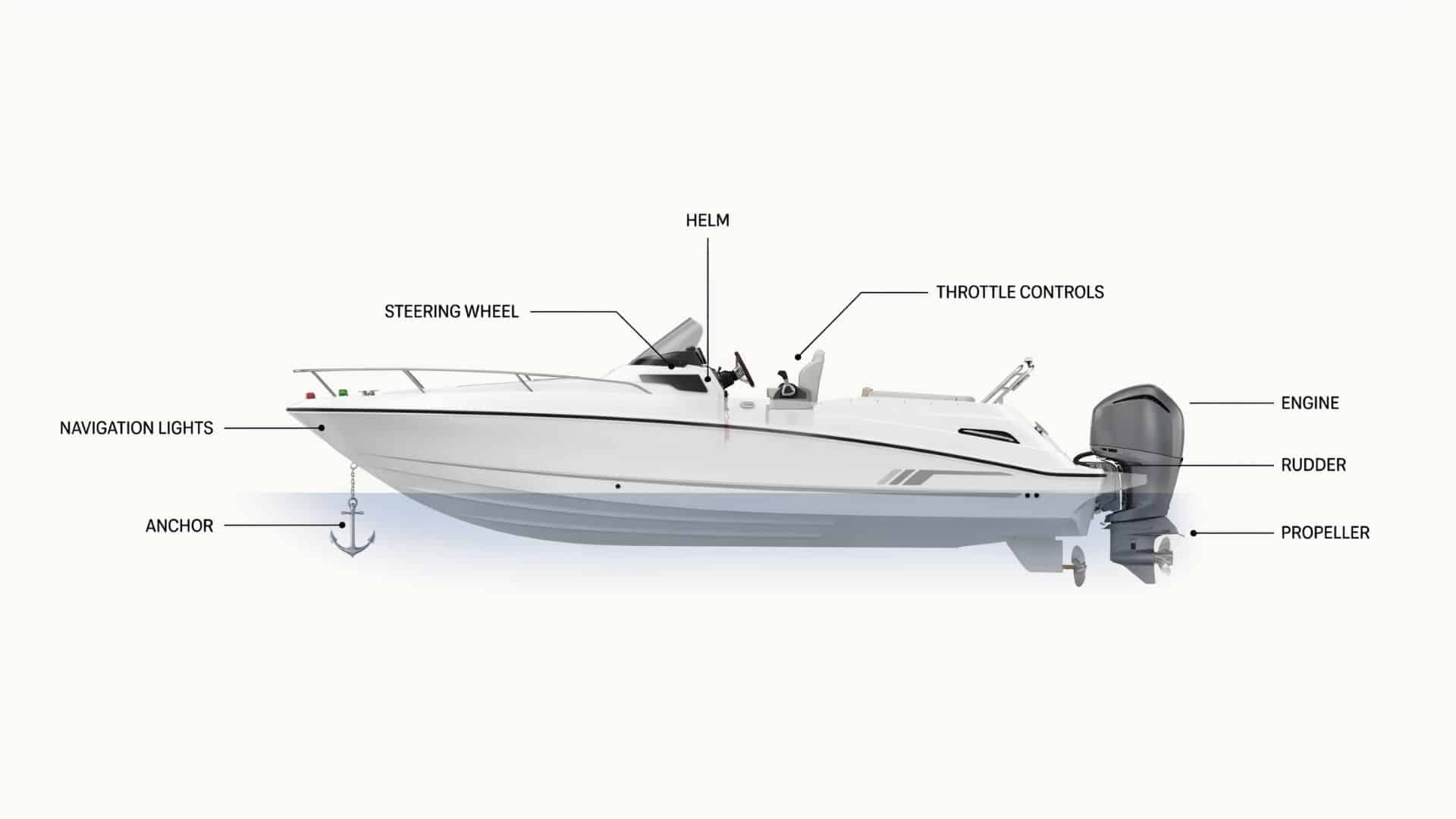
A boat relies on several key components to steer, power, and maneuver safely on the water.
Understanding what these parts do can help you operate the boat with more confidence and communicate more effectively while boating since these are the parts you’ll actually put your hands on once you’re behind the wheel.
Helm
The steering station, basically the driver’s seat of the boat. Wheel, throttle, and the dash showing speed and fuel usually all live right here.
Rudder
A flat blade sitting underwater at the stern. Turn the wheel, the rudder shifts, water flow changes direction, and the boat turns. Without it, you’re just drifting wherever momentum takes you.
Propeller
The prop spins underwater and does the actual work of pushing the boat forward or backward. It’s bolted to the engine and takes the power the engine produces, turning it into motion.
Engine
The outboard sits outside the hull, and the inboard is built right into it. Either setup, this is what actually spins the propeller and gets things moving. Smaller craft often run on electric power instead.
Navigation lights
Red on port, green on starboard. These exist so other boats can figure out where you are and which way you’re heading, especially once the sun goes down. Paddlers need this too.
Anchor
Drop it, and it digs into the bottom, holding the boat roughly in place. Useful for a break, for fishing, or for waiting your turn before docking without drifting into someone else’s boat.
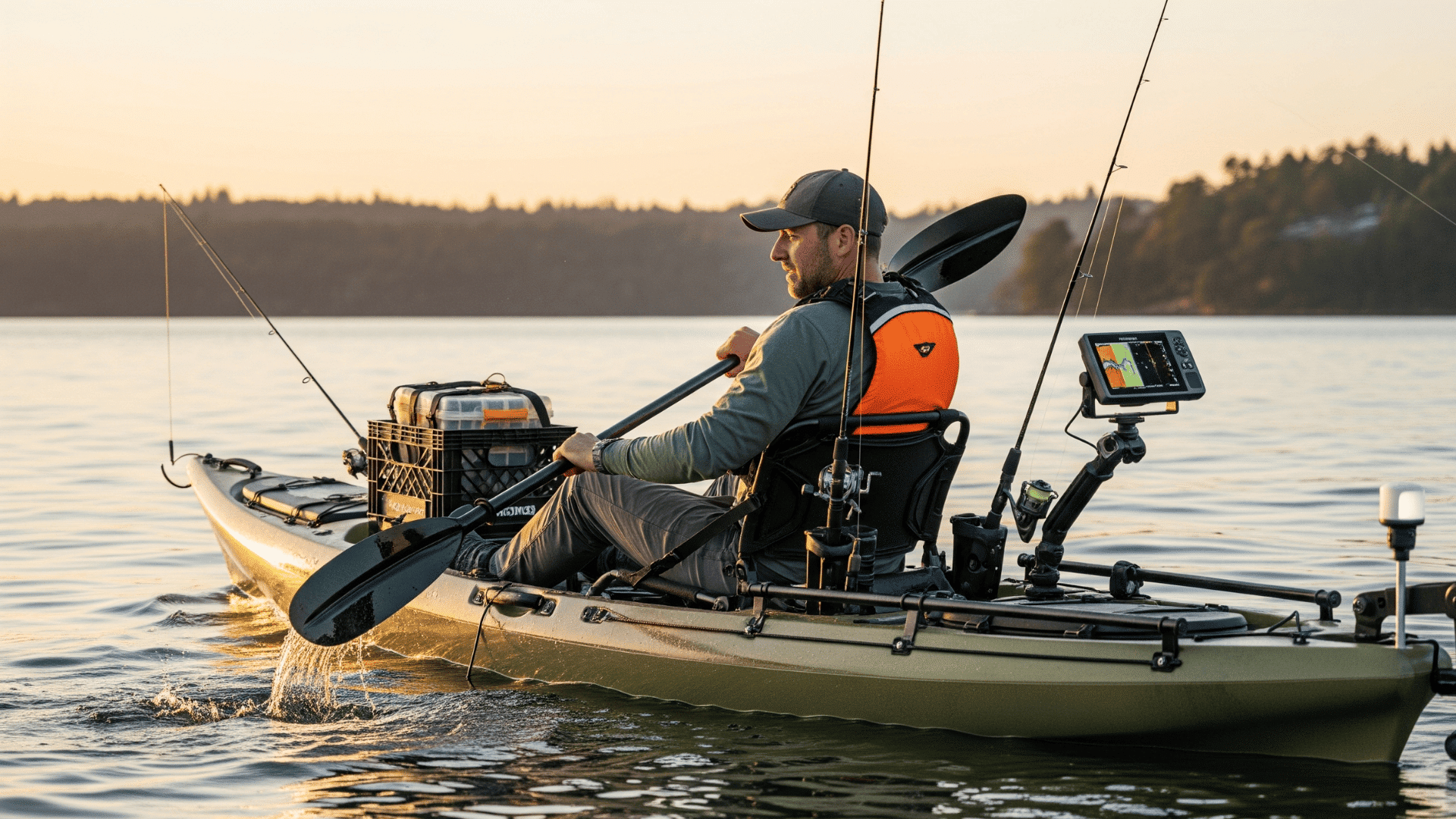
If you fish from a smaller craft, learning how a kayak anchor trolley works can help you hold a spot without constantly repositioning.
Fenders
Cushions, usually rubber, foam, or inflatable vinyl, hung along the side of the boat to absorb impact against a dock, piling, or another vessel. Cheap insurance against scraped paint and a cracked hull.
Why It’s Important to Know the Parts of a Boat
It’s not just to sound like you know boats. That’s not the point of knowing parts of a boat.
“Check the starboard cleat” beats pointing and hoping someone follows your finger over the engine noise. Same with a mechanic bringing up the transom, or the bilge acting up again.
You’re not nodding along while planning to look it up later; you already know where they are and what their functions are.
Manuals assume you know this stuff already. Half the confusion in instructions disappears once none of it’s new to you anymore.
But the real reason, the one that actually matters, is what happens if something goes wrong out there. “Water’s coming in somewhere” gets you one kind of help.
“Bilge is filling faster than the pump can clear it” gets you something faster and more useful.
This applies whether you’re behind the wheel of a cruiser or sitting low in a kayak.
Final Thoughts
None of this is actually complicated once it’s broken into pieces.
Bow, stern, helm, rudder, cleat, waterline- stop treating those as just words, and following directions gets simpler, talking to people on the water gets easier, even basic upkeep involves a lot less guessing.
Having spent enough time around boats to know that half the confusion on the water comes down to two people using two different words for the same part, I can say this stuff sticks fast once you actually need it.
You don’t have to learn all of it today. Pick up whatever you’ll actually use first. The rest shows up on its own, usually faster than you’d think.
Frequently Asked Questions
What are the Main Parts of a Boat?
Hull, bow, stern, deck, keel, gunwale, transom, beam. That’s the structure. The helm, rudder, propeller, and engine actually move it.
Why are the Sides Called Port and Starboard?
Left and right flip depending on which way you’re facing. Port and starboard don’t. Face the bow, port’s left, and it stays left no matter where you end up standing.
What is the Bottom Part of a Boat Called?
Keel, if you mean the piece running underneath. Bilge, if you mean where water actually pools once it’s inside.




3 Responses