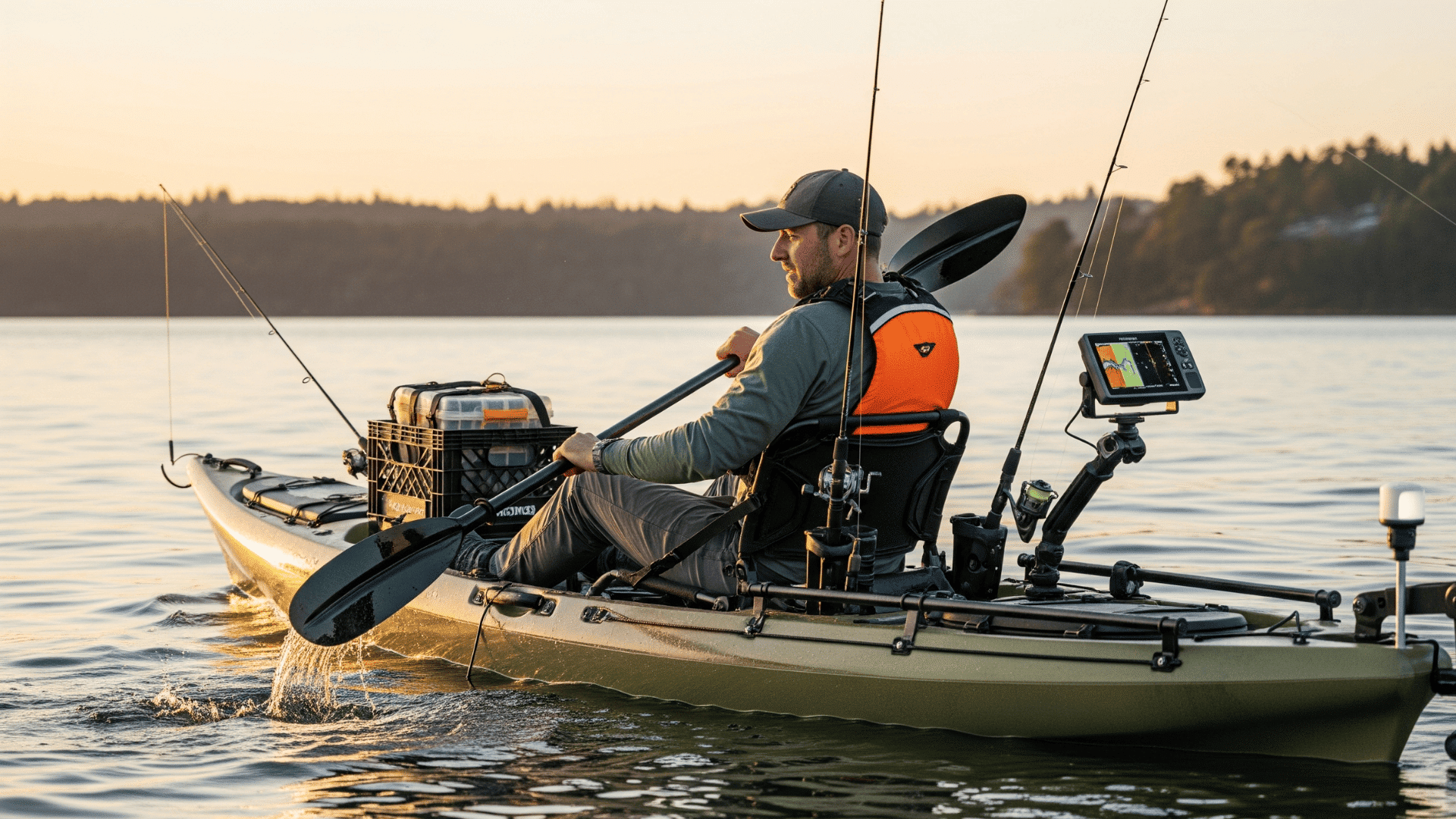
You finally find a good fishing spot, set your line, and within minutes, your kayak has drifted twenty feet off course.
Wind and current do not care about your plans. Staying in position while fishing from a kayak is one of the more frustrating parts of the sport, and many anglers deal with it on every outing.
A kayak anchor trolley helps with this by letting you shift your anchor point along the side of the boat without re-anchoring.
That simple adjustment keeps your kayak facing the right direction even as conditions change.
Many experienced kayak anglers say it is one of the first additions they wish they had set up sooner.
What is a Kayak Anchor Trolley?
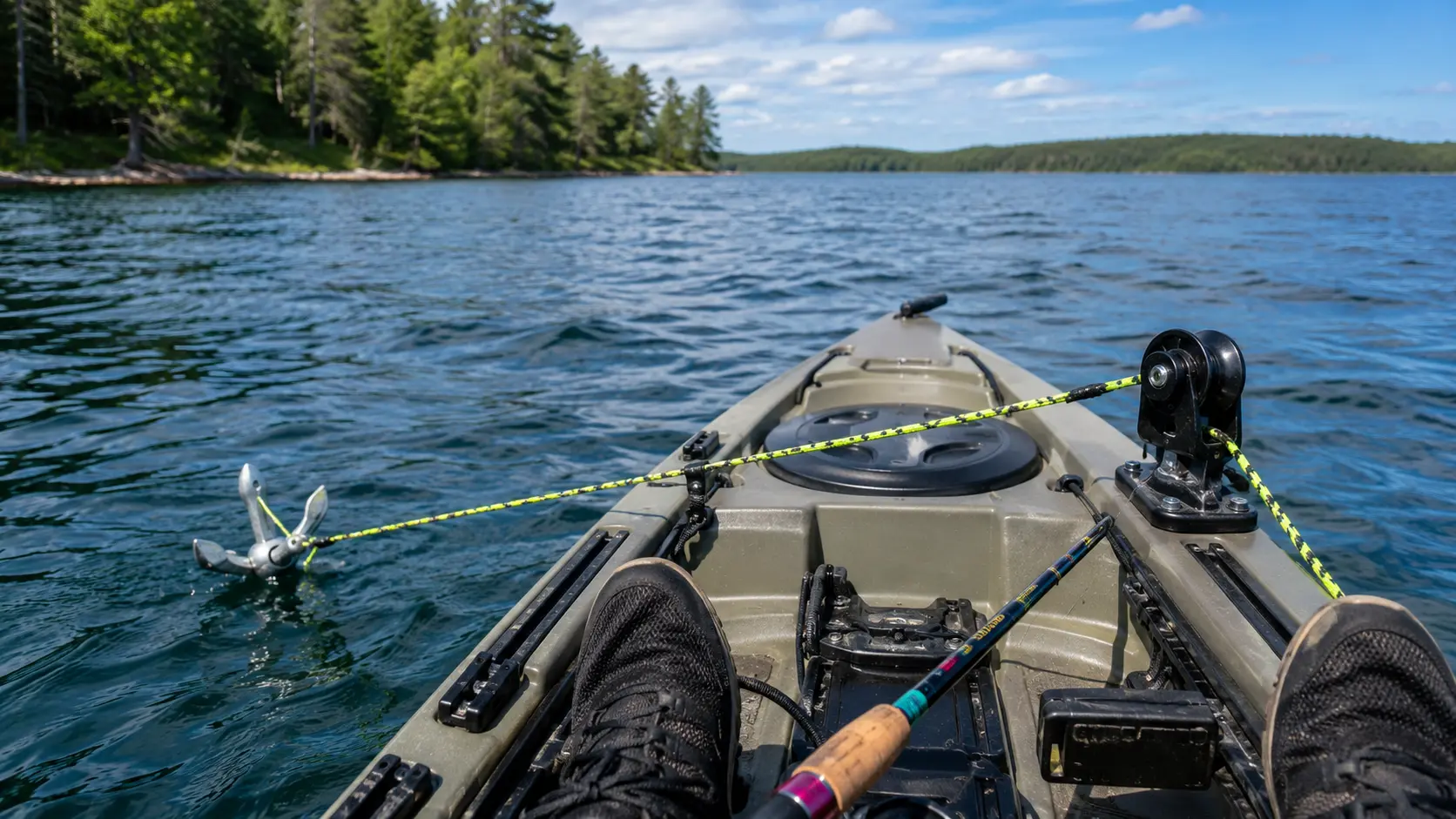
A kayak anchor trolley is a pulley-based system that lets anglers adjust their anchor position without having to pull the anchor back up.
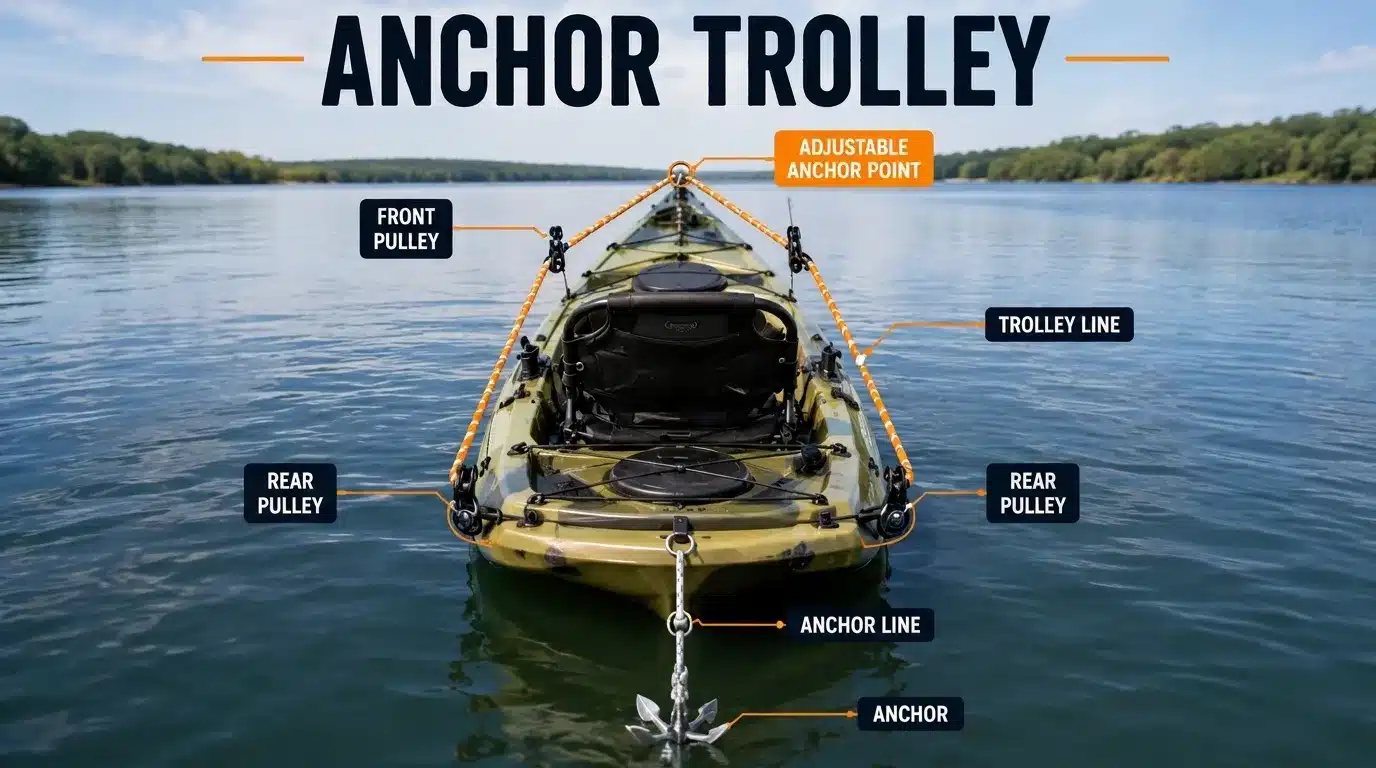
The setup usually includes two pulleys, a rope loop, and a stainless steel ring mounted along the side of the kayak.
One pulley sits near the bow, and the other near the stern. Your anchor line clips to the ring, which slides forward or backward when you pull the rope from your seat.
Moving the ring toward the bow points the kayak into the wind or current, while shifting it toward the stern changes the boat angle for different casting positions. Keeping the ring between both ends also helps manage crosswinds.
Anchoring directly from the side is unsafe because it can turn the kayak broadside, increasing the risk of tipping.
What Kayak Anglers Like About Anchor Trolleys
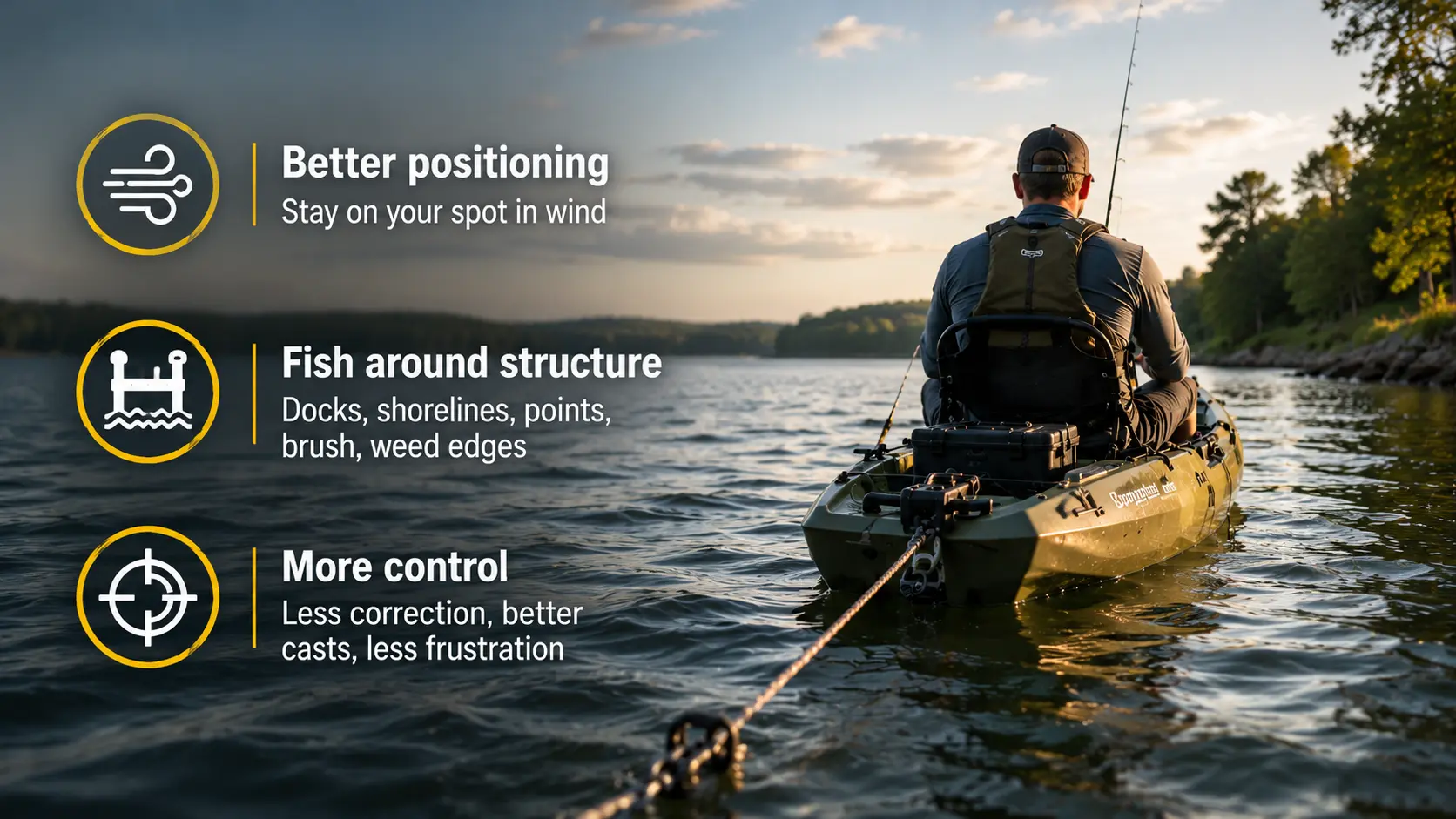
Most kayak anglers who install an anchor trolley do it after one too many days spent fighting wind or getting pushed off a good spot in a river.
The decision usually follows a frustrating outing where constant paddling left little time for actual fishing. Once they try a trolley, most say the water feels a lot more manageable.
- Better positioning around docks and structure. You can set your angle before dropping anchor and hold it there without chasing the boat with a paddle after every cast.
- Less drifting while tying knots or changing lures. With the trolley holding position, you can take both hands off the paddle to re-rig without the boat drifting off the spot.
- Easier casting angles without constant paddling correction. The anchor holds the boat at the right angle so you can keep working the spot instead of paddling back into position.
- More control during solo fishing trips. Fishing alone means no one to hold position while you fight a fish or re-rig. The trolley handles that without any help.
- Works well with drift socks and stakeout poles. Many anglers clip drift socks or stakeout poles to the same ring, making the setup useful across both rivers and open water.
For most kayak anglers, the trolley becomes a regular part of the setup after the first few times, as it keeps the boat in place during a good bite. It removes one of the more annoying parts of fishing from a small boat: losing position at the wrong moment.
Anchor Trolley vs Drift Sock
A kayak anchor trolley and a drift sock do different jobs on the water. The trolley works with an anchor to hold the kayak in one fixed spot, giving full control over position and direction.
A drift sock, also called a sea anchor, is a parachute-shaped device that creates drag in the water to slow the kayak down without stopping it completely. Drift socks work well in deep water where dropping an anchor is not practical.
Many kayak anglers use both together, clipping the drift sock directly to the trolley ring to manage drift angle.
Each tool has its place depending on water depth, conditions, and the amount of movement you want while fishing.
When to Skip Anchor Trolleys
A kayak anchor trolley works well in the right conditions, but it is not something every kayaker needs. Plenty of paddlers get out on the water regularly without one and do just fine.
Knowing when it does not add much can save you time, money, and the need for extra rigging.
| Situation | Why a Trolley Adds Little Value | What Works Better Instead |
|---|---|---|
| Casual recreational kayaking | Not anchoring means there is nothing for a trolley to do | Paddle to position or drift freely |
| Trolling or covering water fast | Staying in motion works against any fixed anchor point | Drift sock to slow speed if needed |
| River drifting | Moving with the current is the goal; anchoring fights it | Let the current do the work |
| Calm small lakes | Low wind and current mean the boat holds on its own | A simple stake-out pole, if needed |
| Beginners who rarely anchor | More rigging, more parts, more to learn upfront | Start with a basic anchor and cleat |
None of this means a trolley is a poor investment for those situations. It just means the payoff will not show up much on a still lake or a paddling trip with no fishing involved.
Anglers who get the most out of a kayak anchor trolley are those fishing spots where wind, current, or tight structure make boat control a real problem.
Common Anchor Trolley Mistakes for Beginners
A kayak anchor trolley works well when it is set up correctly. Many of the anglers’ complaints have come down to mistakes rather than the trolley itself.
Mounting the hardware too low keeps the rope near the waterline, which slows movement and causes friction. Using weak components speeds up wear, and parts tend to fail faster in windy or current-heavy water.
Skipping trolley tension adjustments leaves the line loose, which means little control over where the ring sits. Buying the cheapest kit available usually leads to more upkeep and earlier replacement.
Anchoring incorrectly in moving water is perhaps the most serious mistake, as a poor anchor point puts sideways pressure on the kayak and raises the risk of tipping.
Most of these problems are easy to avoid with a proper setup from the start.
Safety Tips by Experienced Kayak Anglers
Getting the anchor point wrong in strong current or rough water can put a kayak at real risk. Using a reliable kayak anchor system ensures that the trolley, anchor line, and attachment points work together safely.
- Never anchor sideways in strong current- A kayak sitting broadside to moving water is at serious risk of flipping. Always run the trolley ring to the bow or stern before the anchor loads.
- Use a quick-release setup- Clipping your anchor line to the trolley ring with a carabiner means you can detach in seconds if the kayak gets pulled into danger.
- Avoid anchoring in dangerous river flow- Fast-moving rivers with rocks or unpredictable drops are not safe places to anchor. A snagged anchor in swift water can tip the kayak before you react.
- Keep loose lines away from your feet- The anchor rope lying across the cockpit floor is a real hazard. If the kayak tips, a tangled line around your legs makes it much harder to exit.
- Test the system before deeper water trips- Running the trolley through its full range of motion on calm, shallow water first helps catch any friction or weak points before they matter.
A trolley makes positioning easier, but it does not change the fact that anchoring adds risk to any kayak outing. Getting the safety side right takes a little prep and makes the whole experience much less likely to go wrong.
Best Kayak Anchor Systems for Fishing
A kayak anchor trolley controls your angle, but the anchor itself determines how well you hold position. The right system depends on water type, depth, and how often you reposition during a trip.
| System | Best For | Price Range |
|---|---|---|
| YakGear AK1 | Beginners/calm lakes | ~$35 |
| YakAttack LeverLoc HD | Windy lakes/precision | ~$45–$55 |
| Anchor Wizard LP | Rivers/frequent moves | ~$60–$80 |
| Power-Pole Micro | Shallow flats/bass fishing | ~$599 |
| Extreme Max Grapnel | Budget/calm water | ~$25–$40 |
| Scotty #277 | Dock and structure fishing | ~$35 |
| BrushGripper | Creeks and brush banks | Varies |
For verified specs, full installation notes, and a side-by-side hardware breakdown, read our complete guide to the best kayak anchor systems for fishing.
How to Install a Kayak Anchor Trolley
Grab a drill, screwdriver, marine silicone, and your kit. Most installs finish in under two hours.
- Choose your side: Mount on your non-dominant side to keep lines clear of your paddle and casting arm
- Mark the bow pulley: Place it about 10 inches from the bow tip, above the waterline, and mark drill points through the pulley holes
- Seal and screw: Apply marine silicone to every hole before inserting screws; this prevents water intrusion at each mounting point
- Repeat at the stern: Position the second pulley 12–18 inches from the stern, keeping both pulleys in a straight line along the hull
- Space the pad eyes: Mount them evenly between both pulleys to guide the rope flat against the hull
- Thread the rope: Slide the stainless ring onto the rope first, then run the line through both pulleys and tie ends into a closed loop
- Mount the cleat: Fix it mid-ship at a height reachable from your seat without leaning
- Test before fishing: Run the ring bow to stern on calm water and check for friction, slack, or loose hardware
One proper dry run on shore saves a lot of frustration once wind and current are pushing against you.
DIY vs Pre-Made Anchor Trolley Kits
Some kayak anglers build their own trolley system because it costs less and lets them choose their own hardware.
Experienced users tend to prefer DIY, but beginners usually opt for a pre-made kit because all parts are matched and instructions are included.
Most pre-made trolley kits install in under an hour with basic tools. The hardest part is usually drilling into the kayak for the first time, not the trolley system itself.
| Feature | DIY Setup | Pre-Made Kit |
|---|---|---|
| Cost | Usually lower | Higher upfront |
| Hardware | You choose each part | Matched and included |
| Install time | Longer, more planning is needed | Faster with instructions |
| Customization | High | Limited |
| Best for | Experienced users | First-time buyers |
Both options work well when set up correctly. The right choice mostly comes down to how much time you want to spend on the build and how comfortable you are sourcing individual parts.
What Makes a Good Anchor Trolley
When shopping for a kayak anchor trolley, a few features tend to matter more than others.
Pulleys should move smoothly with little resistance, and the rope should run quietly so it does not spook fish nearby.
Stainless steel or marine-grade hardware resists rust in both fresh and saltwater, which matters for long-term use.
The ring and cleat should be easy to reach and adjust from a seated position without stretching. Mounting hardware needs to be solid enough to hold under load without loosening over time.
A simpler design with fewer moving parts also tends to hold up better and causes fewer problems on the water. These are the points most kayak anglers check before buying.
Conclusion
The biggest advantage of a kayak anchor trolley is not simply staying still. It controls how the kayak sits in the wind and current, so you can keep fishing effectively rather than constantly correcting your position.
For many anglers, it helps keep the kayak positioned correctly, reduces unnecessary paddling, and makes fishing feel more controlled on the water.
The right setup also improves safety and makes long fishing trips less frustrating. If you fish from a kayak regularly, adding a kayak anchor trolley is one of the simpler upgrades that can improve your time on the water.
Take time to choose a setup that fits your kayak and practice using it before your next trip.
Frequently Asked Questions
Can You Install a Kayak Anchor Trolley on an Inflatable Kayak?
Most standard kits require drilling into a hard-shell hull, making them unsuitable for inflatables. Clamp-on or adhesive alternatives exist but are generally less reliable than a drilled installation.
How Much Anchor Rope Do You Need With a Kayak Anchor Trolley?
A widely used rule is a 7:1 ratio of rope to water depth. For 10 feet of water, you need roughly 70 feet of anchor line to keep the anchor flat on the bottom and in its holding position correctly.
Can a Kayak Anchor Trolley Be Installed on Both Sides of the Kayak?
Some anglers install systems on both sides for specialized positioning in calm or lightly moving water, but dual-anchor setups are not recommended in strong current because they reduce the kayak’s ability to pivot safely.
Does an Anchor Trolley Get in the Way?
A properly installed trolley sits close to the hull and should not interfere with paddling or casting. Poorly tensioned rope, however, can create slack that catches gear or rubs against the paddle.