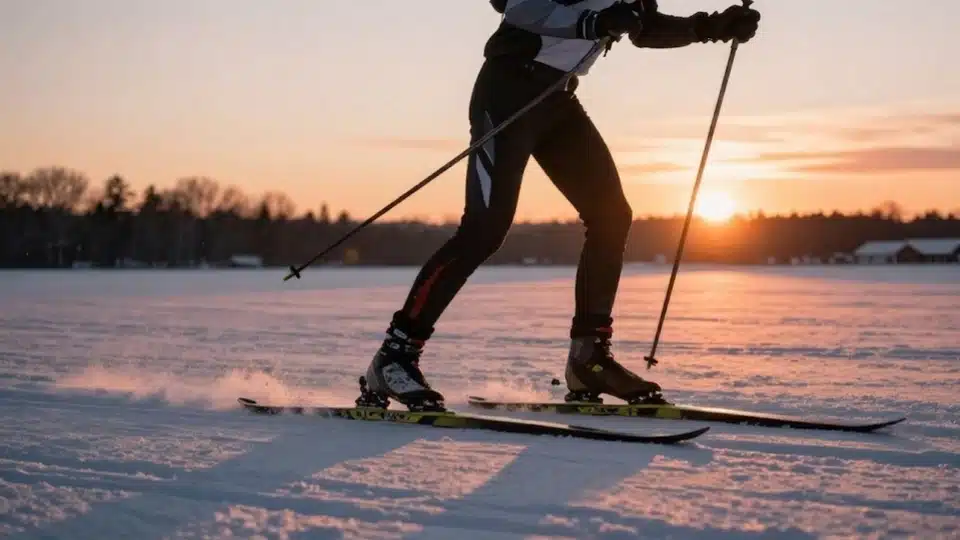
Nordic skiing has been around for at least 5,000 years, making it one of the oldest forms of human travel on record.
What started as a practical way to cross frozen terrain in Scandinavia became a competitive sport, a fitness discipline, and one of the most effective full-body workouts you can do outdoors.
The core idea is simple: your heel stays free, your legs do the work, and you move across snow under your own power with no lift needed.
Nordic skiing covers several different disciplines, from classic cross-country to skate skiing to backcountry touring.
This guide covers what Nordic skiing is, how it differs from downhill skiing, which type might suit you, and how to get started without overcomplicating it.
What Is Nordic Skiing?
Nordic skiing is a type of skiing in which your heel remains free. Unlike downhill skiing, your boot isn’t locked to the ski. That one difference changes everything about how you move.
You push off, glide, and repeat. It works your legs, core, and arms simultaneously. There are two main styles: classic and skate skiing.
Classic keeps you on parallel tracks. Skate skiing looks more like ice skating on snow. Both are harder than they look, but both are worth it. Once you get the basics down, you’ll see why so many people stick with it.
Health Benefits of Nordic Skiing
Nordic skiing does more for your body than most gym workouts. And the best part? You’re outside, moving through fresh air and open trails, not staring at a wall.
- Full-body workout: Your arms, legs, and core all work together with every stride you take.
- Burns serious calories: An hour of Nordic skiing can burn between 400 and 600 calories, depending on your pace.
- Low impact: It’s easier on your joints than running, yet still delivers a strong cardio session.
- Builds endurance: Regular sessions improve your stamina faster than most steady-state cardio options.
- Boosts mental health: Time outdoors in winter light does real things for your mood and focus.
Your body responds well to this kind of movement. It’s hard work, but it never feels like punishment. That’s a rare thing to find in any sport.
Nordic Skiing vs Downhill Skiing: Key Differences
Not all skiing is the same. And once you see the differences laid out, you’ll understand why Nordic skiing attracts a completely different kind of person.
| Feature | Nordic Skiing | Downhill Skiing |
|---|---|---|
| Heel | Free | Locked |
| Terrain | Flat to rolling trails | Steep mountain slopes |
| Lifts Needed | No | Yes |
| Full Body Workout | Yes | Partial |
| Skill Level to Start | Moderate | Moderate |
| Speed | Slower | Fast |
| Equipment Cost | Lower | Higher |
Nordic skiing puts the work on you. No lifts, no shortcuts. But that’s exactly what makes it worth doing. Most people who try it once end up wondering why they ever needed a mountain in the first place.
How to Get Started with Nordic Skiing
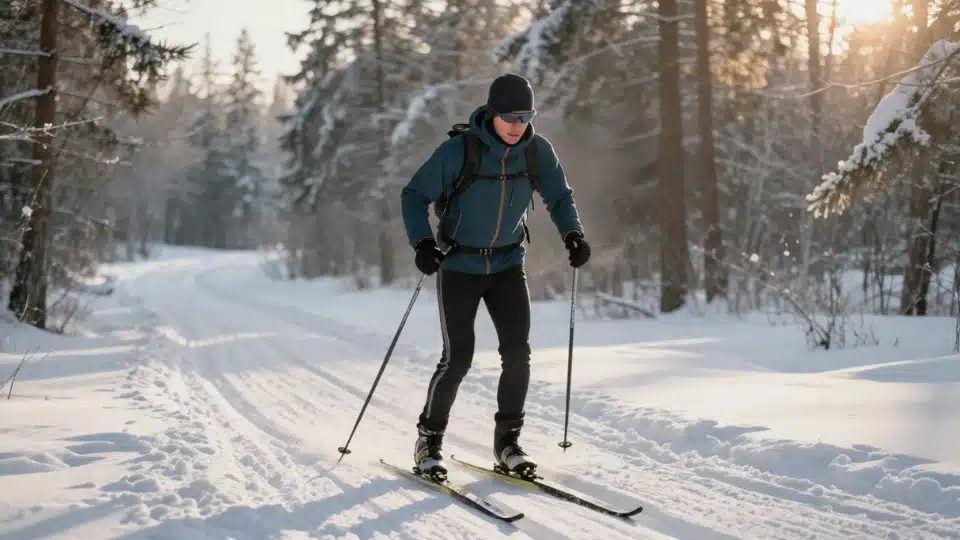
Getting started is simpler than most people expect. You don’t need a mountain, a big budget, or years of experience. Just a few basics and a willingness to move.
- Find a local trail: Look for groomed cross-country trails near you. Most Nordic centers rent gear, so you don’t need to buy anything upfront.
- Start with classic skiing: It’s the easiest style to pick up and gives you a solid foundation before trying anything else.
- Dress in layers: Avoid heavy cotton. Moisture-wicking base layers keep you warm and dry as you heat up.
- Take a lesson: Even one session with an instructor saves you weeks of bad habits.
- Go slow at first: Focus on balance and glide, not speed.
Nordic skiing rewards patience. The first few runs might feel awkward, but your body figures it out faster than you think. Stick with it, and the trail starts to feel like yours.
Types of Nordic Skiing
Nordic skiing isn’t just one thing. It actually covers several types of skiing, and each one feels pretty different once you’re out on the snow.”
| Type | What It Is | Best For |
|---|---|---|
| Classic Cross-Country | Skiing in parallel tracks with a forward stride | Beginners and long distances |
| Skate Skiing | Pushing off at an angle, like ice skating | Speed and fitness training |
| Backcountry Skiing | Off-trail skiing through unmarked terrain | Adventure seekers |
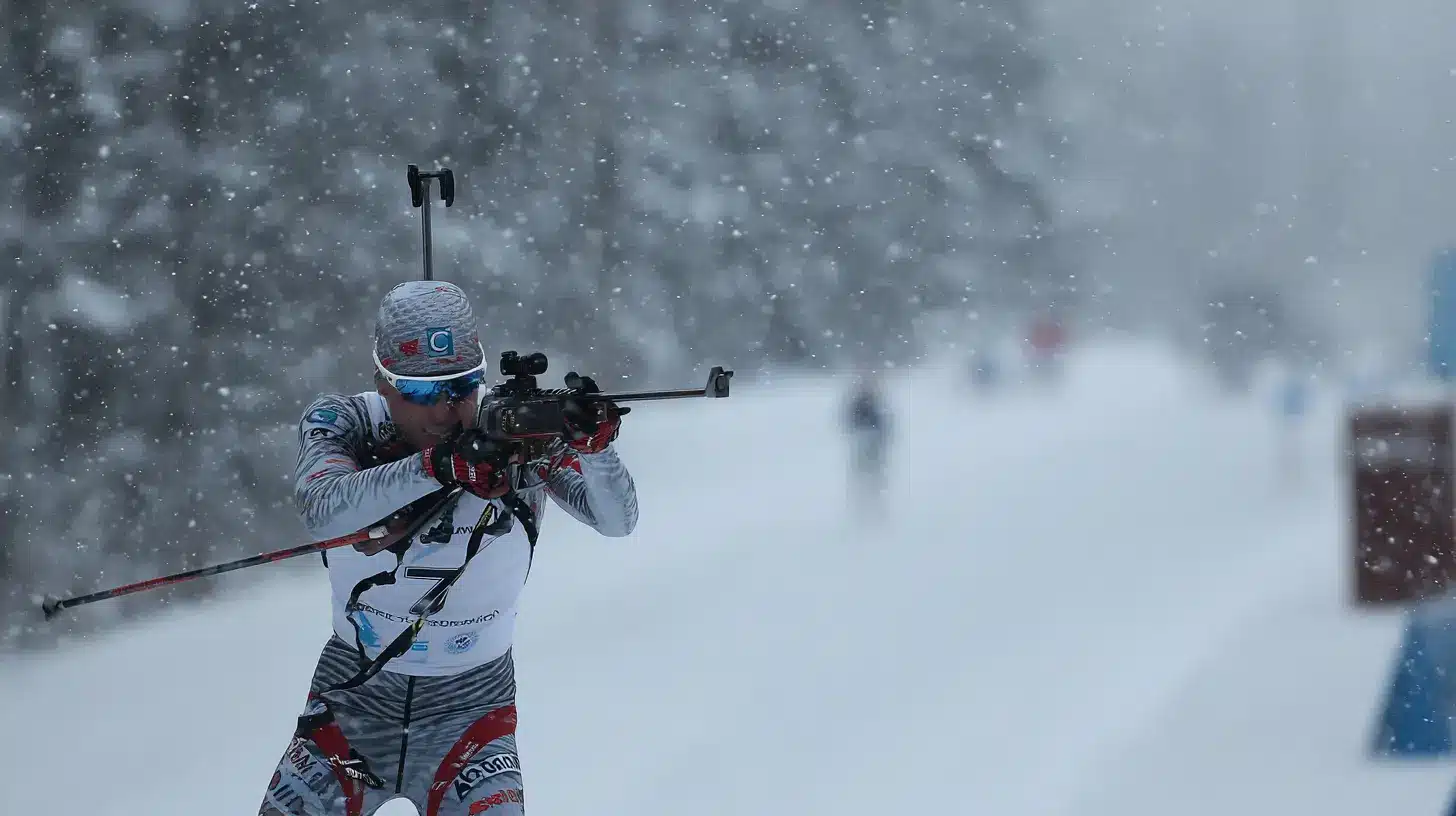
| Biathlon | Cross-country skiing combined with rifle shooting | Competitive athletes |
| Nordic Combined | Ski jumping paired with cross-country racing | Elite competitors |
| Telemark Skiing | Downhill turns with a free heel | Technical skiers |
Each type asks something different from you. Some are beginner-friendly, and some take years to get right. But no matter which one you try first, you’re still getting a proper taste of what Nordic skiing is all about.
Nordic skiing has also been part of the Winter Olympics since the first Winter Games in Chamonix in 1924, longer than almost any other discipline on the program. Biathlon and Nordic combined are both Olympic events, and cross-country racing at the elite level covers distances up to 50 kilometers.
Essential Nordic Skiing Equipment
You don’t need much gear to get going. But having the right equipment makes a real difference, especially when you’re just starting out.
- Skis: Nordic skis are longer and lighter than downhill skis. Classic skis have a grip zone in the middle, while skate skis are smooth all the way through.
- Boots: They attach only at the toe, keeping your heel free. Make sure they match your binding system.
- Bindings: These connect the boot to the ski. NNN and SNS are the two common systems, so check compatibility before buying.
- Poles: Slightly longer than Alpine poles. They help drive your momentum forward with every push.
- Clothing: Thin, fitted layers work best. You heat up fast, so avoid anything too bulky.
Good gear doesn’t have to be expensive. Renting first is a smart move, especially before you commit to buying. Once you know what style suits you, choosing your own equipment gets a lot easier.
Best Places to Try Nordic Skiing
|
Nordic Skiing Techniques for Beginners
Technique matters more in Nordic skiing than most beginners expect. You don’t need to be perfect on day one, but a few basics early on will save you a lot of frustration later.
- Diagonal stride: This is your foundation. Opposite arm and leg move together, just like walking, but with a glide added at the end of each step.
- Double poling: Both poles are planted at the same time while you glide forward. Good for flat stretches where you want to build speed.
- Kick and glide: Push down and back with one ski to grip the snow, then shift your weight and glide on the other. It takes practice, but it clicks fast.
- Snowplow stop: Point your ski tips together to slow down. Simple but reliable on gentle slopes.
- Weight shifting: Stay balanced over one ski at a time. Leaning too far back is the most common beginner mistake.
Nobody gets these right immediately. But each technique builds on the last, so progress comes quicker than you’d think. Keep your knees soft, stay relaxed, and trust the process.
Common Nordic Skiing Mistakes Beginners Make
Everyone makes mistakes when starting out. Most of them are easy to fix once you know what to look for.
- Keep your weight centered over your skis, not on your heels. Shifting back feels natural at first, but it kills your glide and makes every stride harder than it needs to be.
- Hold your poles loosely. A tight grip tires your arms out faster than you’d expect, and over a long trail that adds up quickly.
- Don’t overdress. Nordic skiing heats you up fast, and too many layers will leave you sweaty and uncomfortable within the first ten minutes.
- Warm up before you start. Cold muscles on cold snow don’t mix well, and skipping this is one of the fastest ways to pick up a strain.
- Don’t chase speed early. Rushing your technique just locks in bad habits. Get the basics right first, and the speed follows on its own.
Most of these mistakes fix themselves once you slow down and pay attention to how your body is moving. A little awareness goes further than any amount of effort on the trail.
Wrapping It Up
Nordic skiing looks intimidating from the outside. That’s fair. Most people walk past it and assume it’s not for them. But now that you know what Nordic skiing is and what it actually involves, the picture looks a lot different.
It’s accessible, rewarding, and something your body genuinely benefits from. You have the basics. The types, the techniques, the gear, the places.
Everything you need to take that first step is already in your hands. Get out there and find a trail. Winter won’t wait forever.
Frequently Asked Questions
Is There a Difference Between Nordic and Cross-Country Skiing?
Usually, they mean the same thing. Nordic skiing is the broader term, while cross-country skiing usually means trail skiing.
Is Nordic Skiing the Hardest Sport?
It is one of the hardest endurance sports, but beginners can still learn the basics on easy trails.
Which Country Has the Best Skiing in the World?
Switzerland, Norway, Austria, and Canada are often ranked highly. For Nordic skiing, Norway is one of the best.