
You see skaters rolling past, making it look effortless. Flips, grinds, smooth cruising down the street. You want that feeling too.
Figuring out how to learn skateboarding isn’t as scary as it looks. Sure, you’ll fall. Your ankles might feel weird at first, and balance takes practice.
But once you get rolling, something clicks. The pavement becomes yours. The board feels like an extension of your feet. And suddenly, you’re not watching anymore. You’re riding.
Plus, skateboarding is excellent exercise; you’ll build leg strength, improve balance, and get cardio without even realizing you’re working out.
Ready to find out what happens when you finally push off?
How Long Does It Take to Learn Skateboarding?
There’s no magic number. Some people get comfortable riding in a week. Others need a month just to stop wobbling. It depends on how often you practice and what “learning” means to you.
Riding around smoothly? Expect 2-4 weeks of regular practice. Landing your first ollie? That could take 2-3 months. Getting actually good at tricks? Think years, not months.
Age matters too. Kids pick things up faster because they’re lighter and bounce back quicker. Adults learn fine, but falling hurts more, and fear creeps in more easily.
Choosing Your First Skateboard
Walking into a skate shop can feel overwhelming. Dozens of boards line the walls, all looking pretty similar. But your first board matters, so let’s break down what you actually need.
- Deck size: Go for 7.5 to 8 inches wide. Anything bigger feels clunky when you’re starting out, and smaller decks are trickier to balance on.
- Complete vs. custom: Buy a complete skateboard. Building a custom setup sounds cool, but you don’t know what you like yet.
- Trucks: They should match your deck width. Too narrow and you’ll feel unstable. Too wide and turning gets awkward.
- Wheels: Softer wheels (78A-87A) are better for cruising and rough pavement. Harder wheels (99A-101A) work for tricks but feel every crack in the ground.
Your first board doesn’t need to be expensive, but avoid toy-store boards. A complete from a proper skate brand will last longer and ride better from day one.
Essential Safety Gear
|
Finding Your Skateboarding Stance
Before you learn how to ride a skateboard, you need to know which foot goes where. This isn’t about being right or left-handed. It’s about what feels natural when you’re moving.
- Regular stance: Left foot forward, right foot pushes. Most people skate this way.
- Goofy stance: Right foot forward, left foot pushes. Totally normal, just less common.
- The slide test: Stand still and have someone gently push you from behind. Whichever foot you step forward with first is probably your front foot.
- The stair test: Run toward the stairs and see which foot hits the first step. That’s usually your leading foot.
- Try both ways: Spend 10 minutes riding each stance. One will feel right, the other will feel like you’re walking backward.
Don’t overthink it. Your body already knows. Just listen to what feels comfortable when you push off. Once you pick a stance, stick with it and let muscle memory do its thing.
How to Ride a Skateboard
Now comes the actual riding part. Learning how to skateboard means breaking it down into small steps. Don’t rush through these. Each one builds on the last, and skipping ahead just means more falls later.
Step 1: Standing and Balancing
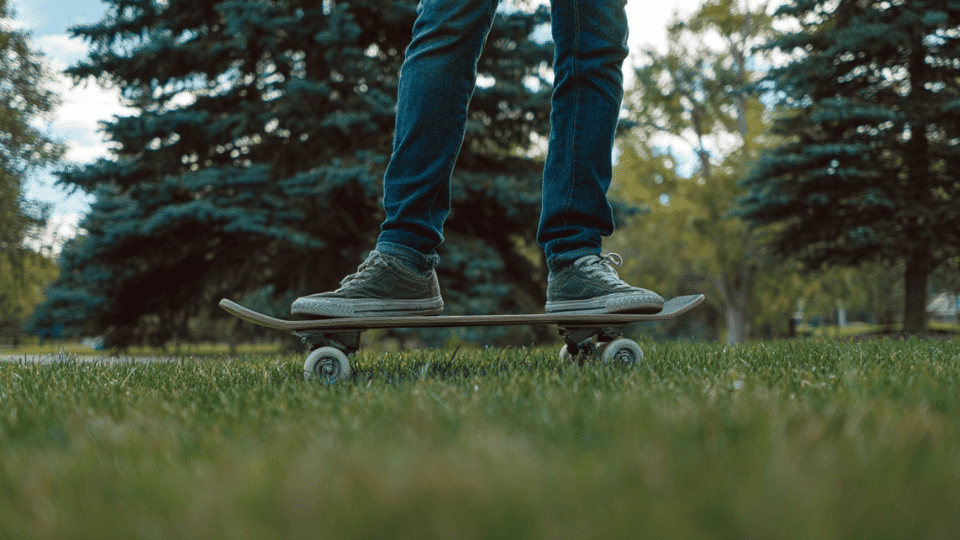
Put your board on grass or carpet so it won’t roll. Step on with your front foot over the front bolts, back foot over the back bolts. Bend your knees slightly. Keep your weight centered, not leaning too far forward or back.
Your shoulders should stay loose, not stiff. Practice shifting your weight side to side without lifting your feet. Once this feels normal, you’re ready to move to pavement.
Step 2: Getting On and Off Your Board
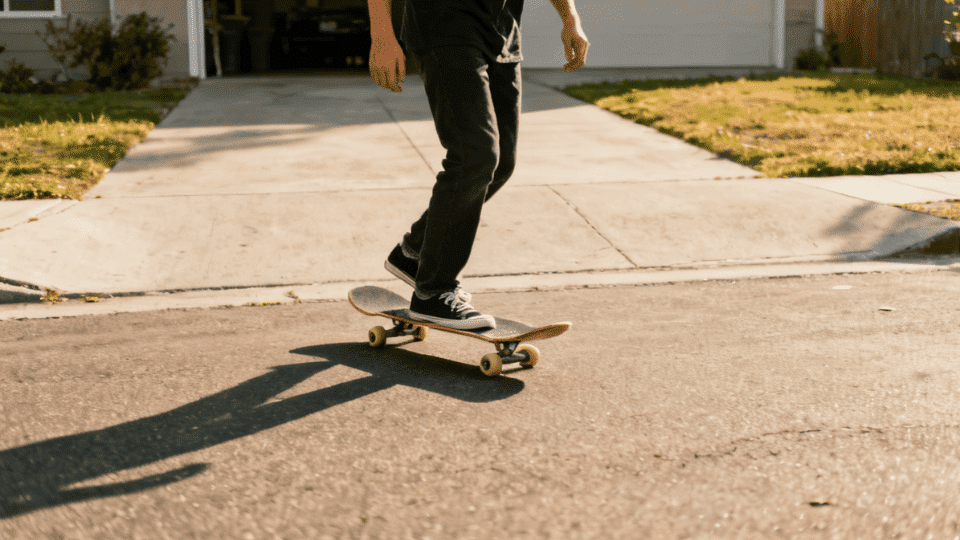
Place your front foot on the board first, angled slightly forward. Push off with your back foot a few times while your front foot rides. When you’re ready, bring your back foot up and plant it over the back bolts.
To get off, slow down first. Step off with your back foot, then your front. Always step off the side, never jump straight forward. Practice this until it’s automatic.
Step 3: Pushing and Moving Forward
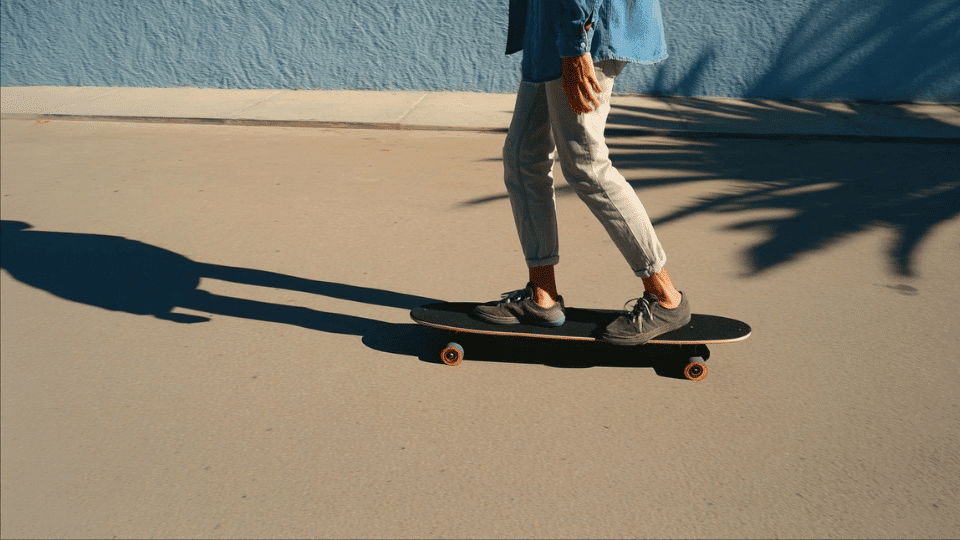
Keep your front foot planted near the front bolts. Push with your back foot, using the inside edge of your shoe. Small pushes work better than big ones when you’re starting.
After each push, bring your back foot back onto the board quickly. One mistake to avoid early: pushing with your front foot while your back foot rides the board. Skaters call this “mongo,” and it throws off your balance and timing. Push with your back foot, always. Look where you’re going, not down at your feet.
Step 4: Turning Your Skateboard
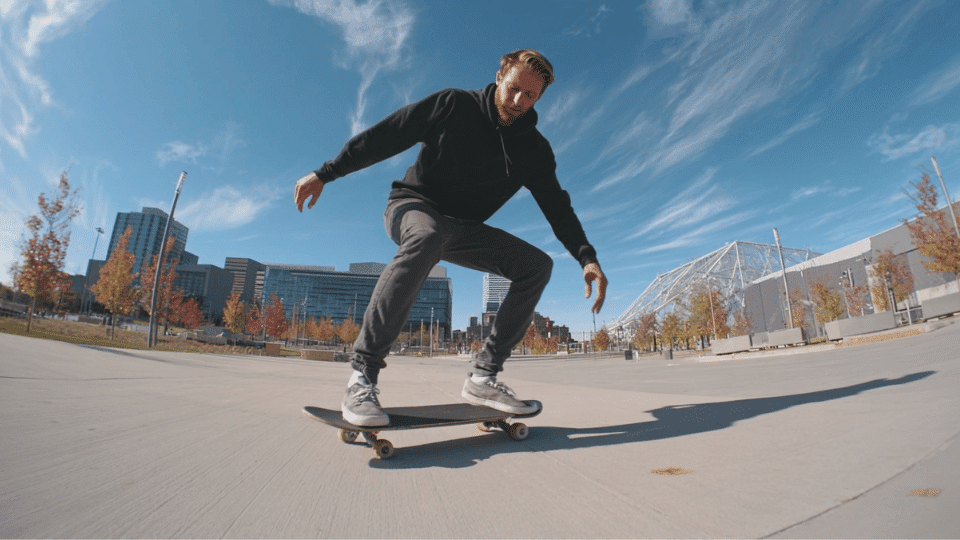
Lean gently in the direction you want to go. Press your toes down to turn frontside, your heels down to turn backside. Don’t jerk or overcorrect. Small movements do the job.
Tighten your trucks if turning feels too loose and sketchy. Loosen them if the board won’t turn at all. Practice making wide, sweeping turns before trying sharp ones. Carving back and forth across flat ground builds confidence fast.
Step 5: Stopping Safely
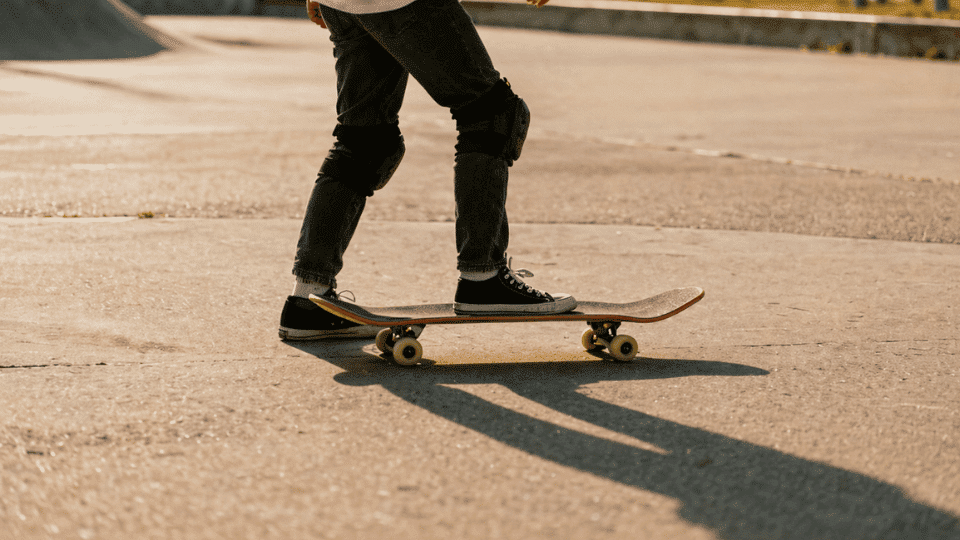
The foot drag is your best friend. Take your back foot off and drag it on the ground like a brake. Press down gradually, not all at once. You can also slow down by turning uphill or doing wide turns.
Jumping off works in emergencies, but run it out so you don’t eat pavement. Never try to stop by stepping on the tail and popping the nose up. That’s a quick way to fall backward.
Take your time with each step. Mastering how to learn skateboarding means getting comfortable at every level before moving on. Once stopping feels natural, you’re actually riding.
Where to Practice Skateboarding as a Beginner
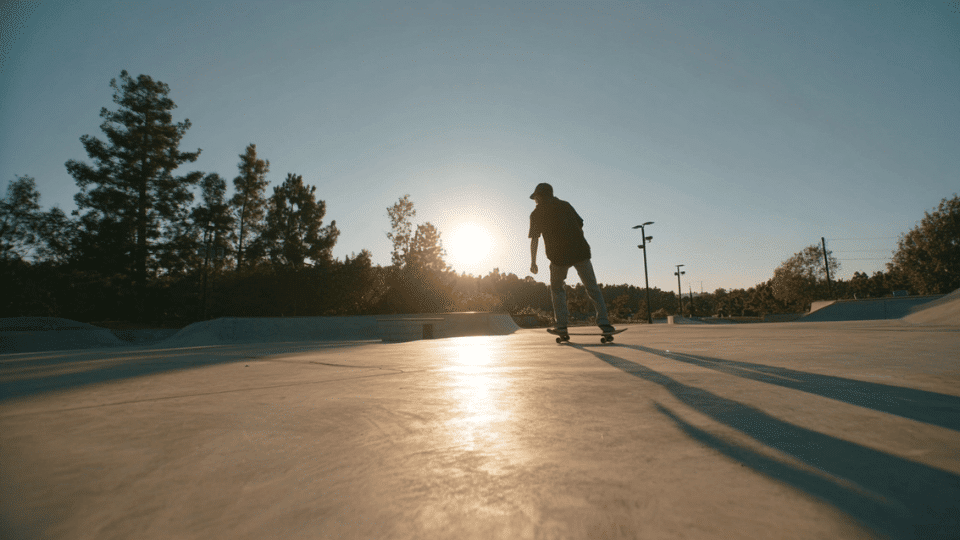
Location matters when you’re learning how to skateboard. The wrong spot makes everything harder. The right one gives you space to fall, mess up, and actually get better without stress.
- Empty parking lots: Smooth, flat, and usually quiet early in the morning or late evening. Perfect for practicing balance and pushing.
- Basketball courts: Smooth concrete with plenty of room. Just avoid busy times when people are actually playing.
- Quiet streets: Low-traffic residential streets work great. Check for cars constantly and stay aware of driveways.
- Skate parks (off-peak hours): These dedicated spaces are a big part of skateboarding culture. Go early in the morning on weekdays when it’s less crowded. Stick to flat areas at first, not ramps.
- Your driveway: If it’s flat and smooth enough, this works for basic balance practice.
Avoid rough sidewalks, crowded areas, and hills until you’re solid on flat ground. Start simple, then branch out. Once you feel confident cruising around, you can start exploring more challenging spots.
What Actually Works When You’re Starting Out
In over 400 guided expeditions across climbing and whitewater, the athletes who progress fastest are never the most talented. They’re the most consistent. Skateboarding works the same way. Short daily sessions beat long weekly ones. Your body builds muscle memory through repetition, not occasional marathons.
Get comfortable just standing, pushing, and turning before you try any tricks. Learn on flat ground away from distractions. Wear your safety gear every session, not just the first few times.
Film yourself occasionally. Your phone will show you foot placement and balance problems you can’t feel while riding.
Set one goal per session and stay with it until it clicks.
Beginner Skateboarding Tricks to Start With
Once you’re comfortable riding around, you’ll want to try something cooler. Don’t jump straight to kickflips. Start with these basics that build your board control and confidence.
- Tic-tacs: Twist your shoulders and shift weight to swing the nose back and forth while rolling. Builds balance and teaches you how the board responds.
- Manual: Lift the front wheels off the ground and balance on the back wheels while rolling. Start with short manuals, then hold them longer.
- Kickturn: While stopped, press down on the tail to lift the front wheels, then pivot your body to turn. Practice both directions.
- Ollie: The foundation of almost every trick. Pop the tail down, slide your front foot up, and jump. This one takes weeks to land consistently.
- Shove-it: Pop the tail and use your back foot to spin the board 180 degrees under you. Easier than an ollie but looks impressive.
Don’t rush these. Each trick teaches you something about board control you’ll need later. Master one before moving to the next.
Creating Your Practice Routine
Randomly skating whenever you feel like it won’t get you far. You need a plan. Even 30 minutes of focused practice beats two hours of aimless rolling around.
| Practice Activity | Time to Spend | Why It Matters |
|---|---|---|
| Warm-up and stretching | 5-10 minutes | Loose muscles prevent injuries and help you move better on the board |
| Balance and stance work | 10-15 minutes | Builds confidence and teaches your body how weight shifts affect the board |
| Pushing and riding | 15-20 minutes | Gets you comfortable moving and builds leg strength for longer sessions |
| Turning practice | 10-15 minutes | Carving back and forth trains your body to lean correctly without thinking |
| Stopping drills | 5-10 minutes | You need to stop smoothly before trying anything else |
| Trick attempts or free skating | 15-20 minutes | Practice what you’re working on or just cruise and have fun |
Click here to download the full practice routine for free.
Mix things up based on what needs work. Struggling with turns? Spend extra time carving. Nailing your balance? Move that time to tricks. Listen to your body and adjust as you go.
Tips to Learn Skateboarding Faster
Want to speed up your progress? Small changes in how you practice make a huge difference. These tips won’t make you a pro overnight, but they’ll cut down your learning curve.
- Skate with better riders: Watching someone who knows what they’re doing teaches you faster than figuring everything out alone. Ask questions and pay attention to their foot placement.
- Film yourself: Your phone camera shows mistakes you can’t feel while riding. Watch your footage and compare it to tutorial videos.
- Practice one thing at a time: Jumping between skills slows you down. Pick one focus per session and drill it until it clicks.
- Skate every day, even for 15 minutes: Short daily sessions beat long weekly ones. Your body remembers better with repetition.
- Fall properly: Tuck and roll, not stiffen. Learning to fall saves you from worse injuries and builds confidence.
Progress comes from showing up consistently, not from talent. Keep rolling, and you’ll get there. The skaters who improve fastest aren’t the most talented; they’re just the ones who refuse to quit.
Final Thoughts
Learning how to learn skateboarding comes down to three things: getting the right setup, practicing consistently, and not being afraid to fall. You’ve got the knowledge now.
You know which board to buy, what gear protects you, and how to actually ride without eating concrete every five seconds. The tricks will come with time, but only if you put in the work.
Stop watching videos and start rolling. Grab your board, find a smooth spot, and push off. Your first session won’t be perfect, and that’s fine. Every skater started exactly where you are right now.
Ready to ride? Get out there and make it happen.
Frequently Asked Questions
Is Skating Harder Than Biking?
Yes, for most people it is. Skateboarding takes more balance and control, and you don’t have handlebars to hold onto.
Is 30 mph on a Skateboard Fast?
Yes, 30 mph is very fast on a skateboard. At that speed, even a small mistake can lead to a hard fall. Most beginners should stay far below this and focus on control, not speed.
Can I Skateboard at 300 Lbs?
Yes, you can. You just need a strong board with good trucks and quality parts. Start slow, focus on balance, and ride on smooth ground. Many heavier riders skate, but using durable gear makes a big difference.