You don’t need to wait 30 minutes before swimming after eating. No major medical or safety organization recommends it, and swimming within an hour of a meal doesn’t raise your drowning risk.
That’s not the answer most of us grew up with. Parents, coaches, and lifeguards have repeated the 30-minute rule for generations, usually without much question. So where did it come from, and does any part of it still matter?
It turns out a small piece of it does, just not for the reason you were told.
Where the 30-Minute Rule Came From
This rule is older than most of the people repeating it.
The earliest known version appears in the 1908 handbook Scouting for Boys, which warned boys to wait 90 minutes after eating before swimming, cautioning that ignoring the advice could cause disabling cramps and leave a boy to drown through his own fault.
The idea spread from there. Camp counselors, gym teachers, and generations of parents repeated the same warning, not because new evidence supported it, but because it sounded cautious and nobody had reason to push back.
By the 1960s, researchers finally tested the claim directly, and it didn’t hold up (see the next section). Even so, the belief outlived the science that disproved it.
How Long You Should Wait
You do not need to sit on a towel for 30 minutes before you jump back in the pool. Doctors and safety groups have studied this for years, and no one has ever found proof that eating before swimming is dangerous.
That said, comfort still matters. If you eat a huge meal and then race laps right after, your stomach might not thank you.
|
What you ate |
What you’re doing |
How long to wait |
|---|---|---|
|
Small snack (fruit, crackers, granola bar) |
Playing or floating |
No wait needed |
|
Regular meal |
Casual swimming |
0 to 15 minutes |
|
Large or heavy meal |
Fast laps, diving, or a swim meet |
60 to 90 minutes |
So here is the real answer. For a light snack, swim whenever you feel like it. For a normal meal, you can get back in the water within a few minutes if you are just playing around. Save any real wait time, up to an hour or so, for big, heavy meals paired with hard exercise.
Rules of Thumb to Remember
If you don’t want to think about tables or timers, these five rules cover almost every situation:
- Light snack, easy swim: Get in whenever you want. There’s no wait to plan around.
- Regular meal, casual swim: A few minutes is plenty. You don’t need a clock for this one.
- Big meal, hard swim: Give it an hour or so, not for safety, but because racing laps on a full stomach just feels bad.
- No meal at all: Eat something small first. Swimming on empty causes more real problems than swimming full ever did.
- Drinks involved: Skip the swim, no matter what you ate or when. This is the one rule with actual safety evidence behind it.
What the Studies Actually Found?
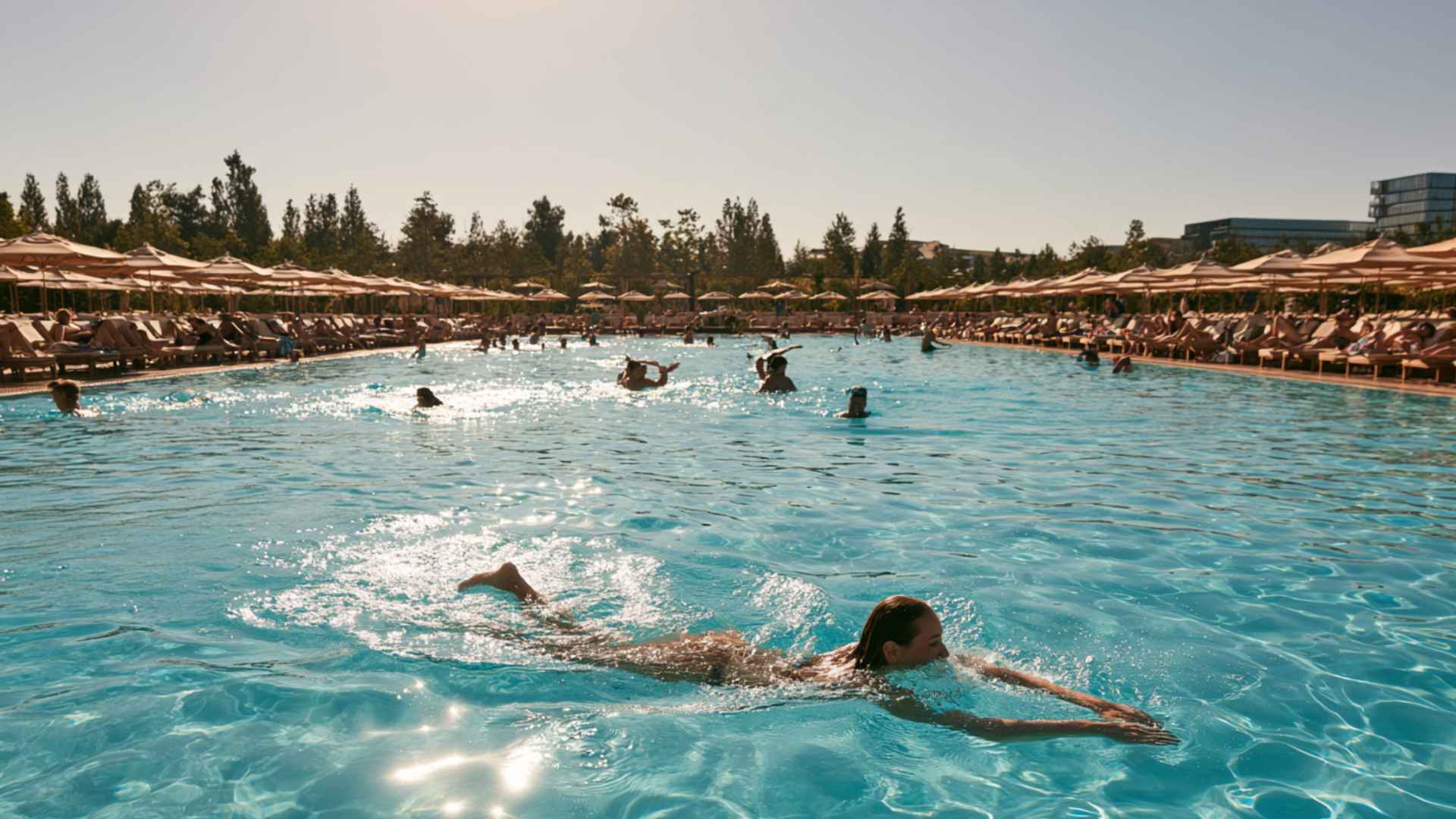
Alt text: A swimmer moves through a large outdoor pool with people relaxing on lounge chairs around the water.
Once scientists actually looked into it, the myth fell apart fast.
The Red Cross scientific review also found no drowning cases linked to eating beforehand in any of the research it examined.
Other research backs this up:
Two separate studies published in 1968, one following swimmers over a one-mile freestyle and another over 200 yards, had competitive swimmers eat before racing at different intervals.
Neither study found any meaningful drop in speed, and reports of cramping were essentially nonexistent; out of nearly 200 total swims, researchers logged only a handful of mild nausea complaints and one case of regurgitation, with no cramps at all.
The Red Cross review also found zero documented drowning cases linked to eating beforehand. Not one.
No major U.S. health or safety group, including the American Academy of Pediatrics and the American Red Cross — recommends waiting a set amount of time before swimming.
Their review concluded that eating beforehand is not a meaningful risk factor for drowning. That’s about as direct as a medical review gets.
A 1965 swim performance study had swimmers eat at different times before racing freestyle, one of several swimming styles and techniques that place different demands on the body. It found no meaningful drop in speed or performance, no matter how soon after eating they swam.
Why “Blood Diversion” Isn’t the Full Story
This is where the myth gets its shaky science. After you eat, your body does send extra blood to your stomach to help with digestion. That part is true.
The myth says this steals blood away from your arms and legs, leaving you weak and prone to cramping or drowning. But your body is not that fragile.
You have enough blood supply to run your stomach and your muscles at the same time, which is part of why swimming and muscle growth go hand in hand even on a full stomach.
Research on gut function during exercise shows the body adjusts blood flow smoothly during physical activity, even with food in your stomach. It is not a choice between digesting and swimming. Your body can do both.
What Causes That Stomach Cramp
If eating before swimming is not the danger, why does it still cause the occasional cramp? The pain people usually feel has a name: exercise-related transient abdominal pain, or a “side stitch” for short.
It shows up as a sharp pain under your ribs, and it happens more in sports with a lot of twisting or bouncing, like running. Exercise abdominal pain research has studied this pain for years and found it is tied to muscle strain and posture, not to your blood supply running out.
Pro tip: If you feel a sharp pain under your ribs while swimming, slow down and take a few deep breaths. It usually fades within a few minutes on its own, and it has nothing to do with drowning risk.
When It’s Smart to Wait Anyway
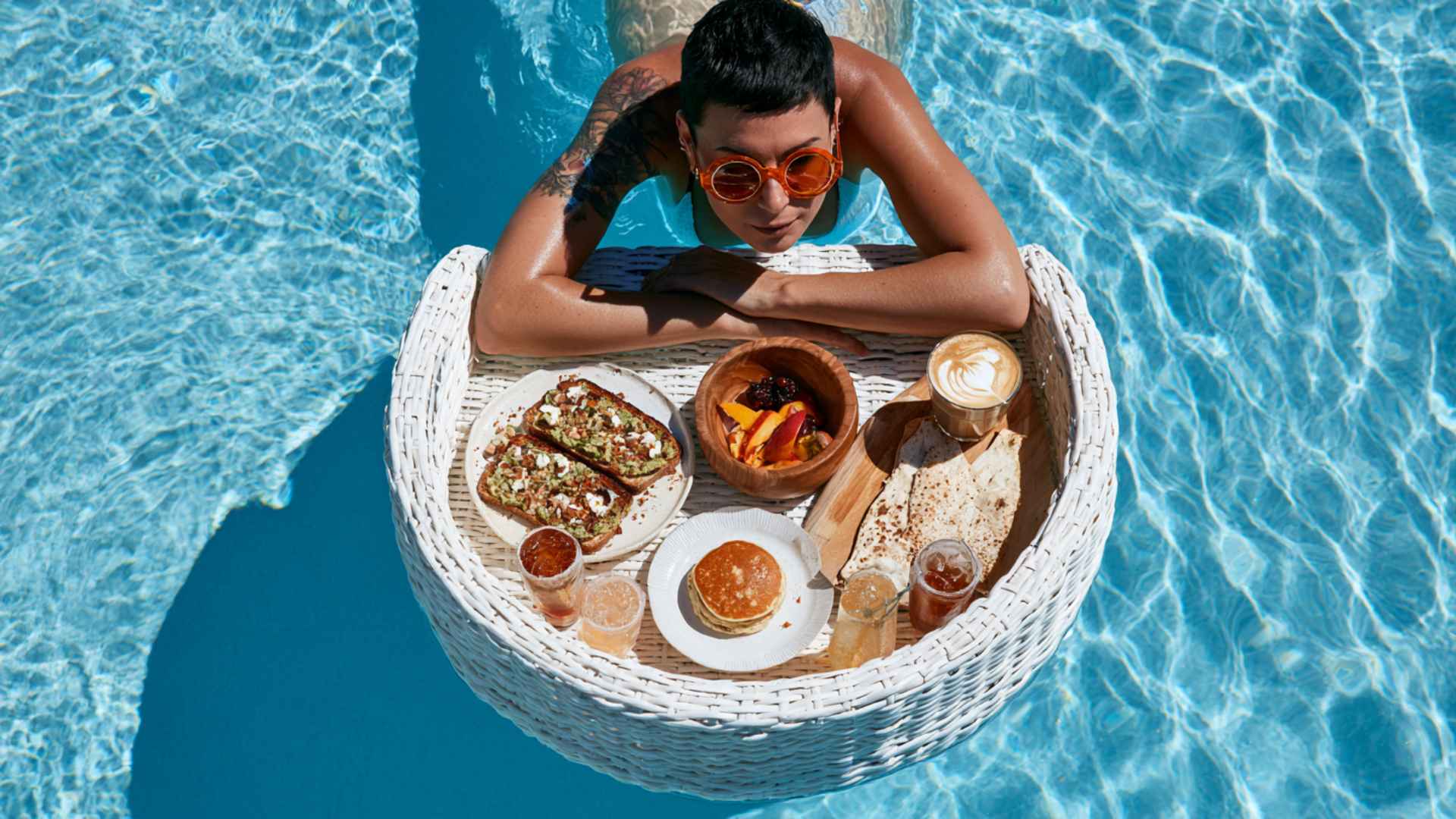
Alt text: Person relaxing in a pool with a floating tray of breakfast items, drinks, and snacks in clear blue water.
Even though the danger is a myth, there are still times when waiting just makes sense for comfort:
- Right before a swim meet or a hard set of fast laps after a big meal
- Right before diving or doing flip turns on a very full stomach, since the extra pressure can cause discomfort
- Any time you or your kid feels sick, bloated, or too stuffed to move comfortably
Waiting after eating is not a swimming rule you need to fear. Listen to your body, avoid risky situations, and focus on real water safety habits that help prevent accidents.
What to Eat Before You Swim
If you want to feel good in the water, what you eat matters more than exactly when you eat it. Light, easy foods sit better in your stomach during activity, while heavy or greasy meals can slow you down and leave you feeling sluggish.
|
Good choices before a swim |
Better saved for after swimming |
|---|---|
|
Banana |
Fried food |
|
Toast with peanut butter |
Large burger |
|
Yogurt |
Creamy pasta |
|
Granola bar |
Big slice of pizza |
The best pre-swim meal isn’t about strict rules; it’s about choosing foods that help you feel comfortable and energized. A lighter meal lets you enjoy swimming’s many health perks without feeling weighed down.
Swimming on an Empty Stomach Has Its Own Risks
People sometimes go the opposite direction and skip food entirely before swimming, thinking it is the safer choice.
It usually is not. Swimming on an empty stomach can cause low blood sugar, which can show up as dizziness, shakiness, or feeling unusually weak in the water, since pre-exercise fuel helps keep blood sugar steady during a workout, according to U.S. Masters Swimming.
That’s a practical concern, arguably more common than the old cramp myth. A small snack 30 minutes or so before a swim workout is a smarter move than skipping food altogether.
Special Notes for Kids and Toddlers
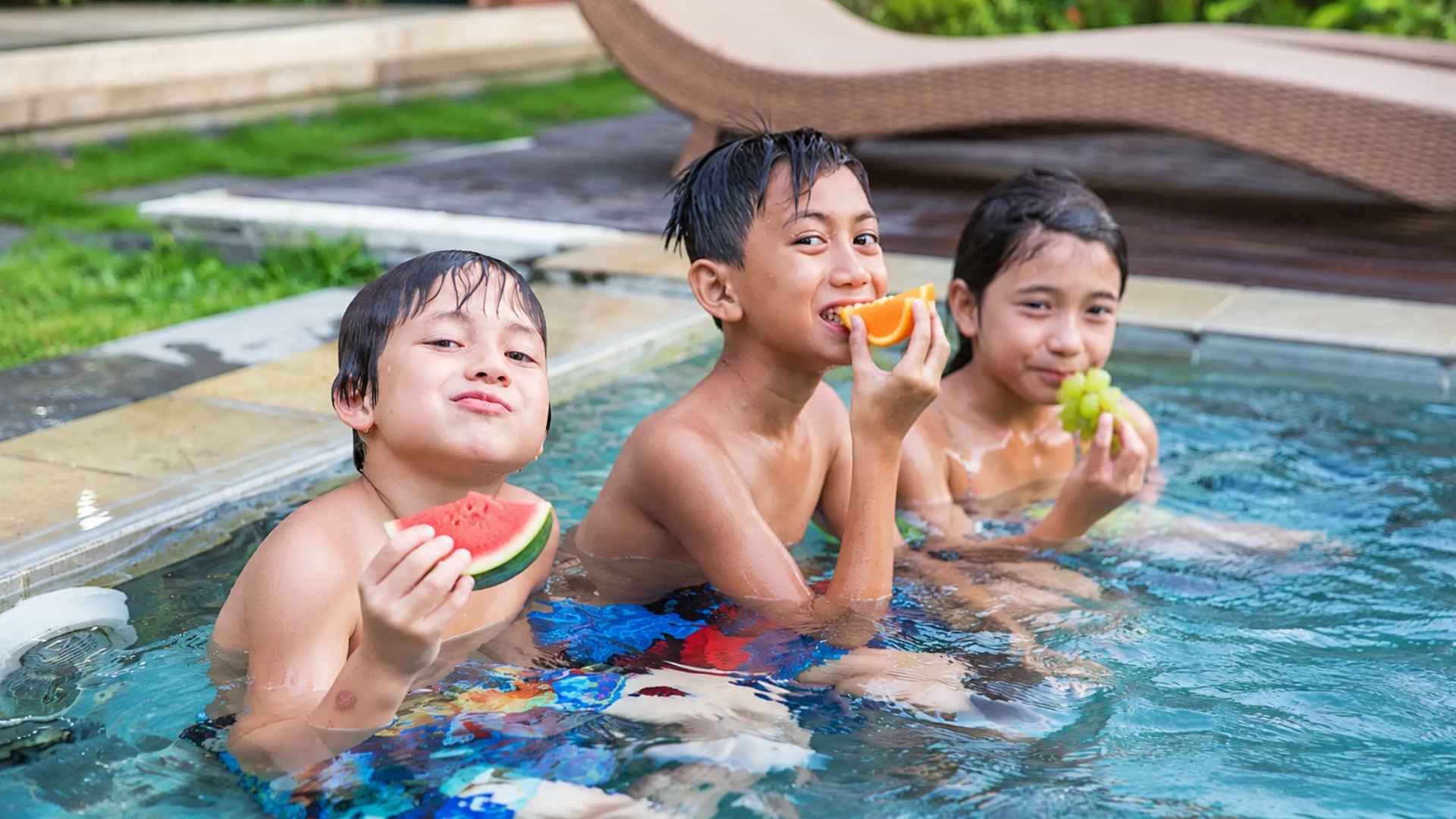
Kids do get upset stomachs in the pool sometimes, but it is rarely about timing. It is usually because they wolfed down a hot dog in three bites and then went straight to cannonballs. Supervision matters far more than any clock for young swimmers.
A couple of things that actually help: Keep an adult within arm’s reach of young or new swimmers at all times. Offer smaller portions before pool time so kids are not too full to feel comfortable
Infants who aren’t yet eating solid food don’t need any meal-timing rule at all. For babies in the water, the priority is constant, within-reach supervision and proper flotation support, not what they last ate.
Signs You Should Get Out of the Water
Swimming should feel comfortable, not like a challenge to push through. Knowing when to pause helps you avoid discomfort and stay safe, no matter when you last ate.
- Sharp Pain: Stop swimming if sharp pain continues for more than a minute or two and does not improve with rest.
- Dizziness or Lightheadedness: Get out of the water if you feel dizzy, faint, or unsteady, since swimming safely may become difficult.
- Nausea: Take a break if you feel sick to your stomach or think you may vomit while swimming.
- Persistent Cramping: Leave the water if stomach or leg cramps continue despite slowing down, stretching gently, or resting briefly.
- Unusual Tiredness or Weakness: Stop swimming if you suddenly feel much weaker or more tired than expected without an obvious reason.
Your body usually gives clear signals when it needs a break. Pay attention to those signs, rest when needed, and return to the water when you feel ready.
Trust Your Body, Not the Clock
A pool day shouldn’t come down to counting minutes on a phone. Eat what sounds good, swim when you’re ready, and save the caution for what actually matters: keeping young or new swimmers within reach and skipping the swim after drinks.
The 30-minute rule was never based on evidence. Trading it for a clock in your head just replaces one bad habit with another.
Frequently Asked Questions
Is It Safe to Swim Right After Eating?
Yes. No major health group links eating and drowning risk. A big meal might make you feel sluggish, but swimming right after isn’t dangerous.
How Long Should Kids Wait to Swim After Eating?
There’s no set number. Just watch for overeating. A short break after a big meal is a comfortable choice for most kids.
Can Swimming After Eating Cause Cramps?
Sometimes, yes. It’s usually a harmless side stitch, not a dangerous muscle cramp. It happens more with hard exercise right after a large meal.
Does the 30-Minute Rule Have Any Truth to It?
Not really. It came from old handbooks, not real research. Studies since then have found no link between eating before swimming and any real health risk.