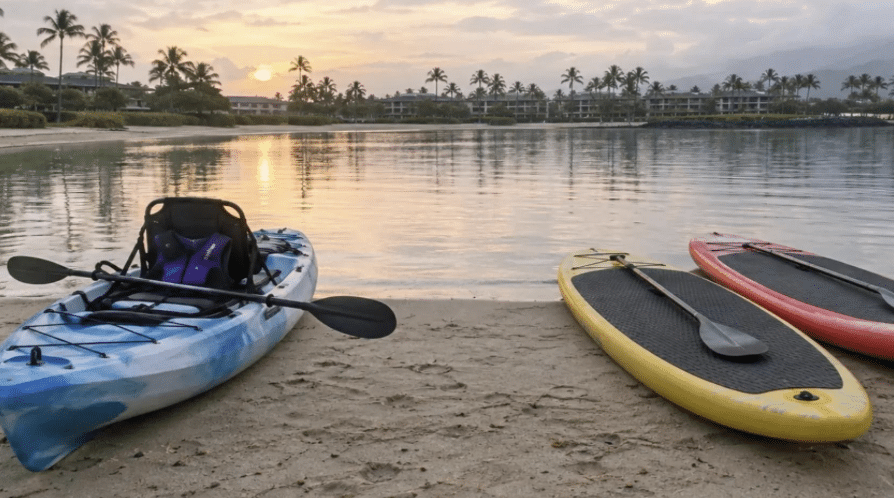
Pick the wrong watercraft, and it can sit in the garage after one summer. In the SUP vs. kayak choice, a kayak is the steadier, drier pick for gear and rough water, while a SUP is the more portable, more playful one.
It is also the question I hear most at the end of my intro classes. Ahead, I compare stability, learning curve, workout, water conditions, surfing, safety, and cost side by side.
If you’re also interested in following the competitive side of the sport, understanding surfing betting odds and lines can add another perspective to watching surf competitions. Then I share the simple test I give students to pick theirs.
SUP vs. Kayak: What Changes When You Get on the Water?
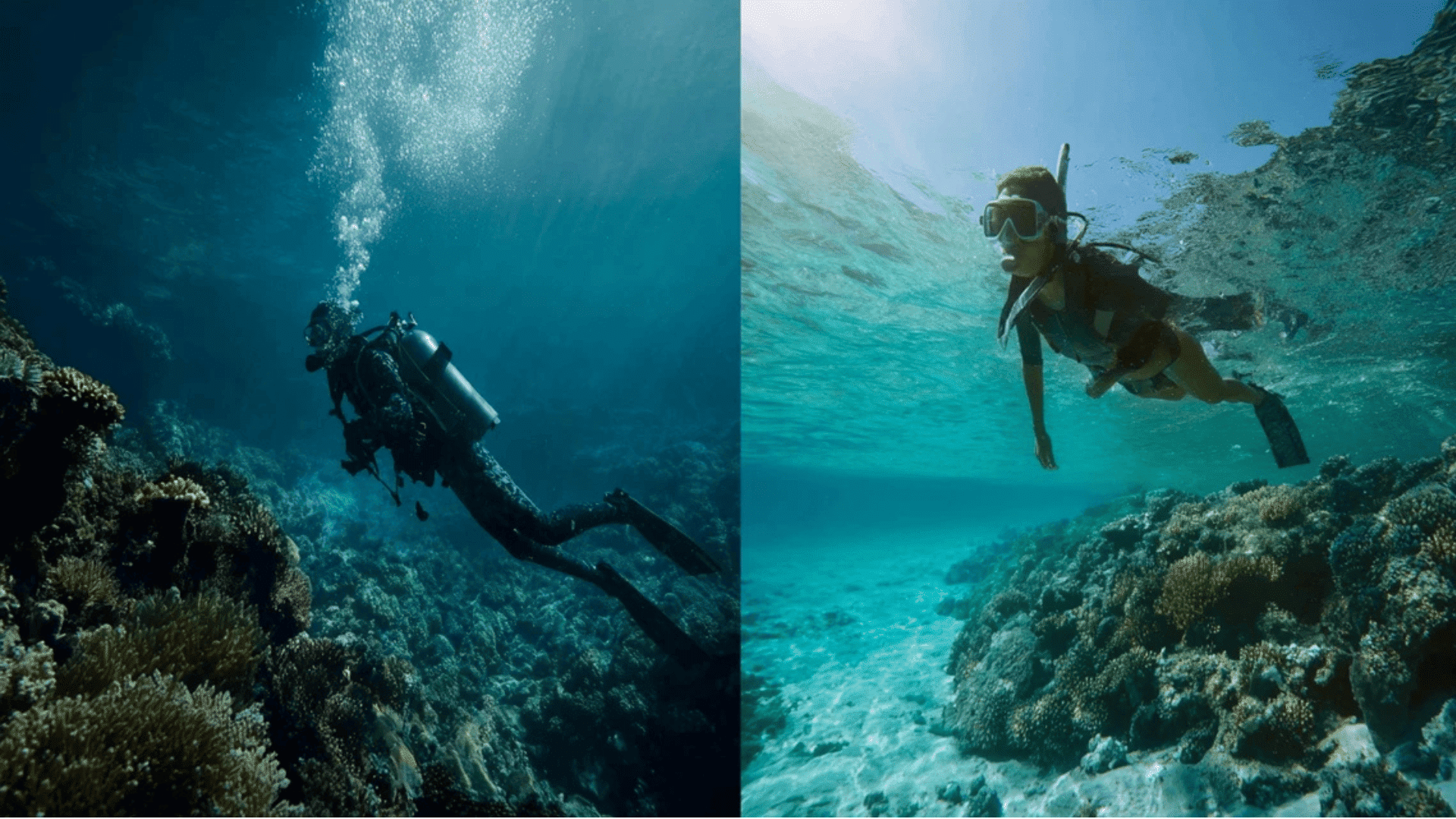
The core difference is position. On a SUP, you stand with a single-blade paddle. In a kayak, you sit low with a double-bladed paddle, which keeps your center of gravity down.
| Feature | SUP | Kayak |
|---|---|---|
| Day One Stability | Needs balance | Steady from the first stroke |
| Speed and Distance | Slower on all-around boards | More miles for the same effort |
| Gear Space | A few deck bungees | Hatches or tank wells; touring kayaks hold the most |
| After a Fall | Easy to climb back on | Sitting inside needs rescue skills |
| Storage and Transport | Inflatables fit a closet or trunk | Hard shells need a rack or garage |
| Surfing | Natural fit | Needs a surf kayak and helmet |
Is Standing on a SUP Harder Than Paddling a Kayak?
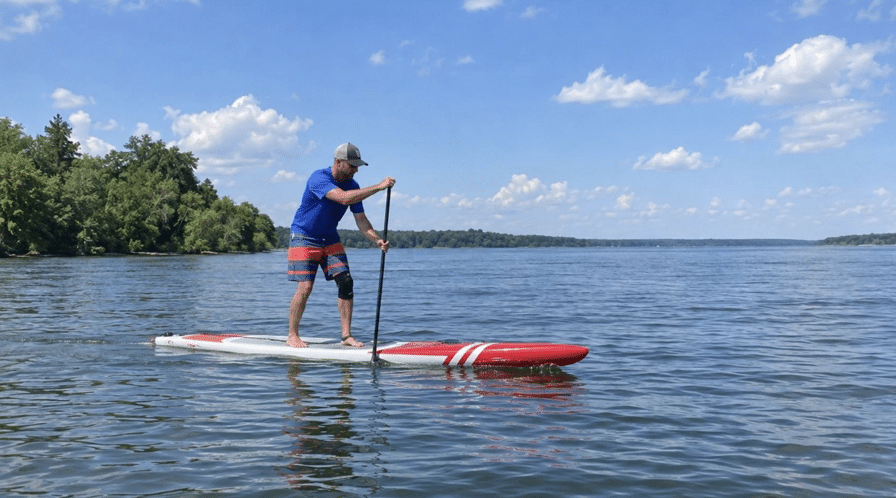
A kayak is easier on day one, since the hull handles your balance. Is paddleboarding harder than kayaking? Only at first. On calm water with a wide board, students who watch the shoreline usually stand for good within a session or two.
The gap flips later. Efficient kayak strokes, edging (tilting the hull to turn), and self-rescue take longer to learn than basic SUP strokes.
My Tip: Start your first board session on your knees. After a few minutes, stand one foot at a time with feet hip-width apart, knees soft, and eyes on the horizon.
The American Canoe Association (ACA) and U.S. Coast Guard (USCG) offer a free Smart Start for Safe Paddling course for either craft.
Which Gives You a Better Workout?
From what I see in my classes, a SUP gives the better balance, core, and leg workout, while a kayak works your shoulders, back, and arms harder. Calorie burn depends more on effort than craft, using values from the 2024 Adult Compendium of Physical Activities.
| Paddling Effort | MET Value | About Calories per Hour (155 lb Paddler) |
|---|---|---|
| Relaxed SUP, 20 to 29 strokes per minute | 3.8 | 265 |
| Moderate kayaking | 5.0 | 350 |
| Steady SUP, 30 to 39 strokes per minute | 5.0 | 350 |
| Hard SUP, 40 to 49 strokes per minute | 9.8 | 690 |
These are my estimates: MET value times weight in kilograms, per hour. A slow, chatty float on a board burns less than a steady kayak session. To check your pace, count strokes for 15 seconds and multiply by four.
How SUPs and Kayaks Perform in Different Water Conditions
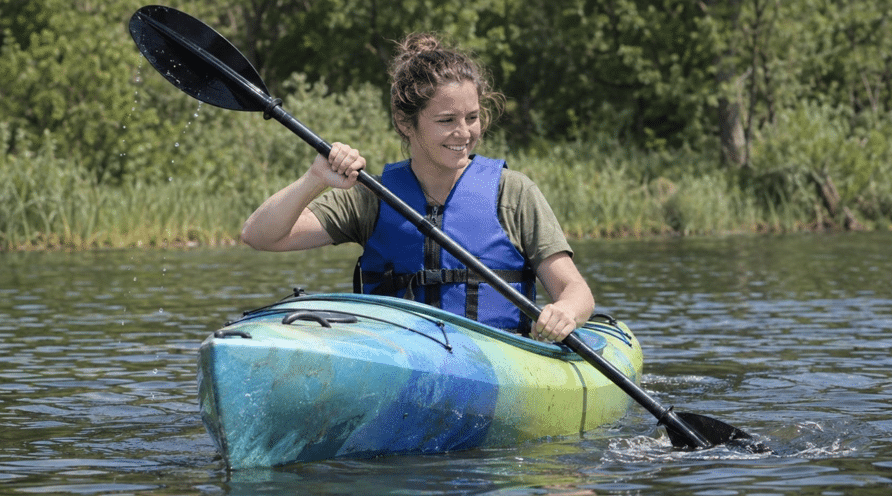
A kayak handles almost every tough condition better. A SUP shines on warm, calm flat water.
Wind and Chop
Standing turns you into a sail. On a SUP, kneel to cut drag, and paddle into the wind first so it carries you home.
My Whitecap Rule: Scattered whitecaps usually mean wind around 7 to 10 knots (Beaufort force 3). Then new paddlers go in kayaks, or boards stay near shore. When whitecaps cover the water, I stay off it.
Rivers and Moving Water
A skilled whitewater kayaker can roll back upright after a capsize. On a board, the Oregon State Marine Board warns that an ankle leash can snag on debris and hold you underwater, so use a quick-release leash at your waist or on your life jacket.
Cold Water and Long Trips
Almost every fall off a SUP means full immersion, while a sit-inside kayak keeps you driest. Dress for the water temperature, not the air. For long coastal days, touring kayaks track straight and carry gear in sealed hatches.
Which One Keeps You Safer When Things Go Wrong?
Neither is safer by default, and habits decide most outcomes. Outside swimming, surfing, and bathing areas, the USCG has treated paddleboards as vessels since 2008, so basic federal rules cover both.
The USCG 2024 Recreational Boating Statistics report found 87% of drowning victims with known life jacket use were not wearing one. It also noted a rise in paddleboard deaths.
My pre-launch check for every student:
- Wear a USCG-approved life jacket. Federal law requires one on board for each paddler, and some states require wearing it. Children under 13 must wear one while underway under federal rules unless your state sets its own age.
- Clip on a whistle to meet the federal sound-producing device rule.
- Wear your SUP leash, or practice a kayak wet exit in shallow water.
- Check the wind forecast, carry a white light if you’ll be out between sunset and sunrise or in fog, and tell someone your route.
What Does It Really Cost to Get Started?
At the entry level, an inflatable SUP usually costs less, since the paddle, pump, and leash often come in one package. A kayak’s sticker price rarely covers the paddle or a rack.
| Cost Item | Inflatable SUP | Recreational Kayak |
|---|---|---|
| Starting Price | Roughly $300 to $800 for a package | Roughly $200 to $1,200 or more for the boat |
| Paddle | Usually included | Often sold separately |
| Transport | Fits in a car trunk | Hard shells need a roof rack or truck |
Prices shift with sales and seasons, and either way, budget for a life jacket.
Three Buying Mistakes I See Every Season
- First, a narrow touring board bought because it looks fast, which leaves beginners swimming more than paddling.
- Second, a hard shell kayak with no rack to carry it, so it stays in the garage.
- Third, a sit-inside kayak for a family that wants to swim, when a sit-on-top lets kids hop on and off.
Which Should You Choose? My Three Question Test
I ask every student three questions. Where will it live? What water will you paddle most weekends? Do you want to sit and cover miles, or stand and play?
A closet, warm calm water, and a wish to stand, swim, or surf point to a SUP. A garage, windy or cold water, and long days with gear or fishing tackle point to a kayak.
My Tip: Rent a SUP one weekend and a kayak the next on the same water. Notice how your back and feet feel after two hours, not twenty minutes.
Frequently Asked Questions
Can You Turn a Paddleboard Into a Kayak?
Yes. Many inflatable boards have D rings for a clip-in seat, and some include a convertible double-blade paddle. A converted board still tracks worse than a real kayak, so it suits calm water only.
Do You Have to Register a SUP or Kayak?
It depends on your state. The Pennsylvania Fish and Boat Commission (PFBC), for example, requires both to carry a registration or a launch permit at PFBC lakes and access areas, plus state park and state forest access areas. Launch permits from PFBC or the Department of Conservation and Natural Resources (DCNR) State Parks both count, and you never need a registration and a permit together.
Can You Bring Your Dog Paddling?
You can take a dog on either craft. A paddleboard gives a dog more open deck to lie down, while a sit on top kayak keeps your weight lower. Fit your dog with a canine life jacket, practice on land first, and keep early trips short and calm.