
There’s a frozen lake, a sail catching wind, and a boat gliding across the ice with no water in sight. That’s ice sailing, also known as iceboating, a winter sport where wind alone powers a specially built boat over frozen ground.
The metal runners replace the usual hull, allowing for minimal friction and thus making these vessels exceed the speed of the wind, making them faster than any sailboat in open water.
It has a rich history, real gear, a race circuit, and enough space for a newbie to join in.
What is Ice Sailing and How Does it Work?
Normal sailing depends on water resisting the hull of the ship to balance it and propel it forward.
In ice sailing, the water is replaced by an ice sheet. Steel runners replace the hull, minimizing resistance to nearly zero.
The wind fills the sail and lifts it. It is this force that propels the whole craft. The runners then convert the force into speed. That is how the sailboat moves forward.
|
What is Apparent Wind? Apparent wind is the reason iceboats can outrun the breeze that’s pushing them. As the boat picks up speed, its own motion creates a headwind that combines with the natural wind blowing across the ice. Because the runners on smooth ice create so little drag, the boat keeps accelerating into that combined wind instead of being slowed by it. This is the same principle that lets a modern iceboat travel several times faster than the wind that’s driving it, something that would never happen on water. |
A Brief History of Ice Sailing
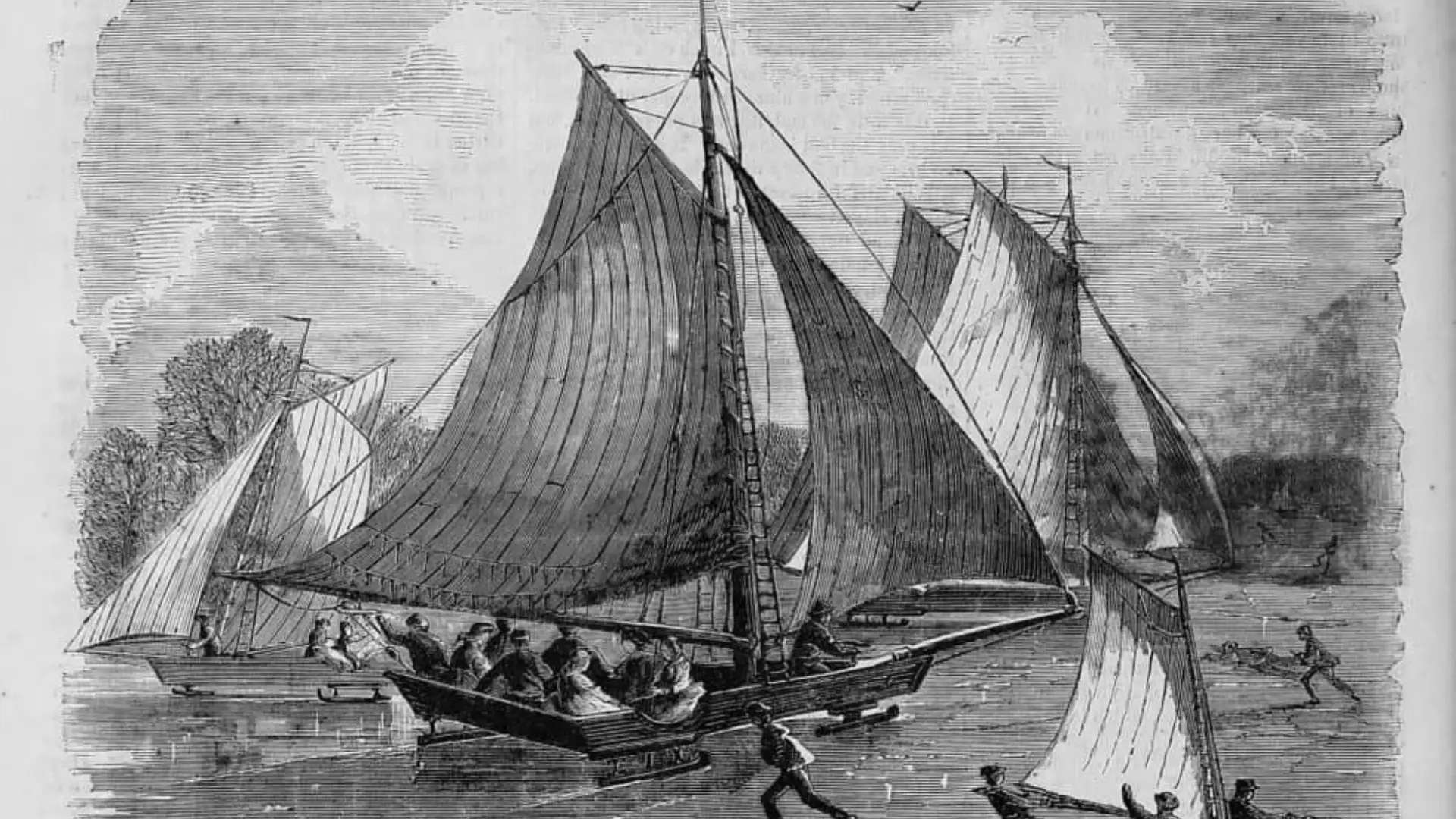
The concept of ice sailing was invented sometime in the 17th century when sailors sailing on frozen canals realized that a sail with an appropriate framework could be used to move as effectively on ice as on water.
This method was developed because in winter, it was hard to use canal channels, and the invention helped with the transportation of goods in wintertime.
The technique was brought to America from Europe and quickly gained popularity among wealthy people living near the lakes.
With the beginning of competitions on ice boats and the appearance of clubs that included the members who were fond of ice yachting, this kind of sport became more popular.
In the 20th century, racing associations appeared, and with the introduction of the simple, easily built DN class, regular citizens became interested in ice sailing.
The sport gained wider attention after the Detroit News sponsored a major iceboat-building contest in the 1930s, which encouraged more people to construct and race their own DN-class iceboats.
How Iceboats are Constructed
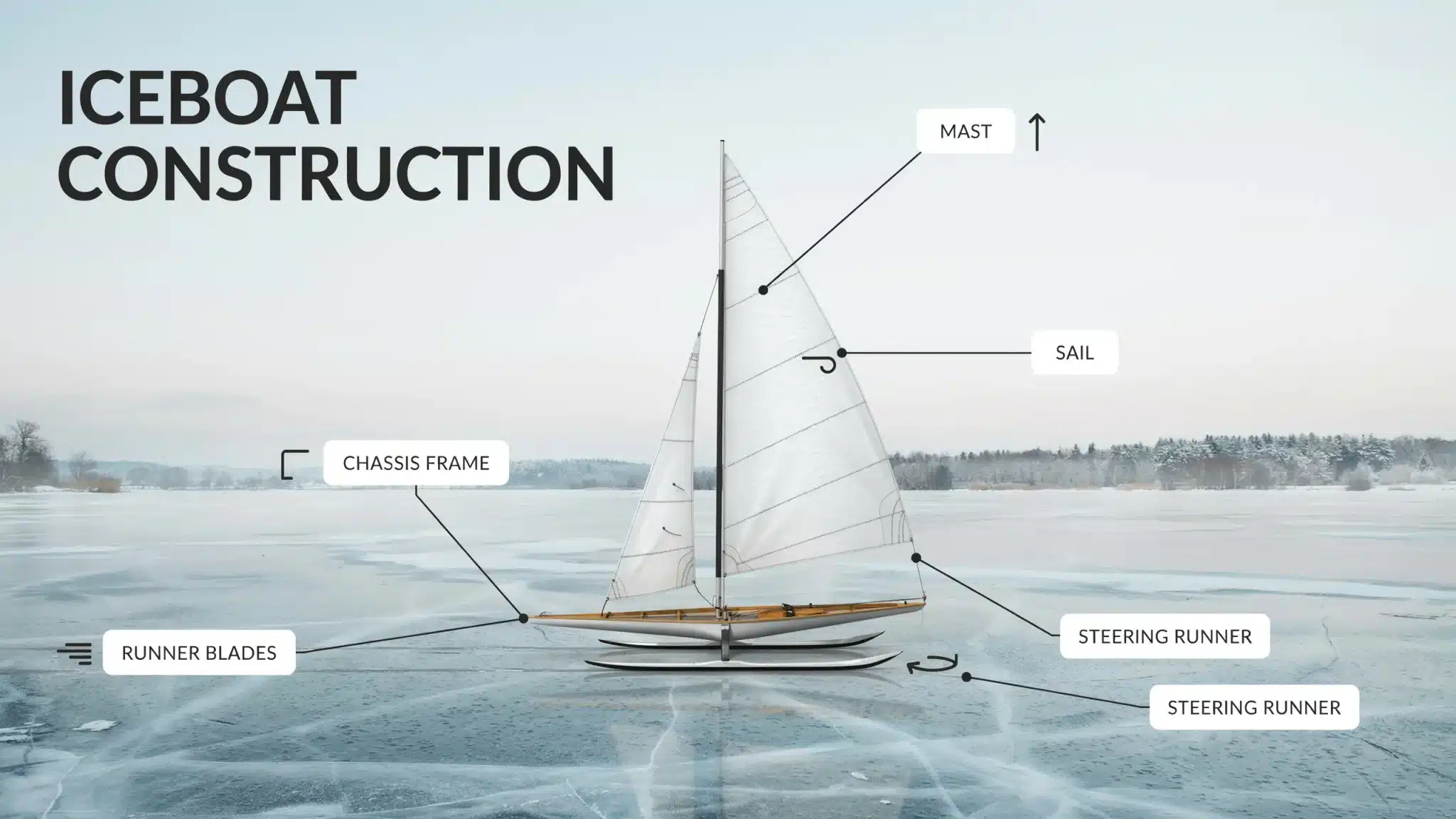
An iceboat may seem uncomplicated on the surface, but each component is there for a reason, and much of it overlaps with sailboat rigging basics used on the water.
Removing the sail and the framework leaves you with a structure completely designed to move fast.
| Part | Purpose |
|---|---|
| Runner blades | Reduce friction and allow speed |
| Chassis/frame (backbone) | Supports the sailor and equipment |
| Runner Plank | Crosspiece connecting the two side runners for balance |
| Mast | Holds the sail |
| Sail | Captures wind power |
| Steering runner | Controls direction, operated by a tiller |
Small modifications made to one component affect the handling of an iceboat in many ways.
Long runners allow the boat to stay on track when moving fast, while a short frame makes it more nimble, though harder to handle in windy conditions.
How to Learn Ice Sailing as a Beginner
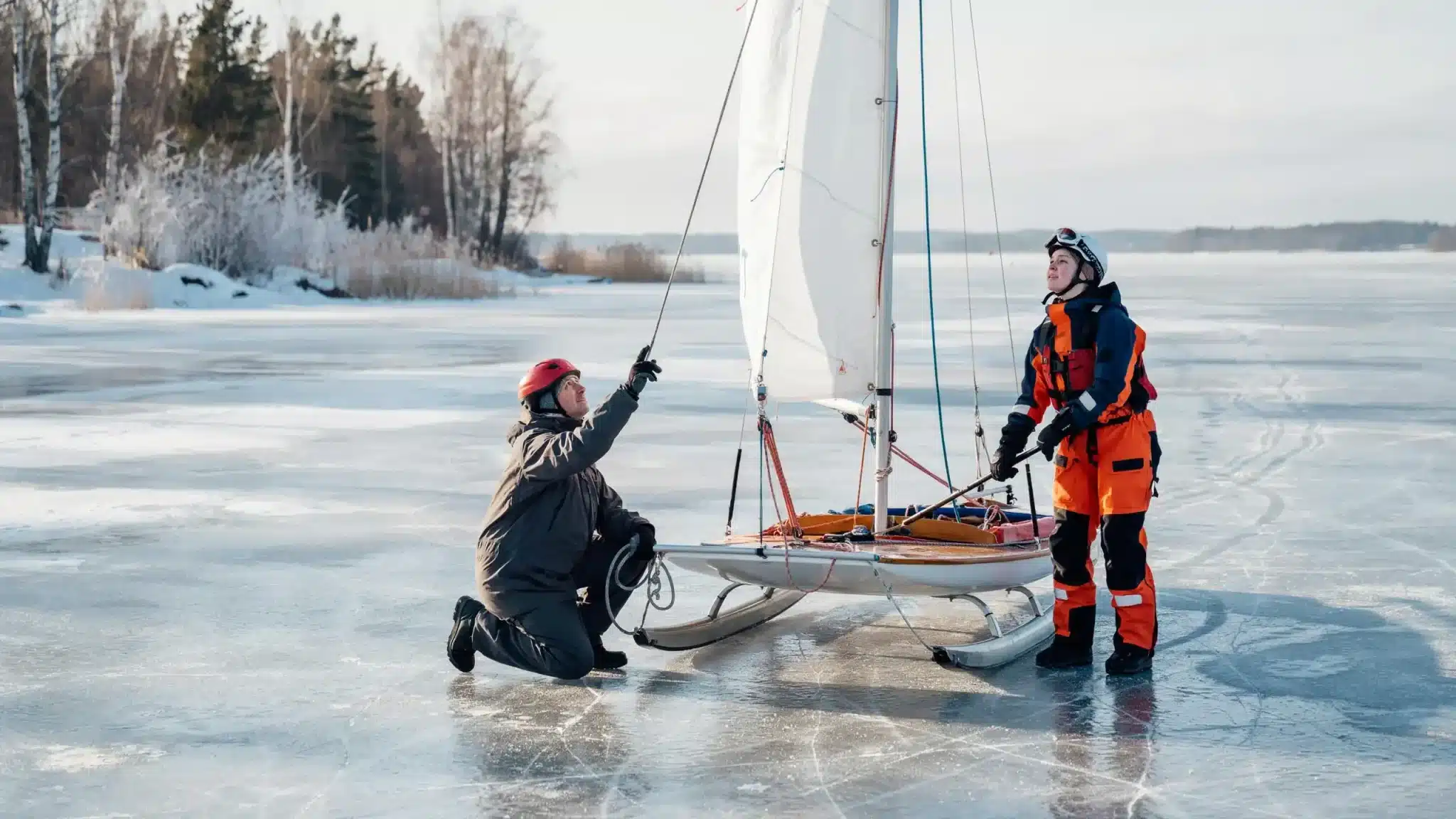
It does not involve owning a boat or being friends with people within this activity. The easiest way for beginners is to start from clubs, borrowed equipment, and a few blunders on the ice.
1. Begin With Ice Sailing Clubs
Ice sailing clubs are probably the quickest way to get involved in this sport. Virtually all clubs have training days where beginners learn the activity alongside sailors with years of experience reading winds and ice.
Besides, many clubs offer the use of their iceboats for rent so you can try it out.
In the U.S. The Four Lakes Ice Yacht Club in Madison, Wisconsin, is one of the oldest and most active, and it’s a good reference point if you’re looking for what a beginner-friendly club program looks like.
2. Master The Basics First
Understanding wind direction gives you an edge right from the beginning because wind is what ice sailing is all about; the same rules apply as in conventional sailing.
Sailing experience comes in handy, but it’s not necessary – lots of people start with ice sailing and succeed without any problem.
3. Go For An Ice Boat For Beginners
When you get the basics sorted, go for the baby steps. Try smaller ice boats that are easier to control and don’t get punishing when you miss your turn.
Most clubs recommend starting with a DN class ice boat, since it’s inexpensive relative to other classes and simple enough to rig and de-rig on your own before you’re fully comfortable on the ice.
Practice sessions organized by local ice sailing clubs focus specifically on this stage, and attending events will allow you to train in an environment where everyone understands your level of experience.
Types of Iceboats Used for Ice Sailing
All iceboats are not created equal. The size of your boat, the speed you need to attain, and your skill level will determine which category you belong in.
1. DN Iceboat
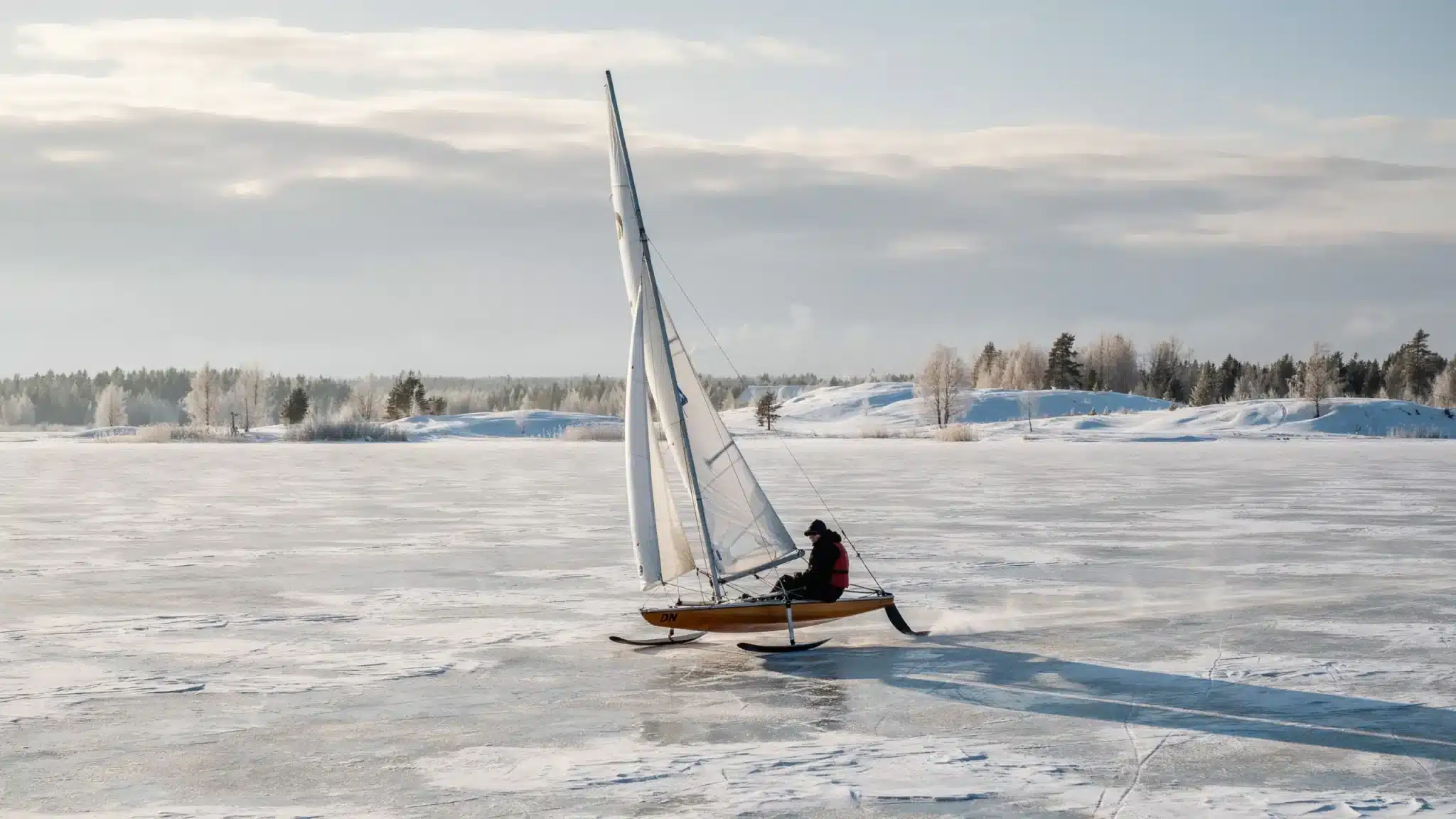
The DN iceboat is the staple of ice sailing because it is a compact craft that is easily transported to the lake and set up without too much trouble.
However, the DN boat is more than just an easy-going iceboat for beginners; even some seasoned racers prefer to sail DN iceboats in competitive events due to their sturdy nature.
2. Skeeter Iceboat
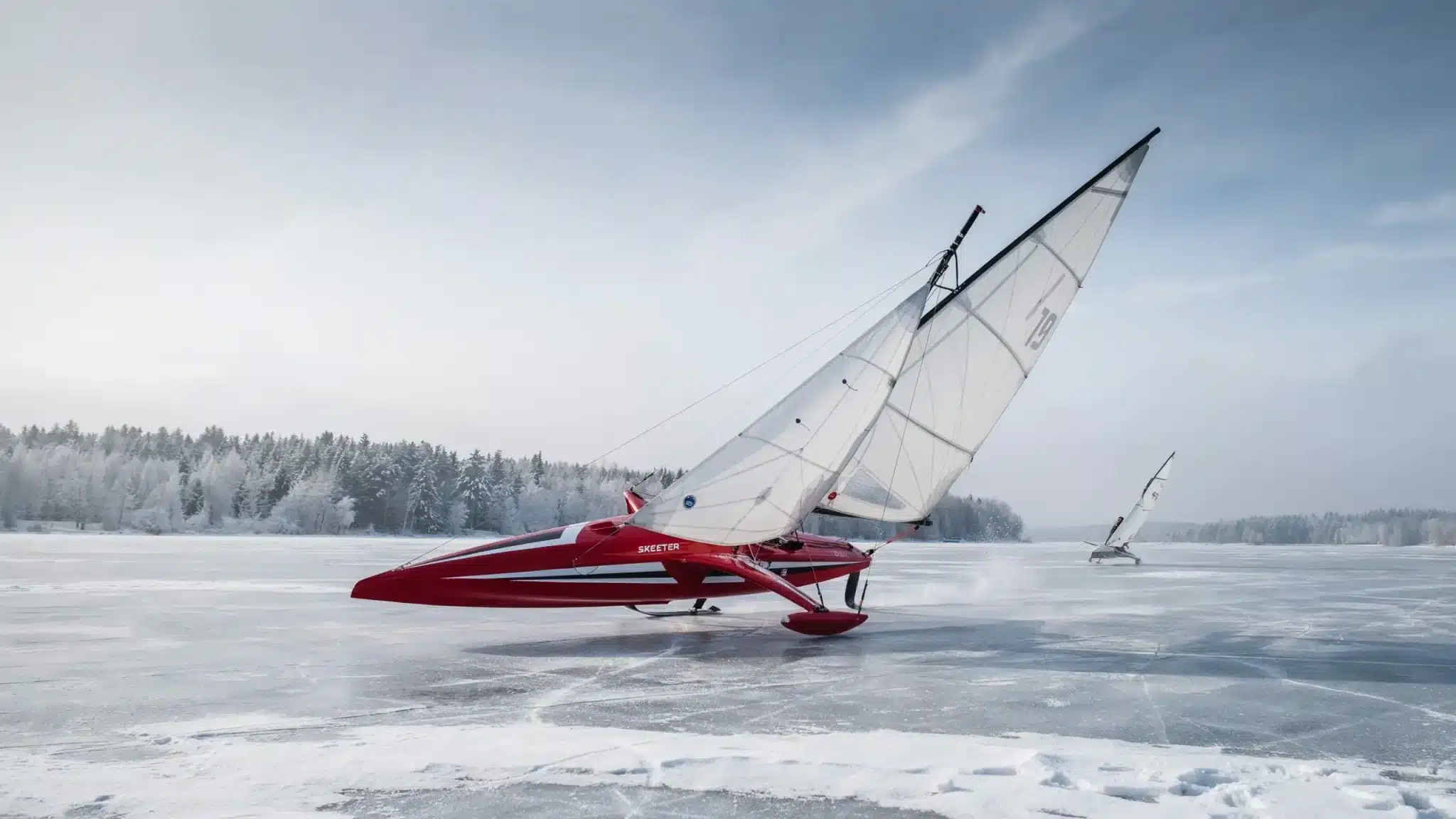
The Skeeter is a bigger racing boat specifically designed with speed and agility as its primary focus.
However, the power that these boats generate is not easy to handle. The ability to sail them safely requires prior experience sailing on the ice with smaller boats such as the DN.
3. Classic Ice Boats
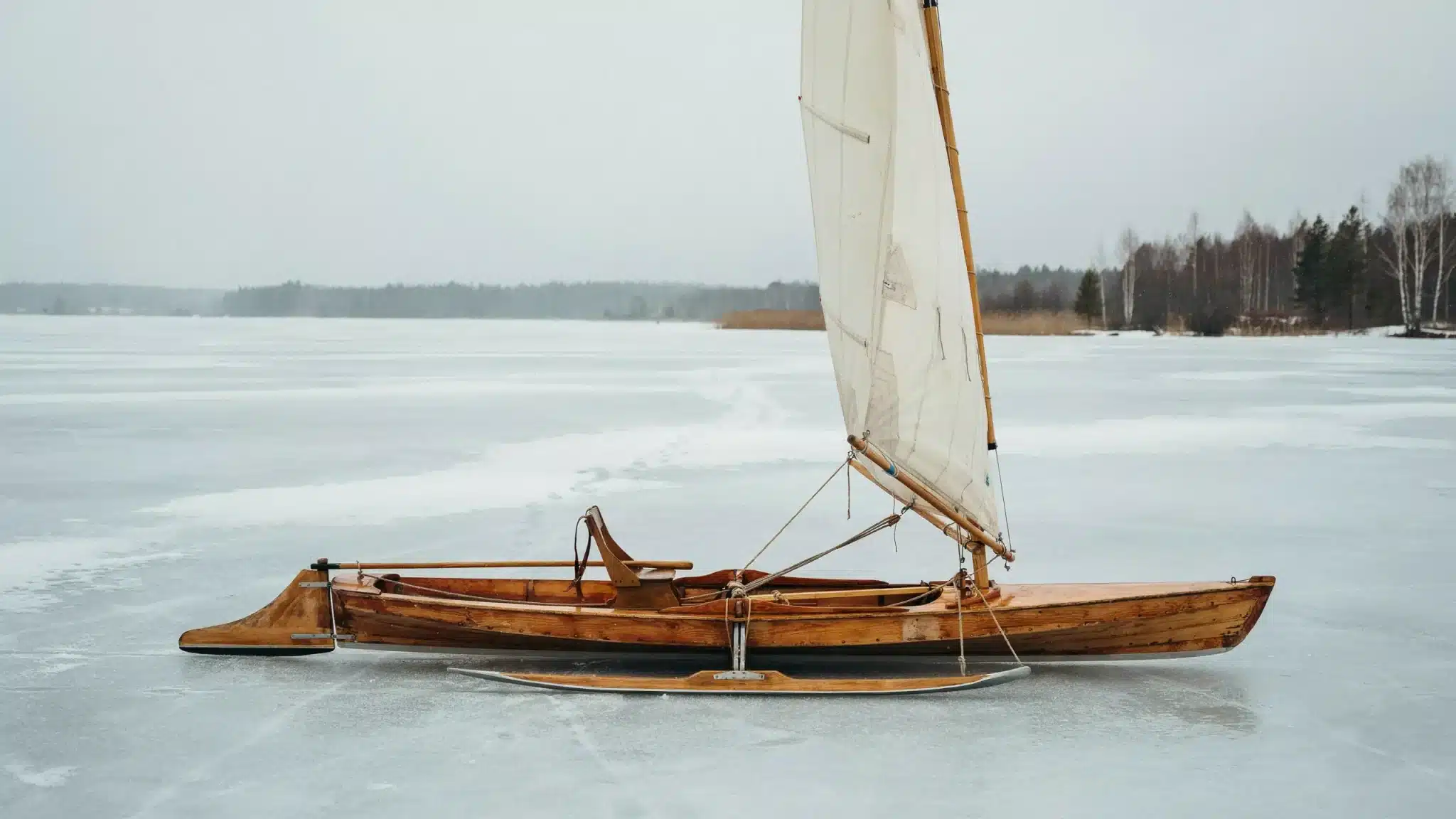
Classic ice boats represent the true history of the sport. It is about the larger and usually older models which have been constructed in the past decades when ice sailing was still a developing sport and used mostly wooden materials.
Classical models were developed for cruising long distances of ice, but many of them are still in use today and loved by sailors who are interested in classical style.
4. Other Classes of Ice Boats
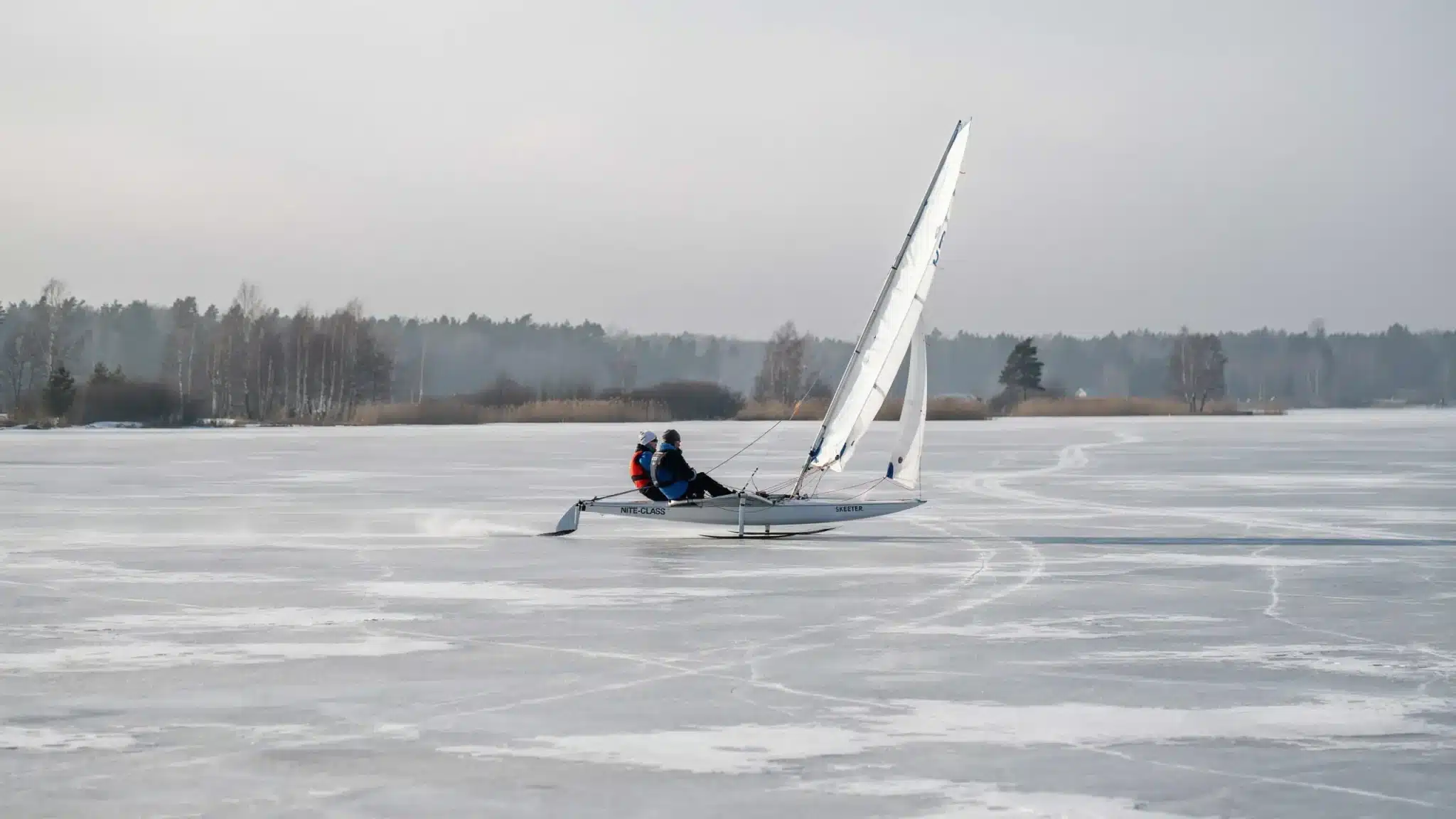
In addition to those three major classes, there are a couple of classes which should be mentioned separately.
The Nite and the Renegade are two such classes, and they are somewhere between DN and Skeeter in terms of construction complexity and performance.
There are also some additional classes which are international and developed according to regional ice sailing traditions.
How Fast Can Ice Sailing Go?
Speed is what makes ice sailing special. Ice sailboats are considered some of the quickest wind-powered craft in the world because of their relationship to friction, specifically its absence.
While any hull moving through water must fight against resistance, runners on ice have very little effect.
Therefore, an ice boat can move much faster than a regular sailboat, even fast enough to outpace the wind blowing it forward, which would never happen in open water.
| Activity | Typical Speed |
|---|---|
| Regular sailboat | Moderate speeds |
| Iceboat | Roughly 60-80 mph in strong wind |
| Racing iceboat | Radar-measured up to 84 mph; historical record of 143 mph (1938) |
Exact speeds depend on circumstances, but the trend is the same: ice is quicker than water.
Factors Affecting the Speed of an Iceboat
The speed of an ice boat is not solely dependent on the presence of wind. Several factors determine the actual speed of an ice boat.
- Wind velocity: Strong, steady wind provides the sail with more power, increasing the speed of the sailboat.
- Ice quality: High-quality ice with low resistance increases the speed of a sailboat, whereas poor-quality ice slows the boat considerably.
- Design of the boat: The hull design, the weight of the sailboat, and runner configuration determine the speed.
- Sail configuration: The efficiency of a well-configured sail helps generate speed, which otherwise could be wasted with a poorly configured sail.
- Skill of the sailor: Experienced sailors can harness the power of wind and ice to increase the speed of the sailboat.
None of these factors operate in isolation. Speed is achieved through the combination of favorable wind, ice, equipment, and skill.
Gear Required for Ice Sailing
The sport seems rather easy from afar, but when you look at all the equipment that is there to ensure you do not freeze at 60mph speeds, things become a little clearer.
| Equipment | Purpose |
|---|---|
| Iceboat | Frame and runners for gliding across ice |
| Sail | Catches wind for propulsion |
| Steering system | Controls direction |
| Protective gear | Cushions falls and hard landings |
| Safety equipment | Ice picks, throw ropes, emergency prep |
| Insulated layers | Traps body heat |
| Waterproof shell | Blocks wind and spray |
| Gloves | Keeps hands functional in the cold |
| Helmet | Protects against high-speed impact |
| Eye protection | Shields from glare and ice chips |
| Warm boots | Insulation and grip on ice |
The wind chill effect is not something you want to overlook while ice sailing, as once you start moving fast, the wind will chill you off even further than what the thermometer says.
The same cold weather layering tips that keep winter kayakers warm apply directly to layering under an ice sailing suit.
The clothing is definitely a lot different from what you would wear during traditional summer sailing, since you are battling the cold winds in this case; readiness is very important.
Basic Ice Sailing Techniques
After you have made your way onto the ice, a few key moves will allow you to glide gracefully across the surface instead of skidding and sliding.
These are some of the first things that you should learn to do once you start sailing on the ice.
- Sailing from a Standstill: Position the boat into the wind to get moving, and increase speed gradually rather than tightening the sail too fast.
- Sailing into the Wind: Side force moves the iceboat forward, and managing sail position keeps that motion going. Balance matters here since the wind can shift it suddenly.
- Steering into the Wind: Trickier than steering away from it. Use careful, controlled movement rather than a rapid rudder turn, and reduce speed before turning in.
- Tacking: Changing direction so the bow passes through the wind. A core skill in both traditional and ice sailing.
- Jibing: The vessel moves away from the wind instead of through it, requiring close sail control as they shift sides.
- Parking and Securing: Lower the sails first so they don’t catch wind, check everything’s secured, and confirm ice conditions before leaving the boat.
Mastering these moves gives you a solid base for ice sailing. Practice each one on calm, stable ice to build confidence on the runners.
Is Ice Sailing Safe?
Ice sailing is a relatively safe sport to undertake if you exercise due diligence in assessing various elements related to it.
- Assess the State of Ice Before You Sail: Factors that include ice thickness, changing weather conditions, and local regulations all influence the safety of sailing. Clear, solid ice should generally be at least 5 to 7 inches (13 to 18 cm) thick for iceboat sailing.
- Ensure You Have the Right Safety Equipment: Wearing the right gear could help save your life in case something unforeseen happens.
- Be Careful of the Following Ice Conditions: Thin ice, cracks on the ice surface, and high wind speeds should be avoided.
Treat the ice with respect, dress appropriately, and your ice sailing experience will not become a tragedy to remember.
Best Locations for Ice Sailing
The frozen lakes that provide ice sailing conditions and feature constant winds are the main attractions for professional ice sailors, and several places across the globe can offer such conditions regularly.
- Winnebago Lake, Wisconsin (USA): One of the most popular ice sailing destinations in America due to its size and guaranteed presence of ice on the lake.
- Green Bay, Wisconsin (USA): The place that was historically associated with iceboat races and clubs, featuring a strong community of beginners who are willing to learn.
- Hudson River, New York (USA): The location that is connected with an ice sailing tradition that is more than a hundred years old.
- Gulf of Bothnia, Sweden/Finland: Wide areas of ice-covered water that attract many ice sailors from Europe.
- Lake Peipus, Estonia/Russia: One of the biggest lakes for ice sailing in Europe used for both competitions and recreational activities.
- IJsselmeer, Netherlands: A famous destination for Dutch ice sailors who have been practicing their sport for many generations.
From the American Midwest to the frozen lakes of Northern Europe, ice sailing thrives wherever cold winters meet open, windy water.
Ice Sailing vs Traditional Sailing
While both types of activities depend on the power of the wind, everything else changes when it comes to the surface beneath the vessel.
| Feature | Ice Sailing | Traditional Sailing |
|---|---|---|
| Surface | Ice | Water |
| Season | Winter | Mostly warmer months |
| Boat design | Iceboat runners | Floating hull |
| Speed | Much faster potential | Slower |
| Environment | Cold conditions | Open water |
Fundamentally, the necessary skills apply to both ice sailing and traditional sailing activities, but the difference in the speed and environment sets ice sailing apart.
Conclusion
Such an unusual combination of traditional sports and extreme sports is what ice sailing is all about.
On one hand, there are frozen canals from the time of our great-grandparents, while on the other, boats are speeding at the same speed as cars on highways.
But I would like to emphasize that this sport is surprisingly easy to access. You do not need your own equipment or previous sailing experience to try your hand at it.
With the help of a local club, a borrowed boat, and a little bit of patience, you can go quite far.
Frequently Asked Questions
Is Ice Sailing the Same as Iceboating?
Yes, ice sailing and iceboating refer to the same sport where specially designed boats travel over frozen surfaces instead of water.
How Fast Can an Iceboat Go?
Iceboats can reach very high speeds because ice creates less resistance than water, with racing boats often exceeding 60 mph.
Can Beginners Try Ice Sailing?
Yes, beginners can learn ice sailing through local iceboat clubs, training sessions, and smaller beginner-friendly iceboats.
Where is Ice Sailing Popular?
Ice sailing is popular in colder regions of the United States, including Michigan, Minnesota, Wisconsin, and New England.