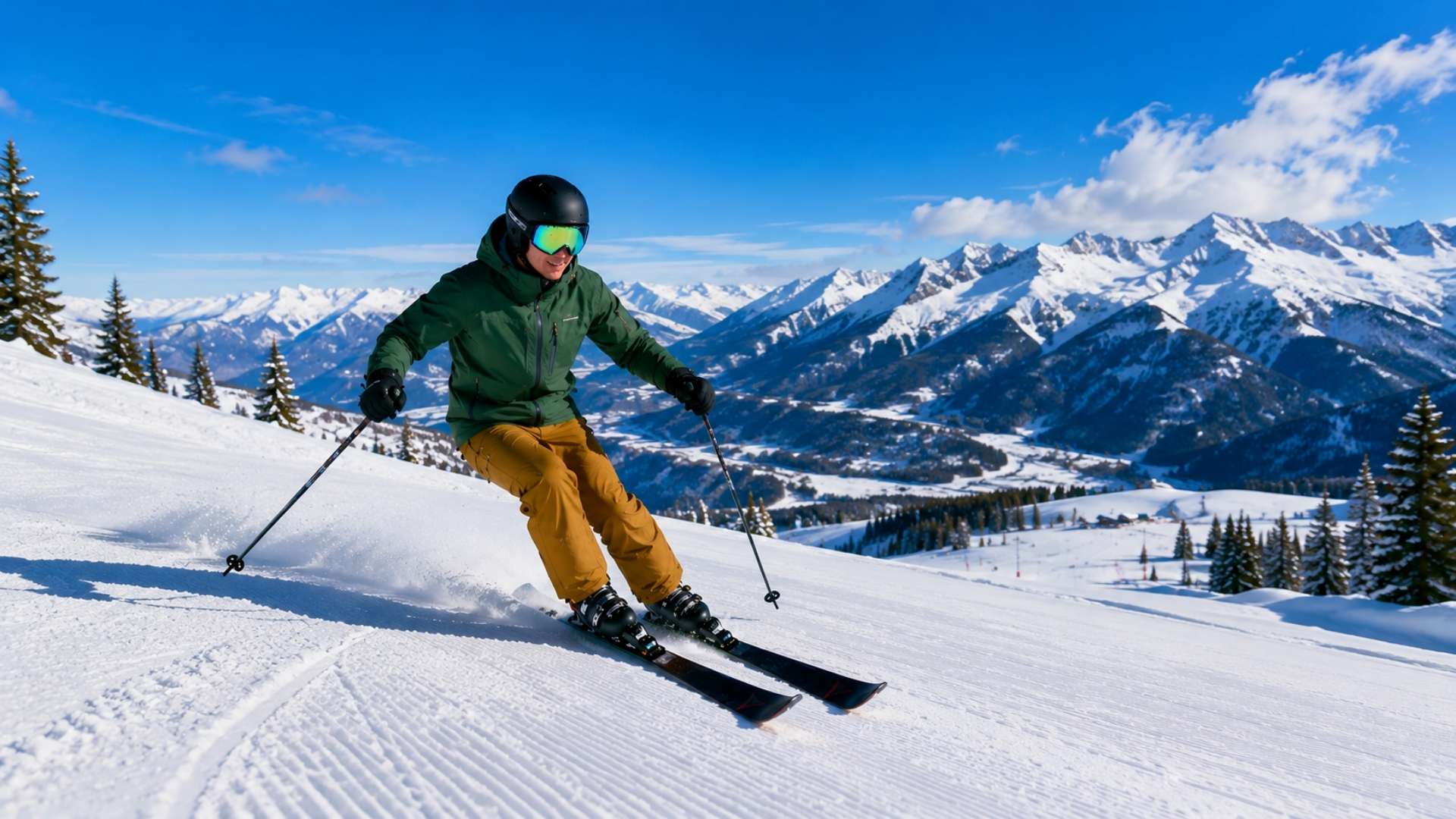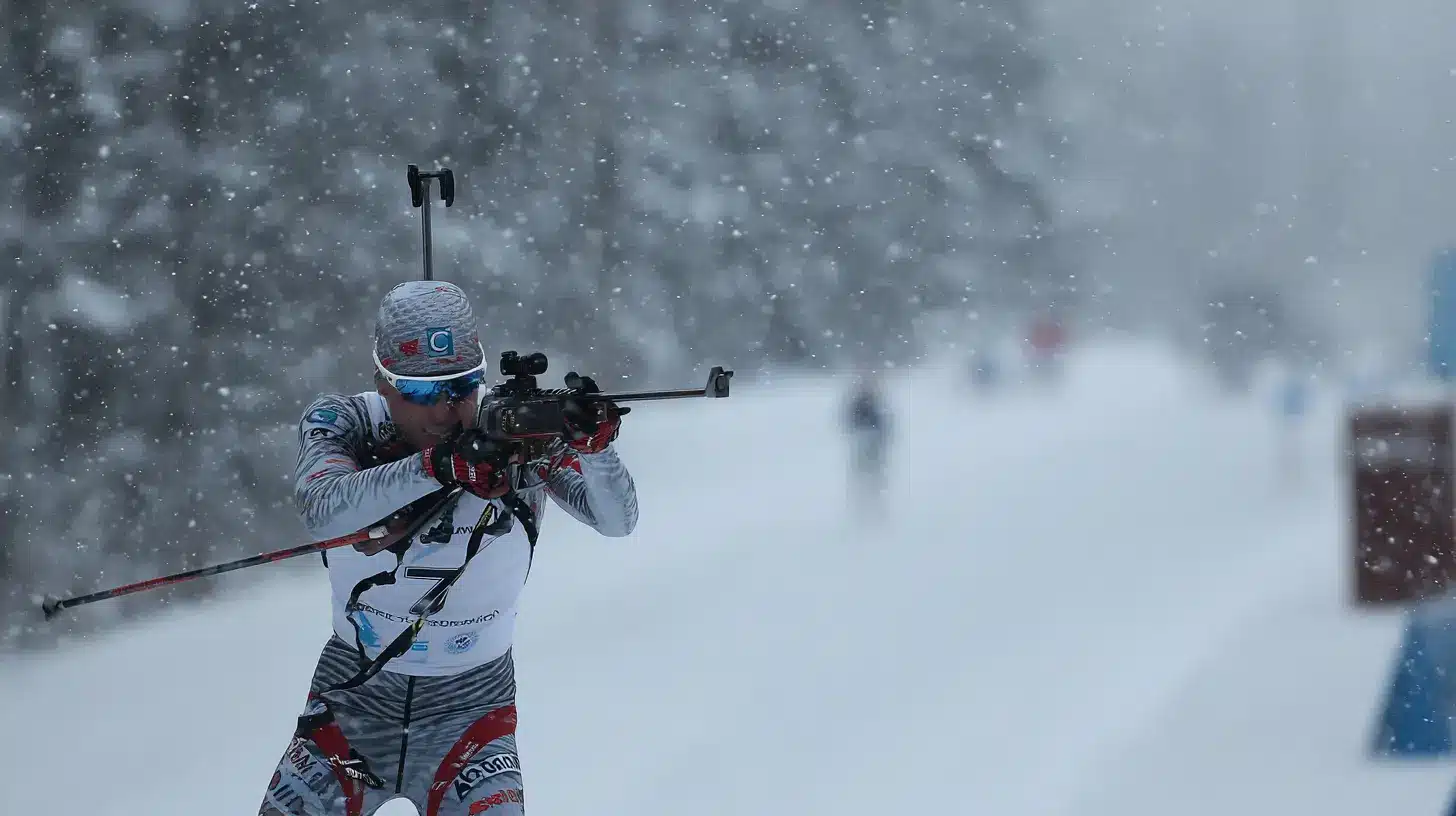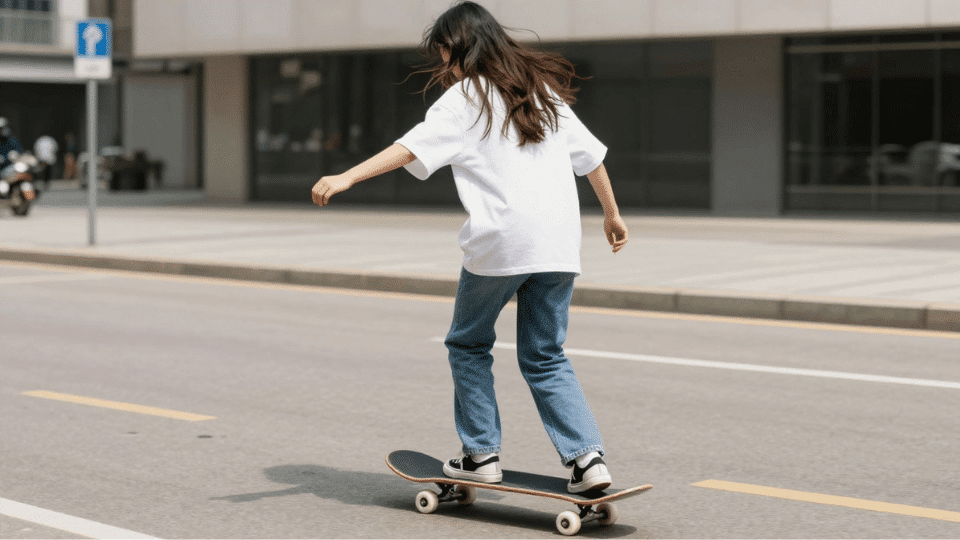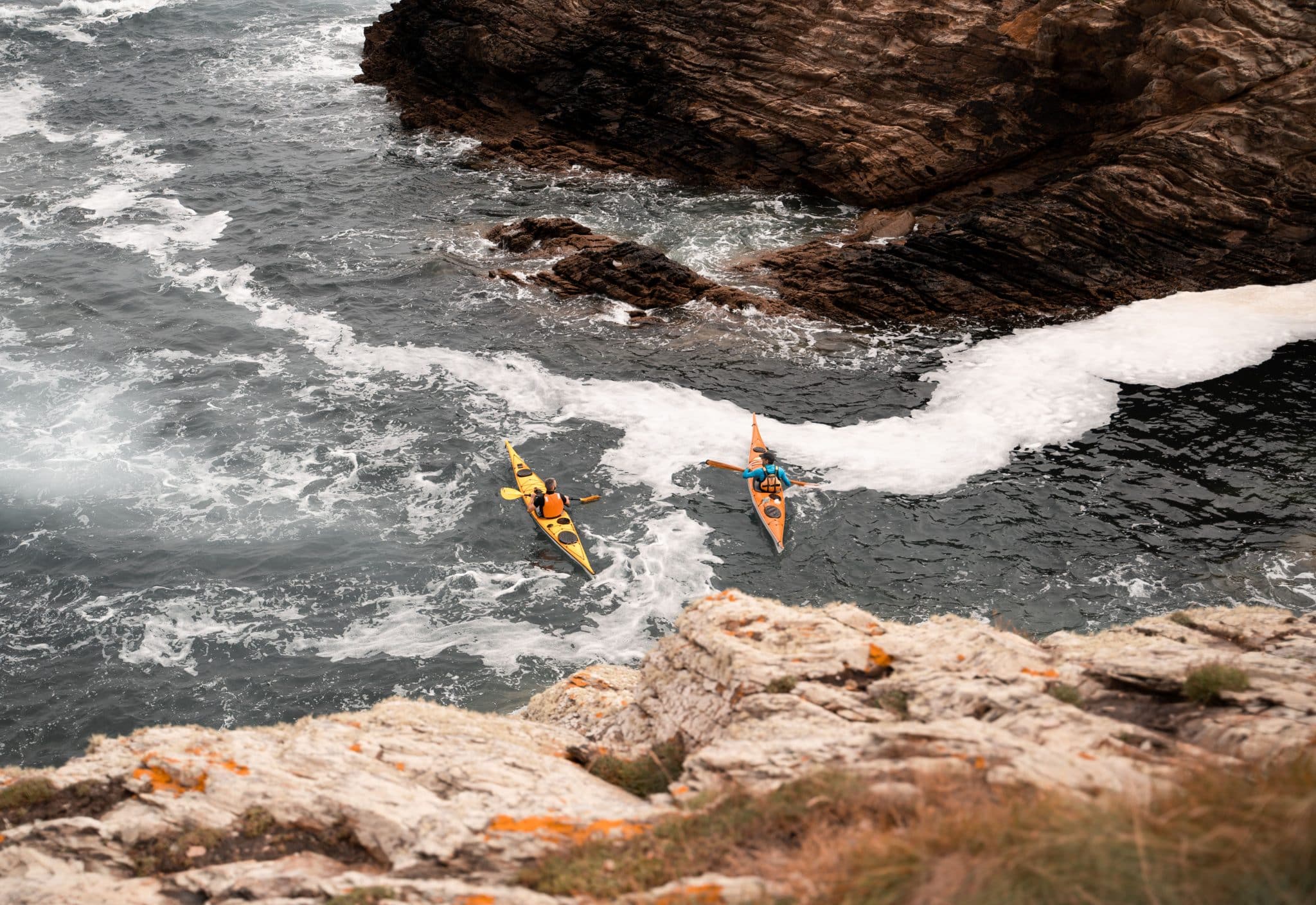
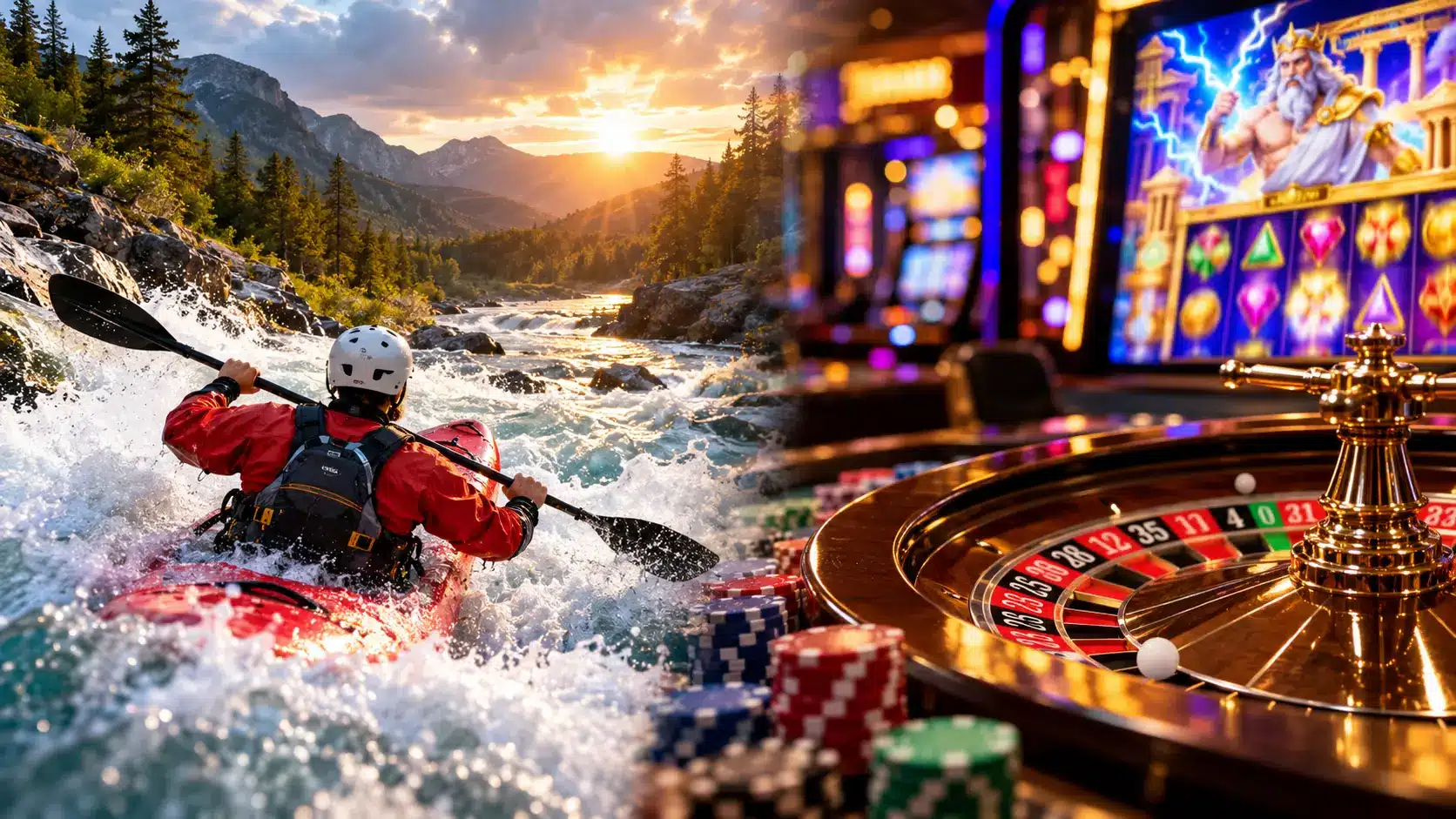
A kayak drops into white water and, for a few seconds, the paddler cannot see exactly what comes after the bend. A roulette ball circles the wheel and nobody knows where it will stop. These experiences belong to different worlds. One involves cold water, physical effort and a very good reason to wear a helmet. The other happens around a wheel or on a screen. Yet both use something the human brain finds unusually interesting: uncertainty.
Not knowing can be uncomfortable. It can also be fun.
Psychologists have long studied how uncertainty changes attention and decision-making. Research on reward processing shows that decisions are shaped not only by a possible reward, but also by uncertainty and the information we might gain from what happens next. The brain does not simply ask, “What will I get?” It is also interested in, “What happens now?”
Why the River Bend Is Exciting
Outdoor adventure gives uncertainty a physical form. A paddler may know the river classification, inspect a rapid and study the route. Still, water moves. Conditions change. The exact experience cannot be scripted.
That unpredictability can sharpen concentration. Research into “flow” in adventure recreation describes deep absorption where attention narrows and people feel intensely engaged. A 2020 systematic review covering kayaking, climbing, surfing and skydiving found flow to be an important part of adventure recreation. Interestingly, participants also emphasized controlling and reducing risk.
That matters. The experienced kayaker is generally not trying to become a passenger in chaos. Training, route reading, equipment, weather knowledge and judgment are all attempts to make uncertainty manageable.
A 2023 study of 199 experienced adventure participants made the point clearer. Risk-seeking was not supported as a central motivation. Participants placed more importance on mastery, connection with the activity and trust in their skills.
So the thrill is not necessarily “I might lose control.” It can be closer to: “I do not know exactly what is coming, but I have prepared myself to respond.”
Uncertainty Without the Paddle
Casino games use uncertainty differently. Consider roulette. The UK Gambling Commission gives roulette as a straightforward example of a game whose outcome is determined entirely by chance. No amount of confidence, concentration or dramatic staring at number 17 can make the ball obey.
Players still decide whether to participate, how much to stake and when to stop. But those choices should not be confused with controlling an individual spin.
The same distinction applies to chance-based digital games. BobCasino, for example, lists Gates Of Olympus 1000 among its games. The slot uses tumbling symbols and randomly appearing multipliers, according to developer Pragmatic Play. The presentation can be energetic and interactive, but uncertainty is built into the mechanics rather than conquered through physical skill.
This is where rapids and reels separate sharply.
A kayaker can improve an eddy turn. A climber can improve foot placement. A mountain biker can learn better braking technique. Practice changes their ability to handle the environment. In roulette, practicing spins does not train the ball. Previous results do not give a player control over the next one.
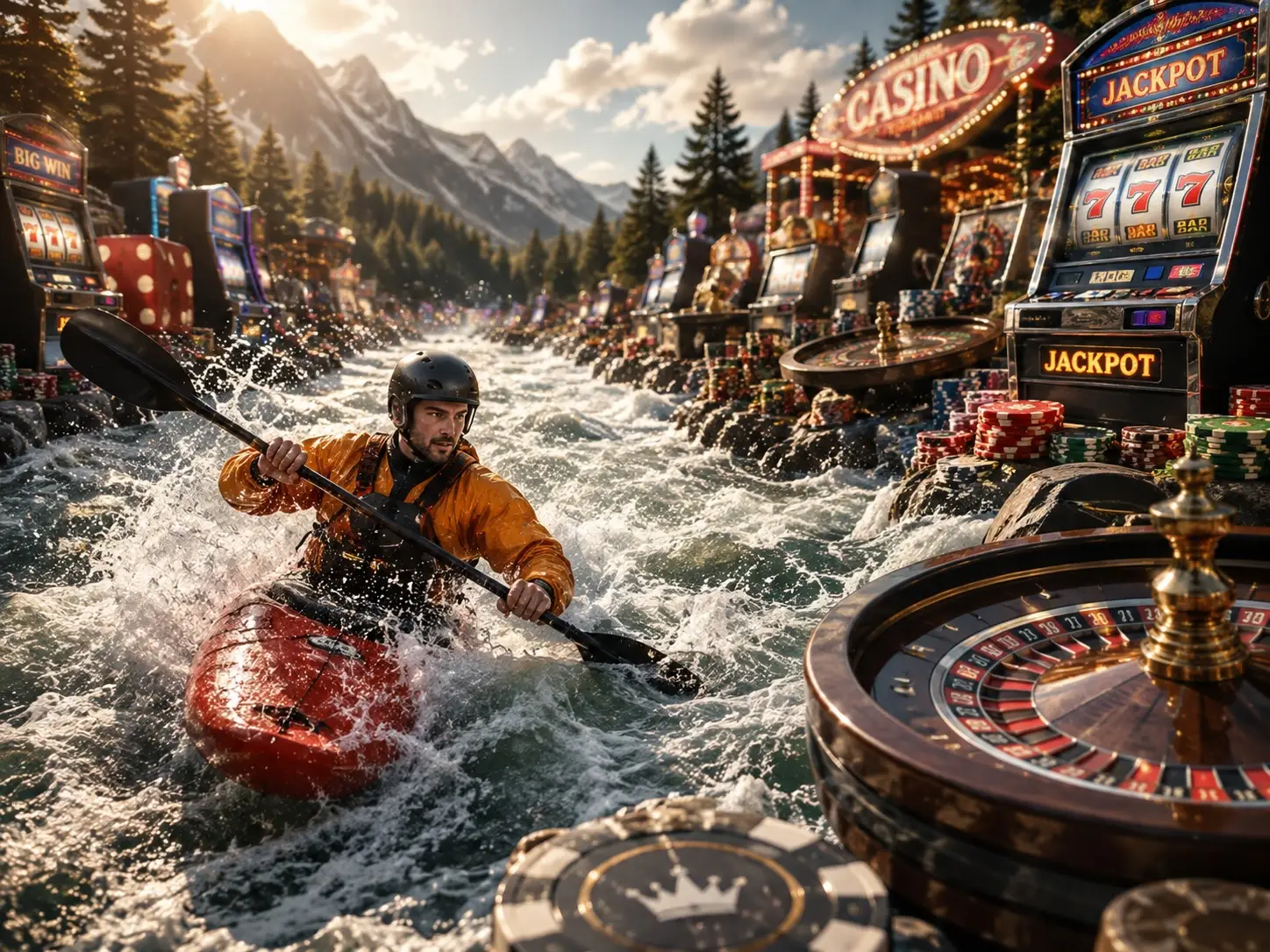
Same Suspense, Different Agency
Still, the emotional rhythm can feel familiar. There is anticipation, an unresolved moment and then an answer. What is beyond the bend? Will the line through the rapid work? Where will the ball land? What symbols will appear?
Humans are remarkably good at turning unanswered questions into entertainment. We do it with mystery novels, penalty shootouts, fishing, escape rooms and weather-dependent hikes. If every outcome were revealed beforehand, much of the fun would disappear.
Adventure recreation adds another ingredient: competence. Flow research often discusses the balance between challenge and skill. Too little challenge can become boring. Too much can become anxiety. Somewhere between them sits a demanding task that feels manageable enough to absorb us.
Recent research also complicates the stereotype of adventure lovers as reckless adrenaline hunters. A 2026 field study of guided aerial adventure activities found that whether risk was experienced as threat or challenge was related to trust, perceived safety and flow. Enjoyable uncertainty, it seems, can work better when people feel equipped to deal with it.
The Fun Is in Not Knowing — Within Limits
Perhaps that is the connection between a river and a roulette wheel. Both interrupt certainty. Both create a short future we cannot fully see. And both can make the next few seconds feel unusually important.
But the similarity should stop there. Outdoor uncertainty often sits inside a system of preparation, learning and responsive skill. Casino uncertainty is frequently generated by chance, with games mathematically structured around probabilities and, in many cases, a house edge.
That difference means the word “risk” hides several different experiences.
Sometimes we enjoy uncertainty because we can test ourselves against it. Sometimes we enjoy it because we cannot control it at all.
Apparently, the human brain has room for both. Just remember: on a river, improving your technique can change what happens next. At a roulette table, Zeus, lucky socks and an impressive poker face still do not get a vote.