Nepal has two established trekking seasons and two that are commonly dismissed. The dismissal is only partly justified, and the right choice depends on what a particular trip is meant to deliver. Someone whose priority is guaranteed mountain views wants a different month from someone whose priority is empty trails, and both differ from someone whose dates are fixed by work and who simply needs to know what to expect.
The whole calendar is shaped by one thing: the monsoon.
Autumn
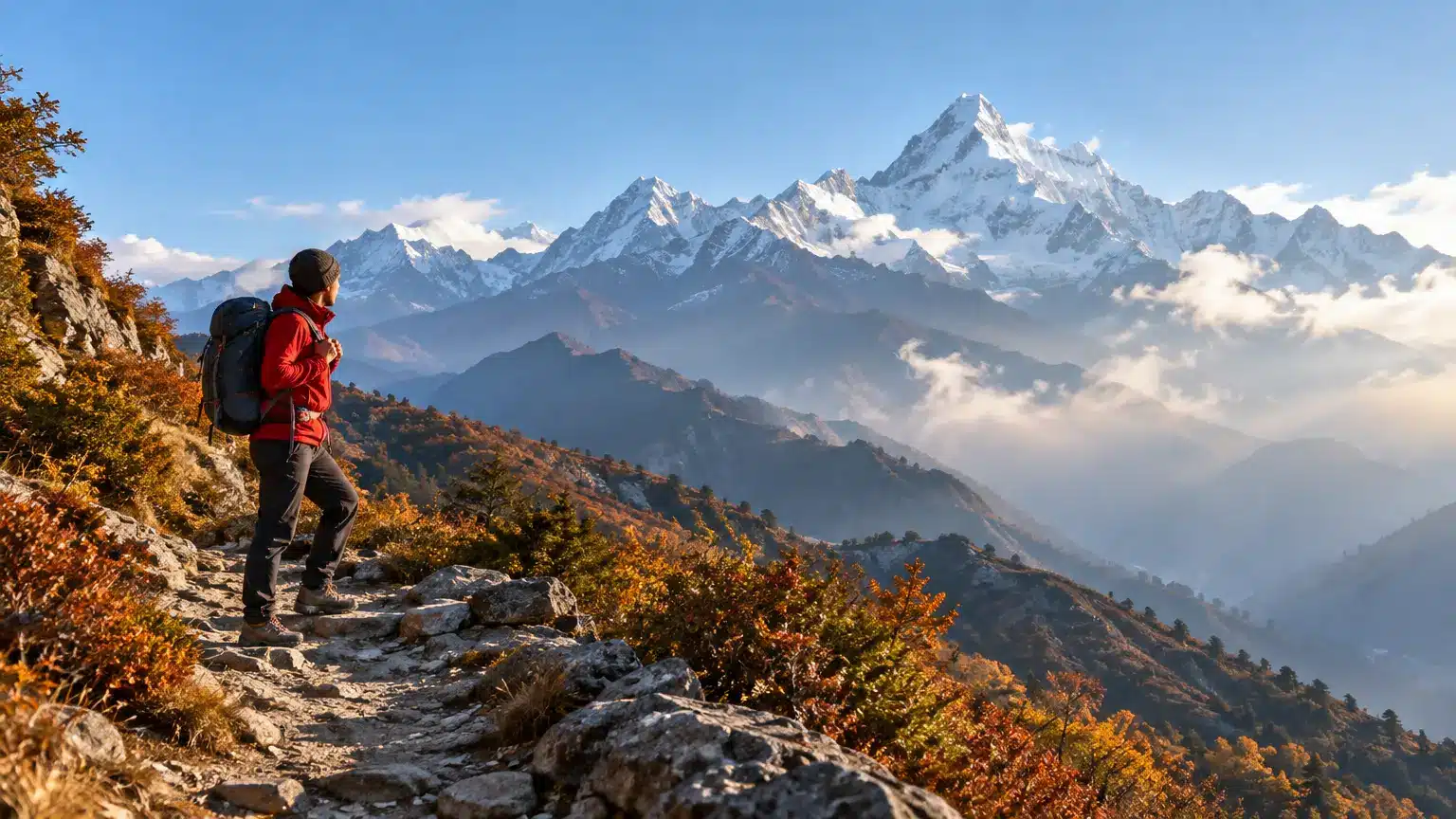
October and November produce the most reliable conditions of the year, and it is not close. The monsoon has washed dust and haze out of the air, visibility is exceptional, daytime temperatures at moderate altitude are comfortable, and the trails have dried out.
This is also when the trails are busiest. Lodges on popular routes fill, domestic flights are oversubscribed, and the better teahouses are booked out days ahead during the middle weeks of October. Anyone travelling then should expect company.
November trades a little warmth for a little quiet. By late in the month nights are cold at altitude and some high lodges begin to reduce service, but the visibility is often even better than October and the trails have thinned out considerably.
Spring
March through May offers longer days, warmer nights, and rhododendron forests in flower across the middle hills, which is a genuine spectacle in its own right rather than a consolation prize.
Visibility is less consistent than autumn. Haze accumulates through the season as the pre monsoon heat builds in the plains to the south, and by late May distant peaks are frequently obscured by mid morning even on a clear day. The trade off is fewer people on the trail and a more relaxed atmosphere in the lodges.
Spring is also the expedition season, which changes the character of routes near the major peaks. Anyone considering manaslu circuit trekking in April will share the lower valley with expedition logistics moving toward Manaslu base camp: long mule trains, stacked loads, and climbing teams. Some find this adds interest. Others find the trail busier than the season’s reputation suggests.
Winter
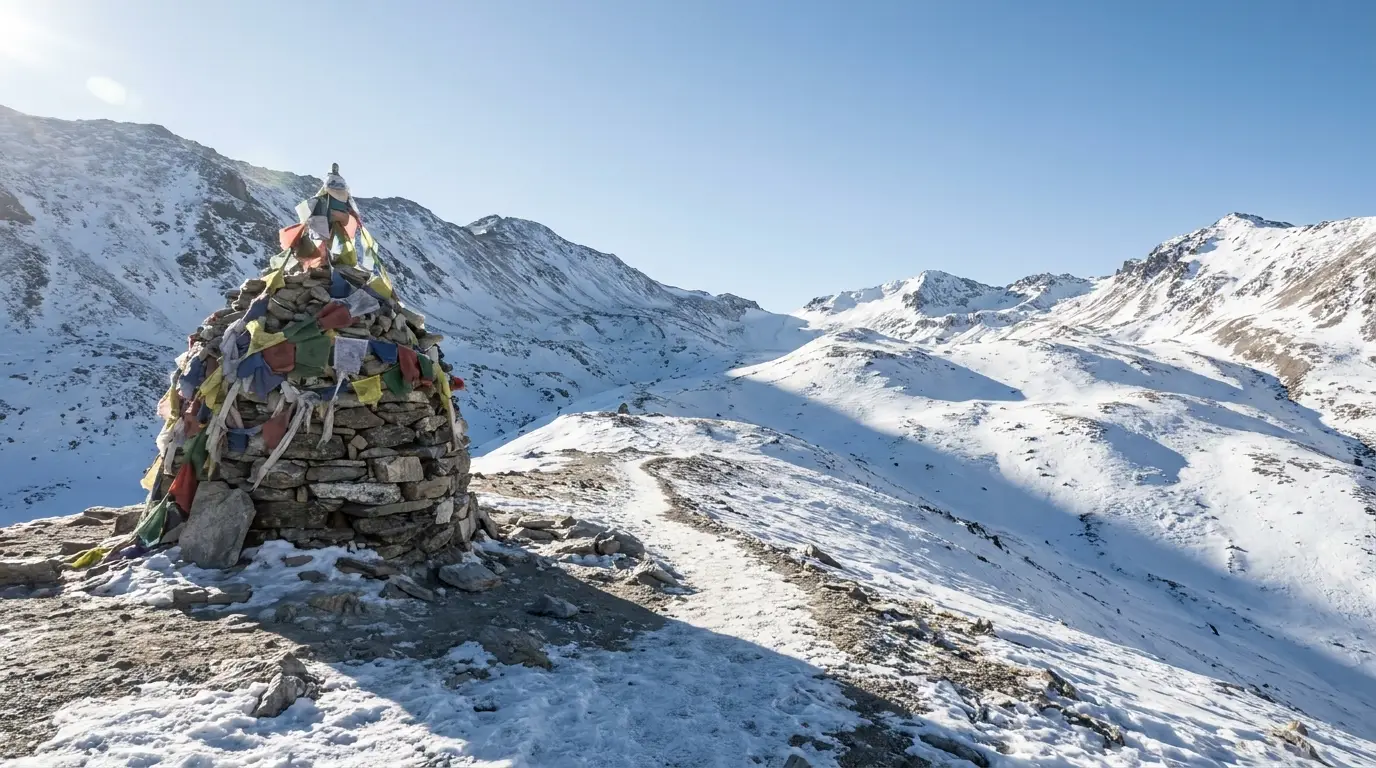
December and January are cold but often strikingly clear, and remarkably quiet. Lower and mid altitude routes remain entirely feasible with adequate insulation, and the light in December is the best of the year for photography.
High passes become the limiting factor. Snow closes them for stretches at a time, and the closure is not always predictable. Lodges at altitude reduce staff or shut entirely, so the practical range of routes narrows considerably even where the trail itself is passable.
Trekkers with warm equipment, flexible plans and a tolerance for cold nights get an experience in December that is unavailable in October at any price: major trails almost to themselves.
Monsoon
June through August brings rain, leeches in the middle hills, clouds that obscures the views for days at a time, and landslides that disrupt road access and occasionally trap groups on the wrong side of a slip.
It is genuinely the weakest season for most of the country, and there is little point pretending otherwise. Flights to mountain airstrips cancel repeatedly. Trails turn to mud. The scenery that justifies the trip is frequently invisible.
The exception is the rain shadow. North of the main Himalayan crest, Mustang, Dolpo and parts of Manang sit in the lee of the mountains and stay comparatively dry through the monsoon months. These are the one genuine summer trekking option in Nepal, and they are busiest precisely when everywhere else is empty.
Matching Route to Season
Route profile narrows the window more than most people expect.
Trails that spend consecutive days above 4,500 metres, or that cross a high pass, are autumn and spring propositions almost exclusively. The gokyo lake trek sits in that category, with its lakes frozen and its lodges thinly staffed through the deep winter months, and the Renjo La crossing unreliable outside the main seasons.
Lower routes are far more forgiving. The Ghorepani and Poon Hill circuits, the lower Annapurna trails, and the middle hill routes near Kathmandu can be walked across most of the year with sensible expectations about cloud and rain. They are the sensible answer for anyone whose dates are fixed in an awkward month.
Booking Consequences
Season affects logistics as much as conditions.
Autumn departures on popular routes book out months ahead, permits queue at the offices in Kathmandu, and domestic flights to Lukla and Jomsom are heavily oversubscribed with delays that cascade across days. Anyone travelling in October should build buffer days at both ends and accept that flight schedules are aspirational.
Spring bookings are easier at every stage. Permits are processed with less queuing, lodges have space, and flights are less contested. For anyone with flexible dates who values a relaxed trip over guaranteed long range visibility, late spring is the most underrated window in the calendar.
Winter and monsoon departures require the fewest bookings of all, for obvious reasons, but the narrower route options mean the planning has to be done more carefully rather than less.
A Simple Framework
Autumn for reliability and views, and accept the crowds. Spring for warmth, flowers and a quieter trail, and accept some haze. Winter for low routes in near solitude, and bring a warmer bag than seems necessary. The rain shadow regions for summer, and avoid everywhere else.
The one combination genuinely worth avoiding is a high pass route during the monsoon. Everything else is a trade rather than a mistake.