Snowboarding has its own language. And if you’re new to it, hearing words like “goofy stance,” “halfpipe,” or “buttering” for the first time can feel like everyone else got a handbook you didn’t.
It’s not as complicated as it sounds, though. Every term has a simple explanation. Once the basics click, the rest follows pretty fast.
Here we have compiled a list of snowboarding terms from A to Z, covering everything from gear and stance to tricks and trail types.
No confusing definitions, no unnecessary fluff.
Just clear, straight-to-the-point, simple explanations that actually make sense and help you understand what snowboarding actually means, no matter if it’s your first day on the slopes or the fiftieth.
Quick Tips To Understand Snowboarding TermsSnowboarding picked up its own vocabulary over the decades, shaped by athletes, terrain parks, and mountain culture. A lot of it carries over from skateboarding and surfing, which is why some terms feel familiar, and others don’t. Most terms fall into four categories:
|
Snowboarding Glossary (Complete A–Z)
If you’re new to snowboarding, the language can feel like a whole different world. This A–Z glossary walks you through common terms in a simple, easy-to-follow way, so you can understand what people are saying on and off the slopes.
A–C Snowboarding Terms
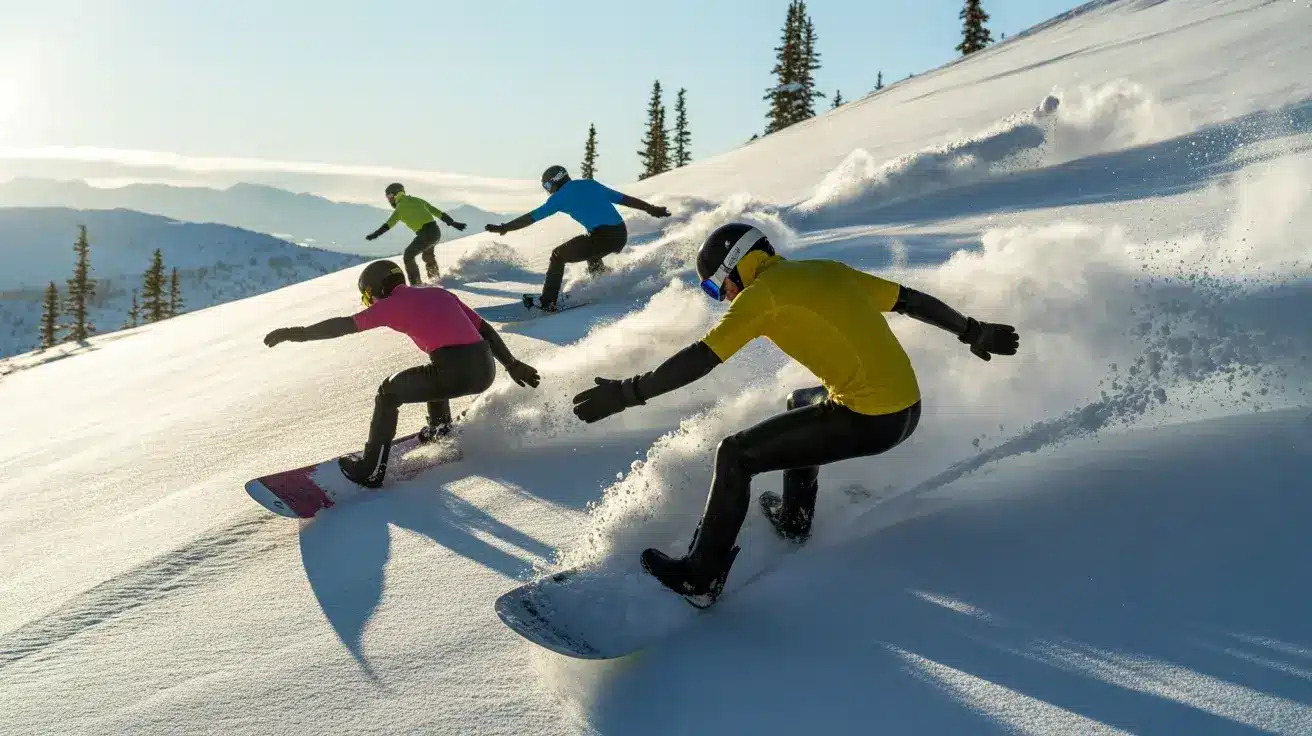
Aerial-Any trick performed in the air after leaving a jump or halfpipe wall.
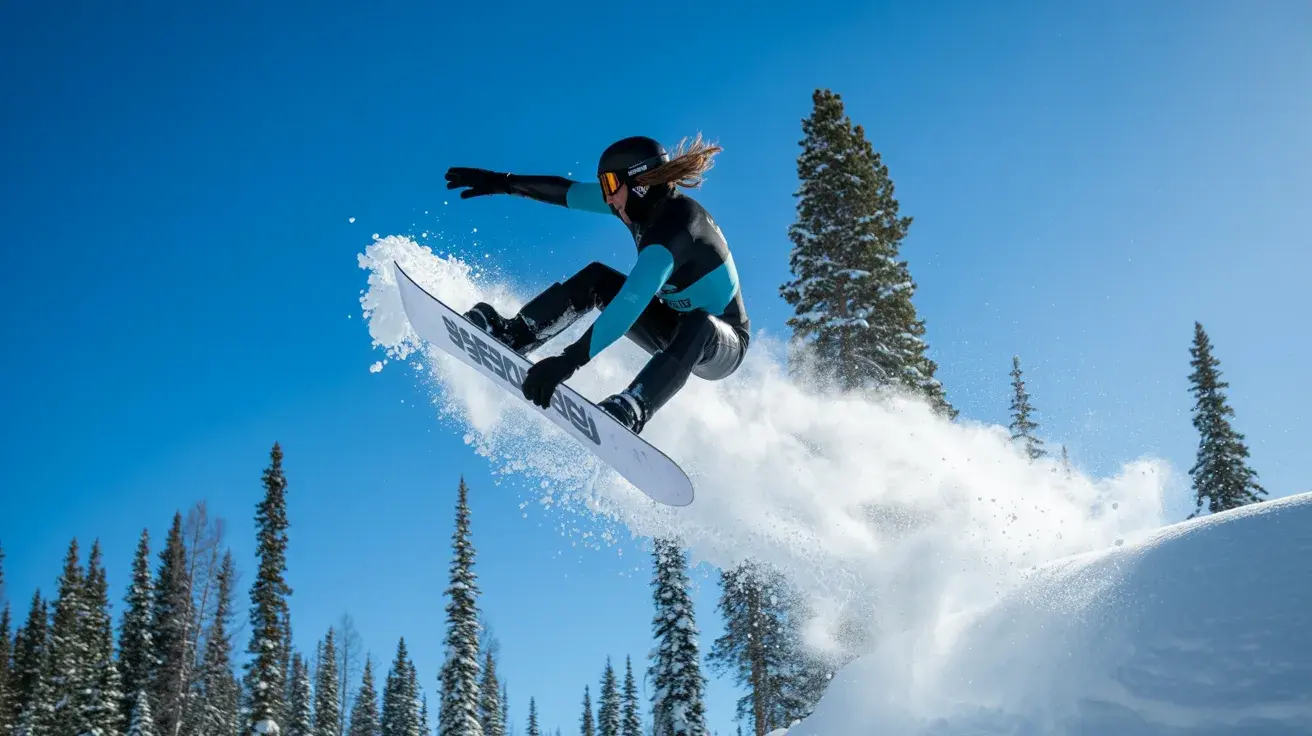
Air-The act of becoming airborne off a jump, pipe, or natural feature.
Alpine-A riding style focused on high-speed carving on groomed runs, using narrow directional boards.
Backcountry-Ungroomed, unmarked terrain outside the boundaries of a resort.
Backside-The heel-edge side of the board. A backside turn rotates toward the heel edge.
Bail-Falling or deliberately crashing to avoid a worse outcome. Example: He bailed before hitting the rail.
Binding- The hardware that attaches boots to the board. Comes in strap, rear-entry, and step-on styles.
Buttering-Pressing the nose or tail of the board into the snow while riding flat ground, creating a smooth, surfy movement.
Camber-The slight upward arc in the middle of a board when laid flat. Adds pop and edge grip on hard snow.
Carve-A clean, precise turn made by digging the edge of the board into the snow. Leaves a thin line in the snow, not a skid mark.
Catching an Edge-When an edge unexpectedly grabs the snow mid-ride, it usually causes a fall. One of the most common beginner crashes.
Chatter-The vibration felt through the board at high speeds, usually on hard or icy snow.
D–F Snowboarding Terms
Directional-A board designed to be ridden in one direction only. The nose and tail have different shapes.
Double Black Diamond-The highest difficulty rating for a trail. Steep, technical, and not suitable for beginners.
Drop-In- The moment a rider enters a halfpipe, bowl, or steep run from the top.
Duck Stance-A stance where both feet angle outward in opposite directions, like a duck’s feet. Common in freestyle riding.
Edge-The thin metal strip running along both sides of the board. Controls turning and braking.
Fakie-Riding backward, with the non-dominant foot leading. Same as the switch for most riders.
Fall Line-The most direct downhill path on any slope. Riding the fall line means going straight down.
Freestyle-A riding style focused on tricks, jumps, and terrain park features rather than speed or racing.
Frontside-The toe-edge side of the board. A frontside turn rotates toward the toes.
G–I Snowboarding Terms
Goofy-A stance, where the right foot leads down the slope. The opposite of regular.
Grab-Reaching down and holding part of the board during a jump. There are dozens of named grabs.
Groomer-A trail that has been flattened and smoothed by a snowcat machine. Usually, the easiest and most consistent snow to ride.
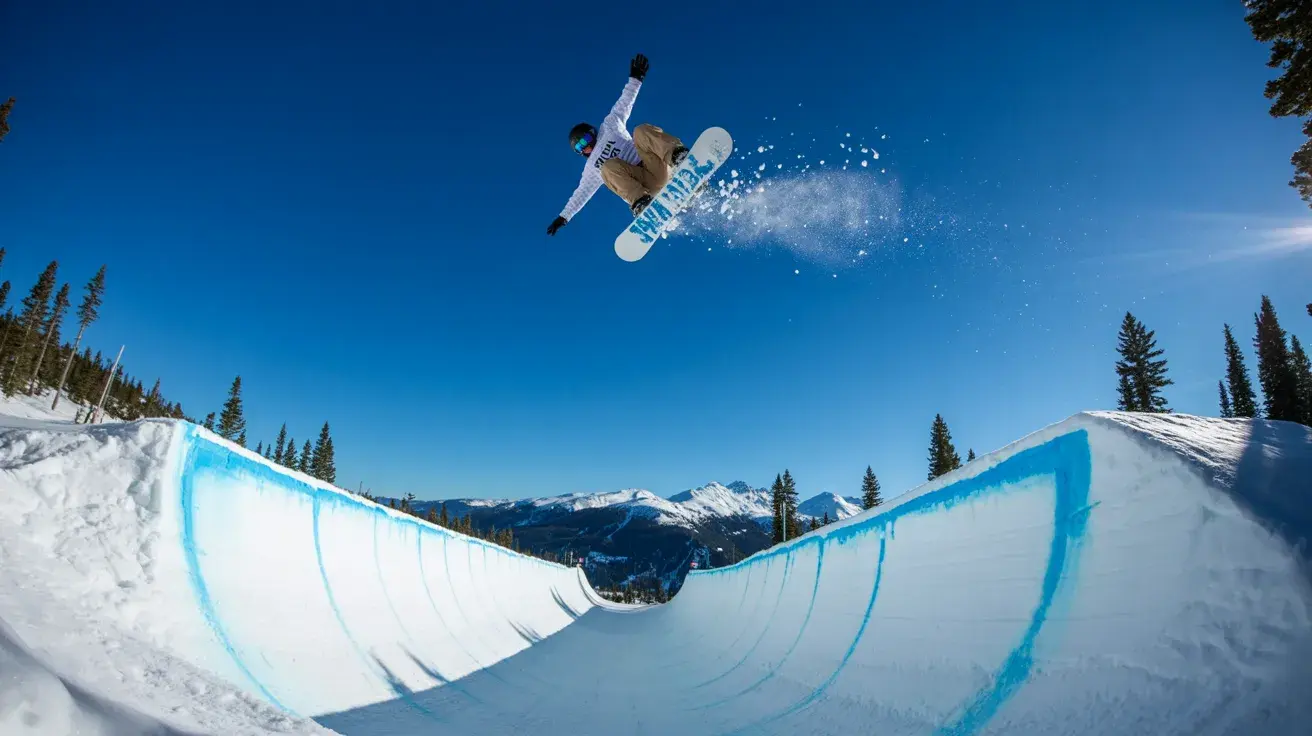
Halfpipe-A U-shaped channel cut into the snow with two vertical walls. Riders go back and forth performing aerial tricks.
Hardpack-Firm, compressed snow. Fast to ride but unforgiving on falls.
Heel Edge-The edge of the board on the heel side. Used to slow down and turn toward the heels.
Hit- A jump or feature inside a terrain park. Example: That last hit had at least 20 feet of air.
Indy-A grab where the back hand reaches across and grabs the toe edge between the bindings.
J–L Snowboarding Terms
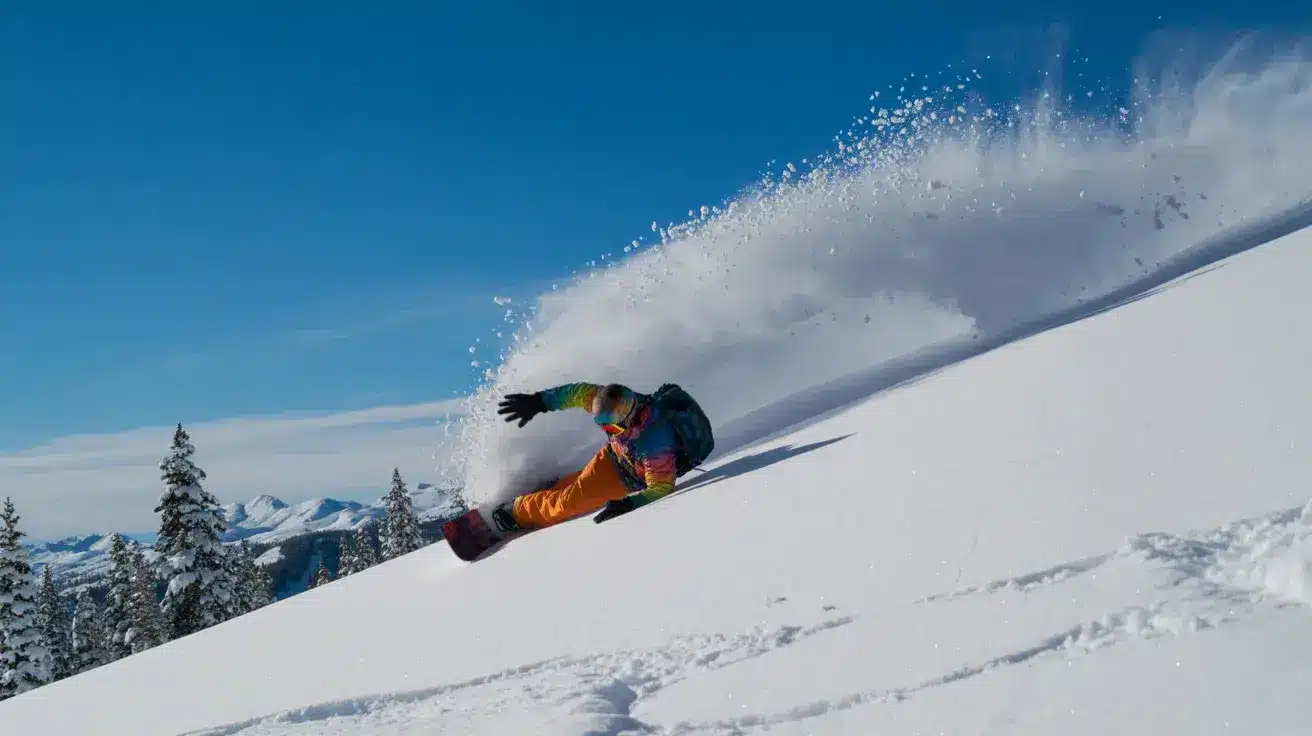
Jib-Riding or sliding on non-snow surfaces like rails, boxes, and other park features.
Kicker-A small, built-up jump that launches a rider into the air.
Knuckle-The rounded top lip of a jump where the takeoff meets the landing. Hitting the knuckle usually means the rider didn’t clear the jump.
Layback-A trick where the rider leans back and drags a hand along the snow while turning.
Lift Line-The queue of riders waiting to board a chairlift or gondola.
Lip-The top edge of a halfpipe wall or the rim of a jump.
M–O Snowboarding Terms
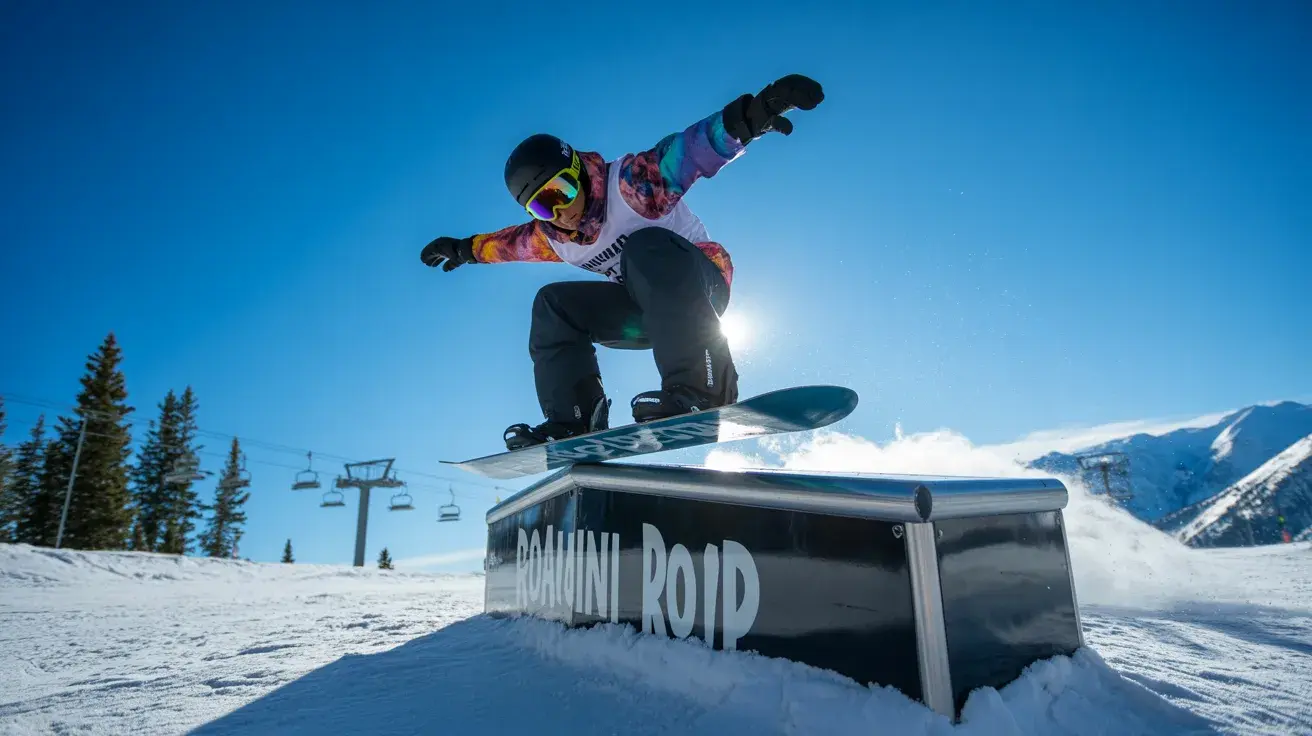
Method-A grab where the back hand grabs the heel edge, and the board gets pulled up behind the rider. One of the most classic and respected grabs in snowboarding.
Moguls-Rounded bumps that form naturally on a slope from repeated turning by skiers and riders.
Nose-The front tip of the board.
Nose Press-Pressing the nose of the board into the snow while lifting the tail. A basic jib trick often done on flat boxes.
Off-Piste– Any terrain outside the groomed, marked runs at a resort. Often unpredictable and better suited for experienced riders.
Ollie-A jump performed without a kicker. The rider pops off the tail to get air, similar to a skateboard ollie.
P–R Snowboarding Terms
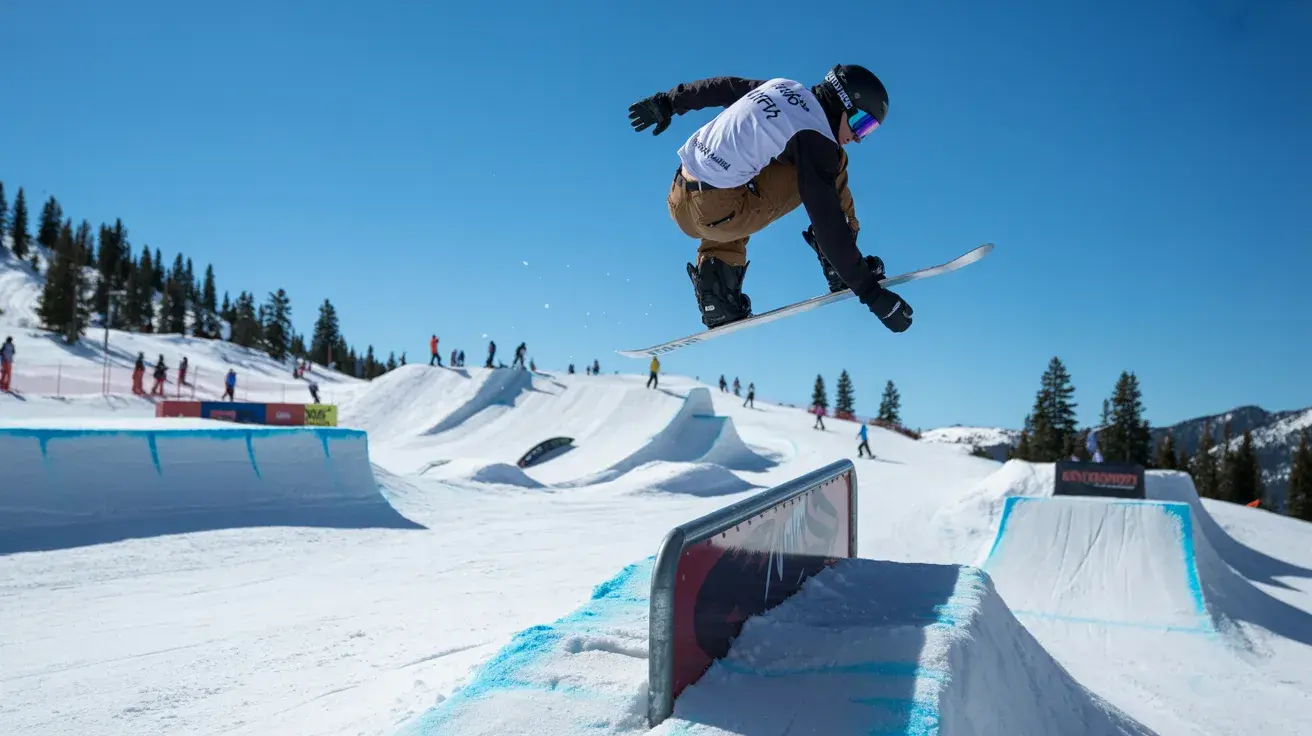
Park-Short for terrain park. A designated area with jumps, rails, boxes, and other features built for freestyle riding.
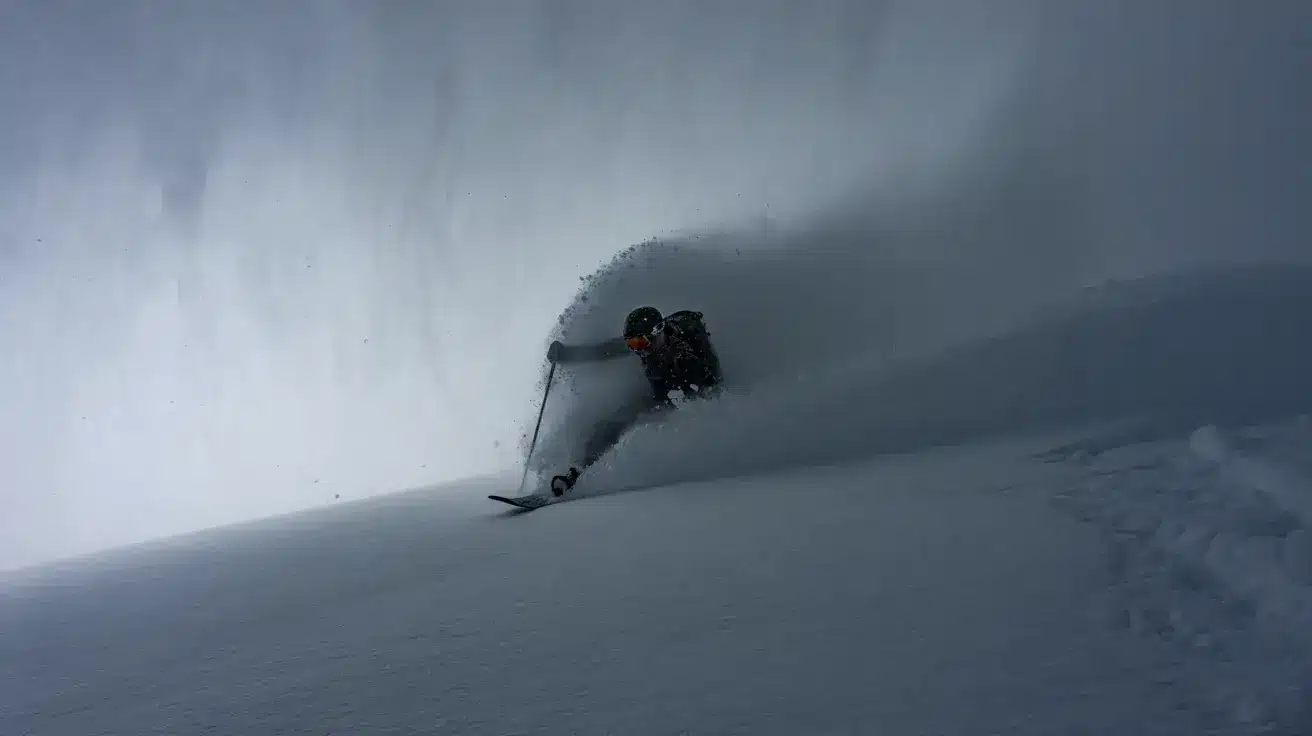
Pow-Short for powder. Fresh, loose, untracked snow. Considered the best snow conditions to ride.
Press-Shifting body weight over the nose or tail to lift the opposite end of the board off the snow.
Profile– The side-view shape of a board. Determines how it interacts with the snow. Common profiles include camber, rocker, and flat.
Regular-A stance, where the left foot leads down the slope. The most common stance for riders.
Rocker-A board shape with a reverse curve, where the middle sits lower than the nose and tail. Easier to turn and better in deep powder.
Run-A marked trail from the top to the bottom of a mountain. Rated by difficulty with green, blue, and black symbols.
S–U Snowboarding Terms
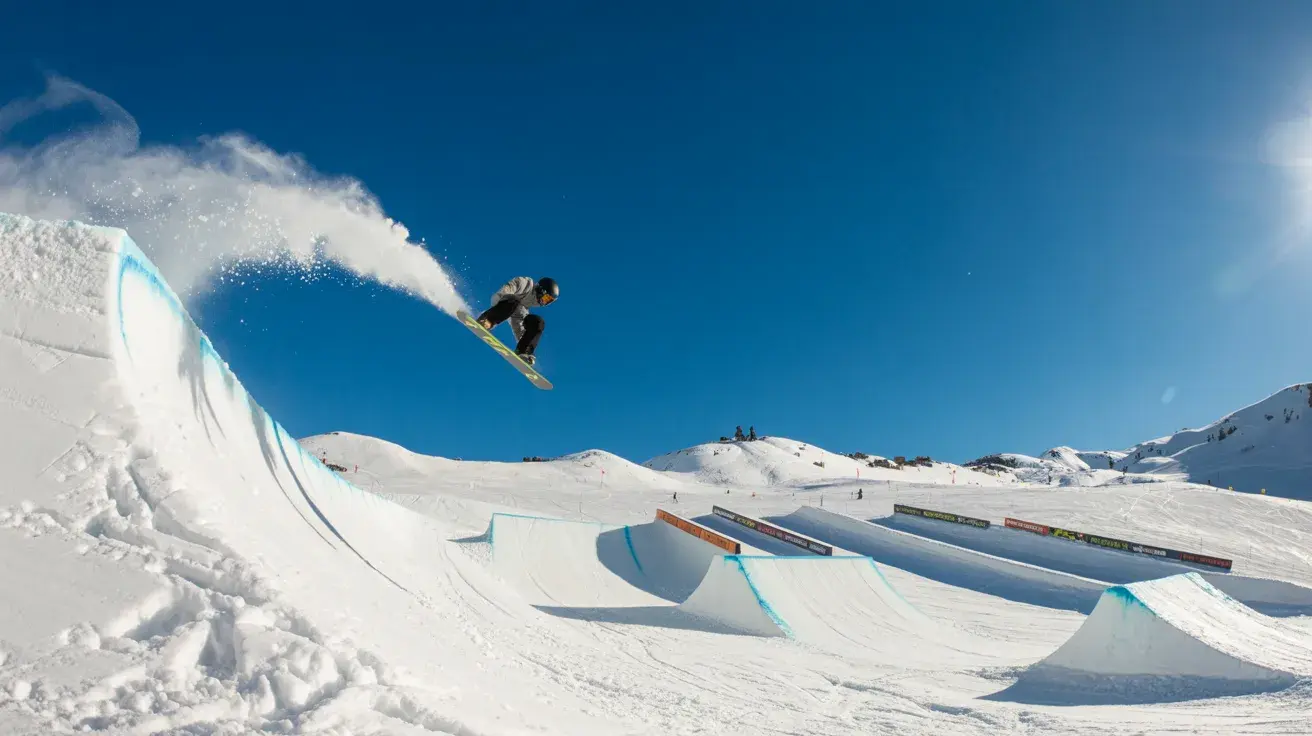
Sending It-Committing fully to a trick or run without hesitation.
Shredding-Riding hard and skillfully down the mountain.
Slopestyle-A competition format where riders go down a course filled with jumps and rails, judged on trick variety and execution.
Stance-The way a rider positions and angles both feet on the board. Includes foot direction, width, and which foot leads.
Switch-Riding with the non-dominant foot forward. If someone rides regularly, their switch is goofy, and vice versa.
Tail– The back tip of the board.
Toe Edge-The edge of the board on the toe side. Used to turn toward the toes and control speed on steep terrain.
Terrain Park-A section of the mountain with built features like jumps, rails, boxes, and halfpipes designed for freestyle riding.
Traverse-Riding across a slope at an angle rather than straight downhill. Used to control speed or move across the mountain.
Twin Tip– A board with a symmetrical shape, meaning the nose and tail are identical. Ideal for riders who spend time riding switch.
V–Z Snowboarding Terms
Vert-Short for vertical. Refers to the nearly vertical upper walls of a halfpipe where riders launch into the air.
Wax-A substance applied to the base of the board to reduce friction and increase speed. Needs to be reapplied regularly.
Whiteout-Conditions where heavy snow or fog reduces visibility to near zero. Riding in a whiteout is disorienting and risky.
Wipeout– A crash or fall, whether minor or dramatic.
Zeroing Out-Resetting a run or trick attempt from the start, usually after a fall or a missed line.
Snowboarding Slang Terms You’ll Hear on the Slopes
The mountain has its own way of talking. Beyond the technical terms, there’s a whole layer of casual slang that riders use every day. Hear these enough times, and they start to feel like a second language.
Here are the most common ones:
- Shred: To ride hard and skillfully. Telling someone to “go shred” means to go out there and ride well. Example: The fresh powder was perfect for shredding.
- Send It: Committing fully to a trick or line without holding back. Often used as encouragement. Example: Just send it, don’t overthink the jump.
- Sketchy: Anything that looks or feels unsafe, unstable, or poorly executed. Example: That landing was sketchy; the snow was way too icy.
- Stoked: Extremely excited or pumped up. A rider is stoked before a big run or after landing a new trick. Example: Everyone was stoked when the fresh snow report dropped.
- Banger: A standout trick or run that’s especially impressive.
- Yard Sale: A bad crash where gear goes flying in every direction across the slope.
Spend enough time on the slopes, and these words stop feeling like slang. They just become part of how riders talk.
Summing Up
Snowboarding has a lot of terms, but nobody learns them all at once. The best way is to pick up a few before hitting the slopes, then let the rest come naturally over time.
The more time spent riding on snowboards, the more the language starts to make sense. Every term clicked is one step closer to feeling fully at home on the mountain.
Don’t stress about memorizing everything from a glossary. The slopes are the best classroom, and most of these terms will stick after hearing them a few times in real situations.
Keep riding, keep learning, and the rest takes care of itself.
Frequently Asked Questions
What are the Most Basic Snowboarding Terms Beginners Should Know?
Start with stance, heel edge, toe edge, carving, and falling leaf. These cover the fundamentals and come up in almost every beginner lesson.
What is the Difference Between a Regular and a Goofy Stance?
Regular means the left foot leads down the slope, while goofy means the right foot leads. Neither is better; it just depends on what feels natural.
What does “sending It” Mean in Snowboarding?
It means committing fully to a trick or run without hesitating. Riders use it as encouragement to stop overthinking and just go for it.
What is the Difference Between Freestyle and Alpine Snowboarding?
Freestyle focuses on tricks, jumps, and terrain-park features, while alpine focuses on high-speed carving on groomed runs. Both require different boards and skill sets.