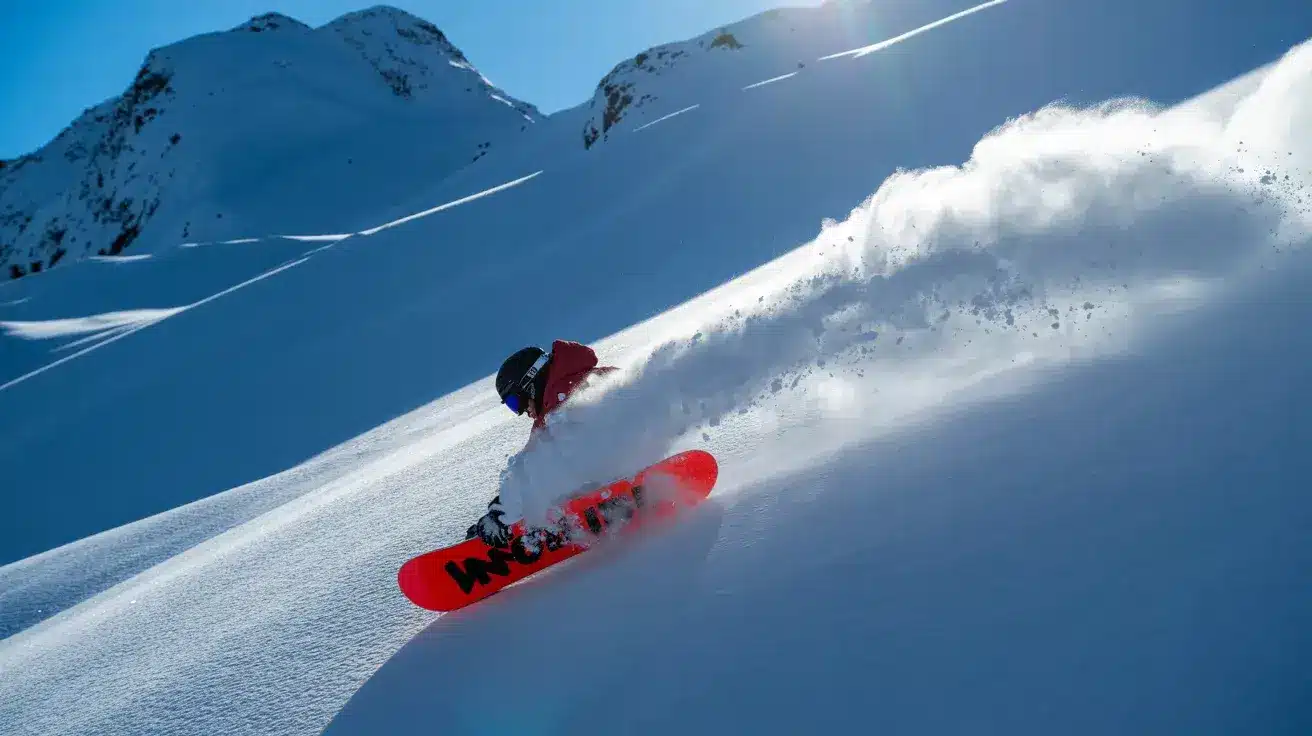
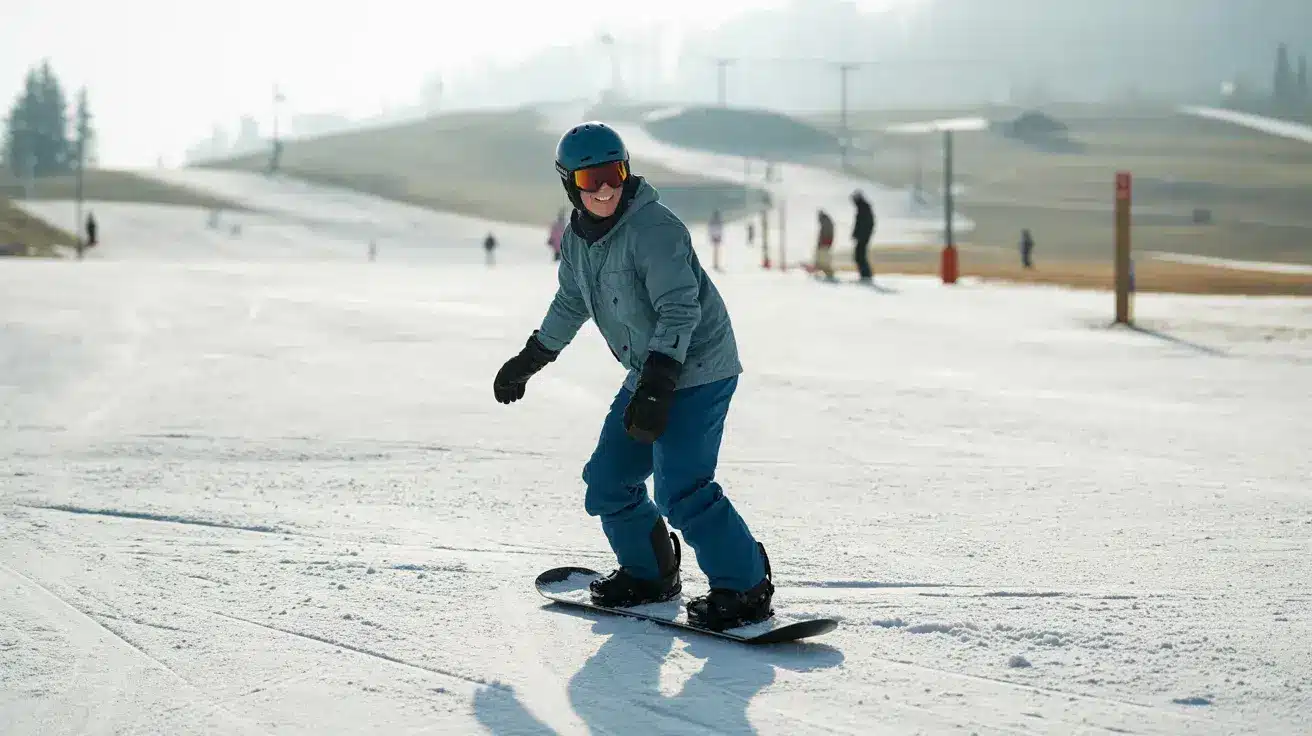
Most people show up at the mountain expecting to glide. What actually happens on day one? They fall, repeatedly, and wonder why their bodies refuse to cooperate.
That’s the honest reality of snowboarding for beginners, and there’s nothing wrong with it. Figuring out how to learn snowboarding takes time, and the early sessions are always the hardest.
The learning curve is steep at first, but it flattens quickly once the basics click. Knowing what to expect before you strap in makes a real difference, and that’s exactly where these first-time snowboarding tips come in.
What You Should Know Before Learning Snowboarding
Snowboarding is hard at the start, and that’s worth saying upfront. Day one will involve falling, and day two probably will too.
Your ankles will ache, your knees will take a hit, and getting off the chairlift without face-planting will feel like a win.
It also helps to remember that a beginner board should feel easier to control as you get used to it all.
Why Does It Feel so Unnatural at First
Your feet are locked onto a single board, pointing to the side. Your body has zero reference point for this position.
Every shift in weight feels wrong until your brain starts connecting balance, edges, and body movement together, and that connection takes a little time.
How the Learning Curve Actually Works
The difficulty front-loads itself. The first two days are the hardest, but most people feel a clear difference by day three.
Once the learning of snowboarding basics clicks, standing correctly, falling without injury, and controlling your speed, progress starts coming faster than expected.
What Day One Actually Looks Like
You’ll spend most of it on the beginner slope. You’ll fall, get up, fall again, and slowly work out how to move without sitting down on purpose.
Every snowboarder on the mountain went through the exact same thing.
Getting Started With Snowboarding? Check These Essential Gears for Beginners
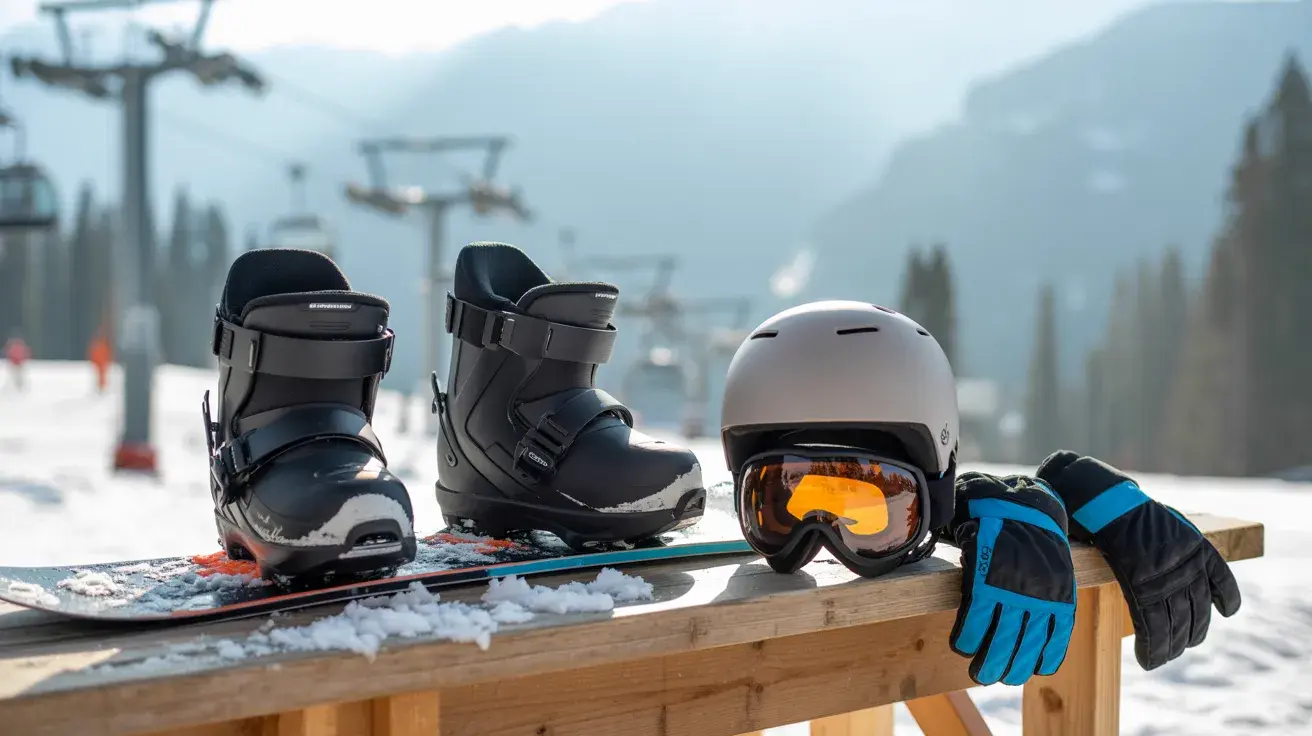
You don’t need expensive equipment on day one, but a few pieces genuinely matter.
- Board, Boots, and Bindings: These three work as a system. A beginner board should be shorter and softer, easier to control at low speeds. Boots need to fit snugly; loose boots mean poor control. Bindings should be adjusted to your boot size before you step on the slope.
- Helmet and Gloves: A helmet is non-negotiable; beginners often fall, and head impacts on packed snow are serious. Get gloves with built-in wrist guards if possible, as wrist injuries are among the most common for first-timers.
- Rent Before You Buy: Rent for the first few trips. Buying a full setup before knowing your riding style or whether you’ll stick with the sport is an expensive gamble. After two or three sessions, you’ll know exactly what you need.
Once the gear is sorted, the real learning begins.
How to Snowboard Step by Step for Beginners
Learning to snowboard follows a clear progression. Rush any of these steps, and the next one becomes harder. Work through them in order; each builds naturally on the last.
Step 1: Practice Balance and Standing Up
Start on completely flat ground before attempting any slope. Strap both feet in and simply get used to how the board feels beneath you.
Rock your weight forward onto your toes, then back onto your heels, and notice how the board responds to each shift.
Getting up from the ground is its own skill. From your back, roll onto your toe edge, get onto your knees, and push up from there.
From your front, push up onto your heel edge. Practice both until standing feels automatic, because you’ll be doing it repeatedly.
Step 2: Learn to Skate and Glide
Unstrap your back foot and use it to push yourself along flat ground, as if you were pushing a skateboard.
This helps you get used to the board moving beneath you while one foot stays free to steady your balance.
Once you start gliding, place your back foot between the bindings, keep your knees slightly bent, and stay centered over the board.
Repeat this a few times until the movement feels controlled and comfortable before heading onto a slope.
Make sure you have accessories like a helmet and gloves on before you start, since even this early practice can come with slips and awkward falls.
Step 3: Learn to Stop Using Your Heel and Toe Edge
Two edges stop you, your heel edge and your toe edge. These are the foundations of all snowboard control.
For a heel edge stop, shift your weight back onto your heels and lift your toes slightly. The board will dig in and slow you down.
For a toe-edge stop, lean forward onto your toes with your knees bent into the slope.
Both should be practiced on the gentlest slope available until stopping feels within your control, not a matter of luck.
Step 4: Try the Falling Leaf Technique
The falling leaf (a popular term in snowboarding) is a side-to-side movement across the slope without turning, as the name suggests.
Stay on one edge, either heel or toe, and slide gently from one side of the slope to the other using subtle weight shifts.
This teaches you how to control speed and direction without committing to a full turn.
Most beginners skip this and go straight to turning, which is exactly why their turns feel uncontrolled. Spend real time here before moving forward.
Step 5: Start Turning on Gentle Slopes
Once the falling leaf feels comfortable, you’re ready for your first turns. A turn is simply a shift from one edge to the other, heel to toe, or toe to heel.
Start with a gentle slope and commit to the movement. As you slide across, gradually transfer your weight from your current edge to the opposite one.
Your board will follow. The mistake most beginners make is hesitating mid-turn; that hesitation is what causes falls. Trust the edge change and let the board do the work.
Step 6: Link Your Turns Together
Linking turns is where snowboarding starts to feel like snowboarding. Instead of stopping between each turn, flow directly from one into the next, heel edge to toe edge, toe edge to heel edge, continuously down the slope.
Keep your upper body facing downhill and let your lower body do the turning. Rhythm matters here more than speed.
Slow, controlled, linked turns on a gentle slope will build more confidence faster than going fast and losing control halfway down.
How to Fall Safely While Snowboarding
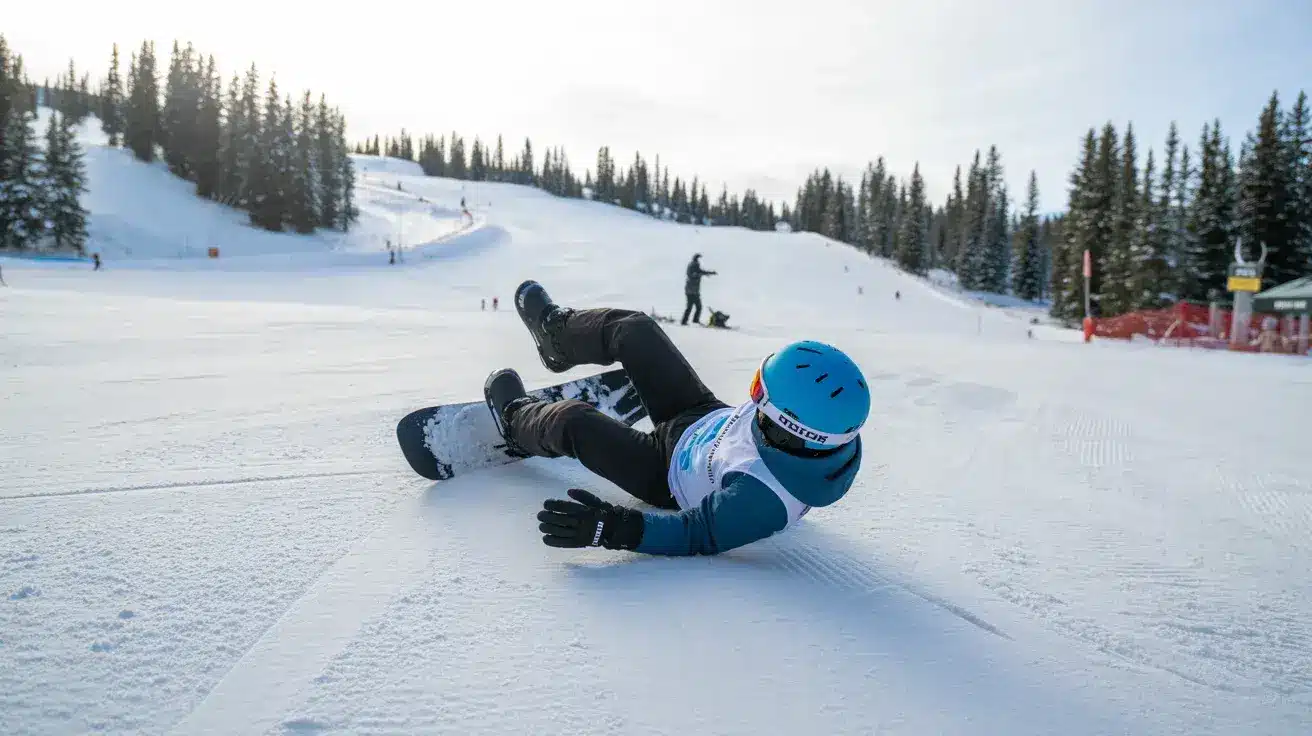
Falling is part of learning to snowboard; the goal isn’t to avoid it, it’s to do it without getting hurt.
The most important rule applies to both directions: keep your hands in. The instinct to throw your palms out is automatic, but open-handed falls on packed snow are the fastest route to a wrist injury. Clench your fists instead and let your forearms take the impact, your backside going backward.
Going down forward? Drop onto your forearms, keep your wrists pulled in, and let your arms absorb it. Going backward? Tuck your chin to your chest immediately and aim to land on your backside rather than your tailbone. Padded shorts are worth wearing for the first few sessions; they make a noticeable difference.
Fall, notice why, adjust. That cycle is how snowboarding actually gets learned.
Beginner Snowboard Tips That Make Learning Easier
Technique gets most of the attention when learning to snowboard, but small habits make an equally big difference. These beginner snowboard tips won’t replace practice time, but they will make every session more productive.
- Bend Your Knees: Straight legs are stiff legs, and stiff legs fall. Keeping your knees bent lowers your center of gravity and naturally absorbs bumps.
- Look Where You Want to Go: Your body follows your eyes. If you stare at the obstacle you want to avoid, you’ll drift toward it. Pick your line, look at it, and your body will start orienting itself.
- Stay Loose: Drop your shoulders, take a breath, and let your body move with the slope rather than against it.
- Take Breaks Before You Need Them: Fatigue is one of the biggest reasons beginners develop bad habits. When your legs are tired, form breaks down and falls increase. Rest before exhaustion sets in, and come back with clean movement.
None of these tips requires extra time on the slope; they just require awareness. Keep coming back to them each run, and the improvement will show up on its own.
Common Mistakes Beginners Make
Most beginner struggles come down to the same few habits, and the good news is they’re all fixable once you know what to look for.
Leaning Back: Sitting back on the board feels safer when speed picks up, but it kills control. Your weight needs to stay centered, not pushed onto your back foot. The moment you lean back, steering becomes guesswork.
Keeping the Body in a State of Stiff Tension: Locked knees and rigid shoulders mean every small bump throws you off. Stay loose and let the board move underneath you.
Skipping the Basics: Rushing onto steeper slopes before stops and edges feels automatic, which is where most beginners stall. The fundamentals aren’t a formality; they’re the reason everything else eventually works.
Spot any of these in your own riding, and you’ve already done half the work of fixing them.
Quick Note For BeginnersMost beginners are curious about how long it will take to learn snowboarding. The simple answer is when you start feeling genuinely in control, somewhere around eight to ten hours on the slope, roughly three to four full days. That’s enough time to link turns, control speed, and stop without deliberately sitting down. Everyone picks it up at a different pace. The timeline matters far less than consistency; a few focused days close together will make the difference. |
That’s a Wrap
Snowboarding has a steep start and a very rewarding middle. The first couple of days will test your patience, your knees, and probably your ego; that’s just how it goes.
What separates riders who progress quickly from those who struggle isn’t natural ability.
It’s showing up consistently, working through the basics without skipping them, and treating every fall as information rather than failure.
Give it time. The clicks come faster than you’d expect.
Ready to get started? Pick your date, book a lesson, and get on the bunny slope; everything else follows from there.
Frequently Asked Questions
Is Snowboarding Harder than Skiing for Beginners?
Snowboarding has a tougher first two days than skiing, but most people find it easier to progress beyond the basics. Skiing is quicker to pick up early, but snowboarding tends to feel more natural once balance clicks.
At what age is it good to Start Snowboarding?
Snowboarding is accessible from around age seven upwards, though younger children often pick it up with surprising ease.
How Fit do You Need to be to Snowboard?
You don’t need a high fitness level to start, but strong legs and decent core stability will make early sessions considerably easier.
Can I learn Snowboarding without an Instructor?
Self-teaching is possible but slow, and bad habits picked up early are difficult to undo later. Even a single lesson on day one gives you a far cleaner foundation to build on than figuring everything out.