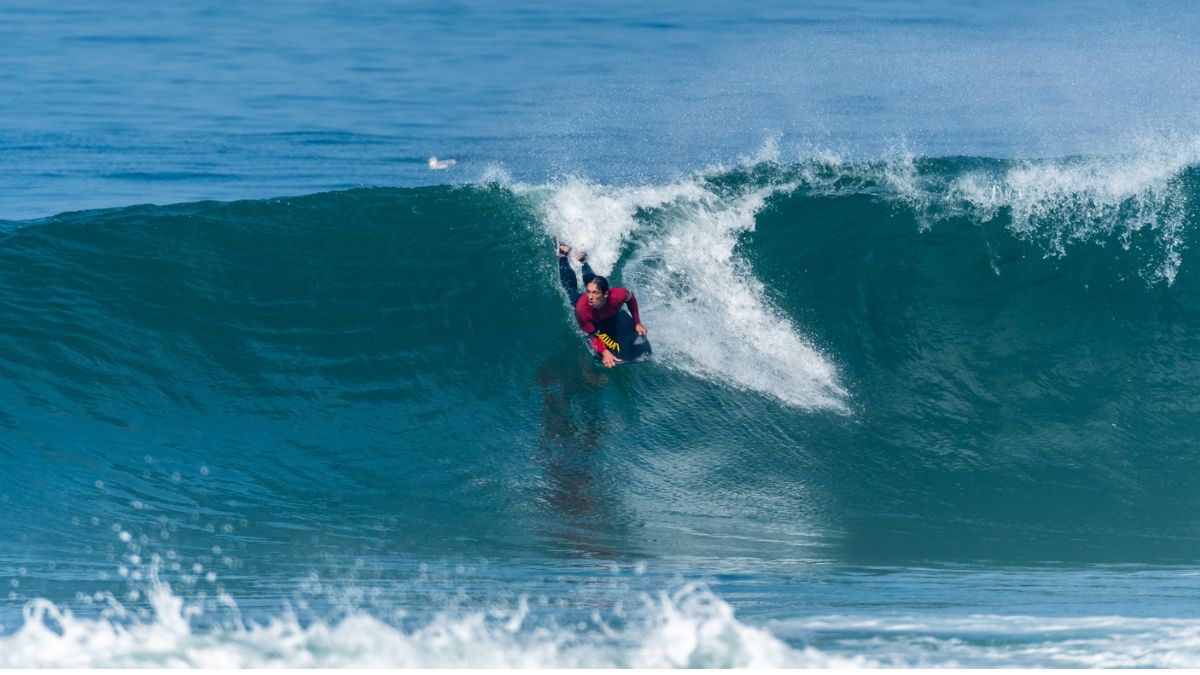
Every summer, thousands of families wade into the shallows with a foam board tucked under one arm, waiting for the right wave. That’s boogie boarding: riding a wave lying down on a short, soft board built to flex with the water.
The modern version traces back to 1971, when surfer and inventor Tom Morey shaped the first foam Boogie Board in Hawaii.
But people were sliding across waves on their bellies long before Morey ever touched a block of foam. Here’s how that old habit turned into an invention, then into a sport with its own boards, contests, and champions.
The Early History of Wave Riding Before Boogie Boards
Long before foam boards existed, people were riding waves on their stomachs. Native Hawaiians and other Polynesian islanders rode waves lying down long before foam boards existed.
The shorter of these craft, called paipo boards, were typically two to five feet long and ridden prone, the same position used on a boogie board today.
Riders also used a longer board called the alaia, usually seven to twelve feet long, which was ridden standing up and is generally considered the direct ancestor of the modern surfboard rather than the bodyboard.
When Captain James Cook’s expedition reached Hawaii in 1778, his crew wrote about islanders riding waves this way, on boards built for both styles of riding.
Centuries later, as board design modernized through the 20th century, boards picked up fins, and some were built from fiberglass. But the basic idea stayed the same: a small board and the rider’s own body doing most of the work.
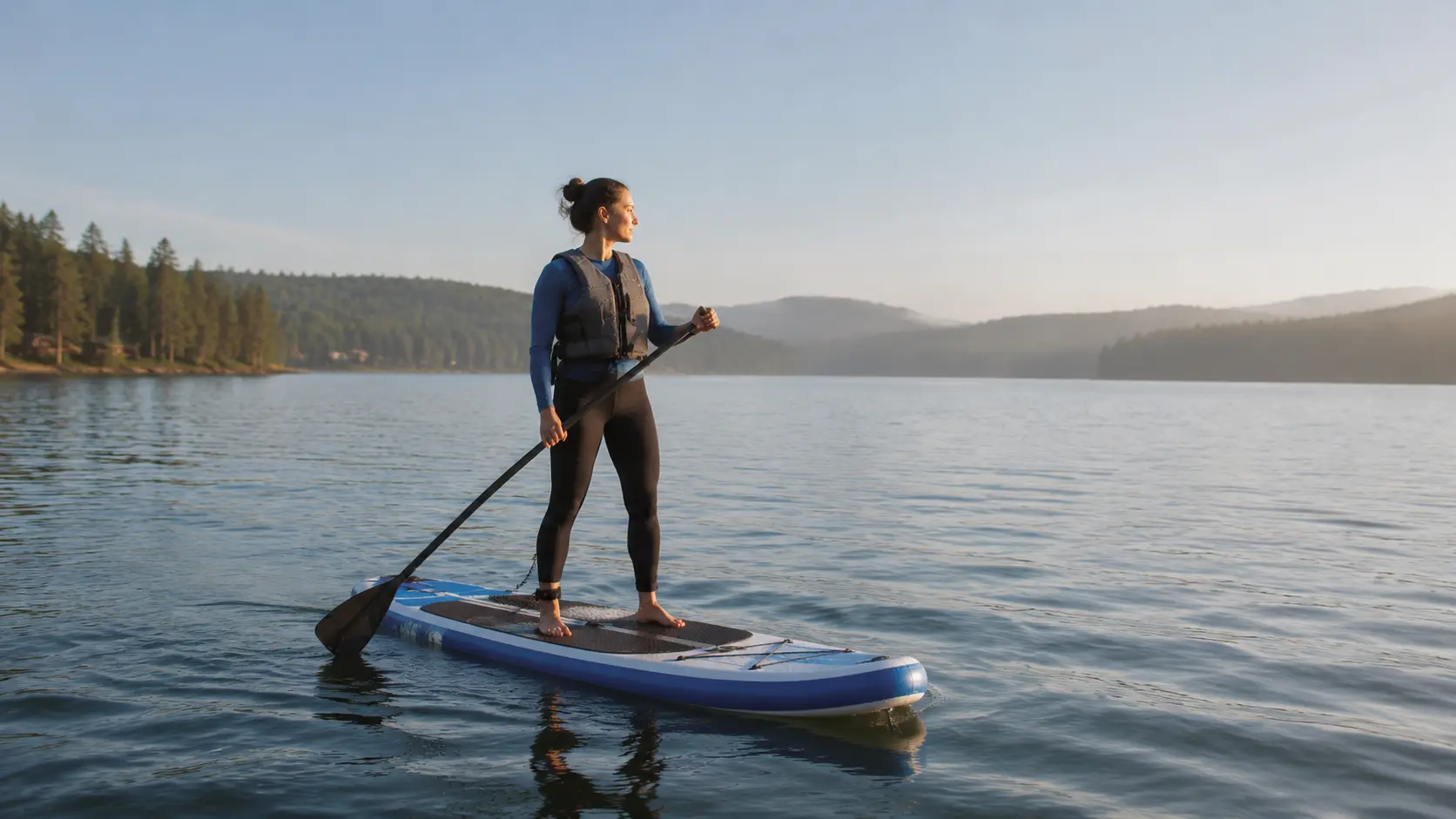
Similar water activities, like paddle boarding, also developed around the connection between riders and the water.
Key Milestones in Boogie Boarding History
Here’s the quick version of boogie board history, from ancient Hawaii to today’s beaches.
|
Period |
Milestone |
|---|---|
|
Before 1778 |
Native Hawaiians ride waves on wooden alaia and paipo boards |
|
1971 |
Tom Morey shapes the first foam Boogie Board on Hawaii’s Big Island |
|
1971 |
Morey signs with G&S Surfboards to produce his invention |
|
Mid-1970s |
Morey opens a shop in Carlsbad, California, as demand grows |
|
Late 1970s |
Kransco buys the Morey Boogie brand in 1977, as sales climb past 80,000 boards a year |
|
1979 |
The Morey/Gap Pro becomes the first professional bodyboarding contest |
|
1982 |
The Morey Mach 7-7 debuts and becomes the sport’s signature board |
|
1980s–1990s |
Mike Stewart defined the era that followed: nine world titles beginning with his first win in 1983 (he’d placed third in the 1982 debut event), the nickname “Mister Pipeline,” and a role introducing riders to the Tahitian wave Teahupo’o. |
|
1990 |
Stephanie Pettersen wins the first Women’s World Championship at Pipeline |
|
2013 |
Jake Stone lands bodyboarding’s first 720 air |
|
2020 |
The IBC becomes the sport’s new governing body and world tour organizer |
|
Today |
Bodyboarding runs on global tours and remains a beach staple everywhere |
This timeline shows how boogie boarding evolved from early wave riding traditions into a modern sport with its own boards, competitions, and global following.
Who Invented the Boogie Board? Tom Morey’s Story
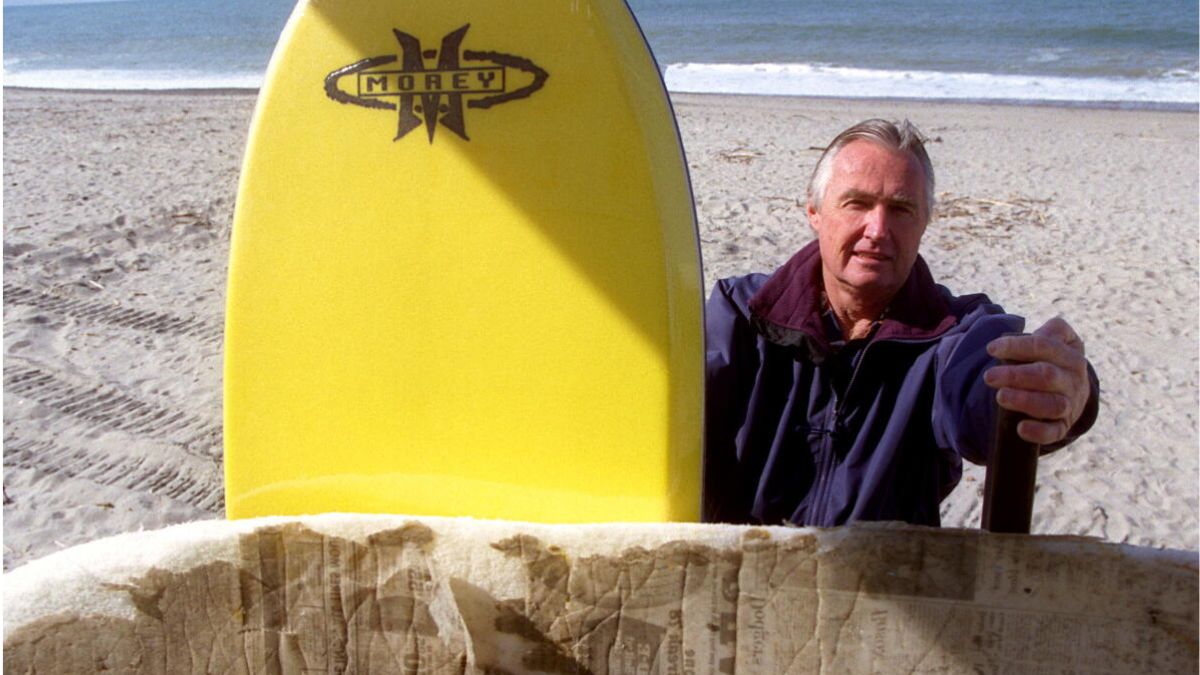
Tom Morey was a surfer, a mathematician, and a jazz musician, all at once. He’d already worked as an engineer at Douglas Aircraft and run his own surf shop. By the early 1970s, he was living a simple, stripped-down life on Hawaii’s Big Island.
The first boogie board came together almost by accident. Morey borrowed an electric carving knife and a household iron. He took a block of scrap polyethylene foam and shaped it into a short, rectangular board with a rounded nose.
He smoothed the surface with newspaper pressed under a hot iron. The finished board weighed about three pounds, a fraction of a normal surfboard.
Then he paddled out to try it, at a break called Honl’s on the island’s west side. What struck him wasn’t speed. It was how directly he could feel the wave move underneath him, something a stiff surfboard never let him do.
Most sources point to early July 1971, often cited as July 7, as the date of that first ride.
How to Boogie Board: Quick Guide
Getting up and riding a wave takes minutes to learn, but a few basics separate a good first session from a frustrating one. Here’s the rundown, from picking gear to catching your first wave.
Gear: A board reaching chin to chest height, swim fins (for paddle power and quick corrections), and a leash on your wrist or bicep.
Read the water: Watch for a minute before paddling out. Spot rip currents (gaps where water moves outward faster), see where others are riding, and start in the whitewater near shore rather than out past the breaking waves.
Paddle out: Lie on the board and paddle through smaller whitewater with your nose up. For bigger waves, push the nose down and duck-dive under as it passes.
Catch the wave: Face the shore, watch behind you, and paddle hard with your fins right as the wave arrives, nose angled slightly down, until it picks you up.
Ride it: Grip the top corners, keep your elbows in, and raise your chest slightly to avoid nose-diving (the most common wipeout). Shift your weight toward the rail to turn.
Kick out: Angle off the wave’s shoulder or roll off before you hit the shallows, and check behind you before paddling back out.
If caught in a rip, swim parallel to shore before heading in. Keep the leash on, and don’t push past waves bigger than you can handle.
How the Boogie Board Became a Popular Beach Product
Morey didn’t waste time turning his prototype into a business. Here’s how it grew over time:
- End of 1971: Morey signs a deal with Larry Smith of G&S Surfboards to help produce the boards.
- Early years: He sells boards from his own backyard for $37 apiece, a price chosen to match his age at the time.
- Mid-1970s: Morey opens a shop in Carlsbad, California, as demand grows beyond what he can manage by hand.
- Late 1970s: He sells the Morey Boogie brand to Kransco, a San Francisco toy company that helps expand production and distribution.
- 1994 to 1997: Kransco is acquired by Mattel, which then sells its sports division, including Morey Boogie, to Wham-O. Wham-O still holds the registered Boogie Board trademark today.
Kransco brought the boards into department stores across the country, turning a small garage project into a product found alongside other popular beach and outdoor items.
As production expanded, Boogie Boards spread from Hawaii and Southern California surf shops to beaches nationwide, becoming a common sight far beyond the surf scene that first made them.
How Boogie Boarding Became a Sport
A product this easy to use was bound to attract people who wanted to push it further. Like other water board sports, boogie boarding eventually developed its own competitive scene, techniques, and dedicated riders.
The first professional contest, the Morey/Gap Pro, ran in 1979 in Huntington Beach, sponsored by Morey’s own company. Things got more organized in 1982, when the International Morey Boogie Bodyboard Pro Championships (IMBBPC) brought riders to Oahu’s Banzai Pipeline and crowned Daniel Kaimi as the sport’s first world champion.
Mike Stewart defined the era that followed: nine world titles starting in 1982, the nickname “Mister Pipeline,” and a role in introducing riders to the Tahitian wave Teahupo’o.
Stephanie Pettersen won the first Women’s World Championship at Pipeline in 1990 and took four world titles. In 2013, Australian rider Jake Stone landed the sport’s first-ever 720 air at an IBA World Tour event.
The sport’s governing body has changed names several times:
- The International Morey Boogie Bodyboard Pro Championships, the sport’s flagship contest at Pipeline (1982 to 1994)
- GOB World Tour (1994 to 2002)
- IBA World Tour (2003 to 2013)
- Association of Professional Bodyboarders, the APB (2014 to 2019)
- International Bodyboarding Corporation, the IBC (2020 to present)
The format stayed the same through every rebrand: riders from Hawaii, Brazil, France, Australia, and South Africa, competing at the same handful of world-class breaks. The IBC has run the tour since the APB folded in 2019, now across six divisions.
How Boogie Boards Changed Over Time
Early Boogie Boards were built with a simple goal: make wave riding easy and accessible. The first designs were little more than lightweight foam slabs with a rounded nose and flat bottom, focused more on floating and stability than speed or advanced moves.
As riders began pushing the limits of the sport, manufacturers started improving the design with features that gave better control and performance:
- Stiffer cores for improved stability and response
- Slicker bottoms to help boards move faster across the water
- Improved tail shapes to make sharper turns possible instead of only riding straight
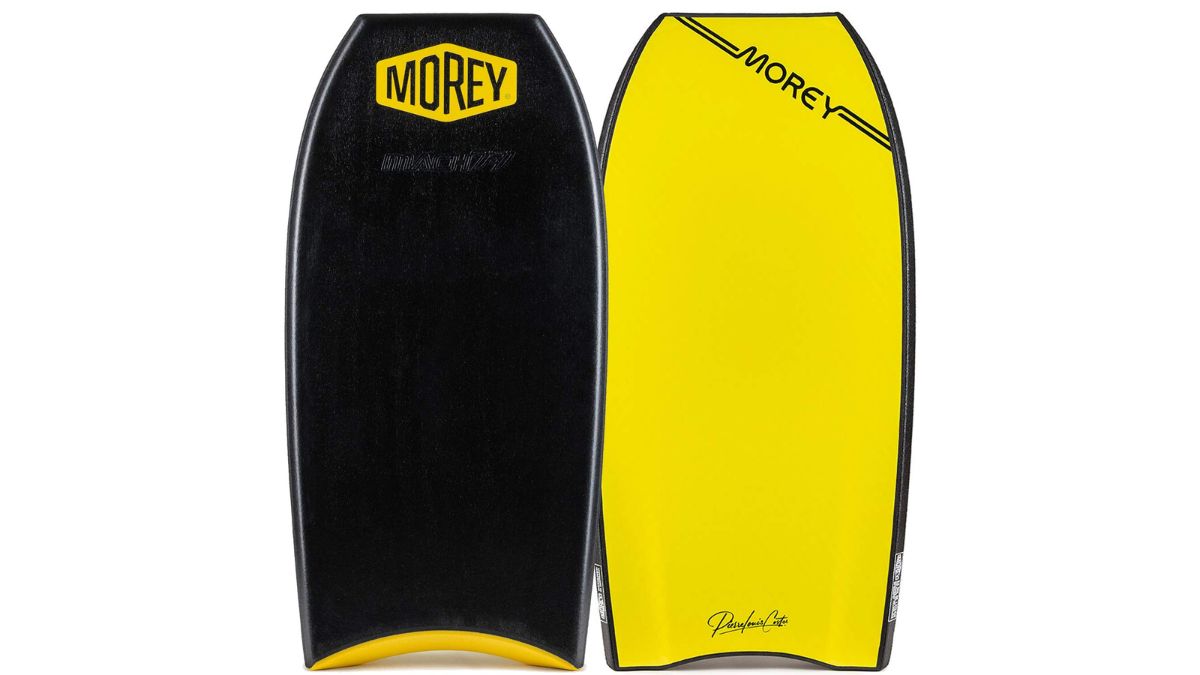
The Morey Mach 7-7 became one of the biggest turning points in this evolution. Released in 1982, it introduced a slick bottom design that helped riders generate more speed across the wave face and handle more demanding conditions. The board quickly became one of the most recognized designs in bodyboarding and influenced many later models.
As technology improved, boards moved from basic polyethylene foam cores to lighter polypropylene materials. Manufacturers also added carbon-fiber stringers for extra strength and channels on the bottom to improve water flow.
These changes let riders choose boards for different styles, including prone riding, drop-knee riding, and advanced performance riding.
Why Boogie Boarding Became So Popular
Boogie boarding stuck around for reasons that have nothing to do with nostalgia. It’s genuinely one of the easiest ways to get up and riding on a wave.
- No need to stand up, so the learning curve is much smaller than surfing
- Boards are light enough for a kid to carry, and cheap enough that losing one isn’t a disaster
- Beginners can catch small whitewater waves within their first few tries
- Experienced riders can still push it hard in serious surf; look at Mike Stewart’s decades at Pipeline
That range is rare in a beach sport. A five-year-old and a world champion can use the same basic tool, just in very different conditions. Surfing asks for balance and years of practice before it feels good. Boogie boarding mostly asks for a wave and a willingness to paddle out.
Boogie Board vs Bodyboard: What Is the Difference?
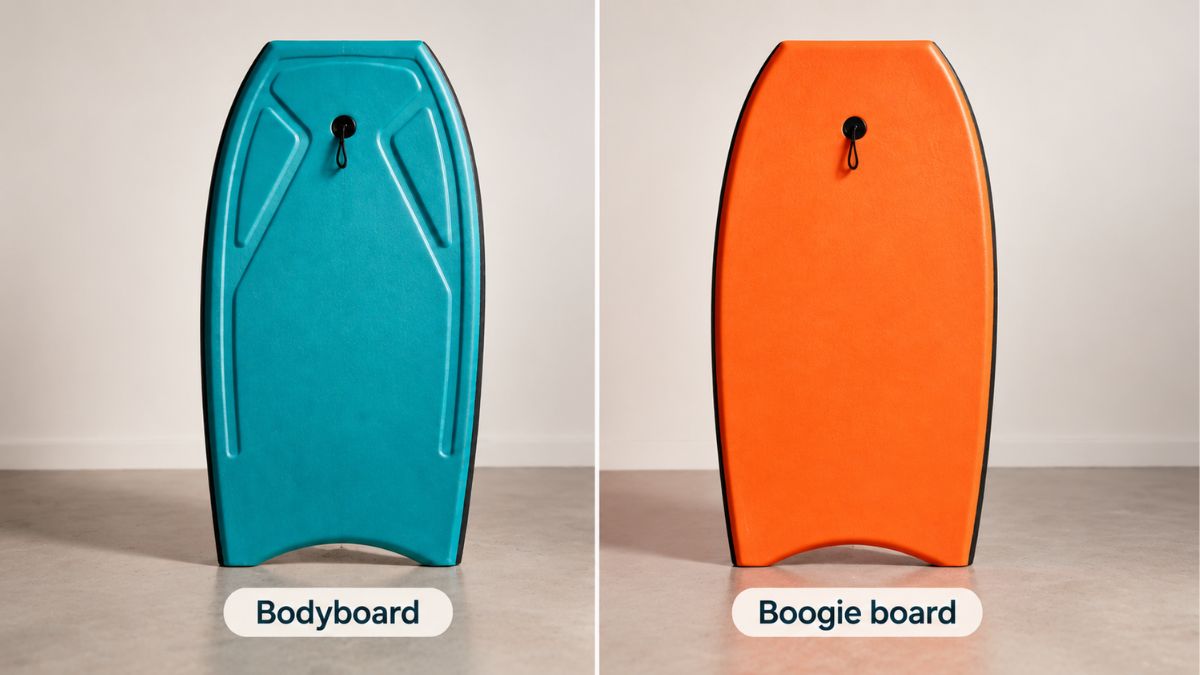
People use “boogie board” and “bodyboard” interchangeably, and that’s fine. But the two terms come from different places.
Bodyboard is the generic name for the equipment: a short foam board ridden lying down. Boogie Board started as Tom Morey’s own brand name. Kransco trademarked it later, once it bought his company.
Once Kransco owned that trademark, competitors legally couldn’t call their boards “boogie boards.” So the wider industry settled on “bodyboard” as the neutral term.
But because Morey’s original board came first and got so well known, plenty of people still call any board a boogie board, the same way some people call any tissue a Kleenex. So, boogie board vs bodyboard? Same object, two names, one older trademark.
Wrapping Up
Boogie boarding didn’t start with Tom Morey, but it wouldn’t exist in its current form without him. He took a habit that Polynesian wave riders had practiced for centuries and turned it into something anyone could pick up at a beach shop and use that same afternoon.
From backyard foam blocks to the Mach 7-7, and to nine world titles for Mike Stewart at Pipeline, the boogie board has stayed true to Morey’s original idea: a board so simple the wave does most of the talking.
That simplicity is still why a new rider can grab one today and feel something close to what Morey felt on his very first ride in 1971.
Frequently Asked Questions
Why is it Called a Boogie Board?
Morey named his invention after boogie-woogie music, though he also credited the idea’s spirit to a phrase from a prayer he’d been reflecting on around the same time. Either way, the board’s easy, flowing motion on a wave is what stuck in his mind.
Is Boogie Boarding The Same as Bodyboarding?
Yes. Bodyboard is the general term for the equipment, while Boogie Board was Morey’s trademarked brand name that later became the word many people use for any board.
Who Was Bodyboarding’s First World Champion?
Daniel Kaimi won the first International Morey Boogie Bodyboard Pro Championships in 1982. Stephanie Pettersen became the sport’s first female world champion in 1990 and went on to win four world titles.