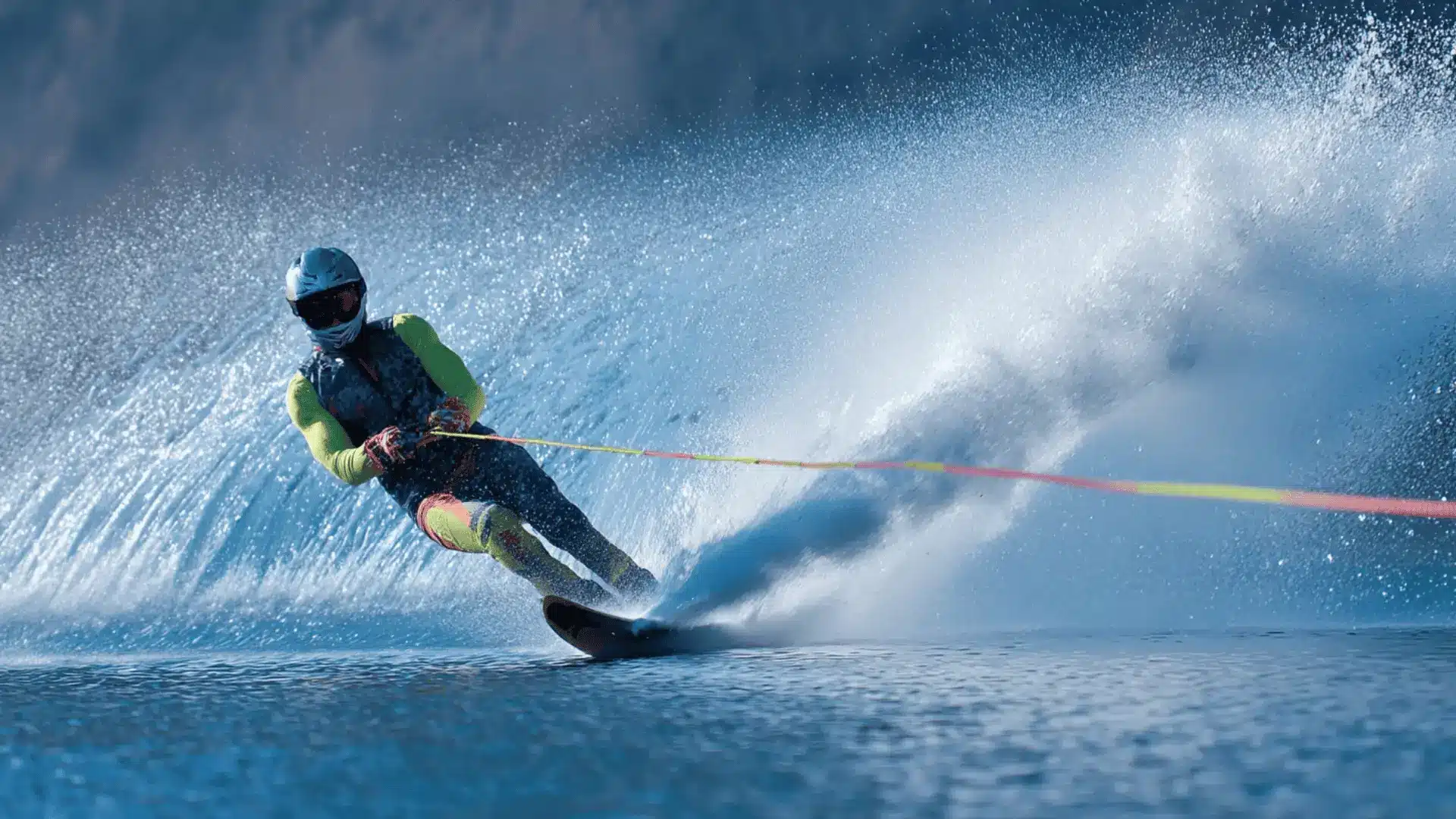
There’s something thrilling about gliding across a lake with just a rope in hand, and that’s exactly what slalom skiing on water brings to life.
I’ve always loved the feeling of carving sharp turns and skimming over waves, but quickly learned that having the right equipment makes all the difference.
From choosing the right ski shape to picking bindings that fit comfortably, each decision changes how smooth and exciting the ride feels.
Over the years, I’ve tried a mix of skis, ropes, and handles, and I’ve seen how different brands and types can completely change performance. I’ll share what works for beginners, intermediate skiers, and those chasing sharper edges, making it easier to enjoy every moment on the water.
What is Slalom Water Skiing?
Slalom water skiing means riding on a single narrow ski while being towed behind a boat.
The skier carves back and forth across the boat’s wake, making sharp turns at speed. It is one of several towed water sports, alongside wakeboarding and kneeboarding, but slalom stands apart because of how much precision it demands.
Recreational slalom is what most people start with: getting up on one ski, crossing the wakes, and building comfort with turns.
Tournament slalom takes it further. A course of six buoys is set up in the water, three on each side of the boat’s path. The skier weaves around every buoy in a zigzag pattern.
After a clean pass, the boat speed increases until reaching a maximum (36 mph for men, 34 mph for women), and then the tow rope gets shorter. The shorter the rope, the harder it is to reach the buoys. Scores are based on how many buoys a skier clears before missing one or falling.
Most riders stay on the recreational side, and that’s where this guide focuses. But understanding the tournament side helps explain why ski design, rope length, and binding fit matter so much, even for casual riders.
Types of Water Ski Equipment Every Slalom Skier Should Know
Having the right equipment makes slalom skiing feel smoother, safer, and more fun. Each piece plays a role in control, balance, and confidence on the water.
- Slalom Skis: A single narrow ski made for sharp turns and clean carving behind the boat.
- Combo & Beginner Skis: Wider skis that make starting easier and help build balance and confidence.
- Bindings & Boots: Good fit and adjustability keep the feet secure and improve comfort and control.
- Tow Ropes & Handles: The right rope length and grip shape improve balance, steering, and overall performance.
- Fins & Accessories: Help with stability, tracking, and smoother turns during slalom runs.
When all the equipment works together, slalom skiing feels more controlled, more comfortable, and a lot more enjoyable from start to finish.
How to Size a Slalom Ski by Weight and Speed
Ski length is one of the most common things new buyers get wrong. A ski that is too short feels unstable at lower speeds, and a ski that is too long turns slowly and feels sluggish through the wakes.
Most manufacturers base their sizing on rider weight, with adjustments for speed and skill level.
Here is a general sizing guide. If your weight falls between two sizes, beginners should go up a size for more stability, and experienced skiers can go down for quicker response.
| Rider Weight (lbs) | Ski Length (inches) |
|---|---|
| 80 – 120 | 59 – 63 |
| 120 – 150 | 63 – 66 |
| 150 – 180 | 66 – 68 |
| 180 – 210 | 67 – 69 |
| 210+ | 69 – 72 |
Keep in mind that every brand sizes slightly differently. Two 67-inch skis from different manufacturers may be built for different weight ranges. Always check the specific size chart from the brand before buying.
Slalom Ski Materials: Fiberglass, Carbon, and Graphite
The shell material of a slalom ski affects how it flexes, how it responds in turns, and how much it costs. All slalom skis use a foam core, but the outer layer varies.
Fiberglass is the most common material. It offers a good balance of flex and durability, making it comfortable for new and intermediate skiers. Fiberglass skis absorb bumps well and are more forgiving on rough water. Most skis under $500 use fiberglass construction.
Carbon fiber is stiffer and lighter. It transfers energy faster, which gives advanced skiers quicker edge response and tighter turns. Carbon skis resist tip flex in hard carves, allowing a smaller turning radius. They cost more, usually $600 and up.
Graphite performs similarly to carbon but is often lighter and pricier. Competitive skiers who want maximum precision tend to favor graphite builds. Composite blends that mix carbon with fiberglass sit in between, offering some stiffness with a more comfortable ride.
For most recreational slalom skiers, fiberglass works well. Carbon and graphite start to matter when you’re running a slalom course regularly or pushing for tighter turns at higher speeds.
Top Slalom Water Ski Brands & Their Models
Choosing a brand comes down to how and where you ski. Some brands are built for aggressive course skiing. Others focus on comfort and easy starts for weekend riders. Here is a look at six options I have used or tested over the years.
1. HO Sports
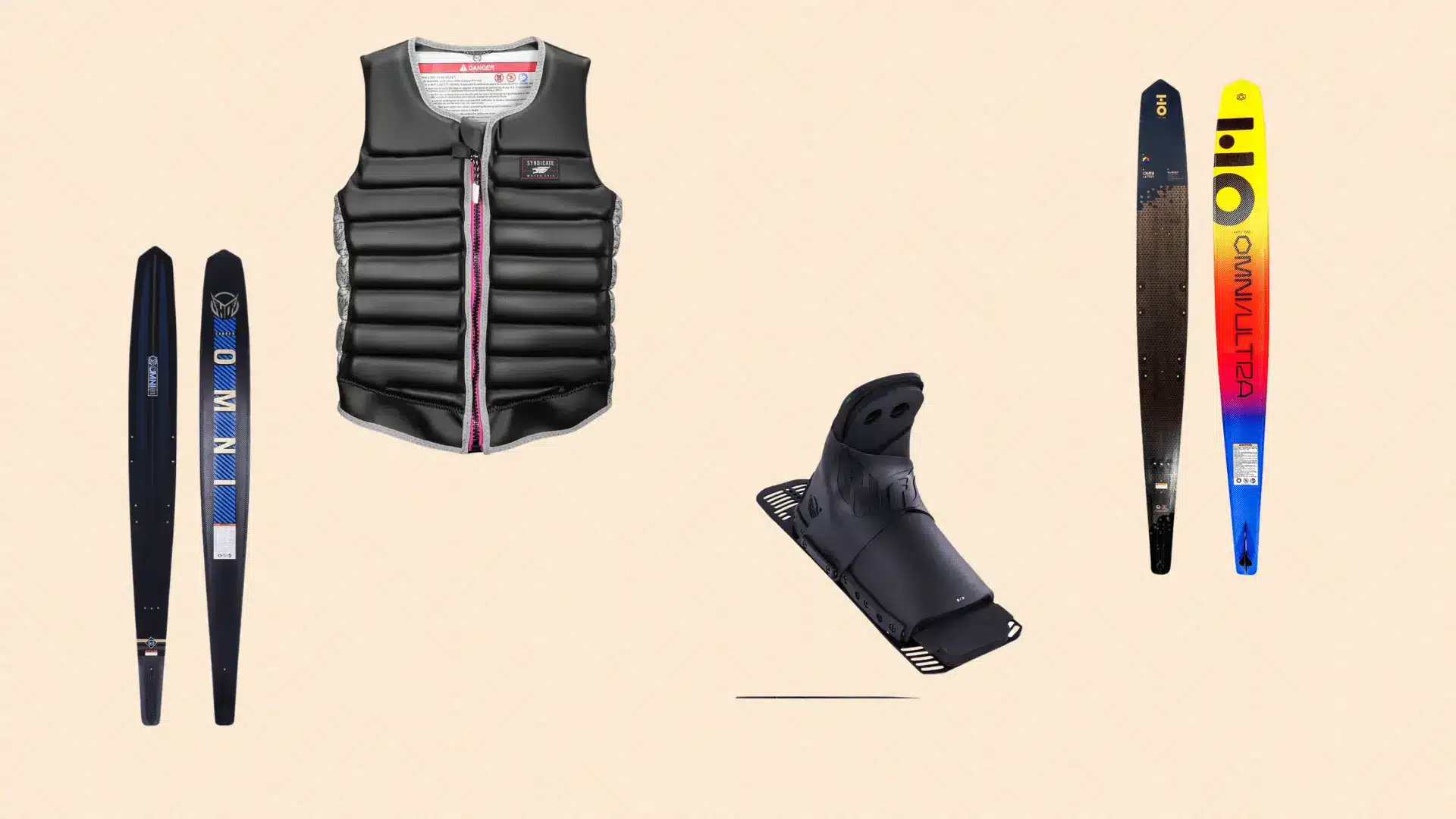
Brands like HO Sports make gear that feels smooth from a deep‑water start to turn. Their HO Carbon Omni is a strong choice if you want tight slalom turns and good speed with a responsive feel, thanks to a stiffer build and smart rocker design.
The HO Omni Ultra mixes slalom performance with more balanced carving, so it works well if you like both slalom and open‑water cruising.
Recommended Products: HO Carbon Omni, HO Omni Ultra, Vests Syndicate Ethos, Animal Rear Boots
2. Radar Skis
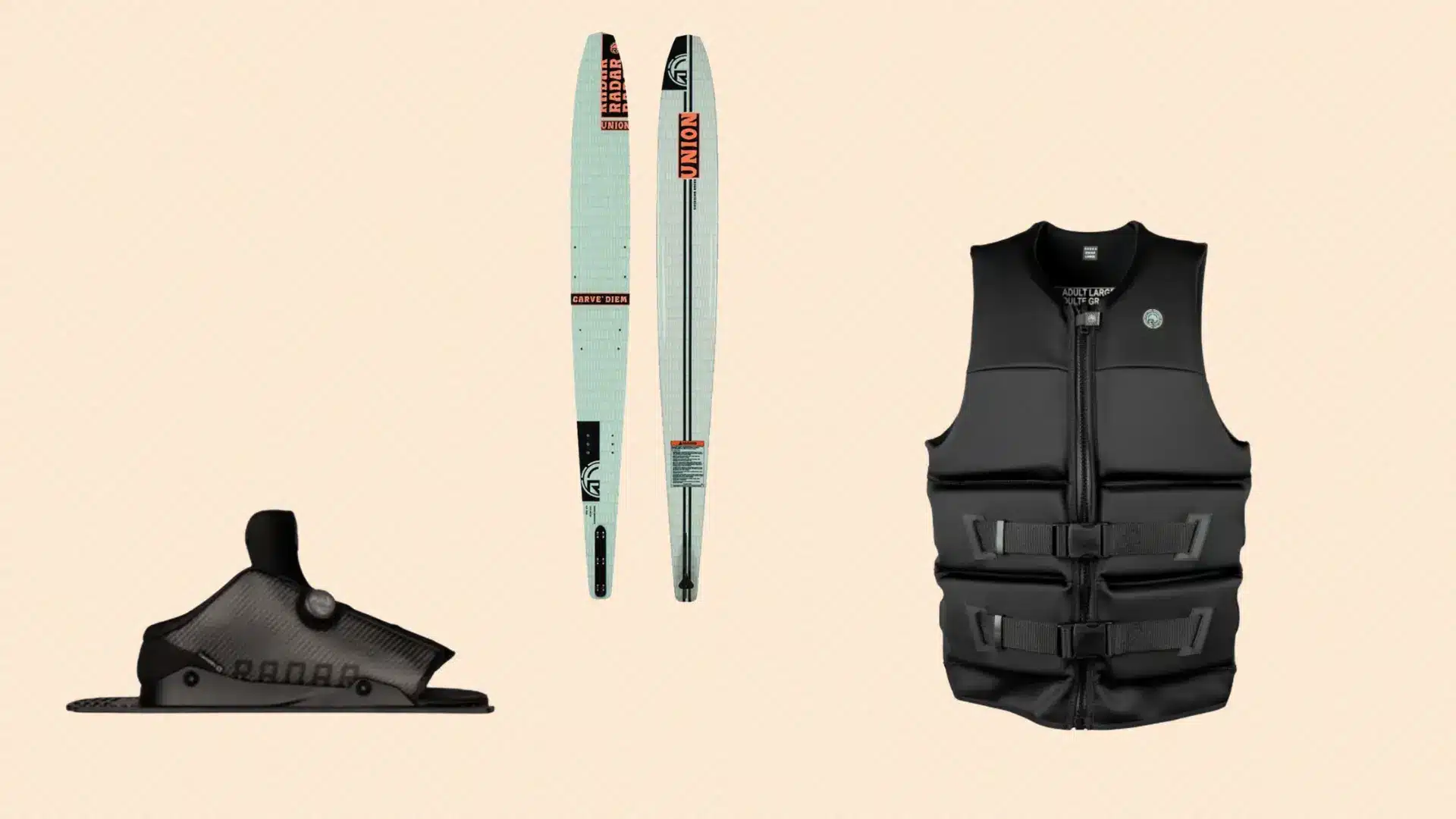
With Radar Skis, I find options that suit a wide range of styles and speeds. The Radar Senate series is one of their most popular; it blends carbon and wood, or advanced core materials, so you get stable, smooth turns whether you’re learning or pushing harder (good for cruising and course runs).
The Radar Union has a slightly larger surface area, which makes it easier to get up and hold the edge at slower speeds. It is a solid pick if you’re starting or prefer relaxed slalom rides.
Recommended Products: Radar Union, Staple Cgg Vest, Toe Plate
3. O’Brien
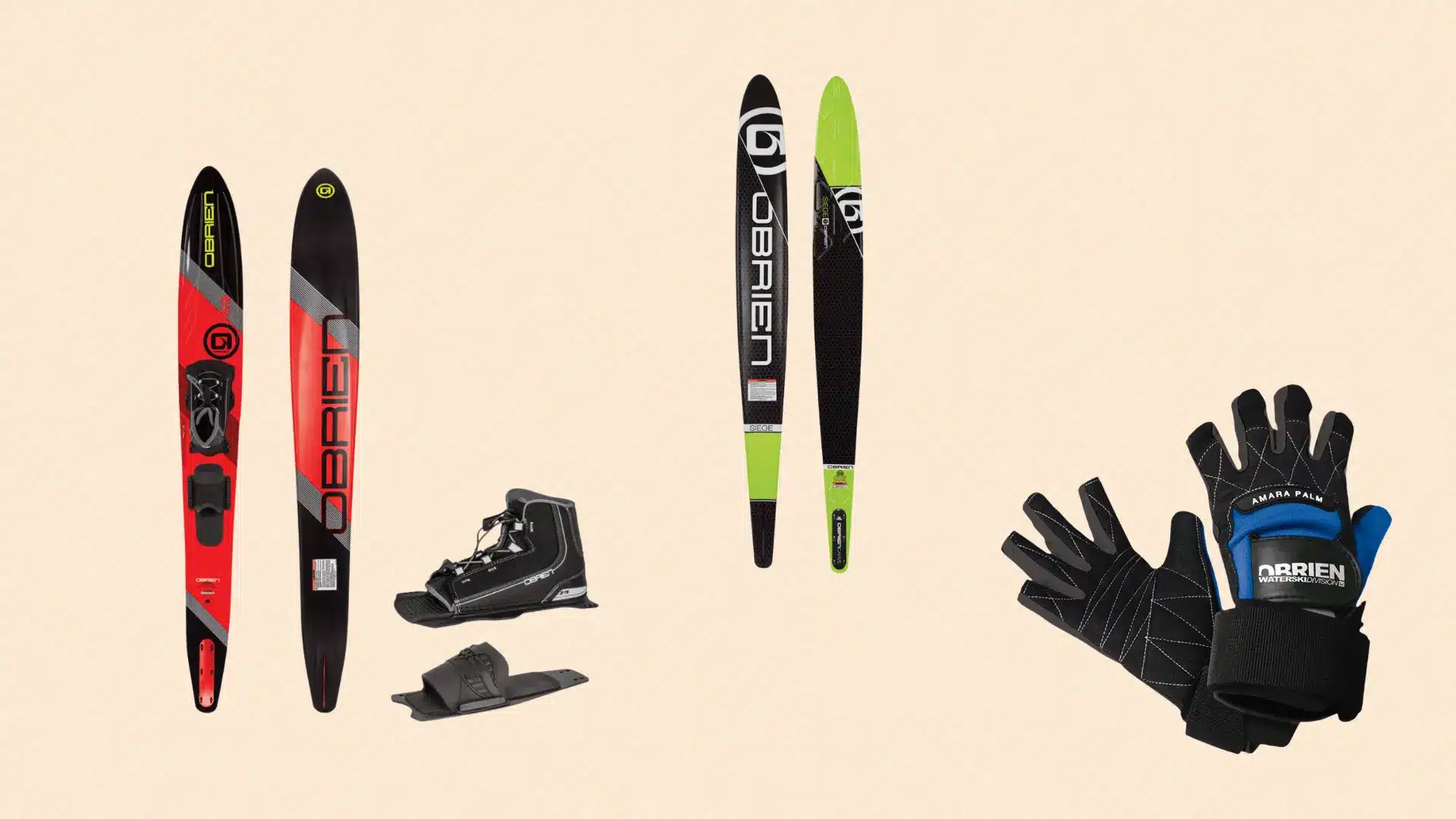
O’Brien has simple, reliable skis. The O’Brien Sequence, with its wider body and smooth rocker, helps beginners and intermediate skiers get up easily, stay balanced, and turn well with minimal fuss.
The O’Brien Siege gives a stable feel with good turn control, great if you want something that holds its line once you’re comfortable carving.
Recommended Products:O’Brien Sequence, O’Brien Siege, Water Ski Gloves
4. Connelly Skis
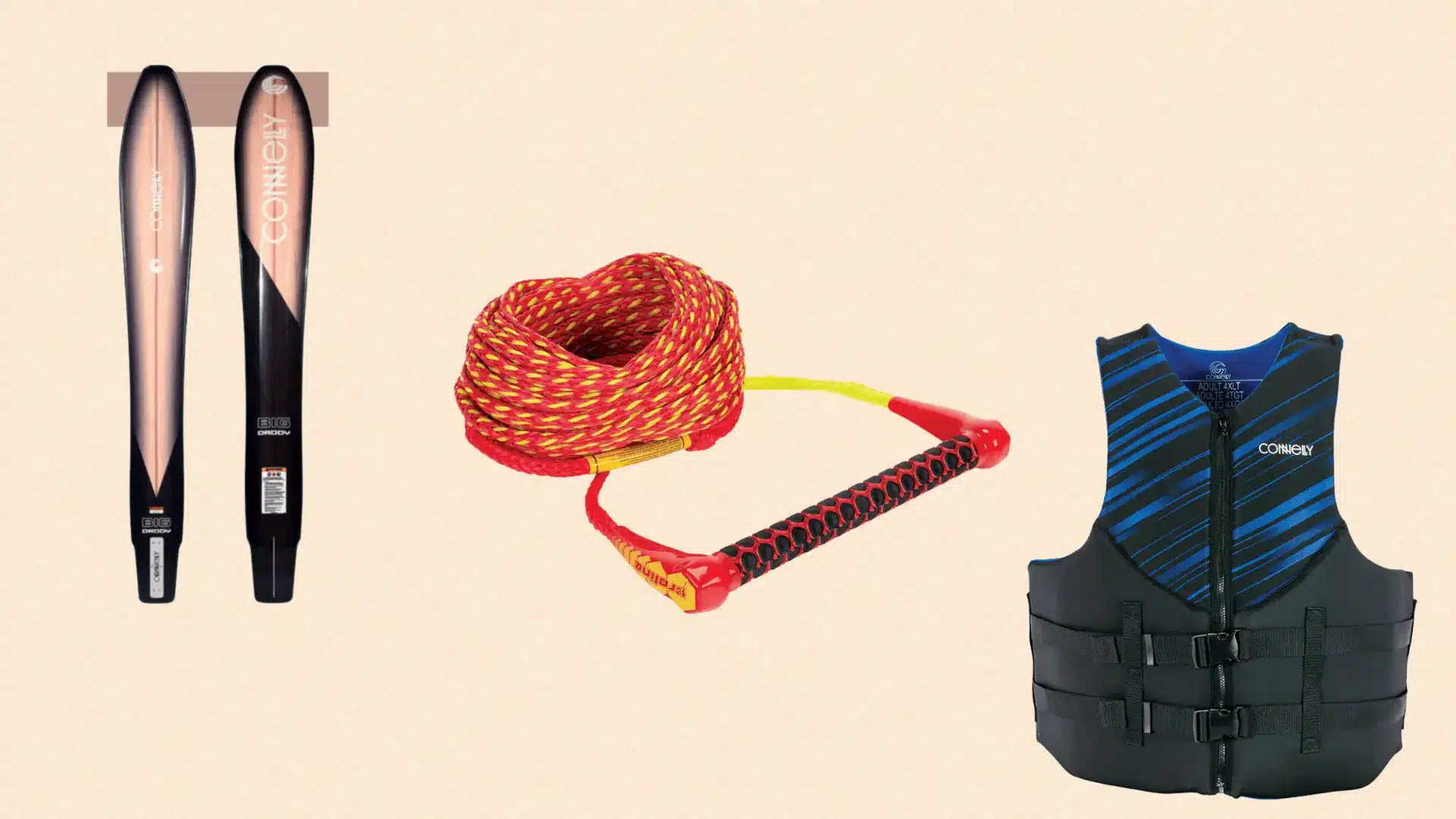
When I pick up Connelly Skis, one thing that stands out is how they think about rider size and style. The Connelly Big Daddy is a good choice if you’re a bigger rider or want extra lift and stability.
It feels solid under you. The Connelly Strato Pro leans toward smooth control and stability, so it’s great for riders who want calm confidence through turns and across chop.
Recommended Products: Connelly Big Daddy, Water-Ski Rope, Neoprene Vest
5. Jobe Water Skis
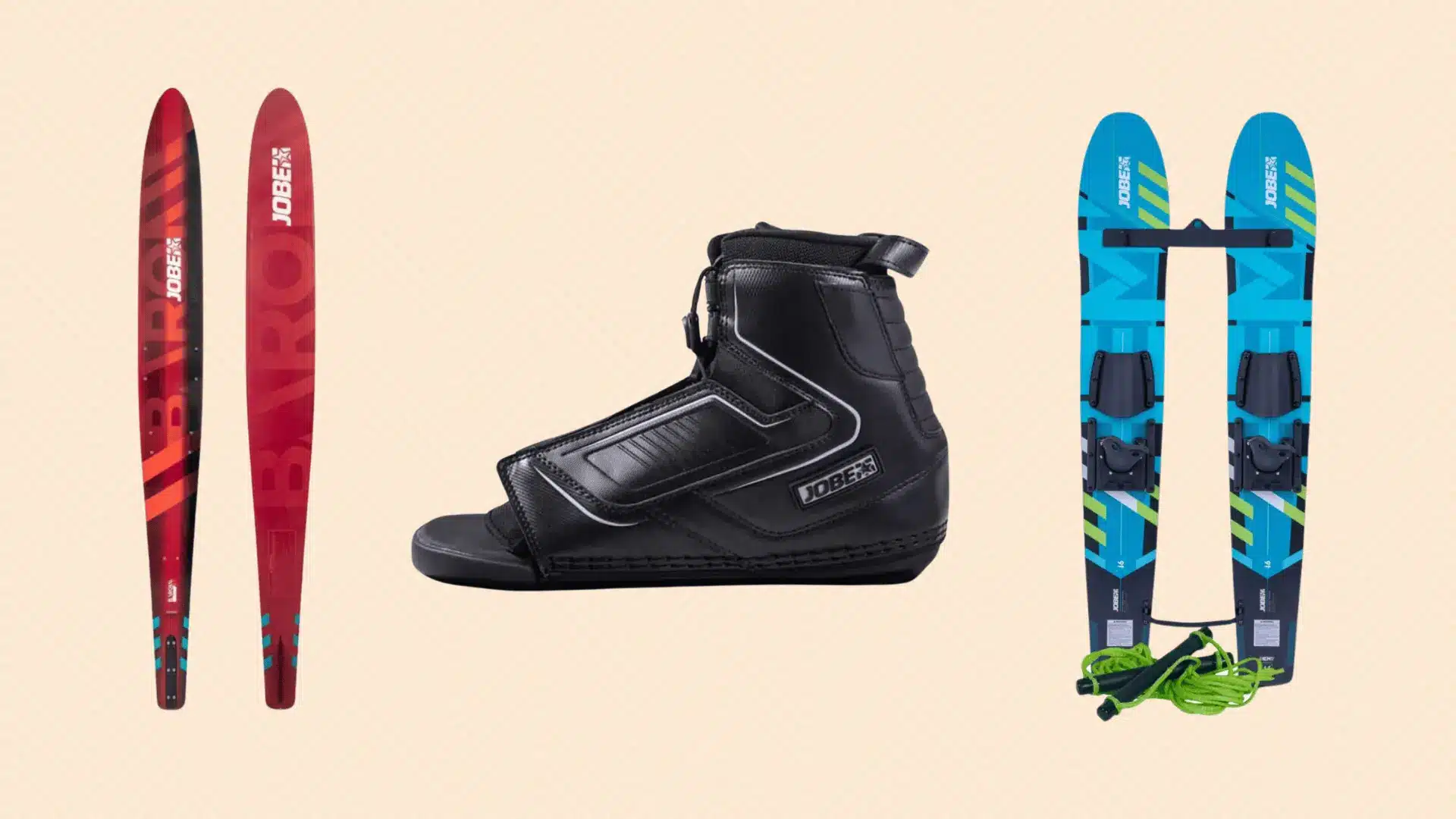
Jobe has been making slalom skis for a long time, and I like how they suit a wide range of skill levels. The Jobe Baron is a nice pick if you’re at an intermediate level.
It’s shaped to help you start turns easily and build confidence as you improve.
Recommended Products: Jobe Baron, Jobe Hemitrainer, Wakeboard Binding
6. Combo Skis (Multiple Brands)
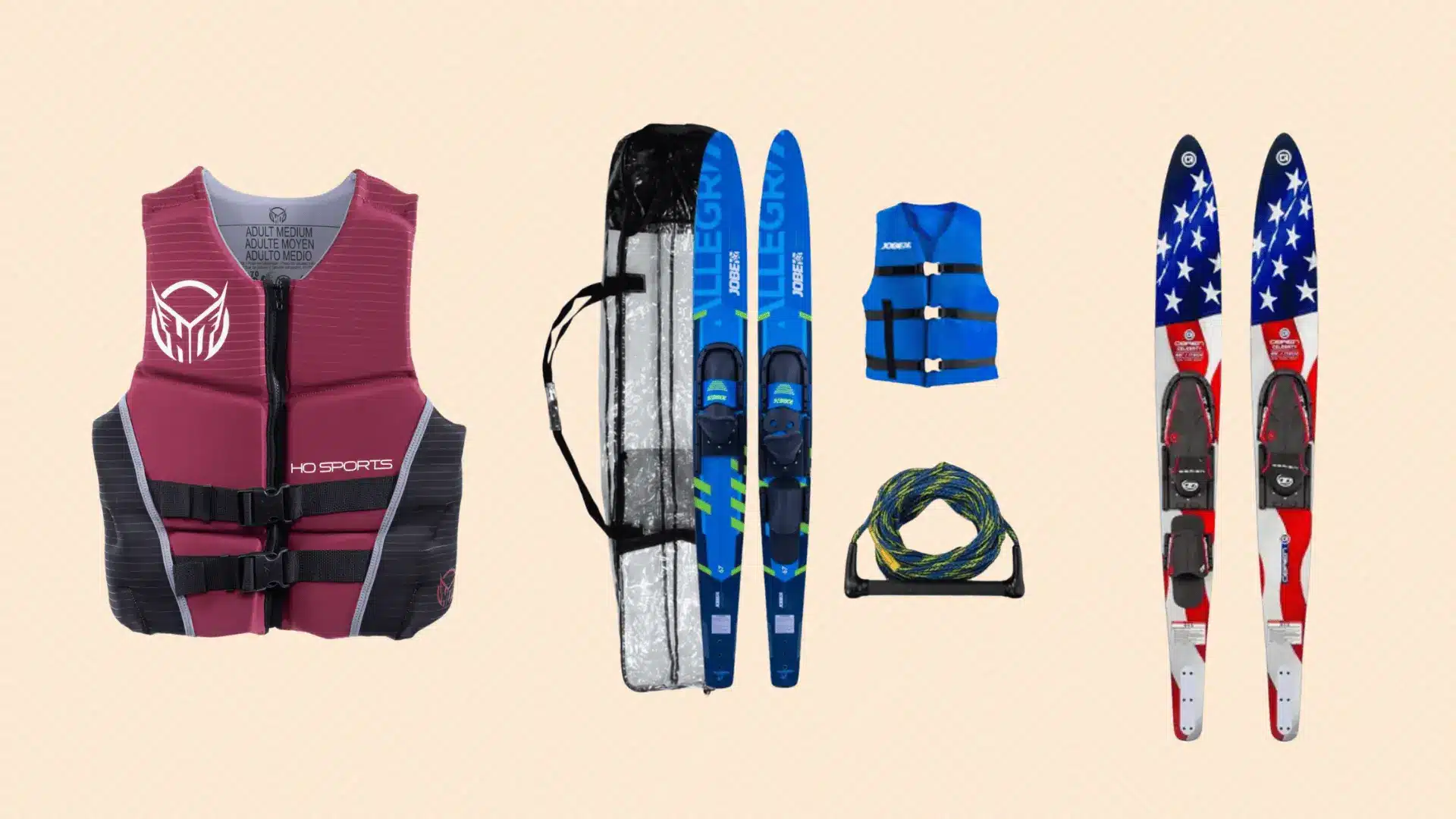
If you want an easy start or something for family fun before dropping into a single slalom ski, combo options are a good choice.
Models like the O’Brien Celebrity are beginner‑friendly pairs that help you get up easily. The Jobe Allegre offers a smooth transition from relaxed cruising to slalom, so you can grow your skills without stress.
Recommended Products: O’Brien Celebrity, Jobe Allegre, Ho Sports Vests
How to Choose the Right Slalom Ski for Your Skill Level?
Finding the right slalom ski is all about fit, balance, and control. Skill level comes first, because beginners need more stability, while intermediate and advanced skiers need quicker turning and better edge hold.
Wider skis help new riders stay steady, and narrower skis give experienced riders a faster response. Ski length also plays a big role; matching it with body weight and skiing speed makes starts smoother and turns easier to manage.
A ski that’s too short feels shaky, while one that’s too long feels slow. Bindings and boots complete the setup. A proper fit keeps the foot secure and comfortable, and the right boot style improves balance and control, helping every ride feel safer.
Slalom Water Skiing Budget and Equipment Goals
I always think about both my goals on the water and my budget when planning my water skiing gear.
For beginners, plan to spend around $150–$300 on stable combo skis, easy-to-use bindings, and a simple rope and handle. That is enough to get comfortable, stay balanced, and enjoy those first runs without worrying about high-end gear.
Intermediate skiers might spend $300–$600 on skis that improve edge control, slightly better bindings for comfort and performance, and a high-quality rope and handle that make turns smoother.
Advanced or competitive riders often budget $600–$1200+ for lightweight carbon slalom skis, high-performance bindings, and specialized ropes and handles that allow precise carving and faster speeds.
Final TipsBefore You Buy
A little preparation goes a long way in making every ride more fun and safe. Here are my top tips:
- Try Gear at Demo Days: Testing skis, bindings, and handles in real conditions helps me feel what works best for me.
- Ask About Ski Size – Matching ski length to your weight and the boat’s speed makes starting and carving much easier.
- Consider Resale Value: High-quality skis and gear retain value, making upgrades later easier and less expensive.
- Set a Clear Budget First: Picking a spending limit early helps avoid buying gear you don’t really need.
- Match Gear to Your Skill Level: Using skis and bindings suited to your level makes learning smoother and keeps progress fun rather than frustrating.
Following these tips helps me pick gear that fits my skill, feels right on the water, and keeps me ready for a great season every time.
Wrap-Up
Slalom skiing on water becomes way more exciting when you have the right gear under your feet.
It is a certainty that using skis, bindings, ropes, and safety equipment that match my skill level and goals makes each run smoother, faster, and more fun.
Experimenting with different types of equipment has helped me learn new techniques and enjoy the water more, whether I’m carving tight turns or cruising for fun.
Even small upgrades, like a better handle or the right boots, can make a noticeable difference.
If you want to get the most out of your time on the water, try out a variety of slalom gear, see what feels best, and don’t be afraid to test new options. Start your next session with confidence and fun.
Frequently Asked Questions
What Slalom Skis are Best for Beginners?
I usually recommend stable combo skis with easy-to-use bindings. They make getting up and staying balanced easier while you build confidence on the water.
Can I Use The Same Rope for All Skill Levels?
Not always. Beginners do better with slightly longer, forgiving ropes, while advanced skiers often need shorter, high-performance ropes for quick turns and precise carving.
How Important is Safety Gear?
Life vests and helmets are a must, especially when learning to ski or when skiing in rough water. I never hit the water without them; they keep skiing fun and safe.