
Ever watch someone ski down a slope and wonder how they make it look so easy? There is a good chance they were using parallel skiing.
It is a technique where both skis stay side by side through every turn. No V-shape. No wide stance. Just skis pointing the same direction, moving together.
Most people pick it up faster than they expect, especially with a bit of guidance and the right slope to practice on.
It sits between the basic snowplow and more advanced carving. Getting it right means smoother turns, less tired legs, and more of the mountain to explore.
What is Parallel Skiing?
Parallel skiing is a technique in which both skis remain straight and at equal distance throughout the entire turn. Instead of spreading your skis into a “V” shape to slow down or turn, you control direction by shifting your body weight from one ski to the other.
Think of it like this. When you first learn to ski, your skis form a triangle. That’s called a snowplow, or “pizza.” Parallel skiing is the opposite. Your skis stay side by side, like the number 11, or if you prefer, like two French fries.
It sits right between beginner snowplow and advanced carving on the skiing skill ladder. Most skiers consider it the point where real skiing begins.
Once you nail it, everything changes. You move more smoothly, waste less energy, and can access more of the mountain. It is not just a technique. It is a turning point in your skiing journey.
Why Does it Matter?
Snowplow only gets you so far. It is tiring and limits you to easy slopes. Parallel skiing saves energy, gives you more control, and opens up harder terrain. Once you learn it, the whole mountain becomes accessible. It is the skill that separates beginners from real skiers.
Parallel Skiing vs. Snowplow
Snowplow uses a “V” shape to control speed. Parallel skiing keeps both skis straight and side-by-side. Same mountain, completely different technique, effort, and experience.
| Feature | Snowplow | Parallel |
|---|---|---|
| Ski position | V-shape | Side by side |
| Speed control | Spread skis wider | Edges and weight shift |
| Energy use | High | Low |
| Best terrain | Green slopes | Blue / Red (intermediate) and beyond North America: blue and black diamond runs |
Snowplow is a great starting point, but it has limits. Parallel skiing gives you more control, less fatigue, and access to the whole mountain.
Are You Ready to Learn Parallel Skiing?Before moving into parallel skiing, make sure your basic control feels comfortable and consistent. Trying it too early often leads to frustration and shaky technique. Quick Readiness Check✔ You can ski down a green slope without falling If You Checked All FourYou are ready to start learning parallel skiing. If some of these still feel difficult, spend a little more time building confidence with the basics first. Strong fundamentals make the transition much smoother. The snowplow is not something you leave behind. It is the foundation that teaches balance, turning, and control. Parallel skiing builds on those same skills step by step. |
Parallel Skiing Safety Tips Every Beginner Must Know
Before hitting the slopes, safety comes first. These simple tips keep you in control, prevent injuries, and make learning parallel skiing a much better experience.
- Start on gentle slopes: Always practice on green or easy blue runs. Never try parallel skiing on terrain that feels too fast or steep.
- Follow the Skier’s Responsibility Code: You are responsible for avoiding skiers below you. Check official guidelines from the National Ski Areas Association.
- Wear properly fitted gear: A well-fitted helmet and boots directly affect your balance and control. Never ski with ill-fitting equipment.
- Take a certified lesson: A PSIA certified instructor spots mistakes you cannot feel yourself. One good lesson saves weeks of bad habits.
- Know your limits: If a slope feels too fast, move back down a level. No run is worth an injury.
Learning parallel skiing is exciting, but never let eagerness override common sense. Stay in control, respect the mountain, and progress at your own pace.
5 Simple Steps to Nail Your First Parallel Turn
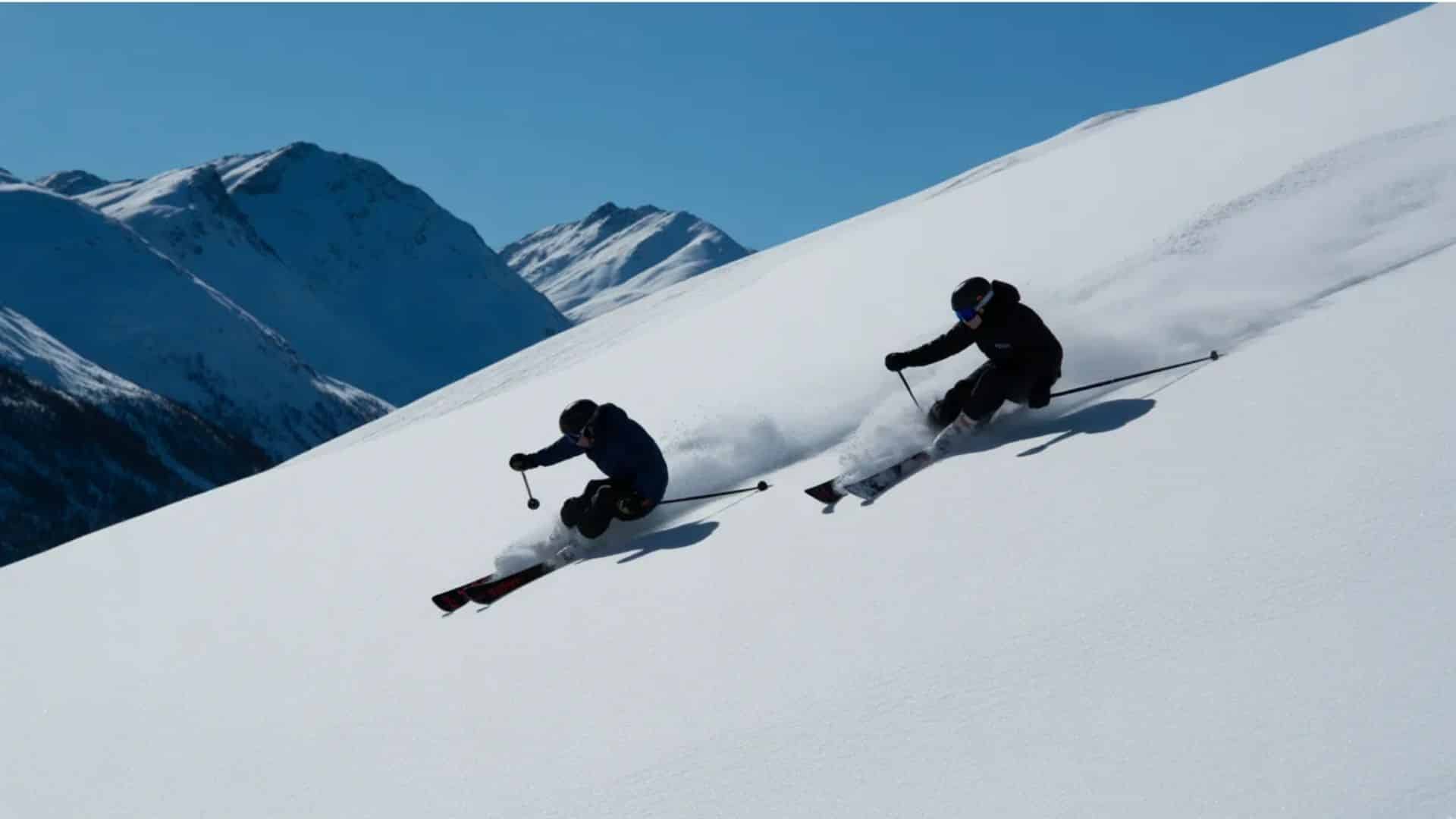
Most beginners overthink this part. Parallel skiing is not one big move. It is seven small ones done in order. Get each one right, and the rest follows naturally.
Step 1: Set Your Stance
Stand with your feet about shoulder-width apart, knees slightly bent, and your weight slightly forward from the ankles. Keep your hands in front of your body and your eyes looking down the slope, not at your skis.
A balanced stance helps you stay steady, react faster, and avoid leaning back, which is one of the most common beginner mistakes.
Step 2: Start on an Easy Slope
Choose a gentle green slope where you already feel comfortable and in control. Parallel skiing is much easier to learn when you are not worried about speed or steepness.
Starting on terrain that feels too difficult can make you stiff, nervous, and less willing to commit to the turn. Keep the slope simple while your technique develops.
Step 3: Bring Your Skis Closer
Start with your normal snowplow position, then slowly narrow the V shape as you move through each run. Do not force your skis to become parallel right away. Let them come closer naturally as your balance improves.
The goal is to gradually reduce the snowplow while maintaining control, a steady speed, and smooth turning from one side to the other.
Step 4: Shift Weight to the Outside Ski
As you begin each turn, place more pressure on the outside ski. For a left turn, your weight goes mainly onto the right ski. For a right turn, it goes onto the left ski.
This weight shift helps the ski grip the snow and guide your direction. Keep your upper body calm and avoid twisting your shoulders to force the turn.
Step 5: Link Smooth Turns
Once a single turn feels steady, start connecting one turn to the next. Let both skis change edges as they point downhill, then shape each turn into a smooth C across the slope.
Focus on rhythm, balance, and control rather than speed. Take your time, repeat the movement often, and only move faster when the turns feel natural.
Note: Practice parallel skiing on wide, gentle slopes with plenty of space around you. If speed starts feeling uncomfortable, move back into a snowplow to regain control before trying again.
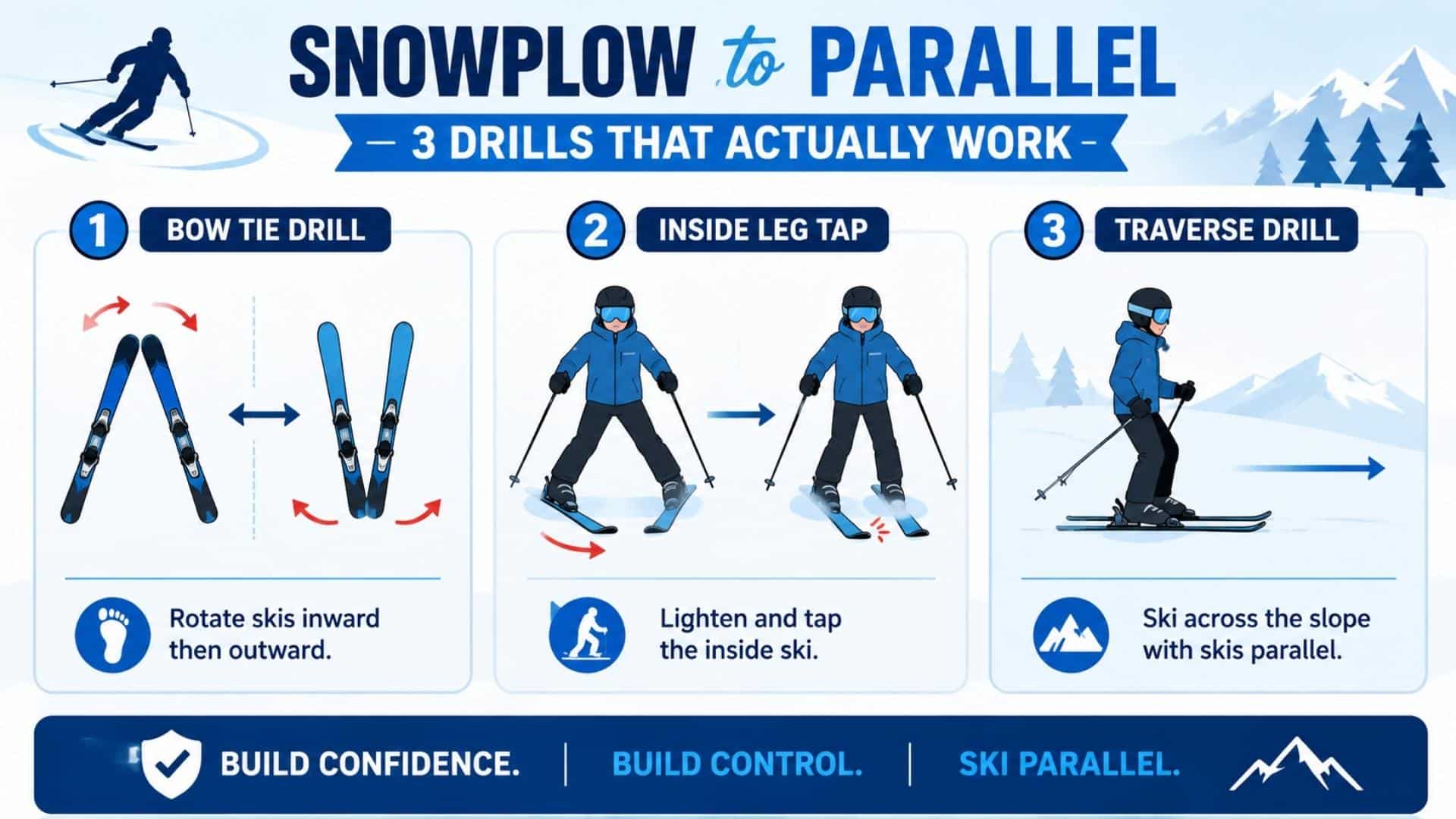
Common Parallel Skiing Mistakes Every Beginner Makes
Most beginners make the same mistakes. The good news is they are all fixable. Here is what to watch out for.
- Leaning back: the most common one. Leaning back causes you to lose control and speed. Always keep your weight forward over the balls of your feet, not on your heels.
- Turning with your upper body: Your legs do the turning, not your torso. If you lead with your shoulders, your legs engage too late, and the turn is already half over before they kick in.
- Too much weight on the uphill ski: Almost all your weight should be on the outside downhill ski during a turn. Weight on the uphill ski kills the turn before it starts.
- Starting on slopes that are too steep: Steep terrain triggers panic, and panic brings back the snowplow. Always practice parallel skiing on slopes well within your comfort zone.
- Trying to rush the process: Parallel skiing builds on muscle memory. Skipping steps or moving to harder terrain too soon creates bad habits that are hard to undo later.
Spot yourself making any of these? Go back one step, slow down, and fix the habit before moving forward. Progress built on a clean technique lasts much longer.
Parallel Skiing vs. Carving: What Comes After Parallel?
Once parallel skiing feels comfortable, most skiers start wondering what is next. The answer is carving. Here is how the two differ.
Parallel skiing: You control speed and direction by skidding your skis slightly through the turn. The skis slide to the side as they rotate. It is controlled, effective, and works on most terrain.
Carving: Your ski edges cut cleanly into the snow with no skidding. The turn leaves two clean lines in the snow rather than a smeared arc. It is faster, more precise, and requires stronger edge control.
Think of it this way. Parallel skiing is like sliding around a corner. Carving is like a racing car gripping the track and cutting through it cleanly.
How do you know you are ready for carving?
- Parallel turns feel automatic
- You can link turns smoothly without thinking
- You are comfortable on blue and red runs
Parallel skiing is not the finish line. It is the foundation on which everything else is built.
How Long Does It Take to Learn Parallel Skiing?Most beginners can start making parallel turns within a week of daily practice, especially with lessons. If you ski only once or twice a month, it may take a season. Kids often learn faster, but steady practice and good technique matter more than rushing progress. |
Final Thoughts
Parallel skiing is more than just a technique. It is the moment you stop surviving the mountain and start owning it. From setting a balanced stance to linking smooth, confident turns, every step you have read here builds on the last.
The transition from snowplow to parallel does not happen overnight, but with patience, the right slope, and consistent practice, it absolutely happens.
The whole mountain is waiting, and parallel skiing is your key to unlocking it.
Have you tried parallel skiing yet, or are you still building up confidence on the snowplow? Drop your experience in the comments. We would love to hear where you are in your skiing journey!
Frequently Asked Questions
How Long Does it Take to Learn Parallel Skiing?
Most beginners can start making parallel turns within a week of daily practice, especially with professional lessons.
Do I Need Lessons to Learn Parallel Skiing?
Lessons are not mandatory but highly recommended. A certified instructor helps you fix mistakes and build clean technique faster.
What is the Difference Between Parallel Skiing and Carving?
Parallel skiing involves slight skidding through turns, while carving cuts cleanly into the snow with no skidding at all.