
Water skiing safety rules exist for one reason: what goes wrong on the water tends to go wrong fast. Not because of freak accidents, but because someone skipped a step they assumed did not matter.
A missed signal, a slow response, a skier in the water with no one watching, that is how injuries happen.
Staying safe on skis goes beyond keeping your balance. It means having the right gear, knowing the hand signals, keeping a spotter on board, and knowing what to do the moment someone falls.
These are not complex rules. They are just easy to ignore when everyone is excited to get on the water.
Most water skiing accidents are preventable. The skiers and operators who avoid them are not more experienced. They are just more consistent about the basics.
The #1 Recommended Water-Skiing Safety Practice
Water skiing looks simple from the shore, but a lot can go wrong in seconds.
That is why every safety guideline, from the U.S. Coast Guard to state boating laws, identifies the same recommended water skiing safety practice above all else: always have a designated spotter on board, in addition to the boat operator.
The boat driver’s job is to navigate safely. They are watching other boats, docks, shallow zones, and incoming wakes. They cannot do all of that and keep both eyes on the skier at the same time.
The spotter fills that gap. They sit facing the skier, read hand signals, and alert the driver the moment something goes wrong.
Here is why it matters. A skier falls. The driver is focused on a crossing boat. Without a spotter, that skier stays unnoticed for 30 seconds with another boat approaching. A spotter catches that fall instantly.
That 30-second gap can be the difference between a close call and a serious accident.
Is a Spotter Legally Required?Yes, in most U.S. states, a spotter is required when towing a skier. Federal rules require at least two people in the boat while a third is being towed, one to operate the vessel, one to watch the skier. The spotter must be at least 13 years old, able to read hand signals, and able to render assistance if needed. Some states also require a ski flag when the skier is in the water. Always check your state’s boating rules before heading out. |
Top 8 Water-Skiing Safety Practices to Follow
Water skiing is fun, but it comes with real risks. Following these safety practices protects everyone on the water, from the skier to the boat operator.
- Always Wear a U.S. Coast Guard-Approved Life Jacket: Every skier must wear a Type III PFD before entering the water. It keeps you afloat without restricting movement on the skis.
- Always Have a Spotter on the Boat: Never tow a skier with just a driver. A dedicated spotter watches the skier and alerts the driver instantly if something goes wrong.
- Learn and Use Standard Hand Signals: Thumbs up means speed up, thumbs down means slow down, and arms crossed above the head signals the skier is okay after a fall.
- Maintain Safe Distance from Shoreline and Obstacles: Keep the skier at least 100 feet away from shores, docks, and swimmers at all times to avoid collisions.
- Inspect the Tow Rope Before Every Session: Check for fraying, knots, or damage before use. A standard tow rope should be 75 to 85 feet long.
- Ski Only During Daylight Hours: Water skiing is only permitted from one hour after sunrise to one hour before sunset in most states.
- Approach a Fallen Skier Slowly and Carefully: Circle back at idle speed from the driver’s side and shift to neutral before the skier is within reach of the boat.
- Teach Skiers the Right Way to Fall Fall backward and to the side, away from the skis. Once in the water, raise one arm and wait for the boat to return.
Following these practices significantly reduces the risk of accidents. Review them with your entire group before every session, not just the first time you head out.
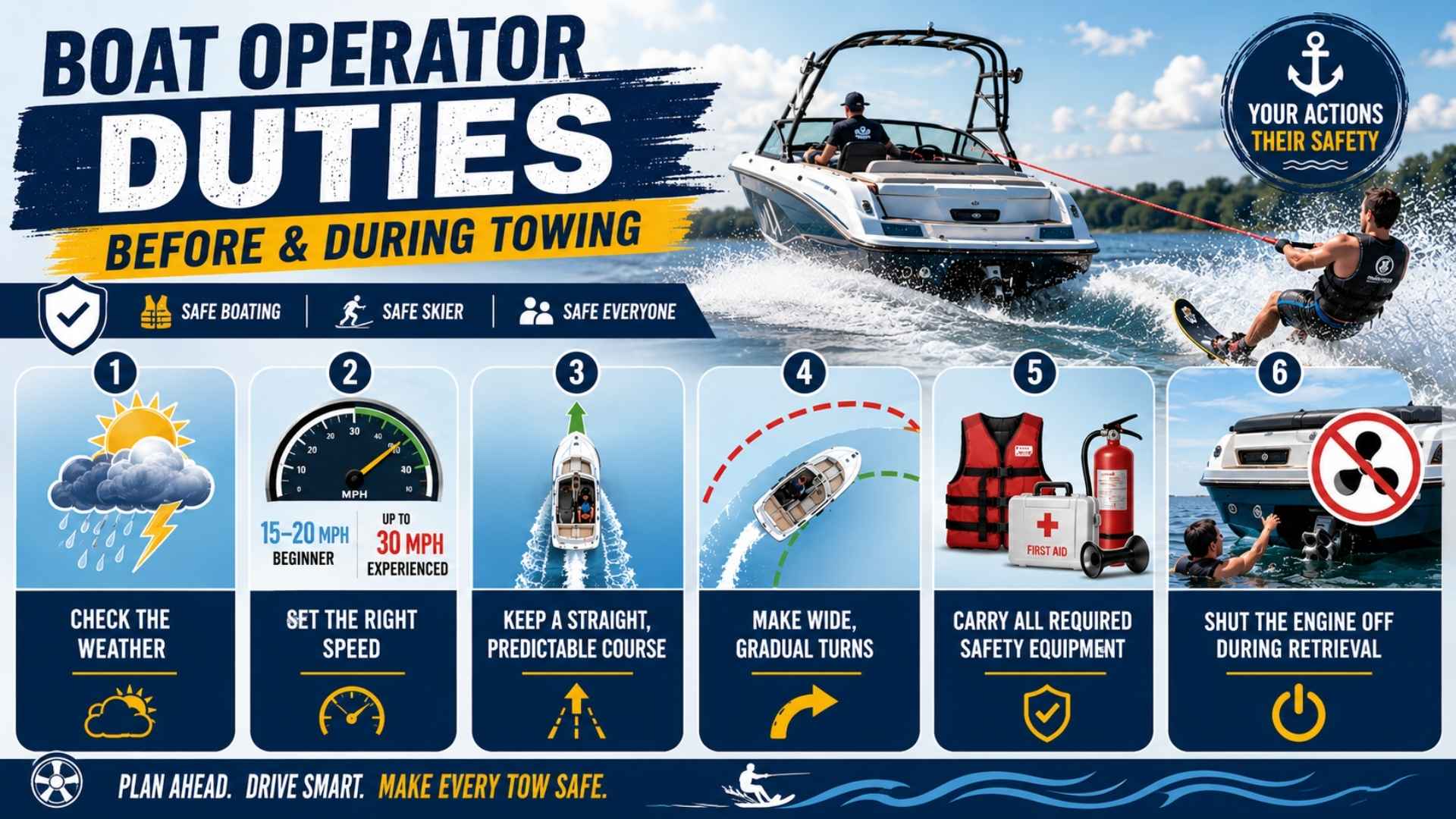
Essentials for Safer Towing
Good equipment helps the skier stay visible, protected, and easier to assist during towing. Before every ride, check that each safety item is ready to use.
| Equipment | Why It Matters |
|---|---|
| U.S. Coast Guard-approved life jacket | Keeps the skier afloat and supports safer movement in the water. |
| Proper tow rope and handle | Gives the skier a secure grip and helps maintain safe towing control. |
| Rearview mirror | Helps the operator monitor the skier, though a spotter is still strongly recommended. |
| Bright ski flag | Alerts nearby boaters when a skier is down in the water. |
| First aid kit | Helps treat minor cuts, rope burns, or small injuries quickly. |
| Emergency sound device | Allows the boat operator to signal nearby boats during emergencies. |
The right gear supports all recommended water skiing safety practices. Check these items before leaving the dock, so small problems do not become serious on the water.
How to Rescue a Fallen Water Skier Safely
Rescuing a fallen skier takes calm teamwork. The driver controls the boat, while the spotter keeps the skier visible and alerts everyone nearby.
- Slow down after the fall: Reduce speed gradually so the boat stays controlled and the skier remains easy to see in the water.
- Keep the skier in sight: The spotter should point toward the skier until the boat returns and the pickup is safely complete.
- Approach from the driver’s side: Return from the driver’s side so the operator has a clear view of the skier during approach.
- Use idle speed near the skier: Move slowly near the skier and avoid creating extra wake that could make pickup harder.
- Shut off the engine during pickup: Shift to neutral and turn off the engine when the skier is close enough to reach the boat.
- Raise a ski flag if required: Use a bright ski flag when the skier is down so nearby boaters know someone is in the water.
Safe pickup is part of good water-skiing safety. Take your time, keep communication clear, and never bring a running propeller near a skier.
Safety ReminderThe most recommended water skiing safety practice is simple: never tow a skier without a spotter. A driver should focus on the water ahead, while the spotter keeps watch behind the boat. That extra set of eyes can help prevent serious accidents. New to towing? A USCG-approved boating safety course is one of the most effective ways to build the knowledge and habits that keep everyone on the water safe. |
Wrap Up
Water skiing becomes much safer when everyone on the boat understands their role. From using a spotter and wearing a life jacket to following safe towing and rescue practices, small steps can prevent serious accidents.
Before your next ride, take a few minutes to review safety rules, inspect your equipment, and communicate with your group.
A safer session starts long before the skier enters the water. Have a water-skiing safety tip that always works for your group?
Share it in the comments or save this for your next trip.
Frequently Asked Questions
Do you legally need a spotter while water skiing?
Yes, most states require a designated spotter in addition to the driver when towing a skier behind a boat.
What is the safest speed for beginner water skiers?
Beginners usually ski between 15 and 20 mph safely, depending on age, comfort, and water conditions.
Why should water skiers wear a Type III life jacket?
A Type III life jacket keeps skiers afloat while allowing enough movement for safe skiing and easier recovery.