Keeping a paddling club active during the off-season means finding activities that preserve the group’s rhythm, and cycling is one of the most practical options available.
When cold water, permit gaps, or seasonal closures shut down access to the river or lake, the club’s social structure, shared schedules, and group identity are still intact and worth using.
Most members already own or can borrow a bike, and the core group dynamics from paddling (meeting at a launch point, waiting for everyone to gear up, and settling into a shared pace) carry over to the road with very little adjustment.
Choosing a Route Everyone Can Commit To
Before finalizing any route, poll club members on distance comfort. A short survey in the club’s group chat, asking whether members are comfortable with 5, 10, or 15 miles, takes two minutes to set up and prevents a mismatch between the route and the group on the day.
For a first outing, 8 to 15 miles on paved paths or low-traffic roads is a reasonable target. Scale the distance up after the ride based on group feedback, not before.
Pick a meeting point that is central, reachable by car, and has adequate parking, since not everyone will cycle to the start.
Parks, trailheads, and community center lots work well because they offer space to gather without blocking traffic.
Share the meeting point with a map link, not just an address, so members can confirm the exact spot without back-and-forth messages.
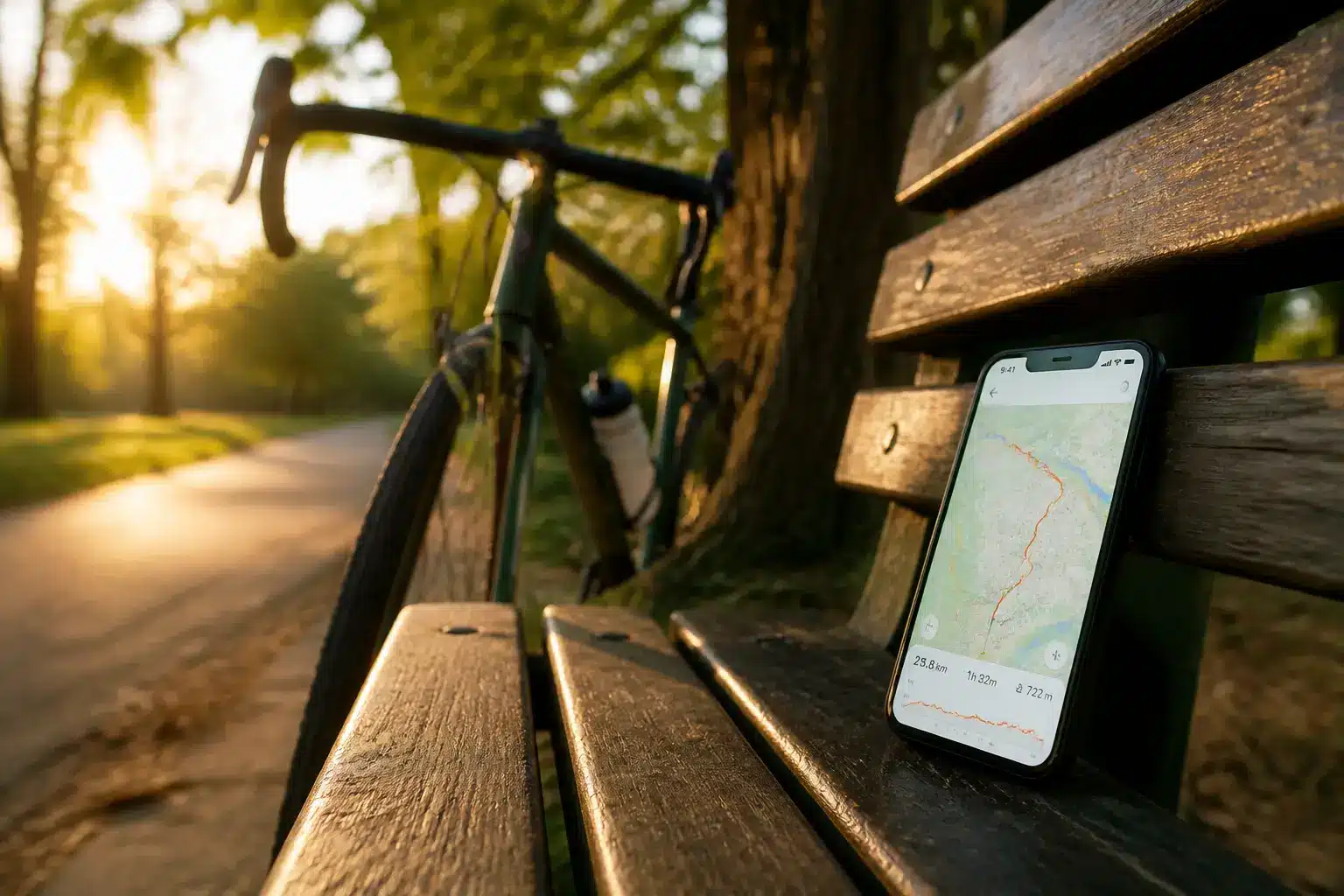
Google Maps works for basic previewing, while Komoot offers surface filters to avoid gravel sections that might catch road cyclists off guard. Ride with GPS allows organizers to export detailed route files directly to members’ phones.
Send the chosen route link in the club’s main communication channel at least 48 hours before the ride.
Previewing the course in person catches hidden surface problems or closed paths before the group arrives.
Representing the Club on the Road
Clubs often develop a distinct visual identity, and off-season rides provide a chance to take that shared look onto the pavement.
Reviewing colors, uploading a club logo, and discussing size options together serves as a simple group activity while water access remains restricted.
Jerseys act strictly as a visual layer rather than a replacement for high-visibility safety equipment, making them an optional addition for any outing.
Organizers can start a club design online before committing to any purchases. Using the online design tools to create a Sports Gear Swag custom cycling jersey for your paddling club lets members check the exact cycling product’s fit, fabrics, artwork options, and sizes.
The platform requires no minimum order quantity, meaning organizers can test the idea with the membership without financial risk.
Clubs review and approve a digital proof before proceeding, ensuring the final artwork matches their current paddling gear.
Because the process begins with design tools rather than a purchase form, organizers can present a complete concept to the group early on.
If members decide against custom apparel for the current season, the route plans and communication framework still hold the club together. The visual identity simply offers another way to stay connected when the kayaks are in storage.
Keeping the Group Together on the Road
Paddling fitness and cycling fitness do not map onto each other cleanly. A strong paddler who rarely rides may find a 12-mile bike route physically demanding, while a newer paddler who commutes by bike every day will find it easy.
Assume the group’s cycling abilities are uneven and plan accordingly, rather than discovering the gap mid-ride.
Define a comfortable pace and a relaxed pace before the ride begins. Announcing these categories early lets members self-select their group without feeling singled out on the road.
Assign an experienced cyclist as a sweep rider to stay at the very rear, ensuring no one ends up unsupported if a chain drops or a tire goes flat. Identifying one or two turnaround points also gives riders a safe way to shorten their outing.
A strict no-drop policy keeps the roster intact. The group must agree to wait at designated intersections or trail markers rather than pushing ahead out of sight.
Share this expectation in writing days in advance, rather than shouting it at the trailhead when people are already clipping into their pedals.
| Key Insight: Stating a no-drop policy in writing before the ride, not just at the start line, sets a clear expectation that supports the use of a sweep rider and designated turnaround points for varying ability levels. |
Building Breaks and Reading the Forecast
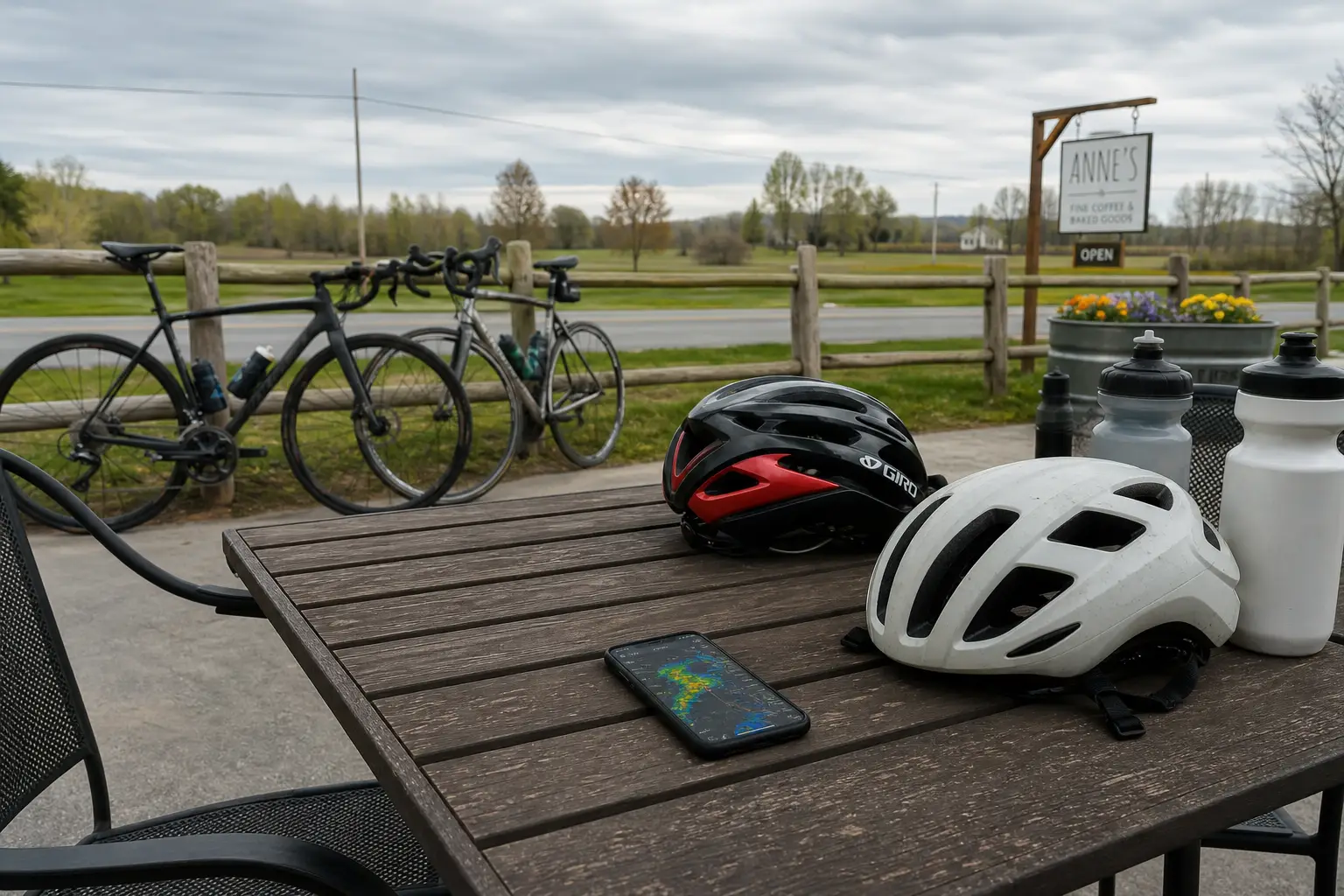
Plan one rest stop for every 30 to 45 minutes of riding. Practical landmarks like a park bench cluster, a cafe with outdoor space, or a covered trailhead shelter work best for large groups.
Include these exact pause locations in the pre-ride brief so riders know exactly when the next break arrives.
Everyone carries their own water and snacks, eliminating the need for the organizer to haul provisions for a dozen people.
Check the forecast 48 hours before departure and set a firm deadline for weather cancellations. Sending a final call by 7 a.m. on ride day gives members time to rearrange their morning schedules.
Establish strict cancellation criteria for lightning or extreme heat, leaving light rain as a judgment call based on the route surface.
Pre-planning a shorter fallback loop ensures the ride can still happen even if an afternoon storm rolls in early.
| Pro Tip: An unambiguous 7 a.m. go/no-go call based on explicit criteria like lightning or extreme heat is far more valuable than a vague “check the weather” reminder that leaves members uncertain. |
Getting the Word Out Clearly and Early
Select a single communication platform and stick with it for the entire off-season. Switching between an email list, a text thread, and a social media page guarantees that someone will miss a crucial update.
Send out the complete ride brief roughly 72 hours before wheels roll. This document must contain the exact start time, a map link for parking, the expected mileage, and a plain-text pace description like “conversational and unhurried.”
Follow up with a brief reminder the day before the ride and a final weather check the next morning. Request RSVPs so the sweep rider knows exactly how many cyclists to account for at the back of the pack.
Maintaining a simple shared spreadsheet of past routes and attendance numbers helps organizers spot which rides pulled the biggest crowds and which paths to avoid next time.
Practical Safety Habits Worth Building In
Helmets remain the strict baseline requirement for every participant because they help prevent fatal head injuries. Research shows that wearing a standard helmet can reduce head injury rates by 48 percent.
Implementing group policies for mandatory helmet gear achieves sustained use rates and significantly lowers traumatic brain injury risks.
Road positioning always defers to local traffic laws, with single-file formations serving as the safest default on busy streets.
Organizers building a new riding culture should consult group etiquette manuals to keep the pack predictable and visible.
Front and rear lights drastically expand the safe operating window for evening rides. While high-visibility outer layers help drivers spot the pack, every cyclist must carry physical identification, an emergency contact number, and a fully charged phone.
Require at least two people in the group to carry basic flat repair supplies. Checking for spare tubes and pump cartridges takes two minutes at the trailhead and prevents a simple puncture from ending the day for everyone.
The Road Forward
Launch the off-season program with a single, short route and a unified communication channel. The initial planning framework covering pace groupings, rest stop maps, and weather deadlines becomes a template for the rest of the winter.
Reusing this structure means every successive outing requires a fraction of the original setup time.
Swapping paddles for handlebars keeps the roster intact when the local waterways close down. Incorporating custom cycling gear eventually adds another layer of visual cohesion, giving members a collaborative design project to handle during the coldest weeks.
The logistics remain highly manageable as long as the organizer prioritizes clear communication and strict safety baselines over speed or distance.