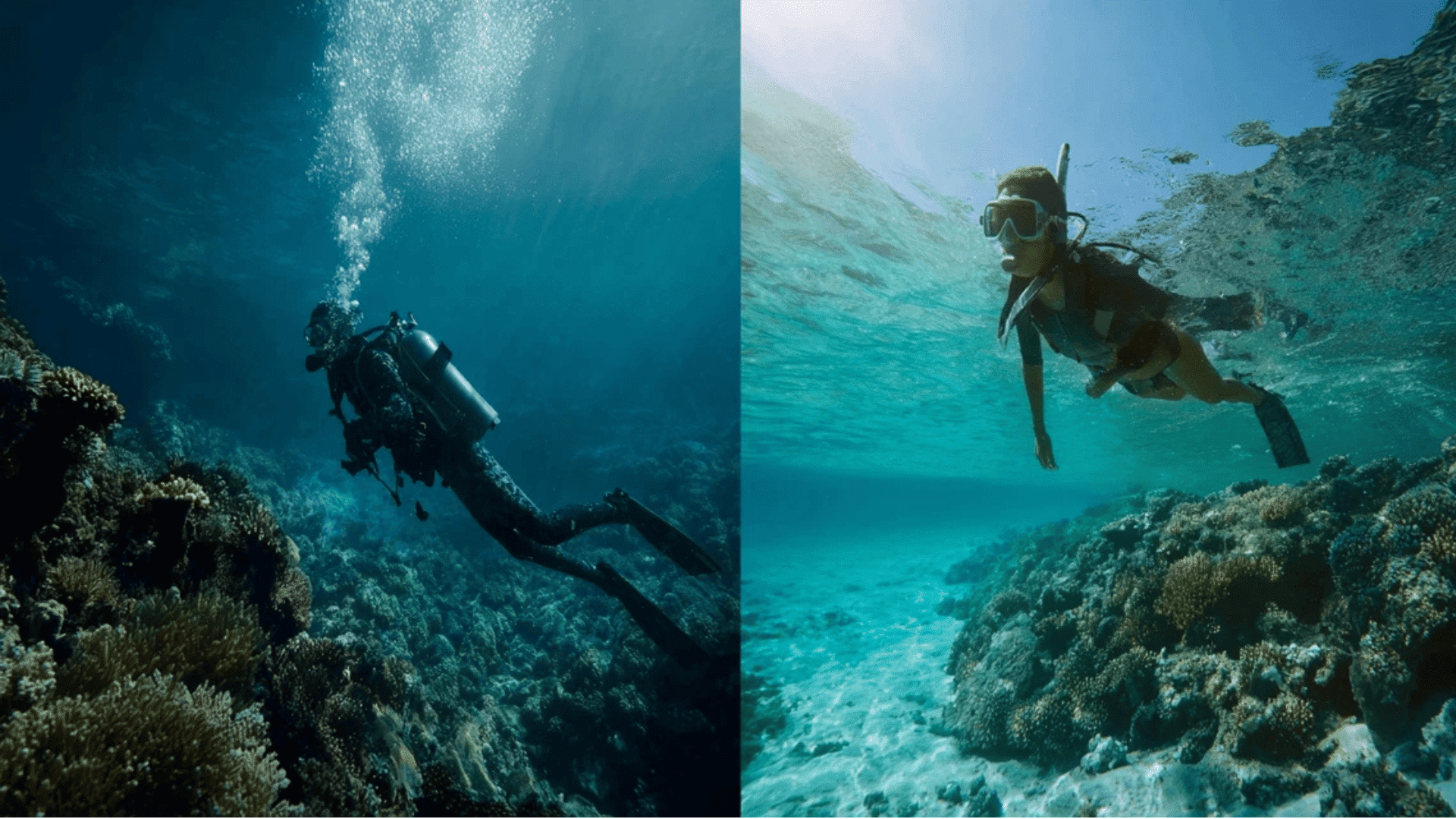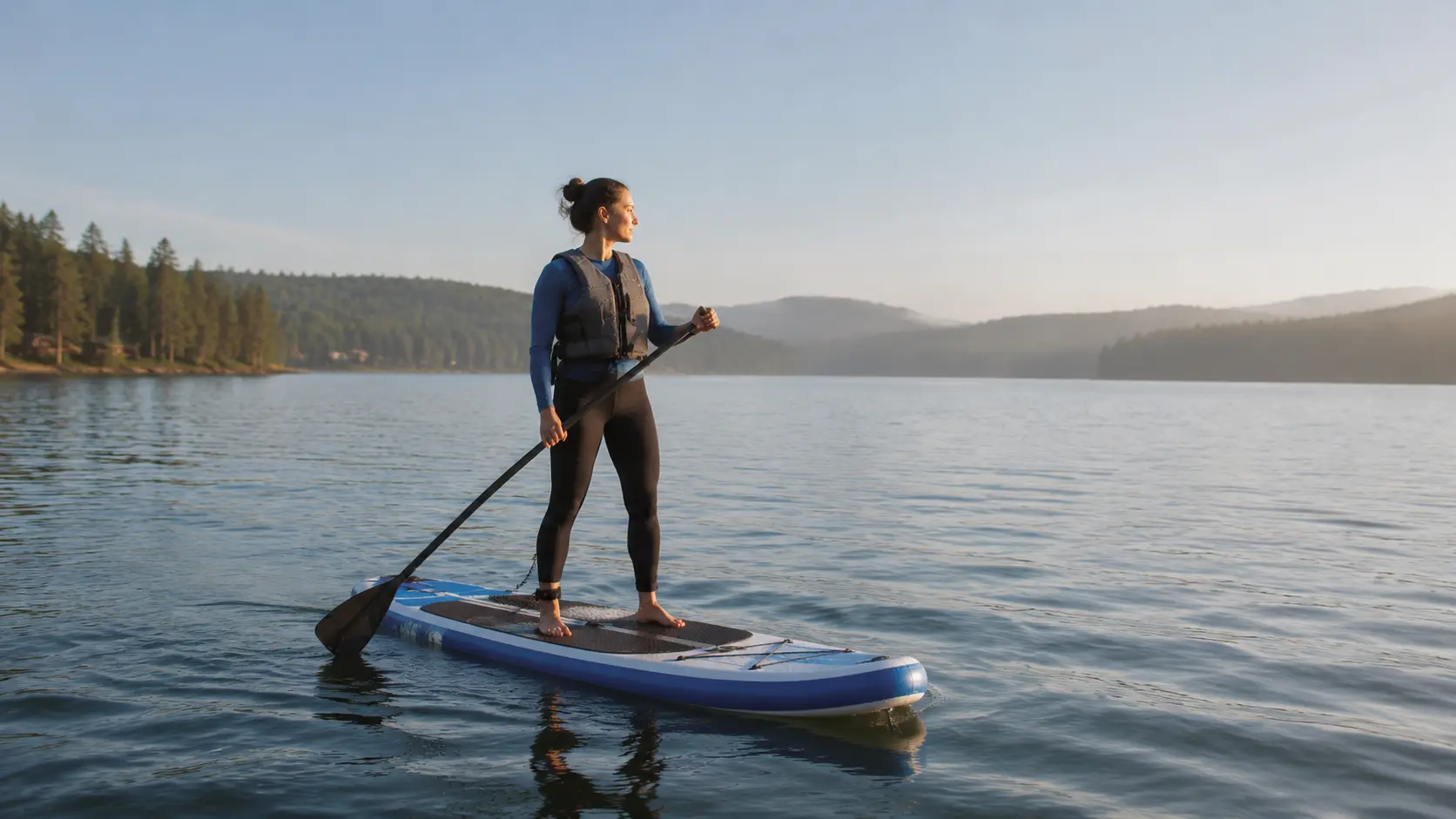
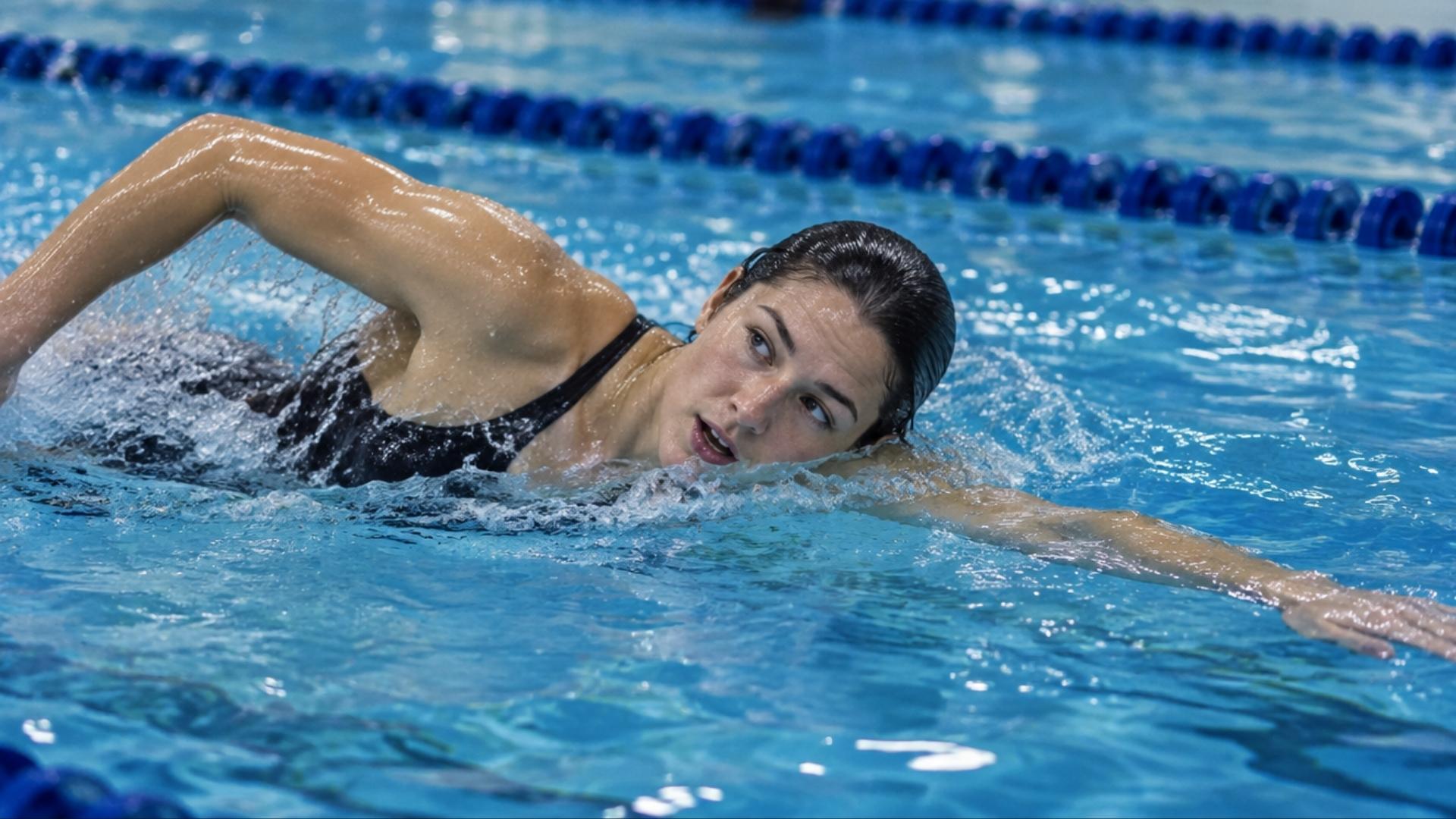
Does swimming build muscle, or does it just make you better at cardio? It can do both.
Anyone who has finished a hard set of laps knows the shoulders, back, core, and legs are doing much more than simply keeping you afloat.
Water adds resistance in every direction, so your muscles stay involved through each pull and kick.
The catch is that swimming does not build size as quickly as heavy strength training.
It is better known for developing strong, lean, well-conditioned muscles, especially when your sessions include harder efforts instead of easy laps.
How Does Swimming Build Muscle?
Water resistance forces your muscles to contract through every phase of a stroke. That mechanical reality is why swimming counts as strength work, not just cardio in a pool.
- Constant resistance on every movement: Air offers almost nothing to push against, but water pushes back on your arms and legs through the full range of a stroke.
- Full body recruitment in a single lap: Your shoulders, back, core, hips, and legs all fire together to keep you moving in a straight line and rotating properly.
- Core stabilization on every stroke: Your abs and lower back work continuously to keep your body flat and prevent your hips from sinking or swinging.
- Low joint stress compared to land training: Buoyancy takes weight off your joints, so you can load your muscles hard without the pounding you get from running or heavy lifting.
- Calisthenic style loading: You are moving your own body weight through resistance, similar to how a push-up or pull-up works, except water adds the resistance instead of gravity alone.
Together, these five factors explain why regular swimmers develop noticeably defined shoulders, backs, and legs, even without ever touching a dumbbell.
What Muscles Does Swimming Work?
Swimming does not isolate one muscle at a time the way a gym machine does. Here is a clear look at which muscle groups get worked, based on what actually happens during a stroke.
|
Muscle Group |
Role During Swimming |
|---|---|
|
Shoulders (deltoids) |
Drive the arm pull and recovery phase on nearly every stroke |
|
Back (latissimus dorsi, trapezius) |
Power the pulling phase and stabilize the upper body through rotation |
|
Chest (pectorals) |
Assist the pull, especially loaded heavily during breaststroke and butterfly |
|
Core (abdominals, obliques, lower back) |
Keep the body aligned and transfer force between the upper and lower body |
|
Glutes |
Stabilize the hips and add power to the kick across every stroke |
|
Legs (quadriceps, hamstrings, calves) |
Generate propulsion through kicking, with the biggest load in breaststroke and butterfly |
|
Arms (biceps, triceps) |
Control the pull and push phases of every arm stroke |
Which Swimming Stroke Builds the Most Muscle?
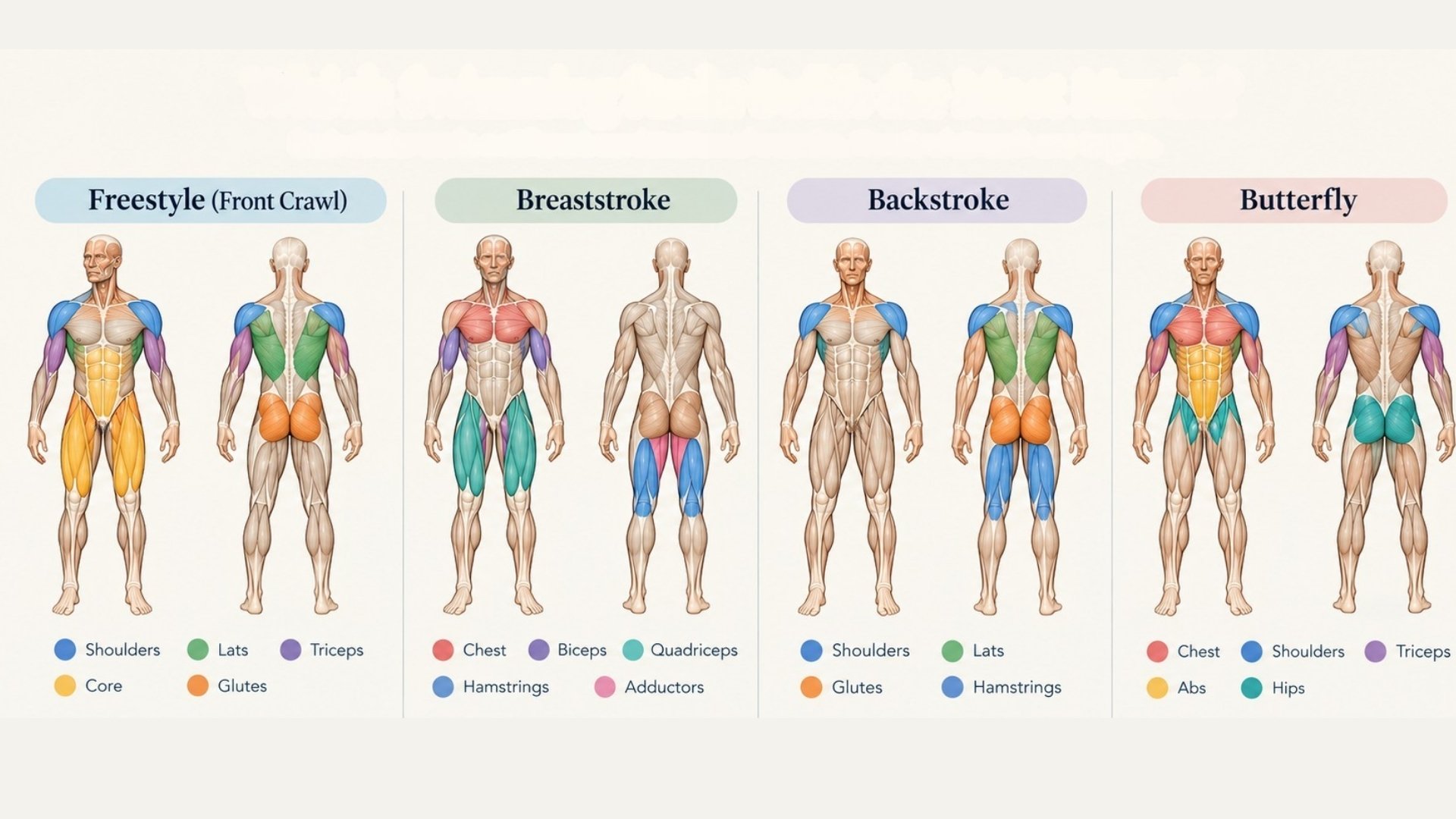
Each of the four competitive strokes loads a different combination of muscles, and knowing the differences helps you pick strokes on purpose instead of swimming the same lap over and over.
Freestyle (Front Crawl)
Freestyle is the stroke most swimmers default to, alternating overhead arm strokes with a steady flutter kick while the body rotates side to side through the water.
- Muscles worked: shoulders, lats, triceps, core, glutes
- Benefits: builds upper body and core endurance, and the rotation trains your obliques in a way few land exercises match
Breaststroke
Breaststroke pairs a simultaneous arm pull with a frog-style whip kick, timed so the arms pull while the legs recover and then fire together.
- Muscles worked: chest, biceps, quadriceps, hamstrings, adductors
- Benefits: one of the more leg-intensive strokes, and the inner thigh work from the whip kick is hard to replicate outside the pool
Backstroke
Backstroke mirrors freestyle but on your back, with alternating overhead arm strokes and a continuous flutter kick while you stay flat and stable at the surface.
- Muscles worked: shoulders, lats, glutes, hamstrings
- Benefits: many swimmers find this stroke helpful for posture since it opens the front of the shoulder, which can help balance out strokes that round it forward
Butterfly
Butterfly uses a simultaneous overhead arm pull paired with a dolphin kick that moves through the hips, demanding more timing and power per stroke than any other style.
- Muscles worked: chest, shoulders, triceps, abs, hips
- Benefits: builds explosive upper body power faster than the other three strokes, though it is also the hardest to sustain for long sets
Can Swimming Alone Build Significant Muscle?
Swimming alone will not get you to serious muscle mass the way a structured hypertrophy program will. I say that as someone who has spent years in the pool and still lifts weights to fill that gap.
The limitation comes down to muscle fiber recruitment. According to the National Academy of Sports Medicine (NASM), endurance activities like swimming train slow-twitch primarily, or type I, muscle fibers, which are built for staying power rather than maximum size.
Type II fibers are the ones responsible for most visible muscle growth. They respond best to heavier loads and progressive overload, which means gradually increasing resistance over time.
Swimming can add small amounts of resistance through paddles or drag suits, but it rarely matches the loading a barbell or a weight stack provides.
This is also why swimmers tend to plateau if swimming is their only training method. Once your body adapts to the resistance of the water at a given pace and volume, that stimulus stops being new, and muscle growth slows down even if you keep swimming the same routine.
The fix isn’t more laps; it is combining swimming with strength training, sometimes called concurrent training, so your muscles keep getting a stimulus they haven’t already adapted to.
None of this makes swimming a weak choice. It means swimming builds muscular endurance rather than muscular hypertrophy, and pairing the two gets you closer to both goals than either one alone.
Does Swimming Change Your Body Shape?
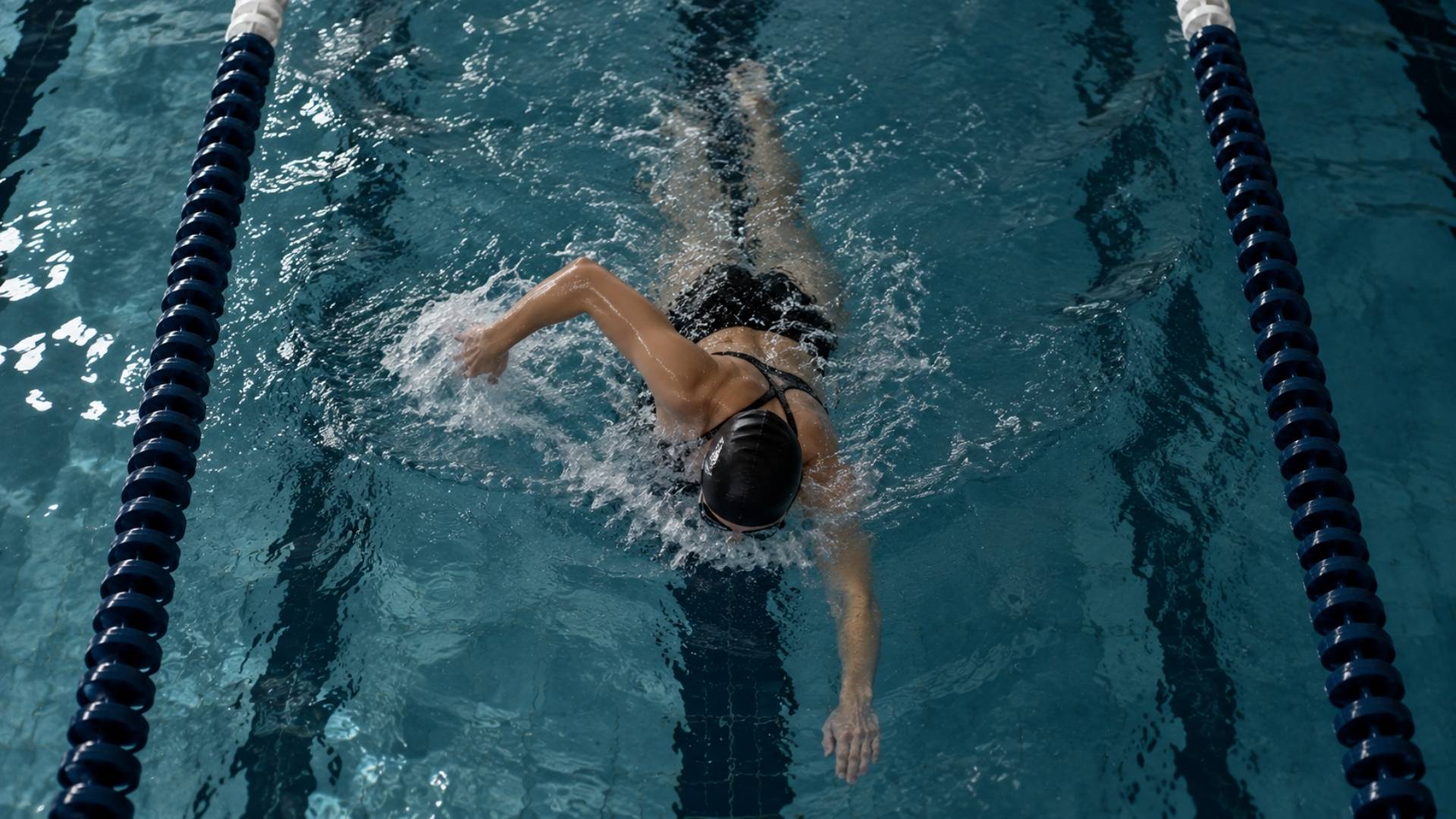
Yes, and this is separate from the scale entirely. Regular swimming tends to broaden the shoulders, tighten the waist, and add visible definition through the back and core, which is where the term “swimmer’s body” comes from.
Freestyle and butterfly load the lats and upper back the most, so those areas usually show the most noticeable change over time.
The shape change comes from a mix of muscle tone and fat loss, not from one muscle group growing dramatically larger than the rest.
That is also why the change tends to show up gradually across the whole upper body rather than in one obvious spot.
Who Is Most Likely to Build Muscle From Swimming?
Swimming does not build muscle equally for everyone. Your starting point matters, your training history matters, and how you actually swim changes how much muscle response you get from the pool.
|
Swimmer Type |
Muscle Building Potential |
|---|---|
|
Complete beginners new to structured exercise |
High, since almost any consistent resistance is a new stimulus for untrained muscle |
|
Recreational swimmers doing steady, easy laps |
Moderate, mostly muscular endurance rather than visible size |
|
Competitive or masters swimmers training with intervals |
High, particularly in the shoulders, lats, and legs from sprint work |
|
People recovering from joint injury or high body weight |
High, because water lets them load muscle without joint strain that would limit land training |
|
Experienced lifters looking for pure hypertrophy |
Low as a standalone method, better used alongside a strength program |
How Often Should You Swim to Build Muscle?
I swim two to three times a week myself. That frequency matches what research and national guidelines recommend for building and maintaining muscle through swimming.
The Centers for Disease Control and Prevention (CDC) recommends adults get muscle-strengthening activity covering all major muscle groups at least two days a week. Swimming laps is classified as vigorous aerobic activity by the CDC, but swimming with intentional effort against water resistance can still contribute to the muscular demand your body needs, even though it isn’t officially listed as a muscle-strengthening activity.
Three sessions a week gives your muscles enough repeated stimulus to adapt while leaving recovery days in between, since muscles rebuild during rest, not during the swim itself.
Most guidance points to somewhere around eight to twelve weeks of consistent training before you see visible muscle tone changes, since that is roughly how long it takes for repeated micro-tears in the muscle fiber to repair and strengthen.
Going beyond four or five sessions without any land-based strength work tends to produce more endurance gains than muscle, so more isn’t automatically better here.
Swimming vs. Weightlifting: Which Builds More Muscle?
Swimming and weightlifting build muscle through different mechanisms, so comparing them side by side makes it easier to see where each one actually wins.
|
Factor |
Swimming |
Weightlifting |
|---|---|---|
|
Muscle type built |
Lean, functional, endurance-focused |
Larger, denser muscle mass |
|
Progressive overload |
Limited, harder to scale resistance |
Easy to add weight session to session |
|
Joint impact |
Very low due to buoyancy |
Higher, especially with heavy compound lifts |
|
Muscle isolation |
Limited, works muscles in groups |
High, individual muscles can be targeted directly |
|
Cardiovascular benefit |
Very high, built into every session |
Lower unless combined with cardio |
Neither one replaces the other completely, and according to U.S. Masters Swimming, swimming can meaningfully improve strength and muscle tone across every major muscle group even though it may not add the same muscle size as dedicated weight training.
If your only goal is maximum size, prioritize lifting. If your goal is functional strength with low joint impact, prioritize swimming. If you want both, that is where combining them earns its place.
How to Maximize Muscle Growth From Swimming
If building muscle matters to you as much as logging laps, a few adjustments to how you swim will get you noticeably more out of each session.
- Add sprint intervals: Short, hard efforts recruit more muscle fibers than steady-paced laps, and I add two sprint sets each week for this reason.
- Rotate through all four strokes: Mixing freestyle, breaststroke, backstroke, and butterfly spreads the load across more muscle groups instead of overusing the same shoulder pattern.
- Use resistance tools: Paddles, a pull buoy, and drag shorts increase the load beyond what plain water resistance provides.
- Pair swimming with two strength sessions a week: Dryland work focused on the shoulders, back, and legs closes the hypertrophy gap that swimming alone cannot fully close.
- Protect your recovery: Muscle repairs itself during rest, so sleep and protein intake matter as much as the swim itself if growth is the goal.
Final Thoughts
Swimming builds real muscle, just not the same way a barbell does.
Regular sessions add visible tone, core strength, and joint-friendly muscular endurance across nearly every major muscle group, especially once sprint efforts, resistance tools, and stroke variety are part of the routine.
If maximum size is the goal, pairing swimming with two weekly strength sessions closes that gap faster than either one alone.
For most people chasing a leaner, stronger, more capable body without pounding their joints, swimming already does the job on its own.
Frequently Asked Questions
Does Swimming Tone Your Body Without Changing Your Weight?
Yes. Swimming can build lean muscle while reducing body fat, which may change your body shape and how your clothes fit even if your weight stays similar.
Does Swimming Build Abs Specifically?
Yes. Swimming constantly engages the core to stabilize your body, especially during strokes that involve rotation. It builds abdominal muscle, although visible abs also depend on body fat levels.
Can You Gain Muscle From Swimming if You Are Over 50?
Yes. Swimming can help older adults maintain and build muscle while placing less stress on the joints. Two to three sessions per week can provide a sustainable routine.
Can Swimming Alone Replace Weightlifting for Building Muscle?
Not if maximum muscle size is the goal. Swimming builds strength and muscular endurance, but weightlifting provides greater progressive overload for muscle growth.
Does Swimming Make You Stronger for Other Sports?
It can. Swimming develops core stability, shoulder endurance, and leg drive that can support activities involving rotation, overhead movement, and coordinated movement.
Does Swimming Build Arm Muscle as Much as It Builds the Back?
Swimming works the arms, especially the triceps and forearms, but the back and shoulders generally develop more because they provide much of the pulling force.