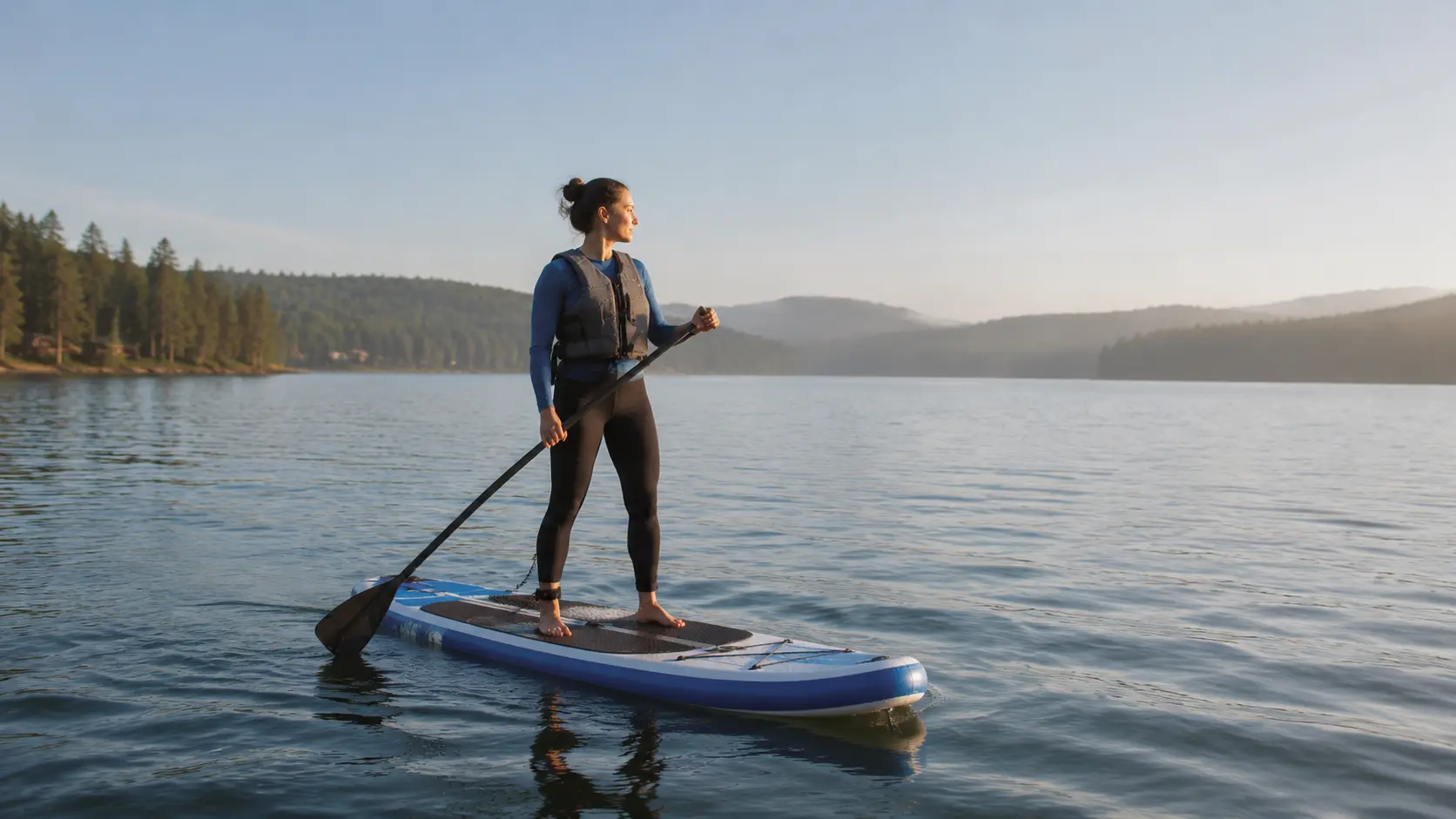
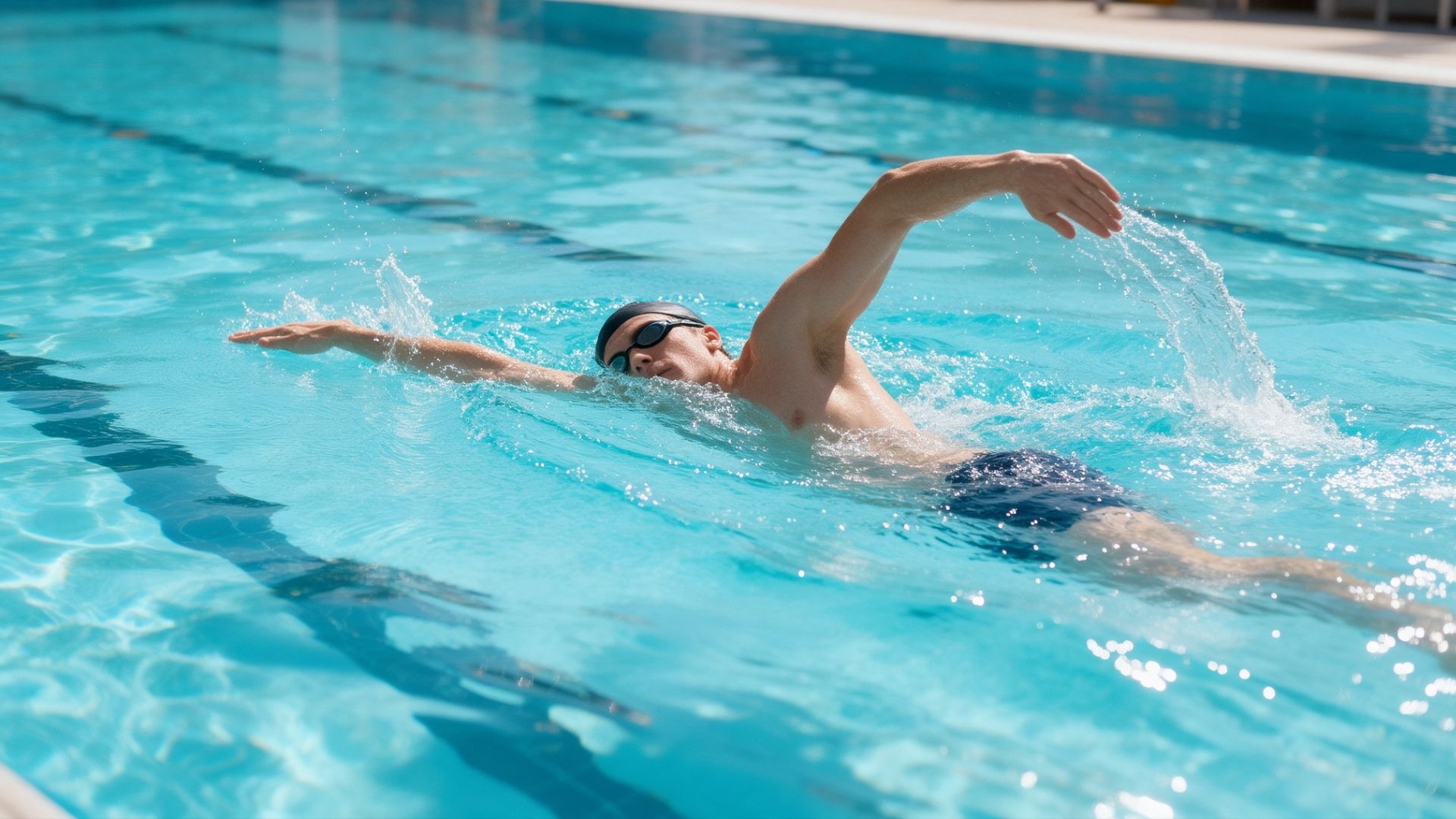
Some workouts leave me feeling like the recovery is harder than the workout itself. Swimming is different.
I can push my pace, get properly out of breath, and work my shoulders, core, and legs without feeling like my joints paid the price.
That is a big reason I keep coming back to the pool. The benefits of swimming go well beyond fitness too.
It can build endurance, support heart health, strengthen the body, and help clear my head after a long day.
What Makes Swimming Different From Other Workouts?
Most workouts ask your body to fight gravity. Swimming asks it to fight water instead, and that single shift changes how your muscles and joints respond.
Water is roughly 800 times denser than air, so every kick and pull works against real resistance the moment you push off the wall.
That same water supports your body weight at the same time, which takes the pounding off your knees, hips, and lower back.
I’ve used running, cycling, and weight training over the years. None of them let me train my heart and my muscles this hard without leaving me sore the next day.
That combination of resistance without impact is rare, and it’s often used in physical therapy programs and long-term fitness plans, too.
Physical Health Benefits of Swimming
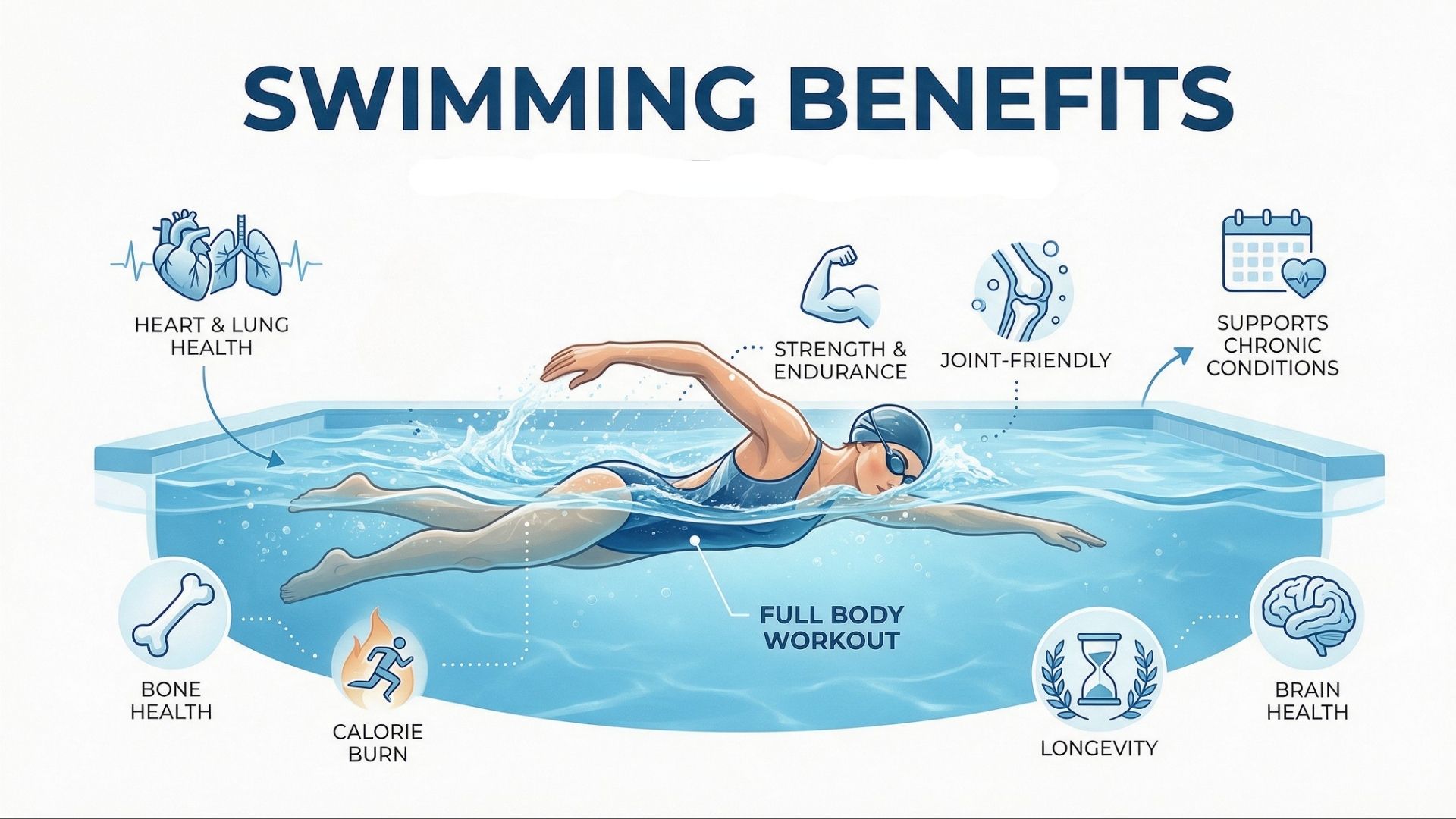
Swimming works your body in ways that are hard to replicate on land, from your heart and lungs down to your joints and bones. Here’s what the research and my own years in the water back up.
1. Full-Body Workout
Swimming recruits nearly every major muscle group in a single session.
Breaststroke leans on your chest, inner thighs, and glutes, while freestyle shifts more of the load onto your shoulders, lats, and core. Backstroke and butterfly each bring their own emphasis, so rotating strokes gives you a more complete workout.
2. Supports Heart and Lung Health
Swimming is an aerobic activity, which trains your heart to pump more efficiently over time.
A 2024 study in Scientific Reports followed 80 adults ages 60 to 70 for 16 weeks and found that high-intensity interval swimming improved measures like walking distance and functional strength more than no exercise at all.
It can also lower blood pressure, blood sugar, and LDL cholesterol, the kind doctors usually flag as the bad one.
I noticed my own resting heart rate drop over a season of regular pool time, which lines up with what most cardio training does over months, not weeks.
The breath control that swimming demands, especially in longer freestyle sets, also helps expand lung capacity in a way dryland cardio rarely does.
3. Burns Calories & Supports Weight Loss
According to Harvard Health data compiled by U.S. Masters Swimming, a 155-pound person burns approximately 223 calories in 30 minutes of moderate swimming. That number climbs to 372 calories at a vigorous pace.
Breaststroke and freestyle both rank among the higher calorie-burning strokes, which is part of why I rotate between them for a harder session.
4. Low-Impact, Easy on Joints
Buoyancy takes most of your body weight off your joints while you swim. That’s why doctors so often recommend it for people recovering from injury.
I’ve leaned on pool sessions during recovery stretches from harder impact sports. It’s one of the few workouts that keeps me moving without aggravating sore joints.
5. Builds Strength, Endurance & Flexibility
Water resistance works your muscles as they contract, and again as they stretch back out. Land workouts rarely load muscle that way.
Over years of regular swimming, I’ve noticed steadier shoulder and core strength than most single-focus gym routines give me, plus better hip and shoulder mobility.
6. May Help With Chronic Conditions
Water-based exercise is frequently recommended for people managing arthritis, since the water’s buoyancy reduces joint strain while its resistance still builds strength.
The Arthritis Foundation notes that water exercise can ease pain and stiffness for people with joint conditions, making it a practical alternative to higher-impact workouts.
7. Supports Bone Health
A small 2020 meta-analysis in BioMed Research International, pooling data from just a few trials, found that postmenopausal women who swam 3 to 6 hours weekly showed higher lumbar spine bone density than non-swimmers. The researchers noted the evidence is limited and called for more research before drawing firm conclusions.
That’s a detail worth knowing if you’re past menopause and looking for a joint-friendly way to support your skeleton alongside strength training.
8. Boosts Lifespan
A long-term study from the University of South Carolina followed over 40,000 men for more than three decades. It found swimmers had a 49 percent lower mortality rate than runners.
A separate study of more than 80,000 British adults found regular swimmers had a 28 percent lower risk of death over a nine-year follow-up. It’s a different study with a different comparison group, but both point in the same direction.
9. May Support Brain Health
Regular swimming has been linked to better cognitive function as people age, and researchers have looked at aerobic exercise like swimming as a possible support for people managing conditions like Alzheimer’s disease.
I can’t measure my own brain function in a lab, but I do notice my head feels clearer on the days I swim, not just calmer.
Mental & Emotional Benefits of Swimming
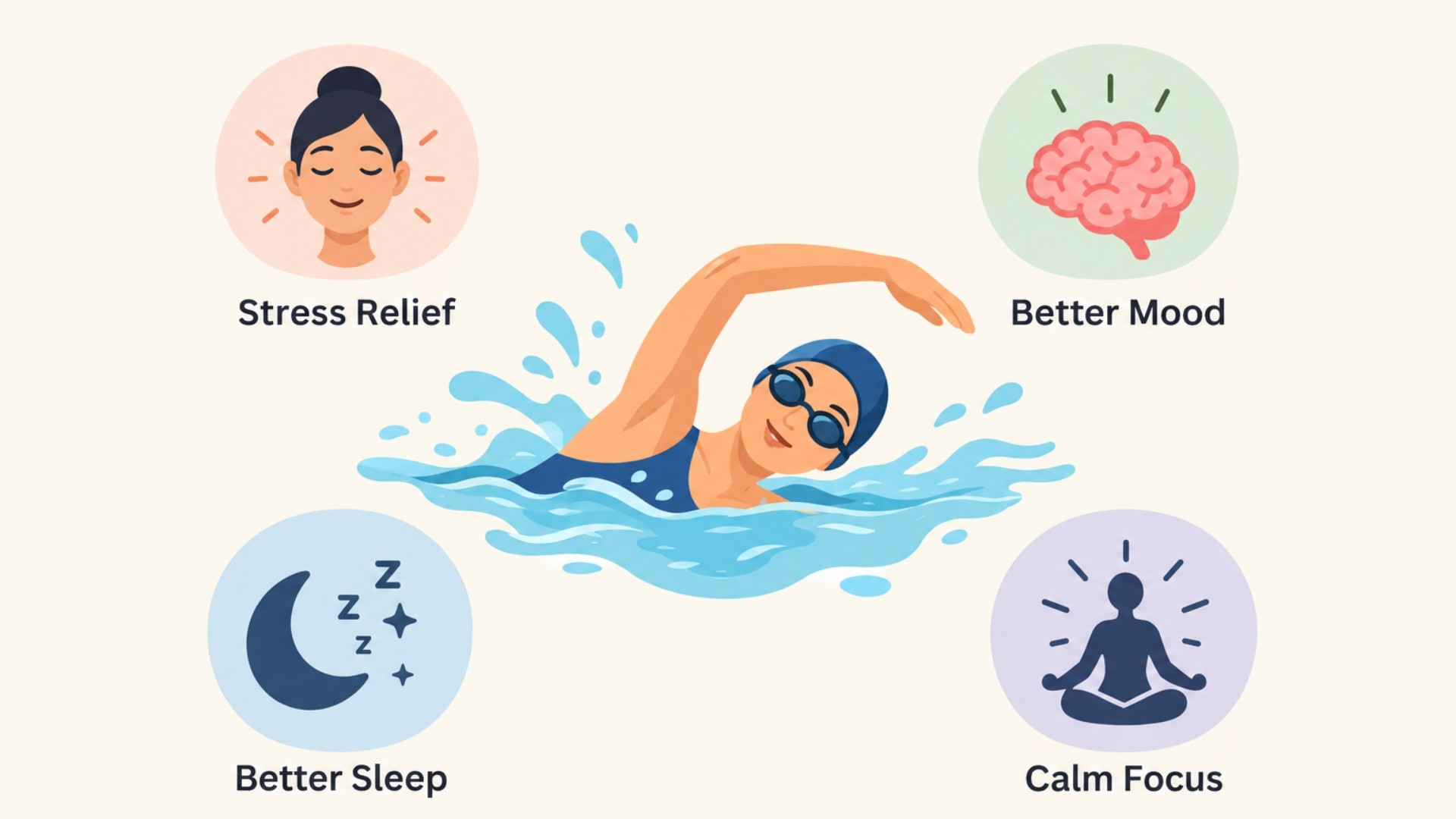
Swimming does as much for your head as it does for your body. That side of it is often the reason I still show up on days I don’t feel like training.
10. Reduces Stress and Anxiety
A 2022 study on aquatic exercise, published in Frontiers in Psychology, found that even light swimming sessions improved mood and reduced anxiety symptoms in participants.
I’ve found my stress noticeably lower after a swim than after most other workouts, likely because of the mix of rhythmic breathing and movement.
11. Improves Mood and May Help with Depression
Aerobic exercise, including swimming, triggers the release of endorphins that can lift mood for hours after a session ends.
Researchers studying aquatic exercise have pointed to swimming as a useful addition to standard depression treatment, though it works best alongside professional care rather than replacing it.
On weeks where training feels like a chore, swimming is usually the one session I don’t skip, mostly because I know how flat I’ll feel if I do.
12. Improves Sleep Quality
Regular aerobic exercise is linked to deeper, more consistent sleep, and swimming’s low joint strain means it won’t leave you too sore to rest well.
On weeks when I swim two or three times, I fall asleep faster and wake up less groggy than on weeks I skip it entirely. I’ve never tracked it with a sleep app, but the difference is obvious enough that I don’t need one to notice.
13. Meditative
The repetitive rhythm of strokes and breathing can put swimmers into a state similar to moving meditation, where outside noise fades, and focus narrows.
I’ve had some of my clearest thinking happen mid-lap, away from screens and alone with my breath and the count of my strokes.
How Much Should You Swim to See Results?
The Centers for Disease Control and Prevention recommends adults get 150 minutes of moderate aerobic activity, or 75 minutes of vigorous activity, weekly.
Swimming counts toward either category depending on your pace. Two or three 30- to 40-minute sessions a week are enough to meet that target.
I personally swim twice or three times a week, a pace that has kept my endurance, joints, and mood steady for years.
Beginners can start with shorter, slower sessions and gradually build distance as technique and comfort improve.
How to Get Started With Swimming
Getting into a regular swimming routine doesn’t require expensive gear or a pool in your backyard, just a plan and some consistency.
- Find a local pool: Community centers, gyms, and public pools often offer lap swim hours at affordable rates.
- Take a few lessons first: Even a handful of sessions with an instructor can fix inefficient technique before it becomes a habit. I wish I’d done this earlier instead of teaching myself a sloppy freestyle that took years to unlearn.
- Start with shorter sessions: Begin with 15 to 20 minutes and build duration as your endurance improves.
- Learn proper breathing: Rhythmic breathing reduces fatigue and helps you swim longer without gasping for air.
- Rotate strokes: Mixing styles like breaststroke, freestyle, and backstroke works different muscles and keeps sessions interesting.
- Invest in basic gear: A well-fitted pair of goggles and a swim cap make a bigger difference than most beginners expect.
Once you’re comfortable in the water, two or three sessions a week are enough to start seeing the benefits covered above.
Who Can Benefit Most From Swimming?
Swimming’s low-impact nature and adjustable intensity make it a fit for a wide range of people, though the specific advantages vary by group.
|
Group |
Primary Benefit |
|---|---|
|
Older adults |
Joint-friendly cardio that supports balance and bone density |
|
People with arthritis |
Reduced joint strain with resistance-based strength gains |
|
Postmenopausal women |
Support for lumbar spine bone density with regular sessions |
|
People recovering from injury |
Low-impact movement that keeps the body active during rehab |
|
People managing stress or anxiety |
A rhythmic, meditative workout that lowers cortisol and improves mood |
|
Pregnant individuals (with doctor approval) |
Gentle, weight-supported cardio throughout pregnancy |
|
Athletes cross-training |
Full-body conditioning without added joint wear from other sports |
No matter which group you fall into, check with a doctor first if you have an existing health condition. Once you’ve got that green light, the water tends to meet you where you are.
Is Swimming Safe for Pregnant Women and Kids?
Swimming is generally considered a safe exercise during pregnancy and may help with swelling and joint discomfort, since the water takes weight off the hips and lower back.
Some pregnancies come with activity restrictions, though, so run it by your doctor first, especially past the first trimester.
Kids benefit just as much. The CDC recommends at least 60 minutes of physical activity a day for children, and swimming rarely feels like a chore to them the way a treadmill might.
Structured lessons build water safety and stroke technique early, while free swim time still counts toward that daily activity and gives you a chance to be in the water together.
What Should You Watch Out for When Swimming?
- Chlorinated water can irritate skin conditions like eczema or psoriasis, so rinse off promptly after swimming.
- Ocean and lake swimming exposes skin to salt, sun, and current, so freshwater rinsing and sunscreen matter just as much as pool safety.
- Always swim in designated, supervised areas, and never swim alone in open water.
- Overuse injuries like swimmer’s shoulder can develop from repetitive strokes without proper technique or rest.
- Dehydration is easy to miss in the water, so drink water before and after sessions even if you don’t feel thirsty.
- Ear infections, sometimes called swimmer’s ear, are common with frequent water exposure, so dry ears thoroughly after each swim.
- Some studies link heavy, long-term chlorine exposure to a higher risk of asthma, particularly in children who swim frequently in indoor pools. If you swim indoors often and notice breathing changes, talk to a doctor.
Is Swimming Worth Adding to Your Routine?
The benefits of swimming are easiest to notice when it becomes a regular part of your routine. You do not need long sessions or perfect technique to get started.
Build gradually, stay consistent, and choose a pace that feels right for you. If you already swim, share what keeps you coming back to the pool.
Frequently Asked Questions
Is Ocean Water Good for Your Skin?
Ocean water contains minerals that may temporarily help with excess oil or minor irritation. However, salt can dry the skin, so rinse with fresh water and moisturize afterward.
Can Beginners Swim Breaststroke Without Formal Training?
They can, but breaststroke’s timing and kick technique can be difficult to learn alone. A few lessons can help beginners avoid poor form and potential knee strain.
How Long Does It Take to Notice Results From Swimming?
Endurance may improve within three to four weeks of swimming two or three times weekly. Visible muscle tone and strength gains often take eight to twelve weeks with consistent training.
Does Swimming Help With Flexibility Outside the Pool?
Yes. Strokes such as backstroke and butterfly require a wide range of motion and can gradually improve shoulder and hip mobility with regular practice.
Is Swimming Safe for People With High Blood Pressure?
Swimming is generally a good aerobic option because it raises heart rate with little joint impact. People with high blood pressure should check with their doctor before starting vigorous sessions.
Is Swimming Better Than Running for Your Joints?
Swimming places less impact on the knees, hips, and lower back because the water supports your body weight. Running is better for building bone density, so combining both can be beneficial.