Parasailing and paragliding get confused constantly, and the names don’t help. Both put you under a canopy in the air, and both look identical in photos.
But the two sports work nothing alike once you look past the name.
Parasailing uses a boat and tow rope to lift you into the air. Paragliding uses a foot-launched wing powered by wind and thermals. That one difference in launch method changes the training, the control, and the entire experience.
This is where parasailing vs paragliding splits into two very different adventures.
A Quick Look at Parasailing vs Paragliding
Here’s a side-by-side comparison before we get into the details.
| Feature | Parasailing | Paragliding |
|---|---|---|
| Launch method | Towed behind a boat | Foot-launched from a hill |
| Power source | Motorboat | Wind and rising air |
| Control | Very limited | Pilot steers speed and direction |
| Setting | Coastal water, lakes | Hills, mountains, coastal slopes |
| Training needed | None for passengers | Required for solo pilots |
| Typical altitude | 300–500 feet | Hundreds to several thousand feet |
| Typical flight length | 10–15 minutes | 30 minutes to several hours |
| Flight path | Fixed by the tow rope | Free through the air |
What is Parasailing?
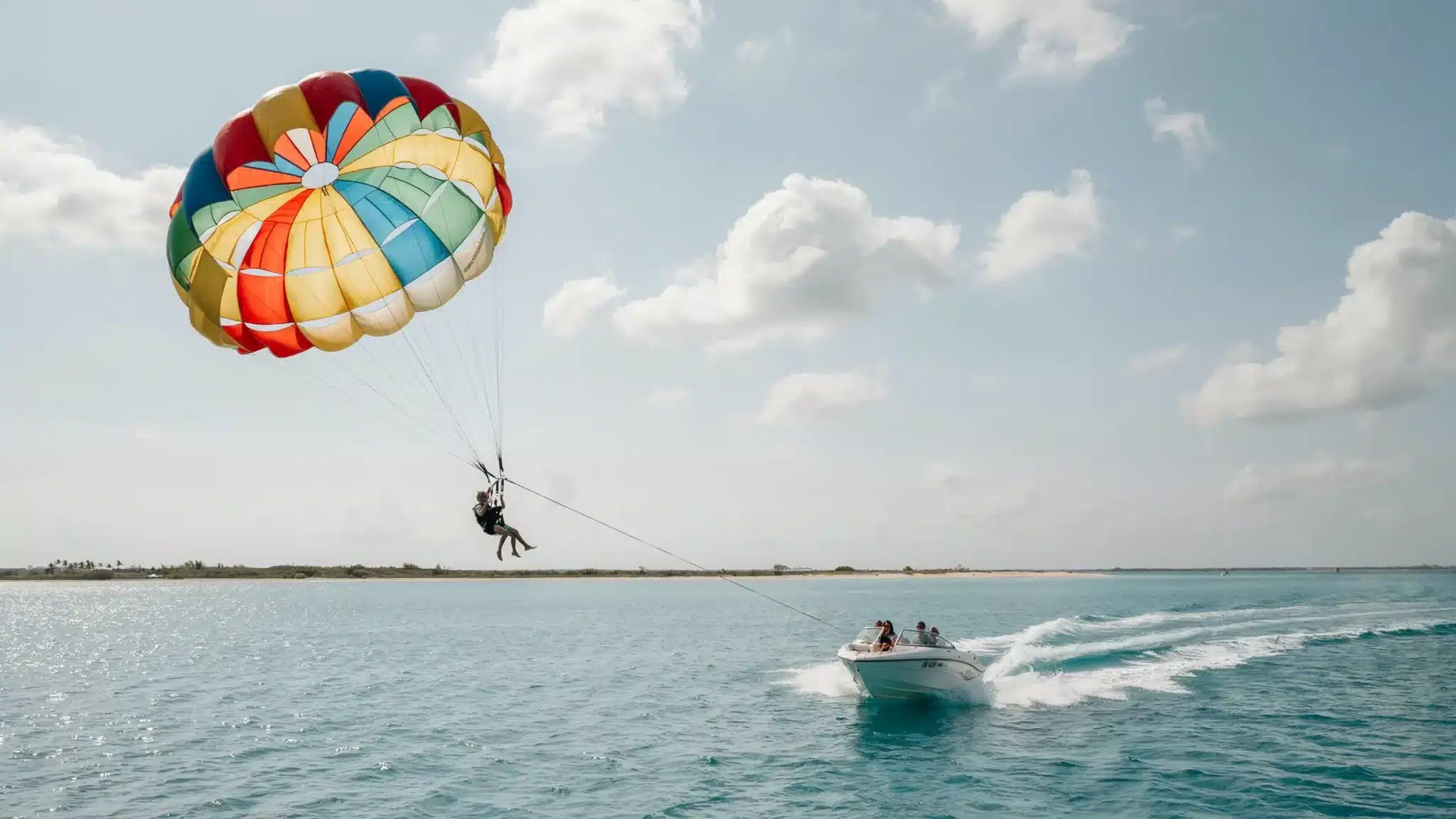
Parasailing straps you into a harness attached to a parachute wing, and a motorboat pulls you into the air on a tow line.
The boat’s forward motion fills the wing and lifts you off the deck with no running or jumping required.
Most rides reach 300 to 500 feet and last 10 to 15 minutes. You put in almost no physical effort, and you have zero control once you’re up.
The boat and crew set the speed, altitude, and course. Our first-timer parasailing safety guide covers exactly what to check before you fly.
What is Paragliding?
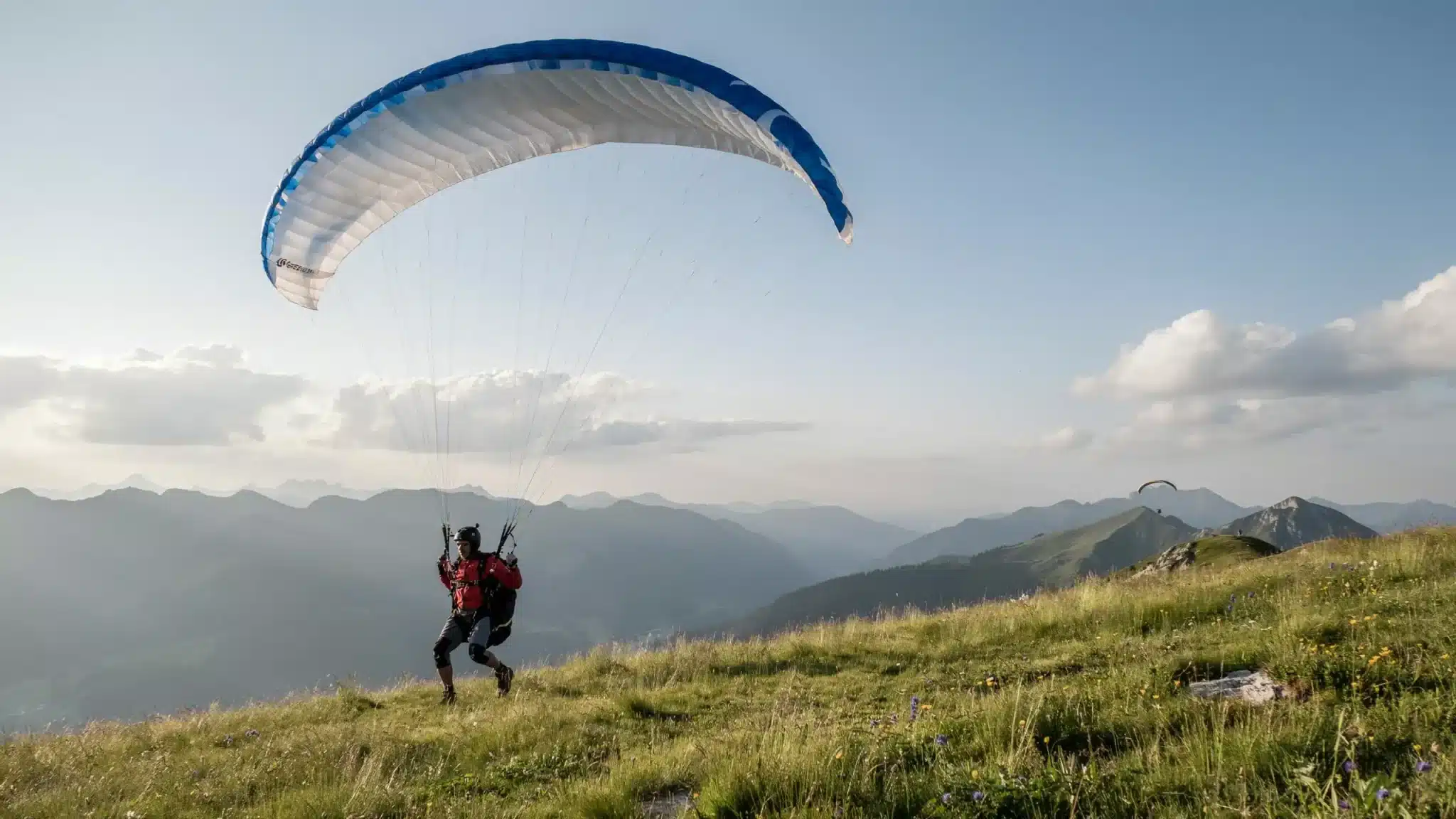
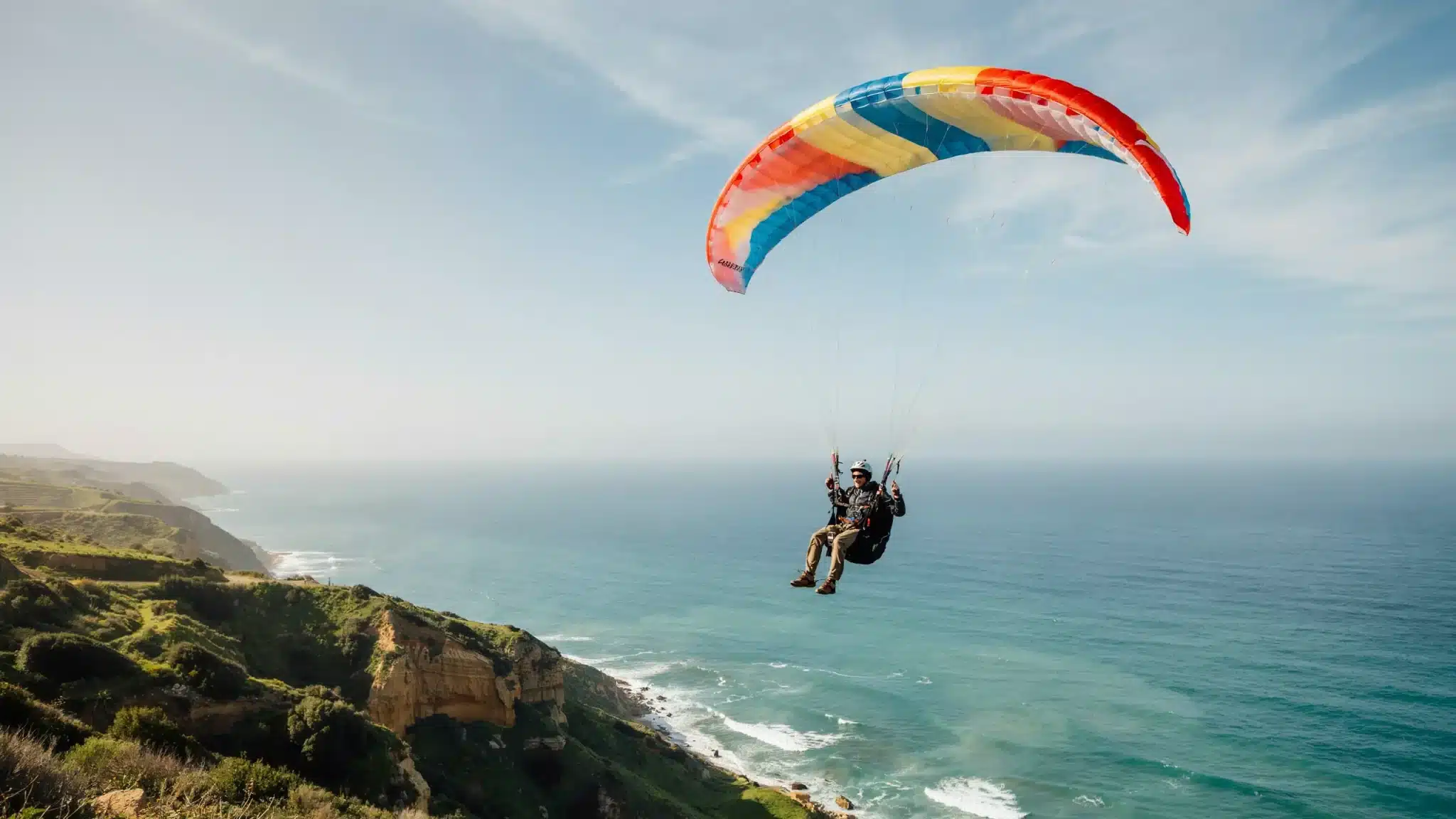
Paragliding is an unpowered sport built around a soft wing that catches air on its own, with no boat, tow line, or engine involved. Pilots take off by running down a slope until the wing fills and lifts them off the ground.
From there, steering happens through brake lines and body weight, which is what makes paragliding the more skill-based of the two.
Flights can run 30 minutes to several hours depending on wind and thermals, and skilled pilots can climb several thousand feet above launch, actively steering and hunting rising air the whole way.
Parasailing vs Paragliding: 8 Key Differences
The gap between these two goes far beyond where each one takes off from:
1. Takeoff Mechanism
Parasailing launches from a boat or dock, skipping any run-up. Paragliding pilots launch by running down a slope, using that momentum to inflate the wing.
2. Boat Connection
A parasailing rider stays tied to the boat via a tow rope for the whole ride. Paragliding has no boat at all; once airborne, the pilot flies independently.
3. Control in Air
The boat crew handles altitude, direction, speed, and timing in parasailing, leaving the passenger nothing to manage. A paraglider pilot controls all of it themselves, reading wind in real time.
4. Source of Lift
Parasailing lift comes from the boat pushing air into the canopy, so it only lasts as long as the boat moves. Paragliding relies on forward momentum, wind, and thermals, letting skilled pilots stay up for hours.
5. Flight Path
Parasailing keeps you on a fixed track directly behind the boat. Paragliding covers open sky, letting pilots turn, circle back, and chase new lift as the wind shifts.
6. Takeoff and Landing
Parasailers launch and land from the boat deck or a beach setup, which stays consistent every time. Paragliding pilots need open space for both and must plan around wind and terrain on each flight.
7. Skill and Training
Parasailing passengers get a short safety briefing; the operator handles everything mechanical.
Solo paragliding is a real commitment: reaching the Novice rating that allows unsupervised flight requires a minimum of 8 hours of ground school and at least 25 logged flights, per USHPA’s Pilot Proficiency System.
8. Physical Participation
Parasailing takes almost no effort since you’re just sitting in the harness. Paragliding demands active involvement at every stage, from launch to steering to landing.
How High Do You Go?
Parasailing stays within a fixed range of 300 to 500 feet, set by how much tow line the boat lets out. Our parasailing altitude breakdown covers exactly how that height is controlled.
Paragliding altitude depends on wind and lift rather than rope length, so it changes flight to flight. A tandem flight might stay a few hundred feet up, while an experienced solo pilot chasing thermals can climb several thousand feet above launch.
Parasailing and Paragliding Equipment
Parasailing relies on boat power. Paragliding depends entirely on gear the pilot controls directly while flying.
| Parasailing Equipment | Paragliding Equipment |
|---|---|
| Parasail canopy | Paraglider wing |
| Passenger harness | Pilot or tandem harness |
| Tow rope | Risers and suspension lines |
| Motorboat and winch system | Brake controls |
| Life jacket | Helmet |
| Boat communication equipment | Reserve parachute |
| Launch and retrieval system | Flight instruments for trained pilots |
Parasailing gear is built around passenger safety on a fixed system; paragliding gear is built for a pilot actively managing the flight.
This breakdown of life jacket types and proper fit covers the same Coast Guard-approved standards that apply to both.
Which One is Safer?
Neither sport is risk-free. Safety comes down to weather, equipment, the instructor, and the operator’s track record, not which sport you pick.
Safety Factors for Parasailing
The U.S. Coast Guard’s oversight covers the towing vessel itself, but there’s no federal standard for parasailing equipment or passenger safety aloft, which is why operator quality varies so much.
- Boat and winch condition: Worn equipment raises the odds of a breakdown mid-tow.
- Tow rope condition: A frayed rope can snap suddenly.
- Weather: Strong wind or storms make takeoffs and landings riskier.
- Life jacket fit: Matters most if you end up in the water.
- Weight limits: Exceeding the rated limit strains the harness and line.
- Operator experience: A seasoned crew reacts faster if something goes wrong.
Choose a reputable operator, ask about their safety record, and follow the first-timer safety tips before you book.
Safety Factors for Paragliding
- Pilot training: A certified pilot has already proven sound in-air judgment.
- Wing and harness condition: A small tear can become serious mid-flight.
- Helmet and reserve parachute: The last line of defense if something goes wrong.
- Wind direction and strength: Sudden shifts can make launch or landing unsafe.
- Launch and landing conditions: Rough terrain or crowded sites raise risk.
- Changing weather: Conditions shift fast in the air, so reading the atmosphere matters as much as reading the wing.
Training: Tandem vs Solo
Parasailing passengers need no training beyond a safety briefing; the crew controls the canopy throughout. Tandem paragliding works the same way, with a trained pilot running the whole flight while the passenger just rides along.
Solo paragliding is the outlier. It requires real instruction and supervised practice before a pilot can handle takeoff, control, and landing alone, so don’t assume every beginner needs formal training for a tandem flight. Most don’t.
Parasailing vs Paragliding Cost
Pricing varies by location and operator, so treat these as general ranges.
| Activity | Typical Price Range | What Can Increase the Cost |
|---|---|---|
| Parasailing | Roughly $50–$100 per rider | Longer rides, private flights, photo/video packages |
| Tandem Paragliding | Roughly $100–$250+ per flight | Longer flights, popular launch sites, transport, photo/video packages |
| Solo Paragliding | Often $1,500–$3,000+ for training and starter gear | Certification courses, wing, harness, helmet, personal gear |
Which Activity is Better for Beginners?
It depends on the experience you want.
Choose parasailing if: you want to sit back and enjoy the view with zero piloting experience. Rides run about 20 minutes and work well with a companion.
Choose tandem paragliding if: you want the actual sensation of flying instead of being towed behind a boat.
Neither commits you to anything long-term, and both are solid entry points with no prior experience needed.
What Should You Wear?
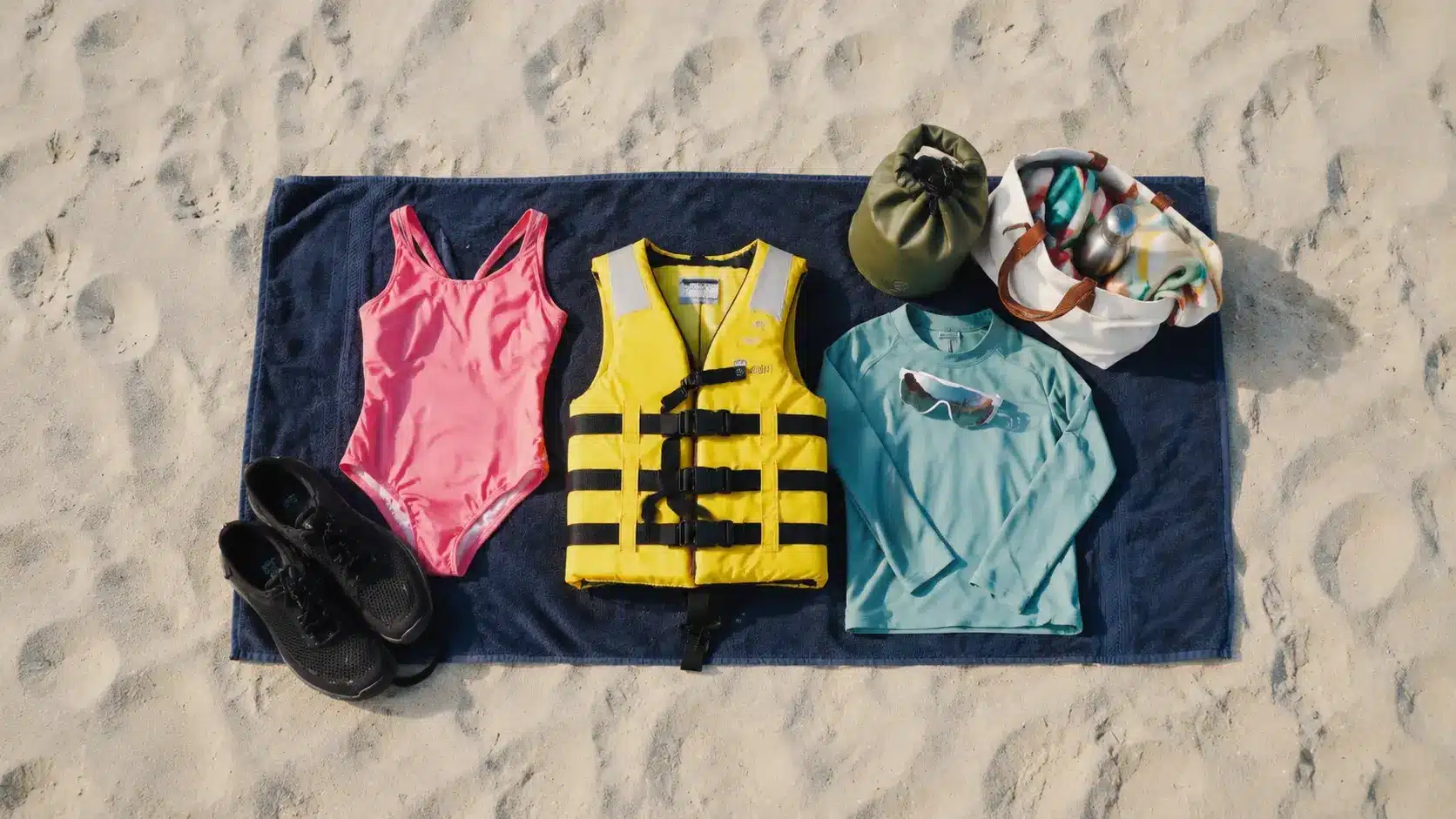
Checklist for Parasailing
- Secure swimwear or quick-drying clothes
- Life jacket supplied by the operator
- Clothing suitable for wind and spray
- No loose hats, jewelry, or unsecured items
Most operators supply the essential safety gear. Our parasailing outfit guide covers what actually holds up against water and wind.
Checklist for Paragliding
- Long trousers
- Closed shoes with a firm grip
- Layers suited to cooler air
- Gloves or a windproof jacket where conditions require them
Conditions vary a lot by elevation and wind speed, so layer up. Your instructor supplies all required safety equipment on-site.
Which One Is Right for You?
Parasailing is the easy, low-effort choice: great views, nothing to manage, just settle into the harness.
Paragliding is the better fit if you want the real sensation of flying and active involvement in the flight, whether tandem or working toward a solo rating.
My take: parasailing for a laid-back vacation day, tandem paragliding when I want a genuine challenge.
Frequently Asked Questions
Can Beginners Go Paragliding?
Yes, via a tandem flight with a qualified pilot. Flying solo requires lessons, supervised practice, and USHPA certification first.
Does Paragliding Use a Parachute?
A paraglider uses a specially designed gliding wing, not a standard parachute. Pilots typically carry a separate reserve parachute for emergencies only.
Is Parasailing a Water Sport or an Air Sport?
Both. You’re airborne the whole time, but commercial rides depend on a boat and happen directly over water, so it’s usually filed under water sports.
Which Is More Adventurous, Parasailing or Paragliding?
Paragliding offers more control, movement, and hands-on involvement. Parasailing is the calmer ride, though either can feel exciting the first time.
How Much Does Parasailing Cost Compared to Paragliding?
Parasailing typically runs $50 to $100 per person. Tandem paragliding usually costs $100 to $250 or more, depending on launch site and flight length.
Can You Get Motion Sick Parasailing or Paragliding?
Parasailing rarely causes motion sickness since the flight path is smooth and steady, though the boat ride out can affect riders prone to seasickness. Paragliding involves more movement and occasional thermal turbulence, which can affect sensitive flyers more.