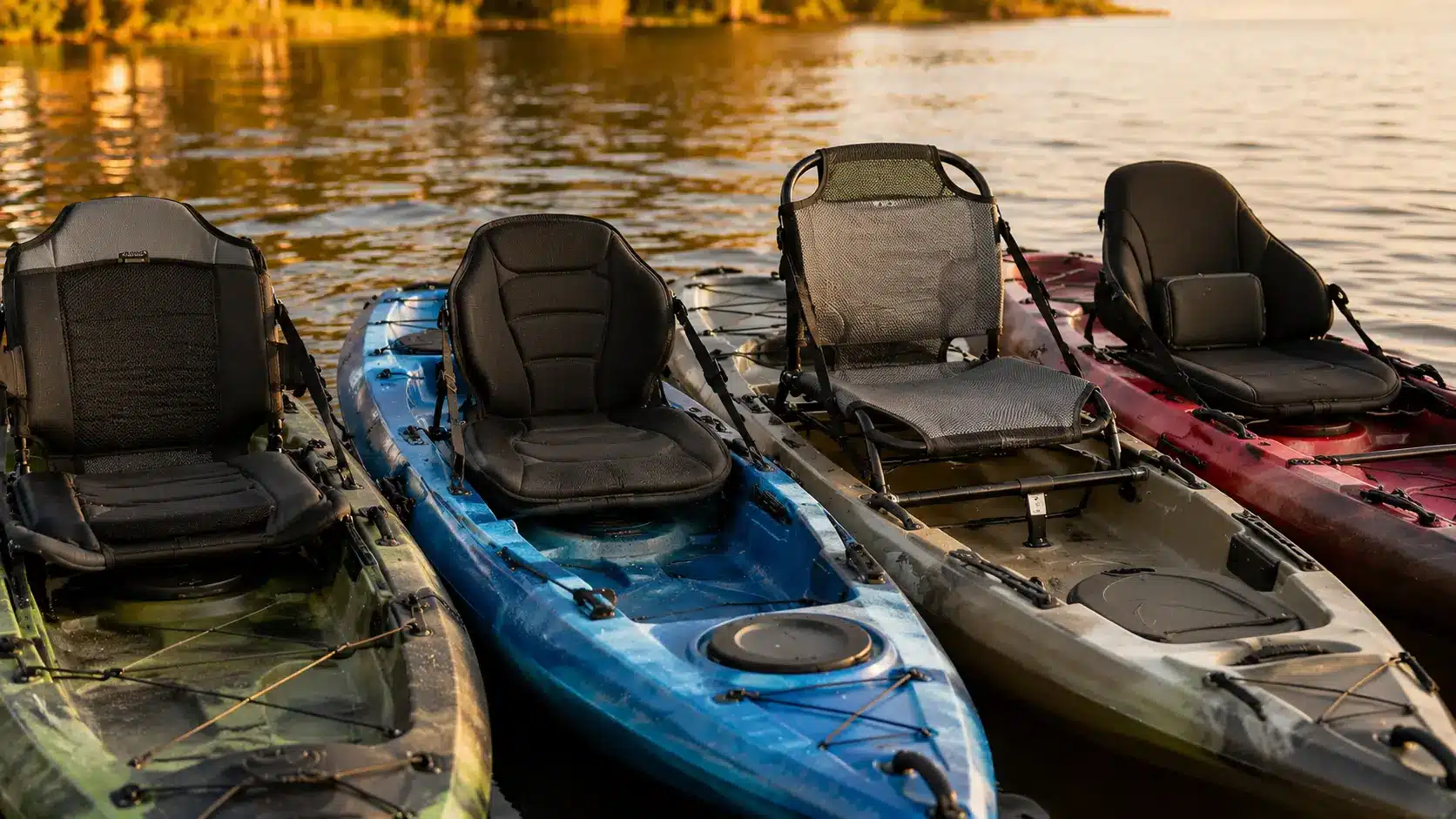
A sore back, numb legs, and aching hips after a paddle are not signs you need a new kayak. Most of the time, your seat is the problem.
Stock kayak seats are built to keep costs low, not to keep you comfortable for hours on the water.
The right kayak seat upgrade can change how long you paddle, how your back feels the next morning, and how much you actually enjoy being out there.
From simple foam pads to full DIY builds, there are options for every budget and every paddler.
Why So Many Kayak Seats Feel Uncomfortable
Many kayak seat problems come from basic design limitations rather than just a lack of padding. The longer you stay on the water, the more noticeable those flaws become.
- Low seating position: Sitting close to the water forces your legs flat and your hips into an awkward angle, creating pressure on the tailbone and tightening the hamstrings.
- Poor lumbar support: Cheap kayak seats rarely support the natural curve of your lower back, which leads to slouching and back pain during longer paddles.
- Cheap molded seats: Many entry-level kayaks use thin foam pads or hard plastic seats that lack adjustability and fail to fit different body types properly.
- Long paddling sessions expose flaws: A seat that feels acceptable for 20 minutes can become painful after an hour as pressure points, fatigue, and poor posture build up.
Understanding these problems makes it easier to choose the right upgrade instead of throwing extra padding at the wrong issue. In many cases, support and positioning matter more than softness alone.
The Different Types of Kayak Seat Upgrades
Not every paddler needs the same thing from their seat. Some want more cushion, some want better back support, and some want to sit higher off the deck. Here are the most common upgrade options and what each one actually does.
1. Padded Seat Cushions
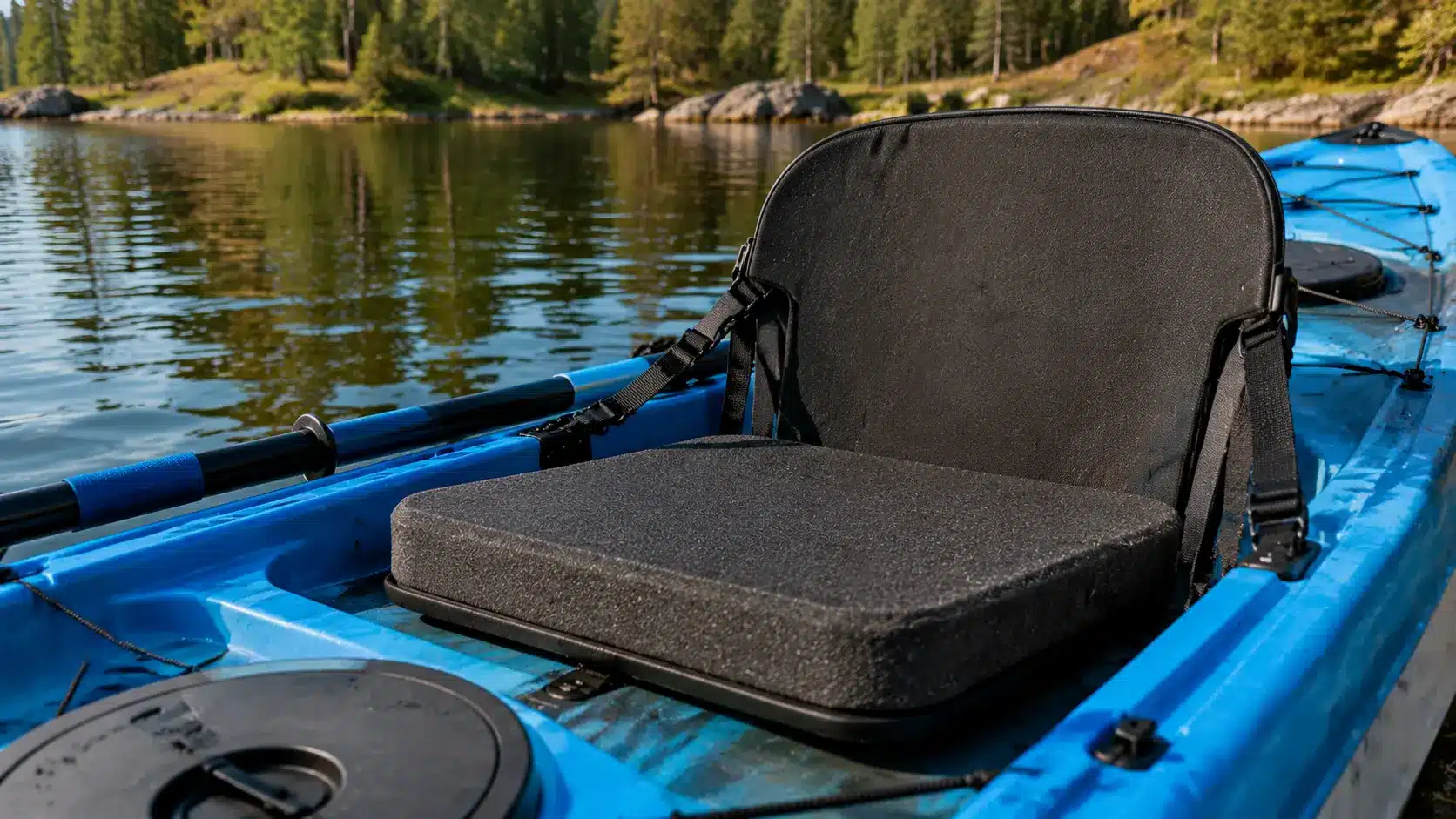
The simplest and cheapest upgrade you can make to any kayak. You place a closed-cell foam or EVA foam pad on your existing seat, and it takes the edge off hard plastic or thin stock seats.
EVA foam is the preferred material because it resists water absorption and holds its shape over time. Works fine for short trips, but won’t fix back pain or posture problems on longer paddles.
2. Gel Seat Pads
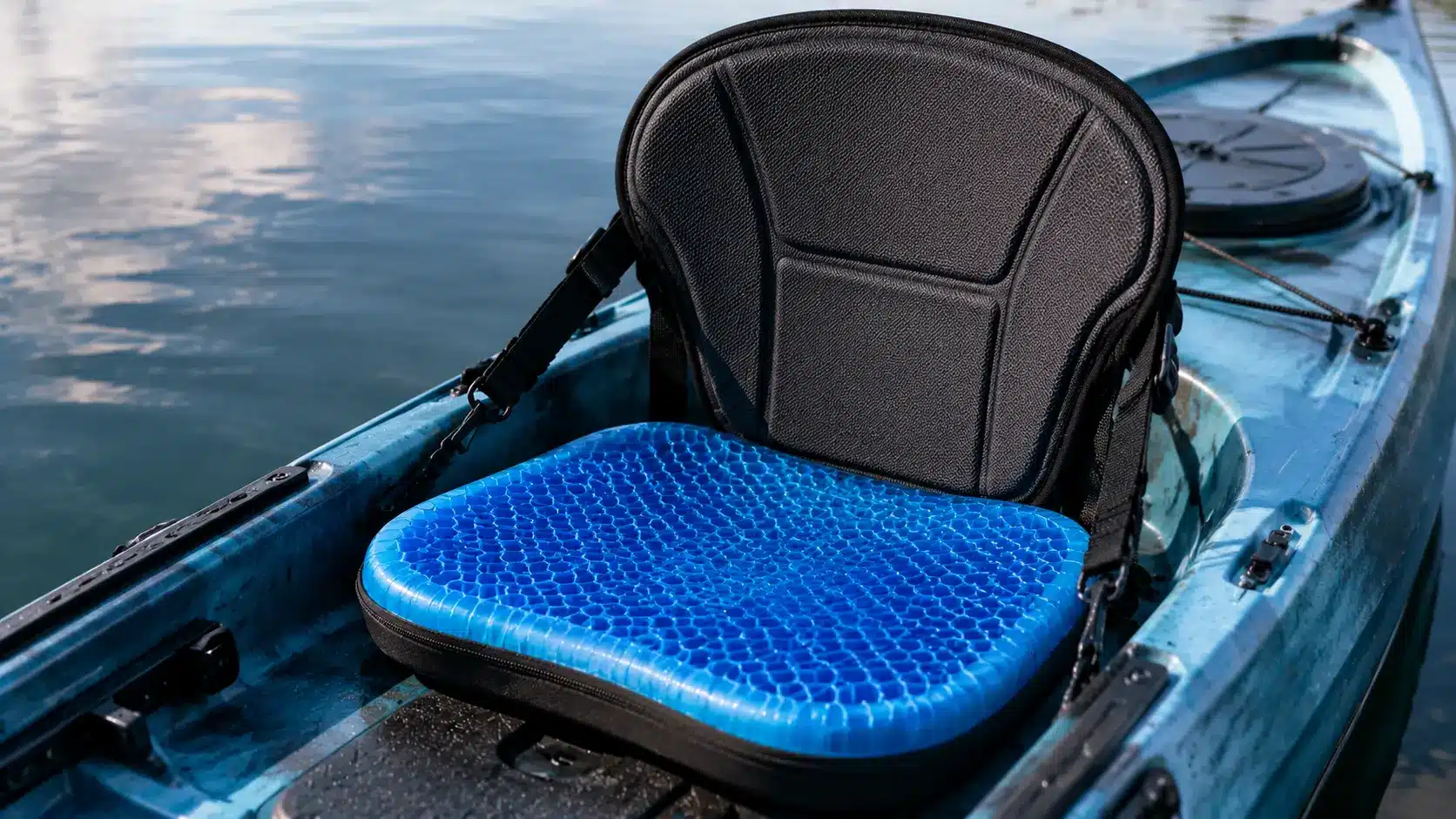
Popular options include the YakPads Gel Seat Pad and honeycomb gel cushions, both of which are widely carried by kayak shops and consistently reviewed as entry-level upgrades worth the cost.
Anglers use these a lot because fishing means sitting in one position for hours at a time. Older solid gel pads can trap heat on warm days.
Newer honeycomb gel designs largely solve this by allowing airflow through the pad, so if heat is a concern, look specifically for a honeycomb gel construction.
3. High-Back Kayak Seats
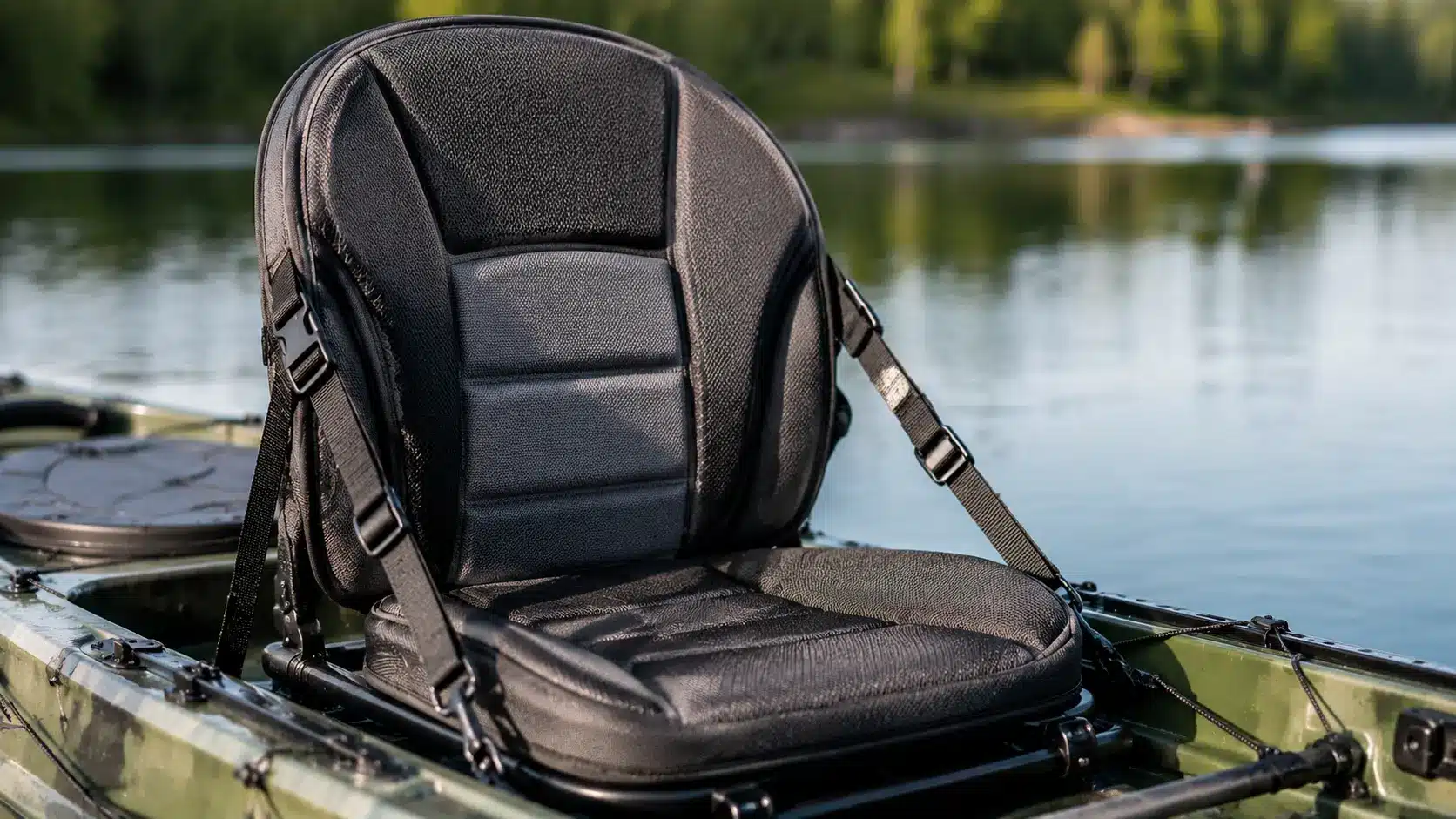
These support your entire back, not just your lower half, which makes a big difference on longer paddles. Anglers, beginners, and recreational paddlers tend to prefer them.
Anglers benefit because staying stationary for long periods requires full back support, while beginners benefit from the posture correction they provide with little effort.
The tradeoff is that they limit how far you can twist your upper body, which slightly reduces paddling efficiency.
4. Low-Profile Touring Seats
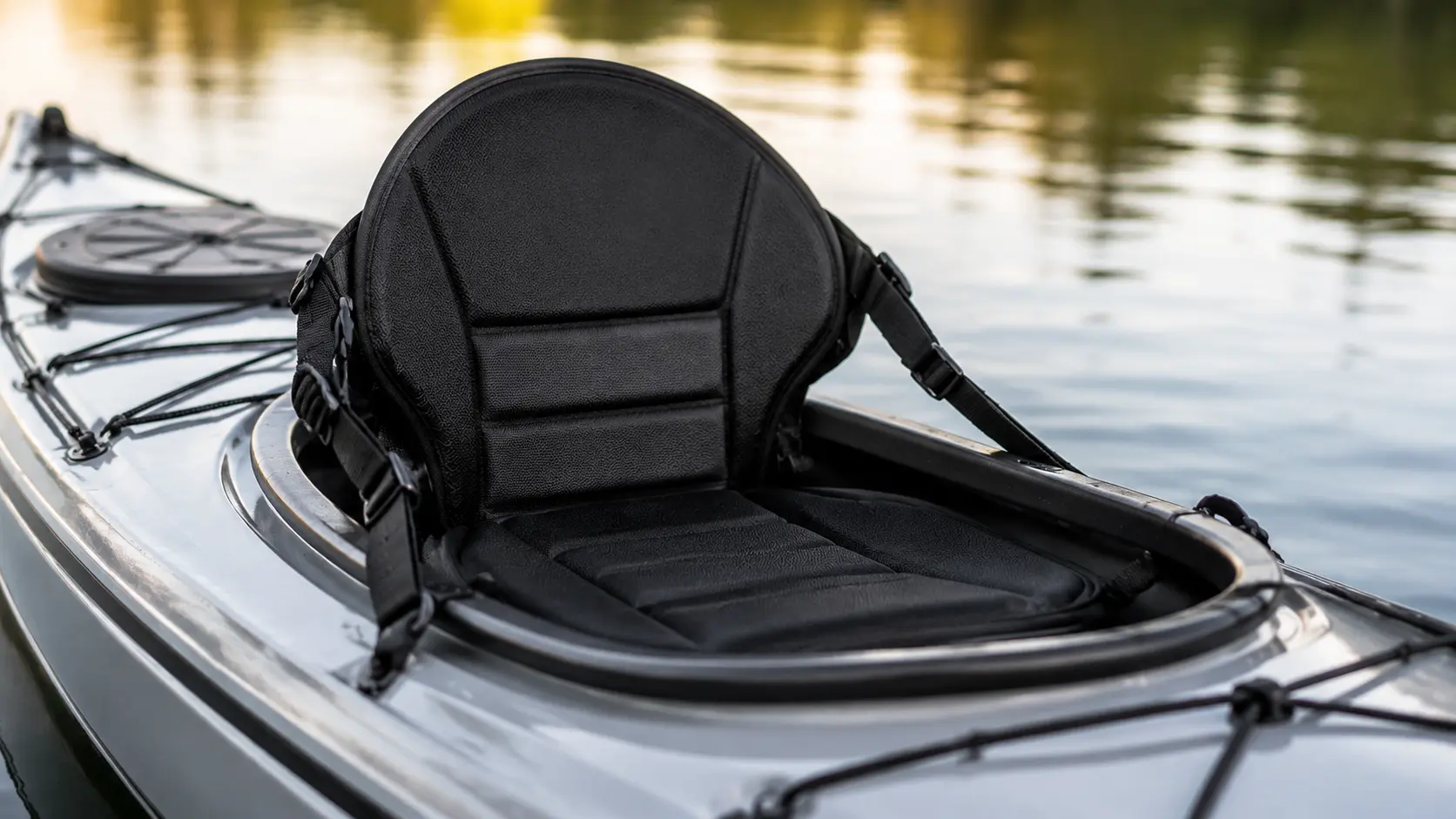
Designed for paddlers who prioritize movement and efficiency over thick cushioning. They sit close to the deck, allow full torso rotation, and keep your center of gravity low.
Less comfortable than high-back seats but much better for performance and long-distance paddling.
5. Stadium Seat Conversions
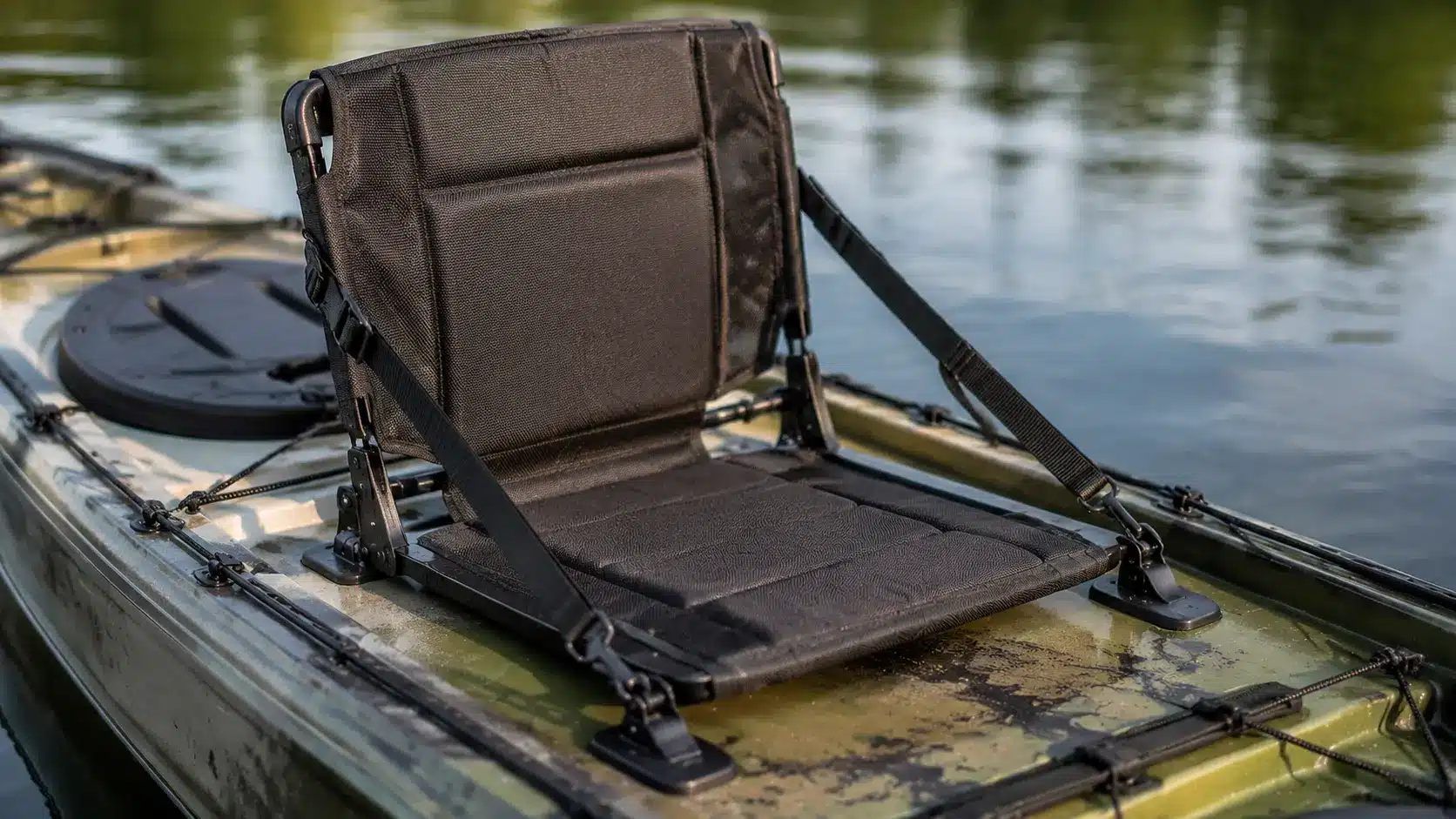
One of the most talked-about DIY kayak seat upgrades on forums like Reddit, and for good reason.
You mount a basic bleacher-style stadium seat onto your kayak deck, which raises your position and adds back support for very little money.
Stability is the main concern here, so this works better on wide fishing kayaks than narrow recreational ones.
6. Framed Lawn-Chair Style Seats
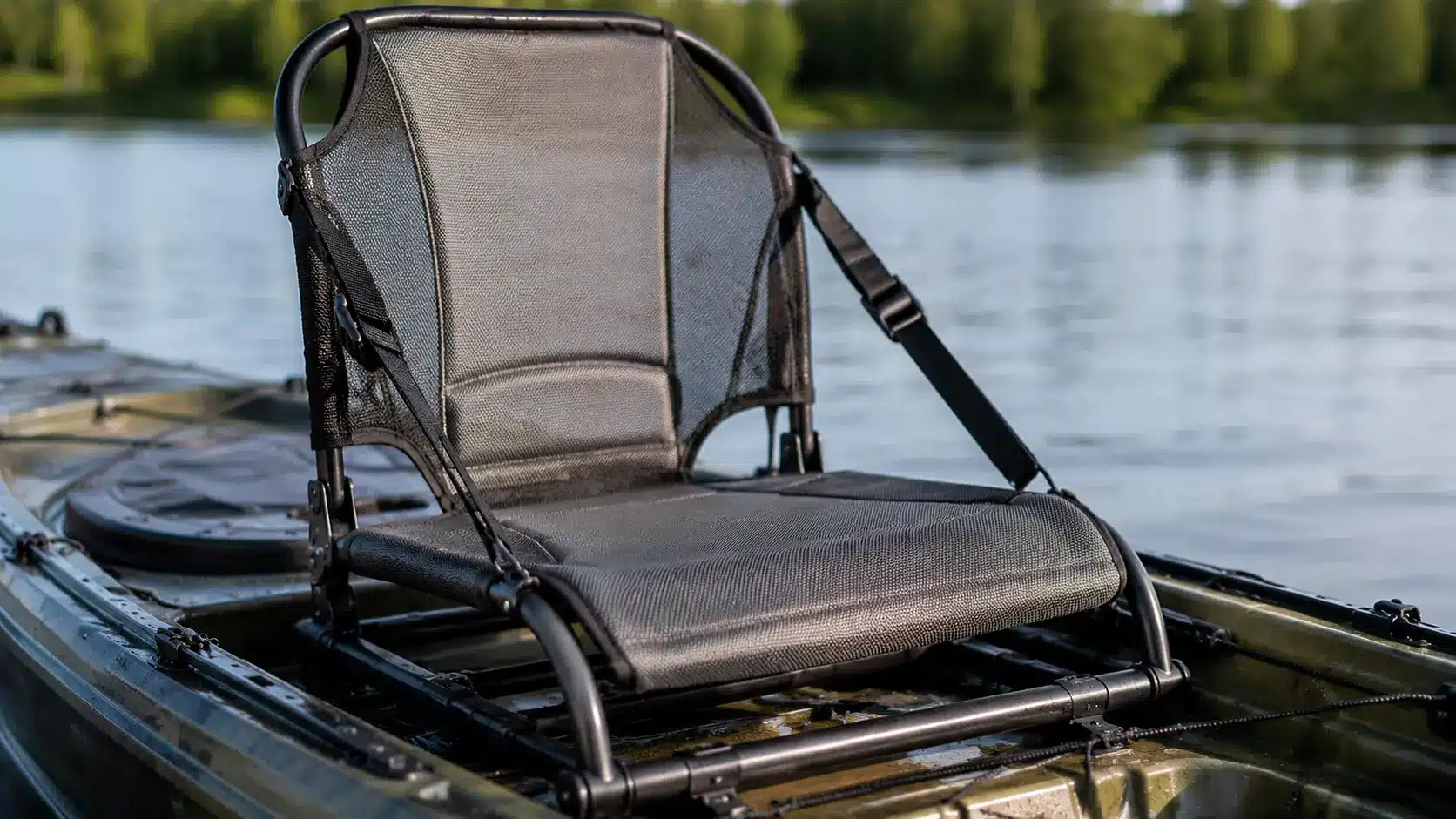
These are the premium end of fishing kayak seating, with a mesh back, elevated position, and a frame that holds its shape all day.
The airflow from the mesh keeps you cooler and drier compared to solid foam or plastic seats. They cost more and take up more space, but anglers who use them rarely go back to anything else.
7. Inflatable Seat Pads
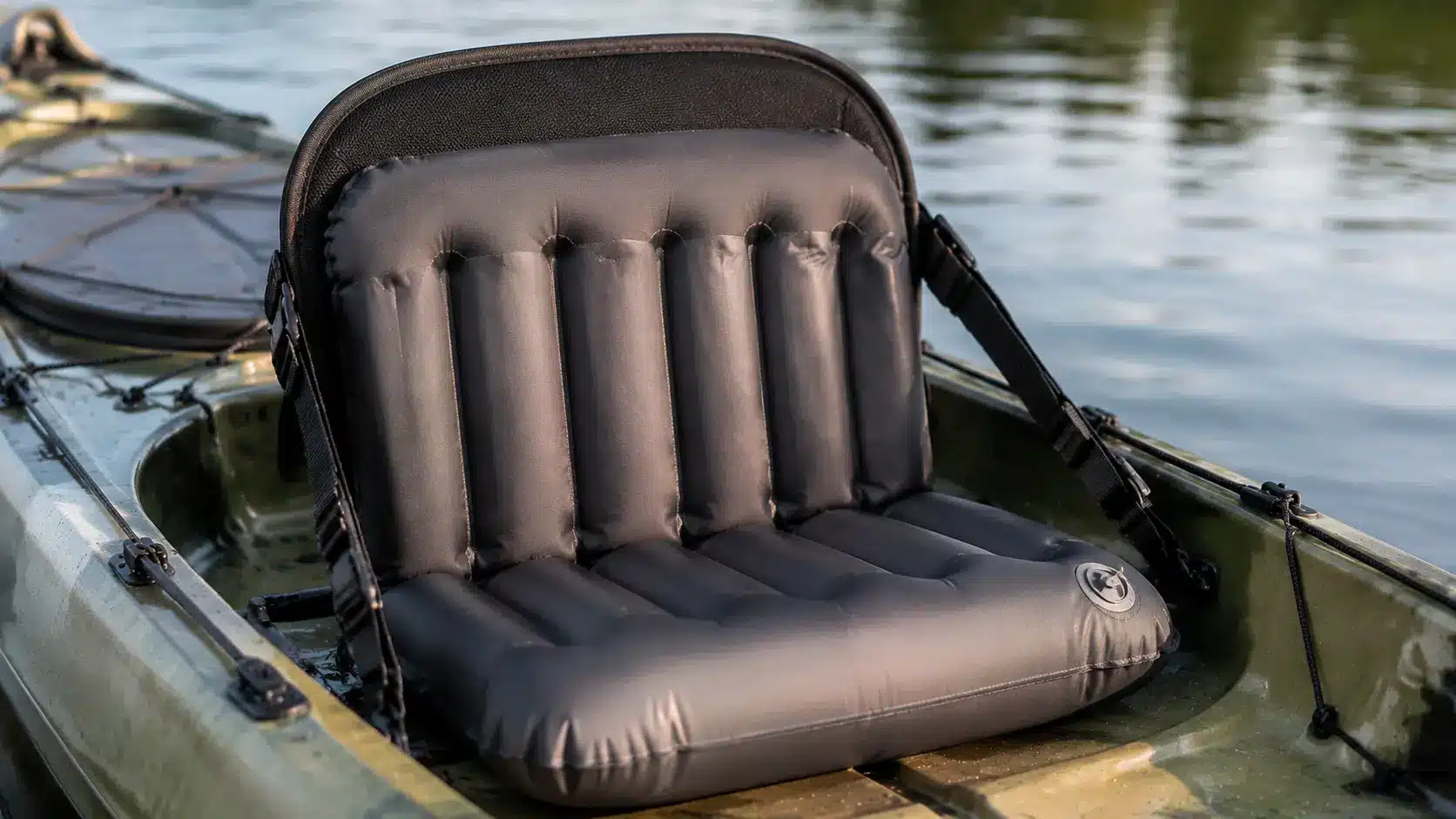
Lightweight pads you can inflate or deflate to adjust firmness depending on what feels right that day.
Easy to pack and carry, which makes them popular with paddlers who switch between different kayaks.
They wear out faster than foam over time, so they work better as a backup option than a daily driver.
8. Foam Outfitting Mods
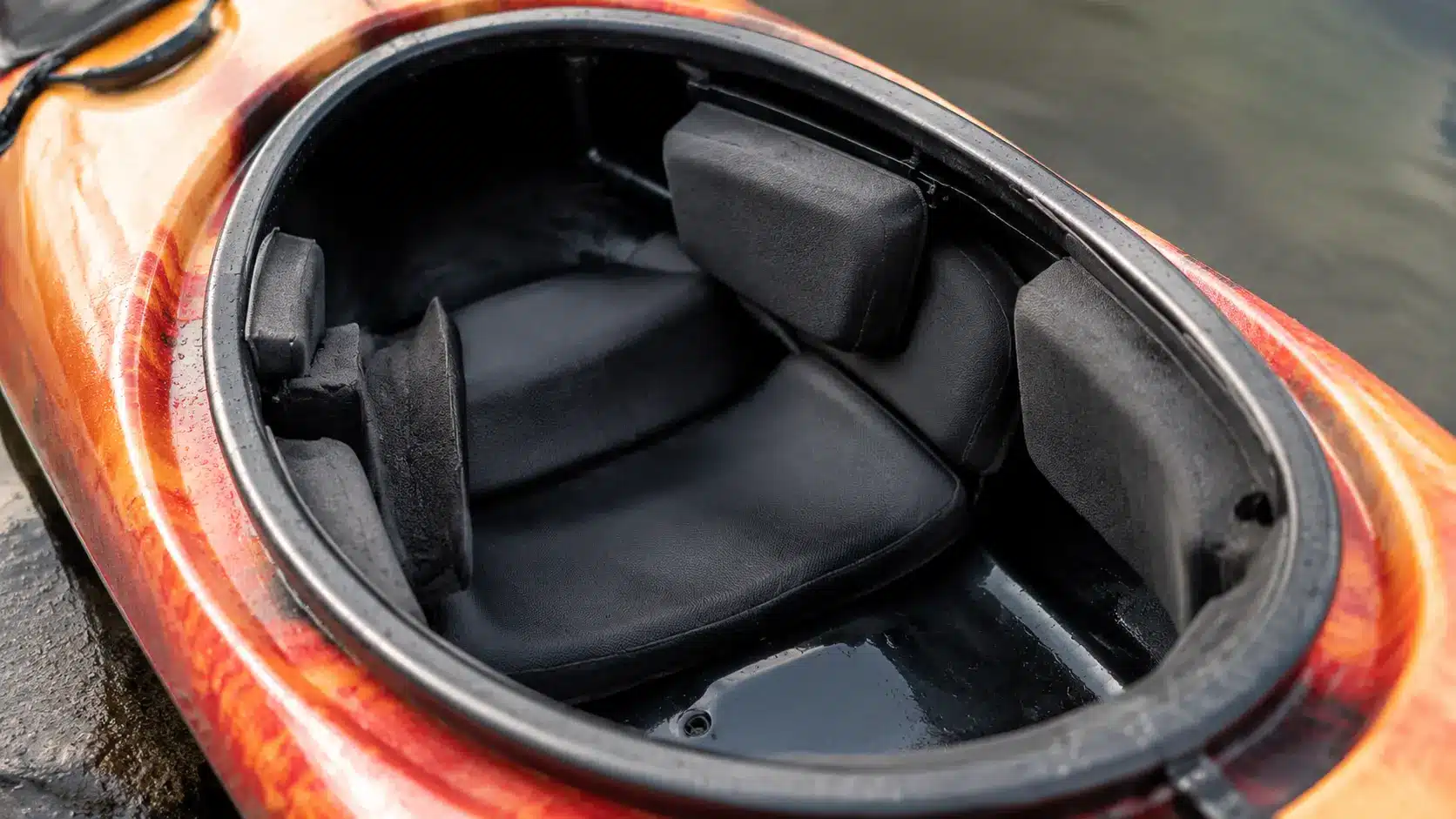
Common in whitewater kayaking, this involves gluing shaped foam pieces to your seat, thighs, and hips to create a custom fit inside the cockpit.
The tighter and more tailored contact gives you better boat control and reduces unwanted movement.
It takes some trial and error to get right, but once dialed in, it feels like the kayak was built for your body.
9. Lumbar Support Attachments
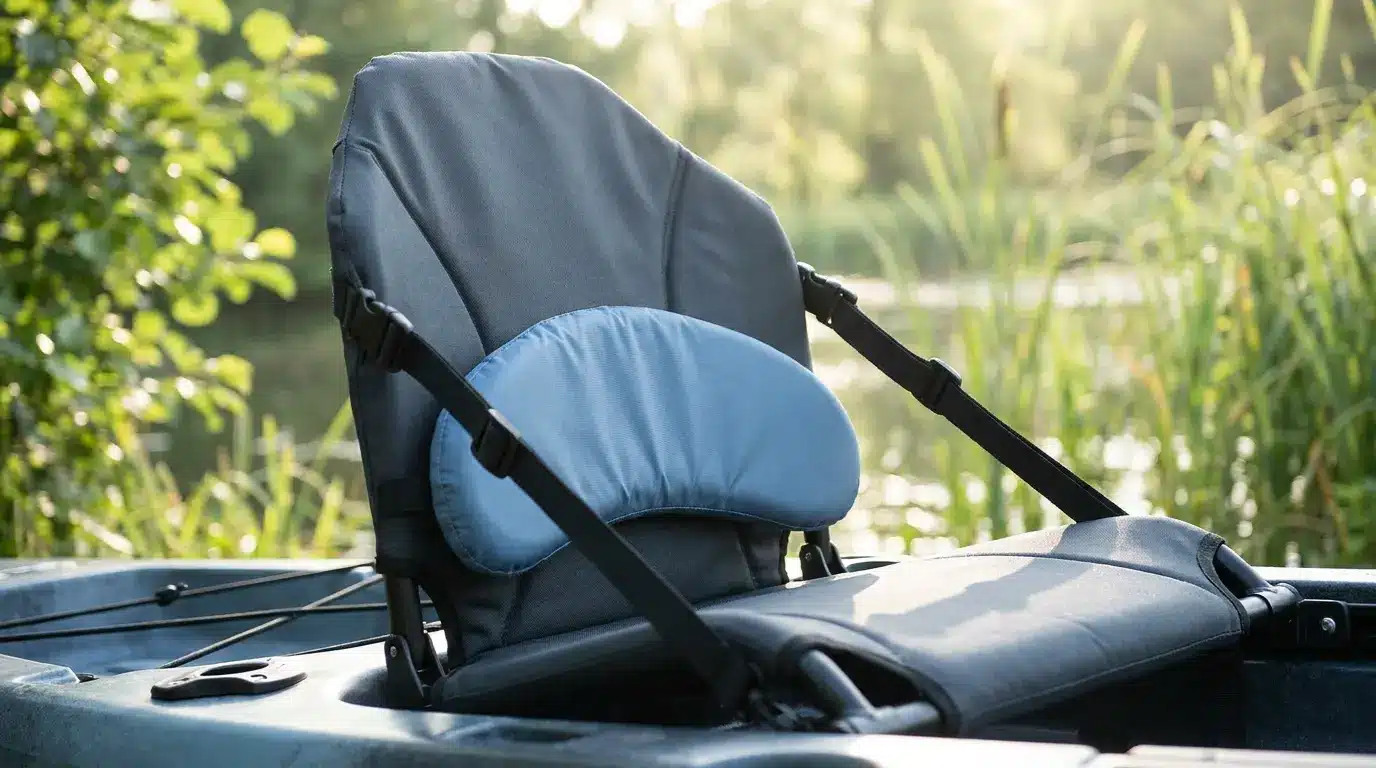
Small curved pads that strap onto your existing seat back and push into your lower spine.
They don’t add any cushioning under you but they correct your posture, which is often the real cause of back pain.
Cheap, easy to install, and one of the most underrated low-cost upgrades available.
10. Raised Seat Platforms
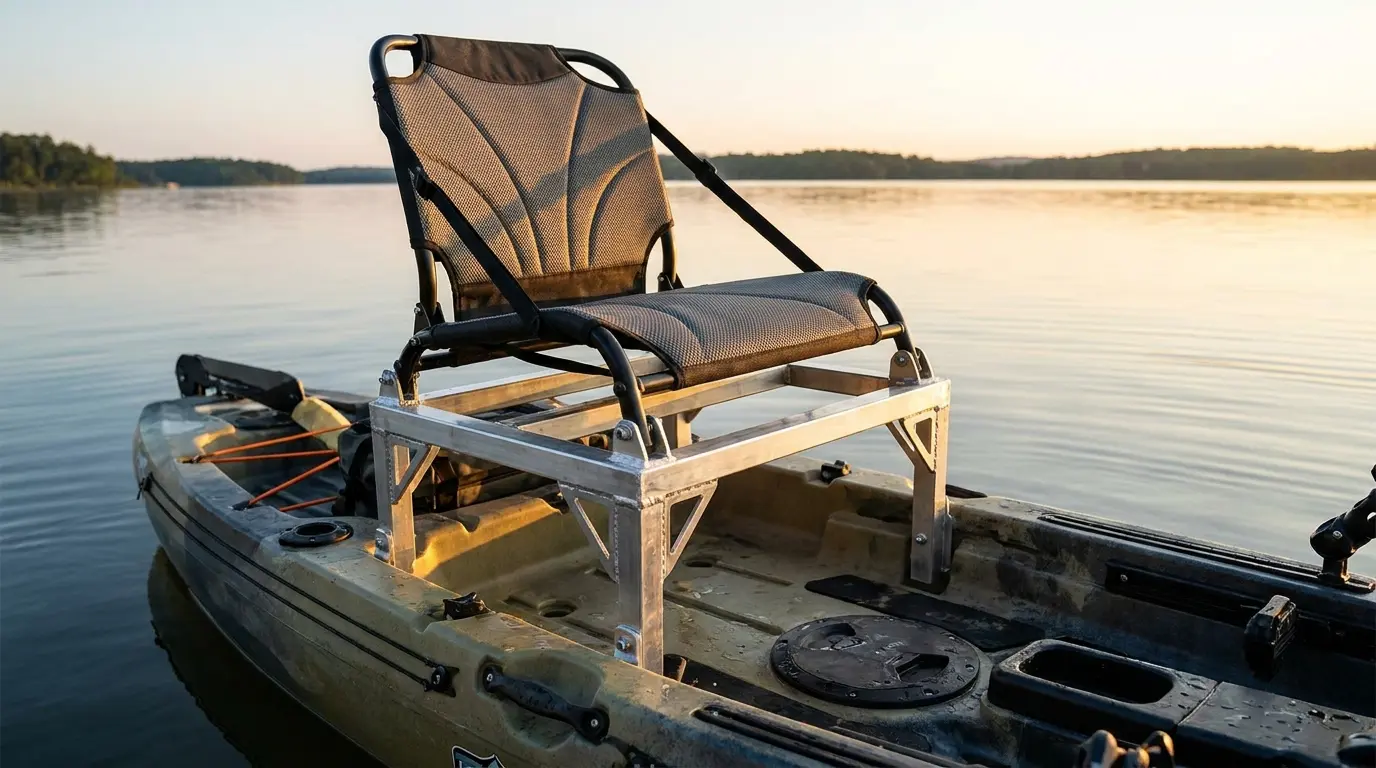
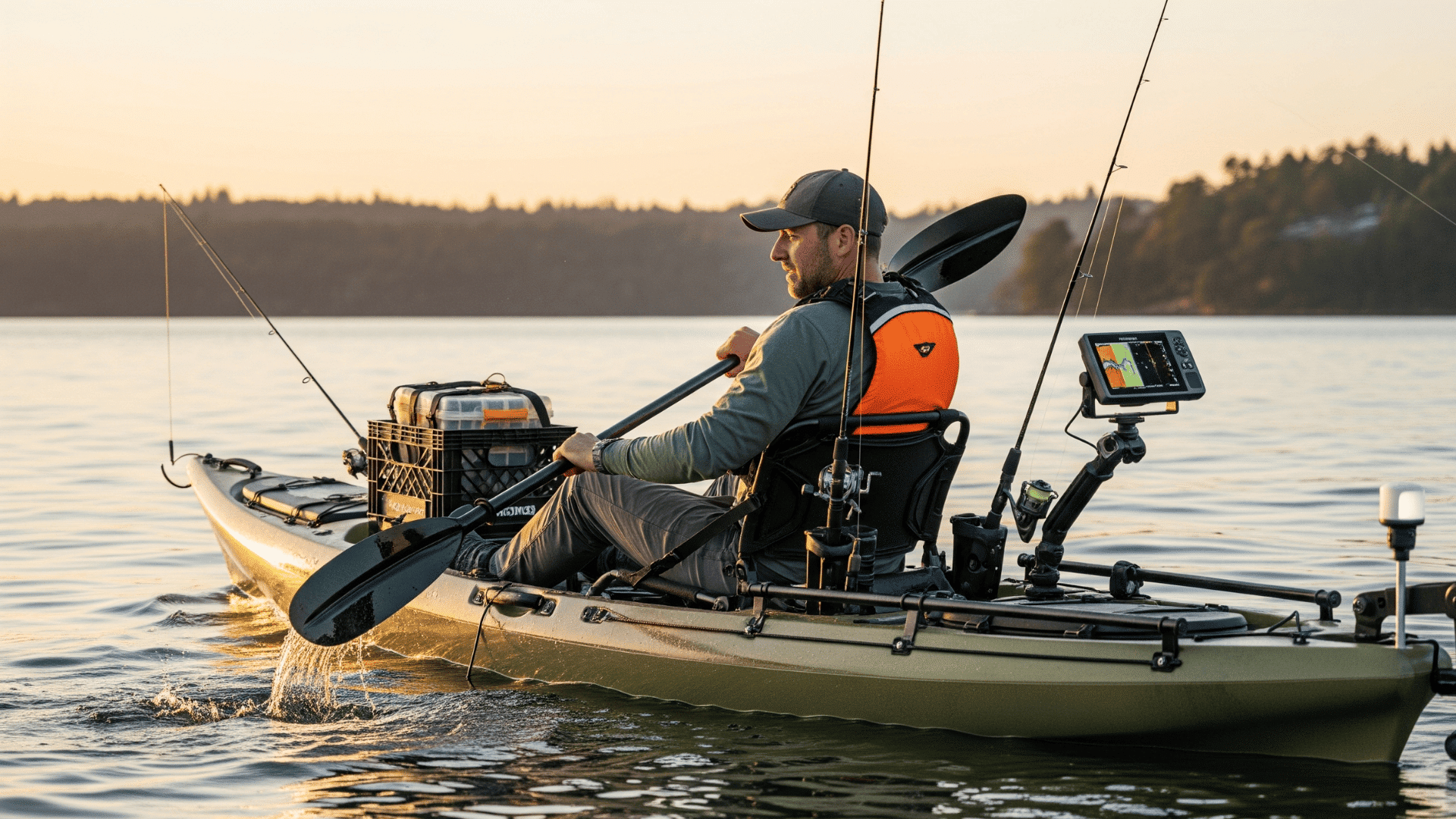
DIY risers or bolt-on mounts that lift your entire seating position higher off the deck. Popular with fishing setups where better visibility and easier standing transitions matter more than staying low.
The higher you go, the more your center of gravity shifts, so stability testing before heading out is a must.
11. Suspension-Style Mesh Seats
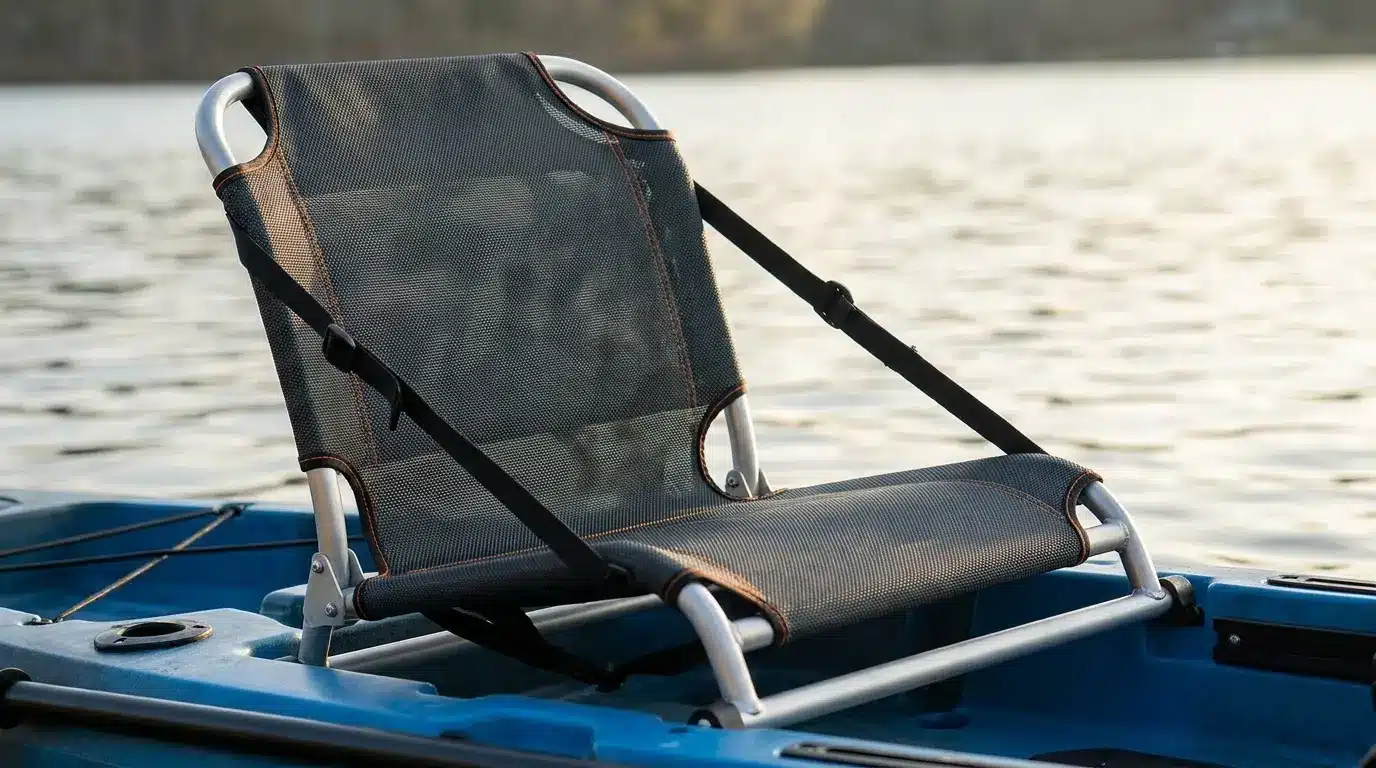
Breathable seat systems that use a stretched mesh surface instead of solid foam. They reduce pressure points and dry out quickly when wet, which is a real advantage in warm conditions.
Less cushioning than foam options, but the airflow and comfort tradeoff is worth it for many paddlers.
12. Custom DIY Seat Builds
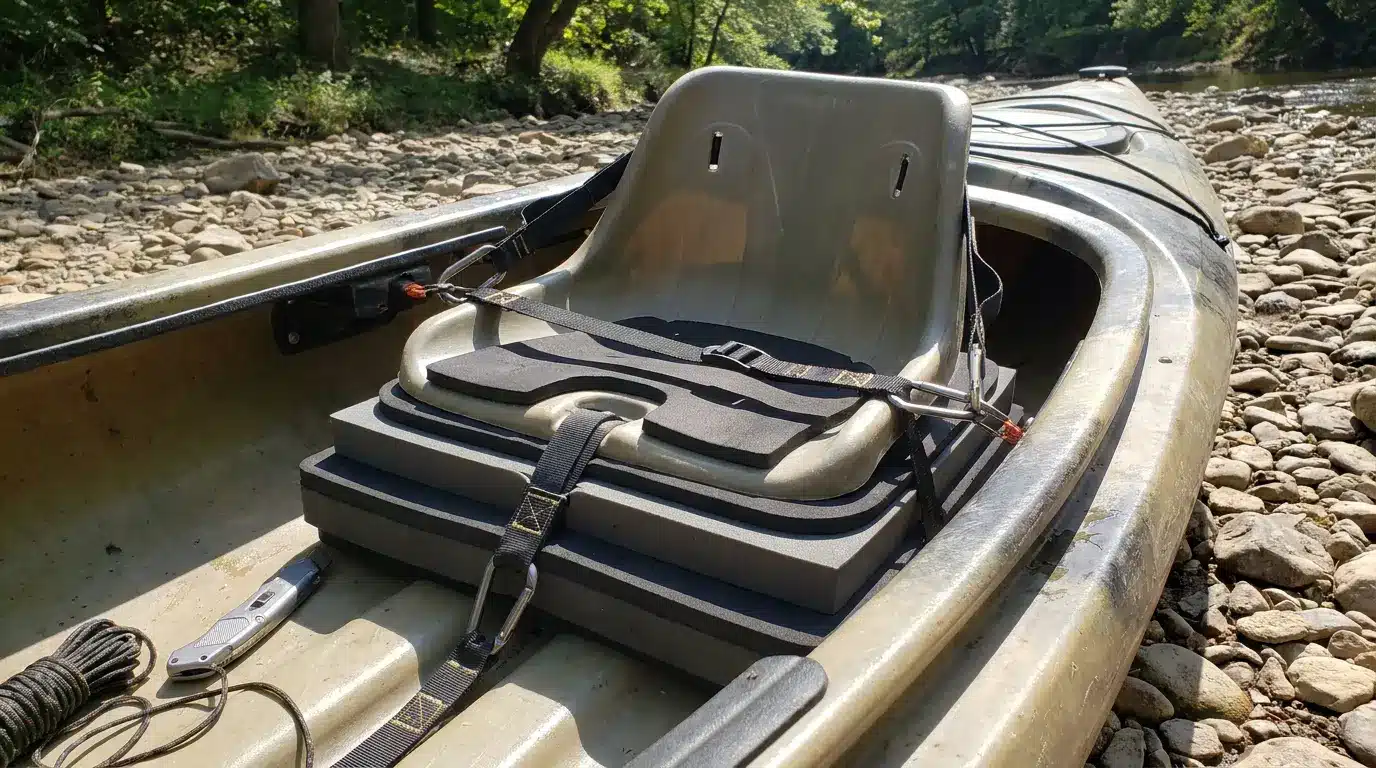
Fully personalized setups where paddlers combine foam, straps, platforms, and seat backs into one system built around their body.
Experienced tinkerers get great results because they can address every specific comfort issue they have.
Done poorly, these builds can shift your balance or restrict your movement in ways that create real problems on the water.
13. Backband Upgrades
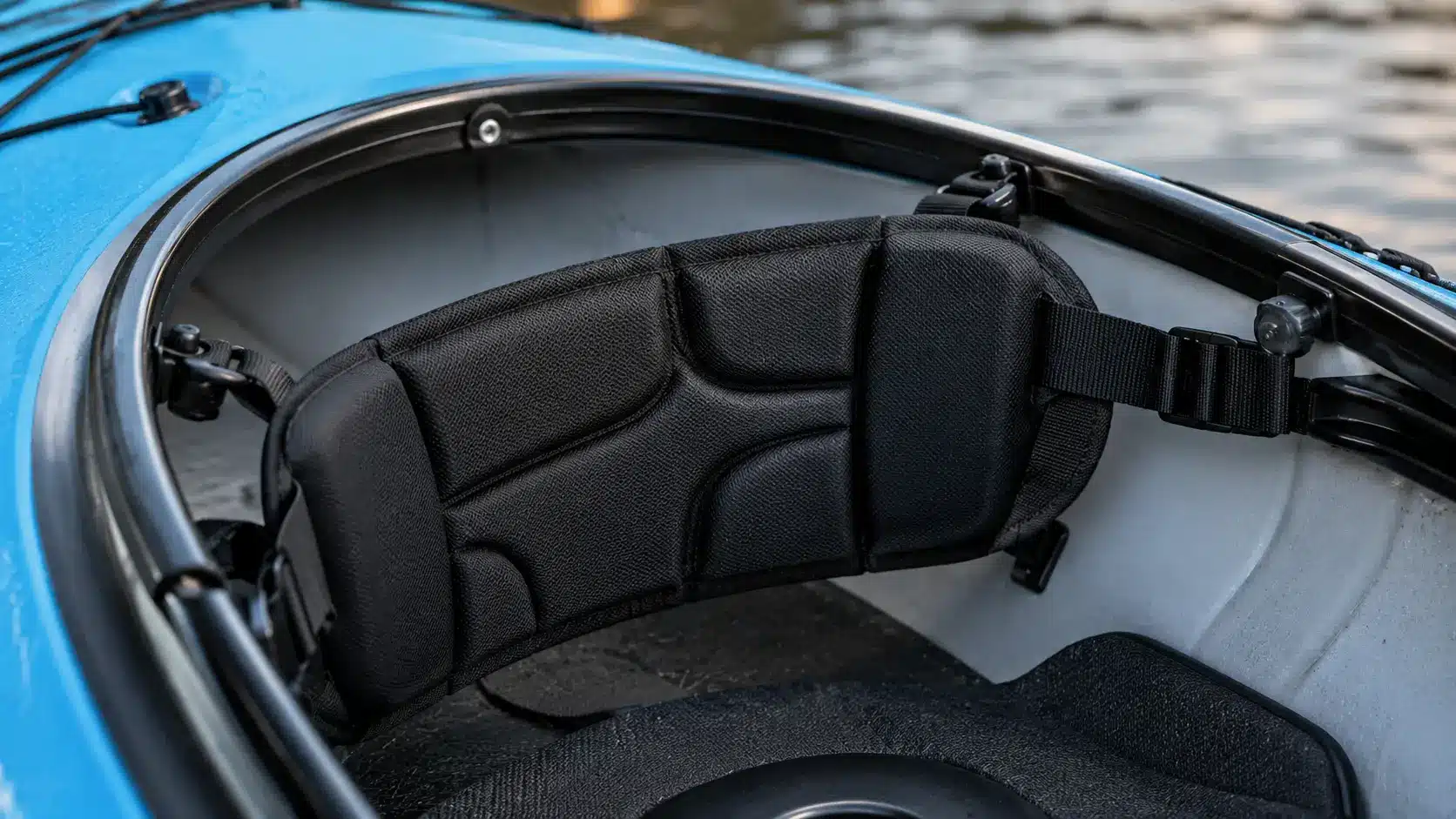
Specifically relevant to sit-inside kayaks, replacing or upgrading your backband improves lower-back support, promotes better paddling posture, and creates a more secure connection between you and the hull.
This translates to more efficient paddle strokes and better maneuverability. It is one of the most overlooked upgrades for touring and recreational sit-inside paddlers.
Do Kayak Seat Upgrades Actually Help?
Sometimes. Not always.
If your pain comes from a hard, thin seat, adding cushioning helps. If it comes from poor paddling posture or a badly designed hull, no seat upgrade will fully fix it.
A lot of paddlers stack cushions to relieve back pain, only to raise their center of gravity without addressing the root cause.
Posture usually matters more than padding. Sitting upright, engaging your core, and using footrests properly will do more for comfort than a thicker seat ever will.
Raised Kayak Seats vs Traditional Low Seats
Raised kayak seats became popular because many paddlers wanted more comfort and a better fishing setup. But the tradeoff between comfort and stability is something many beginners underestimate.
| Feature | Raised Kayak Seats | Traditional Low Seats |
|---|---|---|
| Seating Position | Higher above the water | Closer to the kayak hull |
| Comfort | Reduces leg pressure and improves posture | Can feel cramped during long trips |
| Entry and Exit | Easier, especially for older paddlers | Harder on knees and hips |
| Visibility | Better view of the water and surroundings | Lower viewing angle |
| Stability | Higher tipping risk due to the raised center of gravity | More stable and efficient |
| Best For | Fishing kayaks and relaxed paddling | Touring, speed, and rough-water paddling |
| Paddling Efficiency | Slightly less efficient | Better torso rotation and power transfer |
| Common Use Case | Casting, sitting still, sight fishing | Long-distance paddling and maneuvering |
Neither setup is universally better because it depends heavily on how and where you paddle. The key is balancing comfort with the amount of stability your kayak can realistically handle.
DIY Kayak Seat Upgrade Ideas That Actually Work
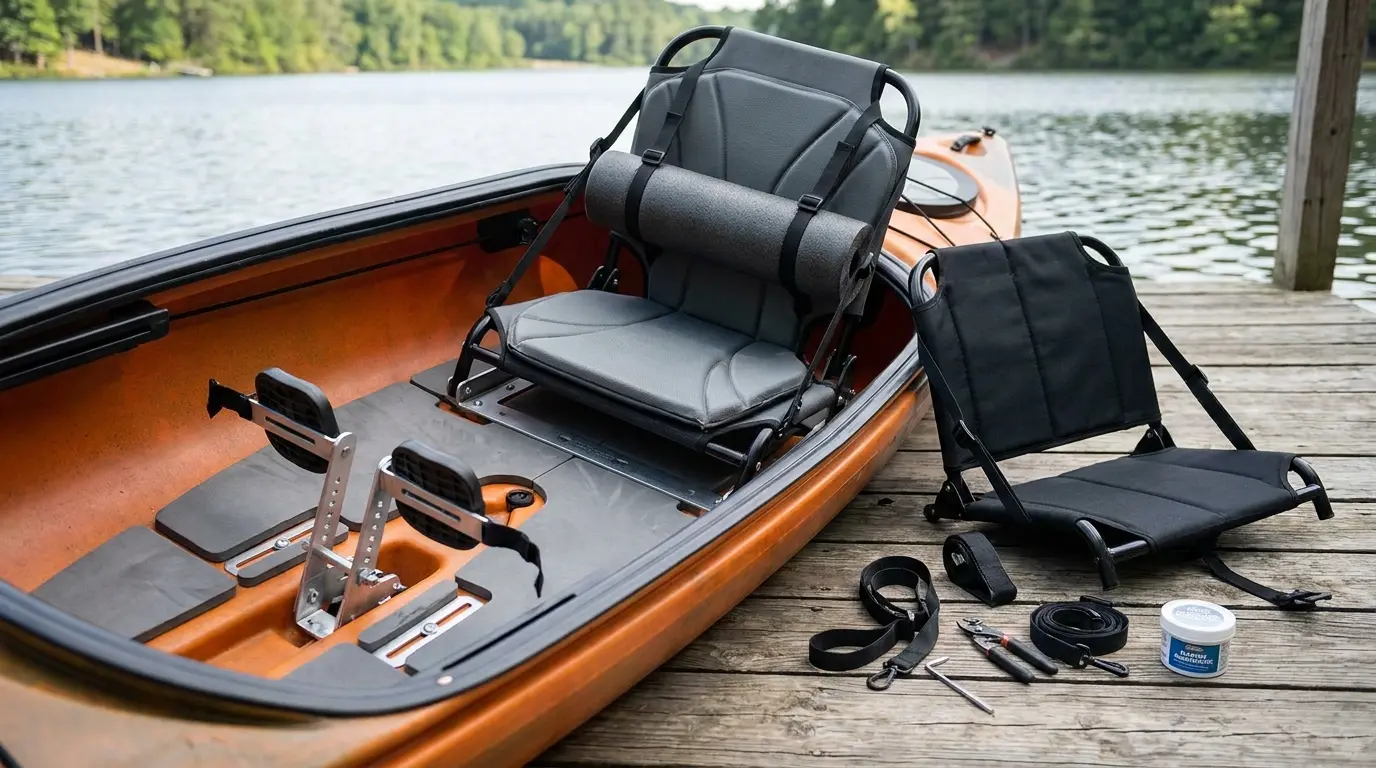
Most kayak seat upgrades do not require expensive parts or major modifications to make a noticeable difference. Small adjustments in support and positioning often improve comfort more than thick cushioning alone.
- Adding foam padding: Cut closed-cell foam to fit your seat base and glue it down. Cheap and effective for basic comfort.
- Installing a stadium seat: Mount it flat on the kayak deck using bolts or non-slip pads. Test stability before heading out on open water.
- Adjusting seat angle and tilt: Some seats allow forward or backward tilt. Tilting slightly forward opens up your hip angle and reduces lower back strain.
- Improving lumbar support: A rolled foam pad or a lumbar attachment strapped to your seatback makes a noticeable difference during longer paddles.
- Customizing foot and knee support: Adjust your foot pegs to keep your knees slightly bent. This simple adjustment can reduce lower back strain by around 30% and takes less than a minute to set up. Combined with a slight forward pelvic tilt, it makes the single biggest posture difference of any DIY fix.
These DIY upgrades work best when tested gradually instead of changing everything at once. Comfort, stability, and paddling posture all need to stay balanced on the water.
Sit-On-Top vs Sit-Inside Kayak Seat Upgrades
Sit-on-top kayaks offer more room to customize. You can swap seats entirely, add risers, or mount fishing-style chairs. Most have molded or strap-based seat systems that are easy to replace.
Sit-inside kayaks have more restrictions. Cockpit space limits how much you can raise or widen your seat. Foam outfitting and lumbar attachments work better here than elevated systems.
Sit-on-tops generally give more options for the kind of comfort-focused upgrades that anglers and recreational paddlers want.
Tight on garage space? These canoe storage setups make it much easier to store larger boats safely without cluttering your entire setup.
Should You Upgrade Your Seat or Buy a Better Kayak?
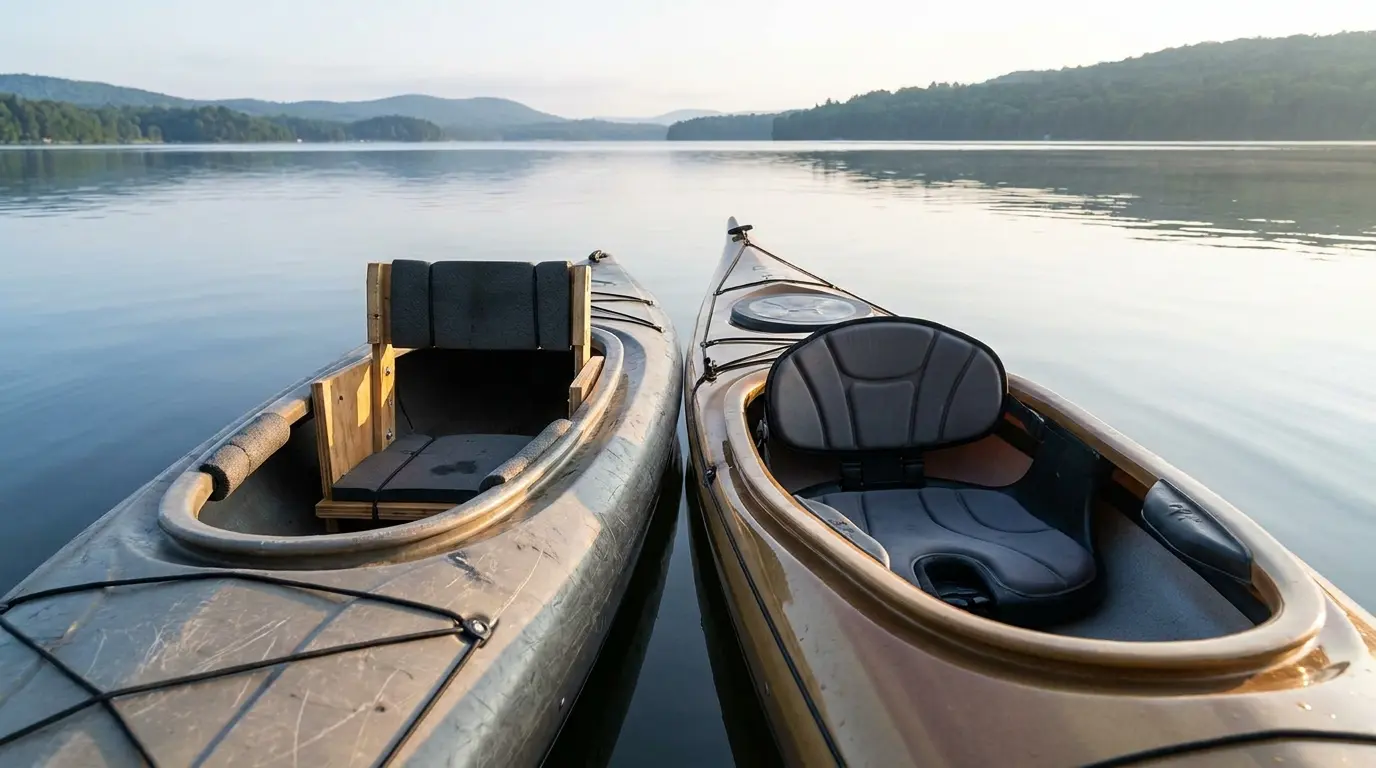
If your kayak fits your body and your paddling style, a seat upgrade is worth it. A good aftermarket seat on a solid kayak makes a real difference.
If the kayak itself is too narrow, too short, or just poorly designed for your body, no seat upgrade will completely fix it. Hull geometry, cockpit size, and footrest placement all affect comfort in ways a new seat can’t correct.
Spending $150 on a seat system for a $200 kayak has real limits. At some point, the better investment is a kayak that fits you properly.
Once you start adding upgrades and extra gear, keeping the kayak stored properly matters a lot more, too.
The Biggest Mistakes People Make When Upgrading Kayak Seats
A better seat can improve comfort, but the wrong upgrade can create entirely new problems on the water. Many paddlers focus too much on softness and ignore stability, posture, and kayak design.
- Raising the seat too high: Stability drops fast when you go too high. Test in calm, shallow water first.
- Ignoring boat stability: A great seat on the wrong kayak is still a problem. Know the limits of your hull before adding elevated systems.
- Overpadding the seat: Too much cushioning raises you up and causes you to sink unevenly into the soft material, which creates new pressure points.
- Buying universal seats that don’t fit properly: Most “universal” seats don’t fit every kayak. Always check mount points and deck shape before buying.
- Forgetting about paddling mechanics: A seat upgrade won’t fix inefficient paddling form. Address your posture and technique alongside any hardware changes.
The best kayak seat upgrades improve comfort without compromising control or stability. A balanced setup almost always performs better than the softest or tallest seat possible.
Final Thoughts
Upgrading your kayak seat does not have to be expensive or complicated. Start with the basics like lumbar support and seat angle before spending money on bigger systems.
Fix your posture, adjust your foot pegs, and give your body time to adapt. Small changes often make a bigger difference than a full seat replacement. If you fish, an elevated seat is worth considering.
If you tour, keep it low and light. There is no single best setup for everyone. The right kayak seat upgrade is simply the one that keeps you comfortable and on the water longer.
Frequently Asked Questions
How Thick Should a Kayak Seat Cushion Be?
Most kayak seat cushions work best between 1.5 and 2.5 inches thick. High-density foam or gel padding in this range provides the best balance of comfort and pressure relief without raising your center of gravity enough to affect stability.
Why Do My Legs Go Numb While Kayaking?
Leg numbness usually comes from poor circulation caused by seat pressure or improper leg positioning. Adjusting your foot pegs and improving hip angle often helps more than adding extra padding.
Can a Kayak Seat Affect Paddling Performance?
Yes, the wrong seat setup can limit torso rotation and reduce paddling efficiency. Seats that are too soft or too high often make it harder to paddle smoothly over long distances.