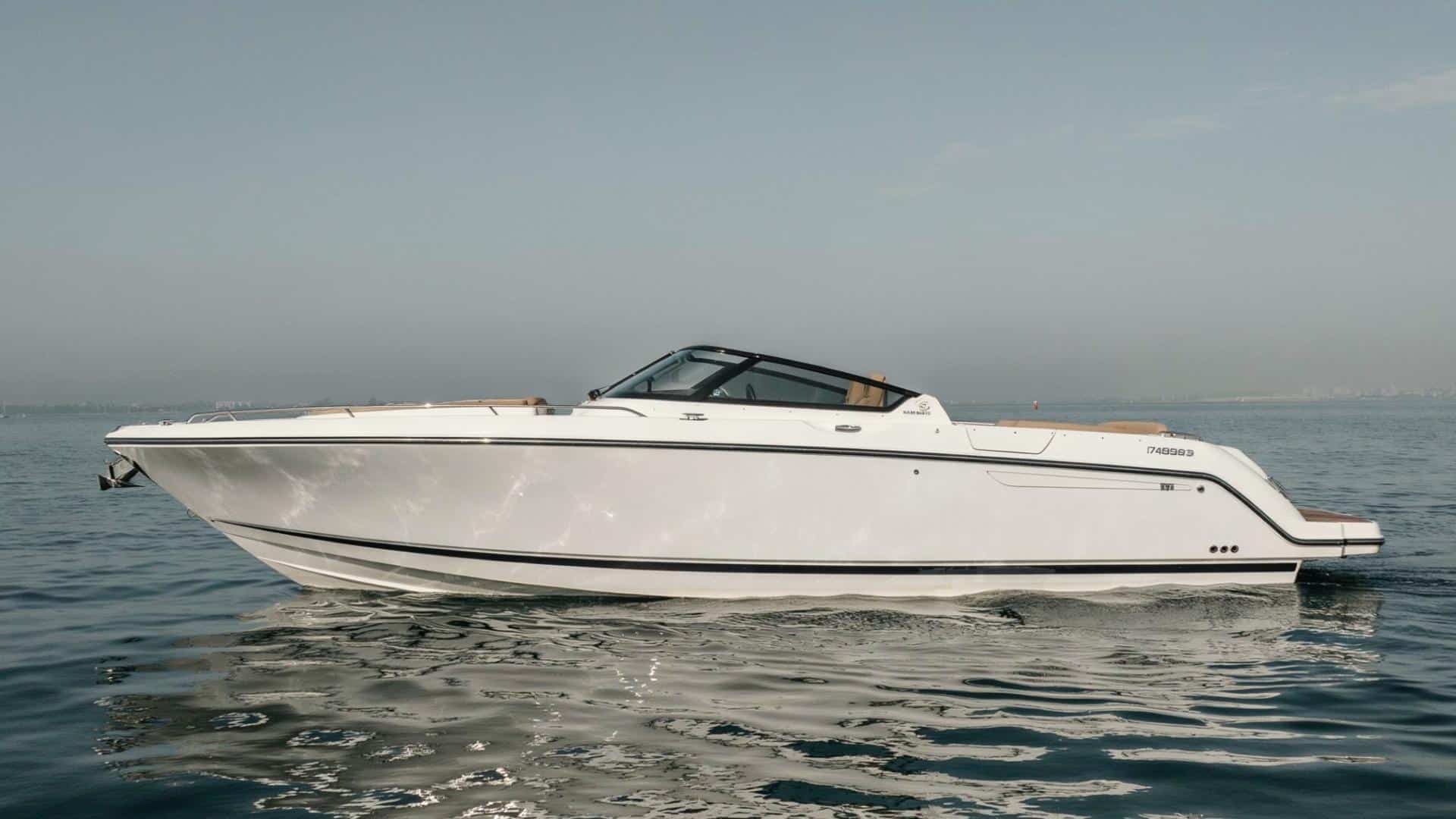

A kayak is easy to love on the water and awkward to live with at home. It’s long, heavy, and always in the way of the car.
The best kayak storage ideas all follow one rule. Keep the boat off the floor, rest it on its side or hull up, and keep it out of direct sun.
I’ve put together different setups for garages, yards, and small spaces, each with who it suits and the one mistake to avoid. Every photo comes from a paddler who built and shared the setup on Reddit.
Why Storing Your Kayak the Right Way Is So Important
Effective kayak storage protects your hull from warping, prevents sun/UV damage, and saves floor space in your garage, shed, or yard.
Storing it properly helps protect it from warping, cracking, or fading due to sunlight. It also keeps mold and mildew from building up if the kayak stays damp after use.
Beyond protection, smart storage saves valuable space in your garage or yard, making it easier to move around without tripping over a bulky boat.
Indoor storage gives the best protection. Outdoor storage works too, as long as you plan for shade, rain, and theft from day one.
Finding the Best Storage Setup for Your Kayak
Which of these kayak storage ideas fits you depends on your free space, how many kayaks you own, and how often you paddle.
Your kayak length and size matter most, since a 12-foot boat needs a long wall or ceiling. If you rent, stick to options that need no drilling.
1. Wall-Mounted Racks
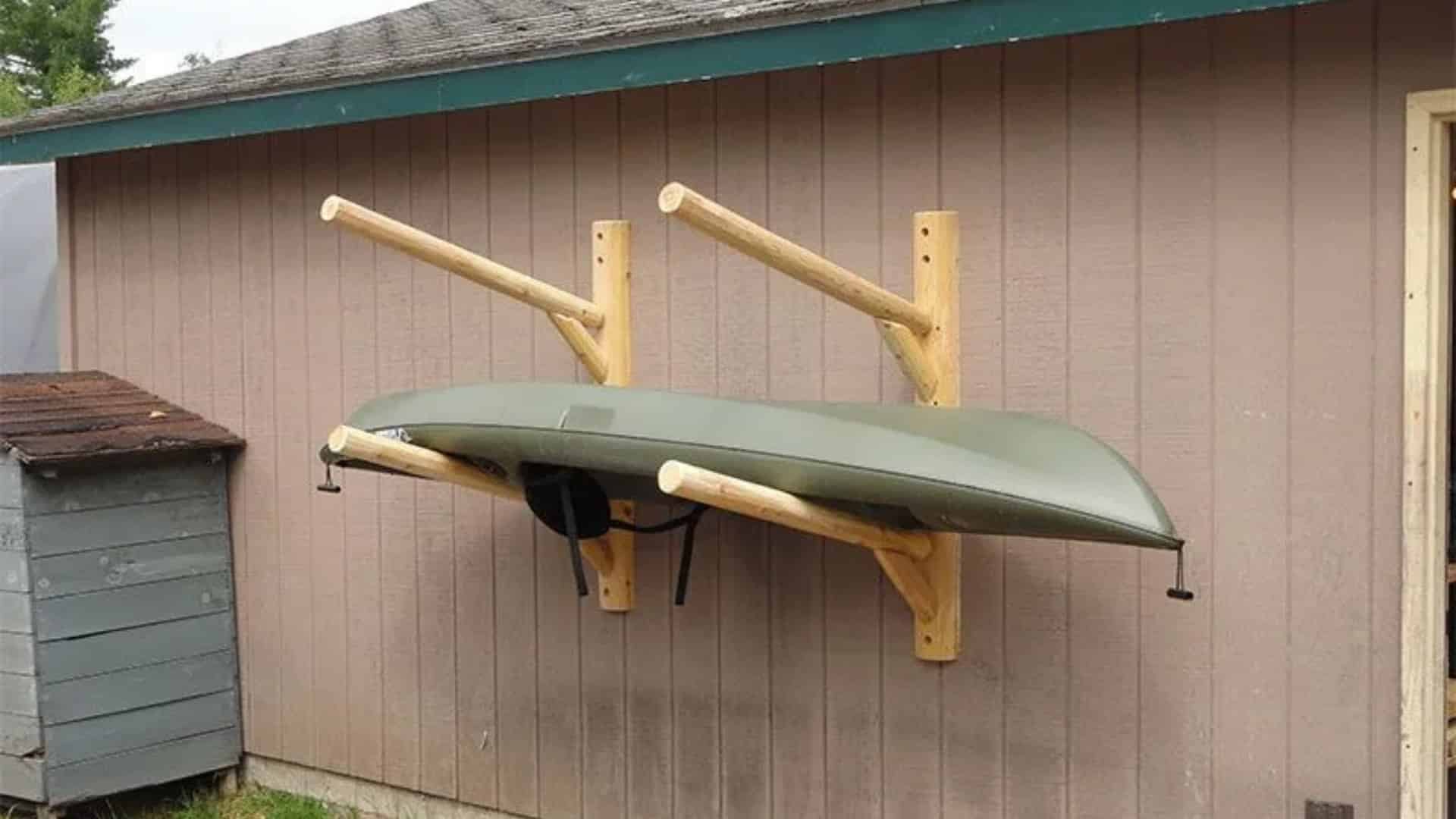
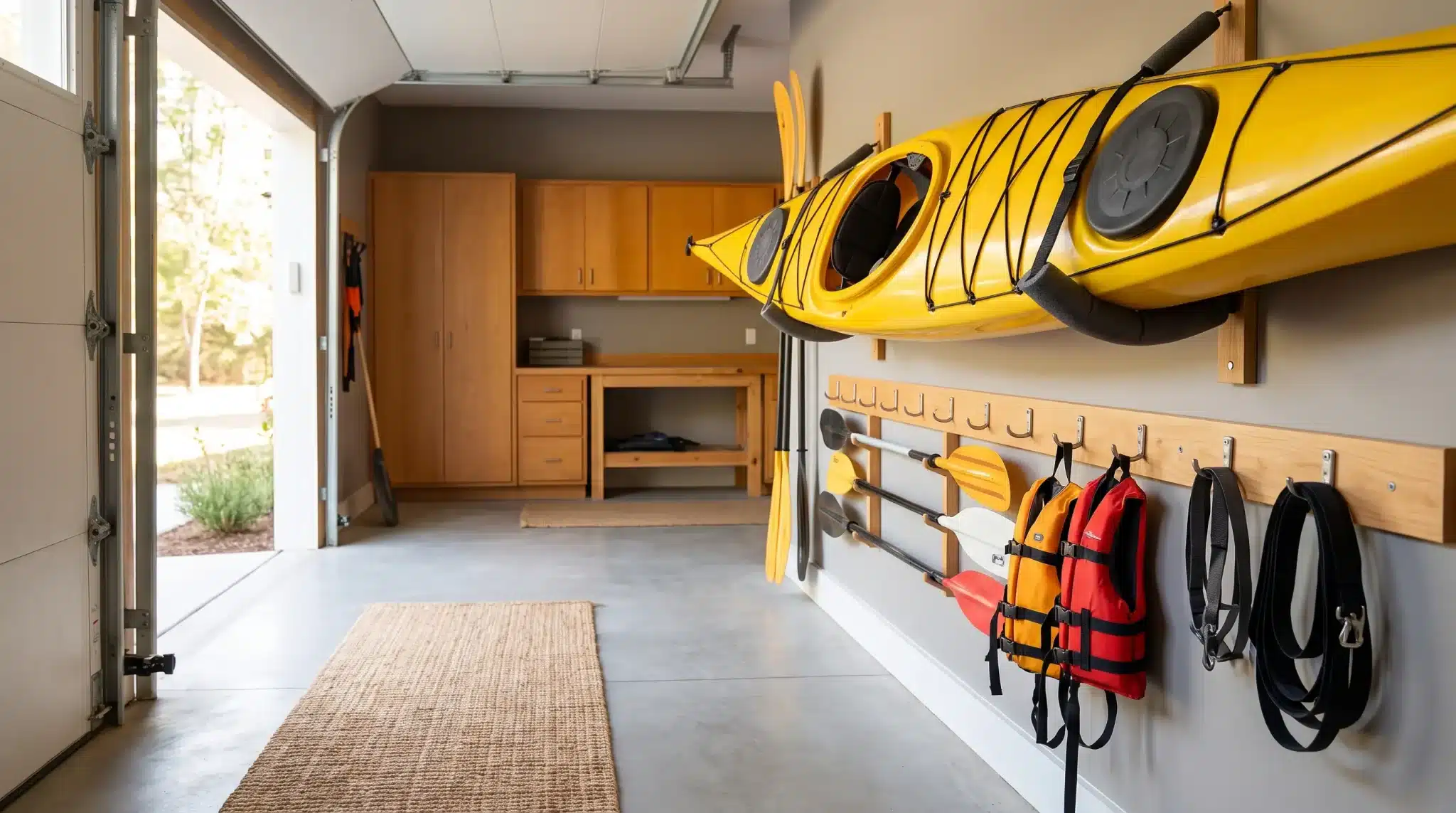
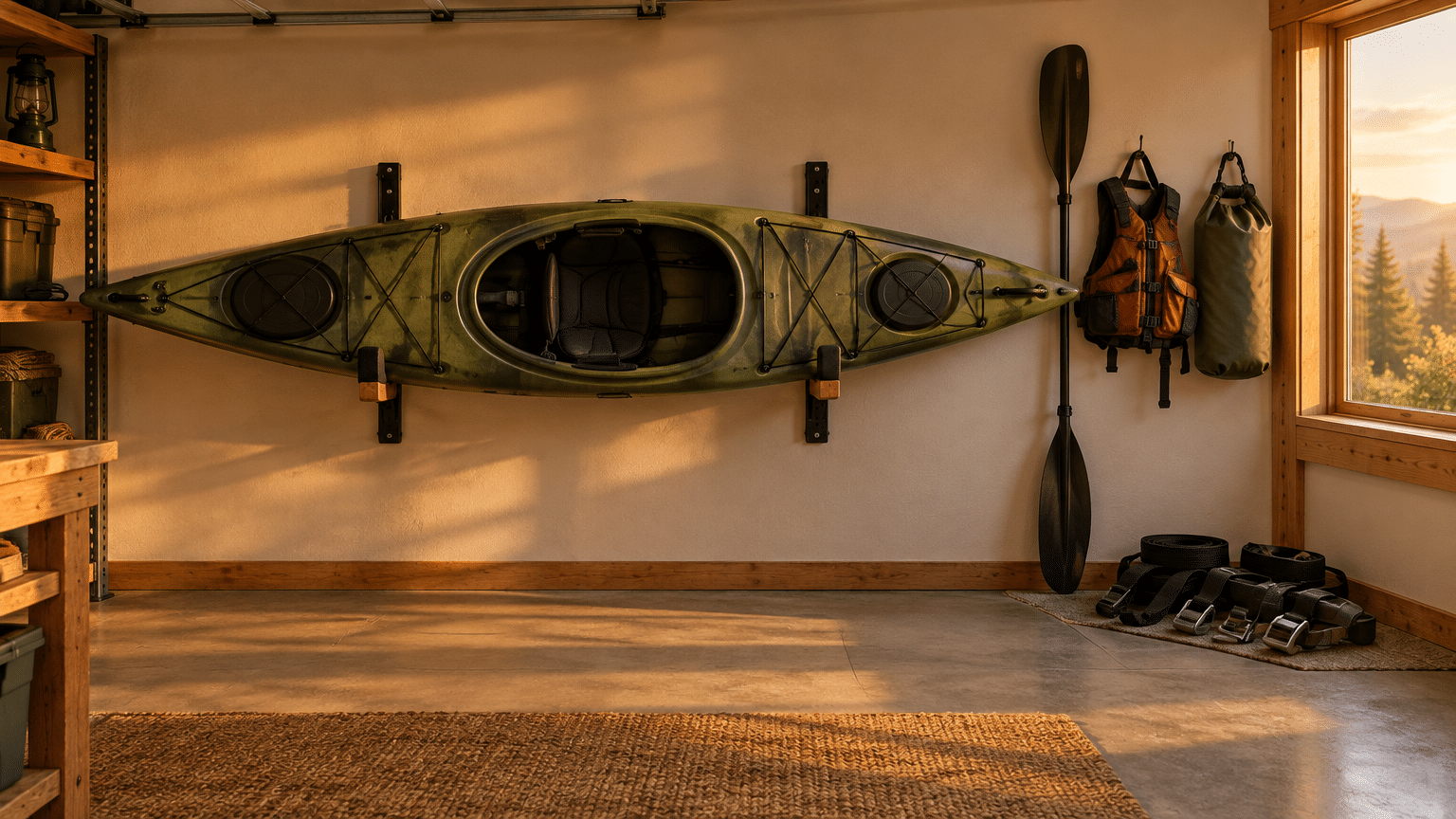
A wall rack holds the kayak on padded arms, so the floor stays clear and the boat sits at an easy lifting height. It’s the first setup I’d look at for most garages.
Perception Kayaks recommends anchoring the brackets into wall studs on either side of the cockpit, the strongest part of the boat. Stacked arms can hold several kayaks on one wall.
2. Vertical Wall Storage
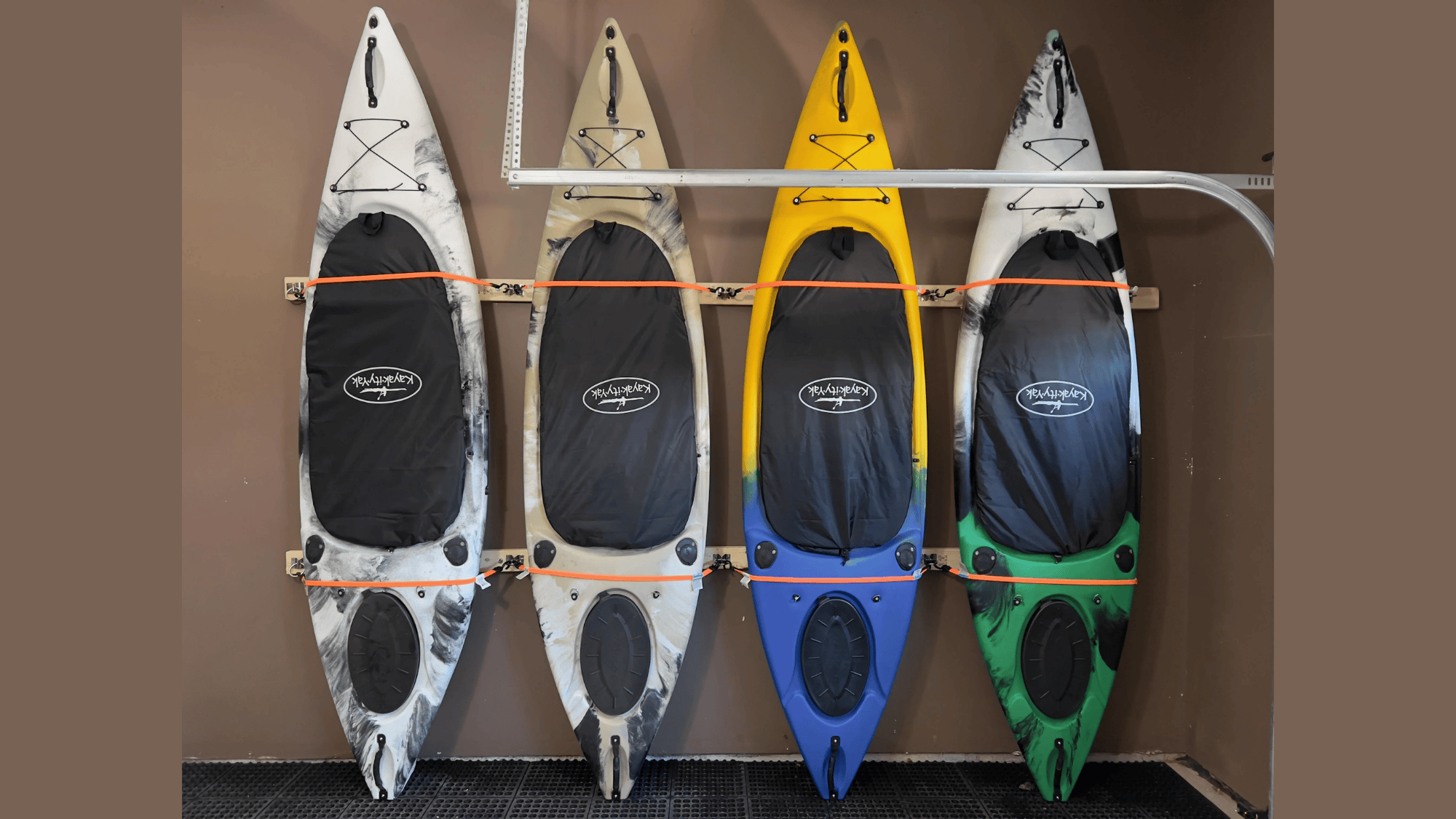
Check your manual first. Standing a kayak on its end for months puts its full weight on one small spot. Follow the manufacturer’s guidance; vertical storage is generally better suited to shorter, lighter boats.
Vertical storage takes up less wall width than any other idea here. Stand each kayak on a thick foam pad and strap it to the wall in two places so it can’t tip.
3. Ceiling Hoist System
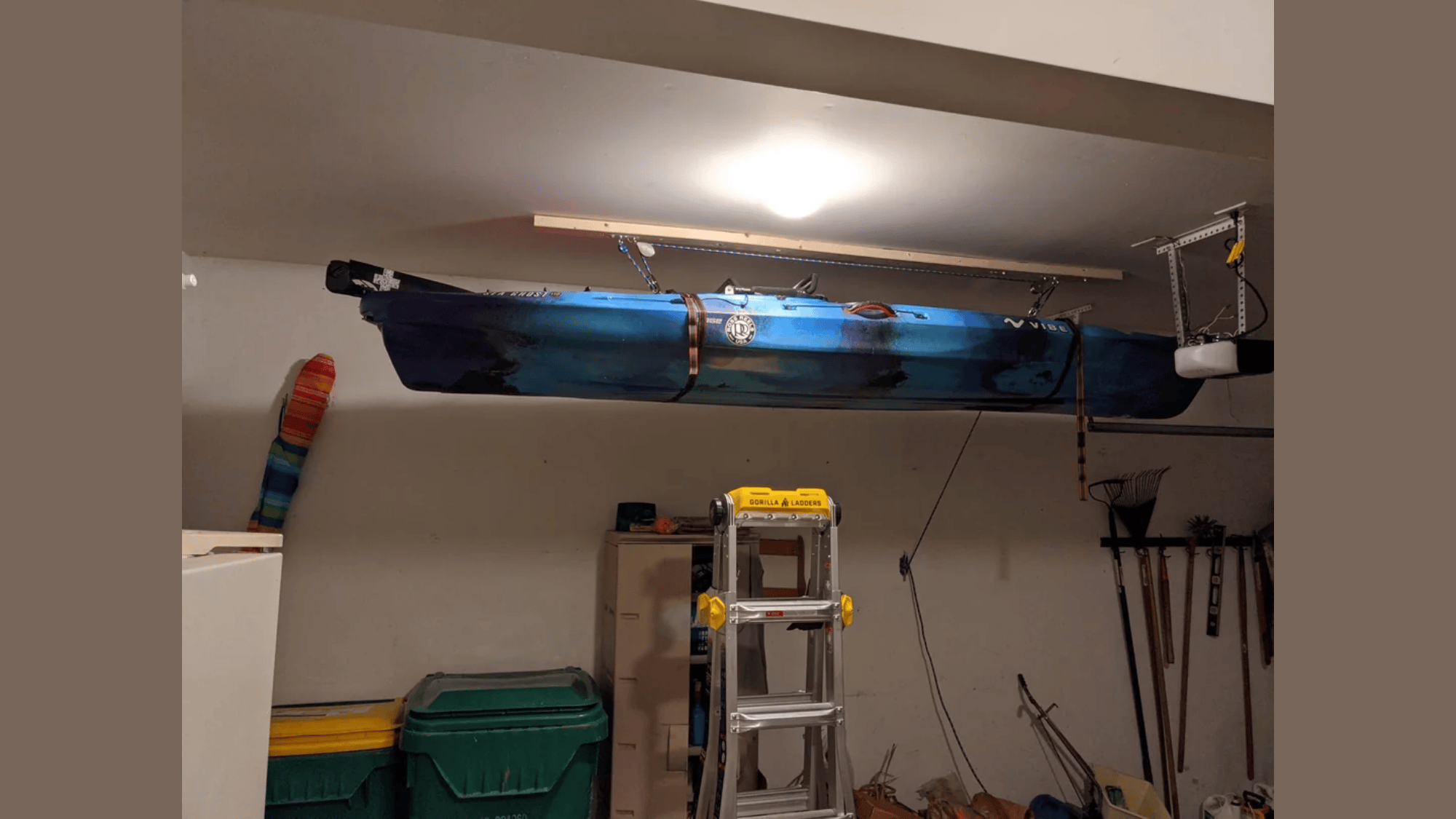
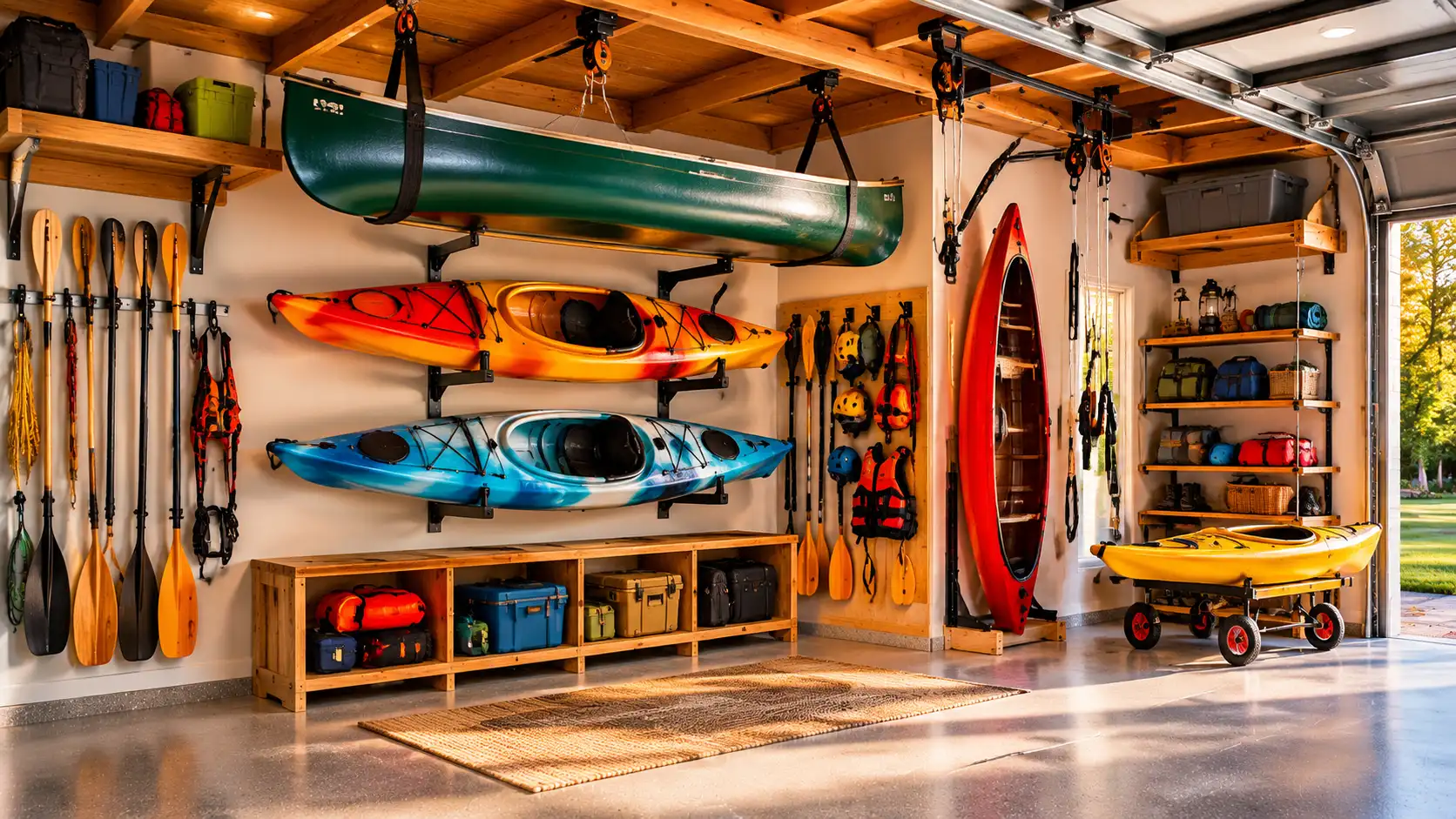
A hoist lifts the kayak to the ceiling with ropes and pulleys, so a car can still park underneath. The pulleys don’t make the kayak lighter. They cut the force you need to pull.
-
Measure the ceiling height, then subtract your car’s height and the kayak’s depth.
-
Confirm the ceiling joists can carry the load, and mount with the hardware the hoist maker specifies. The hoist’s weight rating should exceed the weight of the loaded kayak.
-
Choose wide straps and a locking cleat that holds the rope if you let go.
-
Hang the kayak with the hull facing the ceiling.
4. Ceiling-Mounted Racks
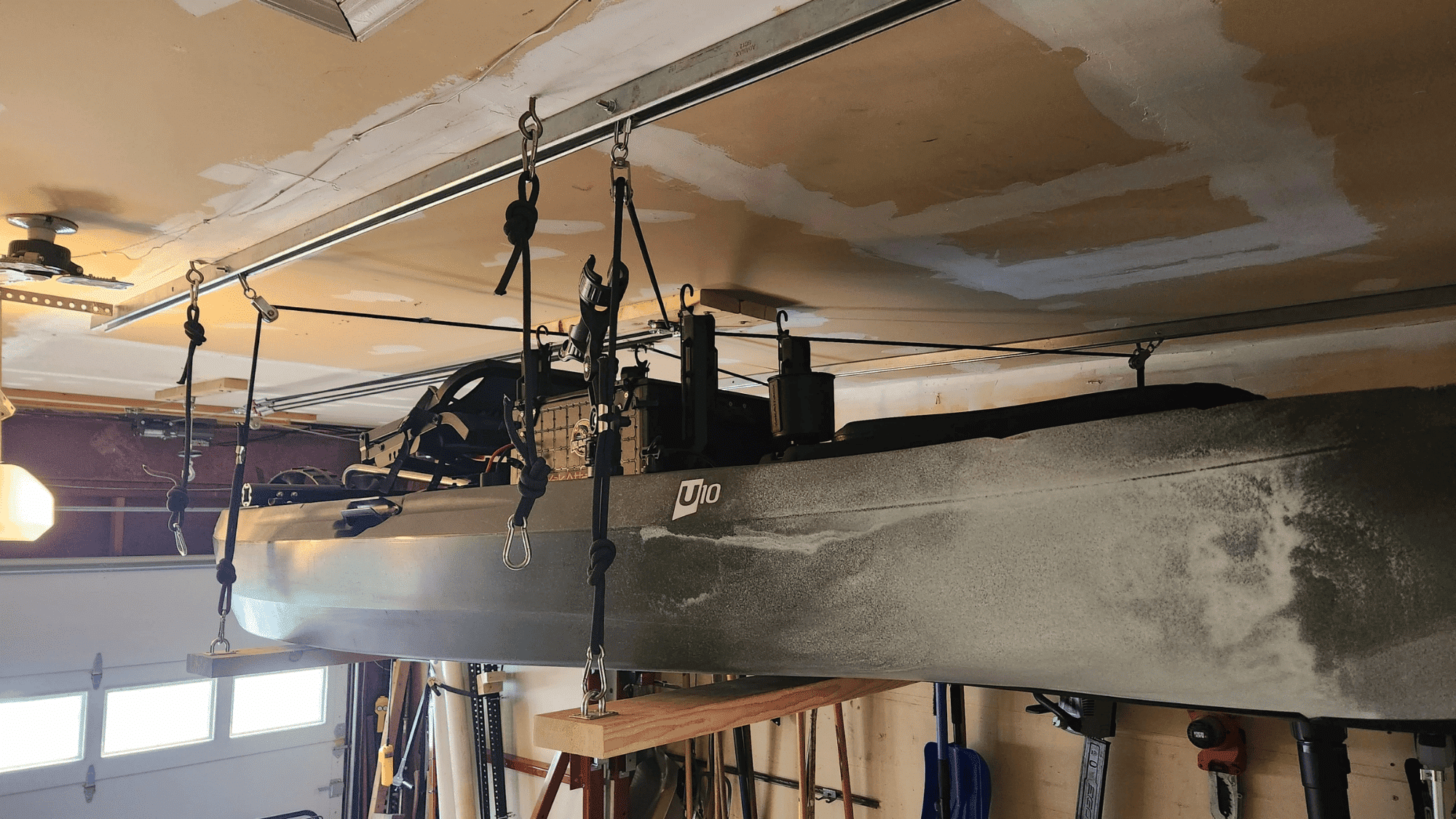
A fixed ceiling rack bolts to the joists and holds the kayak on arms that don’t move. Unlike a hoist, you lift the boat overhead to load it, usually with a ladder or a helper.
The same safety rules apply: verified joist capacity, proper mounting hardware, and a weight rating that exceeds the loaded kayak.
That makes it a better match for a light kayak stored all season than for the boat you grab every weekend.
5. Freestanding Kayak Rack
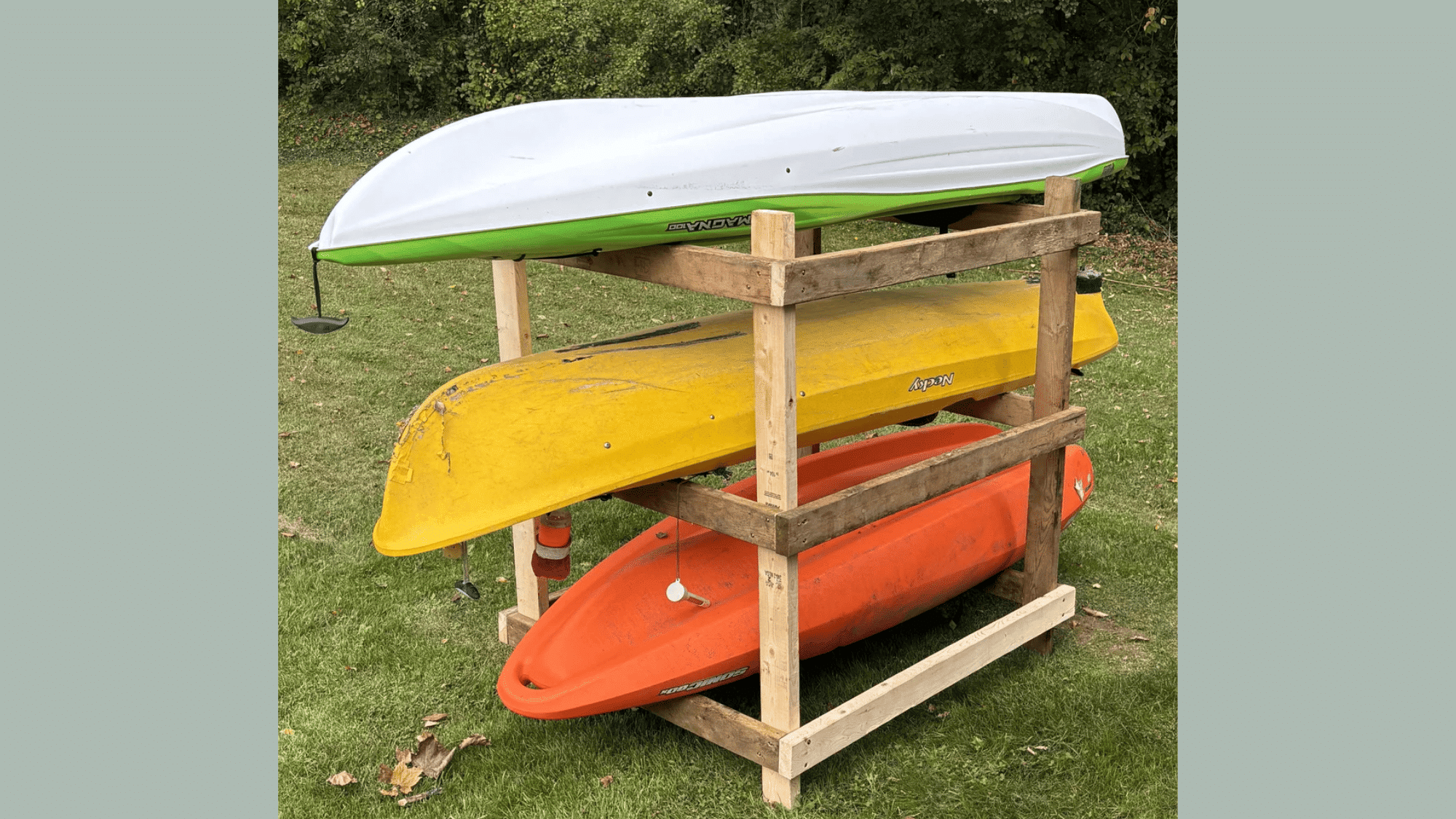
A freestanding rack stands on its own frame, so nothing gets drilled, and many models hold two to six kayaks. It’s a good fit if you:
-
Rent and can’t drill into walls
-
Own three or more kayaks
-
Want a rack on casters you can roll outside
The cost is floor space, since it takes up more room than any wall or ceiling option.
6. Outdoor Kayak Stand
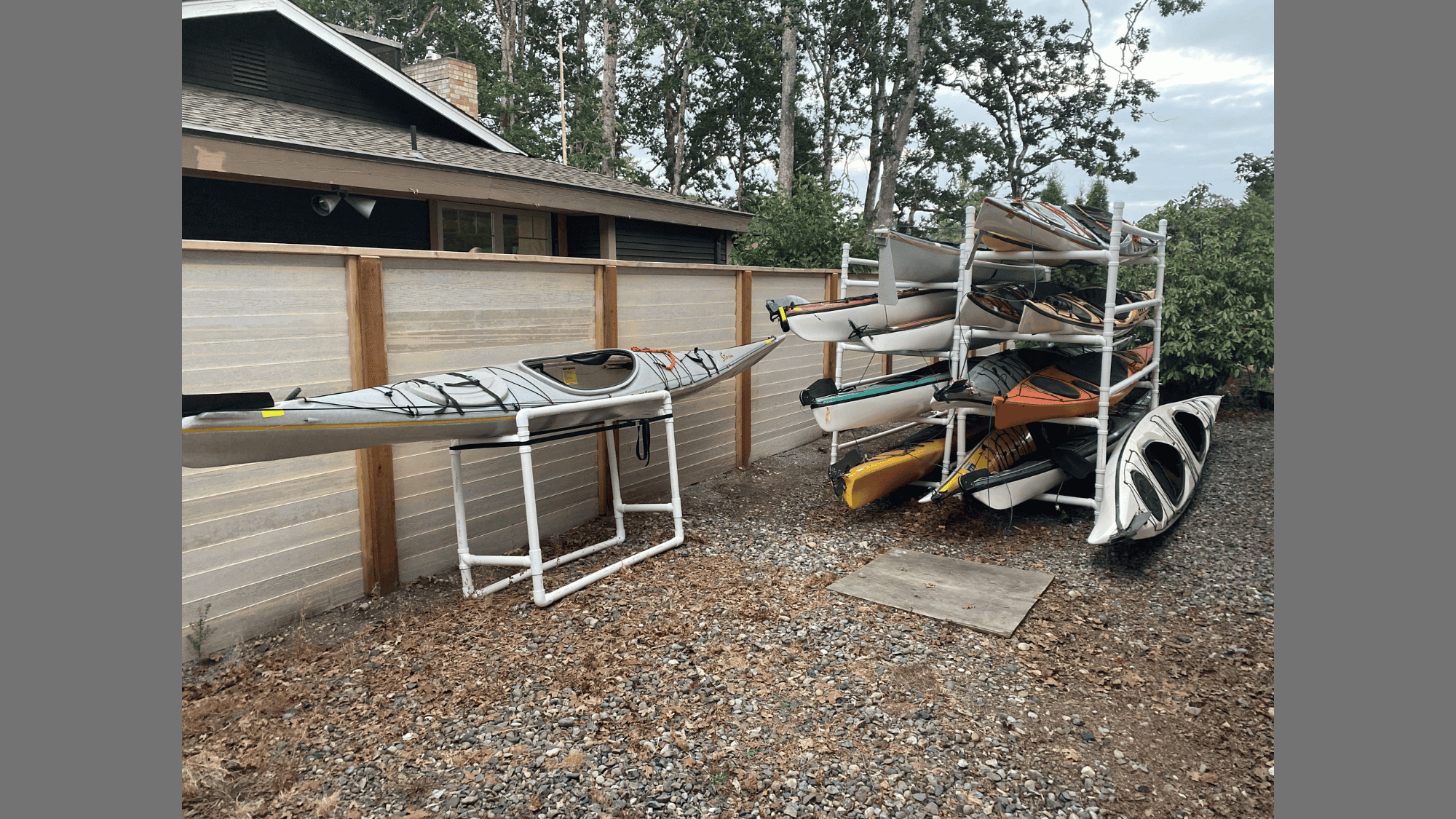
An outdoor stand keeps the kayak off wet ground in a yard or on a patio. Metal and treated wood frames hold up best in the weather.
Shade and water control matter more than the stand itself. Set it where a roof or tree blocks the afternoon sun. Then rig a tarp above the kayak, angled so rain runs off, instead of wrapping it around the hull. A tarp touching the hull traps moisture, and a sagging one can fill with water and dent the boat.
7. Kayak Storage Shed
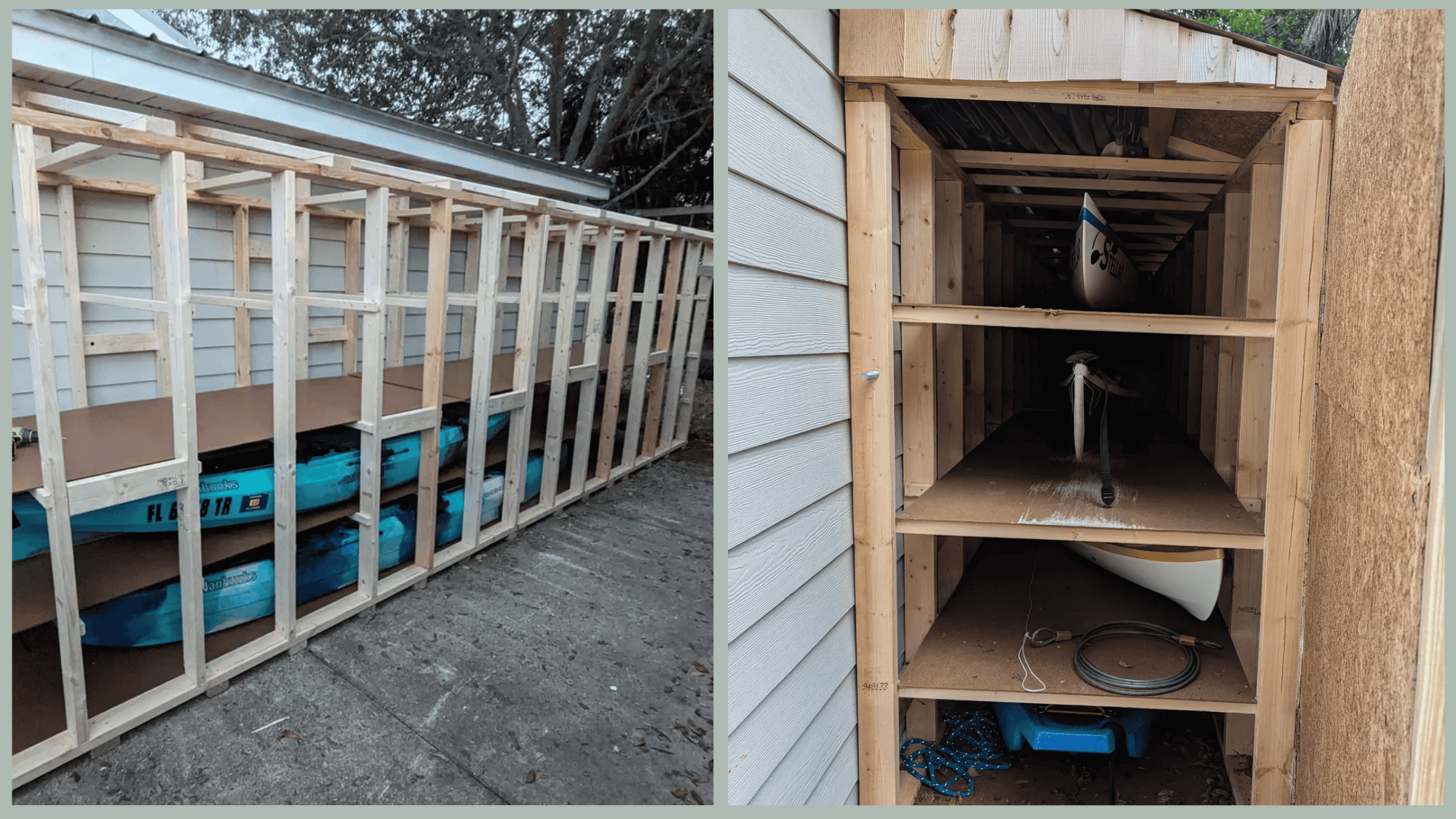
Is a shed worth it? For two or more kayaks kept outside all year, usually yes. It blocks the weather, keeps the boats out of sight, and gives paddles and life vests a home.
What should you plan for? An inside length longer than your longest kayak, padded shelves, and a small vent so a damp boat can dry. A narrow shed like the one pictured takes far less yard space than a garden shed.
8. Heavy-Duty Wall Straps
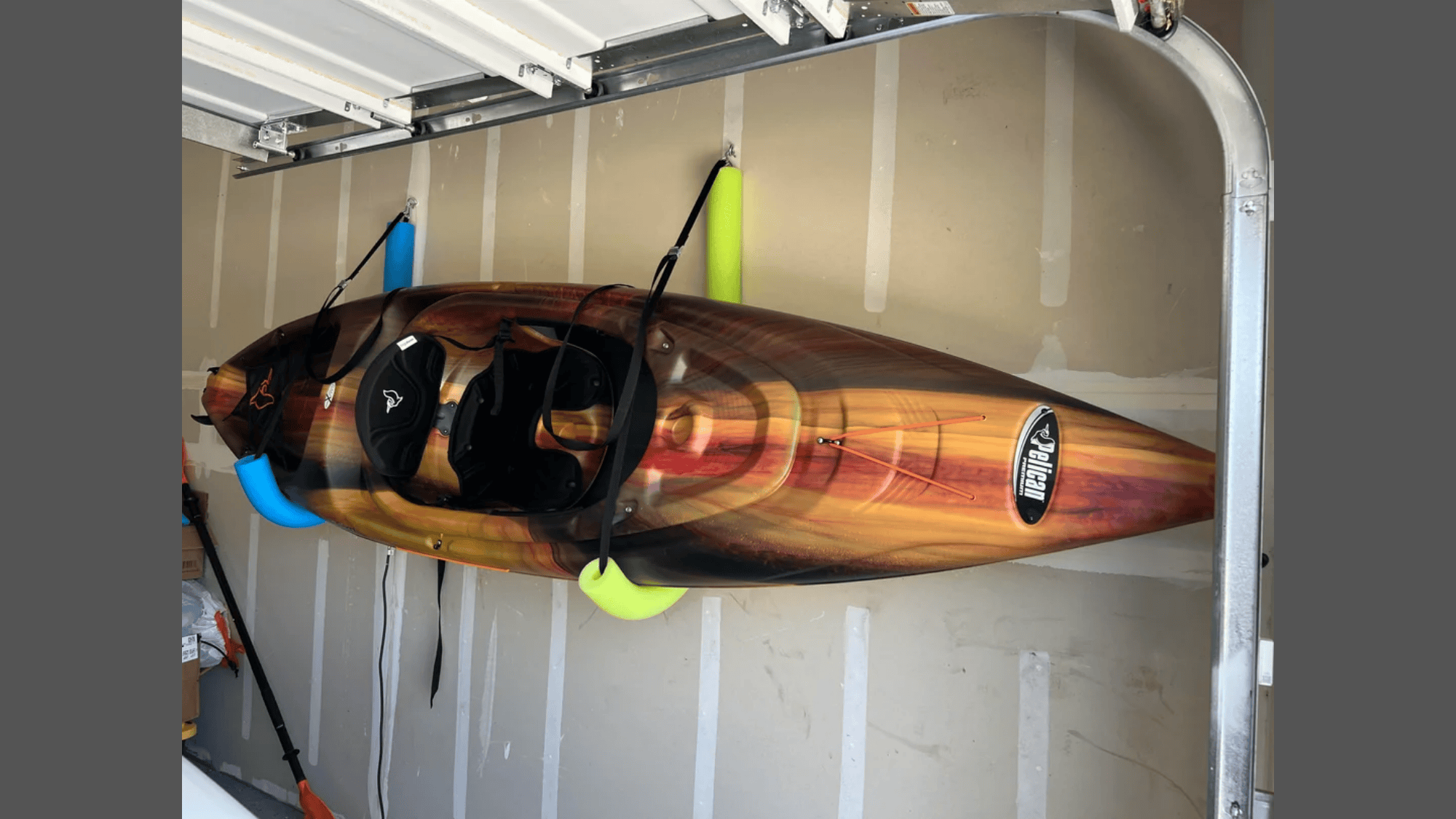
Wall straps cradle the kayak in two wide webbing loops. They cost less than most racks and sit almost flat when the boat is out on the water.
Before you hang it: Screw the hooks into studs, because the straps carry the full weight for months. Keep them snug rather than tight, and plan on a helper to load a long kayak.
9. Floor Cradles
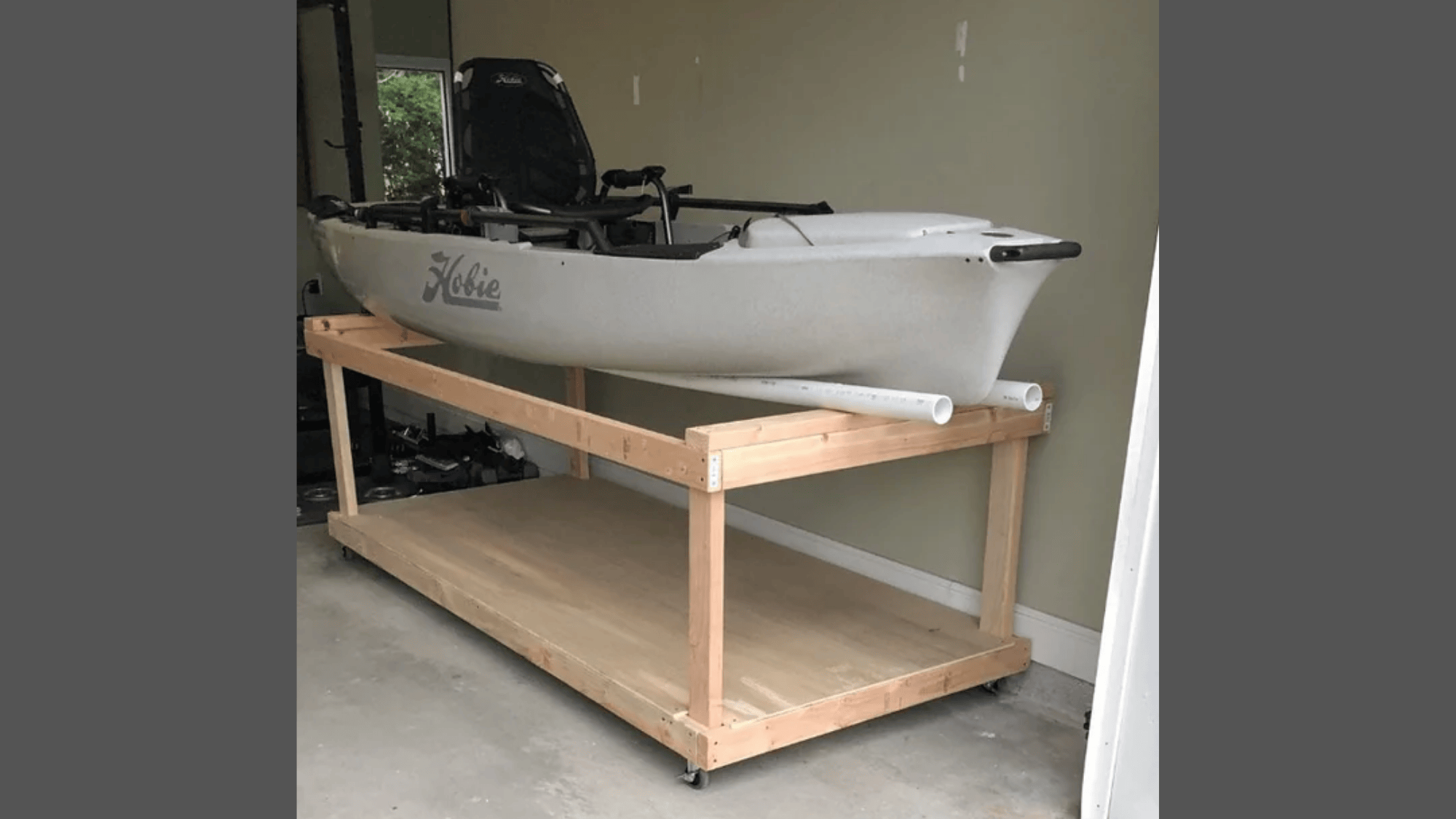
Floor cradles are low padded supports that hold the kayak a few inches above the floor, never on bare concrete.
Why they work: There’s no drilling, setup takes minutes, and kids can load the boat at that height.
The catch: They take up the most floor space. Choose cradles shaped to your hull, since flat boards push the weight into small spots.
10. Rolling Kayak Cart Stand
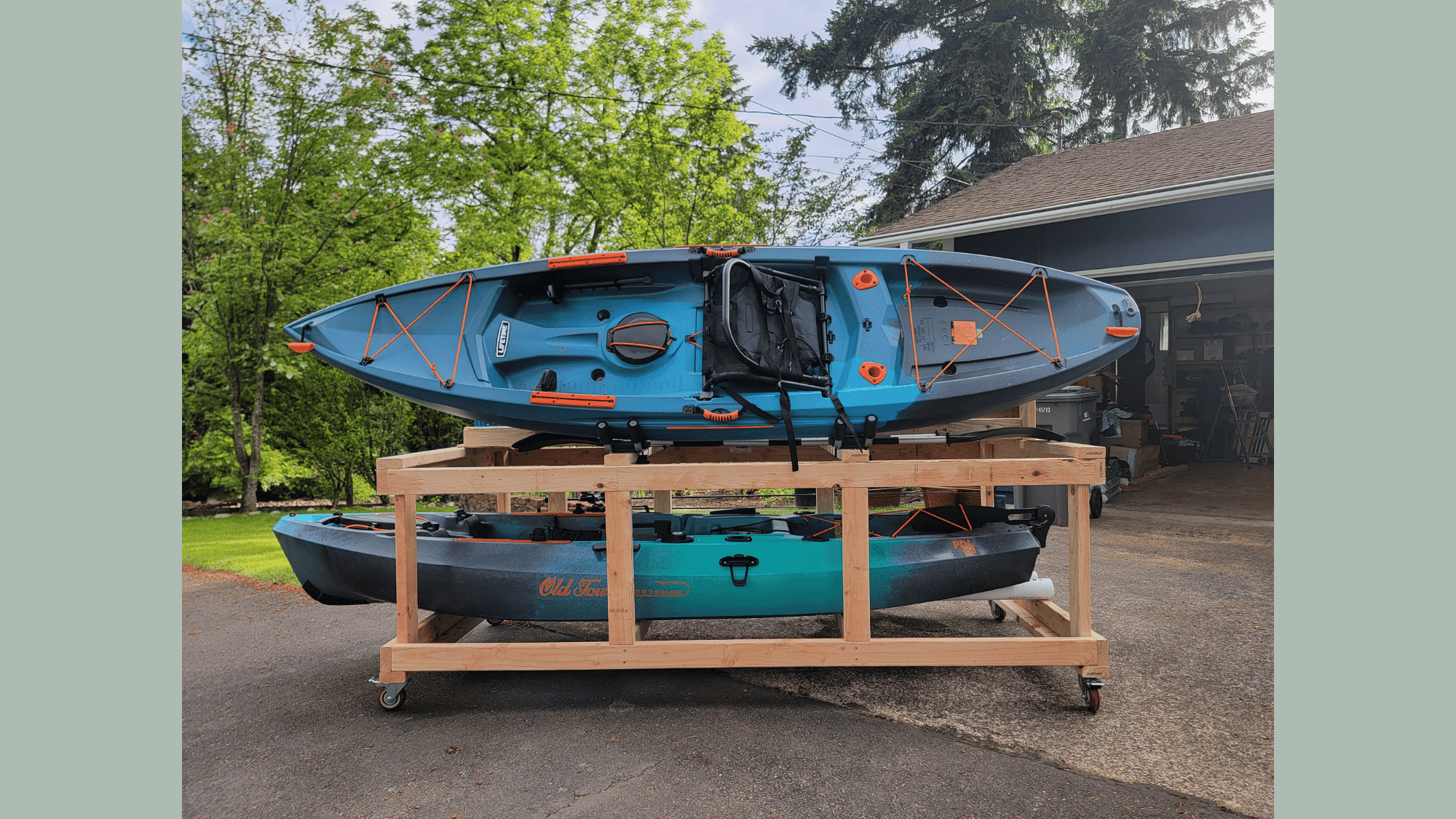
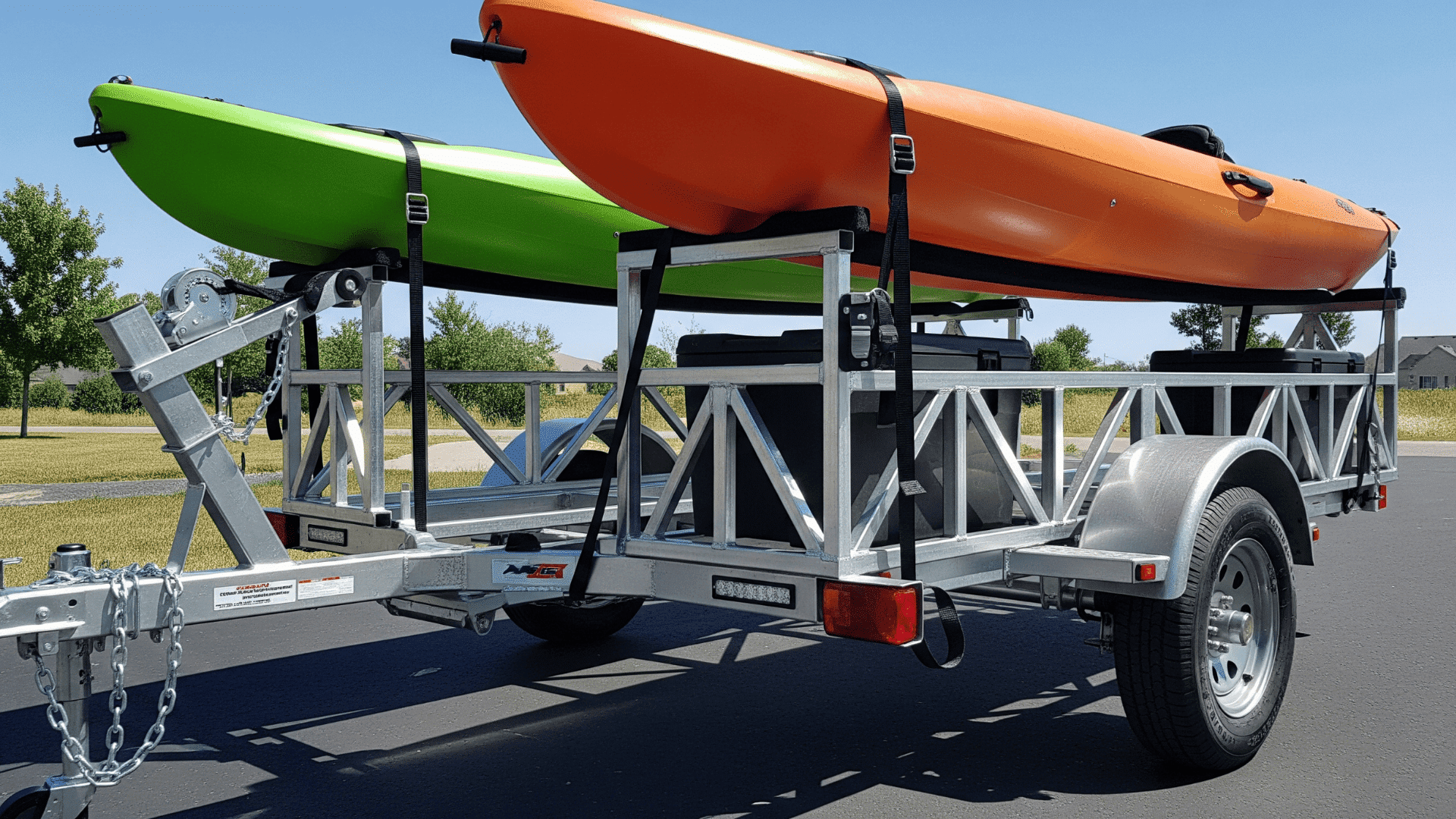
A rolling cart stand is a padded rack on wheels. The kayak stays raised in the garage, then rolls straight out to the truck or trailer, so you never lift a heavy fishing kayak twice. Lock the wheels when it’s parked.
The stand only covers the trip from garage to vehicle. For crossing sand at the launch, a separate kayak cart does that job.
11. DIY PVC Kayak Rack
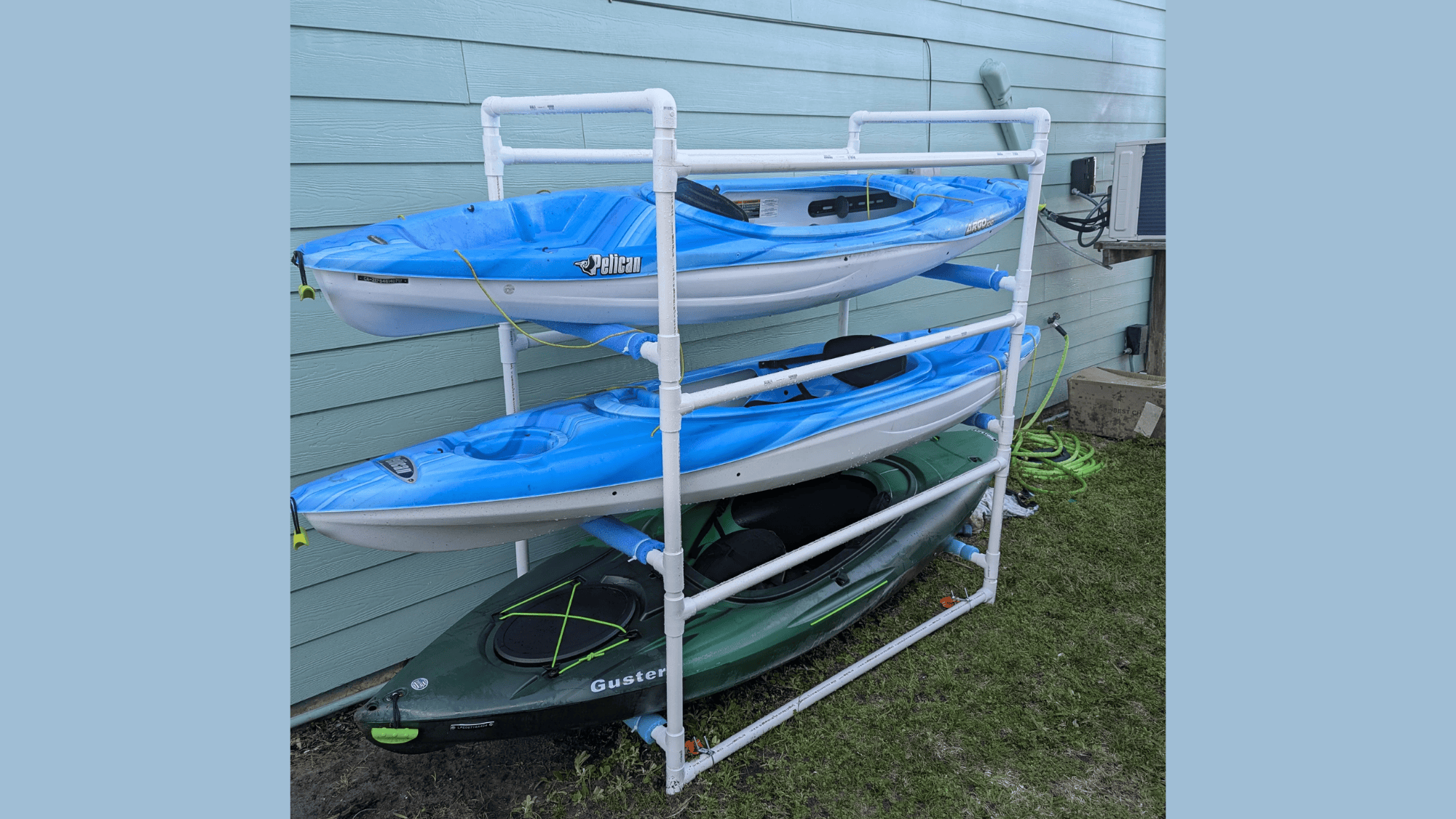
PVC is the cheapest way to build a rack sized exactly to your boats, and it suits lighter recreational kayaks best. You’ll need:
-
PVC pipe with tee and elbow fittings
-
PVC primer and cement
-
Foam pipe insulation to pad every arm
-
A saw or pipe cutter
12. DIY Wooden Rack
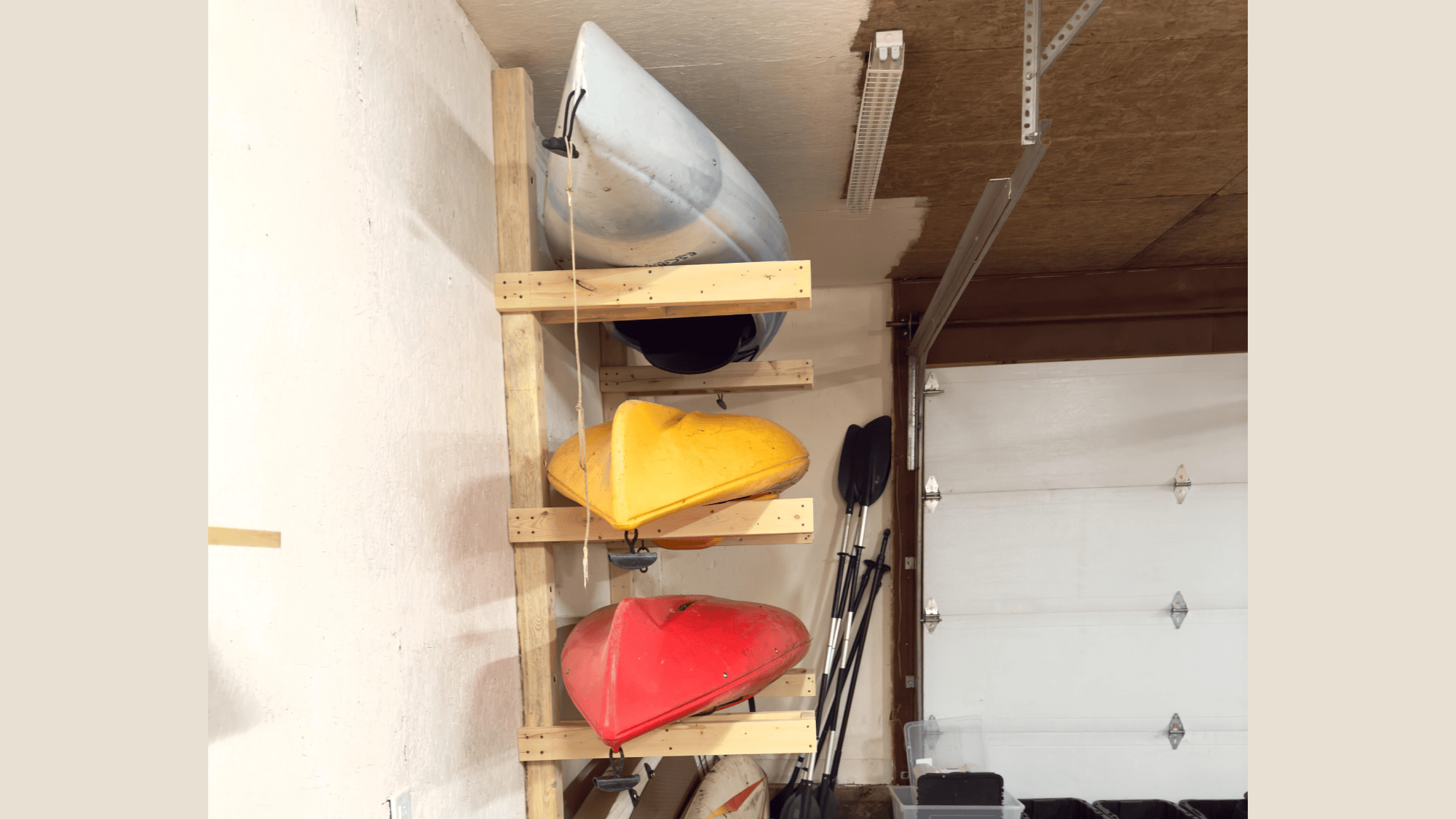
A DIY wooden rack built from 2×4 boards is the sturdier option. It works as a wall rack or a freestanding frame.
|
Factors |
PVC Rack |
Wooden Rack |
|---|---|---|
|
Strength |
Fine for light kayaks |
Handles heavy kayaks and stacks |
|
Tools |
Saw or pipe cutter, PVC cement |
Saw, drill, screws |
|
Best spot |
Yard or garage floor |
Garage wall or freestanding frame |
Use pressure-treated lumber outside, and pad every arm that touches the hull.
13. Garden Fence Storage
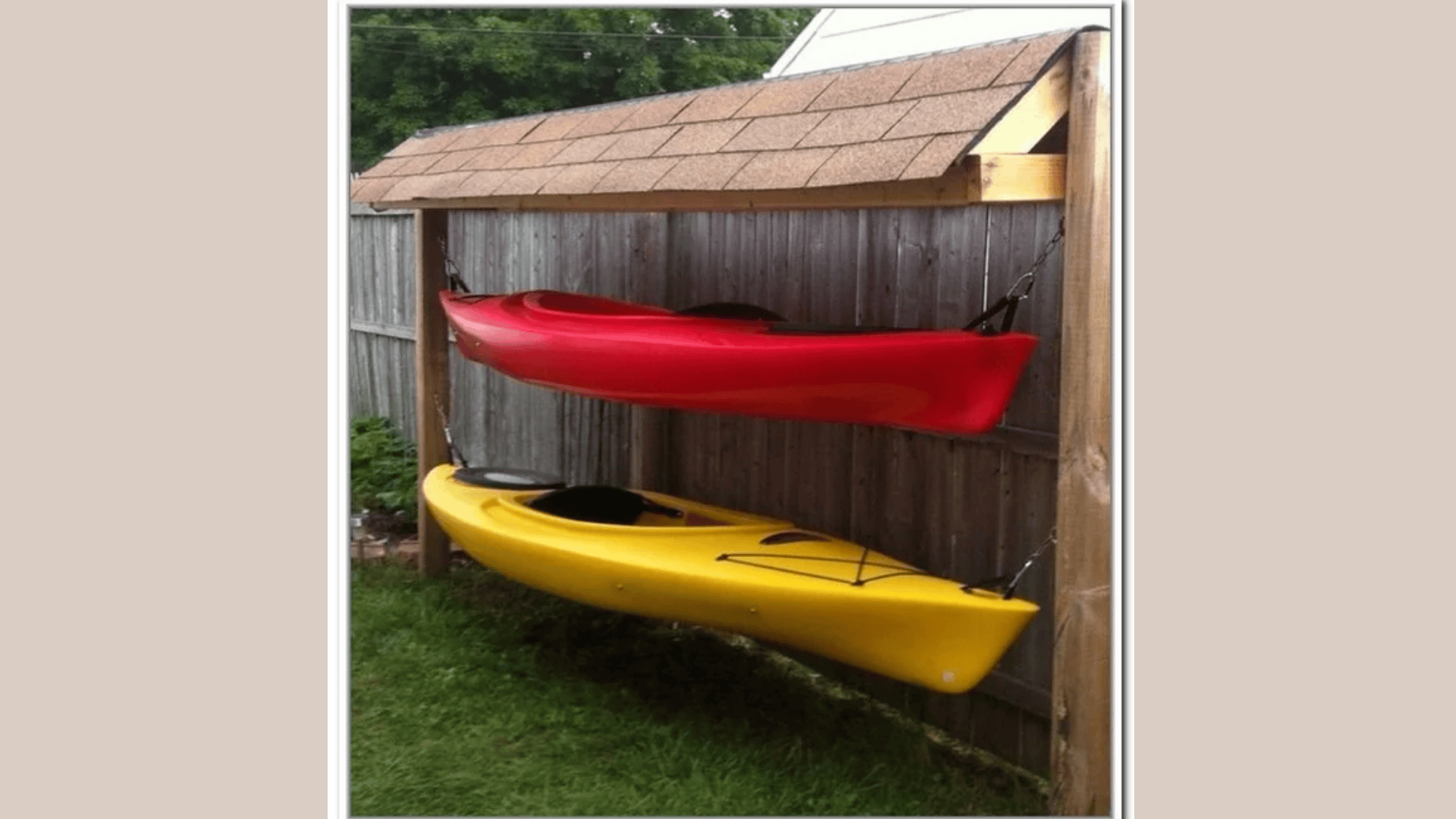
A sturdy fence can carry wall cradles or straps. The setup pictured adds a small roof that keeps sun and rain off both boats. Before you drill:
-
Push on the fence. Wobbly posts won’t hold a kayak through winter wind.
-
Mount into the posts or rails, not the thin boards between them.
-
Use galvanized or stainless hardware, and add a cable lock.
14. Self-Storage Unit
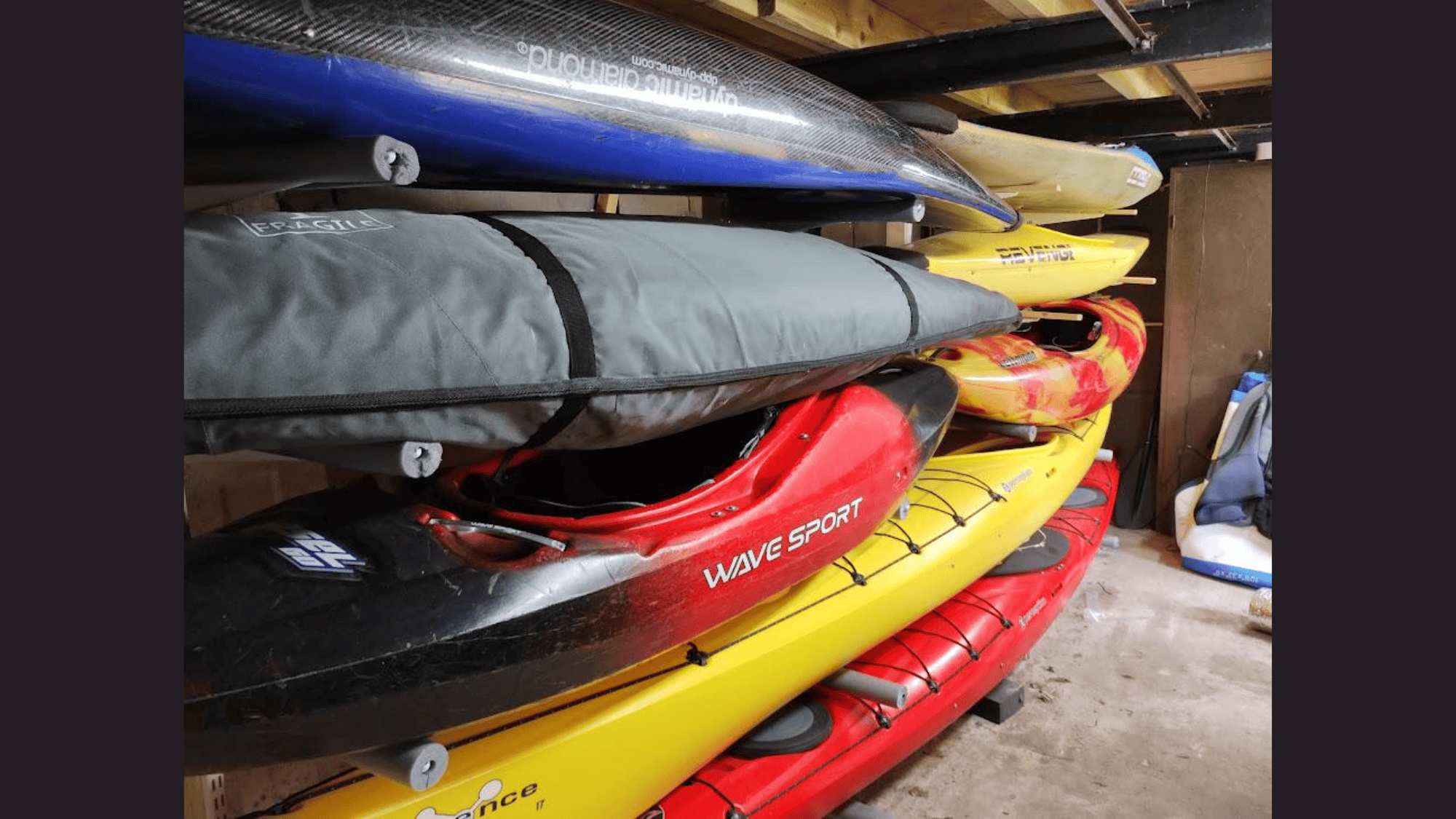
A self-storage unit keeps the kayak indoors, locked, and out of the weather. Check the inside length against your kayak, confirm boats are allowed, and still use a rack or padded supports inside.
A club, marina, or outfitter rack keeps the kayak right at the water. Ask what’s included, such as locks, insurance, and access hours.
15. Under-Deck Storage
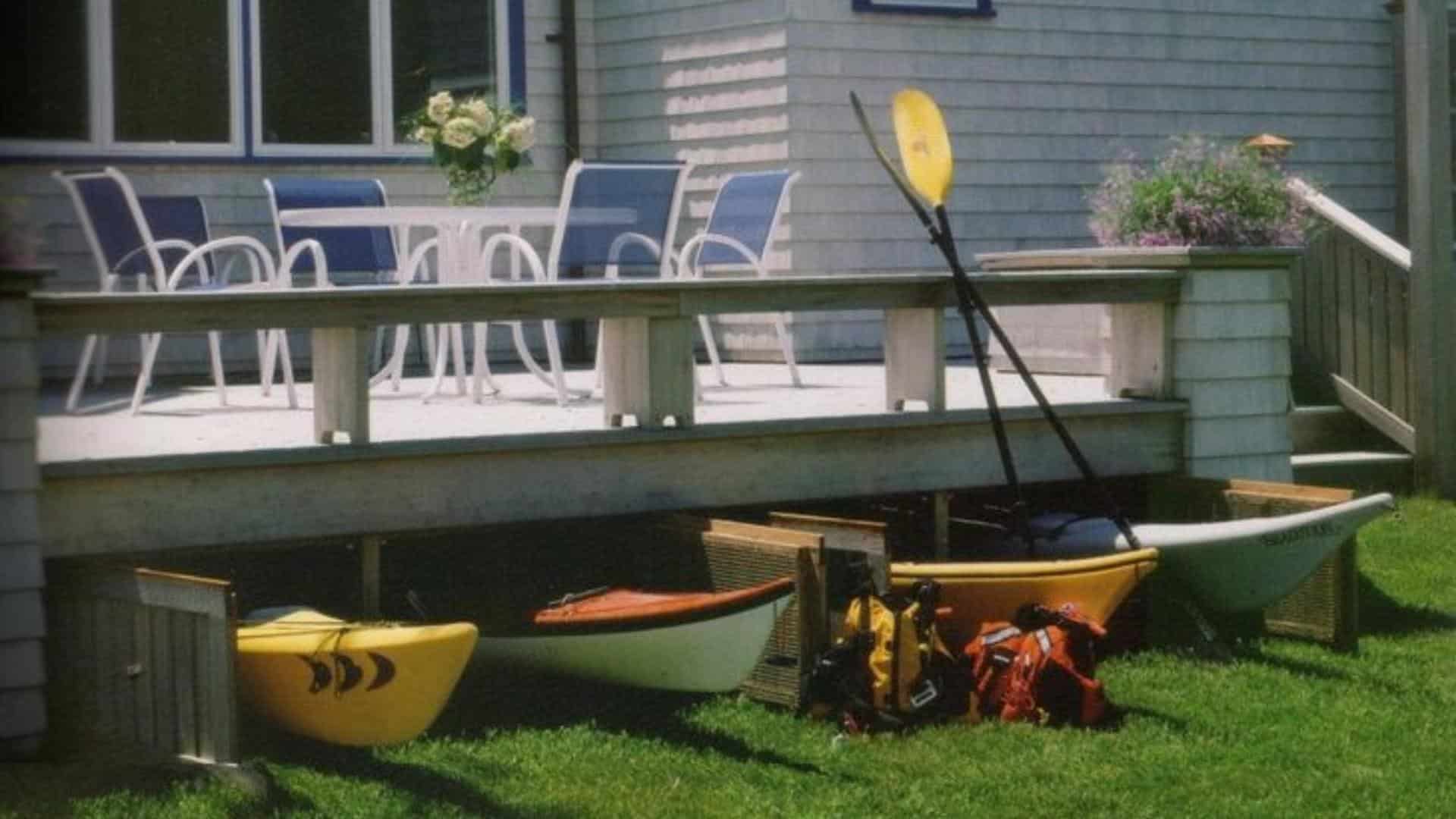
A raised deck works like a free roof. Rest the kayak hull up or on its side on padded supports so it never touches the dirt.
Rain drips through the gaps in deck boards, so hang a tarp under the joists if the kayak sits right under them. Add a cable lock, since the boat sits out of sight from the house.
Kayak Storage Ideas Compared by Space, Budget, and Setup
Wall and ceiling options save the most floor space, while freestanding and DIY racks need no drilling. Match the row to your space and budget.
|
Storage Idea |
Space It Uses |
Budget |
Best For |
|---|---|---|---|
|
Wall-mounted racks |
Wall |
Low to moderate |
Most garages |
|
Vertical wall storage |
Narrow wall |
Low |
Shorter, lighter boats; follow the manufacturer’s guidance |
|
Ceiling hoist |
Ceiling |
Moderate |
Heavy kayaks, parking a car underneath |
|
Ceiling-mounted racks |
Ceiling |
Moderate |
Light kayaks stored all season |
|
Freestanding rack |
Floor |
Moderate to high |
Renters, two or more kayaks |
|
Outdoor stand |
Yard or patio |
Low to moderate |
Homes without indoor room |
|
Storage shed |
Yard |
Higher |
Several kayaks outside all year |
|
Wall straps |
Wall |
Low |
One kayak, tight budget |
|
Floor cradles |
Floor |
Low |
Renters, kids loading |
|
Rolling cart stand |
Floor |
Low to moderate |
Heavy fishing kayaks |
|
DIY PVC rack |
Floor or yard |
Low |
Light kayaks, custom sizes |
|
DIY wooden rack |
Wall or floor |
Low to moderate |
Heavy kayaks, stacks of boats |
|
Garden fence |
Fence line |
Low |
Yards with sturdy fences |
|
Self storage or club rack |
Away from home |
Ongoing fee |
Apartments, no garage |
|
Under deck |
Under a deck |
Low |
Homes with raised decks |
Budget is relative. Low means basic hardware or a weekend DIY build; higher means a shed or a large steel rack.
How to Prepare and Position Your Kayak for Storage
Clean and dry the kayak first, then store it on its side or hull up, never flat on the floor.
-
Rinse and dry it: Wash it with fresh water and mild soap. Pull the drain plug, open every hatch, and let it air-dry fully.
-
Remove the extras: Store the seat, paddle, and electronics indoors. If the seat is worn out, the offseason is a good time for a kayak seat upgrade.
-
Protect it: Spray hard shell kayaks stored outside with UV protectant, and add a cockpit cover once it’s dry.
-
Position it right: I follow the kayak storage advice from REI here. Use two wide, padded supports about a third in from each end. Keep straps snug, never tight, and don’t hang it by the grab handles.
-
Check it monthly: A flat spot near a support means the pad is too narrow or the strap is too tight.
How to Store Kayaks in a Garage or Small Space
Use the walls and ceiling before the floor, and plan around the car and the garage door.
Measure first. Compare the clear wall length with your kayak’s length, leaving room for car doors and the garage door track.
Mount into studs or joists. Every rack, hook, and hoist bracket needs solid wood behind it, not just drywall. A loaded kayak falling onto a car is an expensive mistake.
Pick the coolest wall. Furnaces, water heaters, and sunny windows can soften a plastic hull, so keep the kayak away from them and from chemicals.
Own an inflatable? Dry it completely, then roll it loosely and keep it somewhere cool and dry, since folded fabric traps leftover water. Brands differ on storing it deflated or slightly inflated, so follow your manufacturer’s instructions.
Kayak Protection Accessories Worth Using
A cover, a cockpit cover, and a lock handle most outdoor storage problems.
|
Accessory |
What It Does |
Tip |
|---|---|---|
|
UV Resistant Cover |
Blocks sun that fades and weakens the hull |
Only cover a dry kayak |
|
Heavy Duty Tarp |
Low-cost shelter from rain and snow |
Clear snow off so it doesn’t sag onto the boat |
|
Cockpit Cover |
Keeps rodents, insects, and rain out of the cockpit |
Fit it after the cockpit is fully dry |
|
Lock and Cable |
Anchors the kayak to a rack, post, or fence |
Add a steering wheel lock across the cockpit for extra security |
Final Thoughts on Kayak Storage Ideas
If your garage is short on floor space, I’d start with a wall rack or a ceiling hoist. Renting? A freestanding rack or floor cradles skip the drilling completely.
With no garage at all, a shaded outdoor stand with a suspended tarp and a cable lock will do the job. A club rack by the water works too.
Frequently Asked Questions
Is It Better to Store a Kayak on Its Side or Upside Down?
Both are safe. On its side suits wall racks because the side is the strongest part of the hull. Hull up suits ceiling hoists and many floor racks.
What Is the Best Way to Store a Kayak for Winter?
Store it clean, dry, and indoors if you can. Repeated freezing and thawing can damage a hull, especially fiberglass that has soaked up moisture, so dryness matters more than warmth.
How Much Wall Space Do I Need to Store a Kayak?
For a horizontal wall rack, plan on a clear stretch a little longer than the kayak, plus room to lift it on and off. Vertical storage needs less width. Follow the manufacturer’s guidance; vertical storage is generally better suited to shorter, lighter boats.