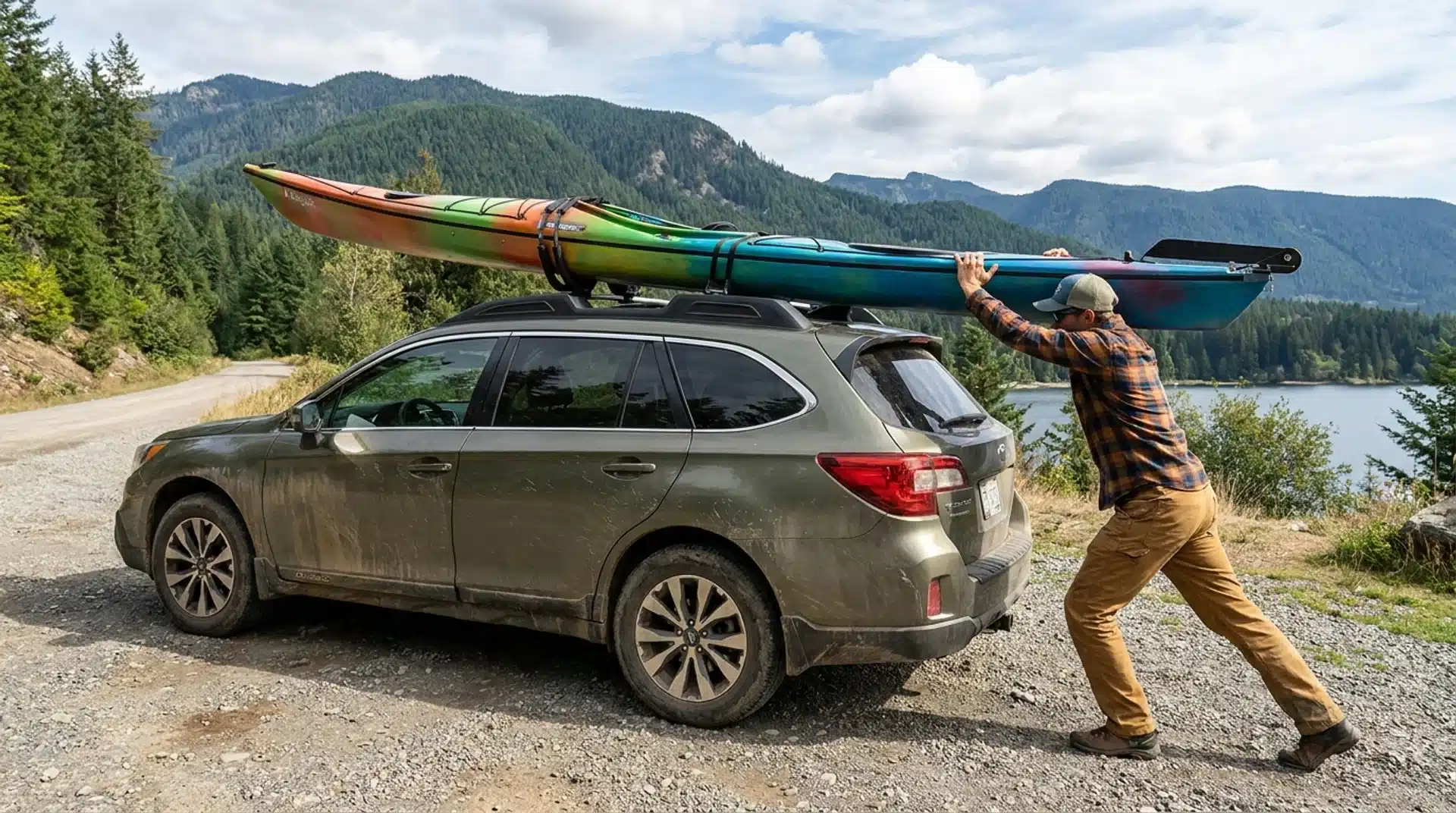

Dragging a kayak across wet sand can wear you out before you even reach the water. It’s one of the first struggles new kayak paddlers run into, and it can also scrape the hull and put extra strain on your gear.
That’s where a kayak cart for beach launch comes in. It straps under your boat so you can roll your kayak from the car to the waterline with less effort.
The challenge is that not every cart works well on sand. Some narrow wheels dig in, some frames wobble under heavier kayaks, and cheaper parts may rust or fail too soon.
The best kayak cart for beach launches should handle soft ground, stay steady under load, and withstand repeated use near water. Once you know what to look for, choosing the right one becomes much easier.
What Makes a Kayak Cart Good for Beach Launches?
Not every kayak cart is built for the beach. Sand, saltwater, and uneven ground require specific features, and knowing what to look for helps you avoid buying the wrong one. Most recreational kayaks need a cart that can handle all of this without slowing you down.
- Wide Balloon or Sand Wheels that roll smoothly over soft, loose ground without sinking
- Rust-Resistant Frame made from aluminum or stainless steel to handle saltwater exposure
- Adjustable Straps or Cradle to hold different kayak hull shapes firmly in place
- Solid Weight Capacity that supports your kayak and any loaded gear comfortably
- Foldable Design for easy storage in your car or kayak hatch
A cart that covers these points will make every beach launch smoother and quicker. Get these basics right, and you spend more time paddling and less time wrestling your boat across the sand.
Best Kayak Carts for Beach Launch
Finding a cart that actually works on the beach takes more than just picking the cheapest option. These nine carts are worth your attention, each bringing something solid to the table depending on your kayak, beach, and budget.
1. Railblaza C-Tug Kayak Cart
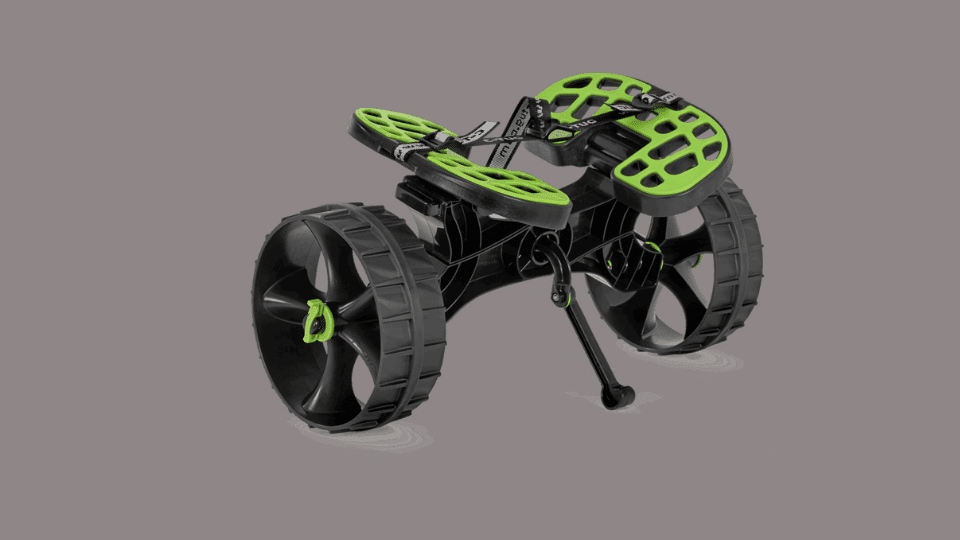
The C-Tug is compact, tough, and built to handle sandy and rocky shores. It snaps together without tools and holds firm under heavier kayaks. If you want something reliable that packs away easily, this one delivers.
- Wheel Type: Puncture-proof polymer wheels
- Capacity: Up to 330 lbs
- Best For: Mixed terrain and rocky beaches
- Key Features: Tool-free assembly, KneeKapper tie-down system
| Pros | Cons |
|---|---|
| Lightweight and durable | Not ideal for very soft sand |
| No flat tires | Higher price point for the base model |
| Snaps together without tools |
Price Range: $140-$170
2. Wilderness Systems Heavy Duty Cart
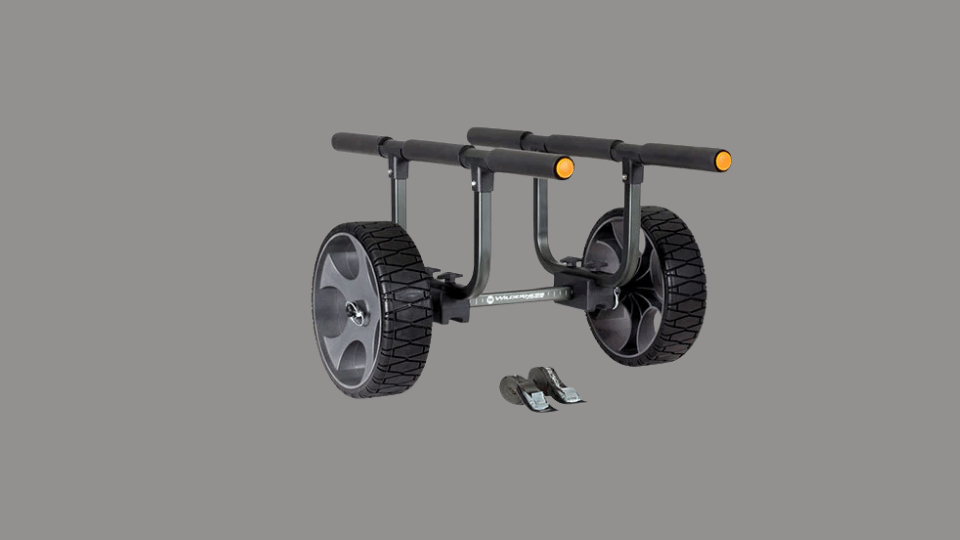
Wilderness Systems Heavy Duty Cart is built with serious kayakers in mind. It holds up to 450 lbs with the airless wheels (330 lbs with the optional beach wheel kit), making it one of the highest-capacity carts available.
This is the ideal option for hauling a heavy, fully loaded Hobie kayak across rough coastal terrain without risking a mid-trip structural failure.
It won Paddling Magazine’s “Best Transport/Storage/Launching” award, and the heat-treated aluminum frame is built to last in coastal conditions. It fits most hull shapes and rolls steadily across firmer beach surfaces.
- Wheel Type: Large 12-inch flat-free airless wheels (beach wheel kit sold separately)
- Capacity: Up to 450 lbs (airless); 330 lbs (beach wheels)
- Best For: Heavier sit-on-top kayaks and loaded fishing rigs
- Key Features: Adjustable bunker bar frame, two height settings, no scupper posts to protect hull
| Pros | Cons |
|---|---|
| Industry-leading 450 lb capacity | Beach wheels sold separately |
| Saltwater-resistant frame | Heavier and bulkier to store |
| Award-winning design | Higher price than budget options |
Price Range: $210-$250
3. Suspenz DLX Balloon Sand Cart
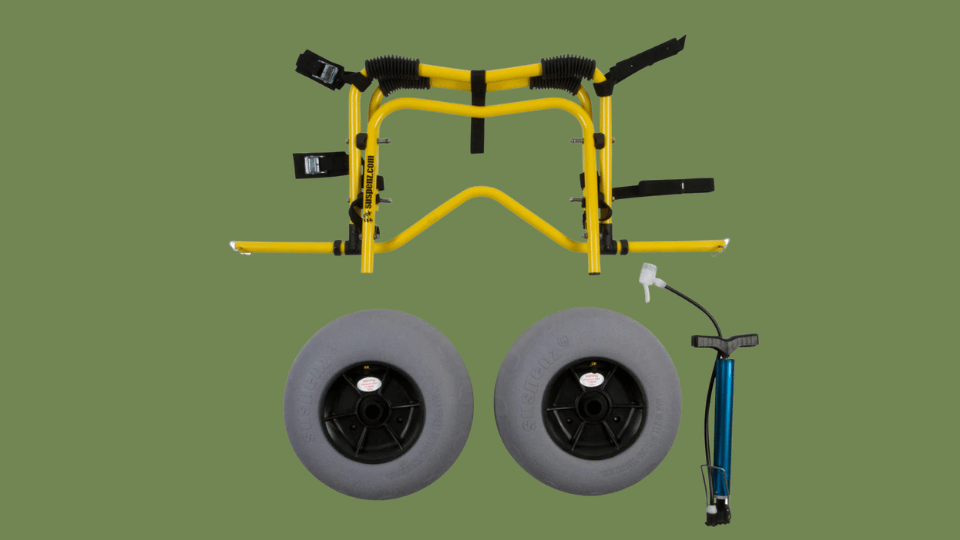
Sand is where the Suspenz DLX Balloon Sand Cart truly shines. The oversized balloon wheels float right over loose, soft ground, so you are not fighting your kayak every step to the waterline. It is one of the top choices for pure beach launching.
- Wheel Type: Large balloon and sand tires
- Capacity: Up to 150 lbs
- Best For: Soft sandy beaches
- Key Features: Anodized aluminum frame, universal fit, kickstand for easy loading
| Pros | Cons |
|---|---|
| Outstanding on soft sand | Lower 150 lb weight limit |
| Rust-resistant frame | Balloon tires need occasional inflation |
| Kickstand holds the cart steady while loading |
Price Range: $190-$250
4. Bonnlo Beach Wheels Kayak Cart
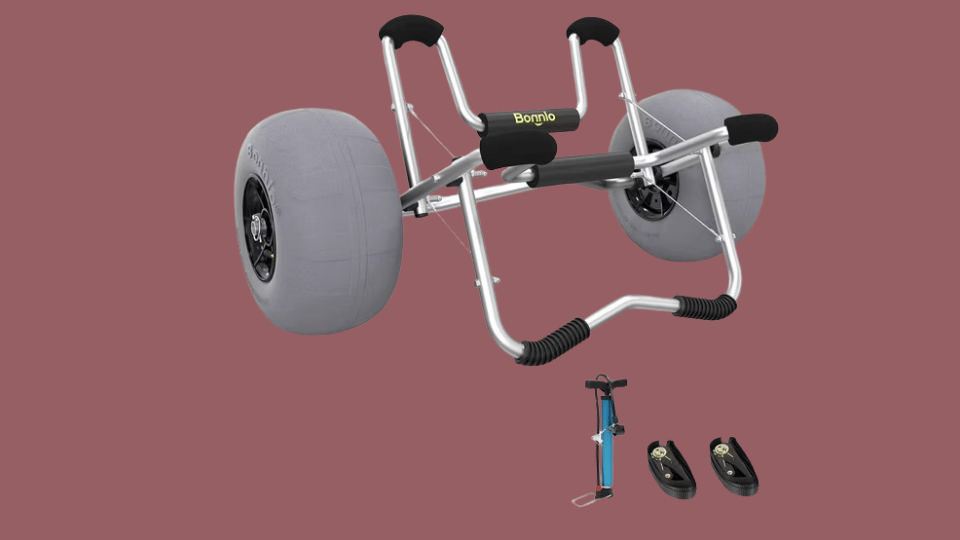
The Bonnlo brings big balloon tires at a friendlier price point. It handles soft sand reasonably well and fits most recreational kayaks. For casual paddlers who launch from the beach a few times a season, it gets the job done.
If you need a reliable cart for an entry-level Ozark Trail Kayak but don’t want to spend more on the wheels than you did on the boat, this is a strong value.
- Wheel Type: Balloon beach tires (12-inch)
- Capacity: Up to 330 lbs
- Best For: Budget-friendly beach launching
- Key Features: Foldable frame, adjustable hull support, kickstand, pump included
| Pros | Cons |
|---|---|
| Affordable with balloon tires | Frame feels less premium |
| Easy to fold | Tires need inflation checks |
| 330 lb capacity at this price is strong value |
Price Range: $90-$120
5. VEVOR Heavy Duty Kayak Cart
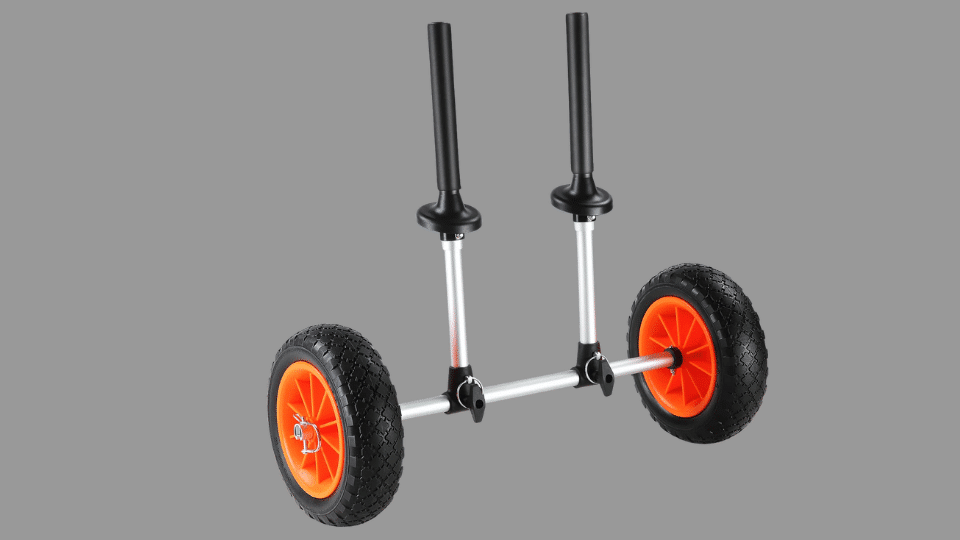
VEVOR packs a lot of capacity into an affordable frame. It supports heavy kayaks and loaded touring boats without flexing, including duck hunting rigs stacked with decoys and extra gear. The build quality is good for the price, and it works well on packed sand or gravel shorelines.
- Wheel Type: Flat-free rubber tires
- Capacity: Up to 330 lbs
- Best For: Heavy kayaks on firmer beaches
- Key Features: Steel frame, padded support bars, adjustable width
| Pros | Cons |
|---|---|
| High capacity at a low price | Heavier to carry |
| No flat tires | Struggles on very soft sand |
Price Range: $45-$70
6. Malone WideTrak ATB Cart
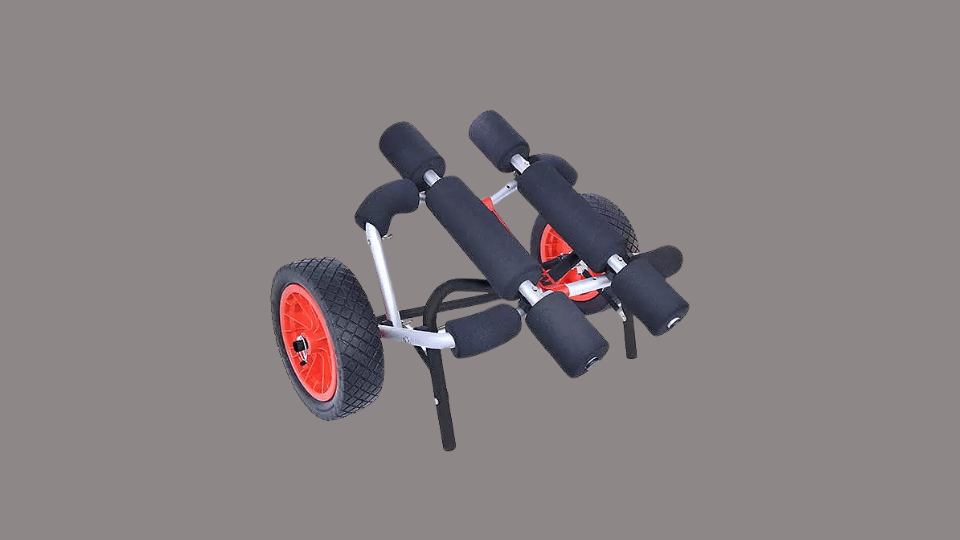
The WideTrak is built for all-terrain use, so it handles sand, gravel, and grass without slowing you down. Wider tires give it better ground coverage, and the aluminum build keeps weight low. A good pick for paddlers who launch from different spots each season.
- Wheel Type: Wide all-terrain tires
- Capacity: Up to 200 lbs
- Best For: Mixed and unpredictable terrain
- Key Features: Anodized aluminum, scupper hole mounting option
| Pros | Cons |
|---|---|
| Works across multiple terrain types | 200 lb limit rules out heavy fishing kayaks |
| Lightweight, corrosion-resistant | Mid-range price |
Price Range: $190-$250
7. YakAttack TowNStow Cart
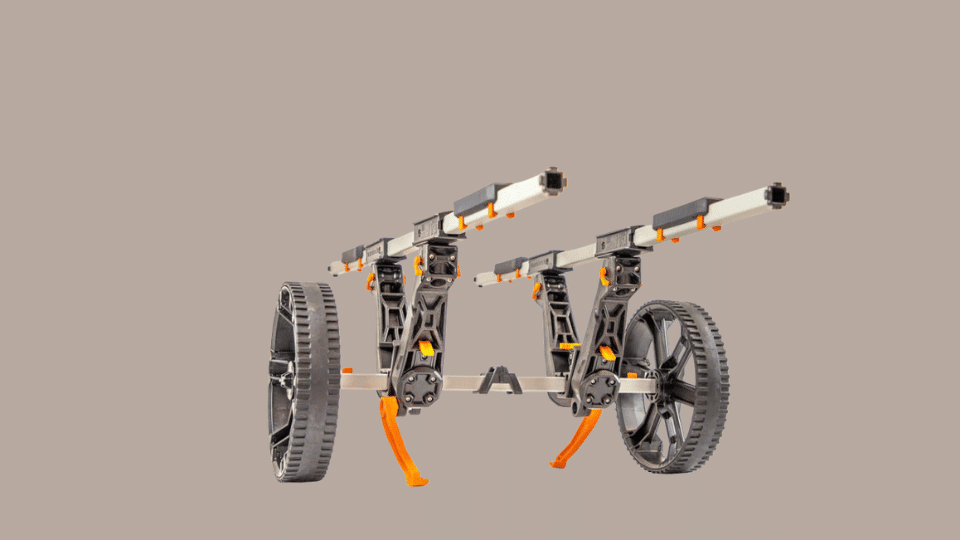
The TowNStow stands out because it stores right inside your kayak’s tank well, so you don’t have to leave it on the beach or stuff it in your car. It is designed for paddlers who want a clean, minimal setup without extra hassle.
- Wheel Type: Flat-free tires
- Capacity: Up to 150 lbs
- Best For: Paddlers wanting on-board storage
- Key Features: Fits standard tank wells, quick-release design, made in the USA
| Pros | Cons |
|---|---|
| Stows on the kayak, no car space needed | 150 lb limit, not for heavy boats |
| Compact and clever design | Higher price for the capacity |
Price Range: $250-$280
8. RAD Sportz Kayak Cart
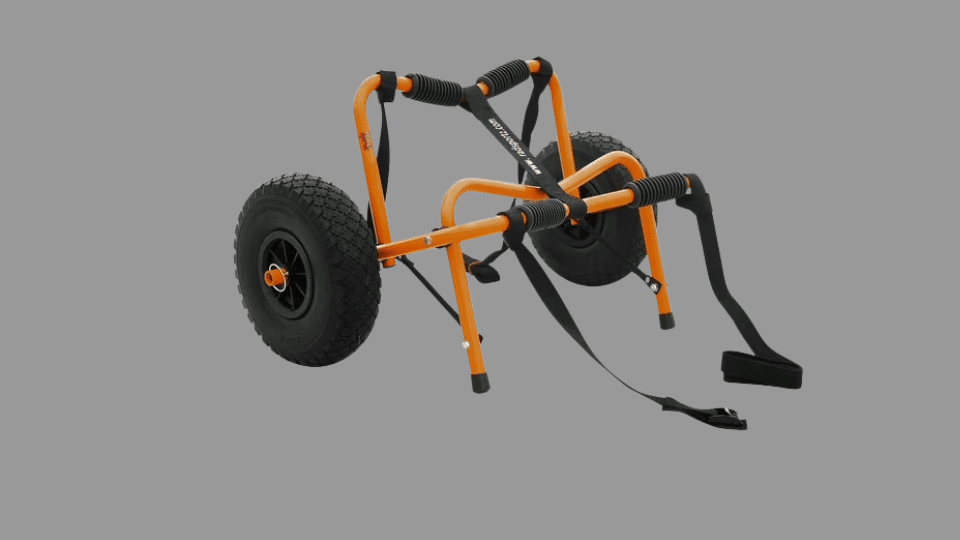
RAD Sportz keeps things simple and functional. It is a no-fuss cart that suits paddlers who just want to get to the water fast.
- Wheel Type: Solid rubber wheels
- Capacity: Up to 200 lbs
- Best For: Recreational kayakers on firm surfaces
- Key Features: Foldable frame, adjustable support straps
| Pros | Cons |
|---|---|
| Easy to use and folds quickly | Struggles on loose soft sand |
| Affordable |
Price Range: $70-$120
9. Ulticor Kayak Cart
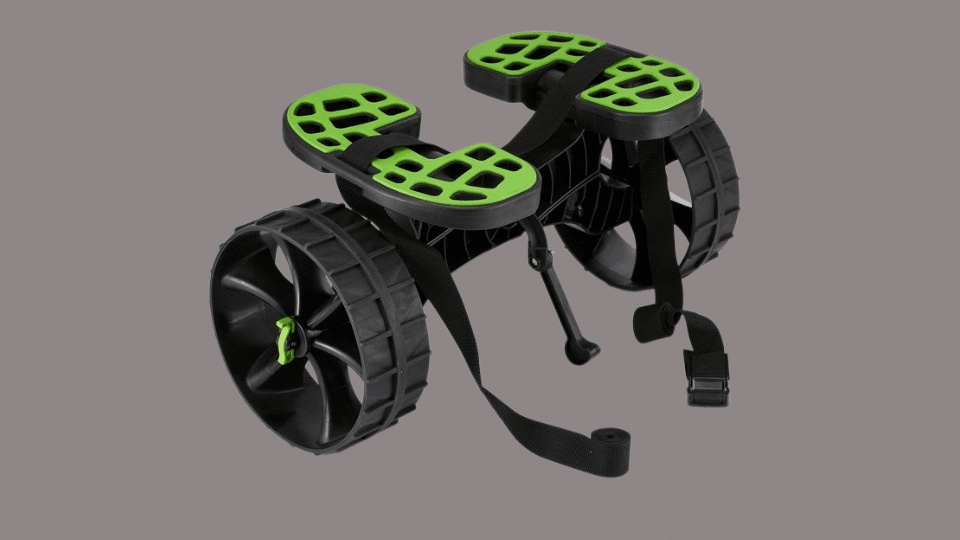
Ulticor targets serious beach paddlers with a cart built for sand performance. The wide tire base keeps it steady on loose ground, and the frame handles repeated saltwater exposure without deteriorating quickly. It earns its place on this list.
- Wheel Type: Wide sand-rated balloon tires
- Capacity: Up to 250 lbs
- Best For: Frequent beach launchers with heavier kayaks
- Key Features: Corrosion-resistant build, padded cradle, quick-fold
| Pros | Cons |
|---|---|
| Strong on sand, high capacity | Slightly higher price than similar options |
| Durable saltwater-resistant frame |
Price Range: $70-$110
10. Seattle Sports Paddling Cart
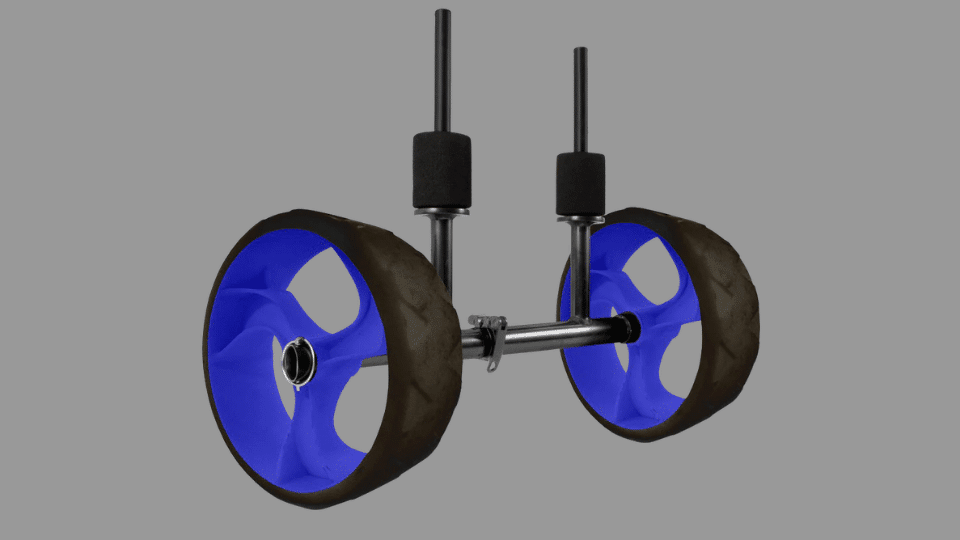
Seattle Sports builds this cart for kayakers who want a lightweight option that still holds up near saltwater. It rolls well on packed sand and assembles in seconds. It is a practical, everyday cart for paddlers who keep things simple.
- Wheel Type: Solid foam-filled tires
- Capacity: Up to 150 lbs
- Best For: Lightweight kayaks on firm beach surfaces
- Key Features: Corrosion-resistant hardware, padded cradle, compact fold
| Pros | Cons |
|---|---|
| Light, quick to assemble, saltwater-friendly | Not suited for soft or deep sand |
Price Range: $190-$250
11. Wheeleez Kayak Cart
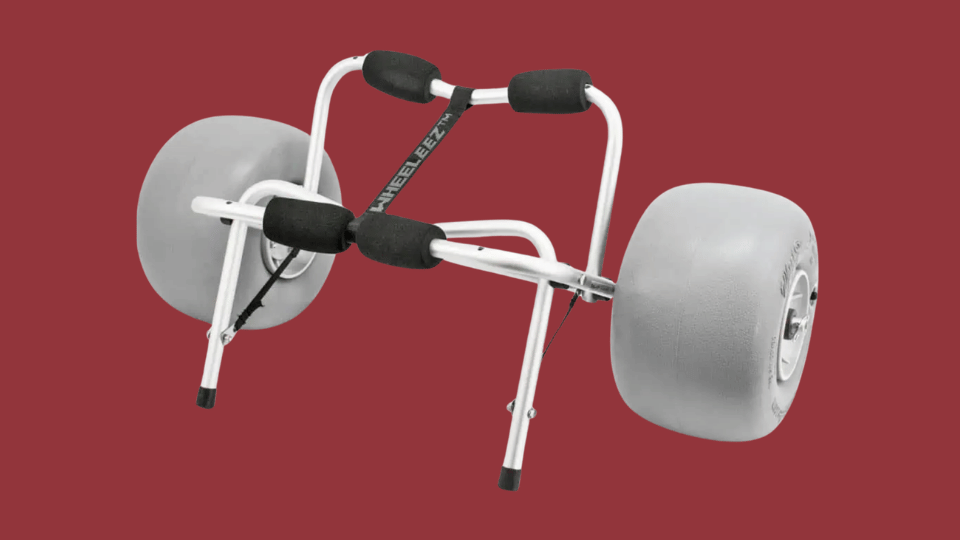
Wheeleez is a well-known name in beach carting for good reason. The oversized polyurethane balloon wheels glide over soft sand better than most options on this list. If your launch spot has deep, loose sand, this cart handles it with ease.
- Wheel Type: Polyurethane balloon wheels
- Capacity: Up to 300 lbs
- Best For: Deep soft sand and coastal launches
- Key Features: Rust-proof aluminum frame, wide wheel base, adjustable cradle
| Pros | Cons |
|---|---|
| Outstanding on soft sand | Bulkier and pricier than basic carts |
| High capacity, very durable |
Price Range: $210-$250
12. Perception Kayak Cart
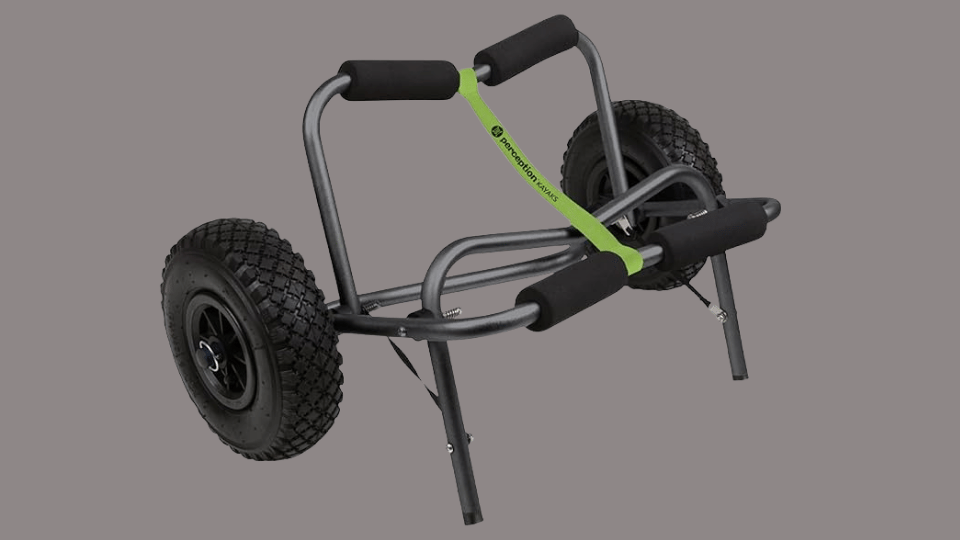
Perception keeps this cart clean and functional without overcomplicating things. It fits most recreational kayaks snugly and handles moderate beach terrain well. For paddlers who already use Perception kayaks, it pairs naturally and performs reliably.
- Wheel Type: Flat-free rubber tires
- Capacity: Up to 175 lbs
- Best For: Recreational kayakers on moderate terrain
- Key Features: Adjustable strap system, lightweight aluminum frame, foldable
| Pros | Cons |
|---|---|
| Affordable, easy to use | Average on loose soft sand |
| Good everyday performance |
Price Range: $60-$85
Each of these carts solves a slightly different problem, so your best pick really depends on where you launch and how heavy your kayak is. Take a look at the buying guide below to narrow it down even further.
Best Kayak Cart for Beach Launch Based on Use Case
Different paddlers need different things from a cart. Your launch spot, kayak weight, and how often you hit the water all play a role in finding the right fit.
| Use Case | Best Cart Pick |
|---|---|
| Soft, deep sand launches | Wheeleez Kayak Cart |
| Heavy kayaks and loaded gear | VEVOR Heavy Duty Kayak Cart |
| Mixed terrain and rocky shores | Railblaza C-Tug Kayak Cart |
| Budget-friendly beach use | Bonnlo Beach Wheels Kayak Cart |
| Storing a cart on your kayak | YakAttack TowNStow Cart |
| Frequent coastal paddlers | Ulticor Kayak Cart |
| All-terrain versatility | Malone WideTrak ATB Cart |
| Lightweight for everyday use | Seattle Sports Paddling Cart |
The right cart does not have to be the most expensive one. It just has to match how and where you paddle. Pick based on your use case, and you will not go wrong.
How to Use a Kayak Cart for a Beach Launch
Using a kayak cart the right way makes beach launches much easier on your body and your gear. A few small adjustments can help the cart roll better on soft sand and keep your kayak balanced along the way.
- Place the cart near the kayak’s center so the weight stays balanced while you pull it.
- Tighten the straps firmly to keep the kayak from shifting on uneven sand.
- Use wide beach wheels if you often launch on soft or wet sand.
- Pull rather than push when moving through deeper sand, as it requires less effort.
- Keep heavier gear low and centered to stop the kayak from tipping sideways.
- Rinse the cart after saltwater use to help prevent rust and damage to the wheels.
A little setup time can save you a lot of frustration at the beach. Once you get used to using a kayak cart properly, launching your kayak feels quicker and much less tiring.
What to Do with the Cart Once You’re on the Water
This question trips up a lot of first-time buyers.
You have three real options: store the cart in your kayak’s rear tank well (the TowNStow is specifically designed for this), strap it to the deck using the bungee cord system, or leave it at the launch point if the location is secure.
For solo paddlers on coastal trips, a cart that folds small enough to fit inside a hatch is worth paying more for.
A little setup time can save you a lot of frustration at the beach. Once you get used to using a kayak cart properly, launching your kayak feels quicker and much less tiring.
Balloon Wheels vs. Airless Wheels
The type of wheel on your kayak cart makes a big difference once you hit the sand. Some wheels glide over soft ground easily, while others struggle and slow you down.
| Feature | Balloon Wheels | Airless Wheels |
|---|---|---|
| Performance on soft sand | Roll more easily without sinking | Can dig into soft sand |
| Maintenance | Need air checks sometimes | Very low maintenance |
| Ride feel | Smoother over uneven ground | Firmer ride |
| Durability | Good, but it can puncture | Tough and puncture-proof |
| Best use | Beach launches | Hard-packed paths and ramps |
If you often launch from soft beaches, balloon wheels usually make the trip easier. Airless wheels still work well on firmer ground and require less maintenance over time.
Tips for Maintaining Your Beach Kayak Cart
A beach kayak cart deals with sand, saltwater, and heavy loads almost every trip. A few simple habits can help it last longer and roll more smoothly when you head back to the shore.
- Rinse After Every Use: Wash off salt and sand with fresh water to prevent parts from wearing out too quickly.
- Check Tire Pressure: Keep balloon wheels properly inflated for smoother movement on soft sand.
- Tighten Loose Hardware: Look over bolts, straps, and wheel fittings before each launch.
- Store It in a Dry Area: Keeping the cart out of damp spaces helps prevent rust.
- Inspect the Wheels Often: Watch for cracks, flat spots, or worn tread around the tires.
- Lubricate Moving Parts: A small amount of lubricant can keep the axle and wheels turning easily.
Regular maintenance takes only a few minutes but can save you money and frustration later. A well-kept cart also makes beach launches feel much easier over time.
The Bottom Line
Choosing the best kayak cart for beach launch use comes down to how and where you paddle. You need wheels that move well on sand, a frame that feels steady, and enough strength to carry your kayak without wobbling.
A cheap cart may work for short trips, but soft beaches can quickly expose weak parts. So, think about your kayak’s weight, your launch spot, and how often you’ll use it.
The right cart makes the walk to the water easier and helps protect your gear. Choose the cart that fits your beach setup before your next trip.
Frequently Asked Questions
Can You Use a Regular Kayak Cart on the Beach?
Yes, but regular kayak carts with narrow wheels often sink into soft sand, making them harder to pull. Beach carts with balloon wheels work much better on sandy launches.
What’s the Best Budget Kayak Beach Cart?
The Bonnlo Beach Kayak Cart is a popular budget-friendly option because it offers wide beach wheels and decent weight support at a lower price.
How Much Weight Can a Kayak Beach Cart Hold?
Most kayak beach carts can hold between 150 and 450 pounds, depending on the frame design and wheel type. Heavy-duty carts are better for fishing kayaks and extra gear.