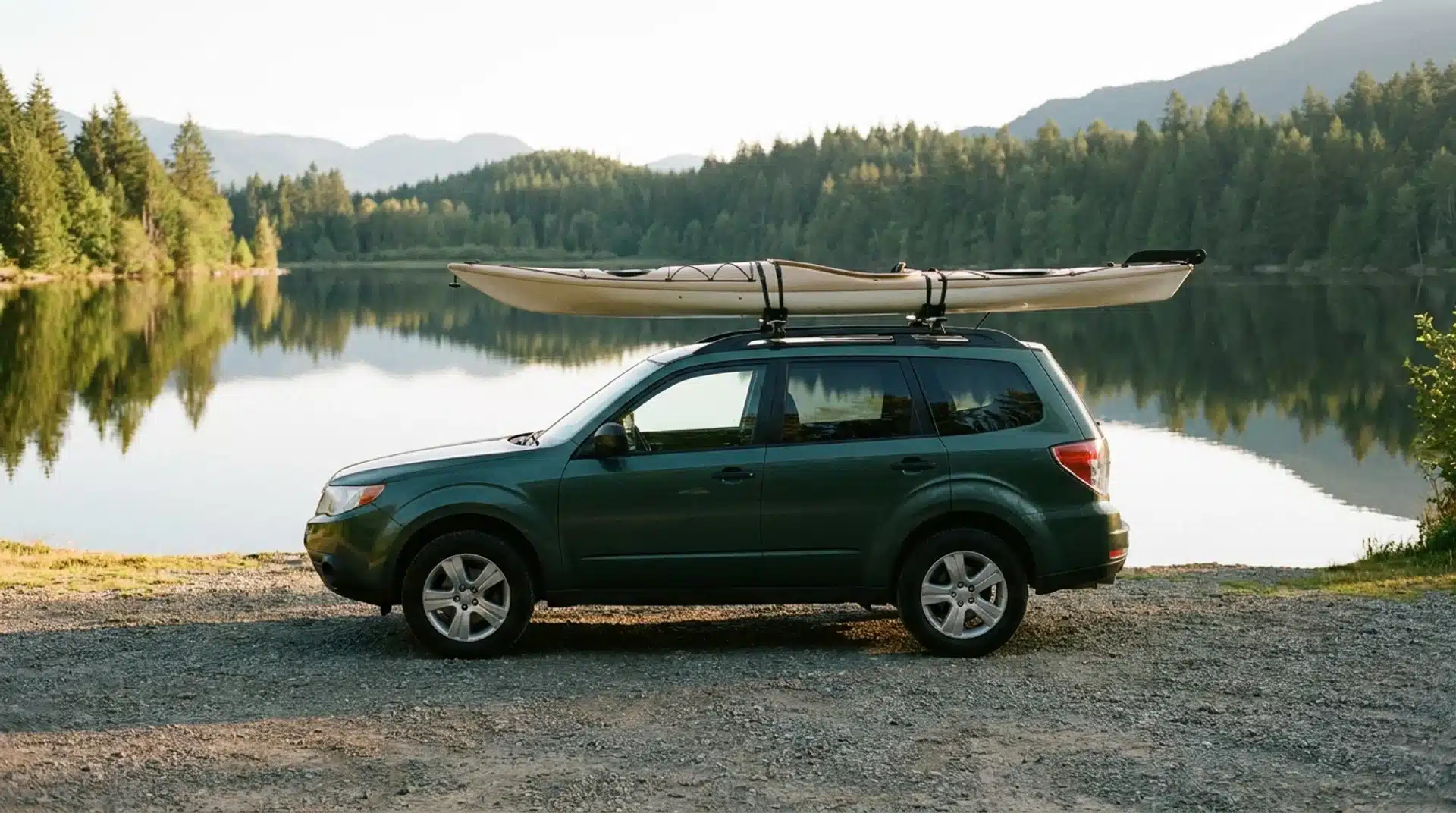
Finding the best kayak rack for SUVs can make a huge difference in how you load, transport, and protect your kayak.
Some racks are built for quick weekend trips, while others are better for long highway drives or heavy fishing kayaks. SUVs with roof rails usually have more choices, but there are also reliable options for bare roofs without permanent crossbars.
From J-style carriers to lift-assist systems, the right setup can make loading easier and help keep your kayak stable on the road.
A good rack also helps reduce stress, saves time, and protects both your vehicle and gear.
Things to Consider Before Buying a Kayak Rack for Your SUV
Choosing the right kayak rack can make loading, driving, and unloading much easier, especially when you match the design to your SUV’s roof type.
For SUVs with roof rails, there are many options; if you also tow or haul larger gear, racks designed specifically for trucks and truck‑bed setups can be more practical.
Taking a little time to compare features can help you avoid problems later.
- SUV Roof Type: Some kayak racks only work with roof rails or crossbars, while others fit bare roofs. Always check if the rack matches your SUV setup before buying.
- Kayak Weight Capacity: Every roof rack has a weight limit. Make sure your kayak and rack together do not go over your SUV’s roof capacity.
- Loading Style: Tall SUVs can make loading difficult. If you load your kayak alone, a lift-assist or side-loading rack may save time and effort.
- Travel Distance: Soft racks and foam blocks are better for short drives, while heavy-duty crossbar systems usually handle highway trips more safely.
- Storage and Removal: Some kayak racks stay on the roof full-time, while others can be quickly removed and stored. Portable systems work well if you only carry a kayak a few times each year.
A rack that fits your SUV properly can help keep your kayak secure and reduce movement during travel. It can also make loading less stressful and protect your vehicle’s roof from damage.
Different Types of Kayak Roof Racks Explained Before You Buy
Not all kayak roof racks work the same way. Some are designed for easier loading, while others focus on carrying multiple kayaks or improving highway stability, since different kayak rack setups are designed for different transport needs.
| RACK TYPE | BEST FOR | PROS | CONS |
|---|---|---|---|
| J-Style Kayak Rack | Solo kayakers and small SUVs | Saves roof space, easy to strap down, folding designs available | Loading can be harder on tall SUVs |
| Saddle-Style Kayak Rack | Long-distance travel and heavy kayaks | Better kayak support and stability | Takes up more roof space |
| Stacker Rack | Carrying multiple kayaks | Holds 2–4 kayaks, space-efficient | Requires more tie-down work |
| Temporary Foam Block System | Occasional trips and bare roofs | Budget-friendly and portable | Less stable for highway driving |
| Lift-Assist Kayak Rack | Heavy kayaks and tall vehicles | Easier loading with less lifting | Higher price compared to standard racks |
The right kayak transport system depends on how often you travel, your SUV roof setup, and how much lifting you want to do. Choosing the right rack style can make loading safer and help keep your kayak secure during the drive.
Best Kayak Racks for SUVs with Roof Rails
SUVs with roof rails have more kayak rack options and usually offer better stability for long trips. From lift-assist systems to folding J-style racks, these carriers are designed to make loading easier while keeping the kayak secure on the road.
1. Thule Hullavator Pro
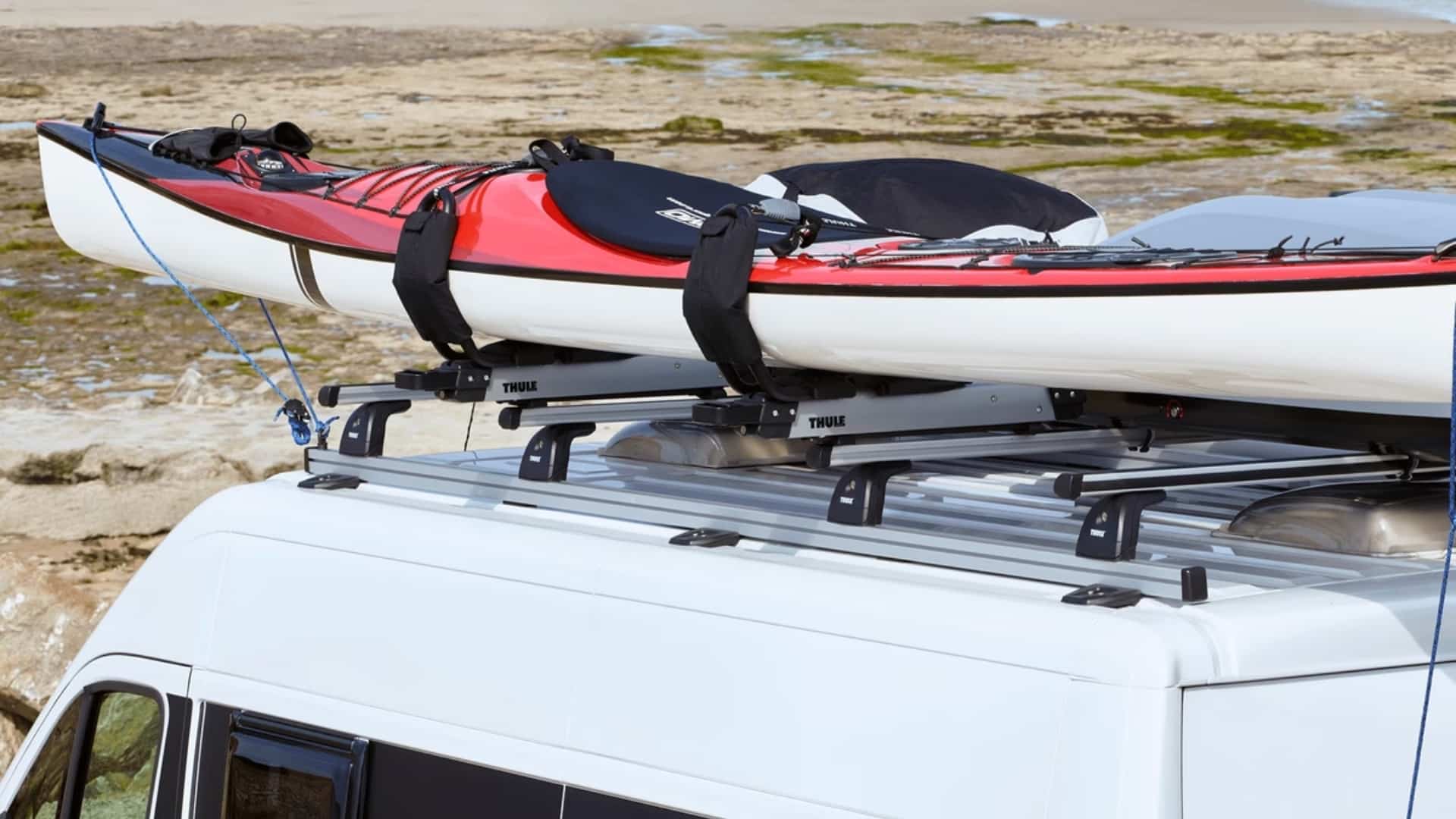
The Thule Hullavator Pro uses gas-assist struts to lift and lower your kayak. Double extending arms brings the boat down to waist height, which makes strapping easy on your back.
The padded cradles have eight touch points to protect your kayak’s finish during transport.
Key Features
- The gas-assist struts handle 40 pounds of the kayak’s weight, making solo loading easier.
- The double-extending arms lower the kayak by up to 3 feet to waist level.
- The eight padded support points protect your kayak from scratches and damage.
- The corrosion-resistant aluminum and steel construction ensures a long product life.
| Pros | Cons |
|---|---|
| One person can load a heavy kayak | Costs over $700 |
| No heavy lifting or straining | The rack itself weighs 39.7 lbs. |
| Corrosion-resistant materials last longer | Only fits Thule brand crossbars |
2. Yakima JayLow
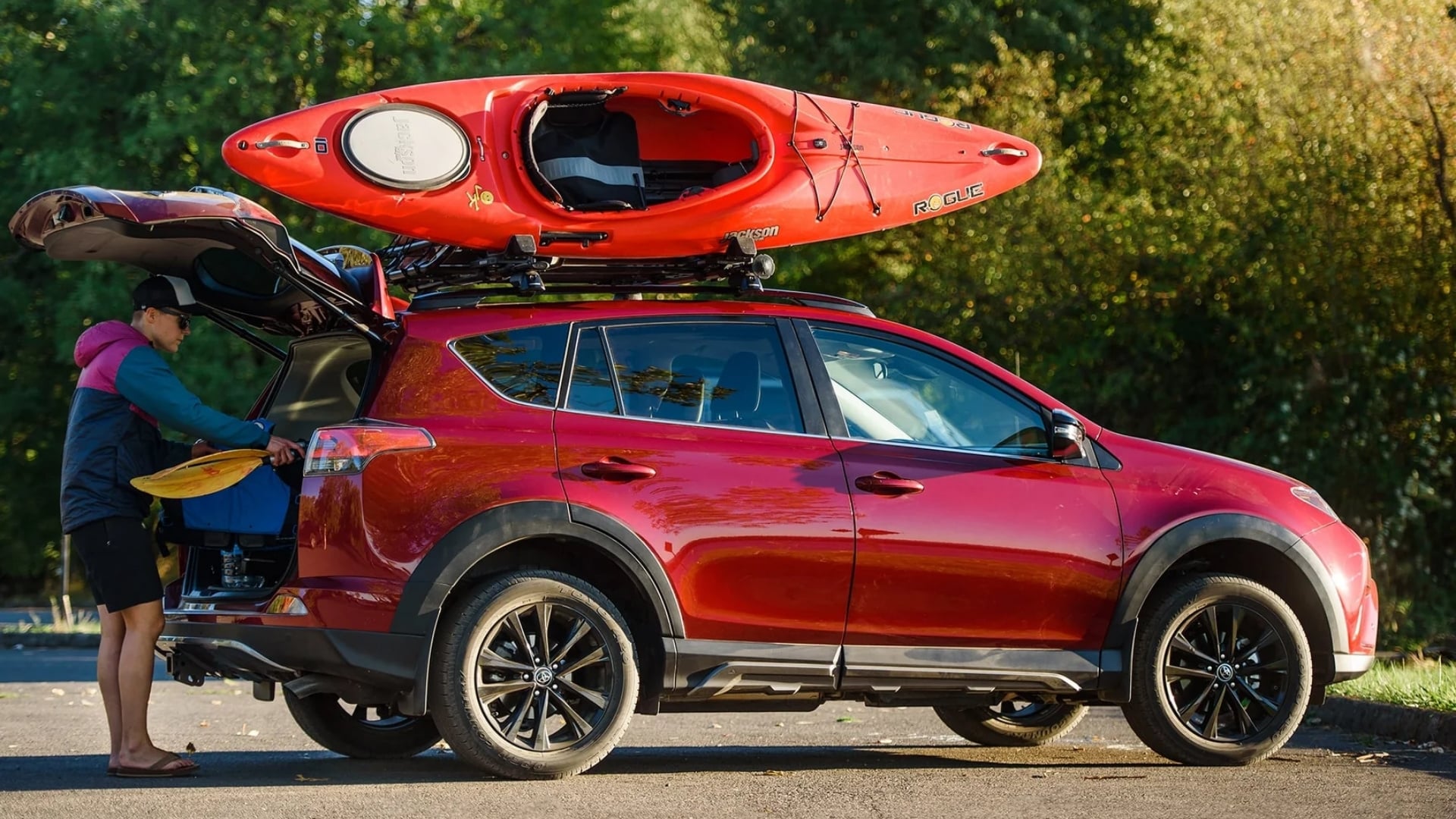
The Yakima JayLow comes fully assembled and installs without tools. You can carry one boat upright in the J-cradle or switch to stacker mode for two kayaks.
The arms fold flat against your roof when not driving to reduce wind resistance.
Key Features
- You can carry one kayak in the J-cradle position or two kayaks in the vertical stacker position.
- The rack folds flat against your roof when not in use to reduce wind noise.
- The tool-free installation works on round, square, factory, and aerodynamic crossbars.
- The included heavy-duty straps and bow and stern tie-downs help secure your load.
| Pros | Cons |
|---|---|
| Very lightweight at only 11 lbs. | Whistling noise reported at highway speeds |
| Fits round, square, and factory bars | Straps can fall down the arm during loading |
| Less expensive than lift-assist racks | Holds 130 lbs. maximum for two boats total |
3. Malone Downloader
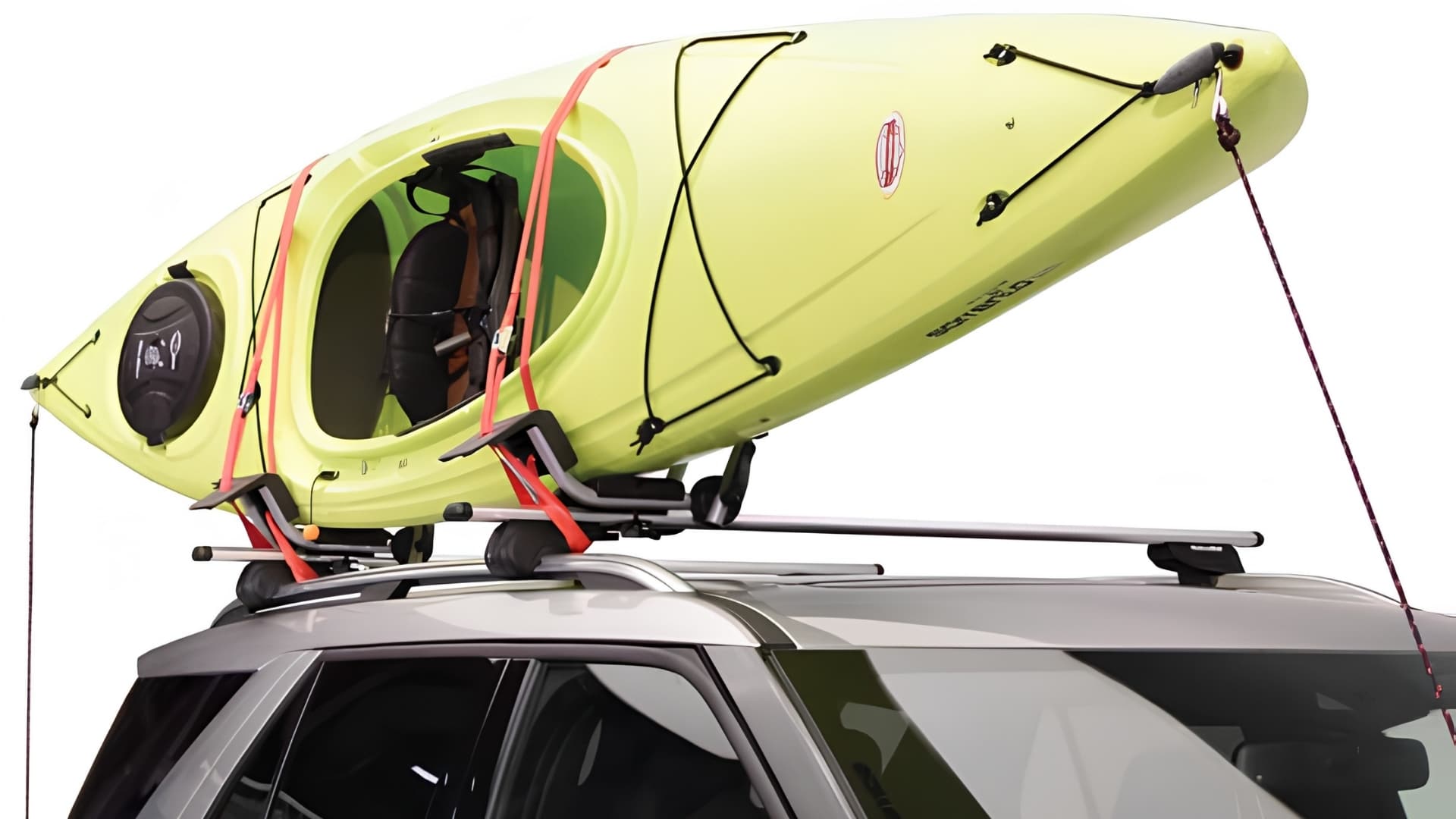
The Malone Downloader features a built-in loading ramp to help slide your kayak up from the ground. The aluminum frame folds down flat when not in use to fit inside a garage.
Universal JAWZ hardware includes two bolt sizes to fit different crossbar shapes.
Key Features
- The built-in boarding ramp makes loading and unloading your kayak much easier.
- The fold-down technology increases overhead clearance for low garages or parking structures.
- The corrosion-resistant aluminum construction provides durability and strength for long-term use.
- The universal JAWZ mounting hardware fits round, square, oval, and most factory crossbars.
| Pros | Cons |
|---|---|
| Costs much less than Thule or Yakima | The ramp is short, so the angle can be steep |
| Folds very flat to just 6 inches high | The load limit is 75 pounds per kayak |
| Extra-long 11-foot straps are included | Aero bars may need a separate fit kit |
4. INNO INA455 Kayak Lifter
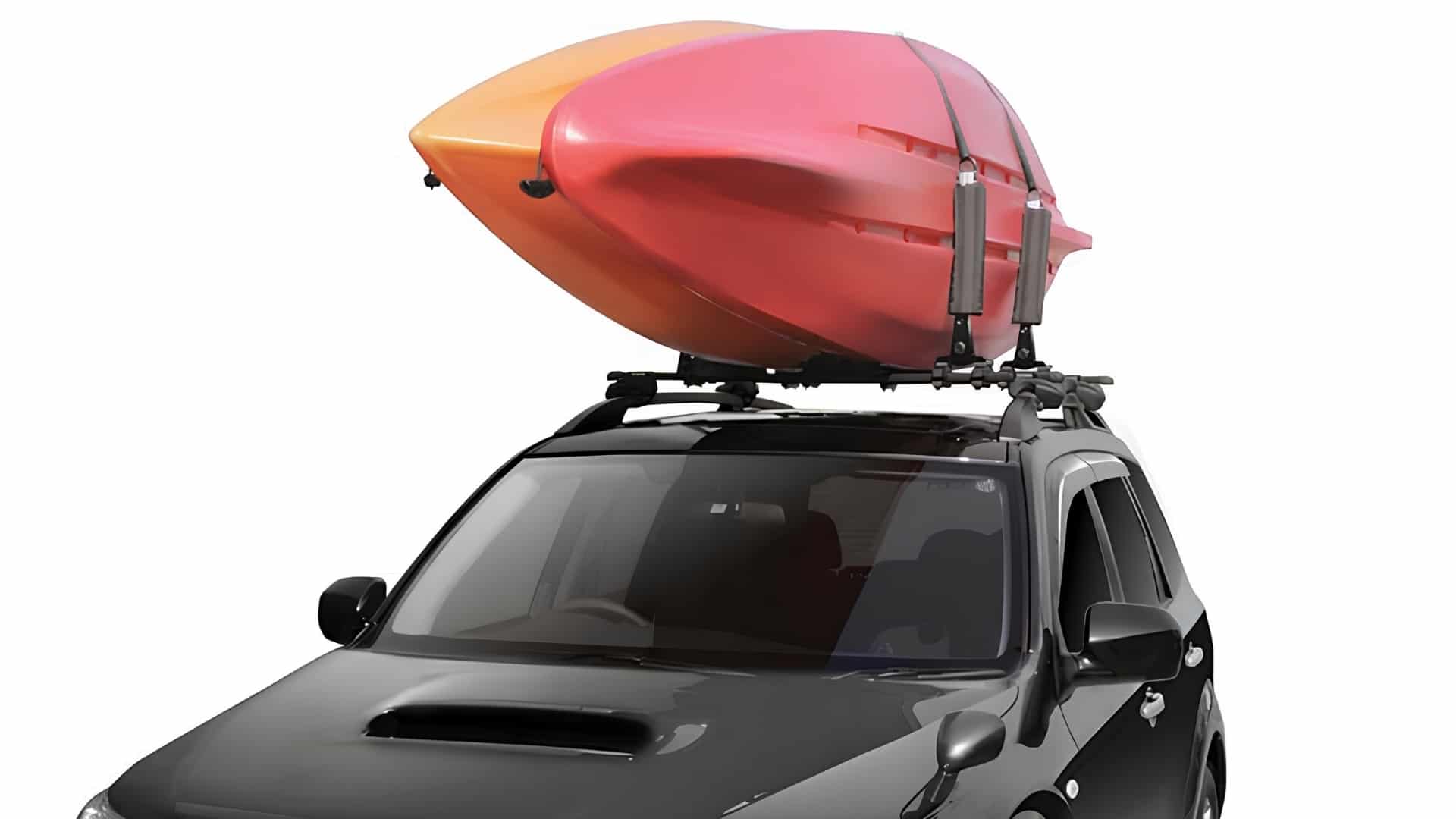
The INNO INA455 is a dual kayak carrier with a unique “garage friendly” design that keeps your boats low. The universal mounting system attaches easily to square, round, and most factory crossbars.
This rack is built to carry up to two kayaks at once for paddling partners.
Key Features
- The garage-friendly design keeps kayaks low to avoid hitting low door frames.
- The universal mounting system works with square, round, and most factory crossbars.
- You can carry up to two kayaks at the same time with this single rack.
- The aerodynamic shape helps reduce wind noise while you drive.
| Pros | Cons |
|---|---|
| Low profile fits in garages easily | Product page lacks detailed specs |
| Carries two kayaks at once | Weight limit per kayak not listed |
| Costs only $229.99 | May not fit all aftermarket aero bars |
5. Yakima ShowDown
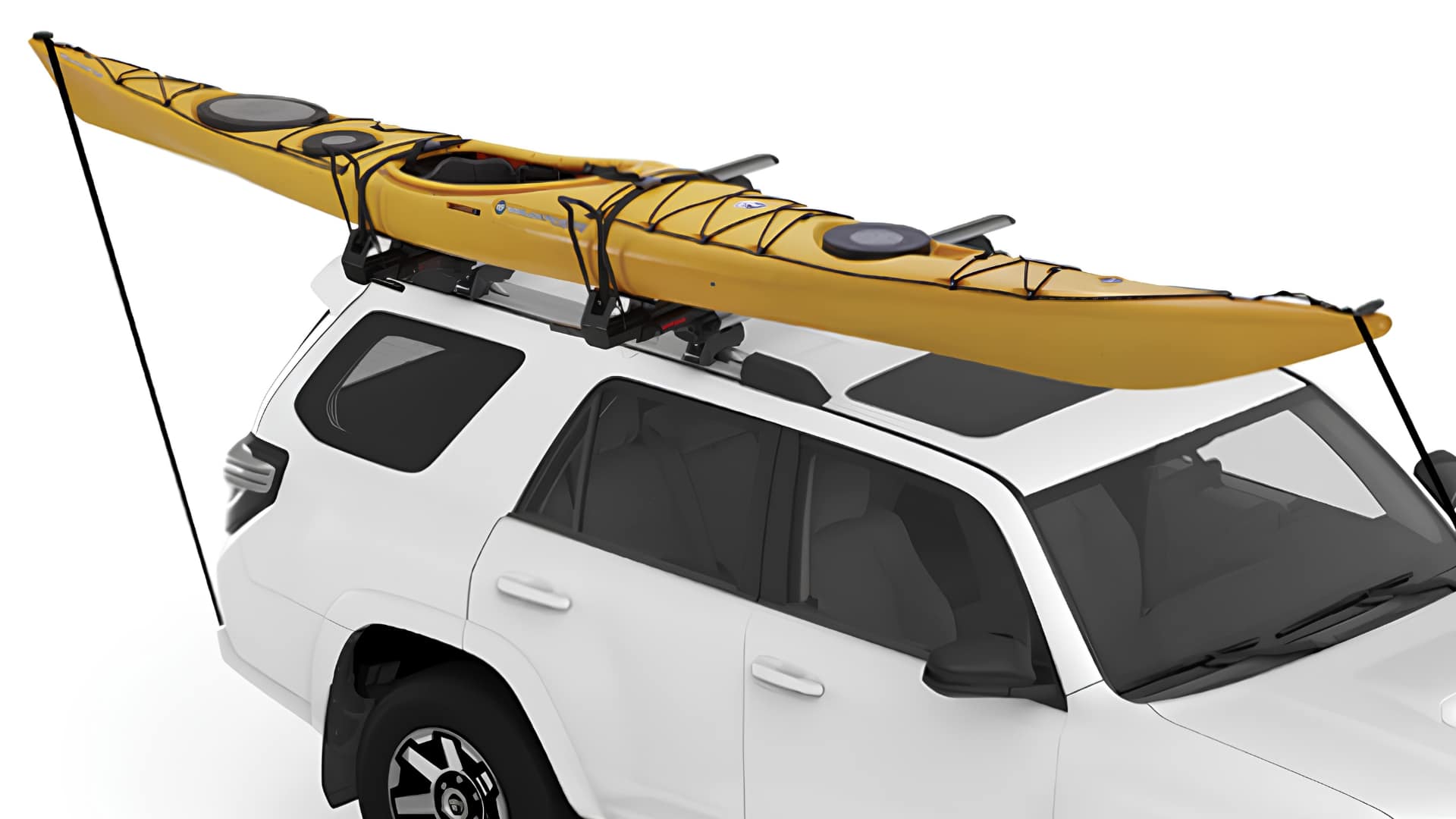
The Yakima ShowDown uses a slide-and-tilt mechanism to load kayaks from the side at waist level.
It tilts down 26 inches from the roof height and provides 30 to 45 percent weight assistance. The felt-covered cradles flex to fit your hull shape and fold flat when not in use.
Key Features
- The slide-and-tilt mechanism lets you load boats at waist level from the side of your car.
- The system provides 30 to 45 percent of the boat’s weight in assistance, depending on your boat’s width.
- The felt-covered cradles flex to match your hull shape for secure transport.
- The rack folds down flat to reduce drag and noise when you are not using it.
| Pros | Cons |
|---|---|
| Side loading avoids heavy overhead lifting | Build quality feels inferior to older Yakima products |
| Tilts down 26 inches from the roof height | Safety pins can be very hard to remove |
| Holds up to 80 pounds for kayaks or boards | Slim hull kayaks like OC1 do not fit well |
6. Malone SeaWing
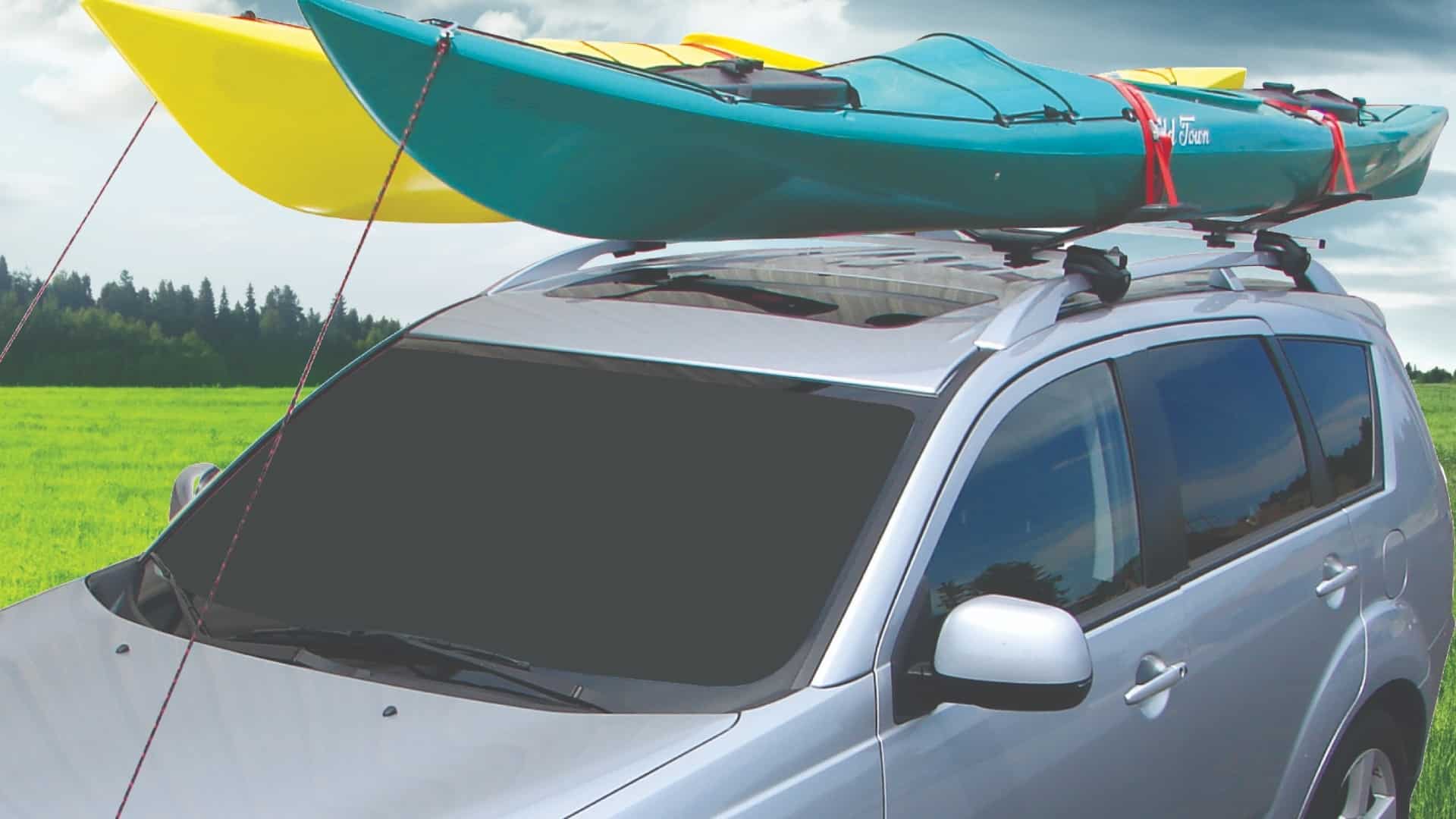
The Malone SeaWing is a low-profile V-style carrier that lets you load from the rear without lifting the whole kayak. You simply put the front of the boat on the back of your vehicle and push it up.
The nylon and poly-carbon construction will never rust, and installation requires no tools.
Key Features
- You load by putting the front kayak on your vehicle’s rear and then pushing up.
- The low-profile design stands only 4.5 inches tall to clear garage ceilings.
- The nylon and poly-carbon construction resists corrosion and will never rust.
- The universal Jawz hardware requires no tools for a simple installation.
| Pros | Cons |
|---|---|
| Very low 4.5-inch height fits in garages | The load limit is 75 pounds per kayak |
| No rust from nylon and poly-carbon parts | The optional load assist module is sold separately |
| Simple, no-tool installation on most bars | The rear-loading method may scratch the car’s paint |
The best kayak rack depends on your kayak size, loading preference, and how often you travel. Choosing a rack that works well with your roof rails can make transportation safer and more convenient.
Best Kayak Racks for SUVs without Roof Rails
Many SUVs without roof rails can still carry a kayak using temporary roof rack systems. Inflatable racks are popular because they are easy to install, simple to store, and do not require permanent hardware on the vehicle.
7. HandiRack Universal Inflatable Roof Rack
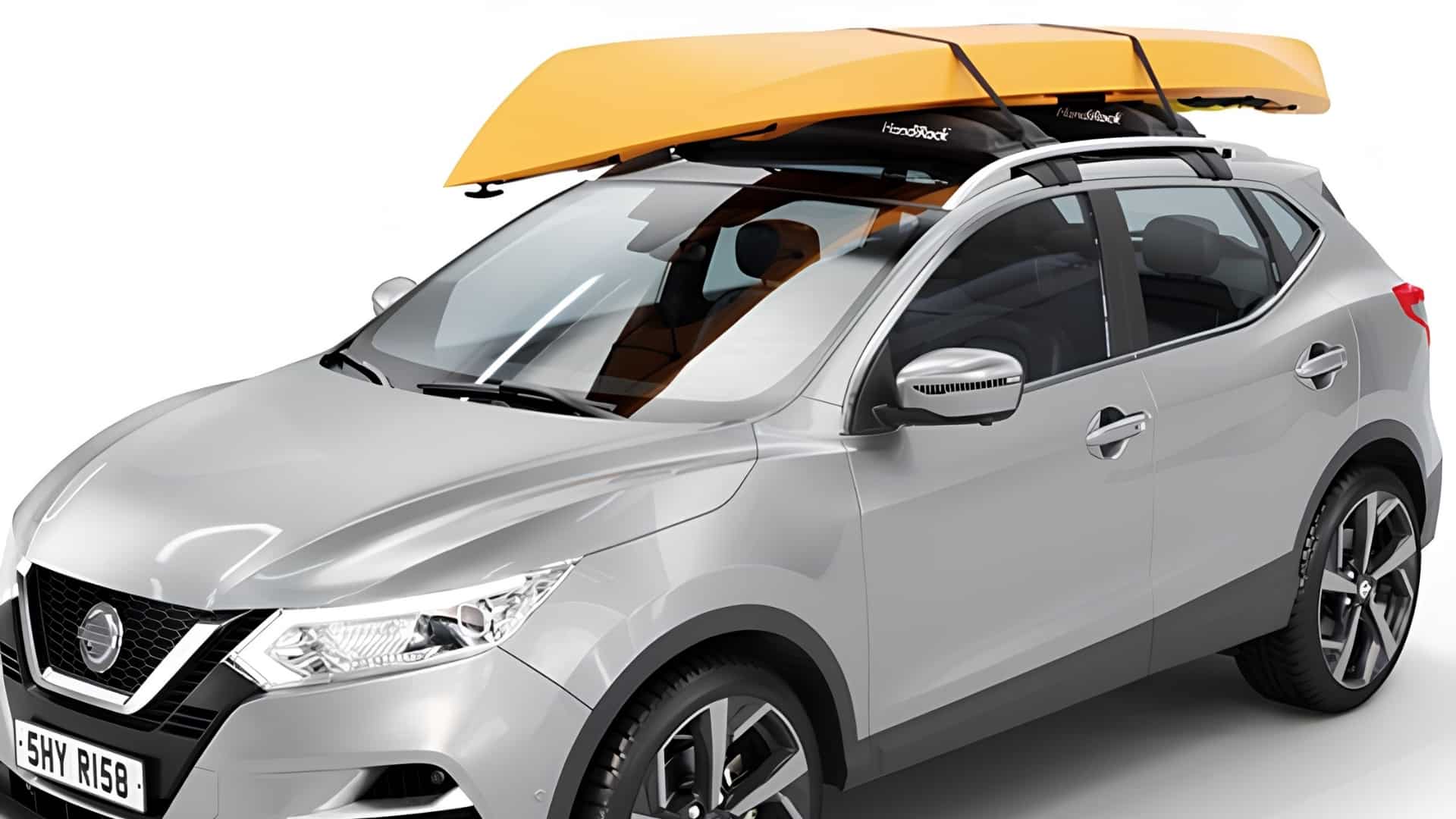
The HandiRack is an inflatable roof rack made for cars without existing crossbars. You pump up the puncture-resistant air tubes, which create a soft cushion between your roof and the load.
It packs into a storage tote and can hold up to 180 pounds for temporary use.
Key Features
- The three-ply nylon air tubes resist punctures and protect your vehicle’s roof.
- The double-action air pump and storage tote are both included in the box.
- The rack holds up to 180 pounds for kayaks, SUPs, ladders, or other gear.
- Five D-ring anchor points give you many options for strapping down your load.
| Pros | Cons |
|---|---|
| Very lightweight at only 6 pounds | For temporary use only, not permanent |
| Fits any car with a bare roof | Must be removed when not driving |
| Packs into a small tote for storage | No crossbars for attaching other accessories |
8. SportRack Complete Roof Rack System
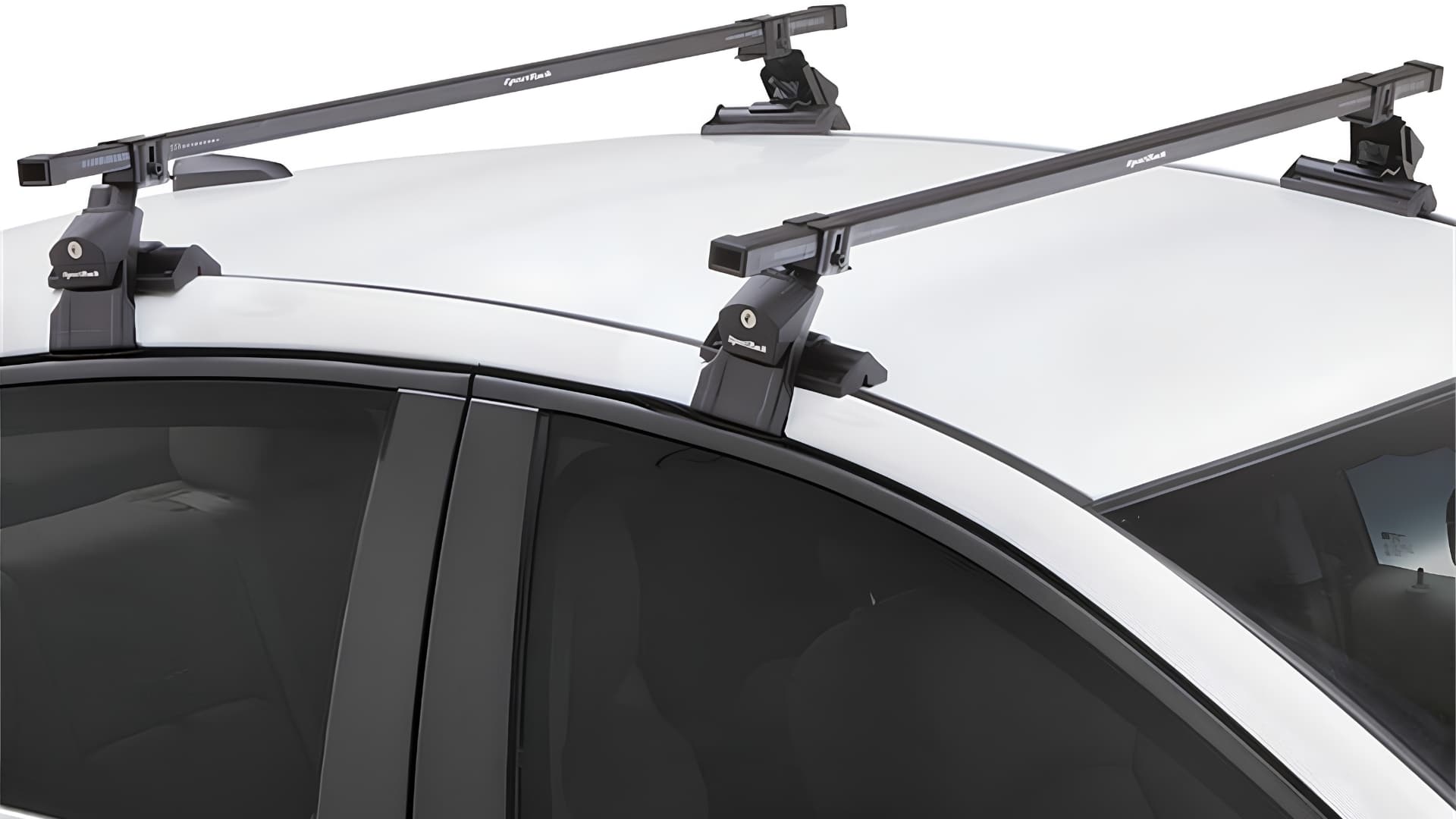
The SportRack SR1005 is a complete roof rack system that comes fully assembled out of the box. It includes load bars, hooks, feet, and integrated locks, all ready to install.
The steel construction supports up to 130 pounds and fits many popular cars and SUVs without factory racks.
Key Features
- The system comes pre-assembled and ready to install with no drilling required.
- The integrated locking system secures the entire roof rack to your vehicle.
- The durable steel construction can hold up to 130 pounds of gear.
- The rack is compatible with many accessories for bikes, skis, and kayaks.
| Pros | Cons |
|---|---|
| All parts included and pre-assembled | Only fits specific car models, check the guide |
| Locks built right into the rack | Cannot be folded down when not in use |
| Low price for a complete system | Steel construction is heavier than aluminum |
9. Malone VersaRail Bare Roof Cross Rail System
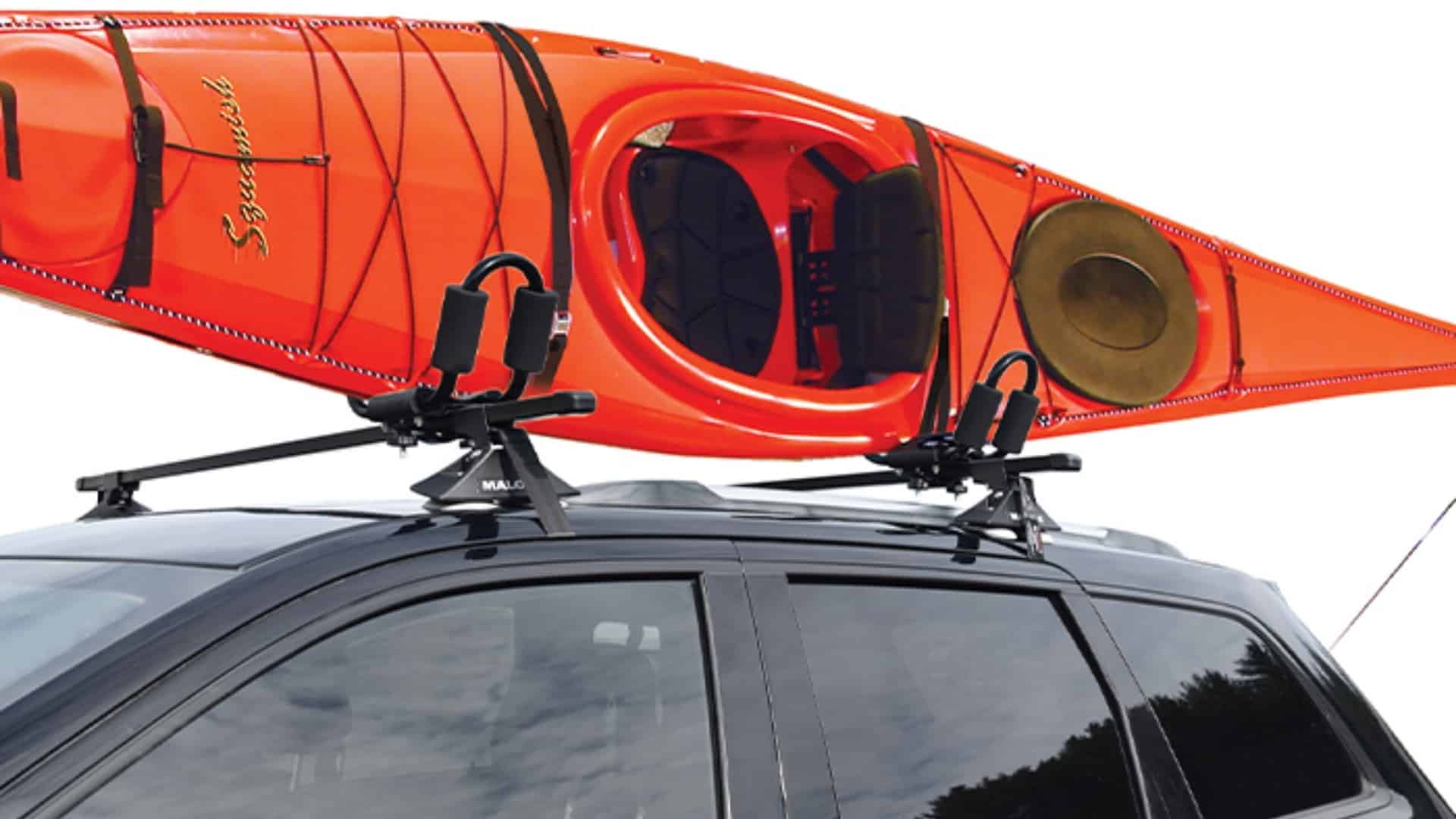
The Malone VersaRail turns a bare roof into a stable platform for carrying gear. Twin cup vacuum towers with silicon pads attach using strong straps that go through your car’s doors.
The square steel crossbars come in 50 or 58-inch lengths and hold up to 135 pounds.
Key Features
- The twin cup vacuum towers and silicon pads grip your bare roof securely.
- The square crossbars fit most bike, boat, and cargo accessories on the market.
- The corrosion-resistant coating on the steel bars prevents rust over time.
- The included wrench means no extra tools are needed for installation.
| Pros | Cons |
|---|---|
| Fits any car with a bare roof | Straps may block side curtain airbags |
| Crossbars are 50 or 58 inches long | For temporary use only, remove when done |
| A wrench is included for installation | Not safe for rooftop tents |
10. Yakima EasyTop
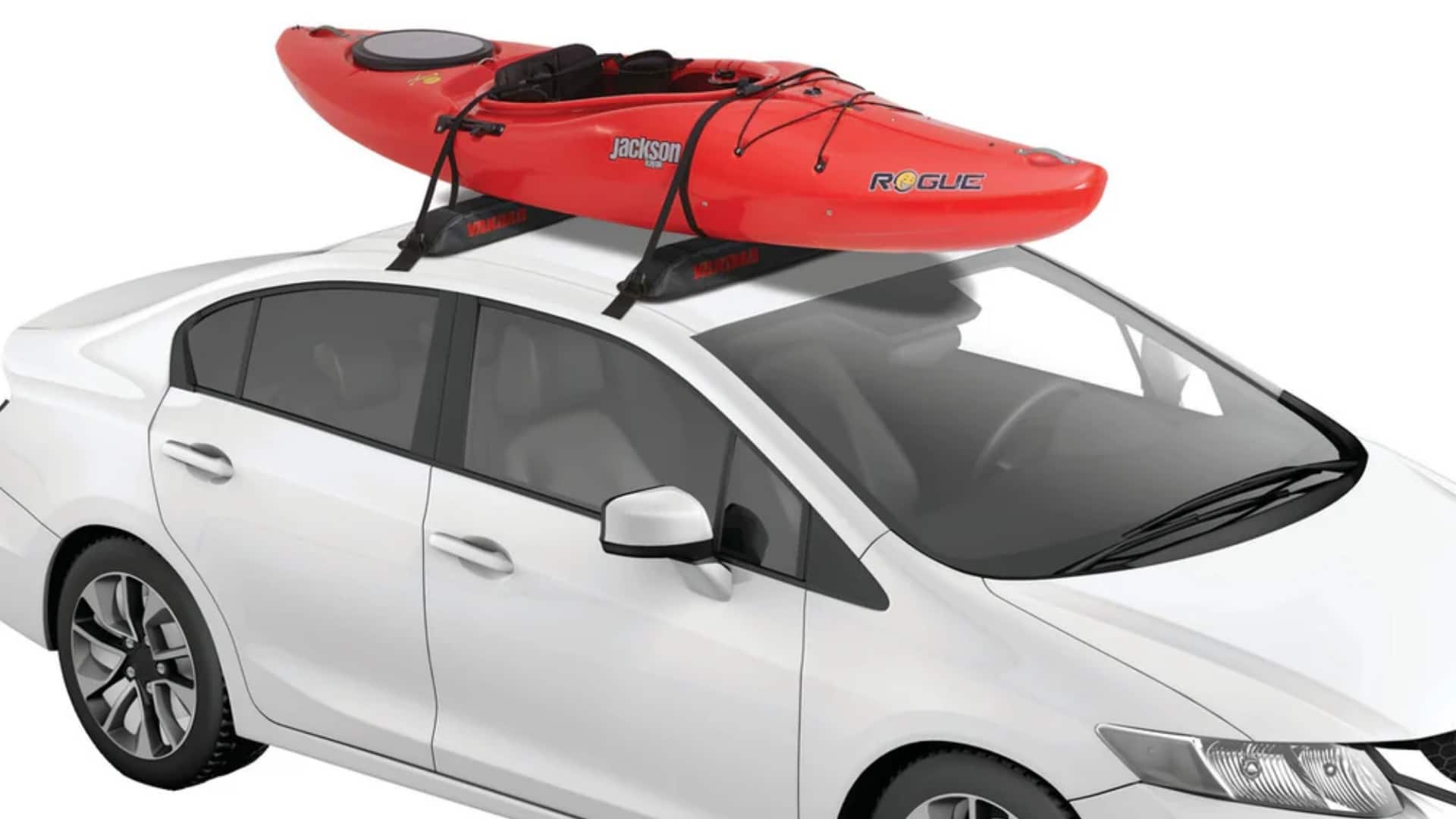
The Yakima EasyTop is an instant temporary roof rack that straps onto almost any vehicle. You simply loop the straps through your door frames and buckle them up for a secure fit.
Thick padding protects both your car and your gear, and the whole system installs in just minutes.
Key Features
- The rack installs in minutes by looping straps through your door frames and buckling.
- The thick padding protects your vehicle’s roof and your gear from scratches.
- The double-latching buckle provides extra security for your load.
- You can carry up to 80 pounds of long, flat gear, such as skis, boats, or surfboards.
| Pros | Cons |
|---|---|
| Fits almost any vehicle with door frames | Temporary use only, not a permanent rack |
| Easy to bring for rental cars or trips | The load limit is 80 pounds maximum |
| Simple design with no tools needed | May not fit vehicles with frameless doors |
11. Thule Evo Clamp System
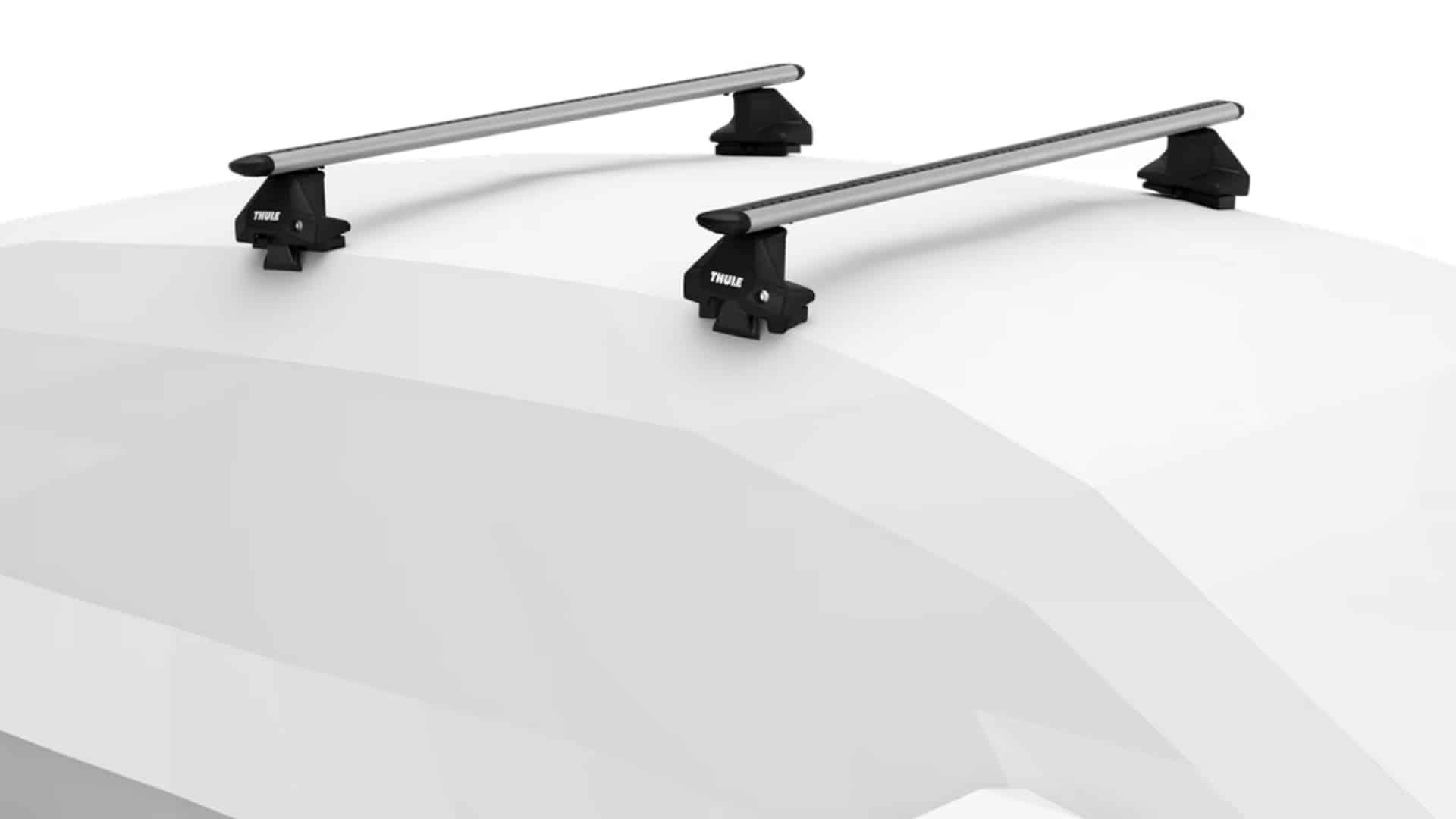
The Thule Evo Clamp is a set of four feet that attach to vehicles without existing roof rack attachment points.
Patented clamping technology secures the rack firmly to your car. An ergonomic torque-limiter key clicks when the rack is tightened securely, so no extra tools are needed for installation.
Key Features
- The patented clamping technology secures the rack to vehicles without factory attachment points.
- The ergonomic torque limiter key clicks when the rack is properly and safely secured.
- The quick assembly uses click-in mounting brackets, requiring no additional tools.
- The feet work with Thule WingBar, AeroBlade, SquareBar, and ProBar crossbars.
| Pros | Cons |
|---|---|
| Holds up to 165 pounds of gear | Only works with Thule Evo system crossbars |
| Easy installation with click-in brackets | Locks are sold separately |
| Torque limiter prevents over-tightening | Feet alone cost over $200 without bars |
12. SeaSucker Monkey Bars
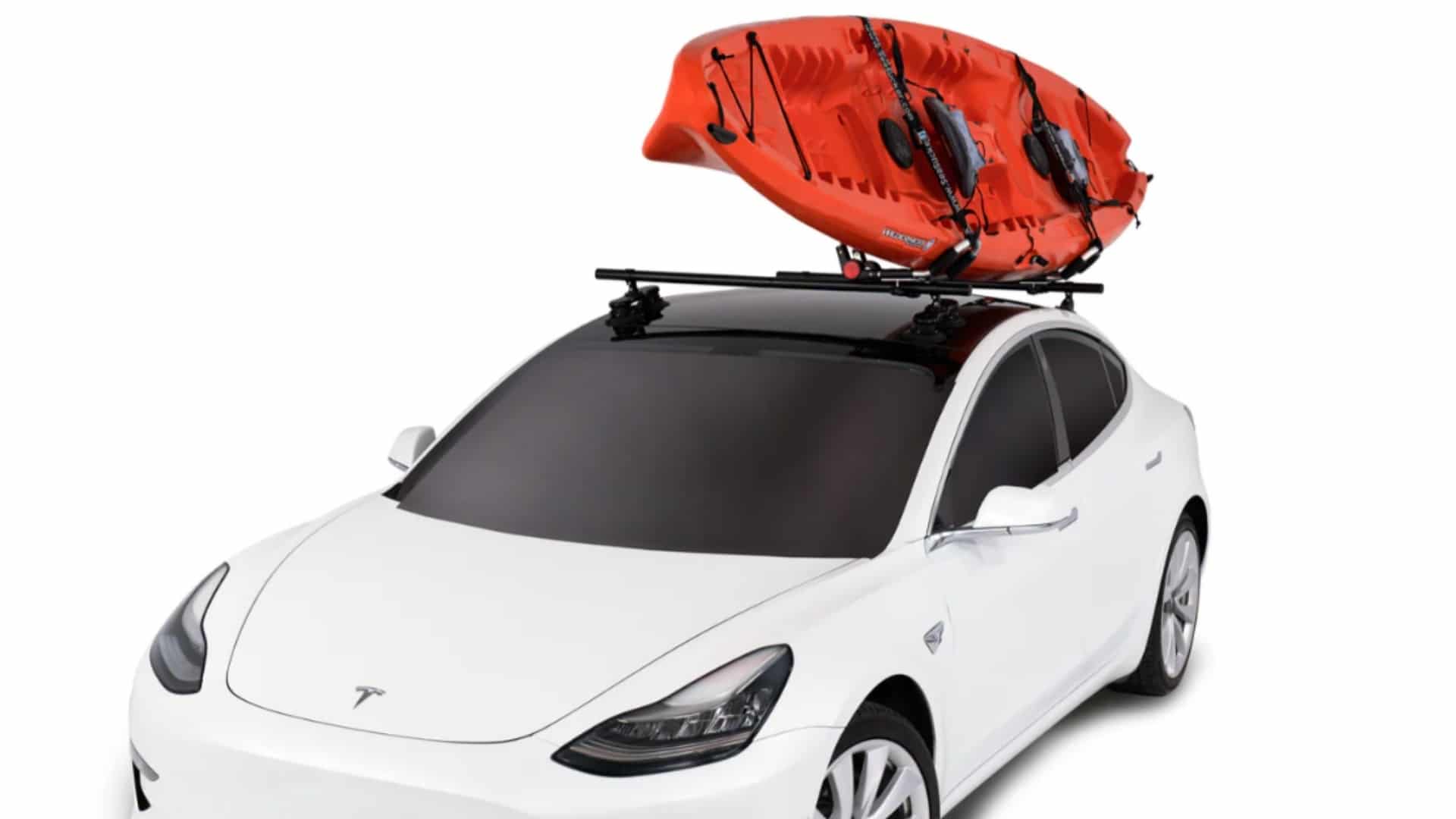
The SeaSucker Monkey Bars use heavy-duty suction cups to attach to any smooth, flat roof. The vacuum mounts have an orange indicator band that shows when they need repumping.
Each 4.5-inch cup has a pull strength of 120 pounds, and the bars sit about 5.5 inches off your roof.
Key Features
- The vacuum mounts attach to any smooth, flat roof without needing factory rails or crossbars.
- The orange indicator band warns you when a cup is losing vacuum and needs to be repumped.
- The non-marking rubber pads will not scratch or leave marks on your car’s paint.
- The 1.325-inch diameter crossbars work with most other brand’s accessories.
| Pros | Cons |
|---|---|
| Fits any car with a smooth roof surface | Must check and repump cups regularly |
| Removes completely with no permanent parts | Not recommended for wrapped or vinyl roofs |
| Made in the USA with a lifetime warranty | Cold weather can freeze cups to the roof |
13. Malone AirFlow2 Crossbars
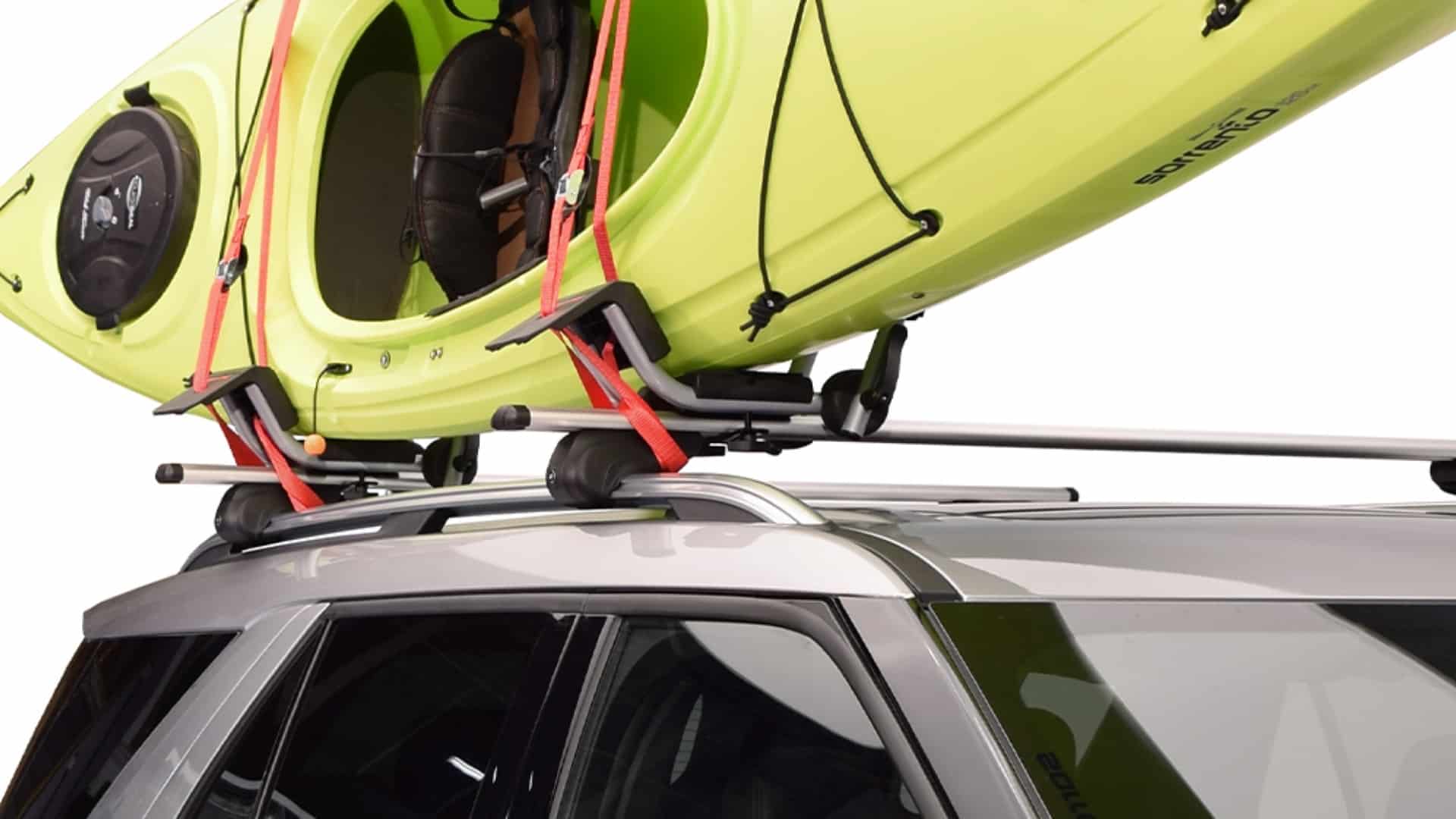
The Malone AirFlow2 is a complete crossbar system for vehicles with factory-raised side rails. The aerodynamic aluminum bars reduce wind noise and have integrated T-slots for attaching accessories.
Built-in key locks secure the towers to your vehicle, and the system holds up to 165 pounds.
Key Features
- The aerodynamic bar shape helps create a quiet roof rack system while driving.
- The integrated T-slots make it easy to attach most accessories (except bike carriers).
- The built-in key locks protect the rack from opportunistic theft when parked.
- The double-walled aluminum construction is non-corrosive and built to last.
| Pros | Cons |
|---|---|
| Includes locks and keys for security | T-slots do not work with bike carriers |
| Comes with free Aero Rack Pads (limited time) | Only fits vehicles with raised factory side rails |
| Lightweight aluminum will not rust | Crossbars extend past towers for more space |
The right setup depends on how often you carry your kayak, your travel needs, and your SUV’s roof capacity. A properly fitted rack can make loading easier and keep the kayak secure during travel.
How to Load a Kayak on an SUV by Yourself?
Loading a kayak alone becomes much easier when you use the right kayak lifting technique.
One simple method is rear loading, where you place the front of the kayak on the back of the SUV and slide it forward onto the rack. The side-loading method works well if you have enough space beside the vehicle.
Some people also use a kayak loading system or load-assist racks to reduce lifting effort, especially for taller SUVs.
To protect the car roof from scratches, place a towel, foam pad, or protective mat where the kayak touches the vehicle. Always secure the kayak properly before driving to keep it stable on the road.
Common Kayak Transport Mistakes for SUVs
Transporting a kayak on an SUV may seem simple, but small mistakes can lead to damage or unsafe driving conditions. Using the right setup and following basic kayak roof transport tips can help protect both your vehicle and your kayak during travel.
- Overtightening Straps: Pulling kayak tie-down straps too tight can bend the kayak or damage the hull over time.
- Ignoring Weight Limits: Carrying too much weight on the roof can stress the rack system and compromise driving stability.
- Wrong Crossbar Spacing: Crossbars spaced too close together may not properly support the kayak during transport.
- Forgetting Bow and Stern Tie-Downs: Extra front and rear straps help reduce kayak movement, especially during highway driving or windy conditions.
- Improper Kayak Positioning: A poorly positioned kayak can shift while in transit, increasing wind resistance on the road.
Safe kayak transportation starts with a secure rack setup and properly tightened straps. Taking a few extra minutes to check everything before driving can help prevent accidents and keep the kayak stable on the roof.
Final Thoughts
Choosing the best kayak rack for SUVs depends on your roof setup, kayak size, budget, and how often you travel.
Some people prefer lightweight temporary systems, while others need heavy-duty crossbars for regular highway use. A well-fitted rack can make loading safer, reduce movement during transport, and help protect your kayak from damage.
Taking time to compare rack styles and features can help you avoid common problems later.
If you already use a kayak rack on your SUV, share your experience, favorite setup, or tips in the comments to help other readers find the right option.
Frequently Asked Questions
Are Inflatable Kayak Roof Racks Safe for Highway Driving?
Inflatable roof racks can work safely for short to moderate highway trips when installed correctly. Proper strap tension and bow and stern tie-downs help reduce movement during driving.
Do Kayak Roof Racks Affect Gas Mileage?
Kayak roof racks can slightly reduce fuel efficiency due to increased wind resistance. Low-profile and aerodynamic crossbars usually create less drag during highway driving.
Is a J-Style or Saddle Rack Better for Long Trips?
Saddle-style racks usually provide better support and stability for long-distance travel, especially with heavier kayaks. J-style racks save roof space and work well for smaller recreational kayaks.