
I’ve spent enough seasons on the water, wrenching on both inboard and outboard setups, to know this decision isn’t as simple as picking a side.
The inboard vs outboard question comes up every time I talk to someone shopping for a new boat, and for good reason.
Every boater has a different priority. Some care about smooth handling on the water. Others want quick repairs and easy servicing.
A few just want something that fits their budget without extra headaches. In my experience, engine choice shapes all of that, and getting it wrong can mean years of frustration or unexpected repair bills.
Weather, water type, and how you actually use the boat all play a role too. Before locking in a decision, it helps to understand what each option offers, what it costs over time, and where the real tradeoffs sit.
Inboard vs Outboard at a Quick Glance
Both inboard and outboard motors have unique benefits depending on your boating needs. This comparison highlights key differences in design, maintenance, performance, and ownership costs.
| Feature | Inboard Motor | Outboard Motor |
|---|---|---|
| Engine location | Installed inside the boat hull | Mounted outside on the transom |
| Best for | Watersports, wake boats, and larger vessels | Fishing boats, pontoons, and recreational cruising |
| Maintenance | Requires more effort due to limited engine access | Easier servicing with accessible components |
| Fuel efficiency | Performs well during steady cruising speeds | Modern models offer improved fuel economy |
| Steering | Uses a separate rudder or drive system | Steering is controlled by turning the engine |
| Replacement | More complex and time-consuming | Easier to remove and replace |
| Upfront cost | Often lower sticker price, higher repair bills later | Often 2-4% higher sticker price, cheaper to own long-term |
| Typical repower cost | $20,000-$70,000+ for diesel inboard replacement | $15,000-$30,000+ installed for 150-300 hp |
Choosing between an inboard and outboard motor depends on how you use your boat, your maintenance preferences, and your long-term ownership goals.
What is an Inboard Motor?
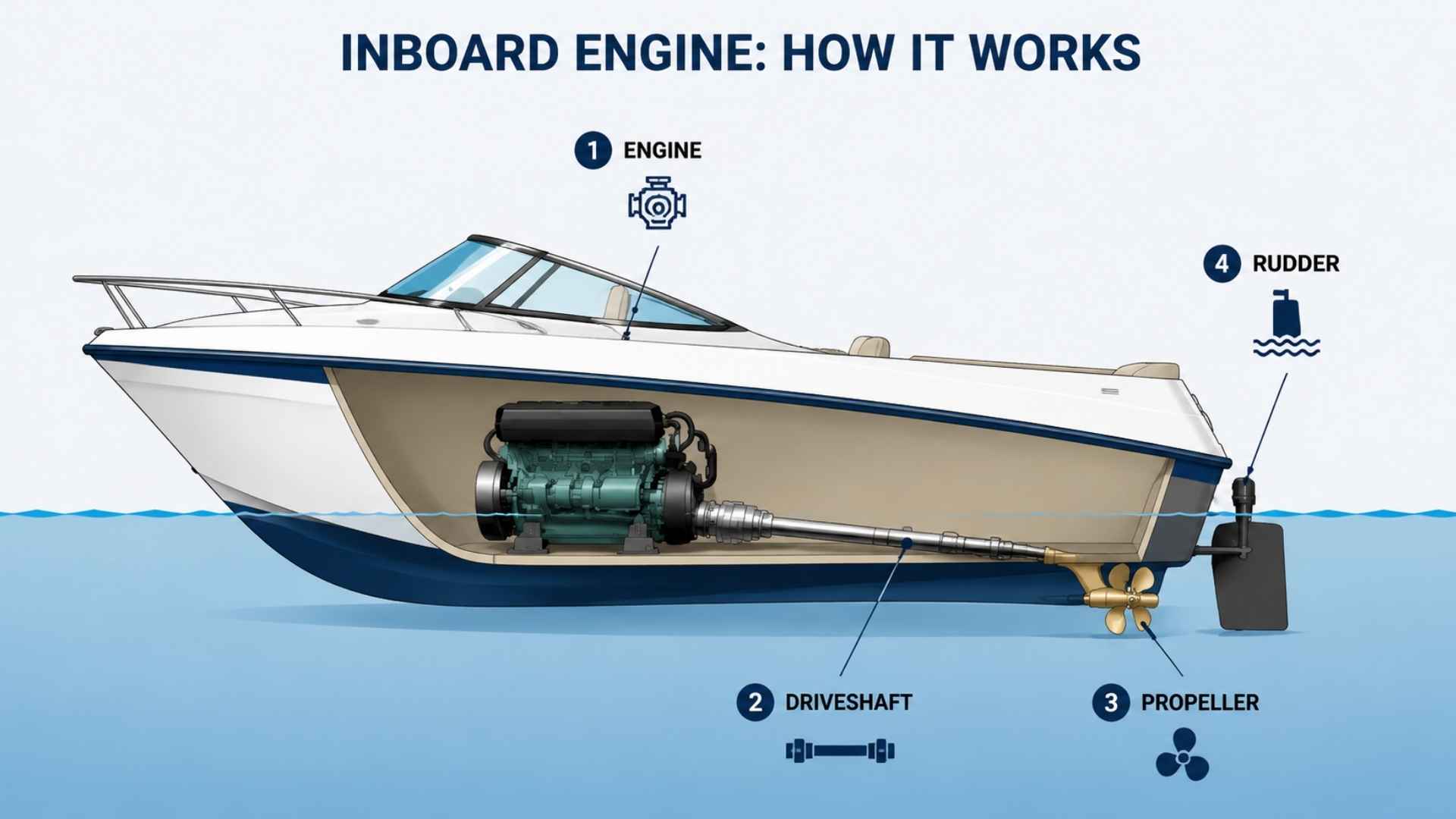
An inboard motor is mounted inside the hull rather than outside it. Power is transferred by a driveshaft from the engine to a propeller located below the boat.
Most family boats with this setup actually run a sterndrive, sometimes called an inboard/outdrive or I/O. This pairs an automotive-style engine inside the hull with a steerable, trimmable drive unit mounted at the stern.
Dedicated tow boats for wakeboarding and skiing use a true inboard instead, with the propeller fixed under the hull and a separate rudder for steering.
Inboard and sterndrive systems are popular in wake boats, ski boats, and larger cruisers for their smooth handling and balanced performance.
The inboard engine has a simple power transfer system:
- Engine placement: The engine is housed inside the boat, typically in a dedicated compartment near the center or rear.
- Power transfer: A driveshaft connects the engine to the propeller, which spins underwater to move the boat forward.
- Steering control: On a true inboard, the propeller stays fixed while a separate rudder changes direction. On a sterndrive, the entire outdrive unit pivots to steer.
What Is an Outboard Motor?
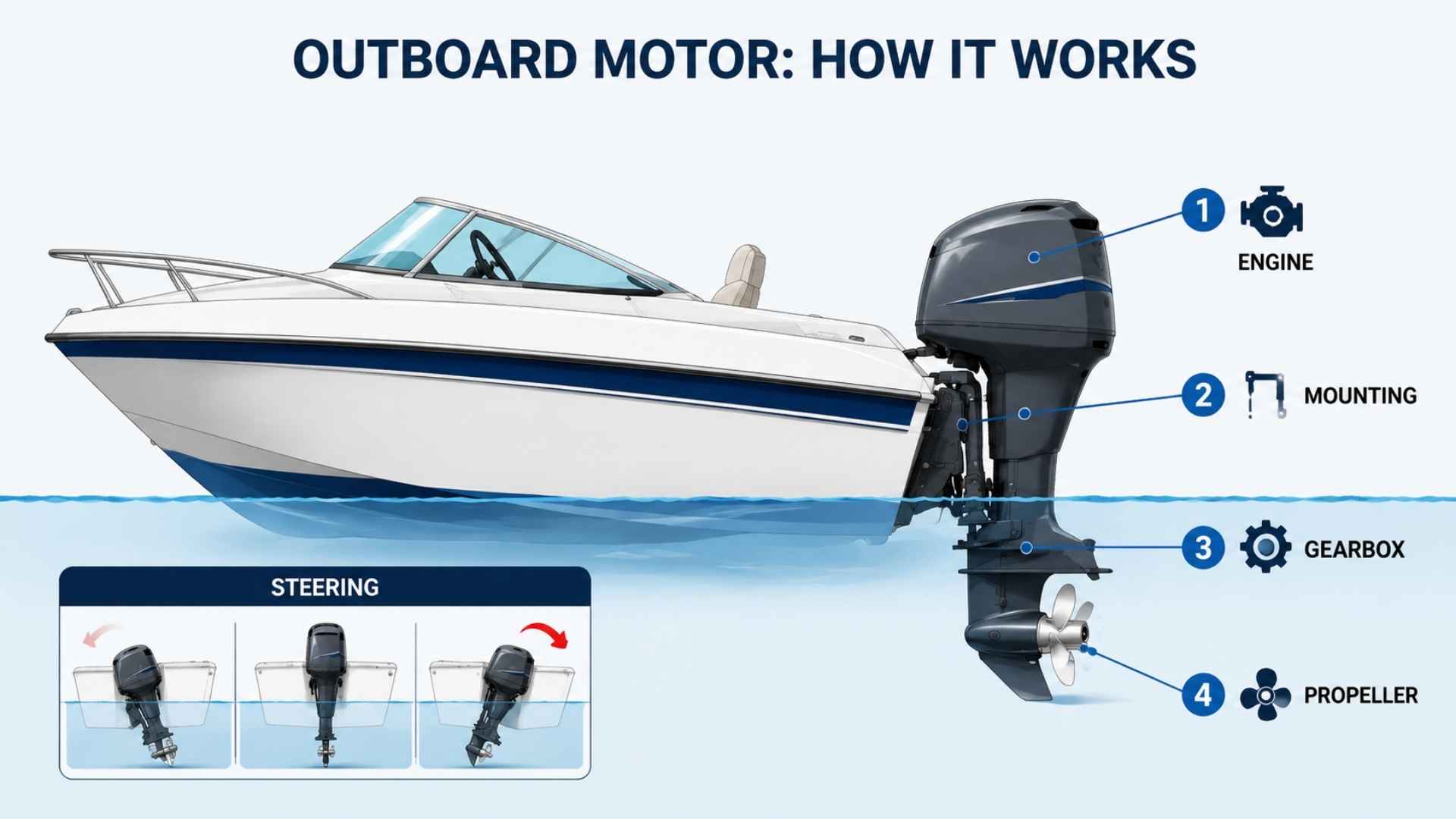
An outboard motor is a self-contained propulsion system attached to the outside of a boat, usually mounted to the transom at the stern.
It combines the engine, gearbox, and propeller into one unit, which is why I find it simpler to install, maintain, and replace than a sterndrive.
Outboard motors are popular on fishing boats, pontoons, and recreational boats because of their versatility and simple design.
An outboard motor is a self-contained unit that provides both power and steering:
- Engine placement: The engine sits outside the boat hull, attached directly to the transom at the rear.
- Power transfer: The engine sends power through the gearbox to spin the propeller, which pushes water backward to move the boat forward.
- Steering control: The entire motor turns left or right, directing the propeller and controlling the boat’s movement.
- Modern options: Newer outboard motors include fuel-efficient four-stroke engines and electric models designed for quieter operation and lower emissions.
Inboard vs Outboard: Key Differences
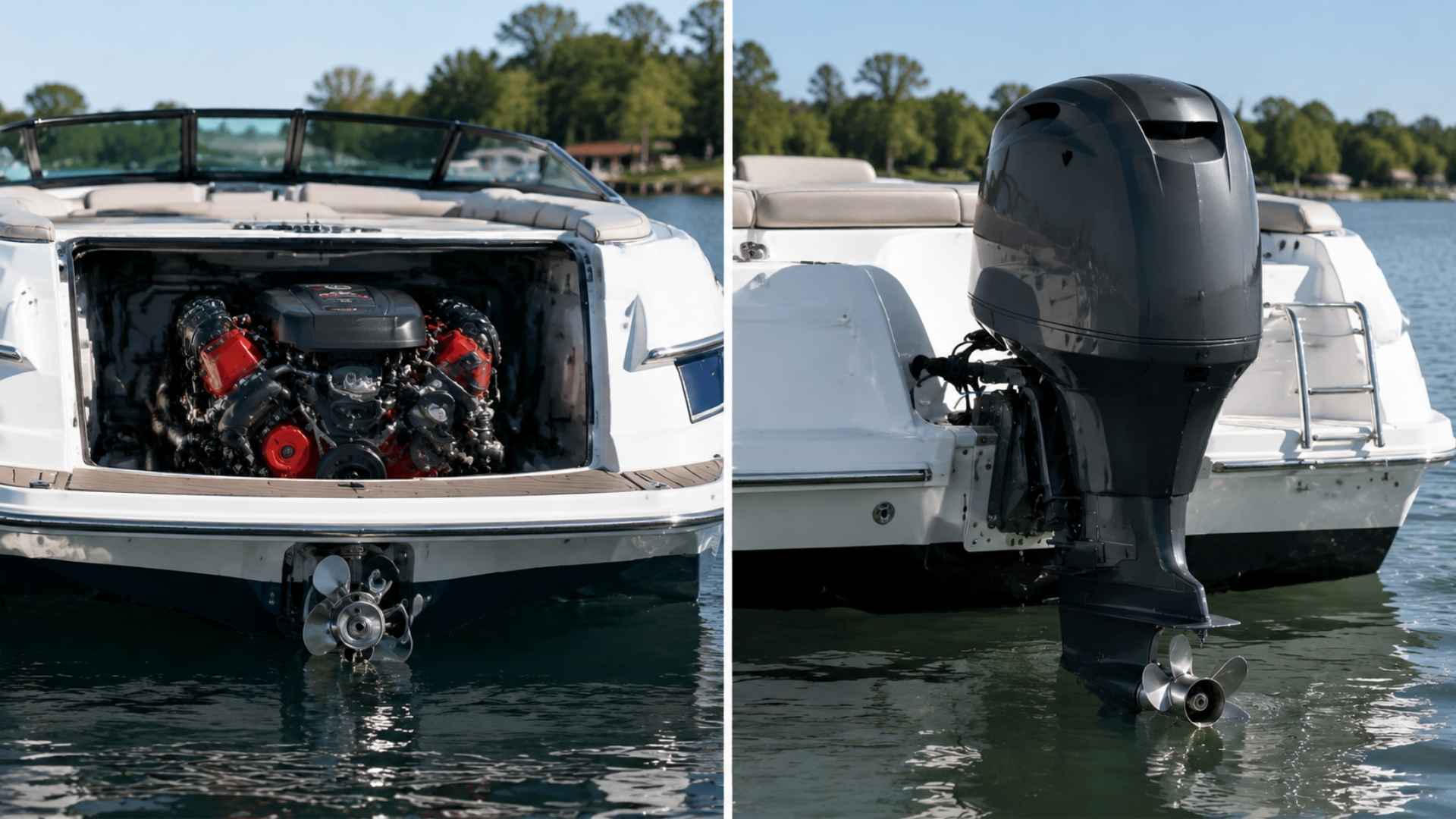
Choosing between an inboard and outboard motor comes down to how you use your boat. Performance, maintenance, fuel costs, and available space all affect which setup works best.
1. Performance and Handling
Inboard motors provide balanced handling because the engine sits lower in the boat, improving weight distribution.
I’ve found they’re a clear favorite for wakeboarding and skiing because the fixed prop position under the hull creates a cleaner, safer wake for riders in the water.
Outboard motors are favored for speed and flexibility. They offer fast acceleration, high-horsepower options, and are easier to upgrade since you can swap the entire motor when necessary.
Example: A wakeboard boat owner might prefer an inboard, while a fishing boat owner may choose an outboard for better maneuverability around docks and shallow water.
2. Maintenance and Repairs
Maintenance is one of the main differences between these two types of motors, and it’s the one I get asked about most.
Inboard and sterndrive engines are harder to reach because they sit inside the hull, which increases both repair time and labor cost.
Outboard motors are easier to access for routine servicing, like oil changes and inspections. You can also tilt them clear of the water, which helps protect the motor from corrosion between trips.
Ownership insight: Most boat owners I’ve talked to prefer outboards specifically because routine maintenance is simpler and something they can often do themselves.
3. Fuel Efficiency and Operating Costs
Fuel efficiency depends on engine size, boat design, and driving habits, not just motor type.
Modern four-stroke outboards offer better fuel economy and provide efficient performance for most recreational boats, and if you’re deciding between engine designs on the smaller end, it’s worth understanding the 2-stroke and 4-stroke tradeoffs before you commit to a motor.
Inboards can also run efficiently, especially during consistent cruising and watersports activities that call for steady power.
Where the real cost gap shows up is in annual service. Routine outboard upkeep, an oil and filter change, gear lube, spark plugs every couple of seasons, and a water pump impeller every 200 to 300 hours, typically runs $300 to $700 a year at a dealer, or less if you handle it yourself. Sterndrive service tends to run $700 to $1,500 a year because of the added bellows, drive lube, and manifold work that a true inboard or outboard simply doesn’t have.
The bigger number to watch is the repower bill down the line.
A gas outboard repower typically runs $15,000 to $30,000 installed for a 150 to 300 hp setup, while replacing a diesel inboard can run anywhere from $20,000 to $70,000 depending on the boat.
I always tell people to divide that number by the years of engine life they expect left, so it’s easier to compare against a competing listing honestly.
Disclaimer: Prices above are general estimates based on typical market ranges and can vary by region, engine brand, horsepower, and dealer labor rates. Always get a written quote from a licensed marine mechanic before budgeting for service or a repower.
4. Boat Space and Design
Inboard motors keep the rear of the boat clear, creating a cleaner layout with more space for seating and watersports setups. This makes them popular for boats designed around passenger comfort and activities.
Outboard motors free up interior space because the engine sits outside the hull.
That extra room is also where anglers usually mount a second power source, and choosing the best trolling motor battery for that setup depends on the same space and weight tradeoffs you’re already balancing with the main engine.
Outboards also make storage and repairs easier to access, which is part of why they’re such a practical choice for smaller boats.
Example: A family cruising boat may benefit from an outboard design, while a dedicated wake boat may work better with an inboard setup.
5. Durability and Long-Term Reliability
Engine hours matter more than engine type when it comes to durability, and this is where I’d steer you away from vague generalizations.
A well-maintained outboard commonly reaches 1,500 to 3,000-plus hours before it needs major mechanical work.
Inboard and sterndrive engines commonly land in the 1,500 to 2,000-hour range on a solid maintenance schedule, with sterndrives often needing significant service closer to the 1,000 to 1,500-hour mark because of the added complexity of the drive system.
The real threat to any marine engine’s lifespan isn’t the hours themselves; it’s what happens when maintenance gets skipped.
On outboards, a missed water pump impeller change is the single most common cause of a cooked powerhead. On sterndrives, deferred bellows and U-joint service is what usually turns a routine bill into a full outdrive rebuild.
The EPA’s marine engine emissions standards are also part of why newer four-stroke outboards run cleaner and often last longer than older two-stroke designs.
Inboard motors sit protected inside the hull, which shields them from some outside exposure, but repairs take longer and cost more when problems do occur.
Outboard motors are built to handle harsh marine environments and are easier to protect with proper flushing and storage; their simpler design also makes it easier to replace parts or upgrade the motor entirely.
Example: A boater who frequently runs saltwater may prefer an outboard because it’s easier to rinse, service, and replace when the time comes.
Repowering: Can You Switch From Inboard to Outboard?
Yes, and it’s a question I hear often from owners of aging inboard boats. Converting from an inboard to an outboard setup is possible, but it starts with a thorough inspection of the transom to confirm it can structurally support the new mounting.
Depending on the boat’s size, the outdated inboard system you’re replacing, and the outboard motor and rigging you choose, a full inboard-to-outboard conversion typically runs $25,000 to $40,000. That’s a significant investment, so compare it against simply replacing the boat if the hull itself is showing its age.
Most owners I’d point toward this route are the ones dealing with a failing inboard that’s already facing a $20,000-plus replacement bill anyway, since the switch buys better fuel economy and dramatically simpler maintenance going forward.
One thing people forget: a major repower can trigger paperwork with your state, so it’s worth checking your boat registration requirements again after the swap.
Inboard vs Outboard for Different Types of Boating
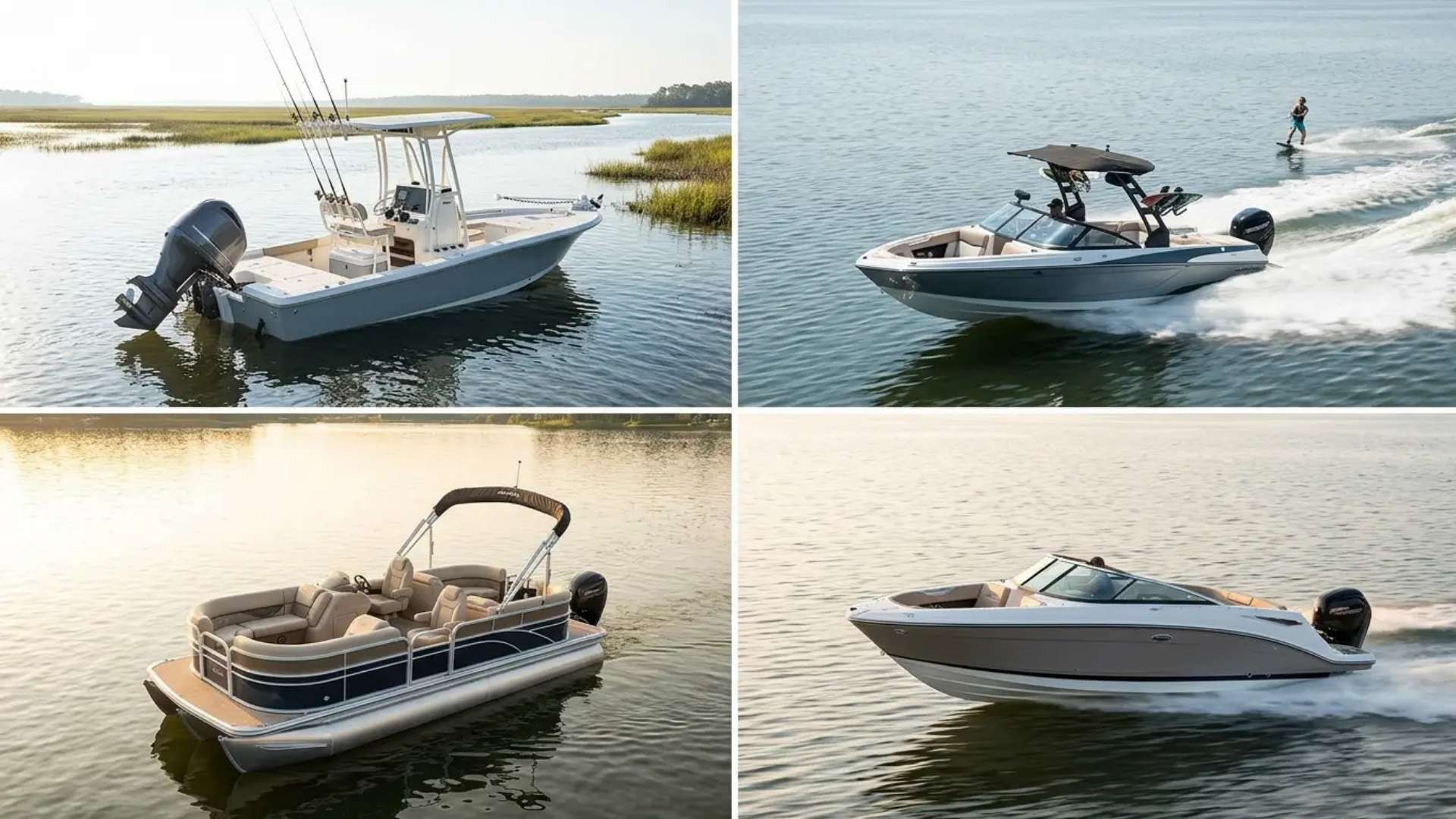
The ideal boat motor depends on your main activity, water conditions, and performance expectations. Different boating styles call for different levels of power, control, maintenance, and flexibility.
1. Fishing Boats
Recommended Motor: Outboard Motor
Outboard motors are popular for fishing boats because they handle shallow water well and are easier to maintain. Their simple design allows quick repairs during long trips, while easy tilting helps protect the motor in different water environments.
2. Wakeboarding and Skiing Boats
Recommended Motor: Inboard Motor
Inboard motors are preferred for watersports because they provide better weight balance and smoother handling. Their design creates controlled wakes and improves rider positioning, making them ideal for wakeboarding, water skiing, and other tow sports.
3. Pontoon Boats
Recommended Motor: Outboard Motor
Outboard motors work well with pontoons because they offer reliable performance without taking up interior space. They’re easier to service, provide flexible power options, and leave more room for seating, storage, and comfortable family cruising.
4. Cruising Boats
Recommended Motor: Depends on Boat Size
The best choice for cruising depends on the boat’s size and intended use. Smaller cruisers often benefit from outboards because they’re easier to maintain, while larger boats may use inboards or sterndrives for smoother rides, better balance, and long-distance comfort.
How to Maintain Your Boat Motor for a Longer Life
Regular maintenance helps prevent engine failures, improves performance, and extends your boat motor’s lifespan. Simple checks and routine care can reduce repair costs over time.
- Change Engine Oil Regularly: Replace oil at recommended intervals to keep engine parts lubricated and prevent unnecessary wear.
- Flush the Engine After Saltwater Use: Rinse the motor after saltwater trips to remove salt buildup and reduce corrosion damage.
- Check the Cooling System: Inspect cooling components regularly to prevent overheating and keep the engine running efficiently, following the U.S. Coast Guard’s boating safety guidance for routine engine checks.
- Inspect the Fuel System: Check fuel lines, filters, and tanks to avoid blockages and maintain smooth engine performance.
- Store the Motor Properly During Winter: Prepare the engine before storage by draining fluids and following solid boat storage practices to protect parts from moisture damage.
A well-maintained boat motor delivers better performance, fewer unexpected repairs, and a longer service life. Following these steps helps protect your investment and keeps every trip on the water enjoyable.
Conclusion
Choosing between an inboard and an outboard motor depends on how you intend to use your boat. Inboard and sterndrive motors provide smooth handling and improved balance, which makes them ideal for wakeboarding, skiing, and other watersports.
Outboard motors, on the other hand, are known for being easy to maintain and repair.
They also offer more flexibility, making them suitable for fishing, pontoons, and family cruising, generally at a lower cost of ownership over time even when the sticker price runs slightly higher.
If I had to boil it down to one rule: match the motor to your primary activity first, then run the real numbers on annual service and eventual repower cost before you sign anything.
The best choice for you will depend on your budget, the type of boating you do most, and how much maintenance you want to take on yourself. Which motor type fits your boating style best?
Share your thoughts in the comments below, or keep this page handy the next time you compare boat setups.
Frequently Asked Questions
Is an Inboard Better than an Outboard?
Not exactly. Inboards give you smoother handling and better low-end weight balance for watersports. Outboards are easier to maintain, work better in shallow water, and tend to cost less to own over time despite a higher sticker price.
Do Outboards Last Longer than Inboards?
It’s closer than most people think. A well-maintained outboard commonly reaches 1,500 to 3,000-plus hours, while inboards and sterndrives commonly land around 1,500 to 2,000 hours. Maintenance history matters more than the engine type itself.
Can You Run an Inboard Out of Water?
No. The cooling system relies on water flowing through it, so running it dry causes the engine to overheat fast and can cause serious damage within seconds.
What are Inboard and Outboard in a Ship?
An inboard engine sits inside the hull with a fixed shaft and rudder. An outboard mounts outside the hull as a self-contained, removable unit.
How Much Does It Cost to Switch From an Inboard to an Outboard?
A full inboard-to-outboard conversion typically runs $25,000 to $40,000, depending on the boat’s size, the condition of the transom, and the outboard motor you choose. It’s worth comparing that figure against replacing the boat outright if the hull is also aging.
Are Outboards or Inboards Better for Resale Value?
Outboards generally hold resale value better. They’re easier to repower, cheaper to maintain, and buyers tend to view a fresh outboard as a straightforward upgrade rather than the bigger, more expensive job a sterndrive or inboard replacement involves.