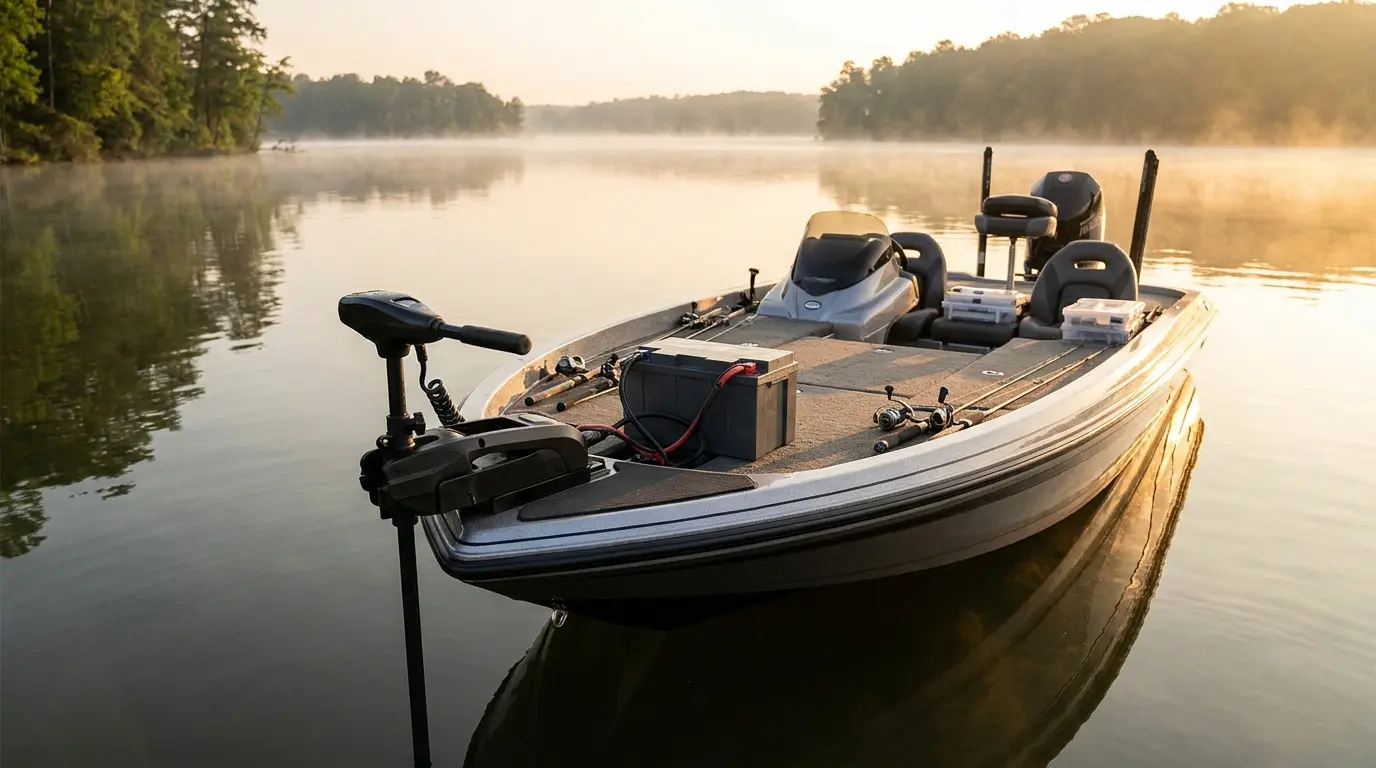
Choosing the best battery for a trolling motor can feel confusing with so many options in the market.
Flooded lead-acid, AGM, gel, and lithium batteries all promise strong performance, but only one type truly fits your boat, motor, and fishing style.
A weak or mismatched battery leads to short trips and lost power right when you need it most. The best lithium battery for trolling motor use offers longer runtime, lighter weight, and steady power all day.
Below, you will find clear comparisons, top picks, and simple sizing tips to help you choose the right battery with confidence.
Why Your Trolling Motor Battery Matters
Your trolling motor pulls a lot of current, especially at higher speeds. A weak or mismatched battery will drain fast, lose power halfway through the day, and wear out quickly.
The right battery keeps steady power flowing so your motor runs at full strength from morning to sunset.
It also affects your boat’s weight, how often you charge, and how many years you get before replacing it.
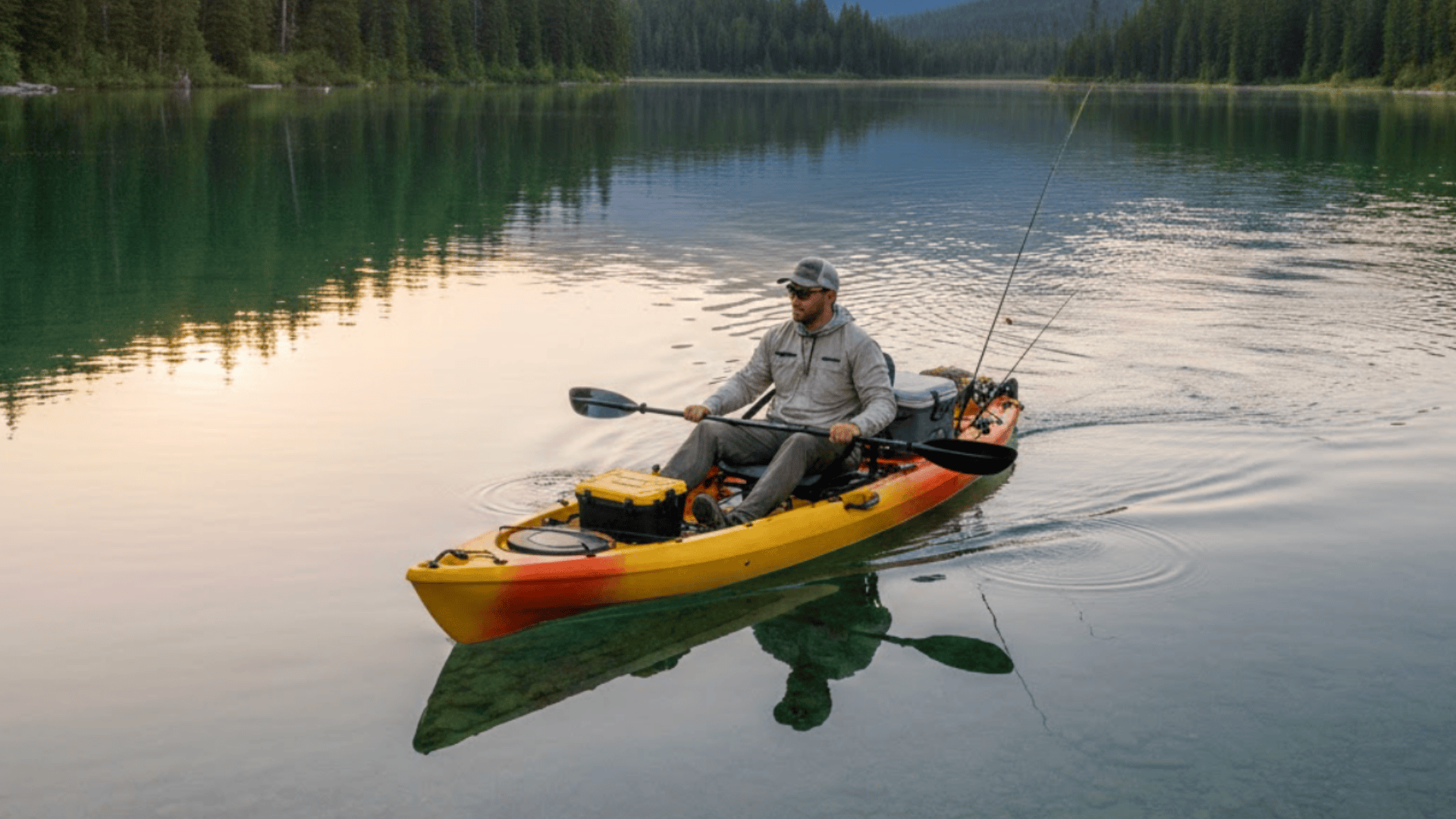
This holds regardless of how kayaks are classified as watercraft, since any motorized setup still needs steady, dependable power to perform well.
Types of Trolling Motor Batteries
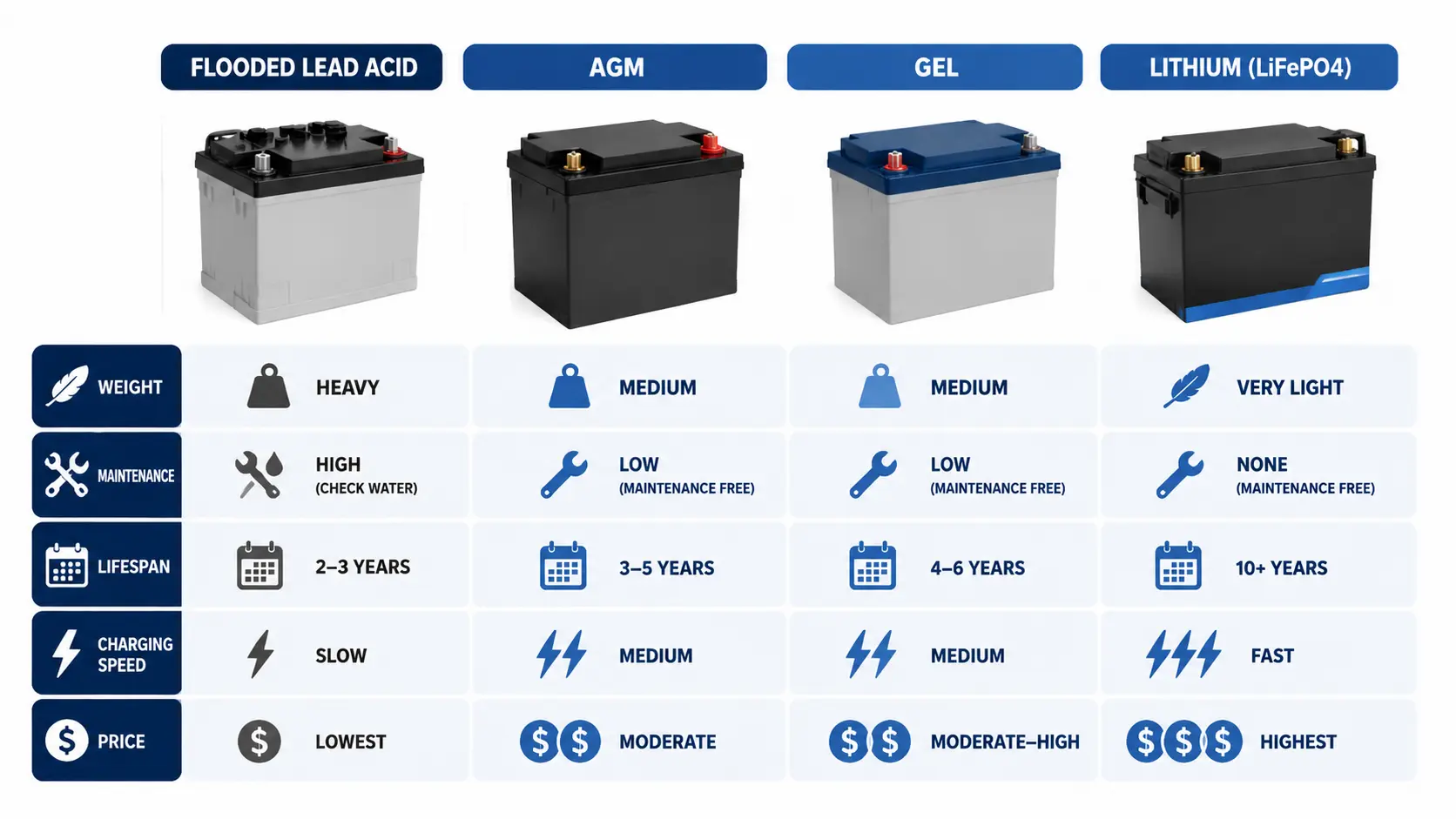
Not every battery delivers the same performance on the water. The right choice depends on your budget, boat setup, and how often you fish.
Flooded Lead Acid
This is the classic deep-cycle battery filled with acid. It is cheap and easy to find at any hardware or auto store.
The downside is that it is heavy, requires regular water top-ups, and does not last as long as newer options. Most flooded batteries last two to three years with steady use.
Best for:
- Budget-conscious anglers who fish occasionally.
- Boats where extra battery weight is not a major concern.
AGM (Absorbed Glass Mat)
AGM batteries hold the acid in a fiberglass mat rather than as a loose liquid. This makes them spill-proof and low-maintenance.
They handle vibration well, charge faster than flooded batteries, and work in any position. They cost more than flooded batteries but usually last a bit longer.
Best for:
- Weekend anglers looking for a reliable, low-maintenance battery.
- Bass boats and jon boats that experience frequent bumps and rough water.
Gel
Gel batteries use a thickened, gel-like electrolyte. They are sealed and maintenance-free like AGM batteries but are more sensitive to overcharging.
They are less common now since AGM and lithium options offer better performance for a similar or lower price.
Best for:
- Boaters who already own a gel-compatible charger.
- Applications where slow, steady power delivery is preferred over high current output.
Lithium (LiFePO4)
Lithium iron phosphate batteries are the newest and best-performing option for trolling motors. They weigh about half as much as lead-acid batteries of the same capacity, hold steady power right up until they are nearly empty, and can be discharged almost fully without damage.
A typical 100 Ah lithium battery weighs around 25 to 30 pounds, while a similar lead-acid battery can weigh 60 pounds or more.
Lithium batteries also charge faster and last far longer, often rated for 3,000 or more charge cycles,s compared to a few hundred for lead-acid.
This weight savings makes a noticeable difference on open-deck kayak setups, where every extra pound affects how the boat handles on the water.
Best for:
- Serious anglers who fish frequently and want the longest battery life.
- Kayaks and small boats where reducing weight improves performance and handling.
Which Battery Type Is Best?
Every battery type has its strengths, and the right choice depends on how you fish and what you want to spend. A quick comparison makes it easier to see where each option stands.
| Battery Type | Lifespan | Weight | Price | Maintenance |
|---|---|---|---|---|
| Flooded Lead Acid | 2-3 years | Heavy | Lowest | Regular water refills |
| AGM | 3-5 years | Heavy | Mid range | None |
| Gel | 3-5 years | Heavy | Mid range | None |
| Lithium (LiFePO4) | 8-10+ years | Light | Highest upfront | None |
A quick comparison only tells part of the story. Here’s where each battery type stands out based on different priorities.
- Lowest budget: Flooded lead-acid batteries such as the EverStart Marine line are the cheapest way to get on the water.
- Best value: AGM batteries strike a fair balance between price, lifespan, and low maintenance.
- Best lifespan: Lithium batteries last three to four times longer than lead-acid batteries, which often makes them cheaper in the long run.
- Best performance: Lithium batteries deliver full power until they are almost depleted, so your trolling motor maintains its strength all day.
- Best for kayak fishing: Lithium wins here too. The lighter weight matters most in a small boat where every pound affects handling and speed.
Your budget, boat size, and fishing frequency should all play a role in the final decision. With the battery types covered, it’s easier to compare the brands and models that offer the best performance in each category.
Best Batteries for Trolling Motors
A battery that works well for one boat may not be the right choice for another. The picks below cover different budgets, boat sizes, and trolling motor setups, making it easier to find one that matches your needs.
Best Overall: MillerTech 12V 135Ah Dual Purpose Lithium
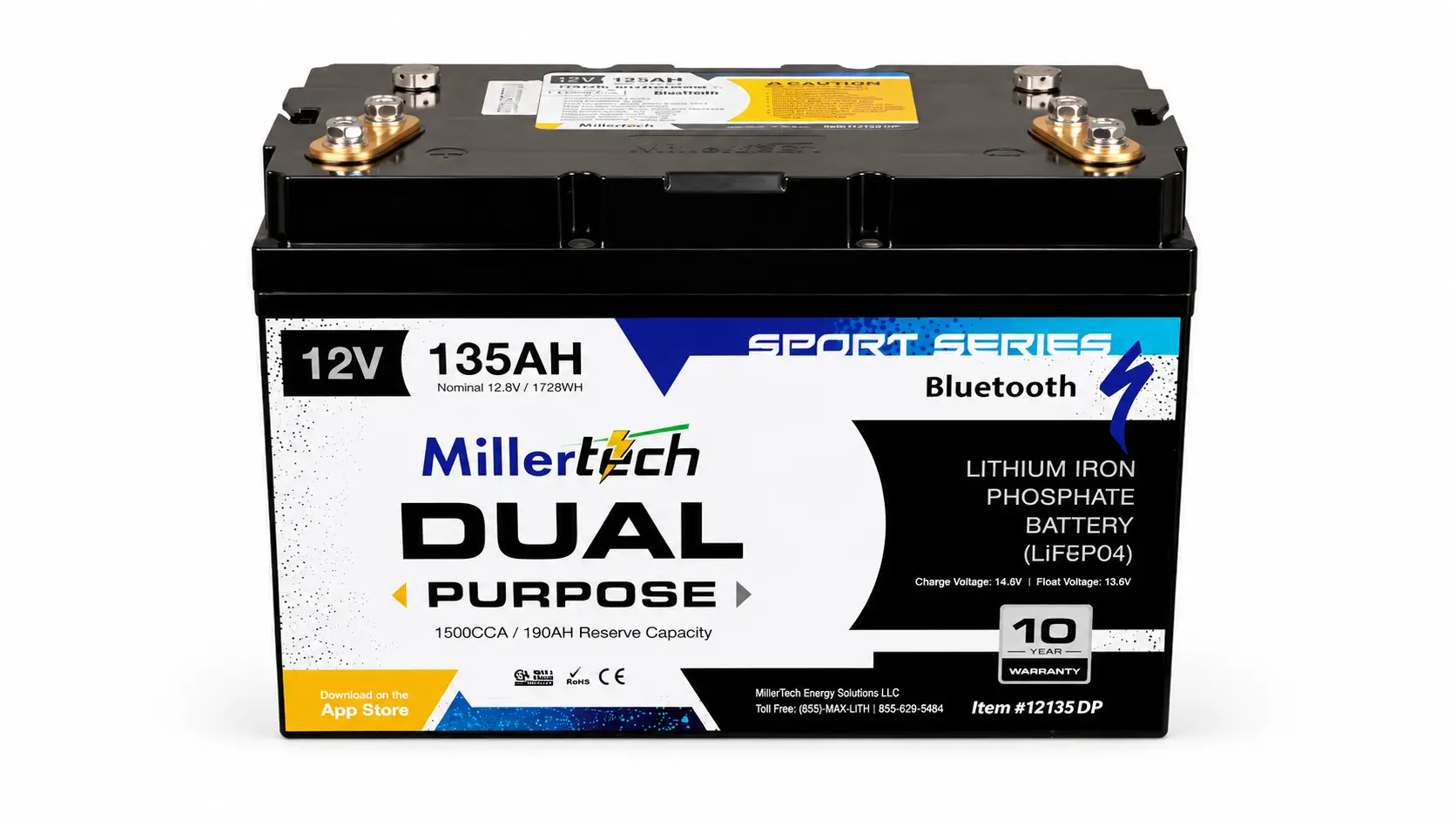
The MillerTech 12V 135Ah Dual Purpose Lithium combines high capacity with the ability to power both your trolling motor and engine starting system. It delivers consistent performance in both hot and cold weather while reducing the number of batteries you need on your boat.
- Best for: Anglers who want a single battery for both starting and trolling-motor duties.
- Why we recommend it: Its large capacity, dual-purpose design, and proven on-the-water performance make it a versatile choice for serious anglers.
| Pros | Cons |
|---|---|
| High 135Ah capacity | Premium price |
| Dual-purpose for starting and trolling motors | Heavier than smaller lithium batteries |
| Performs well in extreme temperatures | Maybe more capacity than casual anglers need |
Best Lithium Battery for Trolling Motor: Dakota Lithium 12V 100Ah
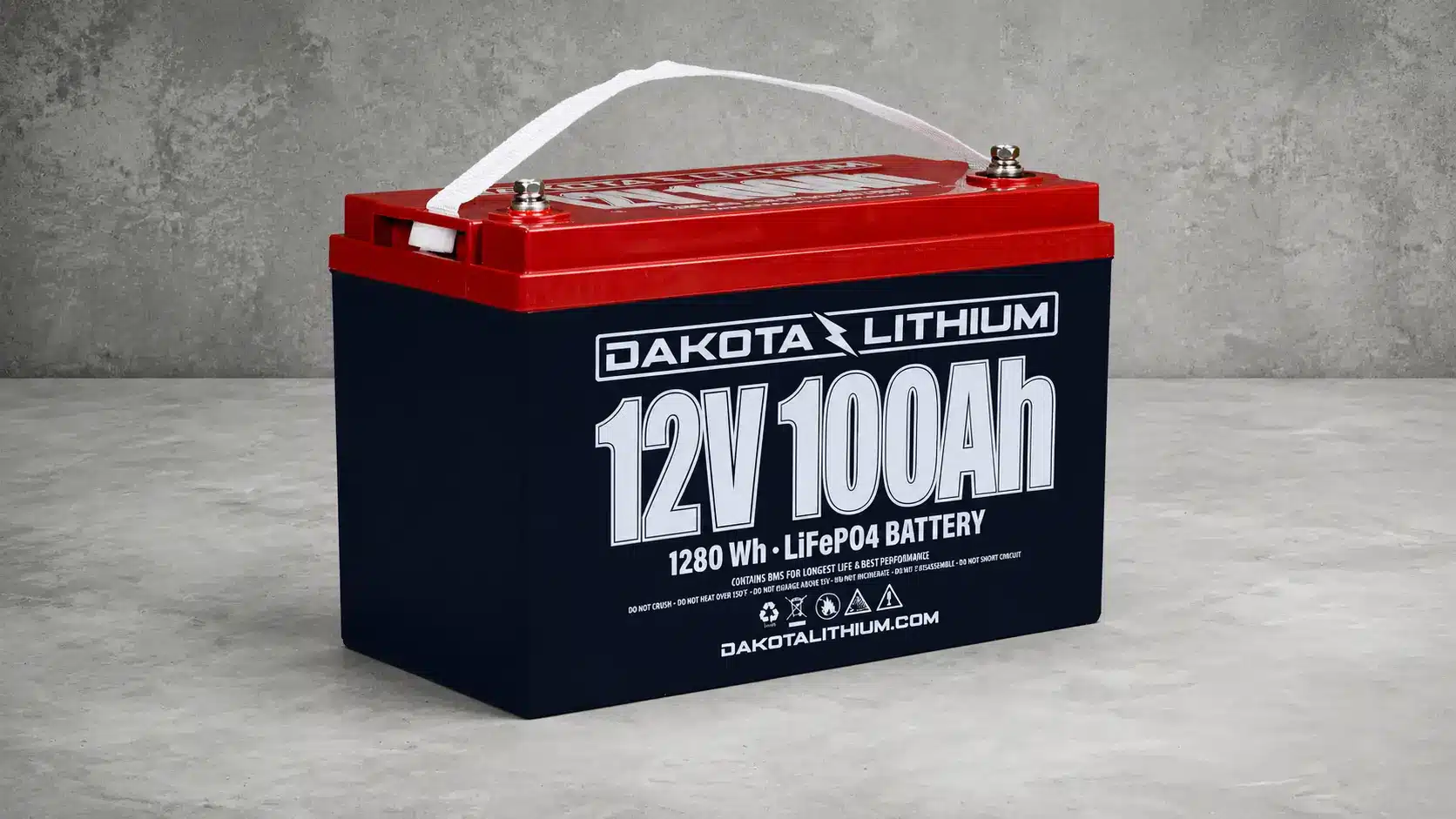
Dakota Lithium is one of the most trusted names in lithium marine batteries. The 12V 100Ah model delivers reliable all-day power, performs well in extreme temperatures, and is backed by an industry-leading warranty.
- Best for: Anglers looking for a premium lithium battery with long-term reliability.
- Why we recommend it: Its excellent reputation, dependable performance, and long warranty make it a worthwhile investment for frequent fishing trips.
| Pros | Cons |
|---|---|
| Industry-leading 11-year warranty | Higher upfront cost |
| Consistent power output | Premium pricing compared to newer brands |
| Excellent performance in hot and cold weather | Bluetooth monitoring is not included on all models |
Best AGM Battery: Optima D34M BlueTop
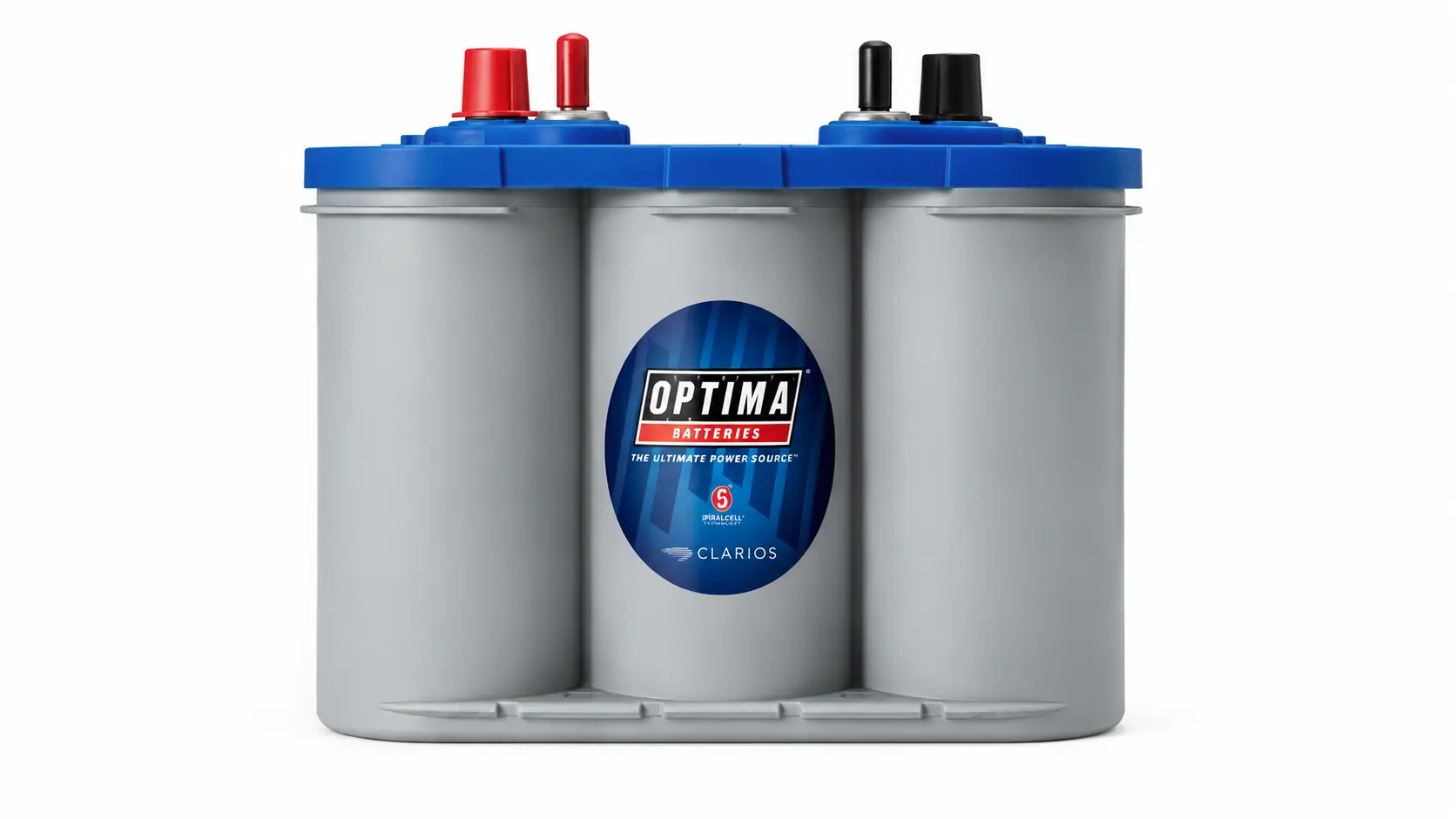
The Optima D34M BlueTop is a premium AGM battery built for dependable deep-cycle performance and strong cranking power. Its sealed design resists vibration and requires virtually no maintenance.
- Best for: Boaters who want AGM reliability without switching to lithium.
- Why we recommend it: It combines excellent durability with dependable performance for both starting and trolling motor applications.
| Pros | Cons |
|---|---|
| Spill-proof, maintenance-free design | Heavier than lithium batteries |
| Excellent vibration resistance | Lower usable capacity than lithium |
| Fast recharge and strong cranking power | Shorter lifespan than LiFePO4 batteries |
Best Budget Battery: EverStart Marine 29DC
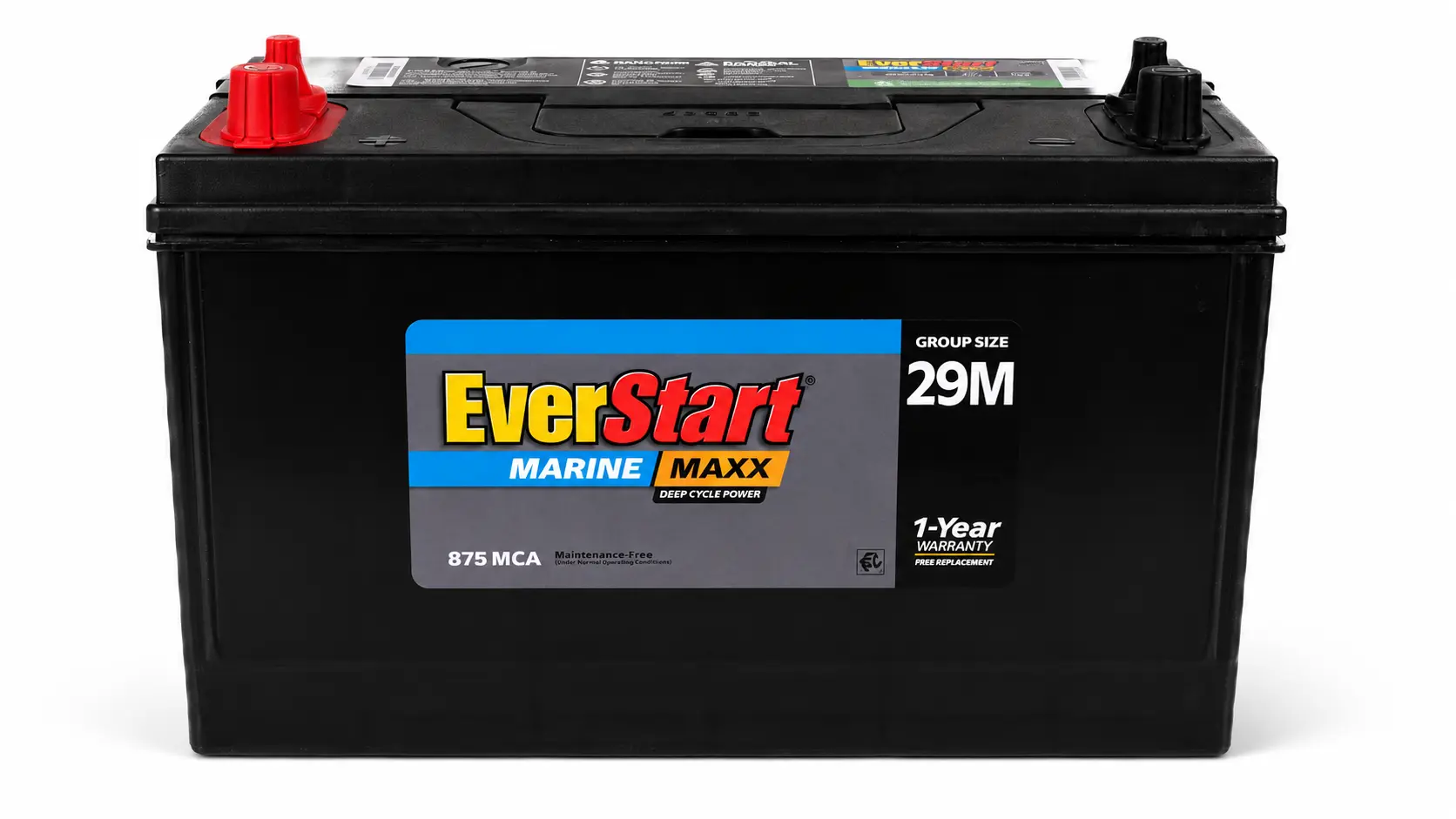
The EverStart Marine 29DC is an affordable flooded deep-cycle battery that’s widely available and easy to replace. It offers dependable performance for casual anglers who don’t want to spend a lot upfront.
- Best for: Budget-conscious anglers and occasional weekend fishing trips.
- Why we recommend it: It provides reliable performance at one of the lowest prices available.
| Pros | Cons |
|---|---|
| Very affordable | Requires regular maintenance |
| Easy to find at Walmart stores | Heavy compared to lithium batteries |
| Reliable for occasional fishing trips | Shorter overall lifespan |
Best Battery for Kayaks: MillerTech 12V 40Ah Sport Series Lithium
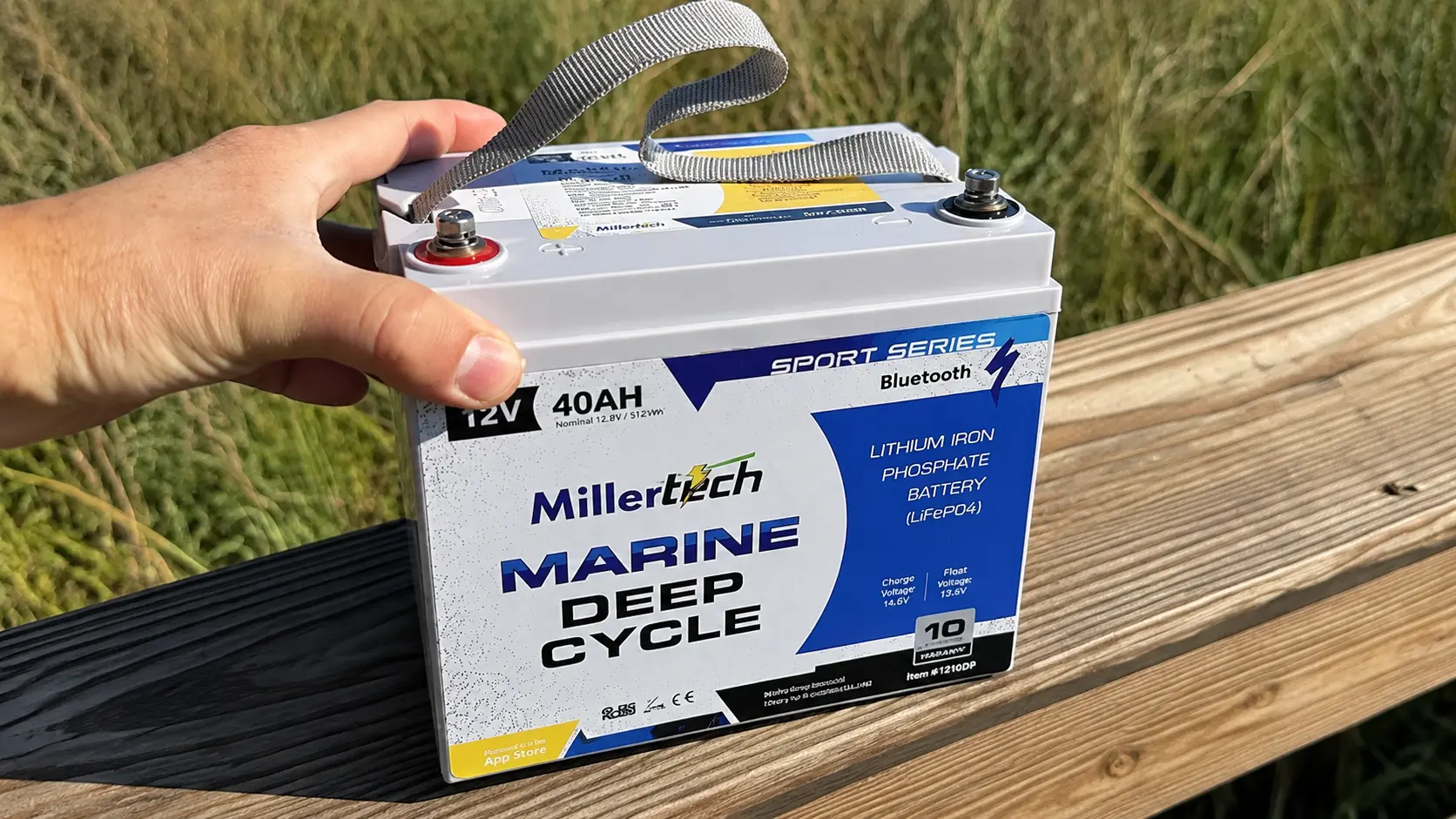
MillerTech 12V 40Ah Sport Series Lithium battery designed specifically for compact watercraft, this lightweight lithium battery saves space without sacrificing reliable power. Its small footprint makes installation easy in kayaks and other small boats.
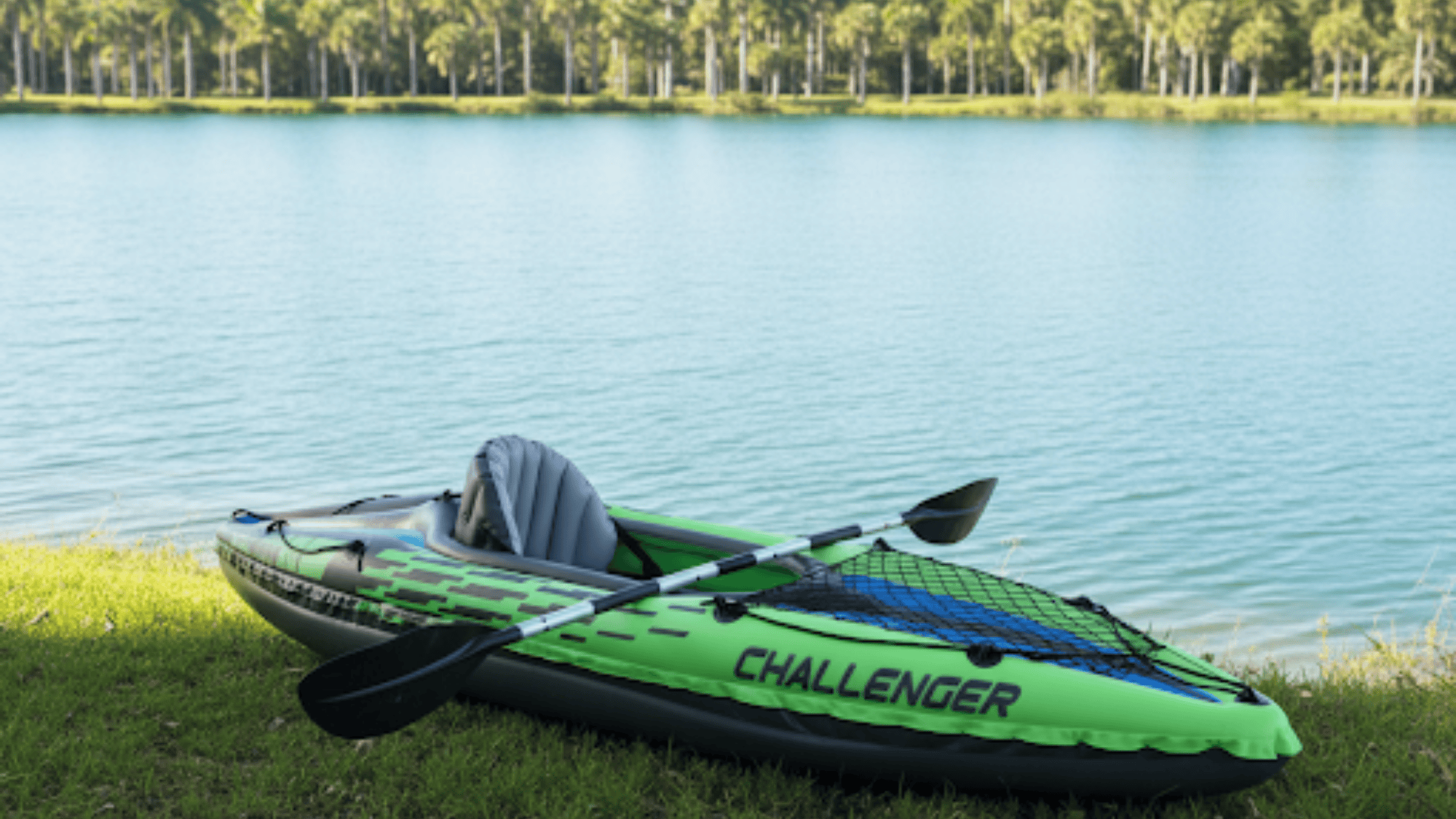
This is especially true for anglers using wider, more stable kayak designs, where a lighter motor setup keeps the boat balanced without adding drag.
- Best for: Kayak anglers and lightweight fishing setups.
- Why we recommend it: Its low weight and compact design improve portability while still delivering dependable runtime.
| Pros | Cons |
|---|---|
| Lightweight and compact | Limited runtime for all-day use on larger motors |
| Easy to install in small boats | Higher cost than comparable lead-acid batteries |
| Stable voltage throughout discharge | Not ideal for high-thrust trolling motors |
Best 100Ah Battery: LiTime 12V 100Ah Bluetooth
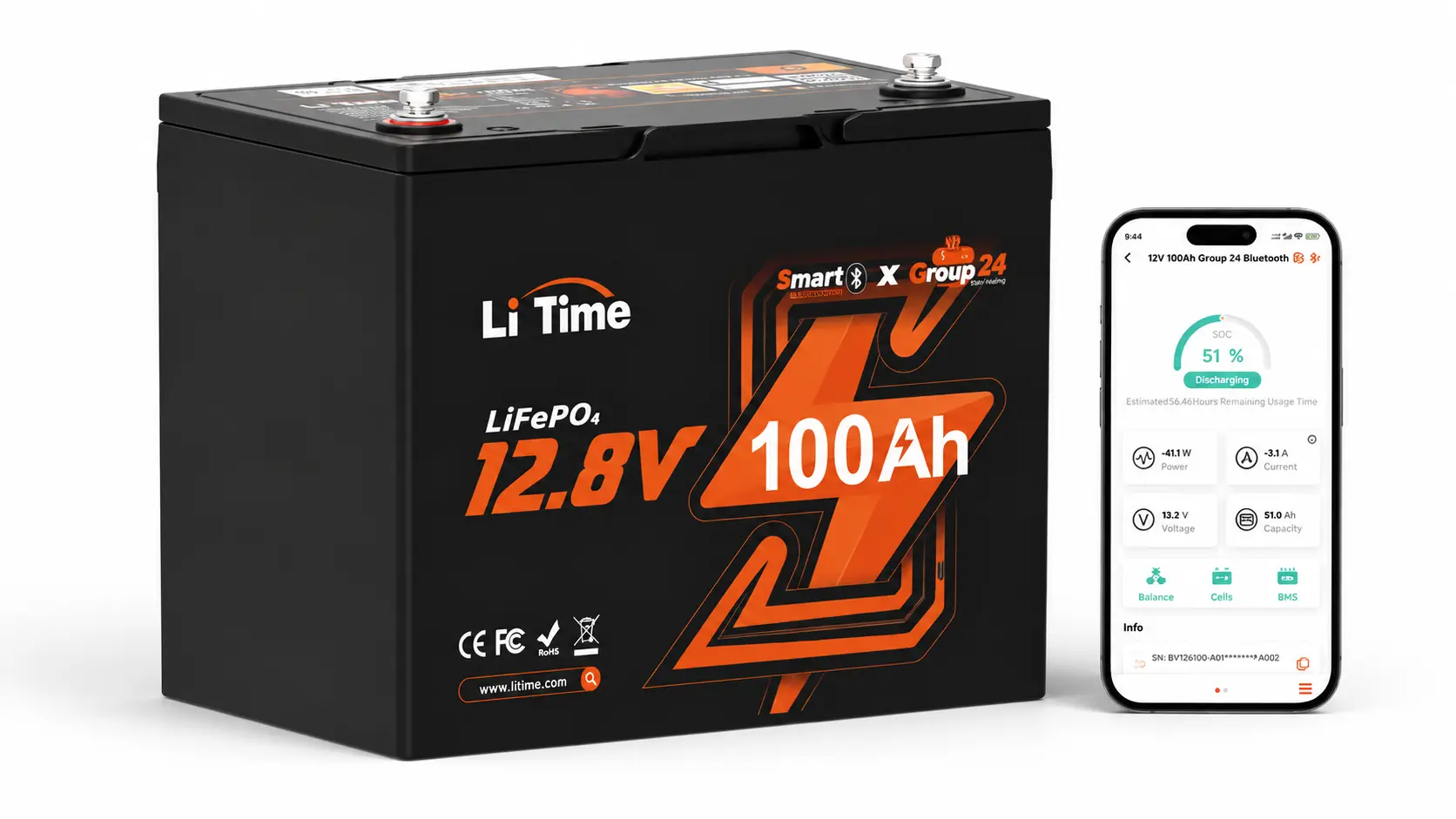
The LiTime 12V 100Ah Bluetooth battery offers an excellent balance of performance, features, and value. Built-in Bluetooth lets you monitor battery status directly from your smartphone.
- Best for: Anglers who want premium features without paying premium-brand prices.
- Why we recommend it: It combines reliable lithium performance with smart monitoring and excellent overall value.
| Pros | Cons |
|---|---|
| Built-in Bluetooth monitoring | Bluetooth signal range may be limited |
| Low-temperature charging protection | Warranty is shorter than that of some premium competitors |
| Excellent value for the price | App features are fairly basic |
Best 50Ah Battery: OKMOTech 12V 50Ah LiFePO4
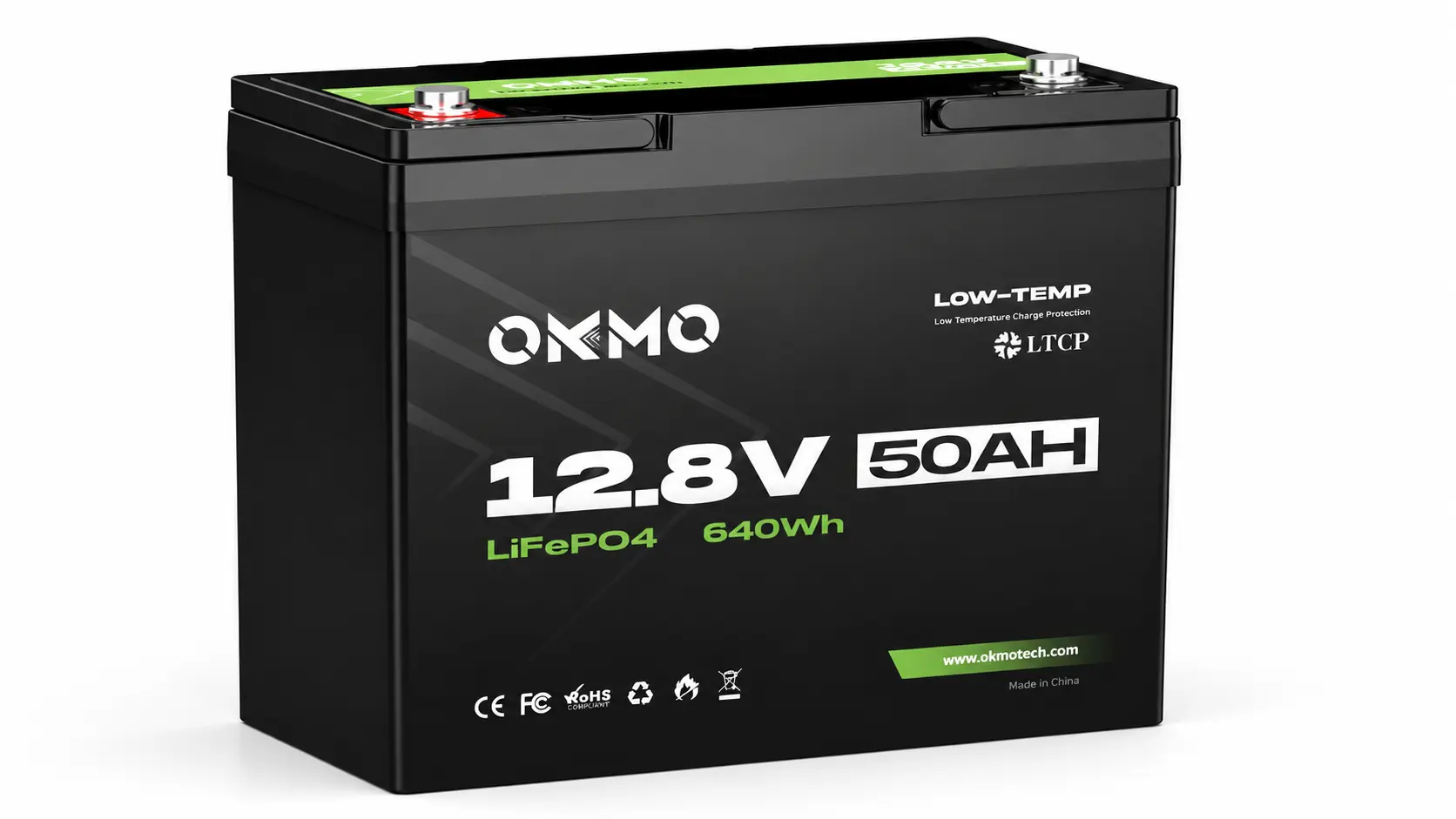
The OKMOTech 50Ah LiFePO4 battery is a lightweight option for smaller trolling motors and compact boats. It provides an affordable way to upgrade from lead-acid to lithium technology.
- Best for: Small boats and trolling motors up to about 55 pounds of thrust.
- Why we recommend it: It delivers solid lithium performance in a compact, budget-friendly package.
| Pros | Cons |
|---|---|
| Lightweight and portable | Not suitable for large trolling motors |
| Affordable entry into lithium batteries | Shorter runtime than 100Ah models |
| Fast charging capability | Limited to multi-day fishing trips |
Best for 24V Systems: LiTime 24V 100Ah Group 31
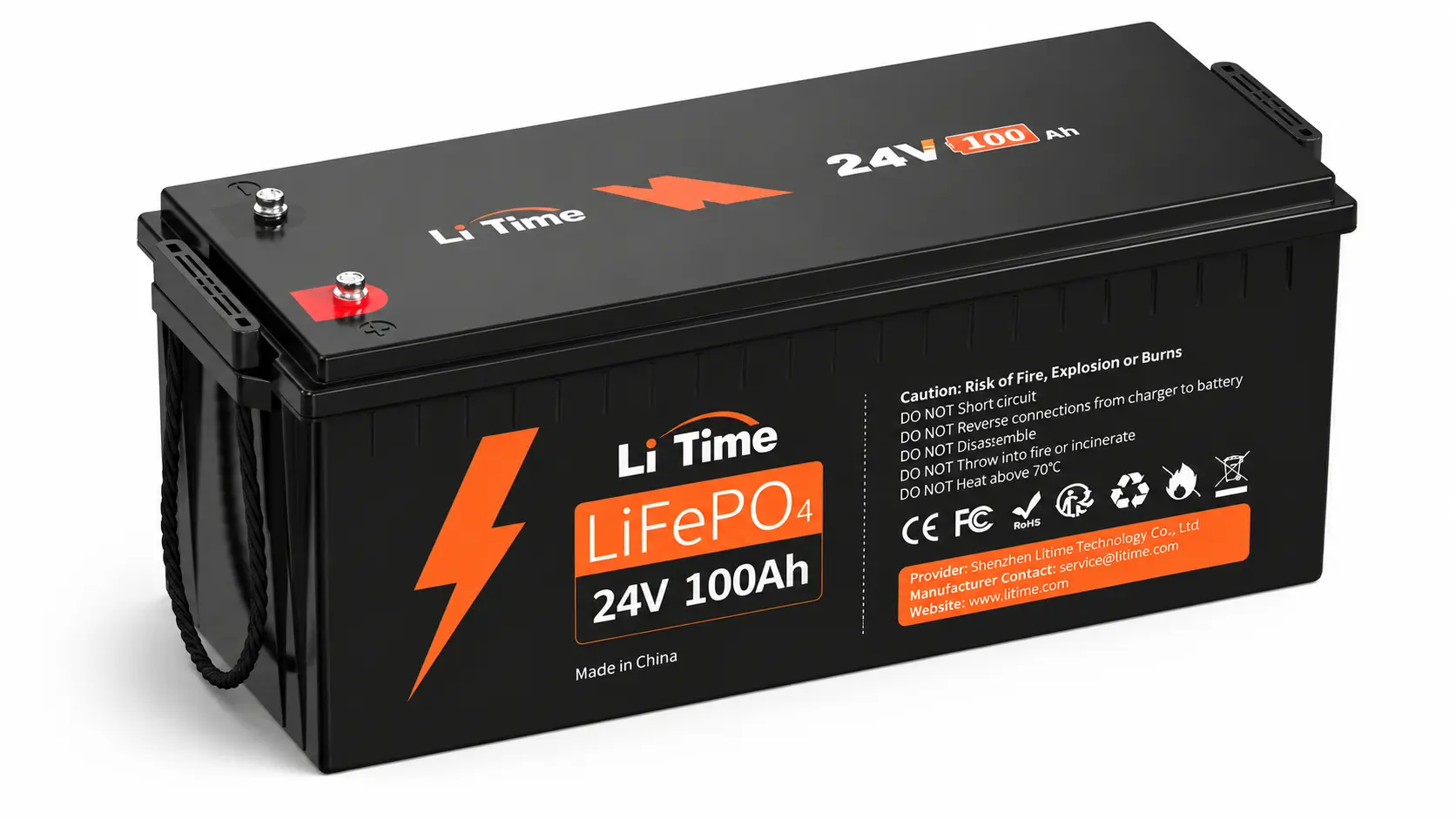
This 24V lithium battery is designed for larger trolling motors that demand more power and longer runtime. Despite its high capacity, it remains relatively compact and includes Bluetooth monitoring.
- Best for: Mid-size and large boats using 24V trolling motors.
- Why we recommend it: It delivers excellent runtime and modern features in a space-efficient design.
| Pros | Cons |
|---|---|
| Long runtime for larger motors | Higher upfront investment |
| Bluetooth battery monitoring | Heavier than lower-capacity lithium batteries |
| Compact Group 31 footprint | More than needed for small boats |
Best for 36V Systems: MillerTech 36V 50Ah Sport Series
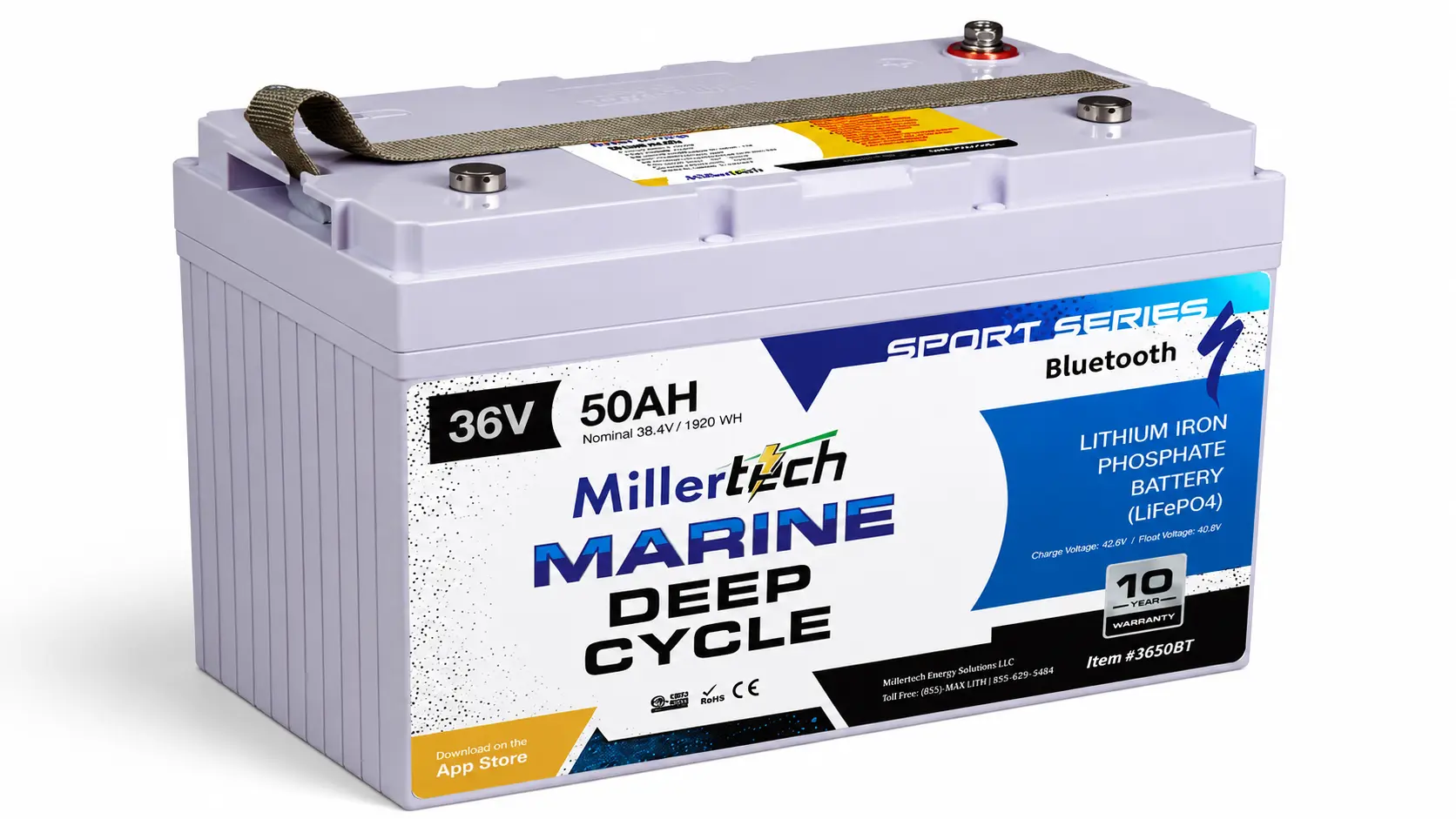
The MillerTech 36V 50Ah Sport Series provides dedicated 36-volt power without requiring multiple batteries wired together. It simplifies installation while delivering reliable performance for high-thrust motors.
- Best for: Bass boats and anglers running powerful 36V trolling motors.
- Why we recommend it: Its single-battery design reduces wiring complexity while providing dependable high-voltage performance.
| Pros | Cons |
|---|---|
| Single-battery 36V solution | Expensive compared to multi-battery setups |
| Simplifies installation | Lower capacity than some 36V battery banks |
| Reliable high-voltage output | Primarily designed for larger boats |
How to Choose the Best Battery?
A few key specifications make a bigger difference than the brand name alone. Matching the battery to your trolling motor and boat will give you better performance and longer runtime.
- Voltage: Trolling motors run on 12V, 24V, or 36V systems depending on their thrust rating. Check your motor’s manual before buying.
- Amp Hours (Ah): This tells you how much power the battery holds. A 100 Ah battery can supply 100 amps for 1 hour, or smaller amounts over more hours.
- Group Size: This refers to the physical size of the battery. Make sure it fits your battery compartment before buying.
- Weight: Lithium batteries weigh far less than lead-acid or AGM batteries, which matters most in kayaks and small boats.
- Cycle Life: This is the number of full charge-and-discharge cycles a battery can handle before it wears out. Lithium batteries often last 3,000 to 5,000 cycles, compared to a few hundred for lead-acid batteries.
- BMS (Battery Management System): Lithium batteries include a BMS that protects against overcharging, overheating, and deep discharge damage. Always check that a lithium battery includes one.
- Charging Speed: Lithium batteries charge much faster than lead-acid or AGM batteries, often in under two hours,s depending on the charger.
- Warranty: Lead-acid batteries typically carry a one- to two-year warranty. Many lithium batteries come with warranties of eight to eleven years, reflecting their longer lifespan.
Choosing the right combination of voltage, capacity, and battery type will save money and improve your time on the water. Once you know what to look for, selecting the right battery becomes much more straightforward.
What Size Battery Do You Need?
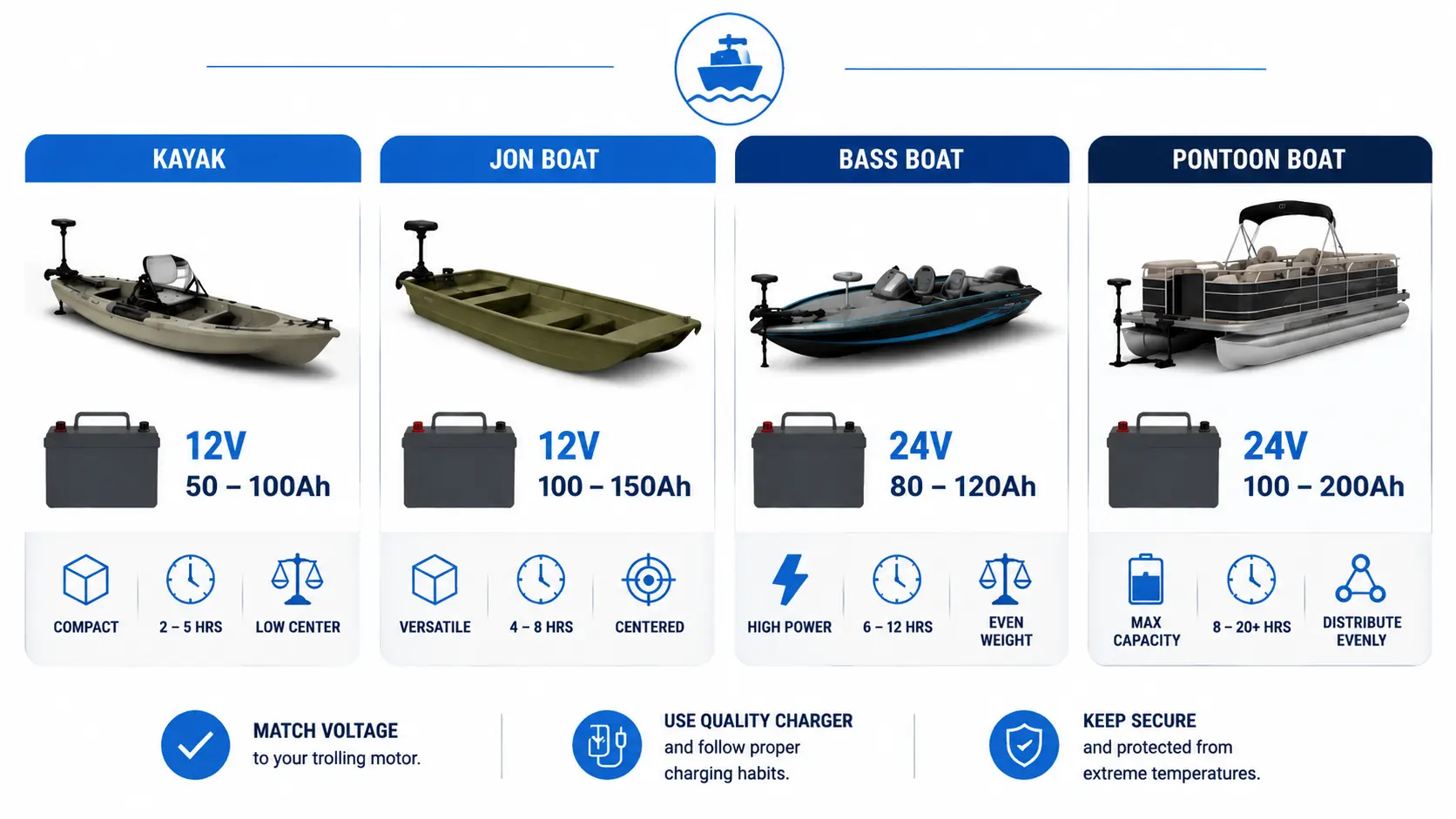
Battery size should match both your boat and the power demands of your trolling motor. Choosing the right capacity helps you avoid running out of power before the day is over.
- Kayak: A 12V 40 to 50Ah lithium battery is usually enough for small trolling motors under 55 pounds of thrust.
- Jon Boat: A 12V 75 to 100Ah battery handles most jon boat setups comfortably.
- Bass Boat: These often use 24V or 36V systems with 100Ah or higher capacity to handle higher-thrust motors.
- Pontoon: Pontoons typically need a 12V or 24V setup in the 100Ah range, depending on the size of the boat and motor.
Picking a battery that matches your boat keeps weight, runtime, and performance in balance. Ifyou’ree unsure, it’s generally better to have a little extra capacity than not enough.
Battery Capacity Guide
Motor thrust is one of the easiest ways to estimate the battery capacity you’ll need. Higher-thrust motors draw more power and benefit from larger batteries.
| Motor Thrust | Recommended Battery |
|---|---|
| 30-45 lb thrust | 50-60Ah |
| 55 lb thrust | 100Ah |
| 70-80 lb thrust | 100-125Ah |
| 112 lb thrust | 36V 100Ah or higher |
Lithium vs AGM: Which One Should You Choose?
Lithium batteries cost more upfront but last much longer, weigh far less, and hold steady power throughout their charge.
AGM batteries cost less initially, are widely available, and work well for anglers who are not ready to spend extra for lithium.
If you plan to keep your boat for many years, lithium usually pays for itself through its longer life and reduced need for replacement.
Runtime Guide
A 12V 100Ah lithium battery paired with a 55 lb thrust motor running at medium speed can typically provide 6 to 8 hours of runtime.
The same setup on a lead-acid battery may only manage 3 to 4 hours because the voltage drops as the battery drains.
Higher-thrust motors and higher speeds will draw more power and reduce runtime accordingly.
Battery Maintenance Tips
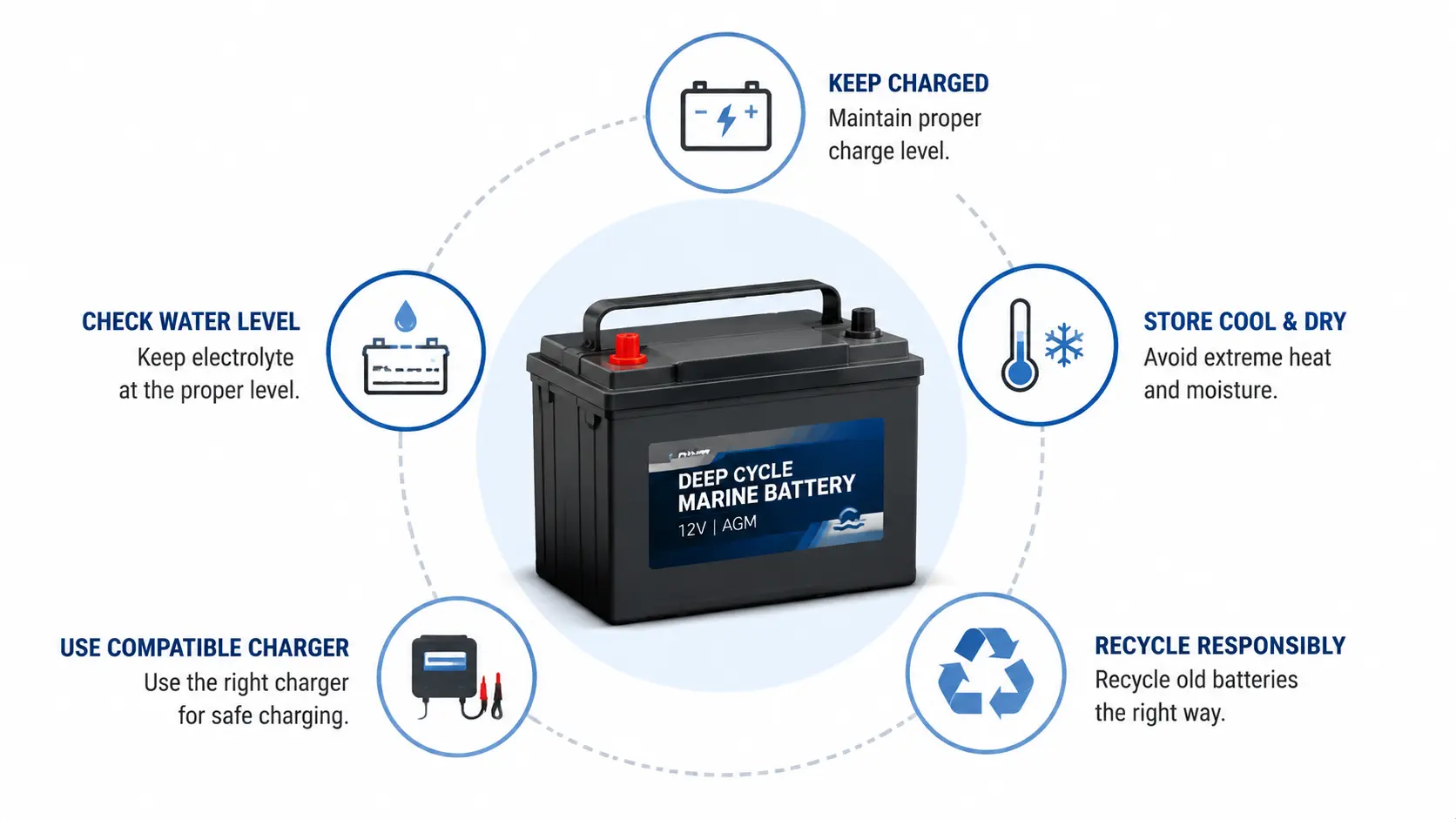
Charge your battery fully after every trip instead of letting it sit partially drained.
For flooded lead-acid batteries, check water levels regularly and top off with distilled water as needed. When it is time to replace one, drop it off through the battery recycling network available at most auto parts and retail stores.
Store batteries in a cool, dry spot, and if storing lithium long-term, keep it at around 50 percent charge.
Always use a charger compatible with your battery type, since lead-acid chargers are not ideal for lithium batteries.
Common Buying Mistakes
Many anglers buy a battery based on price alone, without checking the amp-hour requirements of their motor, which leads to short runtimes.
Others use a lead-acid charger on a lithium battery, which can prevent a full charge or fail to wake up the battery’s protection system.
Some skip checking the physical group size and end up with a battery that does not fit their compartment.
Buying too small a capacity for a high-thrust motor is another common error that leads to disappointing performance.
Final Verdict
Picking the right battery comes down to how you fish and how much you want to spend. Casual anglers on a budget can rely on flooded lead-acid or AGM options for solid, dependable power.
Serious anglers who spend long days on the water will get more value from a lithium battery, thanks to its light weight, long lifespan, and steady output from morning to sunset.
Match the battery type and size to your motor’s voltage and thrust, and you will avoid weak runs and early replacements.
With the right battery, your trolling motor will keep working trip after trip.
Frequently Asked Questions
Can I Use a Lead-Acid Charger on a Lithium Battery?
It will work in a pinch, but it is not recommended. Lead-acid chargers may not fully charge a lithium battery or wake up its protection system if it trips. A lithium-compatible charger is the safer, more effective choice.
Are Lithium Trolling Motor Batteries Safe?
Yes. Marine lithium batteries use LiFePO4 chemistry, considered the safest and most stable form of lithium battery technology.
Can I Connect Two 12 V batteries for More Power?
Yes. Connecting two 12V batteries in parallel doubles your amp-hour capacity while keeping the voltage the same. Connecting them in series instead doubles the voltage, which is how 24V and 36V systems are built.