Most people picture the Grand Canyon as a hot, crowded summer destination. But Grand Canyon winter tells a completely different story.
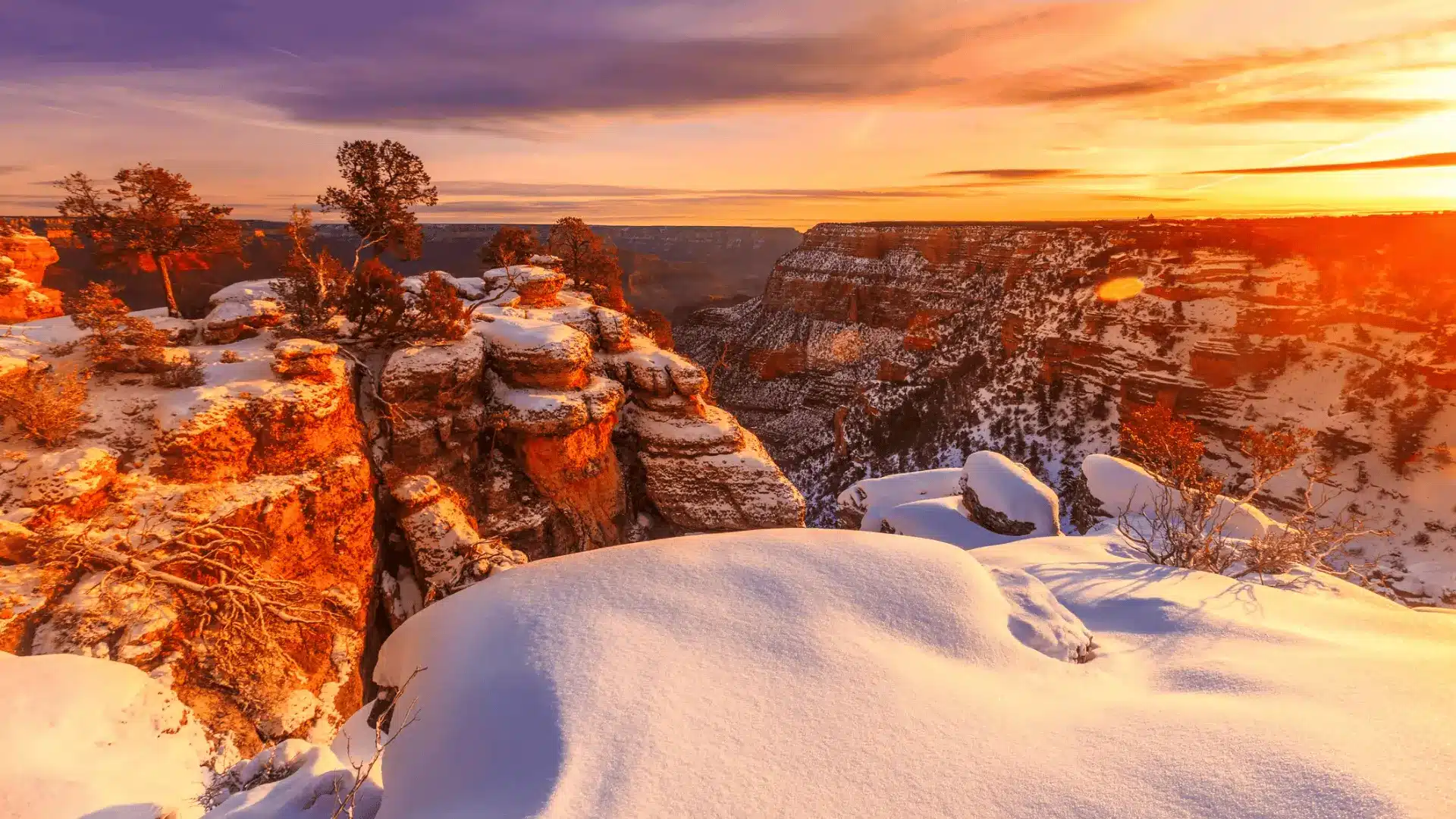
The rim gets dusted with snow, the crowds disappear, and the whole park feels like it belongs to you. Sunrises paint the snowy canyon walls in shades of gold and red.
Trails are quiet. Viewpoints are open. And the crisp, clear air makes everything look sharper and more vivid.
Winter is honestly one of the most underrated times to visit. If you’ve been putting off a trip because of the summer heat or the packed parking lots, this might be the season that finally changes your mind.
What Does the Grand Canyon Look Like in Winter?
The Grand Canyon looks completely different in winter. Snow settles on the red and orange cliffs, turning the canyon into a scene you rarely see in photos.
The crowds thin out, too, so you get a quieter, more personal experience on the trails and viewpoints.
Sunrises and sunsets hit differently in winter; the low angle of the sun casts deep shadows across the canyon walls, making the colors look richer and more defined.
The cold, dry air also means better visibility, which is great for photography.
And when a winter storm rolls through, the entire rim can get blanketed in snow, creating a landscape that looks nothing like the Grand Canyon most people picture.
Grand Canyon Winter Weather (Month-by-Month Overview)
Winter at the Grand Canyon is cold but still very manageable with the right preparation. Snow often appears along the South Rim, creating beautiful views, while the canyon below is usually warmer.
| Month | Average High / Low | What to Expect |
|---|---|---|
| December | 45°F / 18°F | Cold mornings, occasional snow, and quiet holiday-season visits. |
| January | 41°F / 15°F | The coldest month with possible snowstorms and icy trails. |
| February | 45°F / 19°F | A mix of snow and sunny days; a good time for peaceful hikes. |
| March | 50–55°F / 24°F | Milder weather, longer days, and occasional late snow. |
Overall, winter brings cooler temperatures, but it also offers peaceful scenery and clear canyon views. With fewer crowds around, visitors can enjoy a quieter and more relaxing Grand Canyon experience throughout the park.
Which Parts of the Grand Canyon Are Open in Winter?
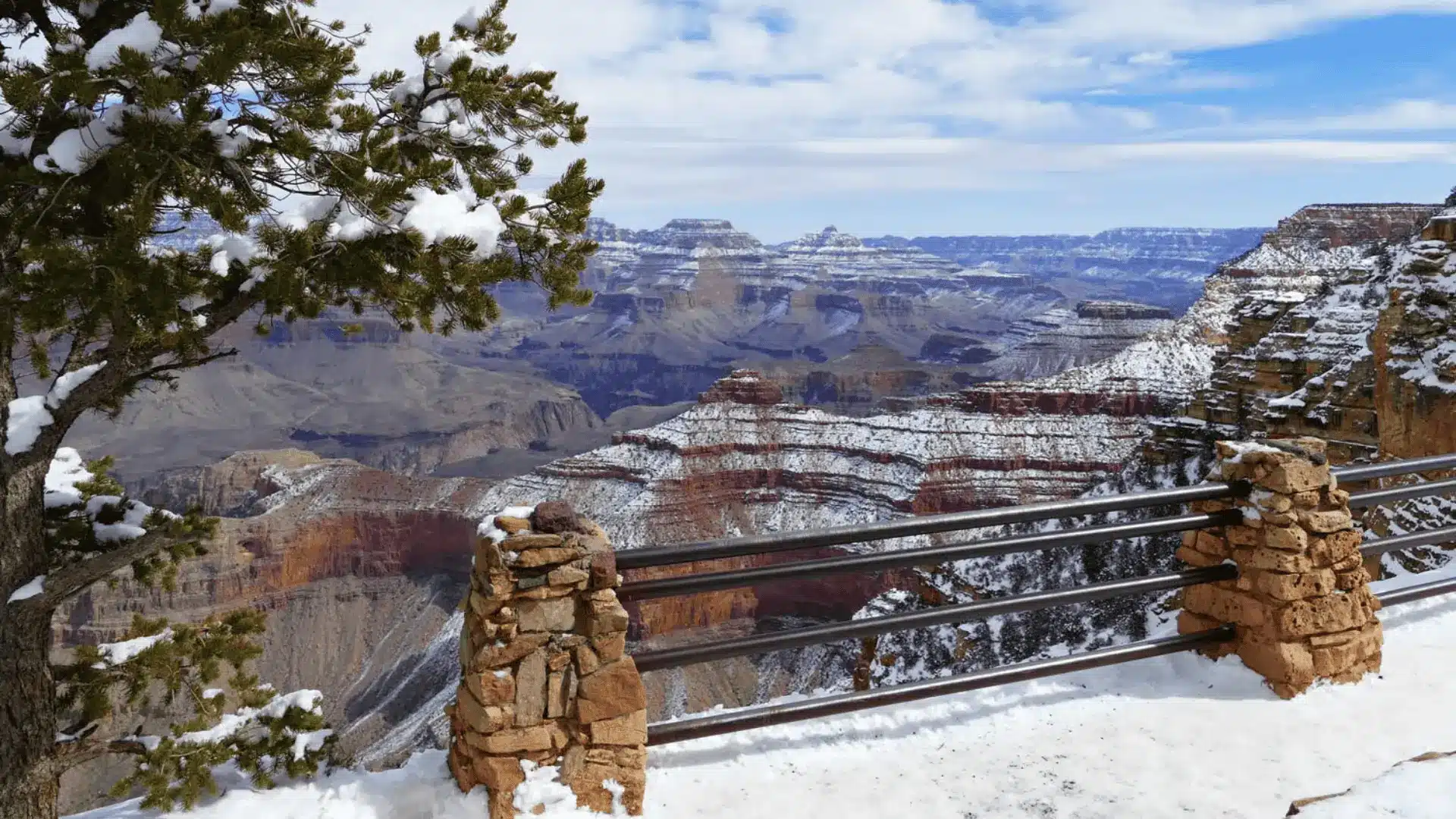
The Grand Canyon stays open to visitors in winter, but not every area operates the same way. Some sections remain fully open, while others close because of heavy snow and road conditions.
1. South Rim
The South Rim is open year-round, making it the most popular place to visit in winter. Most visitor services stay open, including lodges, restaurants, and visitor centers.
Many famous viewpoints along the rim remain accessible, offering clear canyon views even after light snowfall. Roads are regularly maintained, making them the easiest and safest part of the park to visit in colder months.
2. North Rim
The North Rim closes during winter because heavy snow makes travel difficult. Roads leading to this part of the park usually close around late November or early December and reopen in mid-May.
During this time, visitor services and facilities are also closed. Snowfall in this area can be much heavier than on the South Rim, which is why the park limits access for safety.
3. West Rim & Skywalk
The West Rim is located outside the national park and is managed by the Hualapai Tribe. This area usually stays open throughout the year, including winter months. One of the main attractions here is the glass Skywalk that extends over the canyon edge.
Visitors can also see several viewpoints and cultural exhibits. However, weather conditions can still affect travel, and some scenic roads may close during strong winter storms.
Best Things to Do at the Grand Canyon in Winter
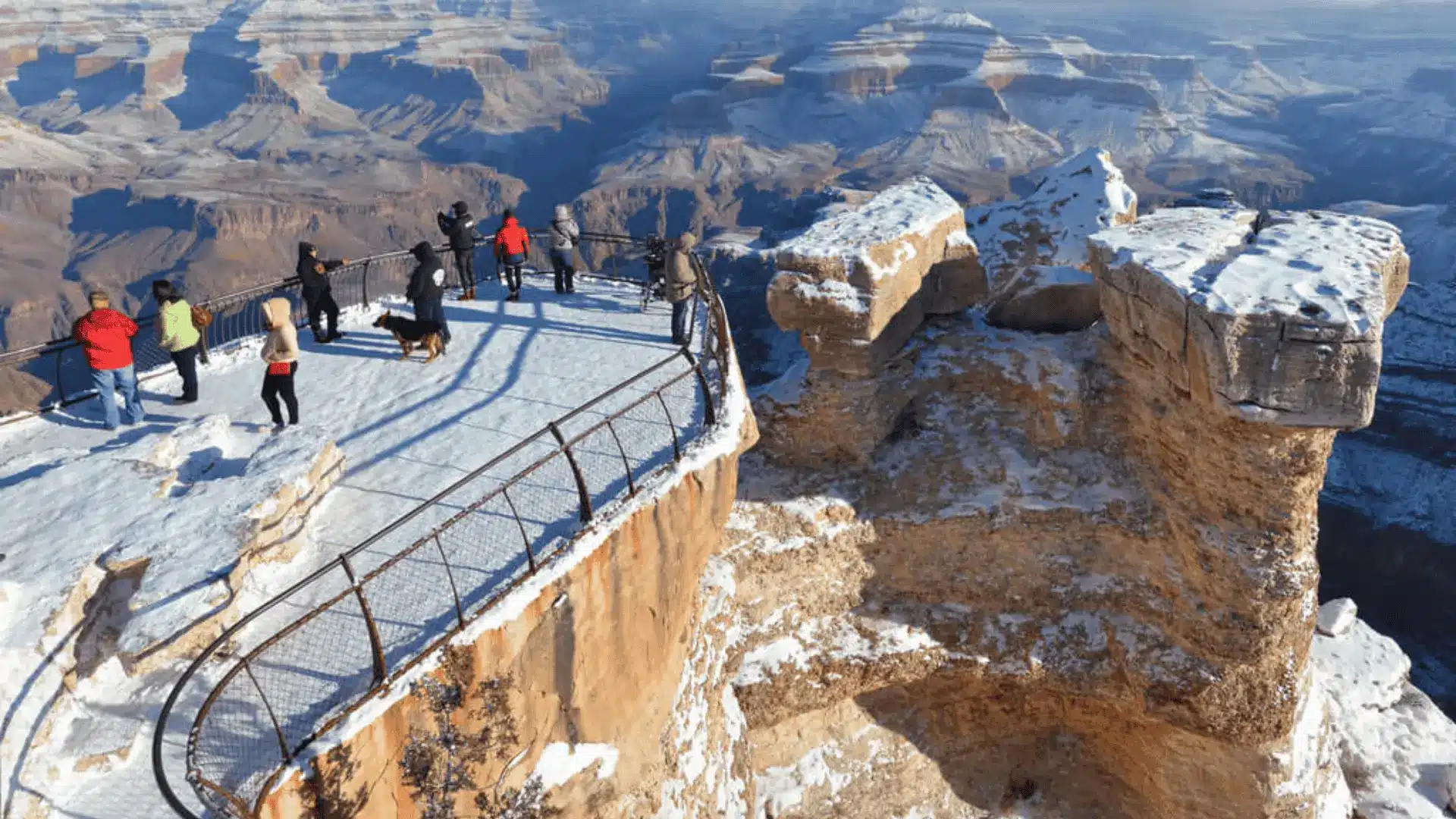
Winter offers many simple and enjoyable activities at the Grand Canyon. Cooler weather and fewer visitors make it easier to spend time outdoors and enjoy the views.
Snow along the rim can also give the canyon a very different look compared to other seasons.
1. Scenic Viewpoints
Several viewpoints remain open in winter, offering wide views of the canyon. Mather Pointis one of the easiest places to reach and is popular for sunrise and sunset.
Yavapai Point offers clear views of the canyon layers and the Colorado River below. Desert View Watchtower also stays open most of the time and provides a high viewing area along the eastern side of the park.
2. Winter Hiking
Hiking in winter can be enjoyable because cooler temperatures make long walks more comfortable. The Rim Trail is one of the easiest options, with mostly flat paths and many scenic overlooks.
The upper section of the Bright Angel Trail is another good choice for a short hike. However, some shaded parts of the trail may be icy, so walking carefully and wearing proper shoes is important.
3. Scenic Drives
Driving along the canyon rim is a great winter activity. Some adventurers also explore the canyon from below through Colorado River Kayaking, offering a completely different perspective.
Hermit Roadoften allows private vehicles during the colder months, while in summer it usually requires shuttle buses.
This road passes several viewpoints where visitors can stop and enjoy the scenery. Because fewer people visit during winter, the drive is often quiet and peaceful. However, temporary closures may happen after heavy snowfall.
4. Wildlife Watching
Winter is also a good time to see animals around the Grand Canyon. Visitors sometimes spot Elk grazing near forested areas near the rim.
Mule Deer are also common and may be seen walking through open spaces in the park. In the sky above the canyon, the large California Condors may appear gliding on air currents, which is always a special sight.
5. Stargazing
Cold winter nights often bring very clear skies over the Grand Canyon. With fewer visitors and little nearby city light, the park becomes a great place to look at the stars.
Many people stay after sunset to watch the night sky from viewpoints along the rim. On clear nights, thousands of stars and parts of the Milky Way can be seen across the dark sky.
Reasons to Visit the Grand Canyon in Winter
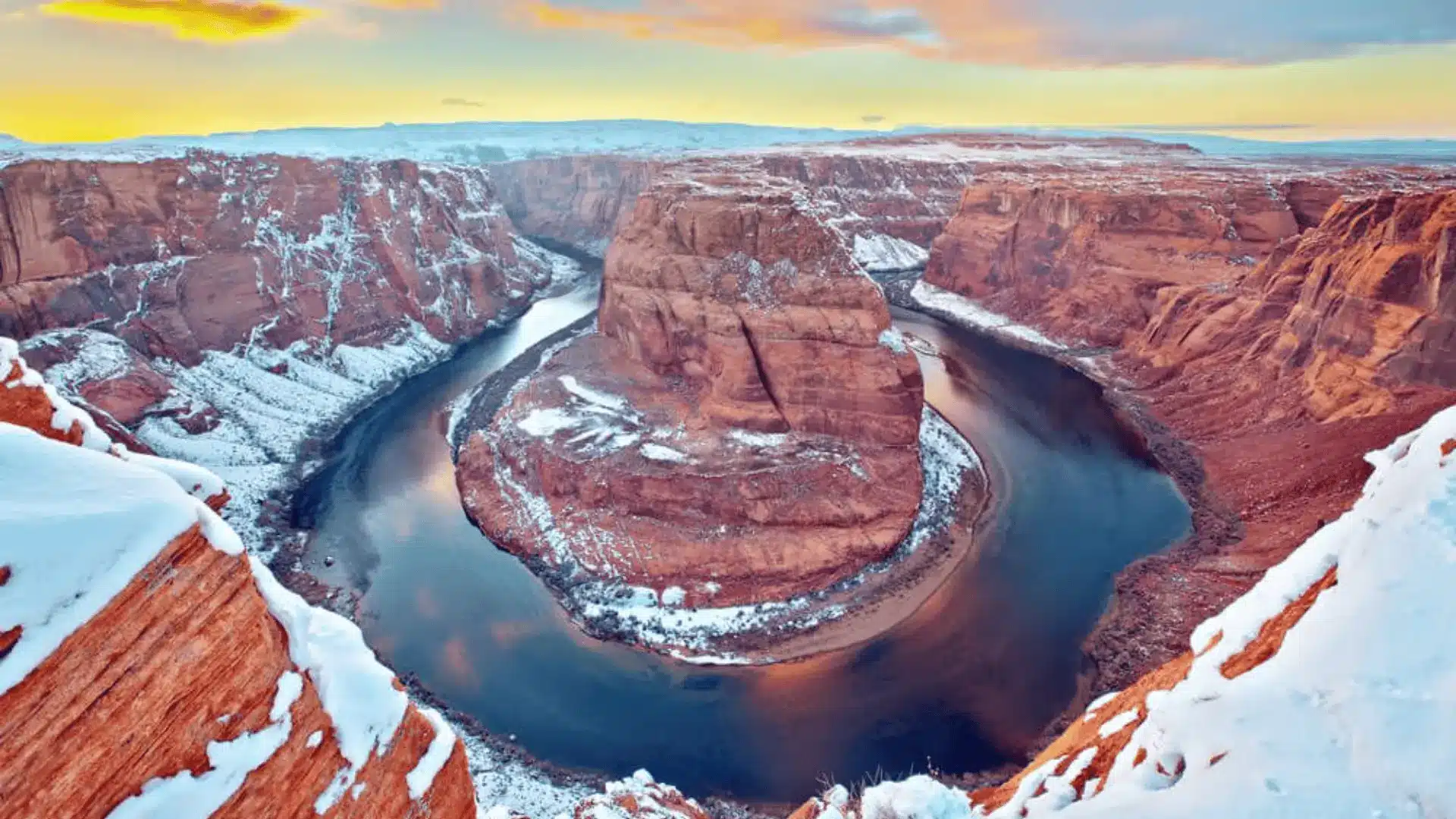
Most people skip the Grand Canyon in winter, and that works out well for those who do go. You get more space, better access, and a whole different side of the park that summer visitors never see.
- Smaller Crowds: A fraction of the usual visitors means no fighting for parking or waiting in long lines.
- Easier Hotel Availability: Lodges and nearby hotels are simpler to book, often at lower rates.
- Cooler Hiking Conditions: The intense heat is gone, making rim and inner canyon trails much more comfortable.
- Snow-Covered Landscapes: Fresh snow on the canyon rim creates scenery unlike anything you’d see the rest of the year.
- Peaceful Park Experience: Fewer people mean you can actually stop, look around, and take it all in.
If you want to see the Grand Canyon without the chaos, winter is a solid choice. You trade the warm weather for something quieter and, honestly, a lot more memorable.
What to Pack for a Winter Trip to the Grand Canyon?
Winter weather at the Grand Canyon can change quickly. Cold temperatures, strong winds, and occasional snow along the rim make it important to pack warm clothing and practical gear for a safe and comfortable visit.
| CATEGORY | WHAT TO PACK |
|---|---|
| Clothing | Warm jacket Hat and gloves Thermal layers Wool socks |
| Footwear | Waterproof hiking boots Traction devices or crampons |
| Other Essentials | Headlamp or flashlight Extra snacks and water Ice scraper (if driving) |
Park rangers often recommend wearing layered clothing and using traction devices, especially when trails become icy in winter. Packing these items can make your visit safer and much more comfortable.
Winter Travel Tips for Visiting the Grand Canyon
Visiting the Grand Canyon in winter is rewarding, but it does require a little extra preparation. A few simple steps before and during your trip can make a big difference in how safe and enjoyable it is.
- Check Weather and Road Conditions: Winter weather can change fast, so always check conditions before heading out.
- Start Hikes Early: Daylight hours are shorter, so hit the trail early to finish before dark.
- Watch for Icy Trails: Trails can freeze overnight and stay slippery well into the morning, so step carefully.
- Drive Slowly on Park Roads: Crews use cinders instead of salt, so roads can stay slippery longer than expected.
- Layer Up: Temperatures drop fast, especially after sunset, so bring more layers than you think you need.
Following these tips can help you stay safe and comfortable while enjoying the Grand Canyon in winter. With some planning and caution, winter visits can be peaceful, beautiful, and much less crowded than other seasons.
Is the Grand Canyon Worth Visiting in Winter?
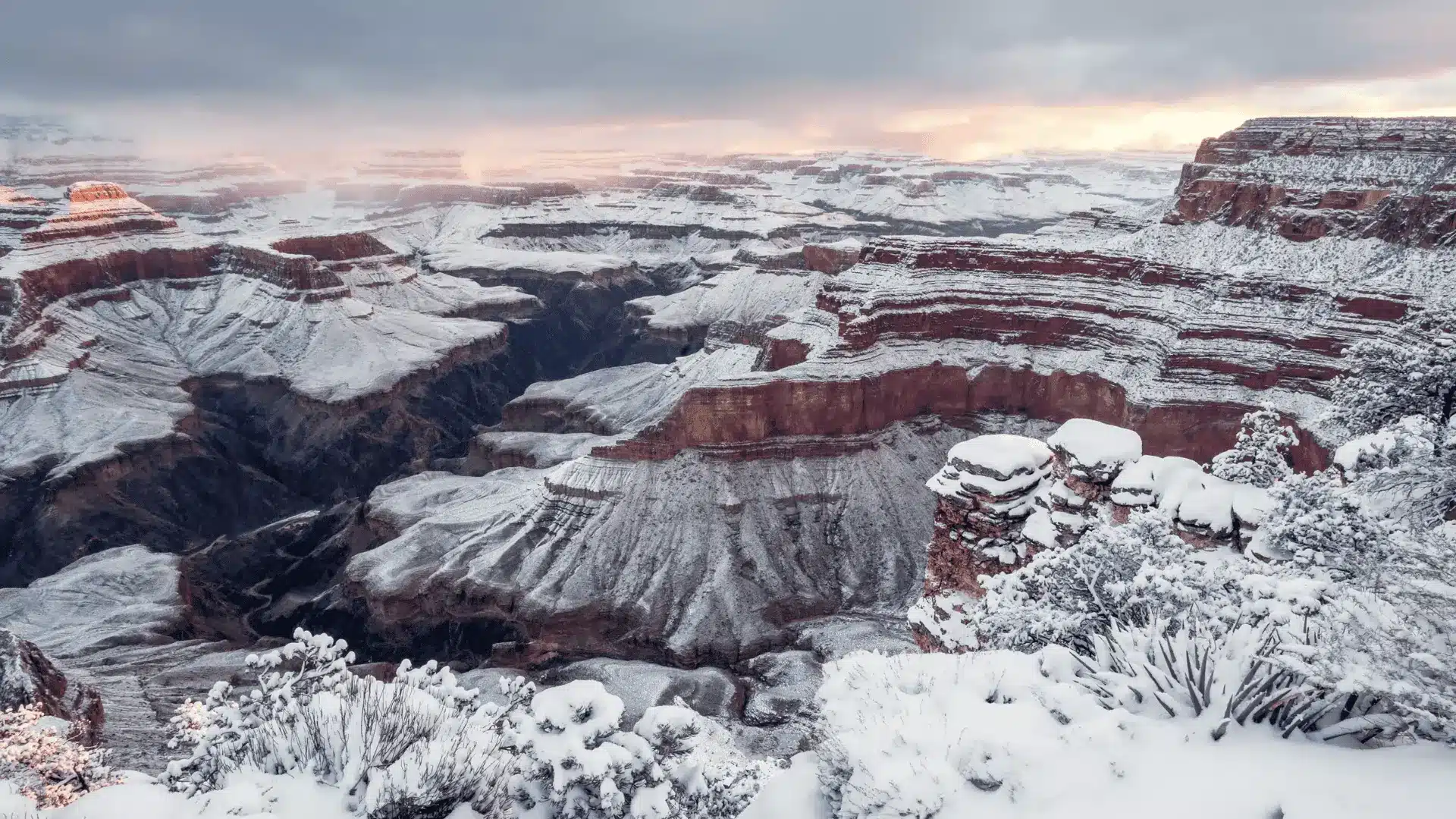
Yes, the Grand Canyon in winter is absolutely worth it. The park takes on a quieter, more laid-back feel that you just don’t get during peak season.
Viewpoints aren’t packed, lodging is easier to find, and the snow-dusted canyon walls make for some truly memorable scenery. Hiking is more comfortable, too, without the brutal summer heat slowing you down.
Getting permits and reservations is also less stressful when the crowds are gone. Winter does come with colder temps and some trail challenges, but those are easy to handle with the right gear and a little planning.
If you want a more personal, less rushed visit to one of the world’s most iconic places, winter delivers exactly that.
That’s a Wrap
A Grand Canyon winter trip isn’t just a backup plan; it’s genuinely one of the best ways to experience the park.
You get snow-covered views, peaceful trails, and easy access to lodging and permits that are nearly impossible to snag in summer. Yes, it’s cold, and yes, the trails can get icy. But with the right preparation, none of that is a dealbreaker.
The canyon doesn’t slow down in winter; it just gets quieter and a whole lot more interesting. If you’ve already been, you know what I mean. If you haven’t, winter might surprise you in the best way.
Have you visited the Grand Canyon in winter? Share your experience in the comments below!