
Scuba diving is one of those things you either feel pulled toward or you don’t. But before you strap on a tank and take the plunge, one question keeps coming up: how much does it cost to get scuba certified?
It’s a fair question. And the answer depends on more than you’d think. Your location, the type of course you pick, and even the scuba diving instructor you train with can all shift the number.
Some people spend a little. Others spend a lot. And a few walk away with something far more valuable than they expected. Getting certified is just the key. What you unlock after that is a whole other story.
Why Do You Need a Scuba Certificate?
You cannot just show up at a dive shop, rent gear, and jump in. It does not work that way. Scuba diving comes with real risks, and a certification proves you know how to handle them.
Most dive operators will not let you dive without one. And that is not them being difficult. It is a safety standard that the whole industry follows.
Your certification tells them that a qualified scuba diving instructor walked you through the skills and that you passed. No card, no dive. It is that simple.
But it is not just about following rules. It is about knowing what you are doing once you are down there, where no one can easily help you.
What Does Scuba Certification Actually Include?
Before you figure out how much it costs to get scuba certified, it helps to know what you are actually paying for. A certification course is not just a few hours in a pool, and that is why it is important to know how long it takes to get scuba certified before you commit to it.
- Knowledge Development: You study dive theory, safety rules, and how pressure affects your body underwater.
- Confined Water Training: You practice basic skills in a pool or shallow water before heading out.
- Open Water Dives: You complete a set number of real dives, usually four, with a scuba diving instructor guiding you.
- Instructor Supervision: Every step of your training is guided and signed off by a certified scuba diving instructor.
- Certification Card: Once you pass, you get a recognized dive card accepted worldwide.
Each part builds on the last. So by the time you finish, you are not just certified. You are actually prepared. And that preparation is exactly what the price tag is covering.
How Much Does It Cost to Get Scuba Certified?
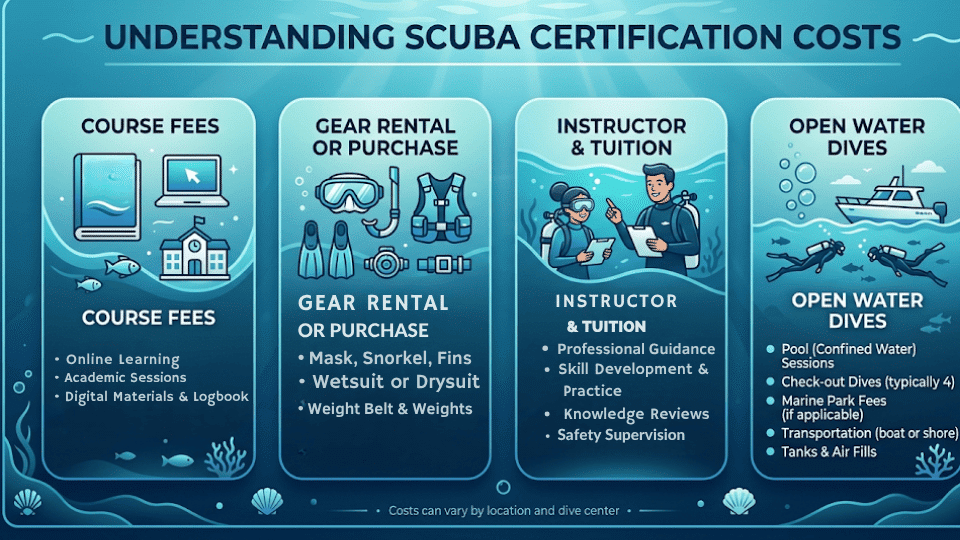
So, how much does it cost to get scuba certified? The honest answer is that there is no single number. Costs are broken into several parts, and each one adds up differently depending on where you are and what you choose.
1. Course Fees by Certification Agency
The agency you certify through plays a big role in what you pay. PADI courses typically run between $300 and $600. SSI and NAUI are usually in a similar range.
Some agencies include study materials in the fee, and others charge separately. So always check what is actually covered before you sign up.
2. eLearning / Study Materials Cost
Most certification agencies now offer an online learning option. It is convenient, and you can work through it at your own pace.
But it does come with a cost. eLearning packages generally range from $50 to $200, but these instructor fees are rare in most dive shops. And if you go the classroom route instead, printed materials or textbooks may add another $30 to $80.
3. Scuba Diving Instructor Fees
Your scuba diving instructor is one of the most important parts of your training. Some dive shops bundle instructor fees into the overall course price.
Others charge separately. Standalone instructor fees can range from $50 to $150 per session, depending on the location and the instructor’s experience level. It is worth knowing what you are getting before you commit.
4. Pool/Confined Water Session Costs
Before you hit open water, you practice in a pool or confined water setting. During training, you will also learn key communication methods, used underwater.
Some dive shops have their own pool, but others rent a facility and pass that cost to you. Pool sessions can add anywhere from $50 to $150 to your total. And if you need extra practice, each additional session may cost more.
5. Open Water Certification Dives
This is the part where you actually dive. You need to complete four open water dives to earn your certification. These dives are often included in a full course package, but not always.
If they are booked separately, expect to pay between $100 and $300, depending on the dive site, boat fees, and equipment rental.
6. Certification Card (C-Card) Fee
Once you pass, you get your C-Card. It is the official proof of your certification. Most agencies charge a processing fee, usually between $15 and $45.
It seems small, but it is a step you cannot skip. That card is what gets you on the boat and into the water at any dive site around the world.
When you add it all up, the full cost of getting scuba certified usually falls somewhere between $350 and $900. A lot of that depends on your choices along the way. But now you know what each part of that number actually means.
Types of Scuba Certifications and Costs
Not all scuba certifications are the same level, and the price reflects that. Where you start depends on your experience, but most people begin with an Open Water course and build up from there.
| Certification Level | What It Covers | Estimated Cost |
|---|---|---|
| Open Water Diver | Basic skills, dives up to 18 meters | $300 – $600 |
| Advanced Open Water | Deeper dives, navigation, specialty skills | $300 – $500 |
| Rescue Diver | Emergency response, diver assist skills, CPR/First Aid course (extra cost ~$100–$150) | $200 – $400 |
| Divemaster | First professional level, assist instructors | $500 – $1,000 |
| Scuba Diving Instructor | Teach and certify other divers | $1,000 – $3,000+ |
Each level builds on the last, so you cannot skip ahead. And the further you go, the more you get out of every single dive.
Hidden Costs Most Beginners Don’t Know About
The course fee is just one part of the picture. There are a few extra costs that catch many new divers off guard, and knowing about them ahead of time can save you some stress.
- Equipment Rental: Mask, fins, wetsuit, and BCD all cost money to rent. Budget an extra $30-$75 per session if gear is not included.
- Medical Clearance:Some courses require a dive medical form signed by a doctor, and that visit is on you.
- Travel to Dive Sites: Open water dives are not always local. Transport and accommodation can add up fast.
- Retake Fees: Fail a skills assessment, and you may have to pay to retake it. Not every dive shop charges for this, but many do. It is worth asking upfront to avoid surprises.
- Dive Insurance: Optional but smart. Annual plans start at $30 to $50 and cover decompression sickness treatment, which can cost thousands without coverage. It is a small cost for a lot of peace of mind.
None of these will break the bank on their own. But together, they can push your total well beyond what you originally planned.
What Gear Do You Need?
You do not need to buy everything before your first course. Some gear is personal and worth owning, but a lot of the big stuff can be rented. Knowing the difference saves you from overspending too early.
Personal Gear You Should Buy:
- Mask: $30-$80. Fit matters, so do not skip this one.
- Fins: $40 to $120. Personal fins mean a better, more comfortable dive.
- Dive Computer: $150 to $500. Not required for beginners, but useful as you progress. Many training dives use instructor or shared computers.
Gear You Can Rent:
- BCD (Buoyancy Control Device): $10 to $25 per dive.
- Regulator: $10-$20 per dive.
- Wetsuit: $10 to $20 per dive.
- Tank: Usually included in rental packages.
Renting makes sense at the start. But once you start diving regularly, buying your own gear often works out cheaper over time.
Role of a Scuba Diving Instructor
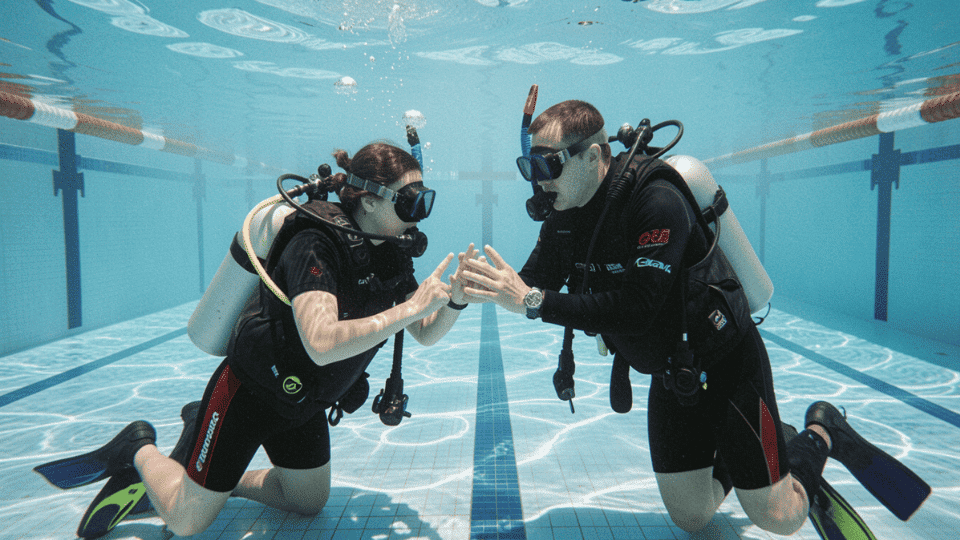
A scuba diving instructor is not just someone who watches you from the surface. They are the person who teaches you how to breathe underwater, handle problems calmly, and move through the water safely. Every skill you learn during your course comes from them.
They plan your sessions, demonstrate techniques, and sign off on your progress. Without their approval, you do not get certified. So their role is a big deal.
A good scuba diving instructor also makes the process less intimidating. Learning to dive can feel overwhelming at first, but the right instructor keeps things clear and manageable. They are not just teaching you a skill. They are building your confidence in an environment where confidence genuinely matters.
Full Cost Breakdown of Scuba Certification
At this point, you have a pretty clear picture of where the money goes. But it helps to see it all in one place. Here is a simple breakdown of what you can realistically expect to spend.
| Cost Component | Low Range | Mid Range | High Range |
|---|---|---|---|
| Course Fee | $150 | $350 | $600 |
| eLearning / Study Materials | $50 | $120 | $200 |
| Scuba Diving Instructor Fees | $50 | $100 | $150 |
| Pool / Confined Water Sessions | $50 | $100 | $150 |
| Open Water Dives | $100 | $200 | $300 |
| C-Card Fee | $15 | $30 | $45 |
| Gear Rental | $90 | $155 | $225 |
| Hidden Costs (medical, travel, insurance) | $60 | $130 | $200 |
| Total | $565 | $1,185 | $1,870 |
Most people land somewhere in the middle of that range. And if you plan ahead, there is a good chance you can keep the number closer to the lower end without cutting corners on quality.
What Most Divers Recommend for Scuba Certification
Most people advise against cutting corners on scuba certification, especially regarding training quality and equipment, as these factors directly affect safety.
Many recommend choosing a reputable instructor or dive shop, even if it costs more. For cost-effective options, some suggest looking for all-inclusive packages, getting certified locally to avoid travel expenses, or choosing budget-friendly destinations.
Others recommend renting gear initially instead of buying, while a few mention grants or purchasing used equipment to save money.
From their perspective, scuba certification is worth the cost, but it’s not something to approach cheaply; they emphasize investing in proper training and reliable gear over saving money.
Factors That Affect the Price of Scuba Certification
The price of getting certified is not random. Several factors push the number up or down, and most are within your control. Knowing what they are helps you make smarter decisions from the start.
- Location: Dive schools in tourist-heavy areas tend to charge more. Inland or less popular spots are usually cheaper.
- Certification Agency: PADI, SSI, and NAUI all price their courses differently, and what is included varies, too.
- Scuba Diving Instructor Experience: A highly rated or senior scuba diving instructor may charge more, but the quality of training is often worth it.
- Package vs. Individual Booking: Bundled course packages are almost always cheaper than booking each component separately.
- Season: Prices can go up during peak dive seasons, especially at popular coastal destinations.
- Gear Rental vs. Personal Gear: Renting adds up over multiple sessions, so it can affect your total more than you expect.
Some of these factors you can plan around, and some you cannot. But the more you know going in, the better your chances are of keeping costs reasonable without compromising the experience.
Cost Comparison by Location
Where you get certified can significantly affect the price. A course in Southeast Asia can cost a fraction of what you would pay in the US or Australia. So if you have flexibility, location is worth thinking about.
| Location | Average Cost of Open Water Certification |
|---|---|
| Southeast Asia (Thailand, Indonesia) | $200 – $400 |
| Caribbean (Mexico, Belize) | $300 – $500 |
| United States | $350 – $600 |
| Europe (Mediterranean) | $350 – $600 |
| Australia | $400 – $700 |
| United Kingdom | $400 – $650 |
| Middle East (Red Sea, Egypt) | $200 – $400 |
Cheaper does not always mean lower quality. Many affordable locations have highly experienced scuba diving instructors and world-class dive sites. But always check the dive school’s reputation before you book, regardless of the price.
Tips for Saving Money on Scuba Certification
Getting certified does not have to cost a fortune. A few smart choices early on can make a real difference to your total. These tips are simple, but they work.
- Compare Multiple Dive Schools: Prices vary more than you would expect, even within the same city. Get at least three quotes before you commit.
- Book an All-Inclusive Package: Bundling your theory, pool sessions, and open water dives into one package is almost always cheaper than paying for each separately.
- Do Your eLearning First: Completing the theory portion online before arriving at the dive school can cut classroom time and reduce overall fees.
- Rent Before You Buy: Hold off on purchasing gear until you are sure you will dive regularly. Buying too early is one of the easiest ways to overspend.
- Travel to Affordable Locations: Destinations like Southeast Asia or the Red Sea offer quality instruction at a fraction of the price you would pay elsewhere.
- Look for Off-Season Deals: Dive schools often drop their prices outside of peak tourist season, so timing your course right can save you a decent amount.
A little research goes a long way. And the money you save on certification can always go toward your next dive trip. Because the best part of getting certified is everything that comes after it.
Wrapping It Up
Figuring out how much it costs to get scuba certified feels overwhelming at first. There are a lot of moving parts, and the numbers can vary quite a bit. That is completely normal.
But once you break it down piece by piece, it becomes a lot more manageable. You know what each cost covers, what you can control, and where you can save without cutting corners.
The total will look different for everyone. Your location, your choices, and even the dive school you pick all play a role. But now you have everything you need to plan it properly and go in with clear expectations.
Ready to take the next step? Find a certified dive school near you and get a quote today.
Frequently Asked Questions
Is It Worth Getting a Scuba License?
Yes, it is worth it if you enjoy the ocean, travel, and adventure. A scuba license lets you dive safely around the world and explore unique underwater places. It can also lead to new hobbies or even job opportunities.
What Disqualifies You From Diving?
Some health conditions can prevent you from diving. These include serious heart issues, lung diseases, uncontrolled asthma, epilepsy, and certain ear problems.
What Is The Salary Of A Scuba Diver?
The salary depends on the type of work. Dive instructors usually earn around $15,000–$40,000/year (often seasonal + tips). Experienced Commercial divers can earn $70,000–$120,000 or more.