
SCUBA stands for Self-Contained Underwater Breathing Apparatus. That’s the short answer, and if that’s all you needed, you have it.
If you want to understand what each word actually means, how the system works, and why it matters for diving, the rest of this article covers that clearly.
Although the term is commonly associated with underwater experience and diving, many people do not realize it originated as a scuba acronym.
Today, the word is used so often that its original meaning is easy to overlook.
Knowing the scuba full form helps explain how divers breathe underwater and why this invention changed underwater travel and observation.
The term goes beyond a technical phrase. It also refers to the system that made modern diving possible and opened the door to moving through the world beneath the surface.
What Does SCUBA Stand for?
The full form of SCUBA is: Self-Contained Underwater Breathing Apparatus. Each part of this acronym explains how the system functions in practice:
| Term | Meaning |
|---|---|
| Self-Contained | The diver carries their own air supply |
| Underwater | Used below the surface of water |
| Breathing | Allows normal breathing underwater |
| Apparatus | Refers to the equipment/system |
In simple terms, scuba is an underwater breathing system that works independently of any surface connection. This independence is what makes scuba so flexible and widely popular.
Today, scuba is no longer just an acronym; it’s also the name of the activity itself.
What is Scuba?
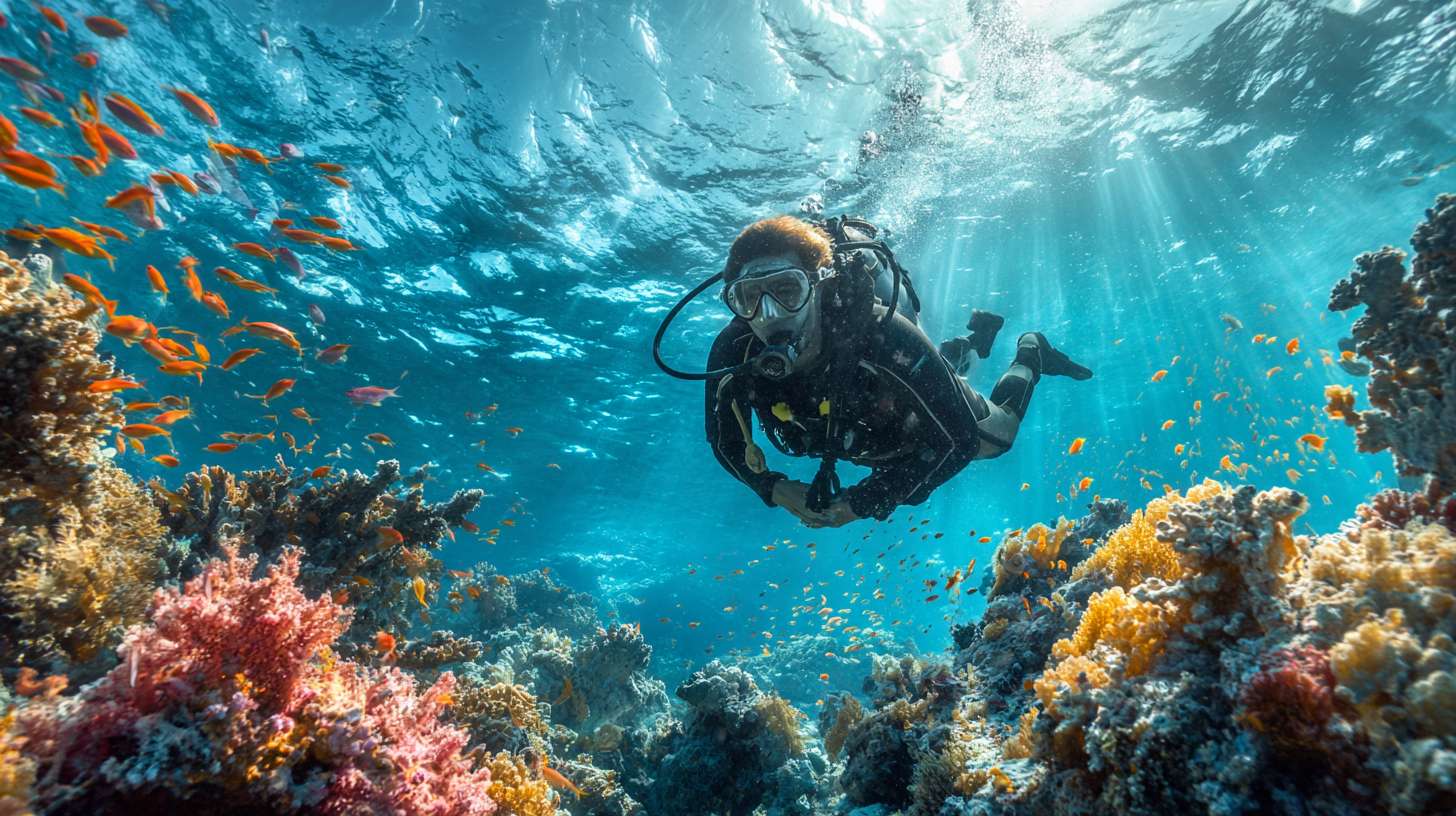
Scuba is an underwater activity where divers use specialized equipment to breathe and move beneath the water’s surface. Unlike swimming or snorkeling, scuba allows you to stay underwater for extended periods and reach greater depths.
For most people, scuba is a recreational experience. It offers the chance to witness coral reefs, colorful fish, underwater caves, and even shipwrecks up close.
However, scuba isn’t limited to tourism. It also plays an important role in marine research, rescue operations, and underwater construction.
In everyday language, when people say “scuba,” they usually mean scuba as a whole, not just the equipment.
The History of SCUBA
The history of scuba shows how underwater breathing changed from basic early methods to the advanced systems used today.
Over time, different inventions made it easier for people to stay underwater longer and move more freely below the surface.
| Period | Milestone |
|---|---|
| Early Interest | The idea of breathing underwater captured human interest for centuries and inspired early experiments. |
| Early Methods | Breath-hold diving and diving bells were used to spend more time underwater. |
| Surface-Supplied Systems | Divers later used helmets connected to air pumps through long hoses, which allowed underwater breathing but limited movement. |
| 1940s Breakthrough | Jacques Cousteau and Émile Gagnan developed the Aqua-Lung in the 1940s, which made modern recreational scuba diving more practical by allowing divers to carry compressed air underwater. |
| Modern Scuba | This invention became the foundation of modern scuba, and SCUBA became widely known as Self-Contained Underwater Breathing Apparatus. |
It’s worth noting that Christian J. Lambertsen, an American physician, independently developed an underwater breathing unit for the U.S. military in 1939 and is credited with coining the term “SCUBA” in 1952. So the word itself has military and medical origins, not just a French diving heritage.
How Does Scuba Work?
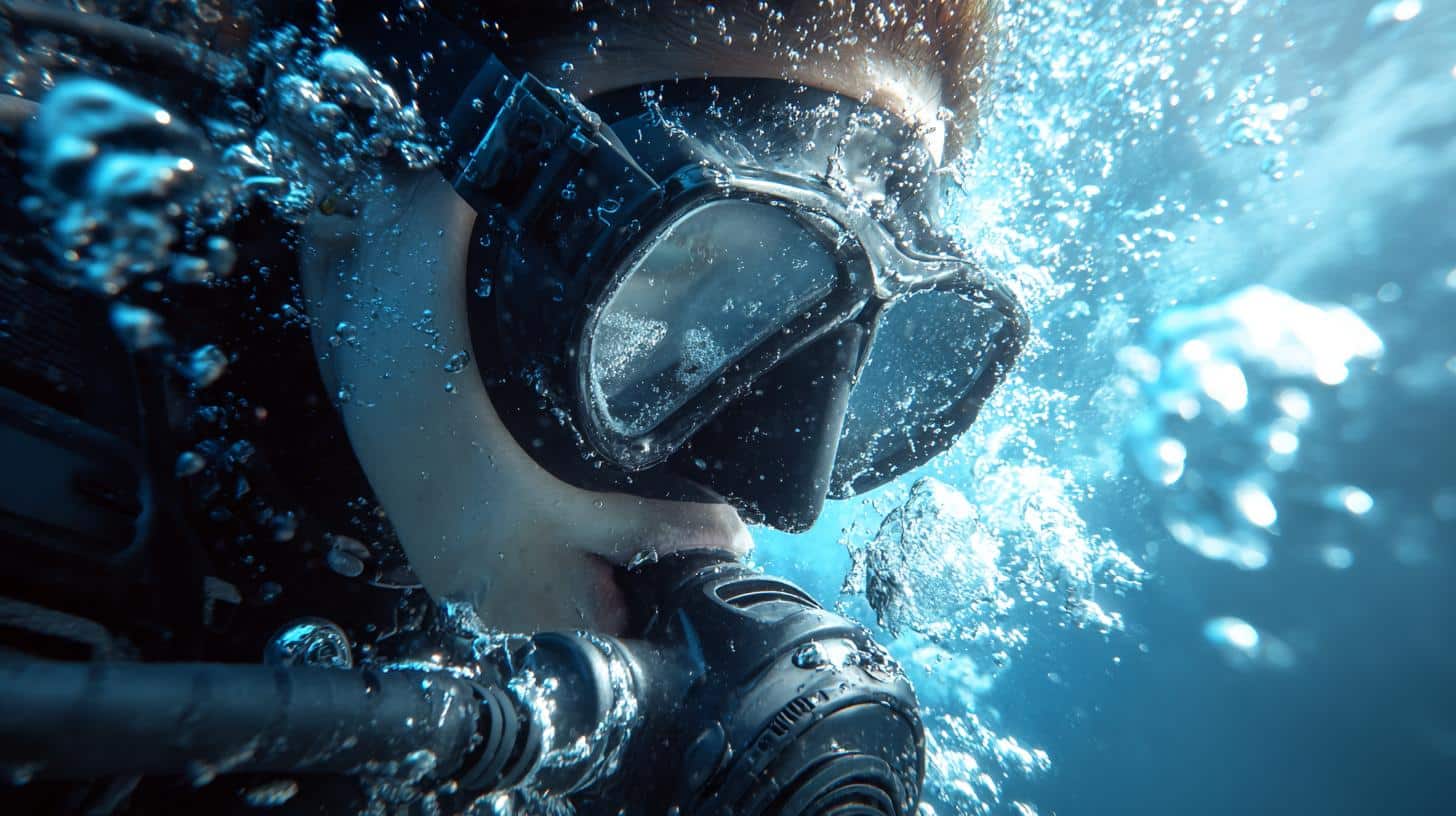
At its core, scuba allows a person to breathe compressed air stored in a tank while underwater.
The system delivers air at a pressure that matches the surrounding water pressure, allowing comfortable breathing underwater.
Here’s how the process works in simple terms:
- Air is stored in a high-pressure tank.
- A regulator reduces the pressure to a breathable level.
- The diver inhales air through the regulator and exhales it back into the water.
- A buoyancy system helps control depth and movement.
The regulator is the most critical component. Without it, the pressure difference between tank air and ambient water pressure would make breathing impossible or dangerous.
Most modern regulators are demand-based, meaning they only release air when you inhale. This design reduces waste and improves safety underwater.
It’s important to understand that scuba systems do not produce oxygen. Instead, they allow divers to carry their own breathing gas underwater, which is why the term “self-contained” is so important.
Main Scuba Equipment Explained
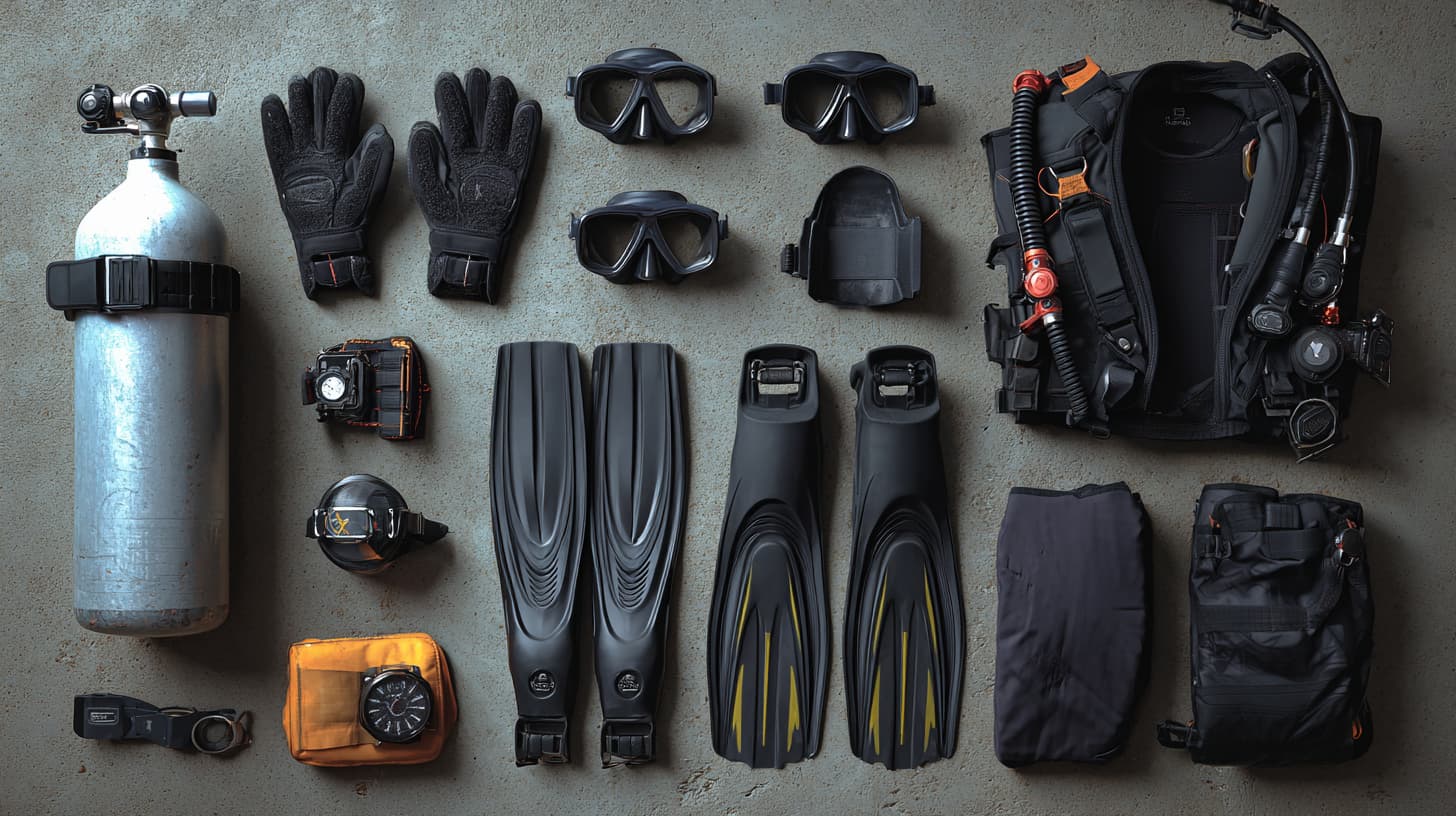
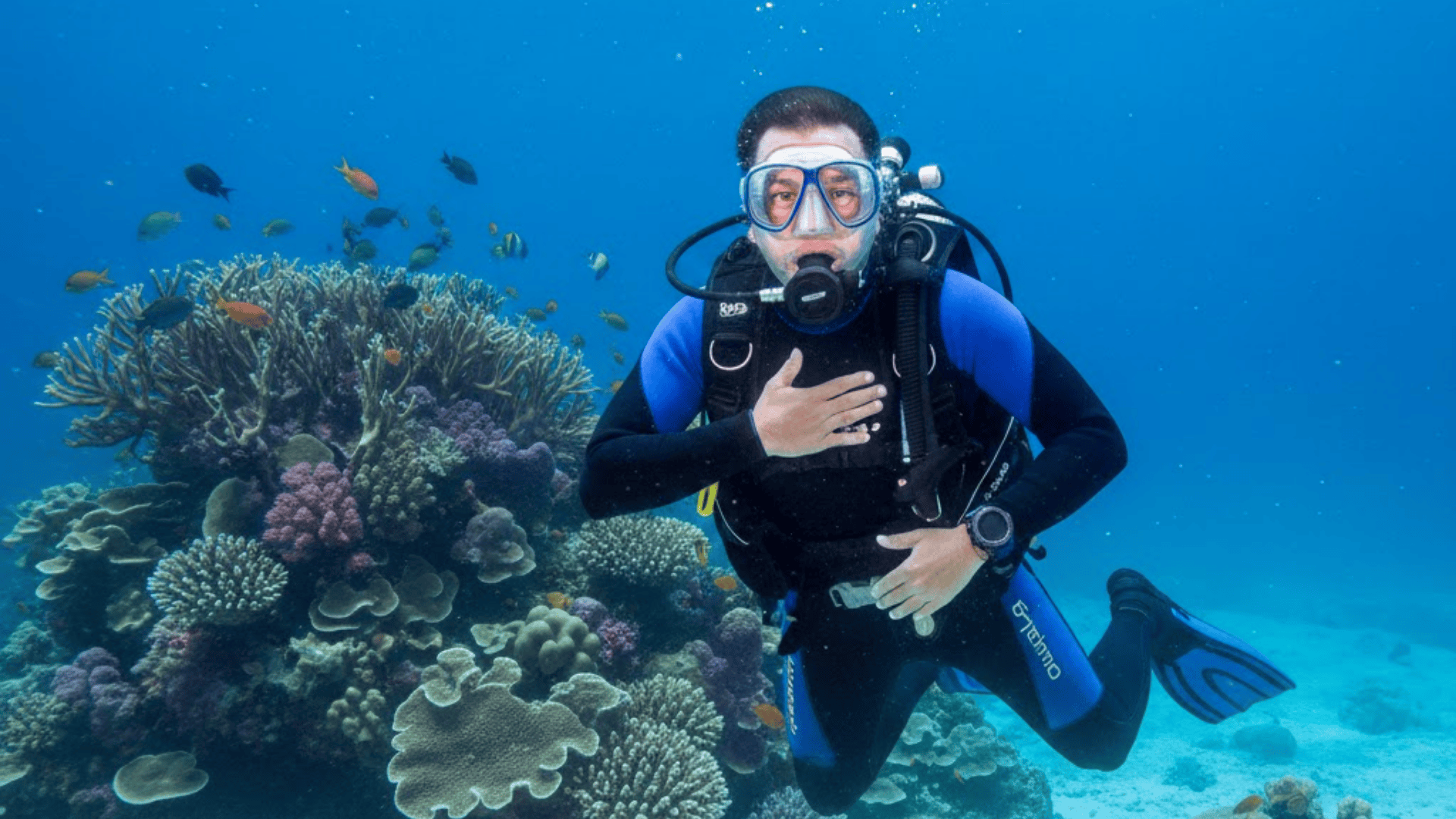
Scuba uses multiple pieces of equipment that work together to support breathing and movement underwater. While it may look complicated at first, each component has a clear purpose.
The most essential scuba equipment includes:
- Tank (Cylinder): Stores compressed air
- Regulator: Controls airflow and makes breathing possible
- BCD (Buoyancy Control Device): Helps you float or sink
- Mask: Enables clear vision underwater
- Fins: Improve movement efficiency
- Wetsuit/Drysuit: Protects against cold water
Additionally, divers often use a dive computer or gauges to monitor depth, time, and air supply.
Together, these components form the complete self-contained underwater breathing apparatus that makes scuba possible.
SCUBA vs Snorkeling: Key Differences
Many beginners often confuse scuba and snorkeling, but the two are different underwater activities. While both allow you to spend time in water, the experience, equipment, and depth vary significantly.
| Feature | Scuba | Snorkeling |
|---|---|---|
| Depth | Can go deep underwater | Stays near the surface |
| Equipment | Tank, regulator, BCD | Mask, snorkel, fins |
| Training | Required | Not required |
| Experience | More immersive underwater time | Surface-level viewing |
Snorkeling is easier to begin with and requires minimal gear, making it ideal for casual use. Scuba, on the other hand, allows for longer, deeper underwater time, offering a more detailed, extended underwater experience.
What About Freediving?
Freediving is a third option that often gets left out of this comparison. Like snorkeling, it requires no tank.
But unlike casual snorkeling, freedivers train breath-hold techniques to descend to significant depths on a single breath.
Competitive freedivers can reach beyond 100 meters. It’s a discipline of its own, separate from both snorkeling and scuba.
Do You Need Training for Scuba?
Proper training is required before attempting scuba. Unlike swimming, scuba involves understanding pressure, breathing techniques, and safety procedures.
The most widely recognized certification agencies are PADI (Professional Association of Diving Instructors) and SSI (Scuba Schools International). Both offer Open Water Diver courses that certify you to dive to 18 meters (60 feet) independently.
- How to use scuba equipment properly
- How to communicate underwater
- How to manage buoyancy
- Emergency safety techniques
Certification ensures that divers can enjoy the experience safely. Without it, scuba can be risky.
Nitrogen Narcosis and Decompression Sickness: What New Divers Should Know
Two physiological risks come up in almost every beginner scuba course, and they’re worth understanding before you ever enter the water.
Decompression sickness (DCS), sometimes called “the bends,” occurs when a diver ascends too quickly. Nitrogen that dissolved into the blood and tissues under pressure forms bubbles as pressure decreases rapidly.
Symptoms range from joint pain and fatigue to paralysis in severe cases.
Recreational divers avoid this by staying within no-decompression limits on a dive computer and ascending slowly (no faster than 9 meters per minute, with a safety stop at 5 meters for 3 minutes).
Nitrogen narcosis is a disorienting effect that typically begins at depths beyond 30 meters.
Increased nitrogen partial pressure affects the nervous system, producing feelings similar to mild intoxication. It impairs judgment and reaction time. Most recreational certifications limit dives to 18–40 meters, partly because of this.
These are not reasons to avoid scuba. They’re reasons to get properly certified and dive within your training limits.
Common Misunderstandings About Scuba
Despite its popularity, there are still several misconceptions about scuba. One common myth is that scuba tanks contain pure oxygen. In reality, most recreational divers use compressed air.
Another misunderstanding is that scuba requires no training, which is incorrect and potentially dangerous.
Some people also believe scuba and snorkeling are the same, but as we’ve seen, they differ significantly in equipment, depth, and experience.
Finally, many assume scuba is only for professionals. In truth, millions of people around the world participate in recreational scuba every year.
SCUBA is More Than Just a Full Form
SCUBA stands for Self-Contained Underwater Breathing Apparatus, but it represents more than just a definition.
It covers the history of underwater breathing systems, the equipment used in diving, and the training required to do it safely.
From understanding how scuba gear works to knowing the difference between scuba and snorkeling, each part adds to a complete picture of the activity.
The scuba full form helps explain the concept, while the practice of scuba shows its real-world use. If scuba interests you, start by learning the basics and enrolling in a beginner certification course.
Frequently Asked Questions
Is Scuba Safe for Beginners?
Yes, scuba is safe for beginners when learned through certified training, proper supervision, and correct equipment use. Following safety rules and diving within limits greatly reduces risk.
How Long Can You Stay Underwater While Scuba?
Most recreational scuba dives last around 30 to 60 minutes, depending on depth, tank size, air consumption, and diving conditions. Experienced divers may manage time more efficiently.
What is the Best Age to Start Scuba?
Many training organizations allow children to start scuba from around age 10, depending on the program. Readiness also depends on confidence, maturity, health, and comfort in water.
Can You Scuba Dive without Knowing How to Swim?
Most scuba certification programs require basic swimming skills. Divers usually need to complete a short swim test and float comfortably, demonstrating they can remain calm in the water.