Cross-country skiing is one of the easiest and most beginner-friendly winter sports to try. Unlike downhill skiing, you do not need steep mountains or expensive lift tickets.
You move across snow using lightweight skis and poles, powered entirely by your own movement.
It works your entire body, gets you outdoors, and costs far less than downhill skiing. Anyone can start, regardless of fitness level or experience.
By the end of this post, you will know exactly what cross-country skiing is, how it works, what gear you need, and how to get started on your very first trip.
What Is Cross-Country Skiing?
Cross-country skiing is a winter sport where you move across snow using skis and poles, no steep mountain or chairlift needed.
You ski along flat or gently rolling trails powered entirely by your own body, making it one of the most accessible and beginner-friendly winter sports around.
The movement is simple: push, then glide. Your heel stays free and lifts off the ski with each stride, just like a normal walking step, creating the smooth flowing motion the sport is known for.
Why People Enjoy Cross Country Skiing
Cross-country skiing has a loyal fan base for good reason:
- It works your legs, arms, and core simultaneously, making it a great full-body winter workout.
- It is quieter and more relaxed than downhill skiing, with no crowded slopes or long lift lines.
- You can do it almost anywhere, including groomed trails, local parks, and open snowy fields.
Once you feel that first smooth glide, it is easy to see why cross-country skiing becomes a winter habit for so many.
The History of Cross-Country Skiing
Cross-country skiing has been around for thousands of years, long before it was ever a sport.
Ancient rock carvings in Norway show people on skis dating back over 5,000 years, using them simply to travel, hunt, and survive harsh winters.
By the 1800s, it had shifted from a survival skill to a recreational activity, with Norway already hosting races.
Military skiing competitions spread across Europe, and by 1924, they had become part of the first Winter Olympics. Today, it sits alongside the most respected disciplines in competitive winter sports.
Cross Country Skiing in Modern Times
Cross-country skiing looks quite different now compared to its humble origins. It shows up in three big ways in everyday life:
- Recreational skiing draws millions of casual skiers each winter who enjoy being outdoors in the snow.
- Competitive racing continues to grow with events held across North America, Europe, and beyond.
- Fitness-focused skiers use groomed trails and Nordic centers to stay active through the colder months.
Cross-country skiing went from a survival skill to a global winter sport loved by millions. That staying power says everything about how special it really is.
Types of Cross Country Skiing
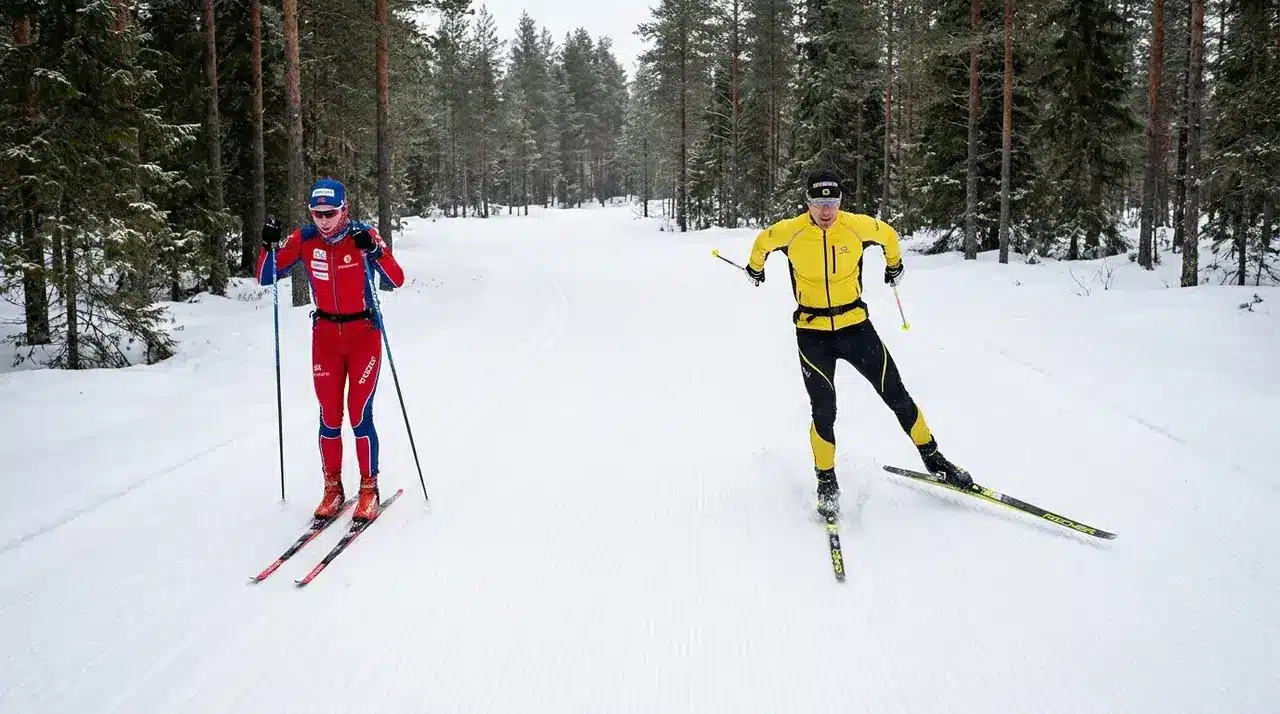
Not all cross-country skiing looks the same. Knowing the different types helps you figure out which one suits you best.
1. Classic Cross Country Skiing
Classic skiing is the most traditional form of the sport. You ski along two parallel tracks in the snow, moving forward in a straight line. The motion feels very close to walking or jogging, which makes it easy to pick up.
If you are starting, classic skiing is the best place to begin. It is forgiving, natural, and does not require much technical skill to enjoy right away.
2. Skate Skiing
Skate skiing is a bit more advanced. Instead of moving straight ahead, you push off to the side in a motion that looks a lot like ice skating. It takes more balance, coordination, and energy than classic skiing.
Because of the wider, more powerful push, skate skiing tends to be noticeably faster. Many experienced skiers prefer it for fitness and racing, but most beginners start with classic skiing before trying this style.
3. Nordic Skiing and What It Means
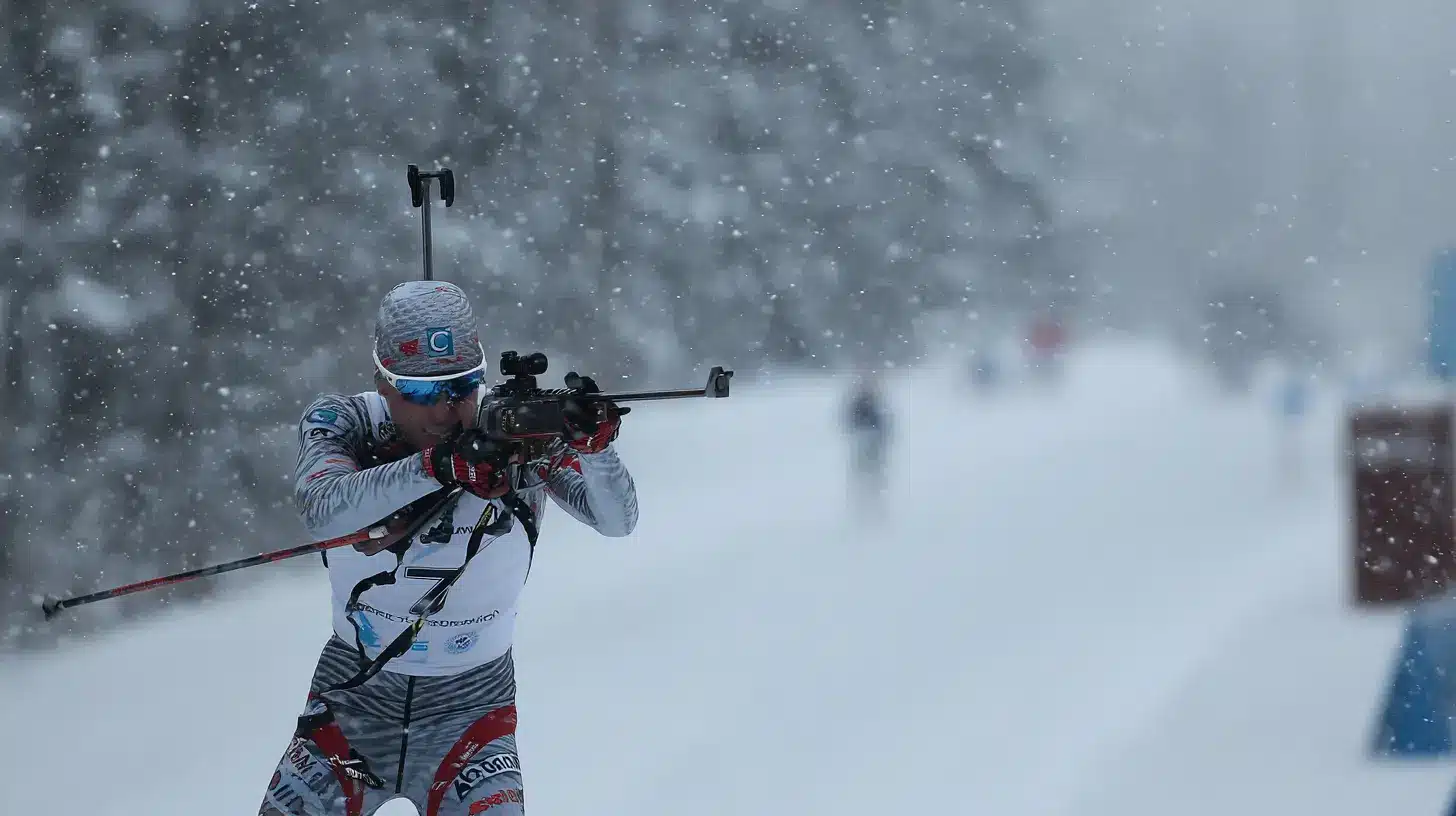
You will often hear the word Nordic used when people talk about cross-country skiing. Nordic is a broader term encompassing a family of snow sports. It includes cross-country skiing, ski jumping, and biathlon, which combines skiing with target shooting.
For most beginners, Nordic and cross-country skiing mean roughly the same thing in everyday conversation. The important thing to know is that cross-country skiing sits at the heart of the Nordic family.
Cross-Country Skiing vs Downhill Skiing
Both are skiing, but the experience is quite different. Here is a quick breakdown.
| Category | Cross-Country | Downhill |
|---|---|---|
| Terrain | Flat or rolling trails | Steep mountain slopes |
| Propulsion | Self-powered | Gravity and chairlifts |
| Heel | Free to lift | Locked to ski |
| Fitness Level | Full body workout | Leg and core focused |
| Cost | More affordable | More expensive |
| Learning Curve | Easier for beginners | Steeper learning curve |
| Setting | Nordic trails, forests | Ski resorts |
If you want speed and big slopes, downhill is your sport. If you prefer a peaceful workout on open trails, cross-country is the better fit.
What Equipment Is Used for Cross Country Skiing
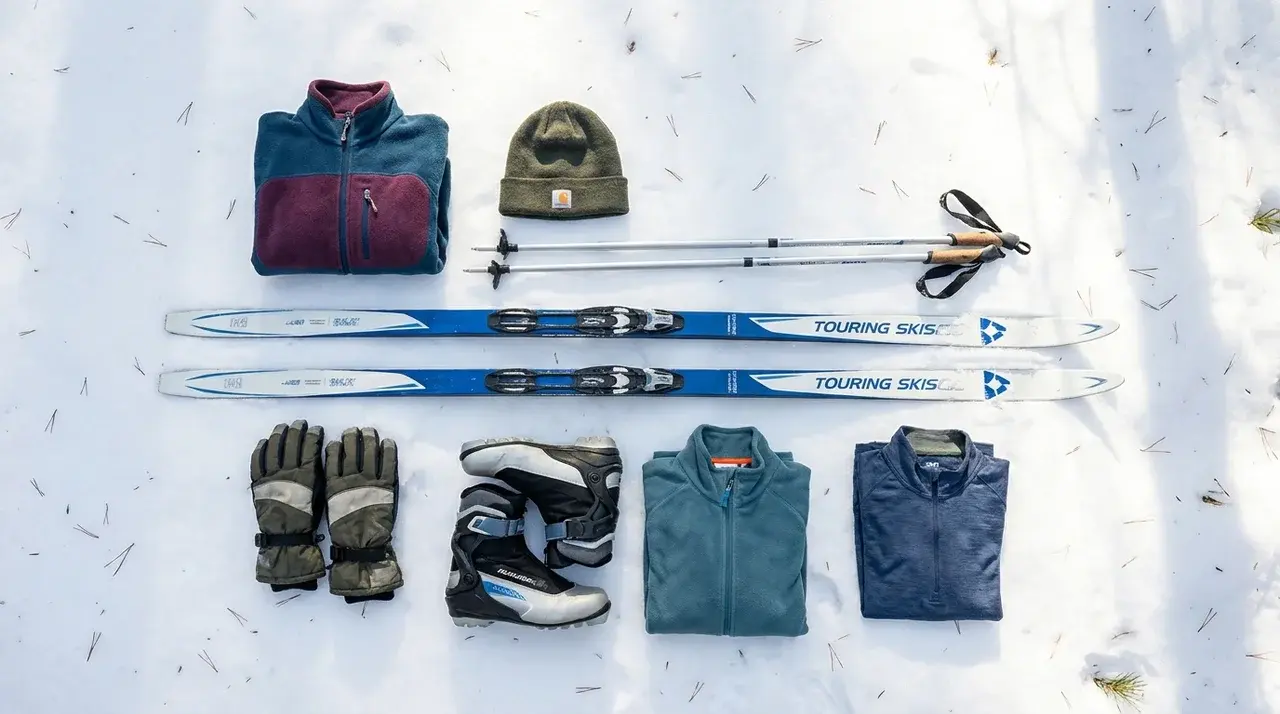
The right gear makes a big difference on the trail. From skis to clothing, this section covers all the essentials.
Cross Country Skis
Cross-country skis are thinner and lighter than downhill skis, which is what allows the smooth glide the sport is known for.
Classic skis are designed for parallel-track skiing and work well for beginners. Skate skis are shorter and designed for the side-to-side pushing motion.
Ski length depends on your body weight, skill level, and skiing style. A Nordic center can help you find the right fit.
Ski Boots and Bindings
Only the front of your boot clips into the binding. Your heel stays completely free, giving cross-country skiing its natural walking and gliding motion.
Boot type depends on your skiing style:
- Classic skiing uses softer, flexible boots that let your foot move naturally with each stride.
- Skate skiing requires stiffer boots that support your ankle during the wider side-to-side push.
Always try boots on before heading out. A good fit matters more than most beginners expect.
Ski Poles
Poles add speed and keep you balanced through each stride. Every time you plant and push, you move faster and more efficiently.
Pole height varies by style. Classic poles reach around shoulder height, while skate poles run a little taller. If you are renting for the first time, ask the staff to fit your poles properly before you head out.
Clothing for Cold-Weather Skiing
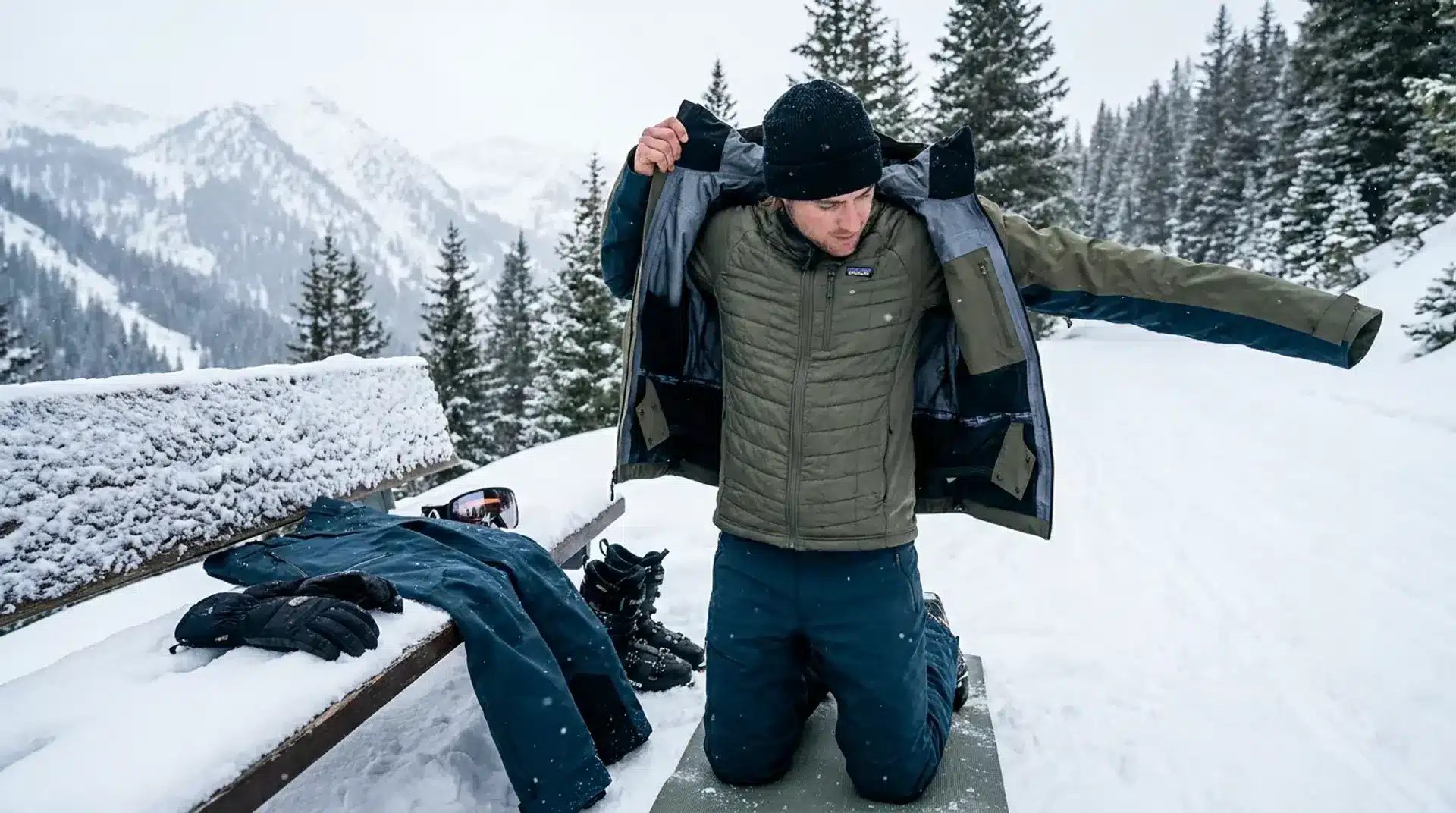
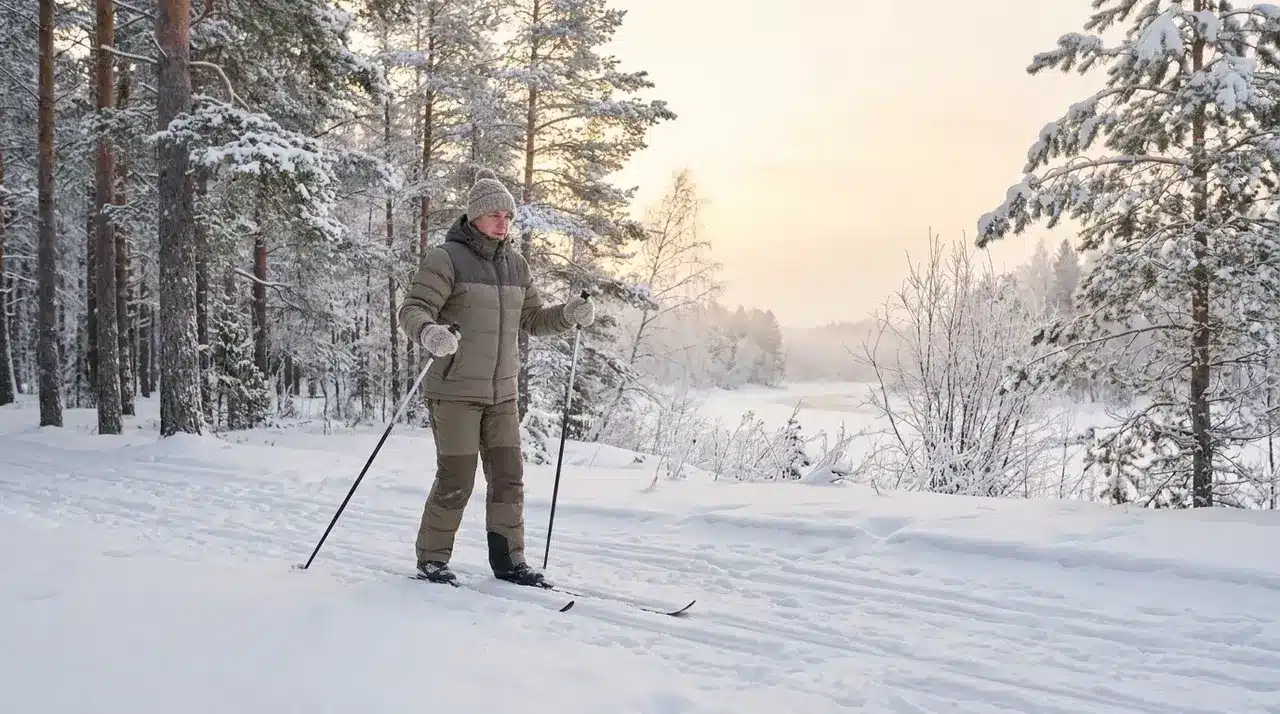
Skip the heavy ski jacket. Cross-country skiing gets your heart rate up fast, and bulky clothing will leave you overheating quickly.
A simple layering system works best:
- A moisture-wicking base layer to keep sweat away from your skin.
- A light mid-layer for warmth without bulk.
- A thin, breathable outer layer to cut the wind if needed.
- Add a hat, gloves, and warm socks, and you are good to go.
Good equipment does not have to be expensive or complicated. Start simple, get fitted at a Nordic center, and build from there.
Is Cross-Country Skiing Hard to Learn?
Learning cross-country skiing has a short learning curve. Most beginners feel comfortable on flat trails within a single session.
Balance feels a little different at first since your feet are longer and the surface slides, but starting on flat groomed trails makes the adjustment quick.
Falls do happen, especially on small slopes, but they are rarely painful.
A first session is really about three things: getting a feel for the forward glide, learning to plant and push with your poles, and picking up the basics of stopping and turning.
Most beginners string it all together within an hour on flat terrain.
Common Mistakes Beginners Make
|
Where You Can Go Cross-Country Skiing
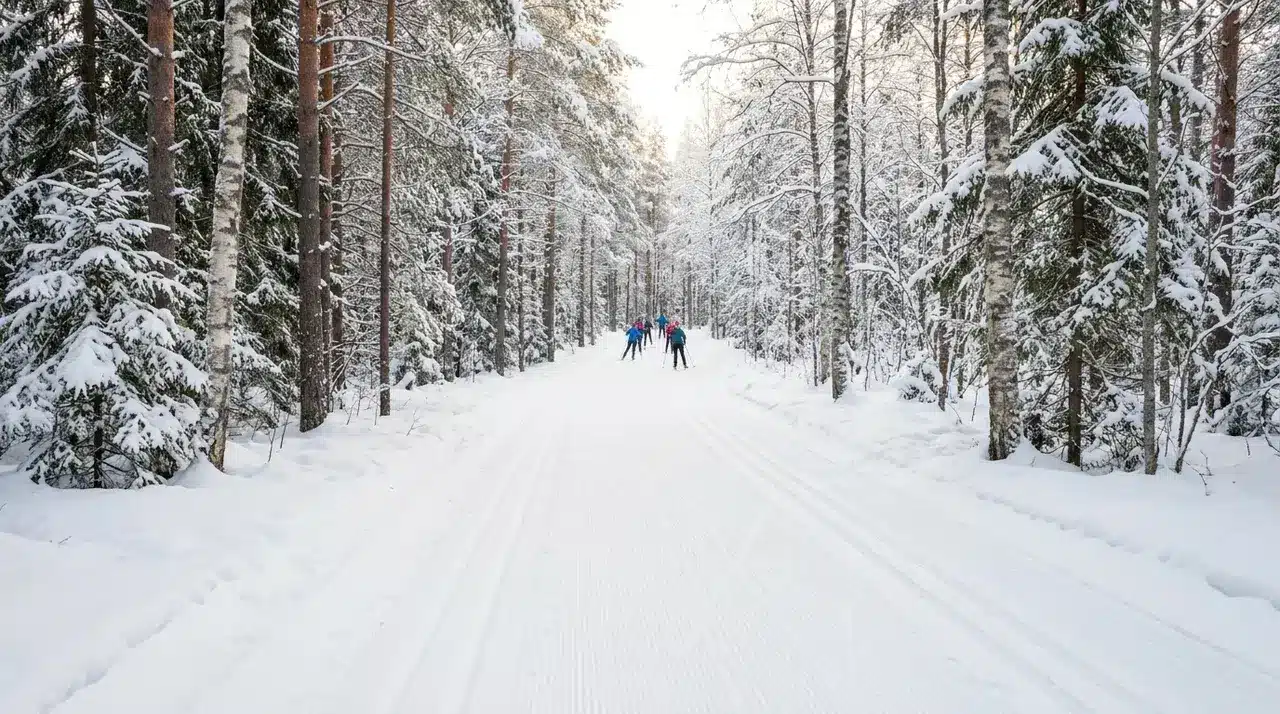
One of the best things about cross-country skiing is how many places you can actually do it. Here is a look at the most common options.
1. Groomed Ski Trails
Groomed trails are the easiest and most beginner-friendly place to start. The snow is flattened and prepared in advance, making gliding much smoother than on untouched snow.
Classic skiing trails usually have two parallel tracks already pressed into the snow, so your skis slot right in.
Most groomed trail networks also use signs to show difficulty levels, so you can easily pick a route that matches your skill level and build up gradually from there.
2. Nordic Ski Centers
Nordic centers are ideal for anyone just getting into the sport. Most offer rental gear, beginner lessons, and clearly marked routes so you always know where you are going.
Staff at these centers can properly fit your skis and poles, which makes a bigger difference than most beginners expect. Find a Nordic ski center near you to get started with the right guidance from day one.
3. Backcountry Cross Country Skiing
Backcountry skiing means heading out onto ungroomed, unmarked terrain away from designated trails. It offers a more adventurous experience but comes with added challenges.
Navigation, changing snow conditions, and safety planning all become important factors.
For beginners, backcountry skiing is best saved for later. Starting on marked groomed trails builds the skills and confidence you will need before venturing out on your own.
Tips for Your First Cross-Country Ski Trip
A little preparation goes a long way on your first day out. Keep these four tips in mind before you hit the trail.
1. Rent Equipment Before Buying
Renting before buying is the smartest move for beginners. Staff can properly size your skis and poles, saving you from spending money on the wrong gear early on.
2. Start with beginner-friendly trails
Choose a flat or gently rolling route and keep it short. A small loop is perfect for getting comfortable without overdoing it. Steep hills can wait until your balance and technique improve.
3. Dress in Lightweight Layers
Skip the heavy ski jacket. Cross-country skiing warms you up fast, so follow these layering tips to ski with lightweight layers you can remove as needed. Pack extra gloves or dry socks, just in case.
4. Learn Basic Trail Etiquette
Stay on the correct track, move to the side if you need to stop, and always let faster skiers pass without blocking the path. A few simple habits keep the trail enjoyable for everyone.
Your first ski trip does not need to be perfect. Start simple, take it slow, and enjoy the experience for what it is.
Conclusion
Cross-country skiing is one of those winter activities that rewards you from the very first session. It is affordable, accessible, and genuinely good for your body and mind.
Whether you are looking for a peaceful outdoor workout or a new winter hobby, this sport delivers both without any unnecessary complexity.
Find a groomed trail near you, rent some gear, and give it a try. You might discover your new favorite way to spend a winter day.
Frequently Asked Questions
Is Cross Country Skiing Good for Beginners?
Yes. Classic skiing on flat groomed trails is easy to pick up, especially with rental gear and a short lesson on your first day.
Can You Cross Country Ski without Lessons?
Yes, but a short lesson helps you learn faster and avoids the frustration most beginners run into on their own.
What Muscles Does Cross Country Skiing Work?
It works your legs, glutes, arms, shoulders, back, and core, with effort varying based on speed and terrain.
Can You Cross Country Ski on Regular Snow?
It works best on groomed or packed snow. Deep powder is harder to manage, and backcountry conditions may need different skis.