

Pick up a surfboard from the 1950s and one from this year, and you would swear they belong to two different sports.
One is heavy, dense wood that soaks up water like a sponge. The other is a featherlight foam core wrapped in materials once reserved for aircraft.
That shift did not happen by accident. Every material change came from surfers pushing their boards past what the last one could handle, then someone figuring out how to build something better.
Once you understand what surfboards are made of, buying one stops being a guessing game. You start by choosing how you want to ride.
|
What Are Modern Surfboards Made Of? Most modern surfboards are made from a foam core wrapped in fiberglass cloth and sealed with resin. The most common combinations are polyurethane foam with polyester resin and expanded polystyrene foam with epoxy resin. |
A Brief History of Surfboard Materials
According to a study published in the Journal of Applied Polymer Science, surfboard construction materials have shifted twice in major ways: first from solid wood to foam after World War II, then from polyurethane to more specialized composites as environmental regulations forced change.
Traditional Hawaiian surfboards were mainly carved from native woods such as koa and wiliwili. Later, wooden boards incorporated lighter woods such as balsa and paulownia as builders sought lighter designs.
That changed once fiberglass and polyurethane foam entered the picture in the 1950s, cutting weight and opening the door to sharper turns and bigger waves.
Clark Foam’s unexpected shutdown in 2005 disrupted the industry’s polyurethane foam supply and accelerated interest in EPS and alternative constructions.
Today, shapers choose from foam, resin, and fiber based on wave type, rider weight, and skill level, and each shift along the way solved a real problem surfers were facing at the time.
Types of Surfboard Materials Explained
Modern surfboards are built from a mix of foam cores, resins, and reinforcement layers, and each combination changes how a board floats, flexes, and holds up on a wave. This is a look at the materials you will actually find on a rack or in a shaper’s bay.
Wood

It was the only option before the 1950s, and Hawaiian shapers worked almost exclusively with local hardwoods like koa, since that’s what grew nearby and could withstand saltwater.
Wood soaks up water over time and gets heavier with use, but it lasts for decades if cared for, and it remains one of the more eco-friendly builds on the market.
Balsa wood entered the picture once fiberglass became available after World War II, since its lighter weight paired well with fiberglass cloth.
PU (Polyurethane)

A PU core gets wrapped in fiberglass cloth, then sealed with either polyester or epoxy resin, with epoxy costing more but holding up better against dings.
The catch is that PU manufacturing emits significant amounts of volatile organic compounds during production, and one of the largest blank suppliers eventually shut down over this.
Even so, PU remains common because it’s affordable and gives a responsive, familiar feel that many surfers still prefer.
EPS (Expanded Polystyrene)
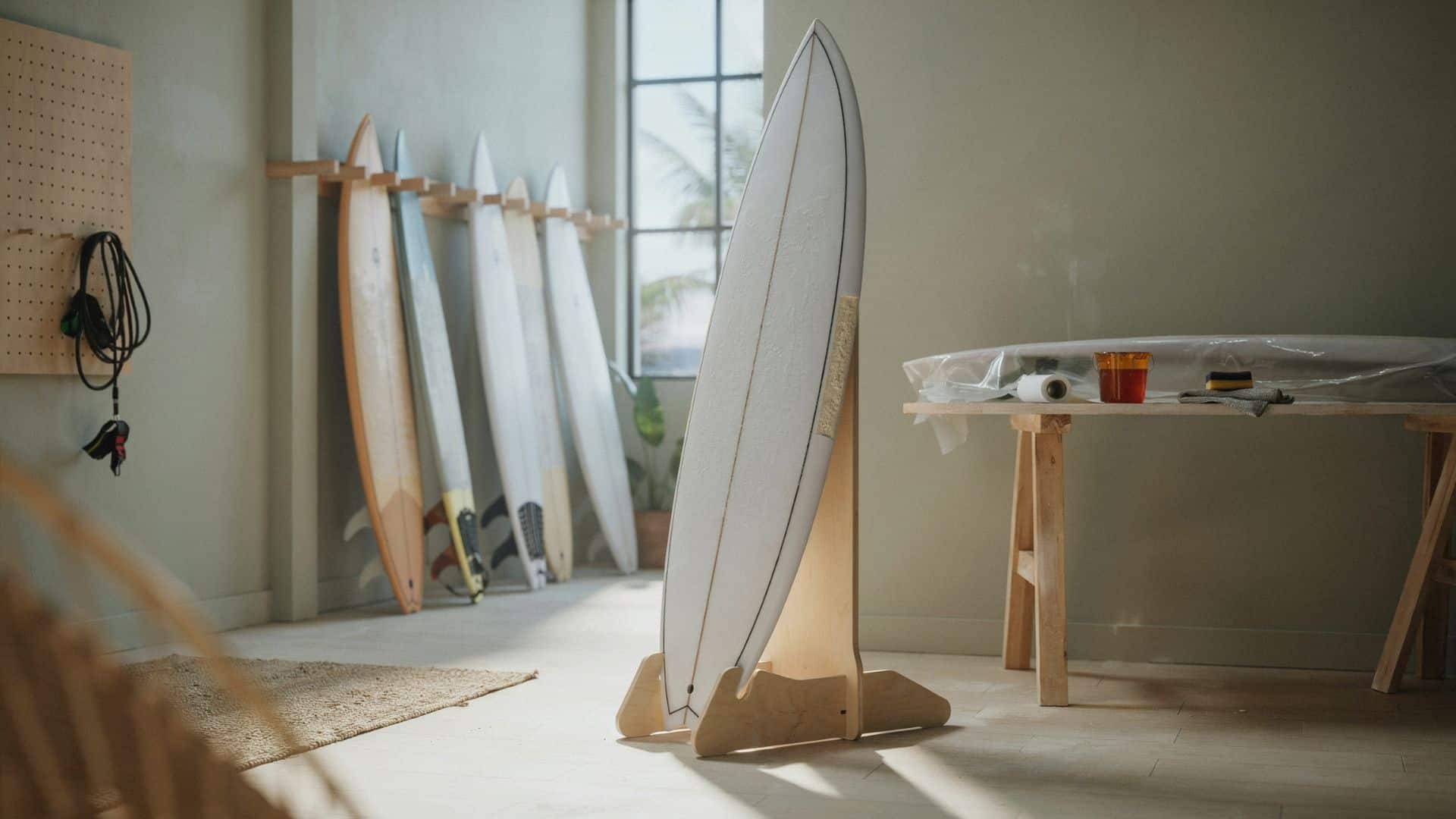
It existed quietly for years before it became mainstream, mostly because PU was cheaper and shapers already knew how to work with it.
That changed when environmental regulations forced a major PU producer to close, prompting the industry to seek alternatives.
It’s also lighter, which makes it a favorite for aerial maneuvers and quick, playful surfing.
XPS (Extruded Polystyrene)
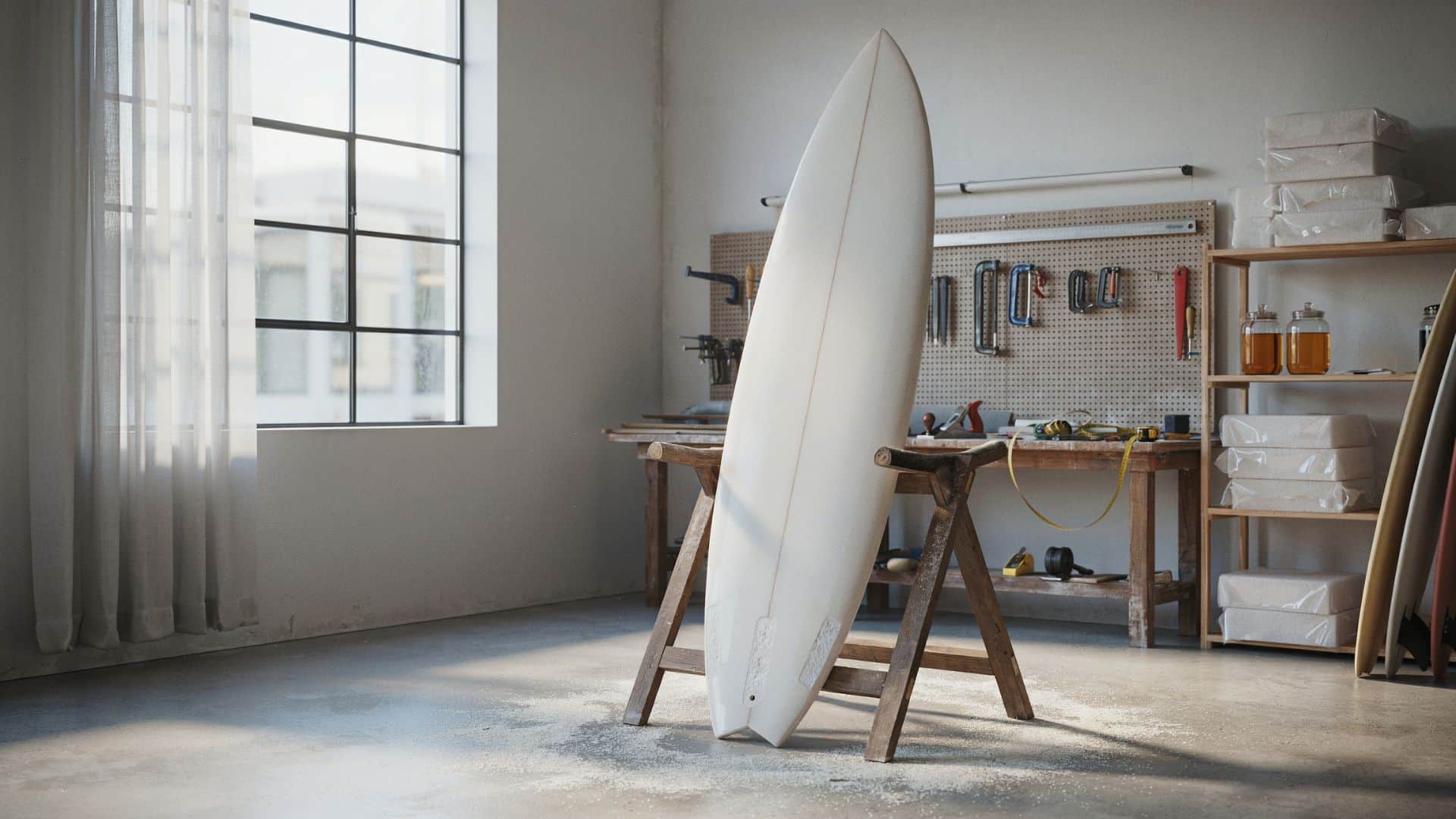
It shares the same chemical base as EPS, but the manufacturing process changes everything about how it performs.
EPS is an open-cell foam, meaning a large share of the board is actually trapped air, which keeps it light but also limits its density.
XPS uses a closed-cell structure instead, so it comes out heavier than EPS but still lighter than PU, and it resists water absorption and denting far better than either.
That durability and responsiveness make it a strong choice for advanced surfers pushing bigger, more demanding waves.
Soft-Top

Soft-top boards swap a hard fiberglass or resin shell for a soft EVA foam deck, which takes the edge off both impact and intimidation for anyone just starting out.
That forgiving surface means fewer bruises and a more stable ride while learning to balance and paddle, which is exactly why most surf schools and rental shacks stock them.
No single material is objectively “the best,” since each one is built to solve a different problem on the water.
Once you’ve got a feel for what each one offers, the comparison table ahead makes it even easier to see them side by side.
Inside a Surfboard: How Core, Skin, and Stringer Affect Performance
Material alone doesn’t determine how a board performs, since the internal structure matters just as much. Three parts work together here: the core, the skin, and the stringer.
Core: The core is the board’s foam or wood interior that determines weight, buoyancy, and flex. PU, EPS, and XPS all refer to core material choices and not the outer shape.
Skin: The skin is the outer layer, usually fiberglass cloth coated with polyester or epoxy resin. It protects the core and adds the stiffness needed for control on a wave.
Stringer: The stringer is a thin strip, often wood, running down the board’s center. It reinforces the core against flex and twisting, though some modern boards skip it entirely for added responsiveness.
Picking a board comes down to matching material to shape. A stiff blank paired with the wrong rocker can work against you on the wave.
Resin Types Polyester vs Epoxy
The resin is the outer layer that seals the surfboard and bonds the fiberglass cloth to the foam core. The two most common options are polyester and epoxy resins, and each offers a different balance of cost, weight, durability, and feel.
| Feature | Polyester Resin | Epoxy Resin |
|---|---|---|
| Cost | More affordable | More expensive |
| Weight | Slightly heavier builds | Lighter overall construction |
| Durability | Good for everyday surfing | Higher resistance to impacts and cracks |
| Flex | Softer, traditional feel | Stiffer, more responsive feel |
| UV Resistance | More likely to yellow over time | Better color retention |
| Best For | Budget-friendly boards and classic PU builds | Lightweight performance boards and EPS/XPS builds |
Polyester resin has been the traditional choice for decades because it is affordable, cures quickly, and works well with polyurethane foam cores.
Epoxy resin costs more upfront but offers a lighter, stronger construction with improved water resistance. It is commonly paired with EPS and XPS foam cores and helps create boards that are durable, responsive, and less prone to yellowing over time.
The better option depends on how you surf. Polyester works well for surfers who want a traditional feel and easier repairs, while epoxy is a strong choice for those who prioritize lighter weight and long-term durability.
Carbon Fiber and Composite Sandwich Construction
Carbon fiber composite constructions became more visible in the mid-2000s, with brands such as Haydenshapes and Firewire helping popularize alternative sandwich constructions.
That same year, Firewire built its composite sandwich boards by wrapping an EPS core in fiberglass, then adding an aerospace-grade layer for extra ding resistance, with balsa and paulownia strips reinforcing the rails.
These boards cost more than standard PU builds, but they reward the effort with a lighter, more responsive ride, making them a strong fit for intermediate to advanced surfers chasing high-performance conditions.
Surfboard Material Comparison
A quick side-by-side makes it easier to match a board to how and where you actually surf.
| Material | Weight | Durability | Best For | Price |
|---|---|---|---|---|
| Wood | Heavy | High | Recreational riding, choppy conditions | Mid to High |
| PU Foam | Medium-Heavy | Medium | All-around use, easy repairs | Low to Mid |
| EPS Foam | Light | Medium-High | Beginners to intermediate surfers | Mid |
| XPS Foam | Medium | High | Advanced, high-performance surfing | High |
| Soft-Top | Light | Low-Medium | First-time surfers, casual sessions | Low |
The right pick comes down to matching that tradeoff to your skill level and the waves you actually ride.
Choosing the Right Surfboard Material for Your Skill Level
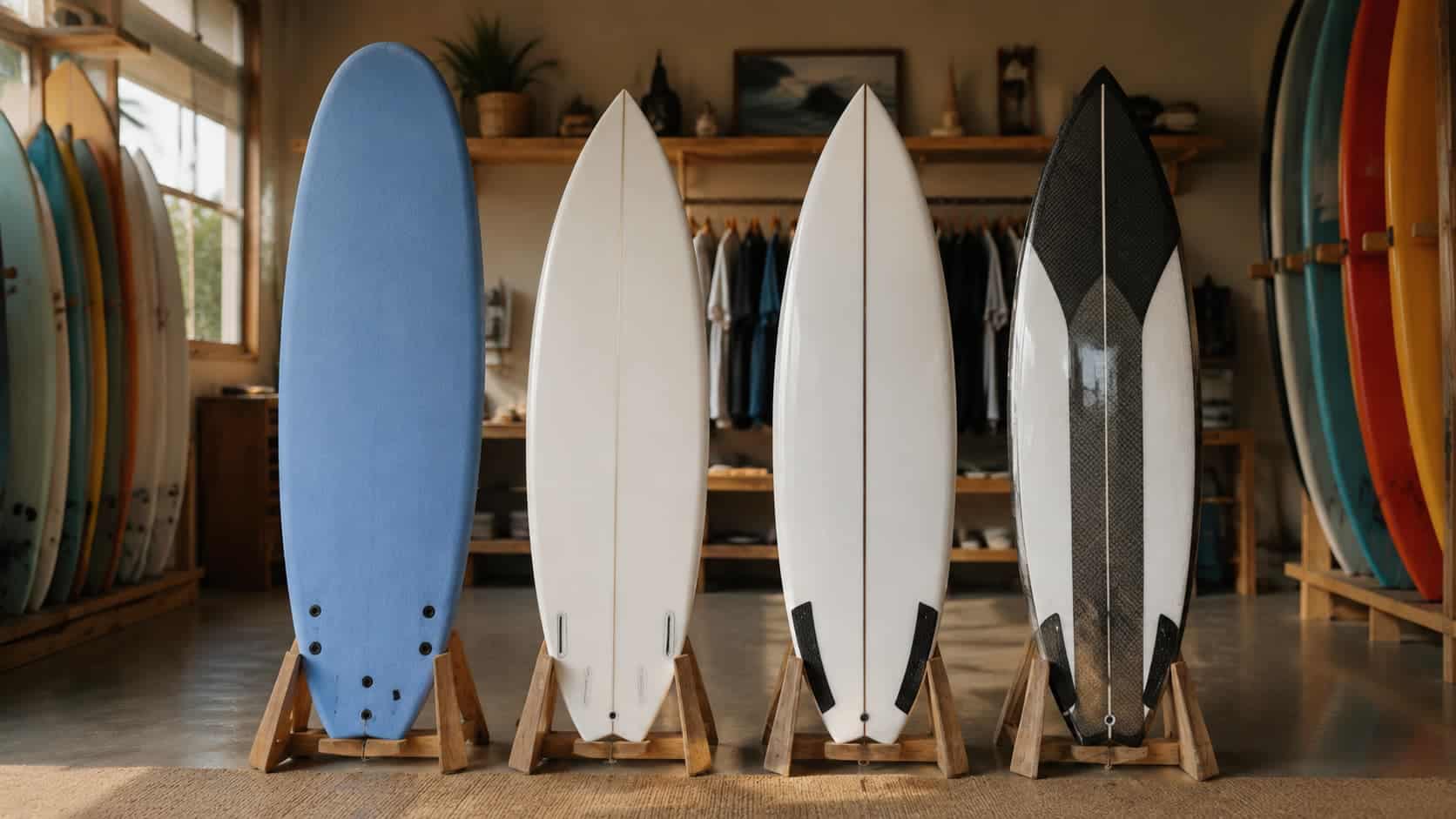
Skill level plays a bigger role in material choice than most new surfers expect. Matching your experience to the right foam and build can considerably shorten the learning curve.
- Beginners: Soft-top or EPS foam boards work best, since both prioritize buoyancy and forgiveness over speed.
- Intermediate Surfers: PU or EPS boards with fiberglass reinforcement strike a balance between control and durability.
- Advanced Surfers: XPS construction boards suit surfers chasing sharper turns and faster response.
Your skill level will shift over time, and so will the material that suits you best. This is a starting point, not a permanent rule that has to be followed.
How Material Affects Performance by Board Type
Material choice can’t happen in isolation, since board shape plays an equal role in how a surfboard performs. This is how the two work together across the most common board types.
| Board Type | Common Materials | Why It Works |
|---|---|---|
| Longboard | PU, EPS, Soft-Top | Extra buoyancy supports paddling and easy wave-catching |
| Shortboard | PU, EPS, XPS, | Lighter, flexible cores allow sharp turns and quick response |
| Fish/Funboard | PU, EPS | Added volume and width bring stability to small, slow waves |
| Gun | XPS | Denser, stronger builds hold up at high speed on big waves |
Look at the material first when you compare board types, since it changes how a board feels more than the outline does. A longboard built with soft foam handles differently than one built with epoxy, and a shortboard reacts to XPS in ways foam never will.
How to Tell What Material Your Surfboard Is Made Of
If you’re buying secondhand or just curious about a board you already own, a few checks reveal what’s inside.
Tap the deck gently: a dull, solid thud usually points to PU foam, while a hollow, lighter sound suggests EPS or XPS.
Check the color and weight next, since PU boards tend to feel noticeably heavier for their size.
Look closely at the surface too, as a slightly rougher, more matte finish often signals epoxy resin over EPS, while a glossy, polished look points to polyester resin over PU.
When in doubt, the manufacturer’s sticker near the tail usually states the core and resin type directly.
Caring for Your Surfboard Based on Its Material
How you care for your board depends heavily on what it’s made of, since PU, EPS, XPS, wood, and soft-top all react differently to water, heat, and impact. This is a quick breakdown by material:
| Material | Care Tips |
|---|---|
| Wood | Rinse with fresh water after each session, dry fully before storage, and reseal with varnish or oil periodically to prevent water absorption |
| PU Foam | Rinse off salt and sand, avoid leaving the board in direct sun or a hot car, and repair dings quickly to prevent delamination |
| EPS Foam | Patch cracks immediately since EPS absorbs water fast once the seal breaks, and store away from prolonged heat exposure |
| XPS Foam | Wipe down after use, check fin boxes for hairline cracks, and store in a padded bag since XPS resists water but not impact damage |
| Soft-Top | Rinse and air dry, check the EVA deck for peeling edges, and avoid dragging the board on rough surfaces, which wears down the foam |
A little consistency goes a long way, since most surfboard damage comes from neglect. Get into a rinse-and-check habit, and your board’s material will hold up far longer than you’d expect.
Sustainability and the Future of Surfboard Materials
Surfboard manufacturing carries a real environmental cost, from the volatile organic compounds released during polyurethane production to foam cores that can sit in landfills for centuries without breaking down.
That impact is pushing manufacturers toward greener alternatives, including recyclable EPS cores, plant-based bio-resins, and natural-fiber laminates such as flax, hemp, and bamboo.
Some brands are even reusing industrial foam waste to reduce the need to produce new materials altogether. These options still lag behind traditional PU and epoxy builds on price and long-term performance data.
Sustainability is no longer a side conversation in surfboard manufacturing. As eco-friendly materials continue to improve, they will become the default option in the future.
Common Myths About Surfboard Materials
Surfboard materials come with their fair share of misconceptions, and many buyers end up choosing the wrong board because of them. These are a few of the most common ones.
- “Epoxy and EPS are the same thing.” Epoxy is a resin, not a core material. EPS is one type of core that pairs well with epoxy resin.
- “Wood boards are outdated and only for beginners.” Wood boards are actually harder to learn on because of their weight, and many advanced surfers use them for style-focused recreational riding.
- “Heavier boards are always more durable.” Weight and durability don’t move together in a straight line. XPS, for example, is lighter than PU but often more resistant to dents and water damage.
- “All foam boards perform the same.” PU, EPS, and XPS behave very differently in terms of flex, weight, and response, even though they’re all technically “foam.”
- “A more expensive material always means a better board.” Price often reflects manufacturing complexity and is not necessarily associated with better performance for your specific skill level or wave conditions.
Knowing the difference between these myths and reality can save you from buying a board that doesn’t actually match how or where you surf.
Final Thoughts
Every board on the rack tells you something about how it will ride once you know what to look for beneath the paint job.
Next time you’re standing in a shop or scrolling through options online, run your hand along the rail, check the deck for flex, and actually ask what’s inside before you ask about the price.
It’s a small habit, but it changes the whole conversation you have with yourself before buying. A board that matches your build and your waves starts feeling like something you just know how to move with.
Frequently Asked Questions
What is the Most Durable Surfboard Material?
XPS and composite sandwich builds tend to hold up best against dents and water damage, though wood remains highly durable for recreational, lower-impact riding.
Are Epoxy and EPS Surfboards the Same Thing?
No, epoxy is a resin used to coat the board, while EPS is the foam core material underneath. They’re often paired but aren’t interchangeable terms.
Is Wood or Foam Better for a Surfboard?
Wood offers durability and an eco-friendly build but adds weight. Foam, whether PU, EPS, or XPS, gives you a lighter, more maneuverable ride overall.
What Surfboard Material is Best for Beginners?
Soft-top or EPS foam boards work best for beginners, since both prioritize buoyancy and forgiveness, making it easier to catch waves and recover from falls.
How do I Know if my Board is PU or EPS?
Tap the deck: a dull thud usually indicates PU foam, while a lighter, hollow sound indicates EPS. Weight and finish also offer clues.