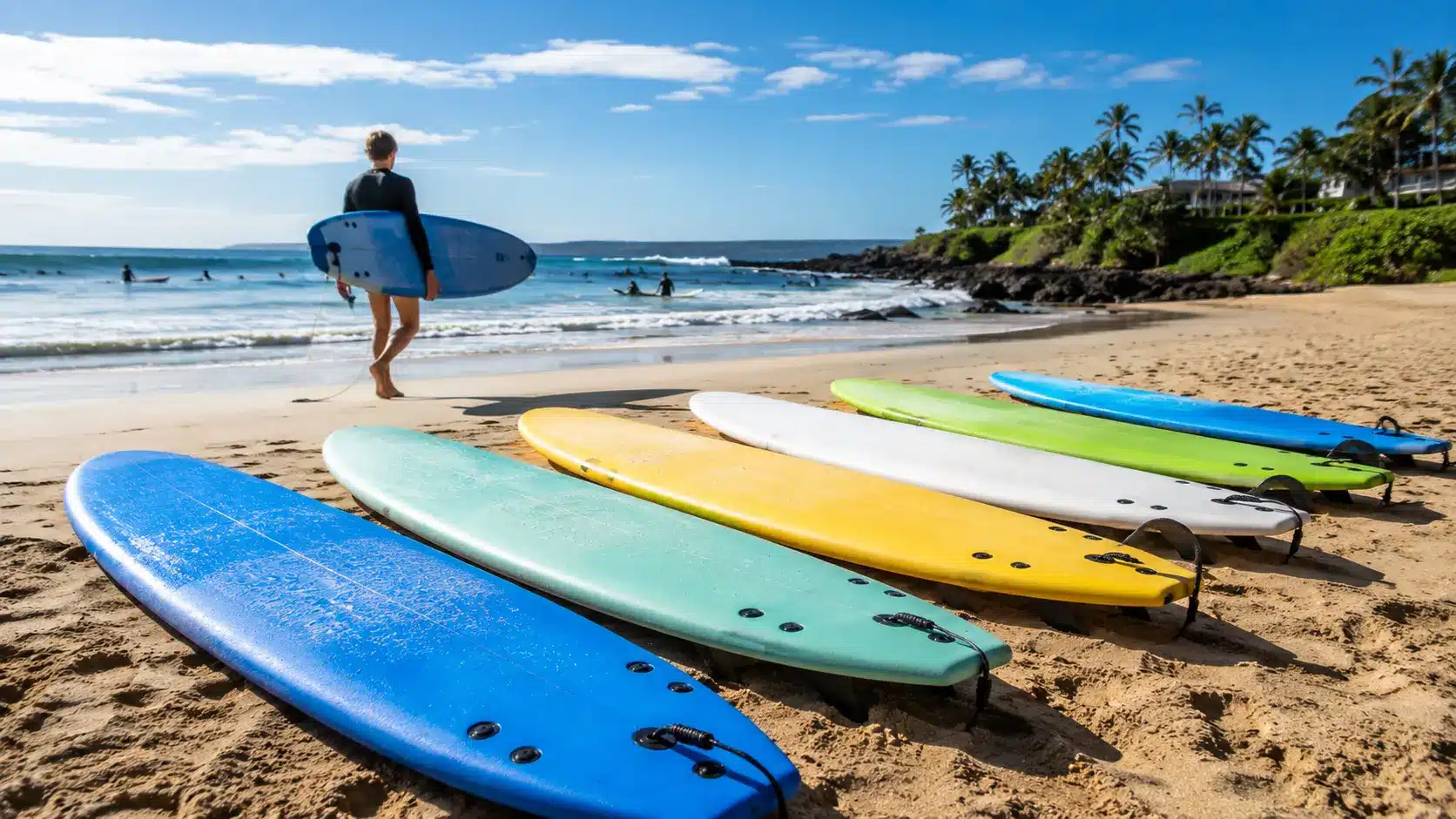
Picking the wrong surfboard is the number one reason most beginners quit surfing before they even get started.
A board that is too small, too narrow, or too low in volume will make catching waves feel impossible. The right board changes everything.
After testing and researching the most popular options available right now, we put together a list of the best surfboards for beginners, covering foam boards, soft-top epoxy boards, and hard boards so that you can find the right fit for your body, budget, and skill level.
If you are completely new to surfing, learning the basic techniques and positioning first can make choosing your first board much easier, especially if you are still figuring out how to surf as a beginner.
Quick Picks: Best Surfboards for Beginners
Here’s a quick way to compare the strongest beginner picks before getting into the full reviews.
| Category | Board | Best For |
|---|---|---|
| Best Overall | Wavestorm 8’ Classic | Most beginners |
| Best Premium Foam | Catch Surf Odysea Log | Easy progression |
| Best Budget | Gerry Lopez Foam Board | Affordable learning |
| Best Hard Board | Torq Longboard | Long-term progression |
| Best Soft-Top Epoxy | Softech Roller | Performance and safety |
These boards cover the main needs of most new surfers: stability, price, durability, and room to improve.
How to Choose the Best Surfboard for Beginners
Choosing the right beginner surfboard mostly comes down to stability, volume, and ease of use. Here are the main things that actually matter:
- Bigger boards are more stable, easier to balance on, and help beginners catch waves more consistently, which is why most new surfers should start with an 8’ to 9’ board.
- Surfboard volume matters just as much as length because higher volume gives better flotation, easier paddling, and smoother pop-ups for beginners.
- Foam boards are usually the best starting point since they are softer, safer, and far more forgiving than fiberglass boards during wipeouts.
- The materials used in a surfboard affect its weight, durability, flexibility, and overall feel in the water.
- Small shortboards make learning much harder because they have low volume, poor stability, and require more skill to paddle and control properly.
- Soft-top epoxy boards are a good middle ground for beginners who want more performance while still keeping some of the stability and safety of foam boards.
The right beginner surfboard should make learning easier, not harder. Stability, volume, and wave-catching ability matter far more than speed or advanced performance when you are starting.
If you are completely new to surfing, it also helps to learn the basic techniques and positioning before buying your first board.
Best Beginner Foam Surfboards
Foam boards are the best choice for first-time surfers. They are safe, stable, and very forgiving when you fall. Surf schools around the world use foam boards for this exact reason.
1. Wavestorm 8’ Classic
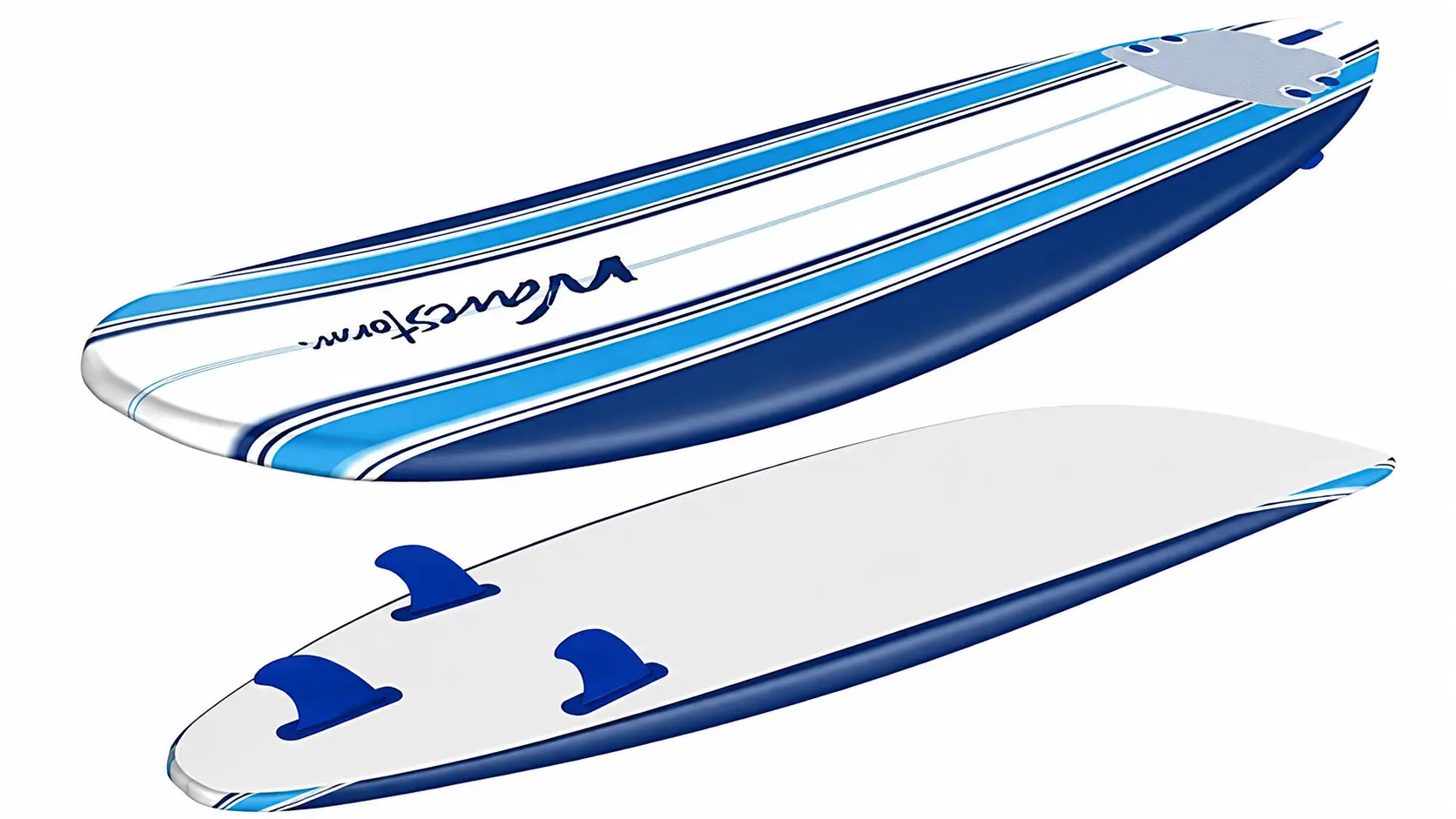
The Wavestorm 8’ Classic is the best-selling learn-to-surf board in the United States for a reason.
The 86L of volume and wide shape make it very easy to paddle and stand up on, even in your first session. If you do not know which board to buy, this is always the right first answer.
Key Features
- Length: 7ft, 8ft
- Dimensions (8ft): 8’0″ x 22.5″ x 3.25″
- Volume: Volume: 86L (Classic edition; some variants listed at 81L depending on retailer)
- Construction: Foam body, three wood stringers, slick HDPE bottom, foam deck, screw-through fins
| Pros | Cons |
|---|---|
| Very affordable | Hard to turn |
| Great float and stability | Basic performance only |
| Comes with fins, leash included, and a lightweight design | Not ideal for advanced surfing, and screw-through fins are less stiff |
Best For: Complete beginners of all sizes, including kids and adults up to 200 lbs
2. Catch Surf Odysea Log
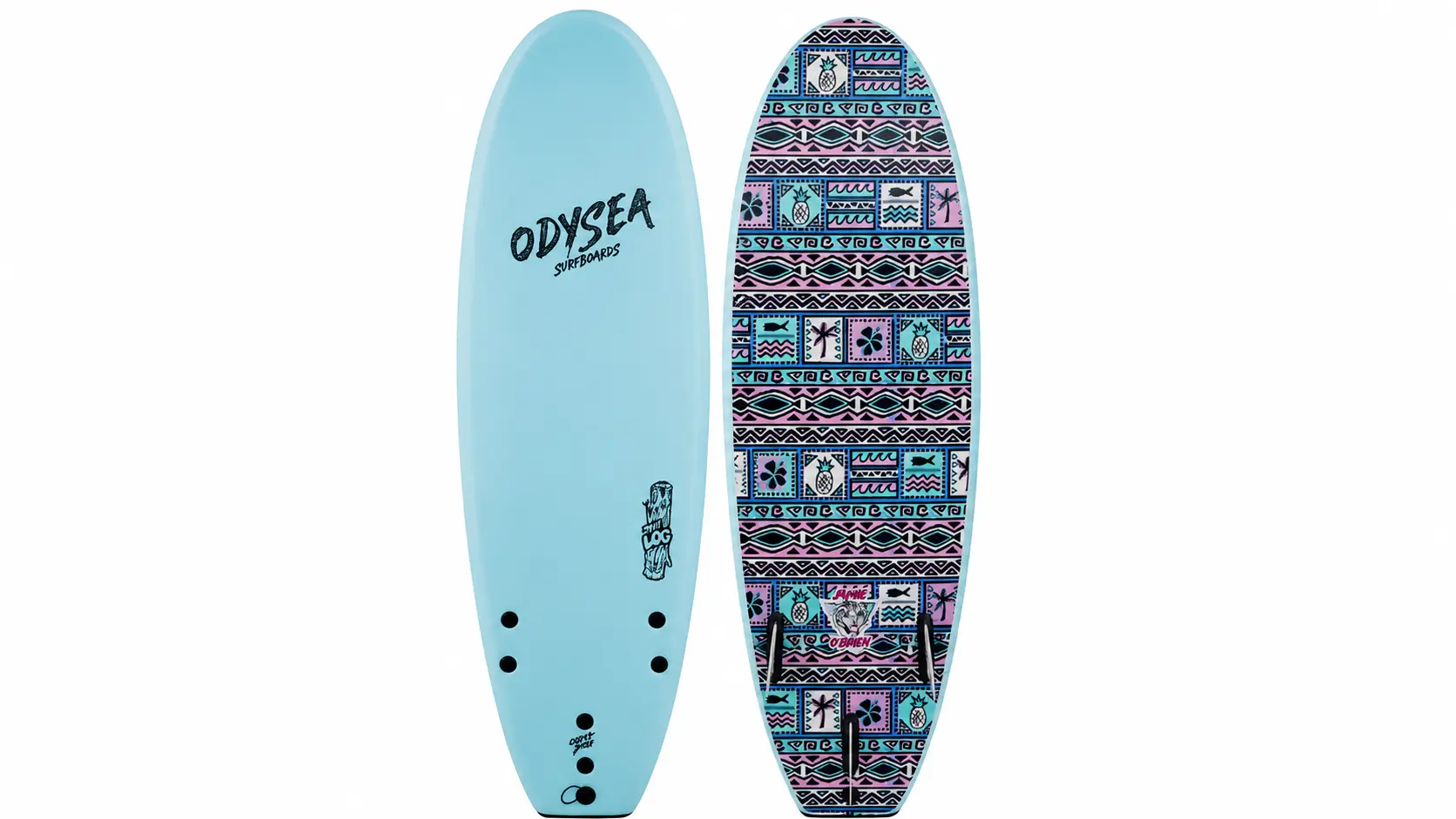
The Catch Surf Odysea log’s stiff dual-composite core and triple maple wood stringers make this board ride more smoothly and hold up under real use far better than cheaper foam options.
The fins are high-performance, not the flexible plastic ones you see on most foamies. If you want a board you can still enjoy riding years after you learn the basics, this is it.
Key Features
- Length: 6ft, 7ft, 8ft, 9ft
- Dimensions (8ft): 8’0″ x 23.0″ x 3.375″
- Volume: 86L (8ft), 98L (9ft)
- Construction: Foam body, stiff dual-composite core, triple maple wood stringers, durable HDPE slick bottom with bumper-tail, OG Deck 2.0 with improved responsiveness and durability
| Pros | Cons |
|---|---|
| Much stiffer and more responsive than basic foamies | More expensive than entry-level foam boards |
| High-performance fins included and triple wood stringers add real durability | Heavier than cheap foam boards |
| Works for both beginners and experienced surfers | It may be overkill for very casual learners |
Best For: Beginners who want to keep their board for years without outgrowing it
3. Gerry Lopez Foam Surfboard
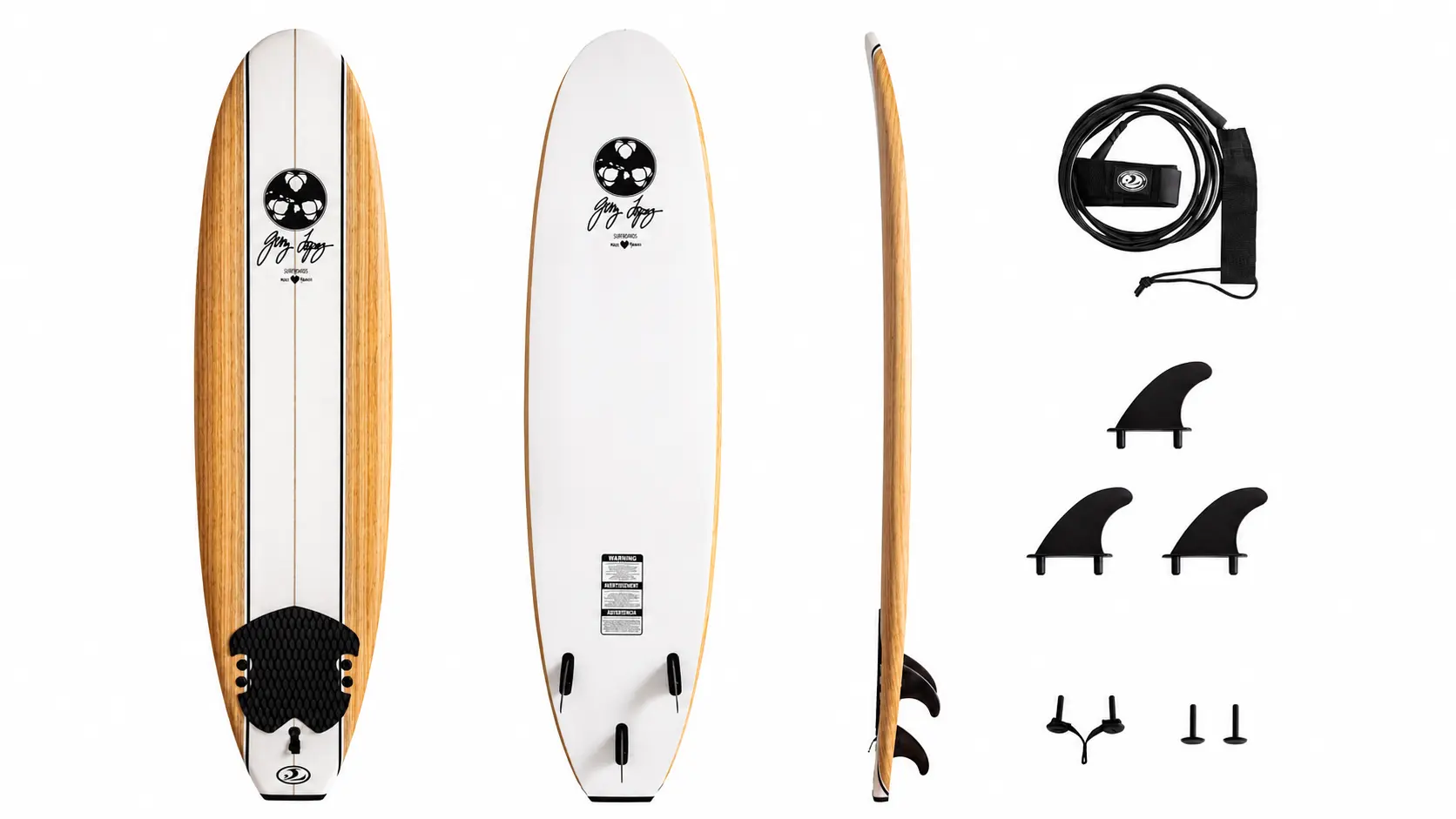
The Gerry Lopez Foam Surfboard is light, easy to paddle, and gets the job done for anyone just starting.
It comes with real FCS fin boxes, which means you can swap out fins as you get better. For the price, it is one of the most complete budget foam boards you can buy.
Key Features
- Length: 8ft
- Dimensions: 8’0″ x 22.0″ x 3.25″
- Volume: 73L
- Construction: 100% waterproof EPS foam core, three wood stringers, HD polyethylene slick hard bottom, IXPE/XPE deck skin, traction pad attached
| Pros | Cons |
|---|---|
| Very affordable price point | Less volume than the Wavestorm (73L vs 86L) |
| FCS 1 fin boxes allow fin upgrades and a traction pad already attached | Slightly flimsier build than premium boards |
| Lighter than the Wavestorm | Mixed reviews on long-term durability, and no leash included in some versions |
Best For: Beginners on a tight budget, originally popularized through Costco but now available through multiple retailers
4. StormBlade SSR
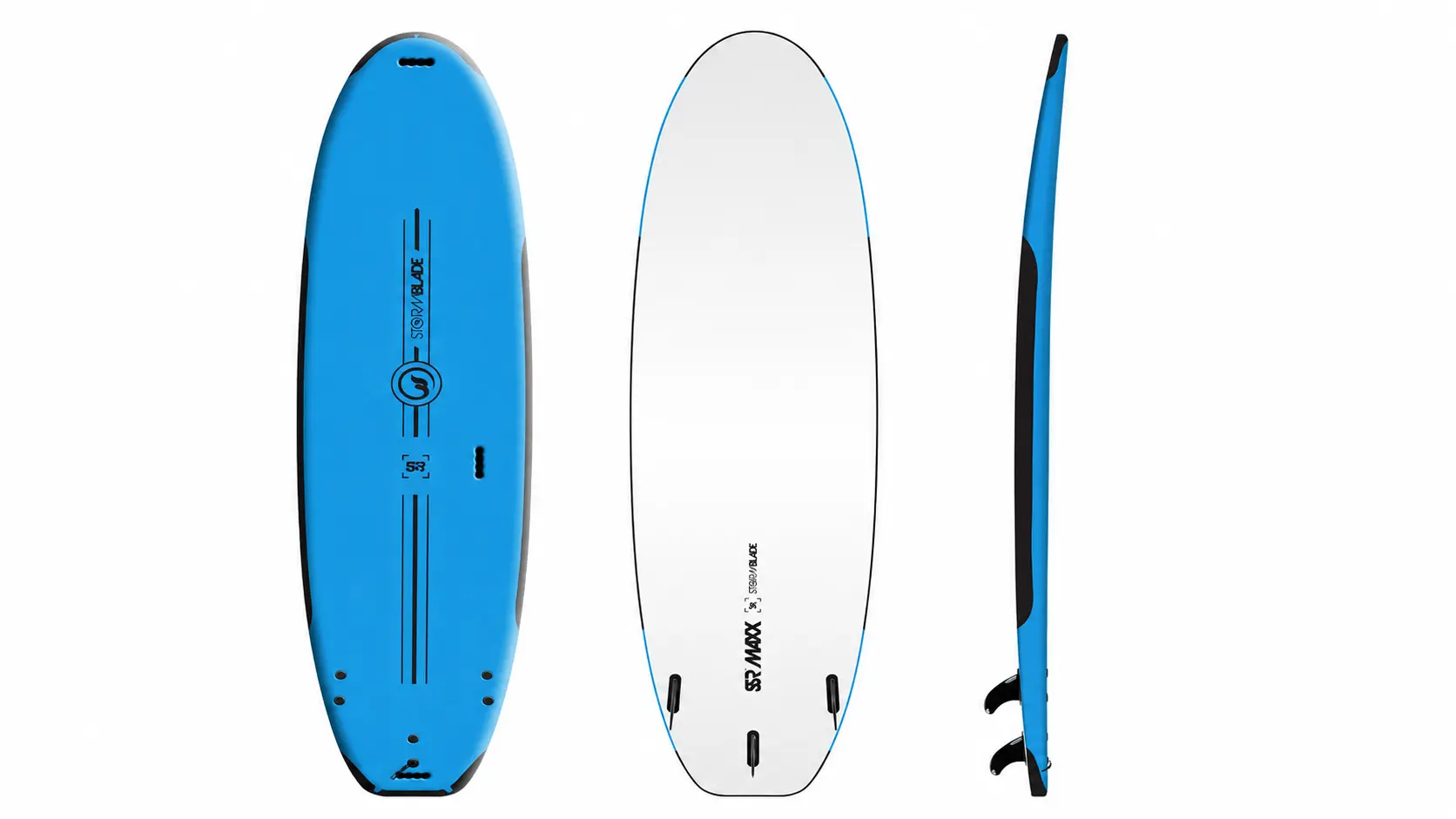
The StormBlade SSR’s nose, rail, and tail reinforcements protect the spots that take the most abuse during learning sessions.
The extra width at 25.5 inches gives you a very stable platform to stand on while you are still figuring out your balance.
Key Features
- Length: 7ft, 8ft, 9ft (Traditional and Performance versions)
- Dimensions (8ft Traditional): 8’0″ x 25.5″ x 3.75″
- Volume: 93L (8ft Traditional)
- Construction: Superior EPS core, 3 marine-ply stringers, 4mm EBS IXL foam top deck, HDPE slick bottom, nose, tail, and rail reinforcement
| Pros | Cons |
|---|---|
| Extra-wide shape offers great stability | Leash sold separately |
| Nose, tail, and rail reinforcement adds real durability | Heavier than some competitors |
| NSSIA certified for safety | Not as widely available as Wavestorm |
Best For: Beginners who surf regularly and need a board that can take a beating
5. Wave Bandit EZ Rider
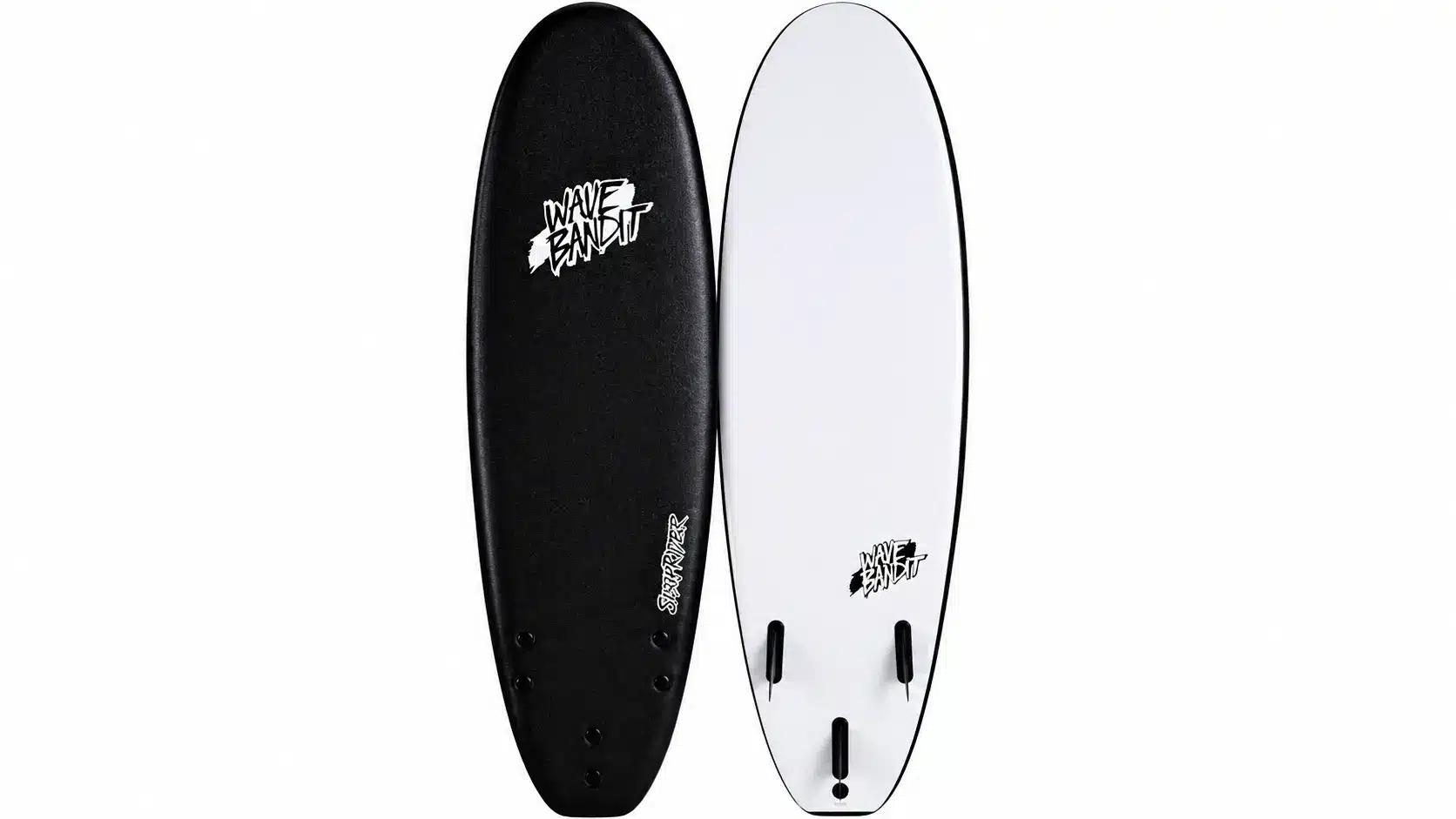
The Wave Bandit EZ Rider’s egg shape is very forgiving and makes catching waves much easier than a standard longboard shape.
The 9ft version at 98L is one of the most buoyant beginner boards on the market, making it a great pick for heavier surfers.
Key Features
- Length: 7ft, 8ft, 9ft
- Dimensions (8ft): 8’0″ x 23.0″ x 3.375″
- Volume: 86L (8ft), 98L (9ft)
- Construction: EPS core surfboard, double maple wood stringers, HDPE slick bottom, foam deck (requires wax for grip)
| Pros | Cons |
|---|---|
| High volume at each size option | Requires surf wax for grip |
| Egg shape catches waves easily | Double stringers instead of triple |
| Fun and easy to ride at all skill levels | Less stiff than triple-stringer boards |
Best For: Heavier or bigger beginners who need a board with plenty of float and stability
6. CBC Slasher Foam Surfboard
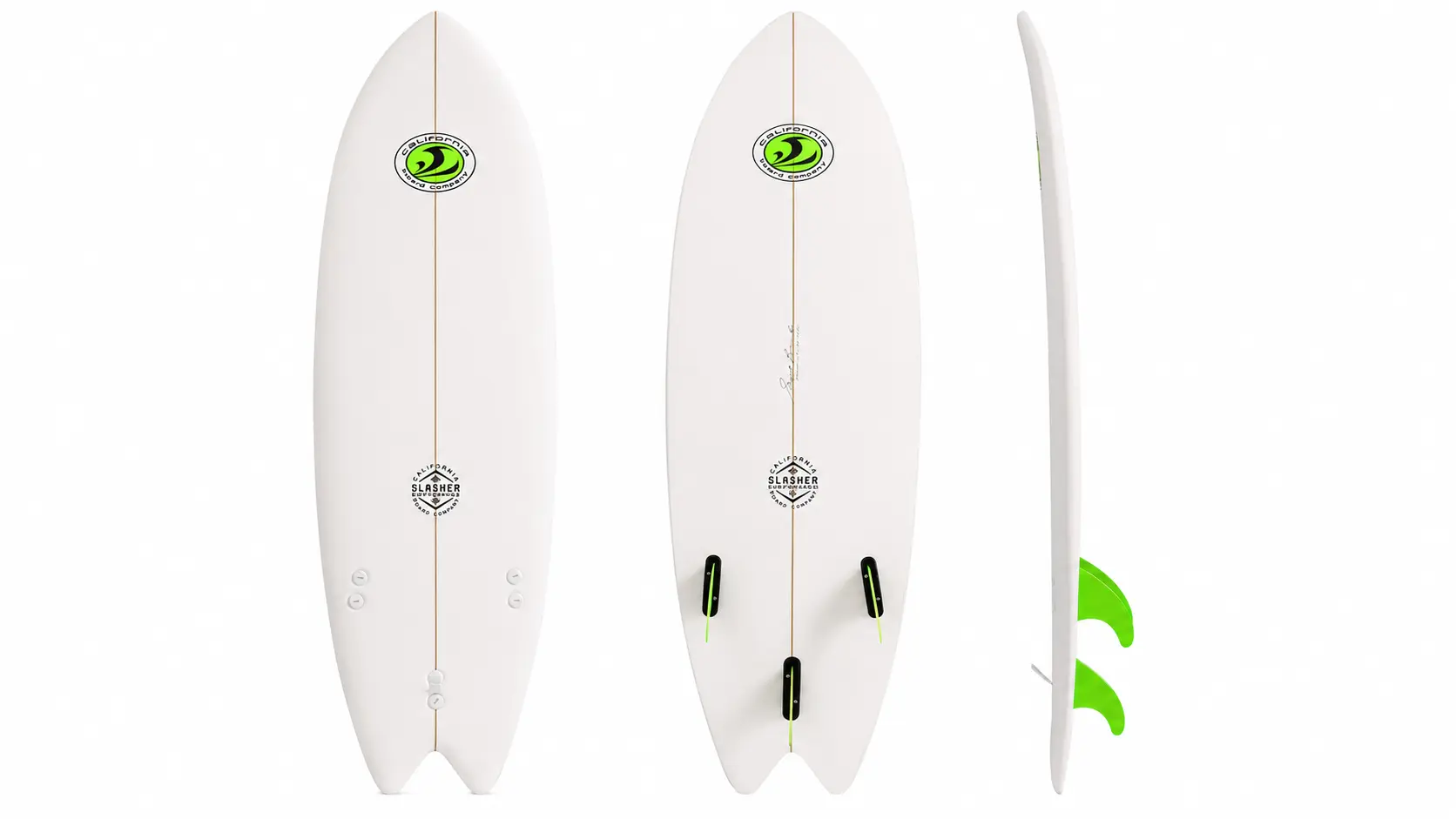
The CBC Slasher gets you in the water without spending much money at all. The three wood stringers keep it stiff enough to ride properly, and the slick bottom helps it glide over waves. If you are not sure surfing is for you, this is the lowest-risk way to find out.
Key Features
- Length: 7ft, 8ft, 9ft
- Dimensions (8ft): 8’0″ x 23.0″ x 3.75″
- Volume: 65-70L approximately (8ft)
- Construction: HD EPS 100% waterproof core, three molded-in laminated wood stringers, HD PE slick bottom, XPE deck skin
| Pros | Cons |
|---|---|
| Very low price | Lower volume than the Wavestorm at the same length |
| Three wood stringers for decent stiffness | Basic build quality |
| The graphics resemble a real fiberglass surfboard and are suitable for kids and adults. | The leash is sold separately and is not built for heavy sessions |
Best For: First-timers who want to spend as little as possible to try surfing
Best Beginner Soft-Top Epoxy Surfboards
Soft-top epoxy boards blend the safety of foam with better performance. They are a great choice if you want to start learning something that will last you longer before you need to upgrade.
7. Softech Roller
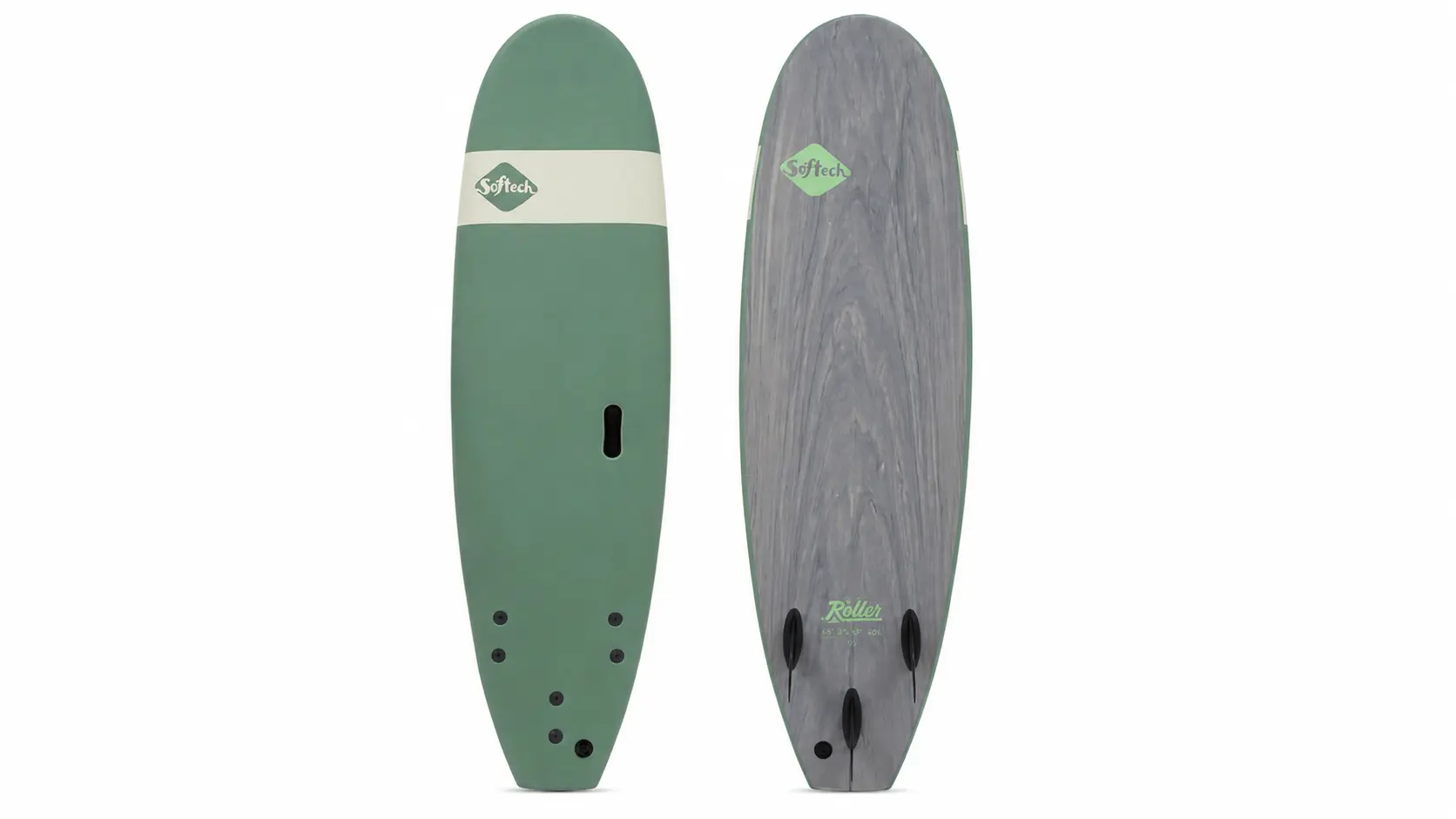
The Softech Roller was designed specifically for beginner surfers, featuring a hand-shaped funboard outline and generous volume across all sizes.
At 94L in the 8ft version, it gives you plenty of float to catch waves and build confidence fast.
Key Features
- Length: 6ft, 6’6″, 7ft, 7’6″, 8ft, 8’4″
- Dimensions (8ft): 8’0″ x 22.25″ x 3.25″
- Volume: 94L (8ft)
- Construction: 100% waterproof EPS foam core, double stringer, soft foam deck, VFS removable fin system, built-in carry handle, leash plug installed
| Pros | Cons |
|---|---|
| Hand-shaped funboard with generous volume | More expensive than basic foam boards |
| Fins are compatible with the FCS two-tab system for easy upgrades | Double stringer, not triple |
| Built-in carry handle and leash plug with very stable wave-catching ability | Less volume than the same-length foamies at shorter sizes |
Best For: Beginners who want a safe board with more performance than a basic foamie
8. South Bay Board Co Verve
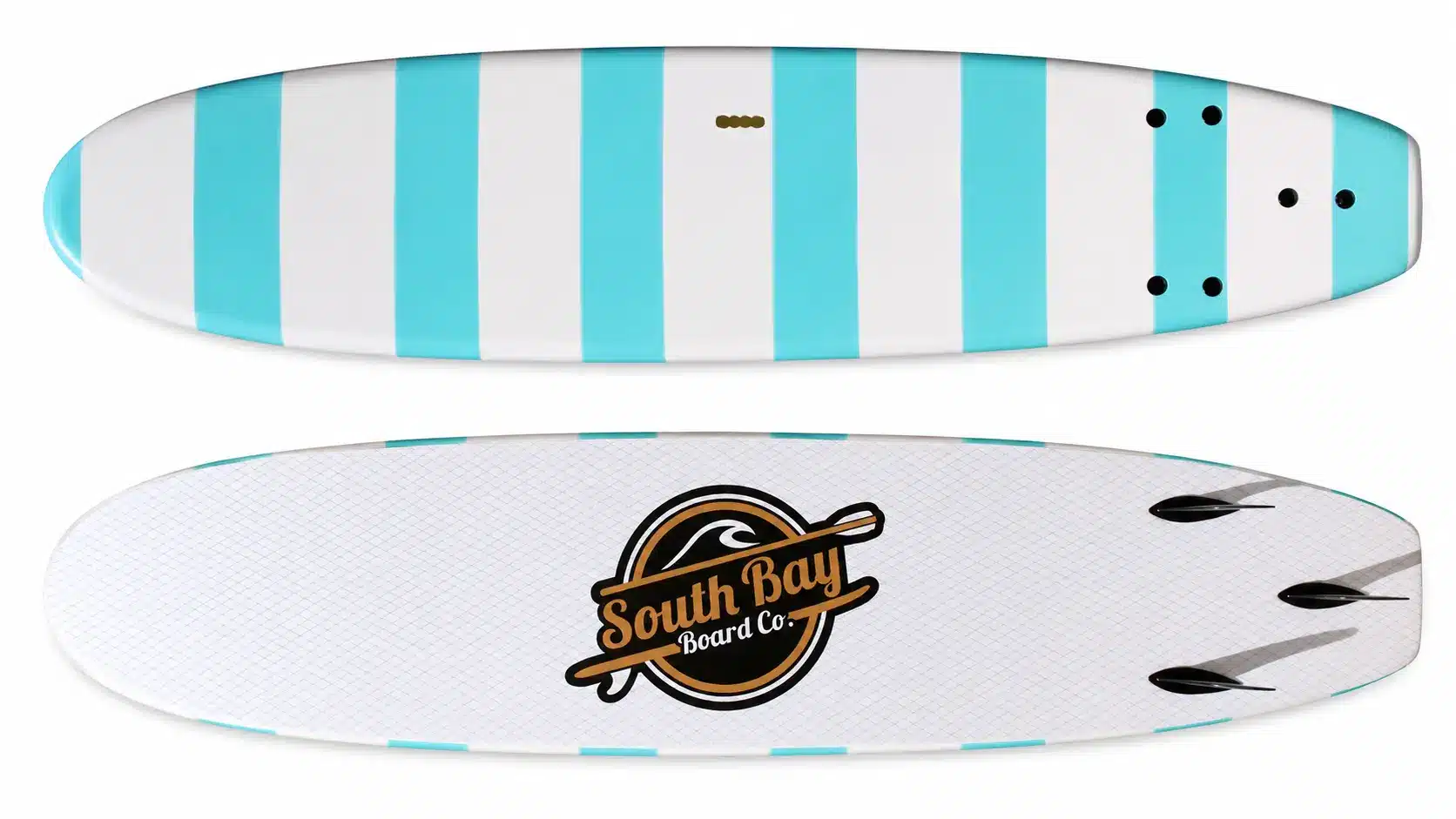
The South Bay’s wax-free, textured deck and beginner-friendly nose rocker make this board easy to set up and ride from day one.
The double-concave bottom channels water to the fins for better control as you move down the line. The patented heat-release valve also prevents the board from delaminating when left in a hot car.
Key Features
- Length: 7ft, 8ft, 9ft
- Dimensions (8ft): 8’0″ x 23.0″ x 3.0″
- Volume: 74-80L (8ft, varies by version)
- Construction: EPS closed-cell foam core, triple stringer system (2 wooden + 1 fiberglass rod), IXPE wax-free textured foam deck, HDPE double concave slick bottom, bamboo body armor shell, patented heat release valve
| Pros | Cons |
|---|---|
| Wax-free textured deck, no waxing needed | Lower volume than some competitors at the same length |
| Patented heat release valve prevents delamination | The nose can be fragile, according to some users |
Best For: Beginners who want a well-built board with beginner-friendly shapes at a solid price
9. INT Classic Soft Top
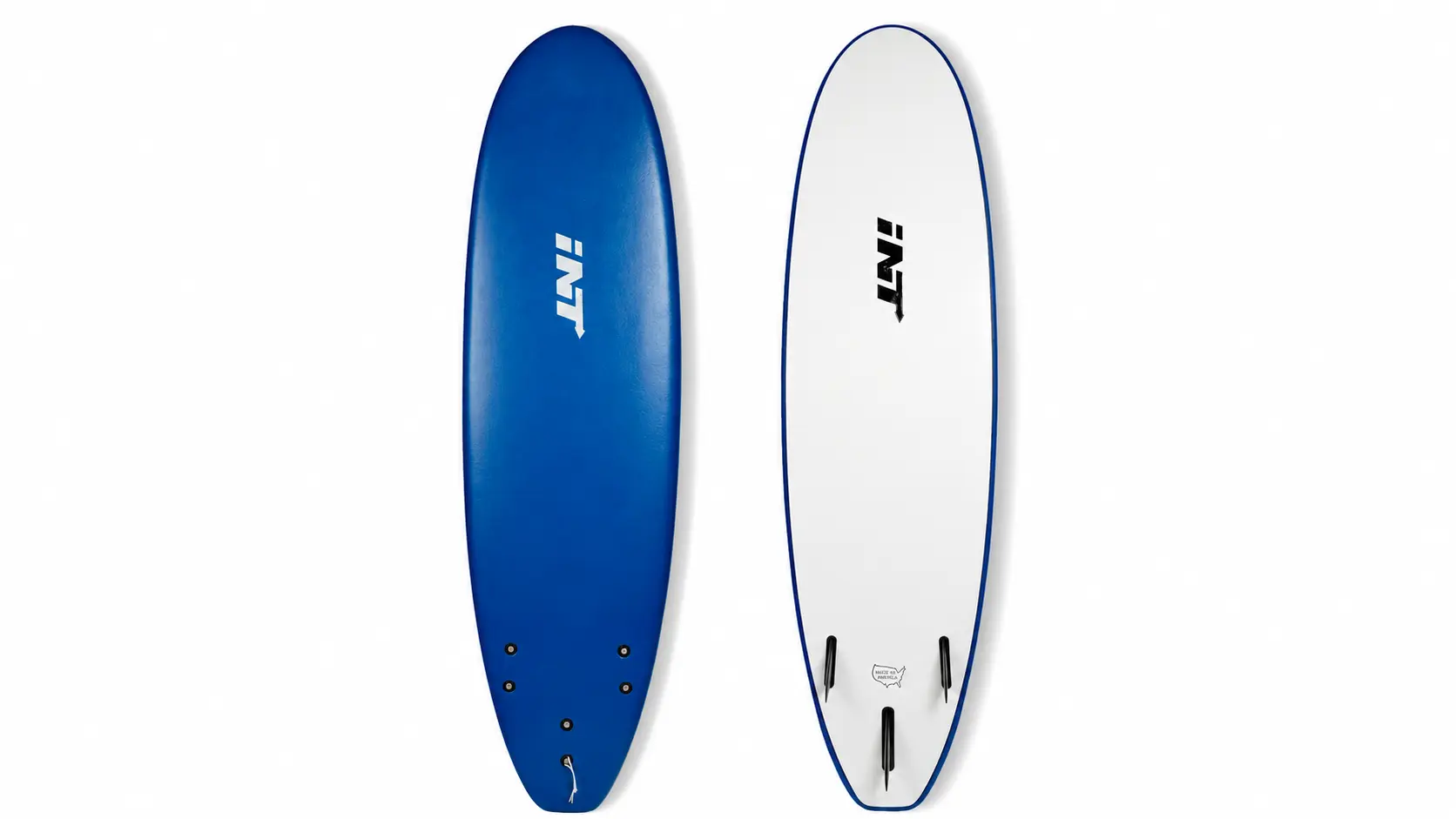
The INT Classic is handmade in the USA using 100% recyclable foam blanks, which makes it stand out from mass-produced options.
The square tail keeps more volume toward the rear of the board, which improves stability and float under your back foot.
Key Features
- Length: 7ft, 8ft, 9ft
- Dimensions (8ft): 8’0″ x 23.0″ x 3.375″
- Volume: 80L (8ft)
- Construction: 100% recyclable foam blanks, handmade in the USA, soft top and soft rails, slick bottom, square tail, stainless steel hardware
| Pros | Cons |
|---|---|
| Handmade in the USA with 100% recyclable foam | Pricier than imported foam boards |
| Square tail retains volume for better float and stability | Can show dents under heavier riders over time |
| Soft top and soft rails make it very forgiving | Older versions had a more durable HDPE bottom |
Best For: Adult beginners who want a locally-made quality soft-top with great stability
10. Formula Fun Fish
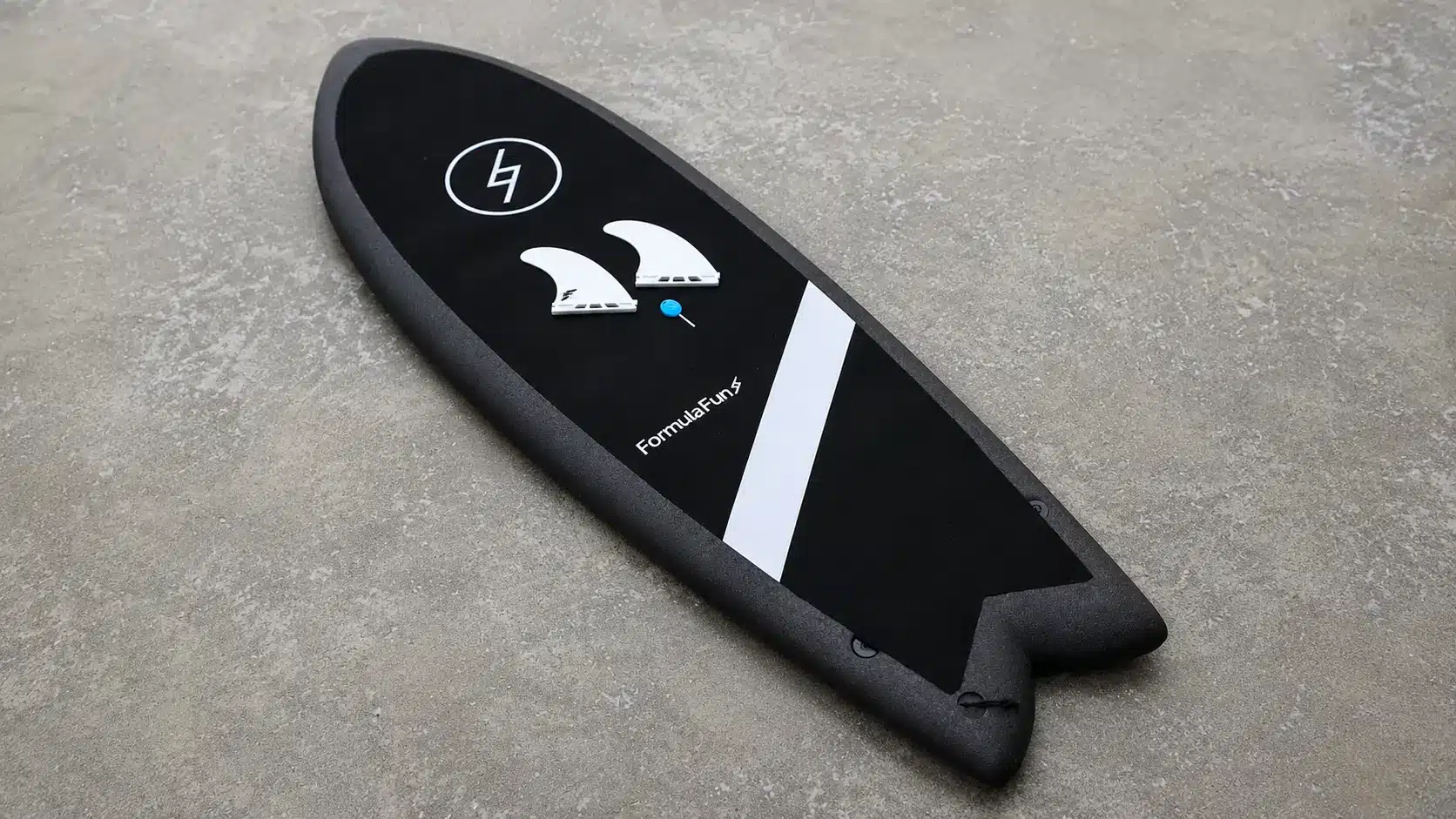
Formula Fun boards use a solid copolymer foam construction that is waterproof all the way through and nearly impossible to break.
The hand-finished rails make turns feel much cleaner than with a standard foamie, and the included Futures Fins are real performance fins.
Key Features
- Length: 5’3” (Twinnie), 8’0” (DOHO funboard)
- Dimensions (DOHO 8ft): 8’0″ x 22.5″ x 3.36″
- Volume: 78L (DOHO), 42L (Twinnie)
- Construction: High-density molded copolymer core, in-molded wood stringer system, recessed EVA wax-free deck pad, Futures Fins fin boxes, hand-finished rails, made in the USA, 100% recyclable
| Pros | Cons |
|---|---|
| Made in the USA from 100% recyclable materials | More expensive than basic foam boards |
| Futures Fins included for a major performance upgrade | The fish shape is less stable than a longer board for absolute beginners |
| Wax-free EVA deck pad with nearly unbreakable waterproof construction | The company offers a recycling loyalty program for old boards |
Best For: Beginners who want a board made in the USA with real performance fins and no wax required
11. MF Softboards Beastie
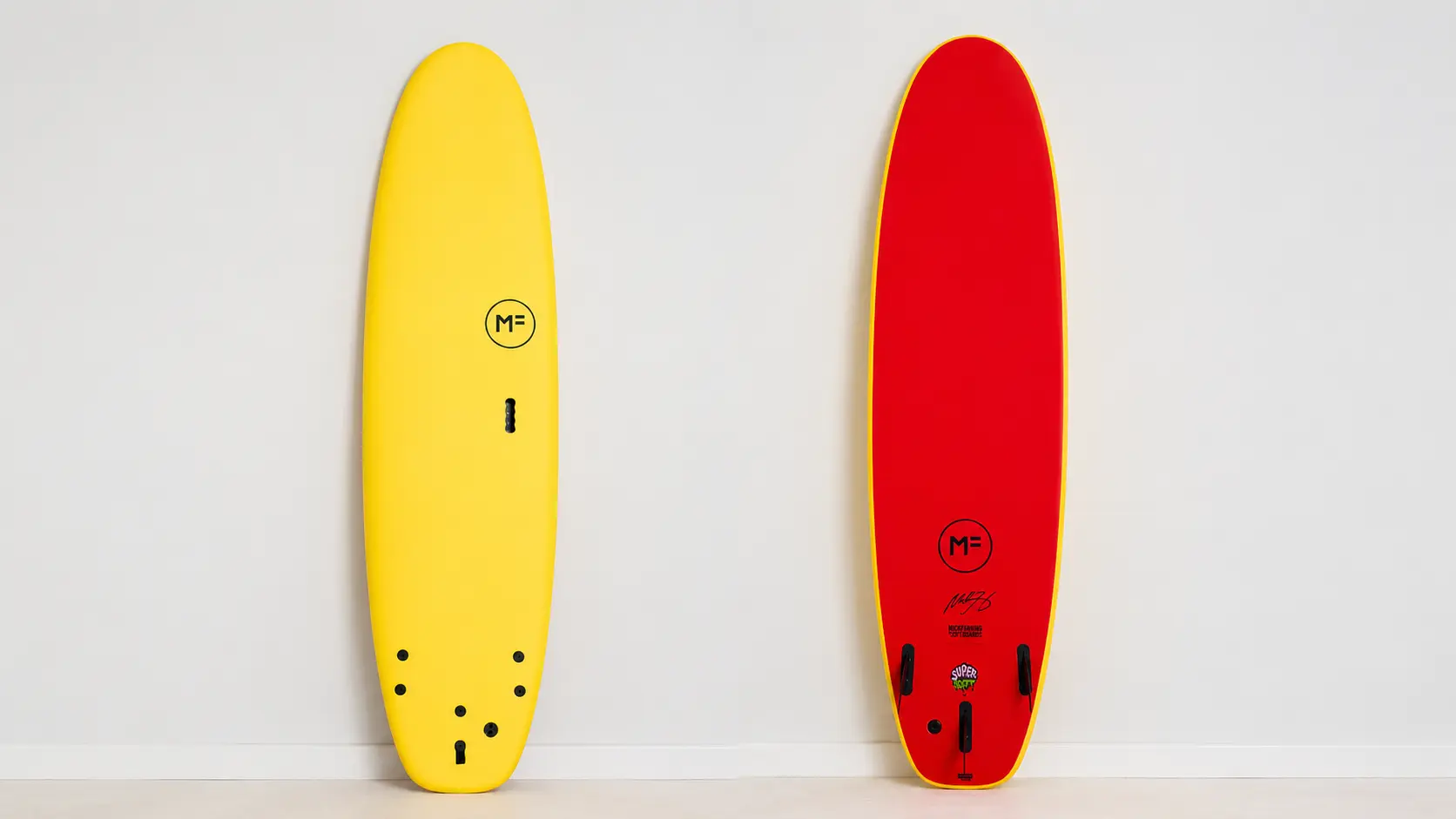
The MF Softboards Beastie has a wide, round tail that provides lift and speed even in weak waves, making it easier to catch waves and get moving.
The single-to-double concave bottom helps you begin developing proper surfing movement much sooner than on a flat-bottom foamie.
Key Features
- Length: 6ft, 6’6”, 7ft, 7’6 “”, 8ft8’6’6”, 9ft
- Dimensions (8ft): 8’0″ x 22.625″ x 2.875″
- Volume: 61.52L (8ft), 87.03L (8’6″)
- Construction: SuperSoft foam construction, 100% recyclable EPS core, single to double concave bottom, wide round tail, built-in carry handle, medium rocker
| Pros | Cons |
|---|---|
| First softboard brand to achieve Level 1 Eco Board certification | Lower volume at 8ft compared to other beginner boards |
| Single-to-double concave bottom helps with speed and turns | Not as stable as a wider, higher-volume foamie |
| Carry handle built in for easy transport and designed by Mick Fanning’s team. | Better suited to surfers who have a few sessions already |
Best For: Beginners who want to progress quickly and not get stuck on a board meant only for complete first-timers
Best Beginner Hard-Top Surfboards
Hard boards work best once you have already learned the basics. If you can stand up and catch waves on a foam board, a hard board gives you better performance and more control in the water.
12. Torq Longboard
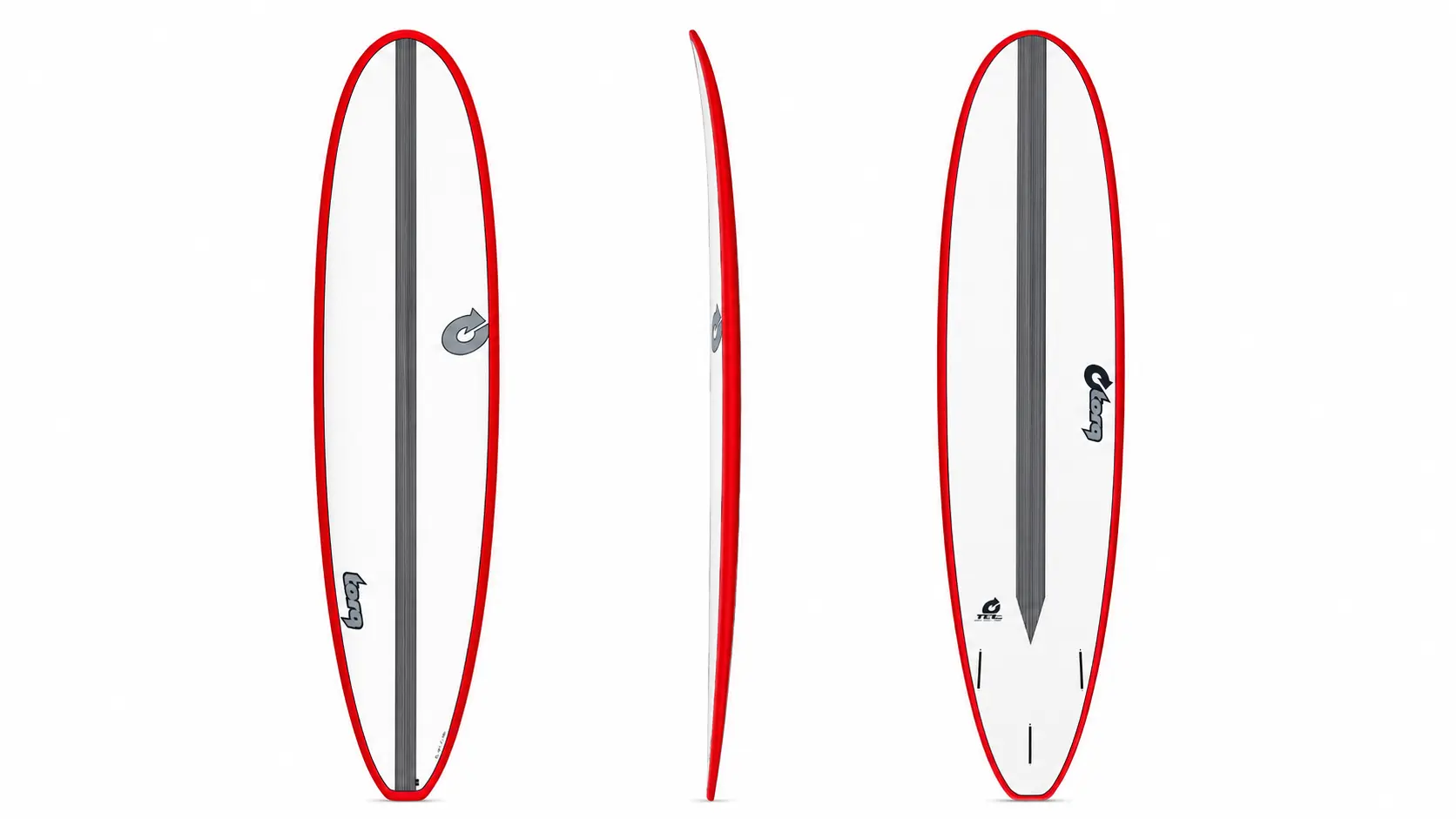
The Torq Epoxy Technology produces a board that is lighter and more durable than most traditionally built hard surfboards.
The 2+1 fin setup gives you the option of riding it as a classic single-fin longboard or adding the side fins for more drive.
Key Features
- Length: 8ft, 8’6″, 9ft, 9’1″, 9’6″
- Dimensions (9ft): 9’0″ x 22.75″ x 3.125″
- Volume: 72L (9ft), 77L (9’1″)
- Construction: Torq Epoxy Technology (TET): lightweight EPS core, biaxial fiberglass cloth, epoxy resin, unique Shield Skin outer coating, precision CNC-cut aluminum molds
| Pros | Cons |
|---|---|
| Extremely durable and lightweight for a hard board | More expensive than foam boards |
| Precision-molded for consistent quality every time | Less forgiving than a foam board when you fall |
| 2+1 fin setup for flexible longboard or thruster style, and works for all skill levels | Requires more care to avoid dings |
Best For: Beginners who have learned the basics on a foam board and are ready to move to a real hard board
13. NSP Elements Funboard
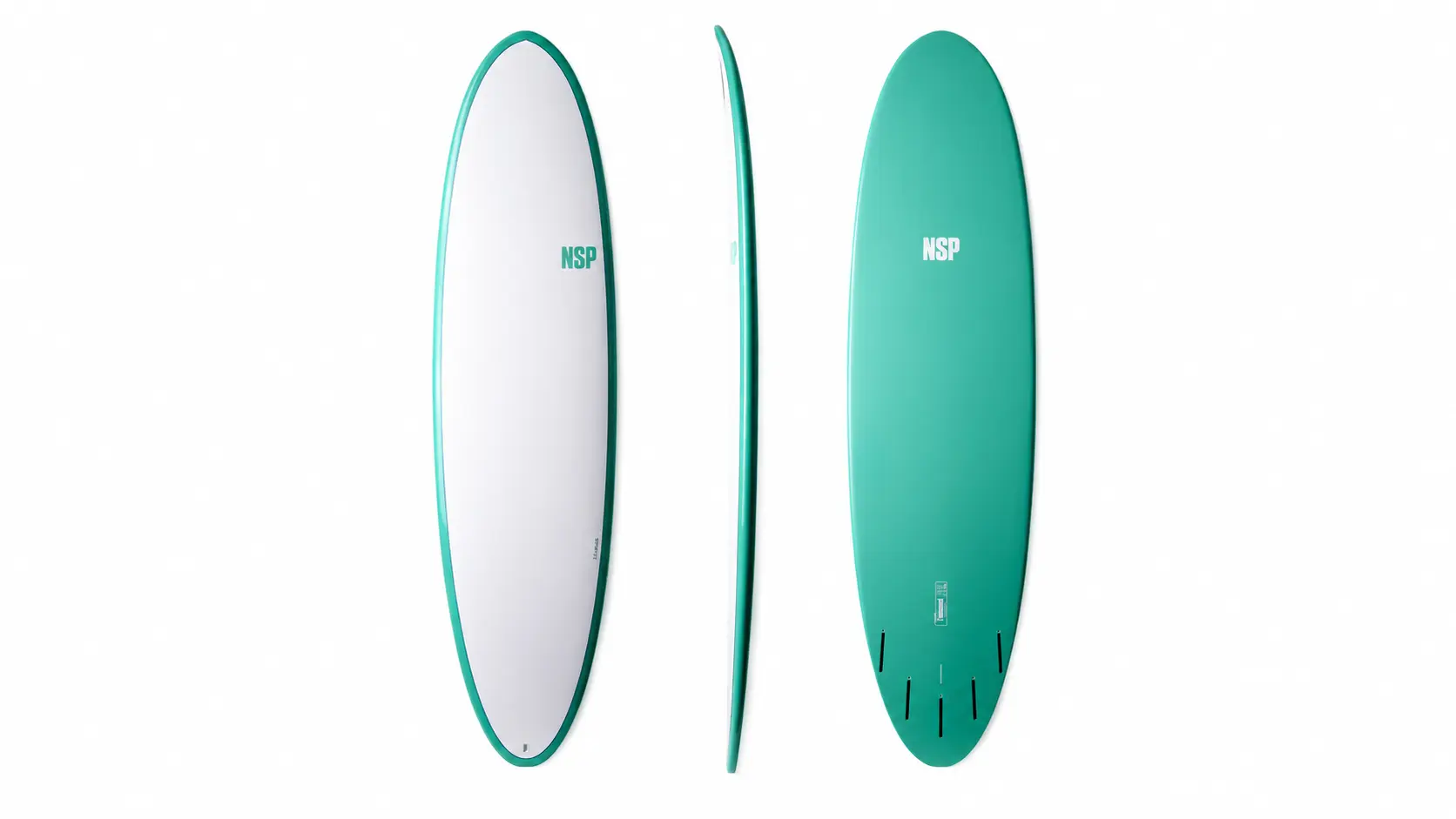
The NSP Elements Funboard’s concave bottom helps water flow faster to the fins, giving you better speed and control as you start linking turns.
The 5-fin box setup means you can try thruster or quad configurations as your surfing develops over time.
Key Features
- Length: 6’8″, 7’2″, 7’6″
- Dimensions (7’6″): 7’6″ x 21.75″ x 2.875″
- Volume: 54.4L (7’6″), 49L (7’2″)
- Construction: Elements construction (epoxy and fiberglass composite), semi-rounded nose, low entry rocker, domed deck profile, concave bottom, rounded pintail
| Pros | Cons |
|---|---|
| 5-fin box setup lets you try thruster or quad configurations | Lower volume than dedicated beginner boards |
| A concave bottom is fast and helps with control | Not the best choice for absolute beginners with zero experience |
| Trusted by surf schools worldwide with a great durability and performance balance | Requires more care than a foam board |
Best For: Beginners moving off a foam board who want to develop real turning skills in small to medium surf
14. Modern Falcon
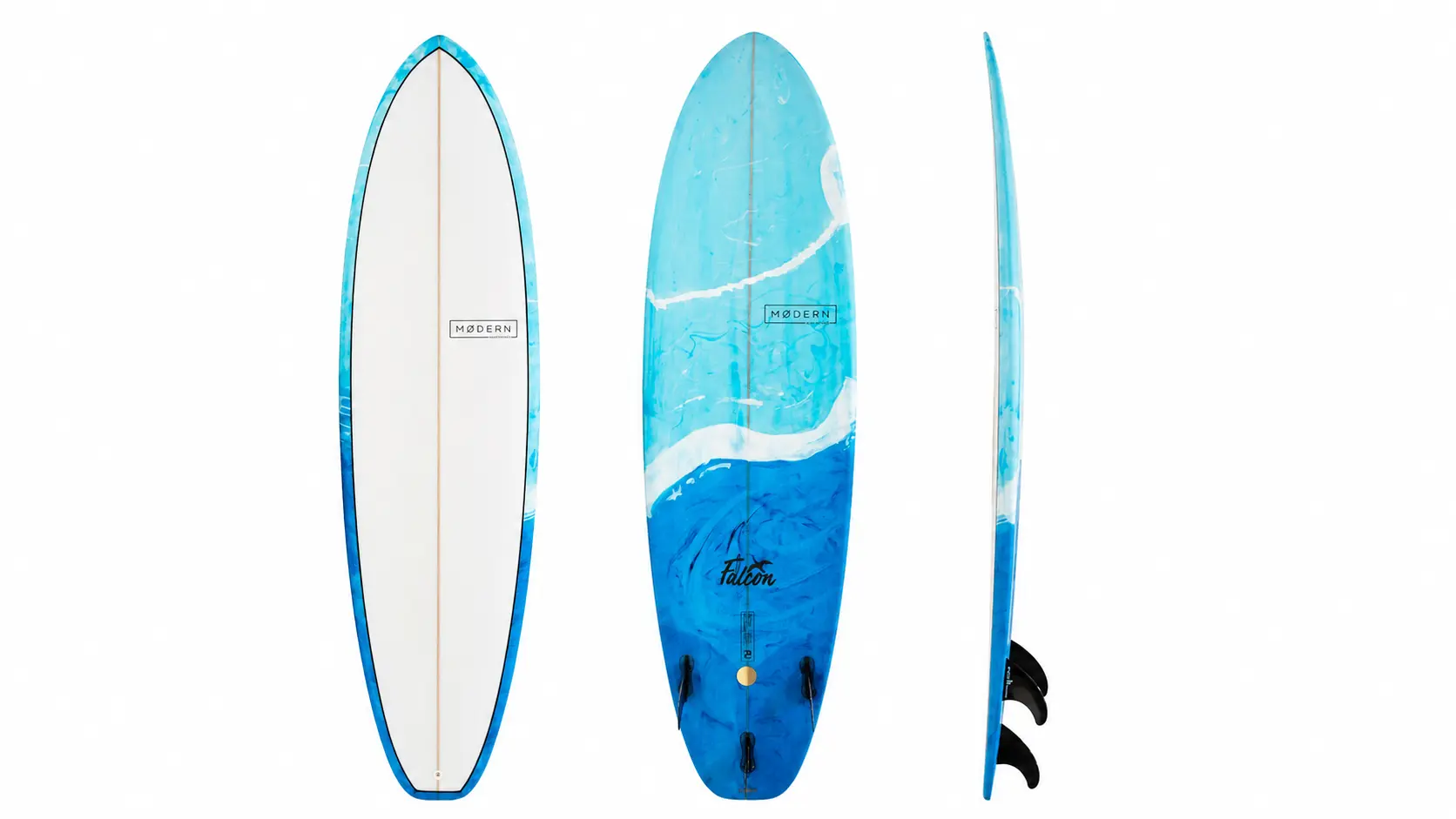
The Modern Falcon’s wide point placed forward on the board gives you more stability right where your chest sits while paddling into waves.
As the board tapers toward the tail, it becomes more responsive and rewards better technique as your skills improve.
Key Features
- Length: 6ft, 6’4″, 6’8″, 7ft, 7’6″, 8ft
- Dimensions (8ft): 8’0″ x 22.25″ x 3.0″
- Volume: 60L (8ft), 53L (7’6″)
- Construction: PU (polyester) construction, CNC milled from shaper’s files, hand laminated with Hexcel fiberglass and Silmar resin, rolled vee to double concave bottom, medium to full rails
| Pros | Cons |
|---|---|
| Wide point forward for stability under the chest while paddling | PU construction can ding and needs more care |
| The double concave bottom helps with linking turns | Less forgiving than a foam or epoxy boardTHE |
| FCS II fin system allows easy fin upgrades and works as skills improve | Not suitable for absolute beginners |
Best For: Beginners coming off a foam board who want a real PU surfboard with performance potential
15. Boardworks Froth
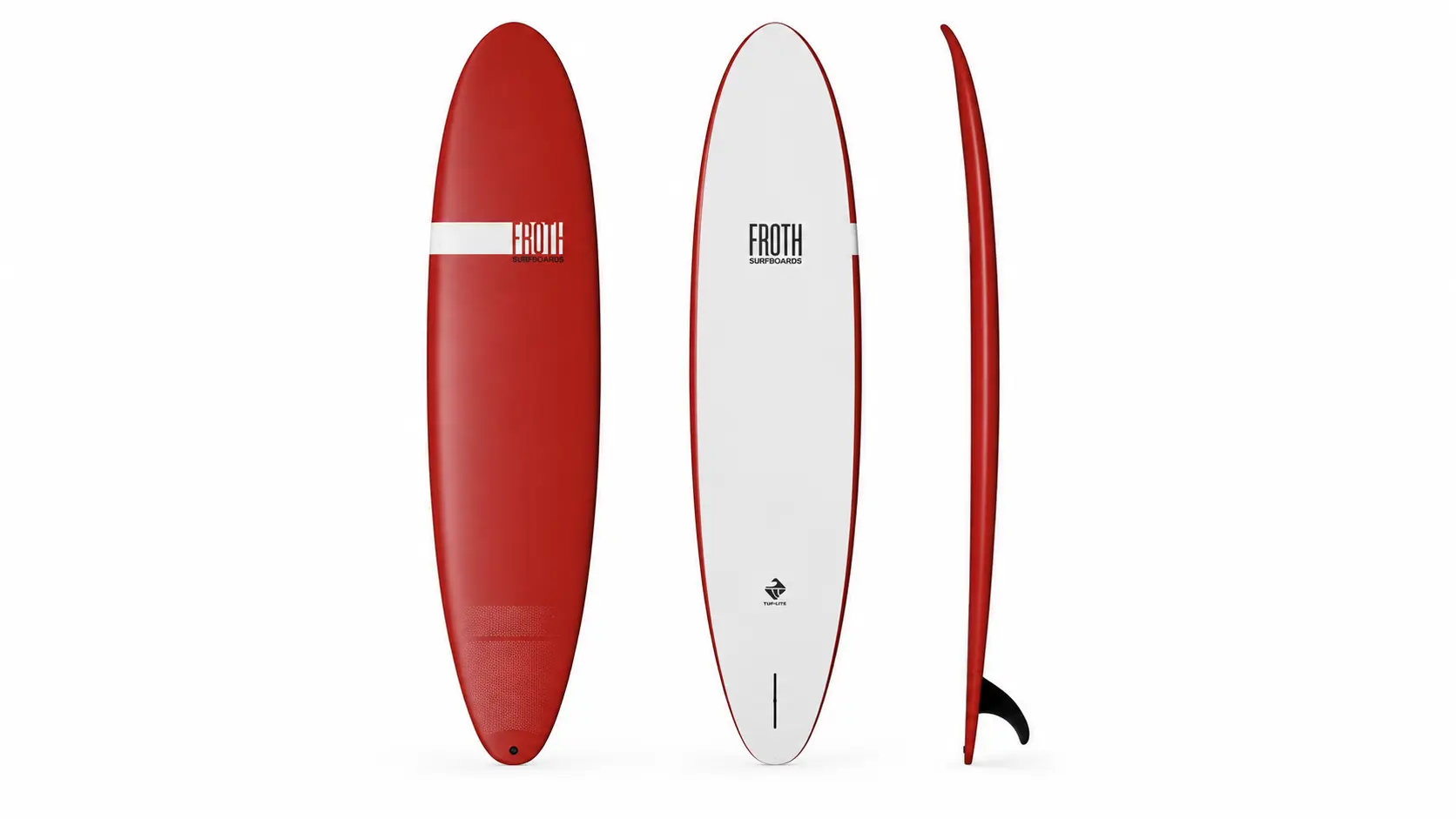
The Boardworks Froth starts as a rigid epoxy board and is wrapped in soft EVA skin, so it rides like a real surfboard while still protecting you when you fall.
The real maple stringer adds stiffness and gives the board that springy feel you get from quality hard boards.
Key Features
- Length: 5ft, 5’6”, 7ft (available in multiple sizes)
- Dimensions (7ft): 7’0″ x 23.0″ x 3.375″
- Volume: 71L (7ft)
- Construction: Rigid epoxy core, real maple stringer, resin hot-coat, premium soft EVA outer skin, fully glassed EPS foam core, high-density EVA nose and tail blocks for extra durability and safety
| Pros | Cons |
|---|---|
| Futures G5 fins included, a genuine performance upgrade | More performance-oriented and less ideal for absolute first-timers |
| Epoxy core with soft EVA skin is durable but safe | Not as buoyant as longer foam boards |
| Lightweight and easy to carry, with good small to medium surf and wake surf use | Stock leash breaks, according to some reviews |
Best For: Beginners who have the basics down and want a board that gives them real performance without losing safety
Foam vs Soft-Top Epoxy vs Fiberglass Surfboards
Foam boards are the safest option. They are soft all the way through, very stable, and the most forgiving when you fall. They are what surf schools use because they get beginners up and riding the fastest.
Soft-top epoxy boards have a soft outer skin but a stiffer core. They ride more like a real surfboard while still being safe. They are a good transition tool once you have the very basics down.
If you want a deeper understanding of shapes, sizes, and constructions, it also helps to learn about the different types of surfboards before buying one.
Hard-top fiberglass boards are fast, light, and responsive. They are less forgiving and ding easily. They are best for surfers who already know what they are doing.
What Size Surfboard Should Beginners Use?
Beginners usually do better with a longer, higher-volume board because it gives more float and balance. Use the chart below as a starting point, then size up if you are unsure.
Beginner Surfboard Size Chart
This table gives a simple starting point for matching board size to surfer weight.
| Surfer Weight | Recommended Length | Minimum Volume |
|---|---|---|
| Under 60 kg | 7’6″ to 8’0″ | 45–55L |
| 60–80 kg | 8’0″ to 9’0″ | 55–70L |
| 80–100 kg | 9’0″ to 9’6″ | 70–85L |
| Over 100 kg | 9’6” or longer | 85L+ |
A larger board gives beginners more float, which usually makes paddling and catching waves easier.
Best Surfboard Length for Learning
For most adult beginners, an 8 to 9-foot board is the right length. Kids can go a bit shorter. The longer the board, the easier it is to paddle and stand up.
How Weight Affects Surfboard Choice
Heavier surfers need more volume. More volume means more float. Without enough float, the board sits low in the water and is very hard to paddle. Always go up in volume rather than down when you are unsure.
Why Volume Matters More Than Height
Many people think taller surfers need longer boards. Volume is actually the more important number.
Two surfers of the same height but different weights will need very different volumes. Always check the volume, not just the length.
Common Beginner Surfboard Mistakes
Most beginners struggle because they choose the wrong board too early. Avoiding these common mistakes will make learning much faster and less frustrating:
- Buying a shortboard too early is the biggest mistake because shortboards have low volume, poor stability, and require far more skill to paddle and control.
- Choosing looks over stability usually backfires since narrow, low-volume boards may look better, but make balancing and catching waves much harder.
- Ignoring surfboard volume slows progression because volume directly affects flotation, paddling power, and overall stability in the water.
- Buying an expensive board too soon is unnecessary because beginner boards get scratched, dinged, and heavily used while learning.
- Using the wrong board for local wave conditions can make surfing harder, since small waves usually work best with longboards, while stronger waves may suit funboards or mid-lengths better.
The best beginner surfboard is the one that helps you catch more waves and build confidence faster, not the one that looks the most advanced.
Best Surfboard Brands for Beginners
Wavestorm is the most beginner-friendly brand out there. Their boards are affordable, easy to find, and trusted by millions of new surfers.
Catch Surf makes higher-quality foam boards designed for both beginners and experienced surfers who love foam.
Softech focuses on soft-top epoxy boards that give beginners a safe but more performance-focused ride.
Torq makes lightweight epoxy boards at a fair price, perfect for progressing surfers.
The brand has since expanded through collaborations with Channel Islands and Rusty Surfboards. NSP has been making beginner and intermediate boards for decades and is trusted by surf schools worldwide.
South Bay Board Co offers solid soft-top boards at good prices, with beginner-friendly features built in.
Final Verdict
Learning to surf is one of the most rewarding things you can do, and having the right board makes the whole process faster and more fun.
For most adults, the Wavestorm 8’ Classic is still the easiest starting point. If you want something more durable, the Catch Surf Odysea Log is worth the extra cost.
Ready to step up to a real board, the Torq Longboard is hard to beat. Pick the board that matches where you are right now, get in the water, and focus on catching as many waves as possible.
Frequently Asked Questions
Can You Learn to Surf on a Used Surfboard?
Yes, as long as the board has enough volume and does not have major water damage or large cracks. A used foam board is often a smarter beginner purchase than an expensive new fiberglass board.
How Long Does It Take a Beginner to Stand Up on a Surfboard?
Most beginners can stand up during their first few sessions if they use the right board and practice in small waves. Consistently riding waves and turning properly usually takes much longer.
Do Beginner Surfboards Come with Everything Needed to Start?
Many beginner boards include fins and a leash, but not all of them do. Always check what is included before buying because some budget boards leave out basic accessories.