Most people choose a paddleboard the wrong way. They start with brand names and price tags, assuming the most popular option is the safest choice.
That’s exactly how they end up with a board that feels unstable, awkward, or simply wrong for how they actually use it.
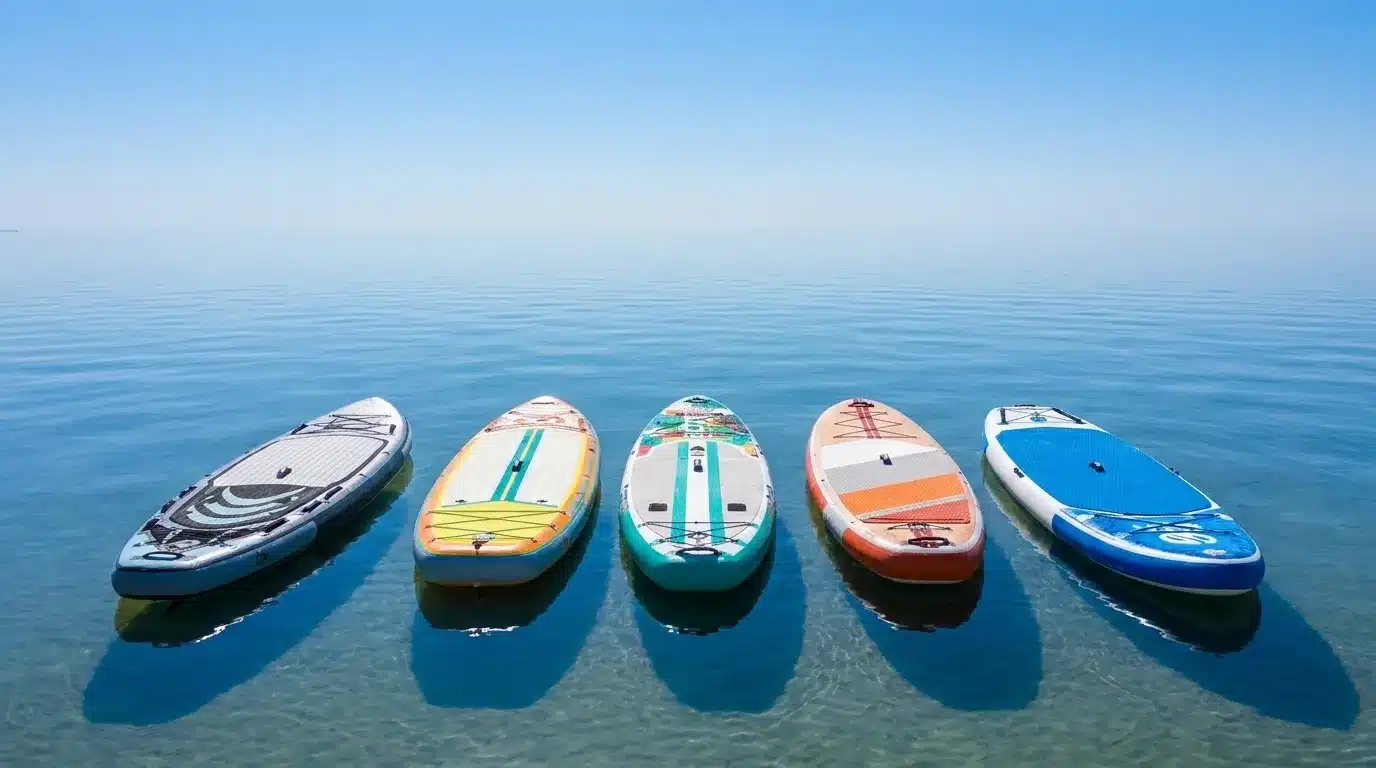
The truth is, paddleboard brands aren’t competing on the same terms. Some are built for beginners who want stability on calm water, while others are designed for touring, fishing, or performance paddling.
Below is a breakdown of the best paddleboard brands based on what they are actually built for, so you can choose the right one without second-guessing your decision.
How to Choose the Right Paddle Board Brand
Before comparing specific brands, it’s important to understand a few basics that actually determine how well a board will work for you. Once you get these right, choosing a brand becomes much simpler and far less risky.
Step 1: Pick your board type
Inflatable boards are the best choice for most people. They are easy to carry, simple to store, and durable enough for regular use.
Hard boards are more performance-focused. They glide better and feel faster, but they need more storage space and a transport setup.
Most beginners and casual users often wonder whether inflatable paddle boards are a good choice. The answer depends on how you plan to use it. Still, for most people, they turn out to be a practical and reliable option that balances ease of use, portability, and durability.
Step 2: Match your use case
Your activity matters more than the brand.
Beginners need stability; touring needs speed and glide; fishing needs stability and gear space; and yoga needs a wide, flat surface.
If this is wrong, no brand will fix it.
Step 3: Check build quality and weight capacity
Good inflatable boards use a drop-stitch core and multiple layers of PVC. This makes them stiffer and more durable.
Also, check the weight capacity carefully. If you carry gear, pets, or extra passengers, you need a higher rating than your body weight.
Quick Recommendation (If You’re Unsure) If you want a safe, all-around option without paying premium prices, Isle is one of the most beginner-friendly choices in this list. It offers a strong balance of stability, ease of use, and everyday versatility without becoming overly technical or expensive. If you want to explore which board size or type suits you yet, check out the best paddle boards for beginners to narrow it down first. |
In-Depth Reviews: Top Paddle Board Brands
Now that the basics are clear, let’s break down the top paddleboard brands and what each one is actually best suited for. This breakdown makes it easier to match a brand to your specific use case.
1. Red Paddle Co: Best Premium Inflatable
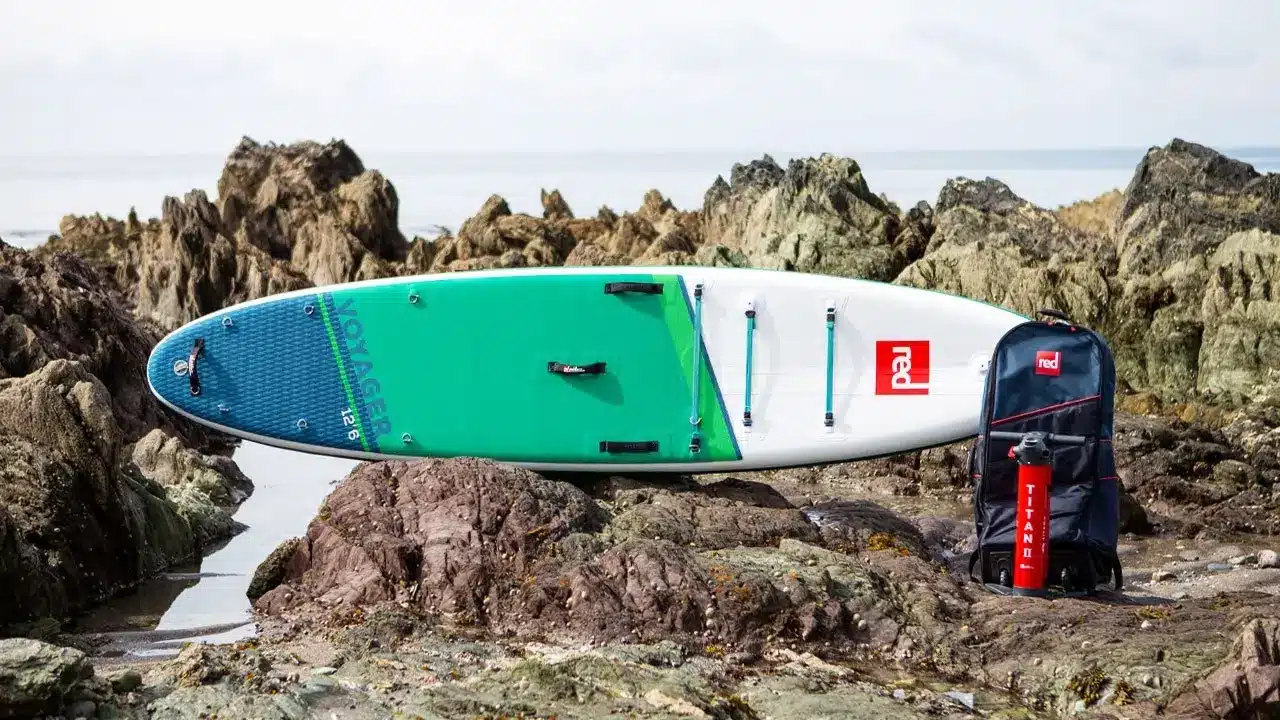
Red Paddle Co focuses on performance. Their boards are among the stiffest inflatables available, delivering better glide and tracking than most competitors.
|
Pros: Top-tier rigidity, excellent tracking, premium carry bag, water-resistant phone case included. |
Cons: Higher price and weight capacity caps around 220 lbs on some models. |
Recommended Products:
- Red Paddle Co 10’6” Ride MSL: The brand’s best-selling all-around board and winner of Supconnect’s Best All Around Paddleboard 2025. Versatile for all conditions.
- Red Paddle Co 11’3” Sport MSL: A step up in performance for paddlers wanting more speed and tracking without sacrificing stability.
Best for: Paddlers who want the best-performing inflatable and paddle regularly.
2. BOTE: Best for Fishing and Versatility
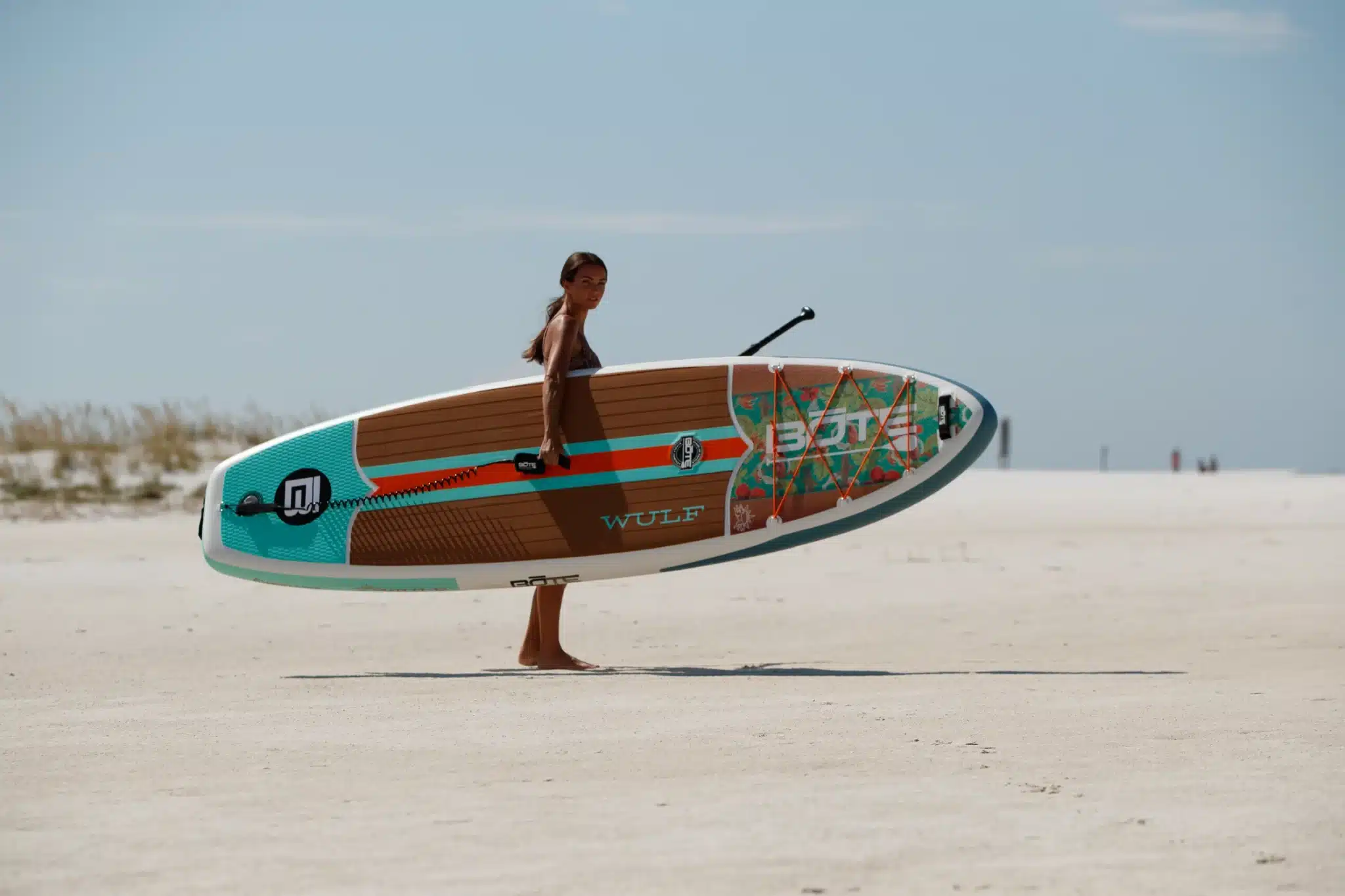
BOTE is built for versatility, especially for fishing and gear-heavy use. Their boards include mounting systems and design features that go beyond standard paddling.
|
Pros: Feature-rich, great for fishing, stable wide shape, and unique design options. |
Cons: Single-layer construction on some models means more flex, and the included pump is slower. |
Recommended Products:
- BOTE HD Aero Inflatable Paddle Board: BOTE’s optimal all-rounder, offering a great mix of stability, speed, and fishing-ready features.
- BOTE Rackham Aero Inflatable Paddle Board: The most feature-rich platform in BOTE’s lineup, with the Rail Rac System for attaching rod holders, coolers, and gear.
Best for: Anglers, gear-heavy paddlers, lifestyle users.
3. Isle: Best for Beginners
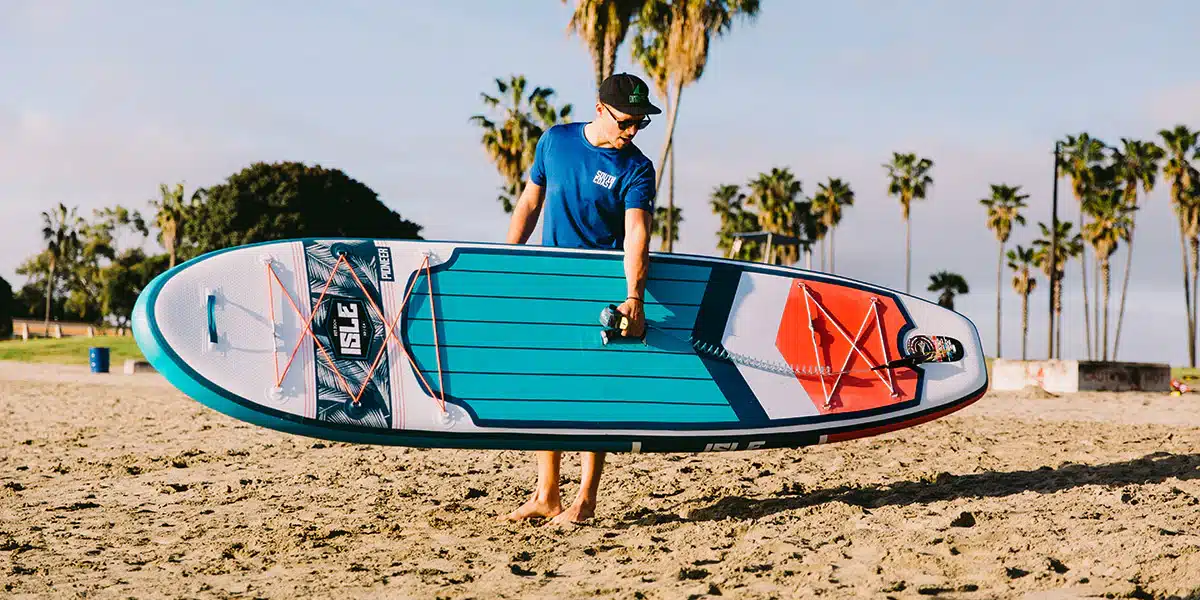
Isle focuses on stability and ease of use. Their boards are wide, forgiving, and ideal for learning without frustration.
|
Pros: Wide and stable, great for yoga, solid customer service. |
Cons: 1-year warranty and slightly fewer accessories than Atoll at a similar price. |
Recommended Products:
- Isle Pioneer Inflatable Paddle Board: ISLE’s most versatile all-around board, designed to handle fishing, yoga, passengers, and more right out of the box.
- Isle Explorer 3 Inflatable Paddle Board: The brand’s best-selling adventure and touring board, now 20% lighter with full kayak conversion capability.
Best for: New paddlers and yoga enthusiasts.
4. Atoll: Best Lightweight Option
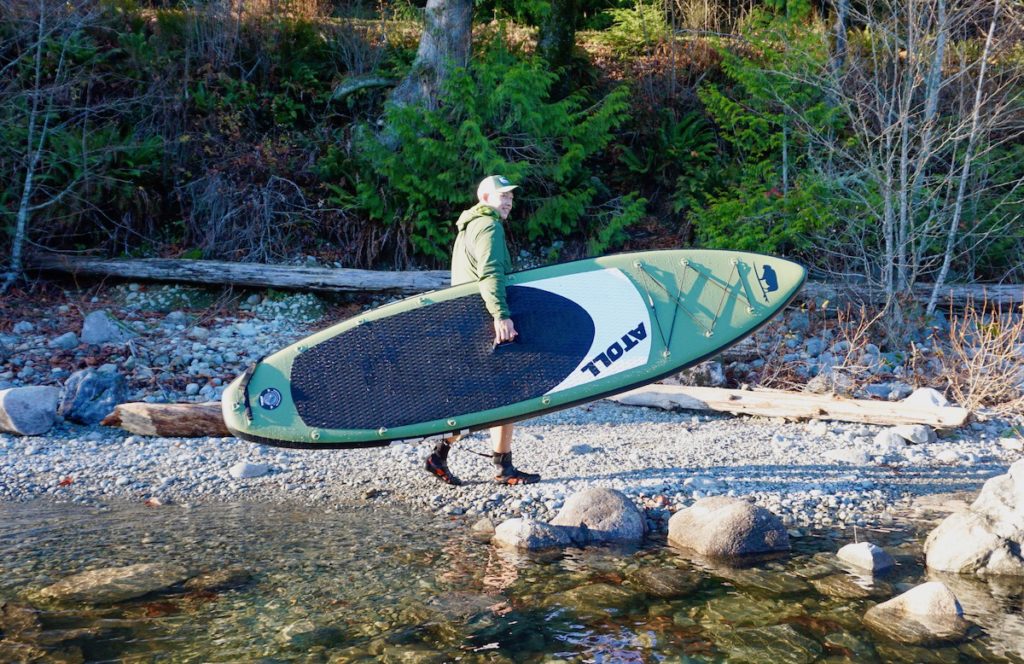
Atoll stands out for its lightweight design. It is one of the easiest boards to carry and transport without sacrificing core durability.
|
Pros: Lightweight, portable, solid build, 2-year warranty. |
Cons: Only one model available, weaker accessories package. |
Recommended Products:
- Atoll 11’ Inflatable Paddle Board – Adventure Package: The flagship model, 11’ x 32”, with dual-layer PVC, tri-fin design, and everything needed to paddle the same day.
- Atoll 11’ Inflatable Paddle Board – Kayak Package: Same great board with added kayak seat and accessories for those who want SUP-to-kayak versatility.
Best for: Travelers and paddlers who want a light board without sacrificing quality.
5. Tower Paddle Boards
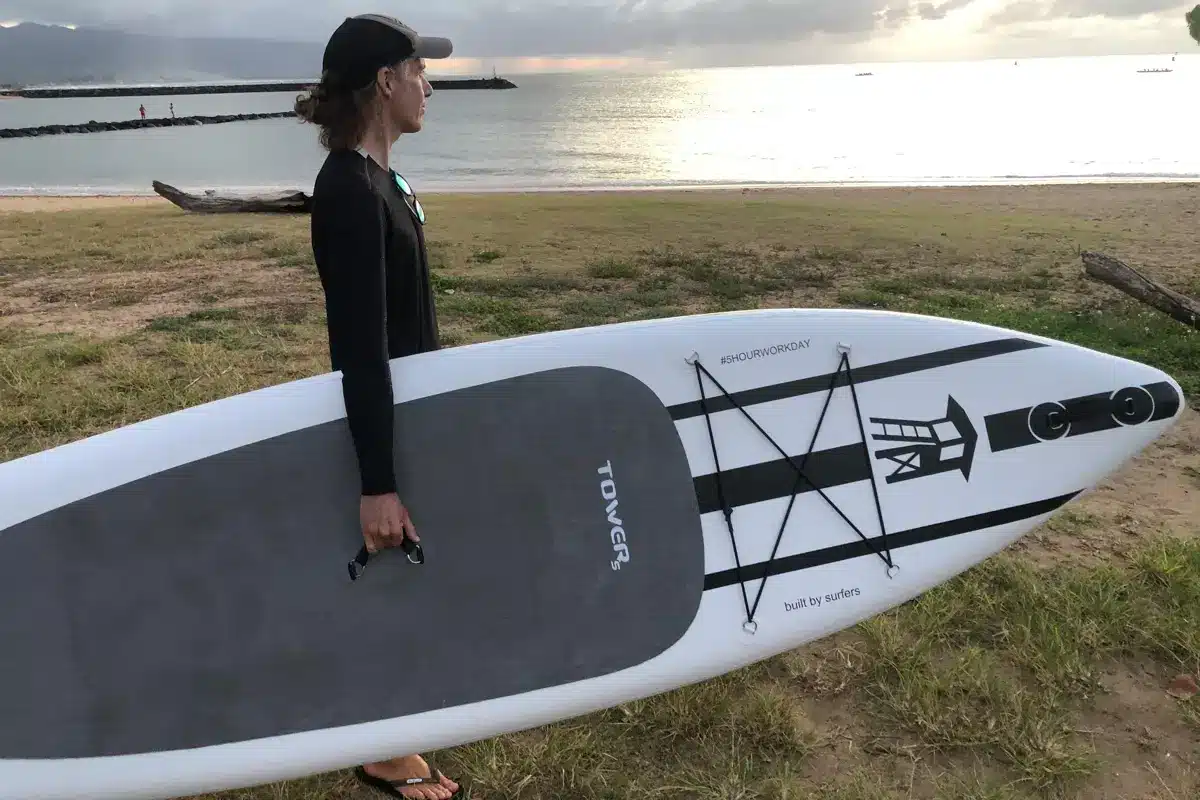
Tower is a solid budget pick that uses fusion construction for better durability than single-layer boards.
Their boards work fine on calm water but tend to flex and struggle in choppier conditions. They also skip the travel backpack, which most other brands include at this price.
| Pros: Very affordable, double-layer hand-glued construction, and a pioneer brand with a long track record. | Cons: More flex in choppy water, no travel backpack included at this price point. |
Recommended Products:
- Tower Adventurer 2 Inflatable Paddle Board: The brand’s most popular model at 10’4”, with double-layer hand-glued construction and a cargo net for gear.
- Tower All Around Inflatable Paddle Board: The most budget-friendly entry point in Tower’s lineup at $349, ideal for first-time buyers.
Best for: Beginners on a tight budget who just want to get on the water.
6. Starboard
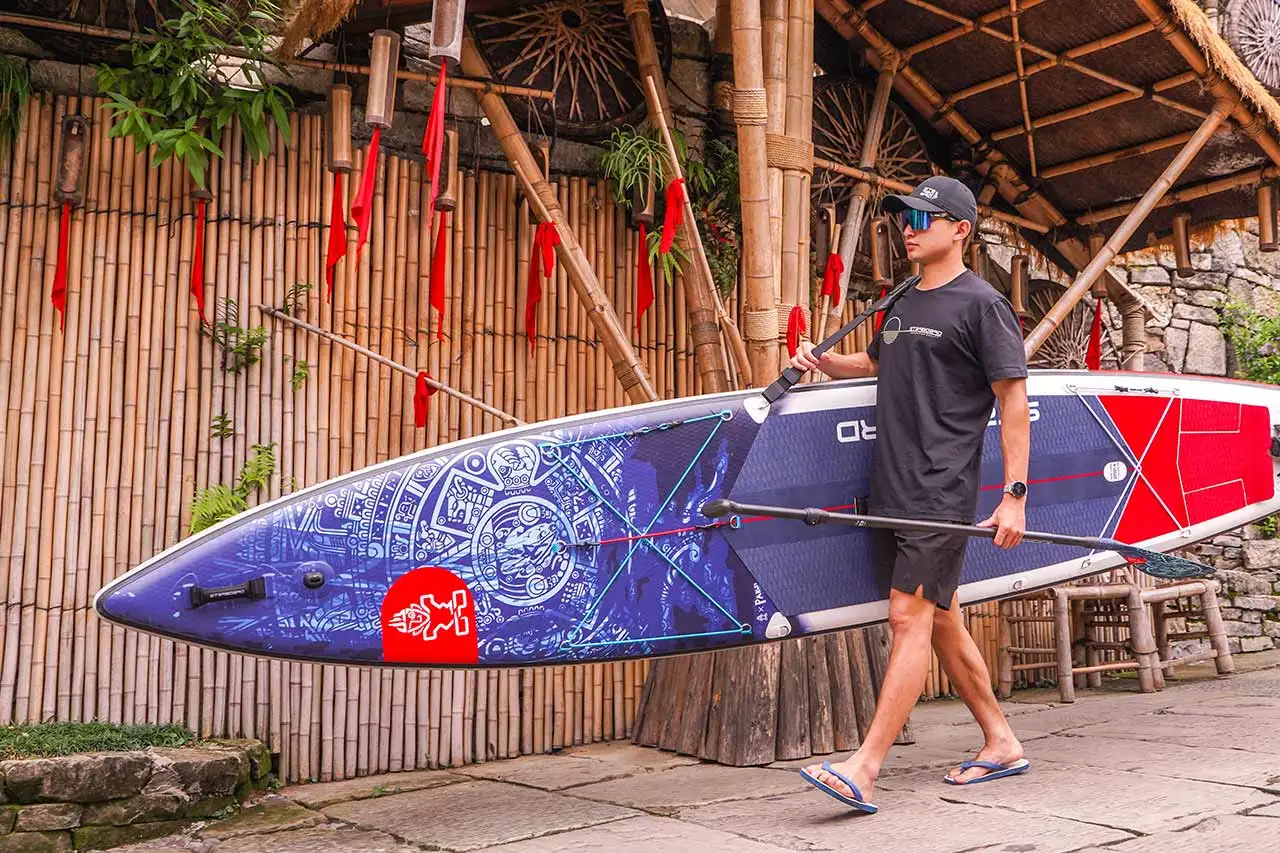
Starboard makes high-performance hard boards built for speed, racing, and serious touring. They are used in competitions and built with premium materials that outlast most other brands.
Not the right fit for casual paddlers but the top choice for advanced riders who want real performance.
| Pros: Competition-grade performance, premium materials, used by world-class racers, built to outlast most boards on the market. | Cons: High price point; not suited for beginners or casual paddlers. |
Recommended Products:
- Starboard 2025 All Star Paddle Board: The brand’s most acclaimed race board, used by competitive paddlers worldwide and described by SUPConnect as arguably the winningest paddle board on the market.
- Starboard 2025 Generation Paddle Board: A touring, surfing, and racing hybrid designed as the ultimate all-condition high-performance board, winner of SUPConnect’s Gear of the Year in 2021 and 2023.
Best for: Advanced paddlers, racers, and anyone looking for a high-performance hard board.
Inflatable vs Hard Paddle Boards: Which One Should You Choose?
This is where most buyers get stuck, because both inflatable and hard boards have clear advantages. The comparison below breaks down the differences so you can quickly decide which one is right for you.
|
Feature |
Inflatable |
Hard Board |
|
Portability |
Very easy to transport |
Needs a roof rack or a truck |
|
Storage |
Fits in a closet or bag |
Needs dedicated storage space |
|
Performance |
Good for most uses |
Better glide and tracking |
|
Durability |
Very durable, hard to ding |
Can crack or ding more easily |
|
Price |
Usually more affordable |
It can be more expensive |
|
Best for |
Beginners to intermediate |
Intermediate to advanced |
Common Mistakes to Avoid
Even after understanding how to choose a paddleboard, many buyers still make avoidable mistakes that lead to the wrong purchase. These are the most common ones to watch out for before you decide.
- Buying based only on price. Cheap boards under $200 often use low-quality materials and fail quickly. Spending a little more on a trusted brand saves you money in the long run.
- Ignoring weight capacity. Many people overlook this. If you weigh 200 pounds and bring gear or a dog, you need a board rated well above that.
- Choosing the wrong board type. A narrow touring board is not the right choice for someone who wants to relax on a lake. Match the board to what you will actually do.
- Overvaluing brand hype. A big name does not always mean a better board. Focus on construction quality, warranty, and what is included in the package.
Final Verdict: Which Paddle Board Brand Should You Pick?
If you already know your use case, the choice is simple.
Red Paddle Co stands out for premium performance; Isle is one of the best beginner-friendly options; Atoll works best for portability; and BOTE is the stronger pick for fishing and versatile setups.
At this point, it’s not about comparing features; it’s just about matching the board to how you’ll actually use it.
Frequently Asked Questions
Are Expensive Paddle Boards Worth It?
Yes, premium paddle boards are worth it if you paddle regularly or want better performance and durability. Cheaper boards can work, but they usually lack stiffness and long-term reliability.
What Size Paddle Board Should I Get?
Most beginners should go for boards between 10’6” and 11’6” in length with a width of 32–34 inches. This size range offers a stable balance of control, comfort, and usability for different water conditions.
How Long Do Paddle Boards Last?
A good quality paddleboard from a trusted brand can last 5 to 10 years with proper care. Longevity depends on usage, storage conditions, and the board’s maintenance.