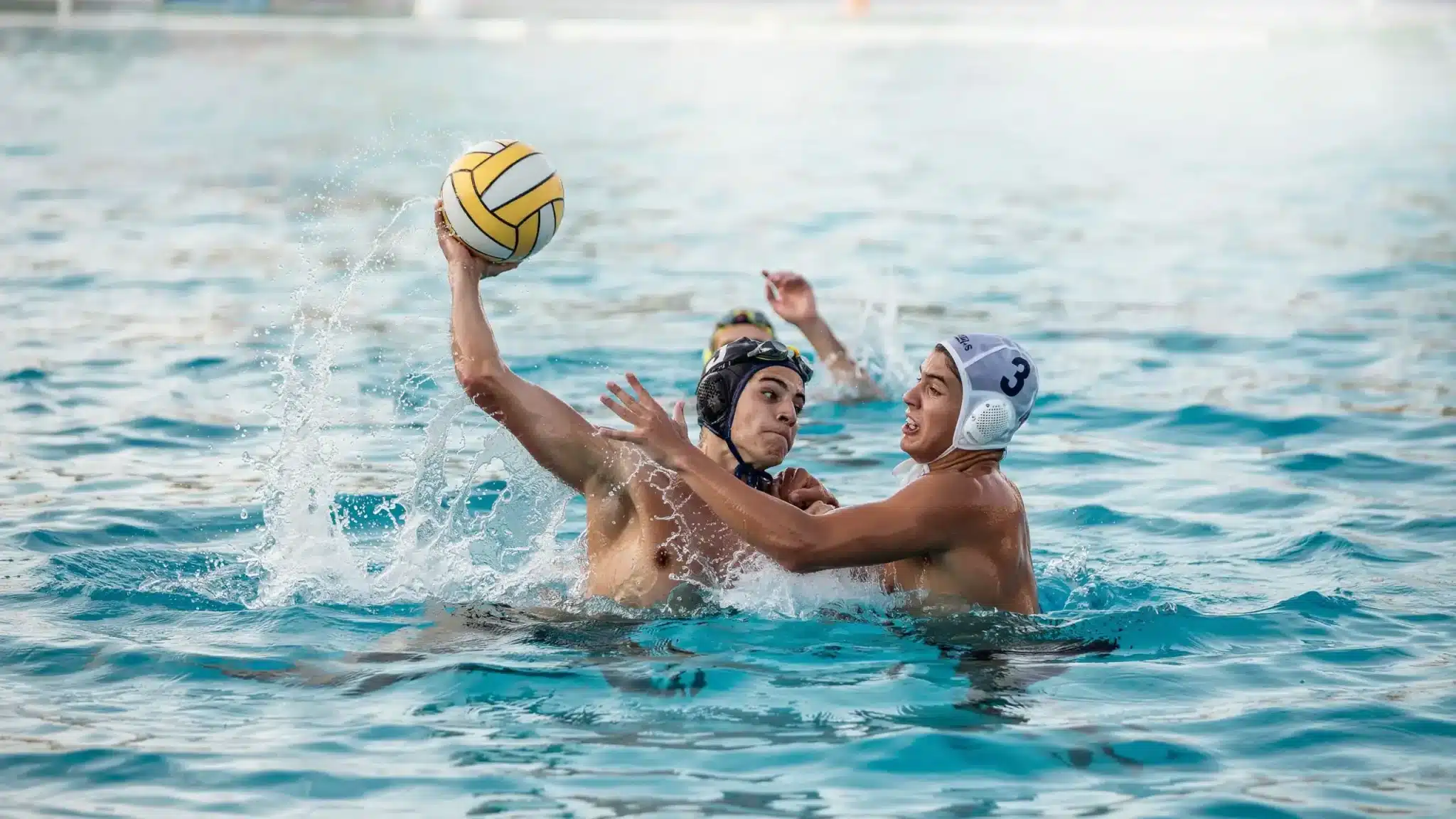
Water polo can look like a pool full of splashing and shouting the first time you watch it, but every player has a clear job to do.
Seven players from each team are in the water at once: six field players and one goalkeeper, and each one fills a role that shapes how the whole team scores and defends.
These roles are not fixed the way they are in most land sports. A player might start as a wing, cut toward the goal as a driver, then swim back to help on defense within the same thirty seconds.
Once you know what each position is supposed to do, the game stops looking like chaos and starts looking like a plan.
It also helps to know the basic fouls and exclusions that shape how those positions move.
What are Water Polo Positions?
In water polo, each team has seven players in the pool at a time: six field players and one goalkeeper. Field players take on roles such as center, wings, drivers, and point, while defenders match up against these attacking positions.
The center works close to the goal and receives passes under heavy pressure. Wings create shooting angles from the sides, while drivers move through water to create passing lanes and scoring chances.
The point usually operates farthest from the goal and helps organize the attack.
NBC Olympics’ own glossary confirms this: point is officially defined as the offensive position farthest from the goal, sitting in the 12 o’clock position of the formation. The goalkeeper protects the net and directs the defense.
These roles can change quickly during play, so players must swim, pass, defend, and reposition constantly as possession moves from one team to the other.
Meet The Seven Positions
Before breaking down each role in detail, it helps to see the full lineup in one place. Here is a quick snapshot of where each position sits in the pool and what it mainly does.
| Position | Where They Play | Main Job |
|---|---|---|
| Goalkeeper | In front of the goal | Stop shots, start counterattacks |
| Hole Set | Two meters from goal, facing it | Score up close, draw fouls |
| Hole D | Guarding the hole set | Stop close-range shots |
| Wings | Sides of the pool, near two meters | Finish passes, create angles |
| Drivers (Flats) | Four to six meters out | Cut to goal, open space |
| Point | Farthest from goal | Run the offense, shoot from outside |
| Utility | Anywhere needed | Fill in on offense or defense |
Water polo positions each serve a specific purpose, from protecting the goal to creating scoring chances, organizing attacks, and supporting teammates across the pool effectively.
What Each Position Does
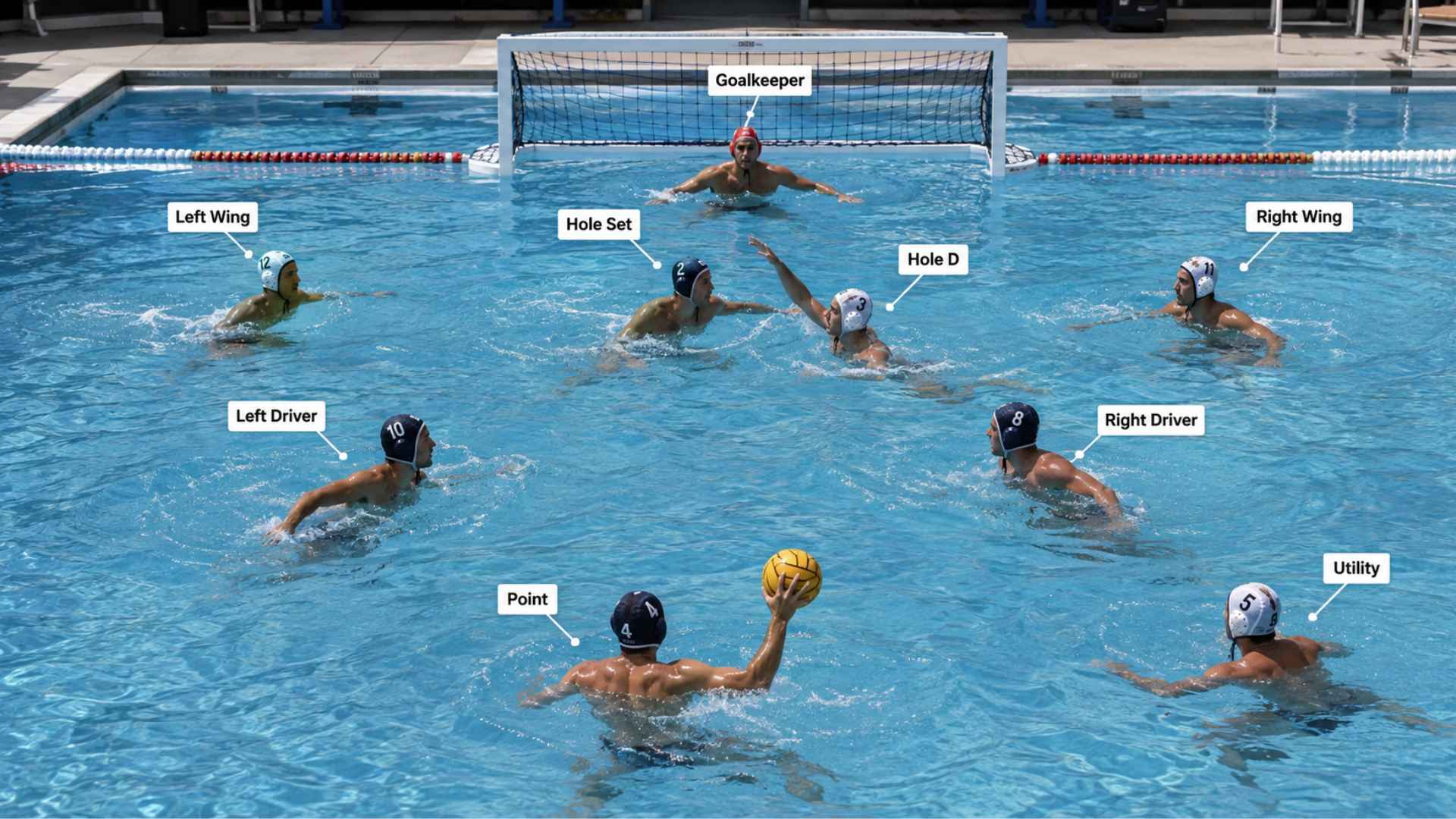
Each water polo position comes with different responsibilities in attack and defense. Understanding what goalkeepers, centers, wings, drivers, point players, and utility players do makes the game easier to follow.
1. Goalkeeper
The goalkeeper is the only player allowed to touch the ball with both hands, punch it with a closed fist, or stand on the pool floor in shallow water.
That comes with a big job: stopping shots that can reach 55 to 60 miles per hour from elite shooters, with the fastest recorded shot in the world clocked at 60 mph.
A good goalkeeper does more than block. They also throw fast outlet passes to start a counterattack the second they make a save, and they call out defensive positioning so the rest of the team knows where to move.
2. Hole Set (Center Forward)
The hole set plays with their back to the goal, right at the two-meter line, fighting for position the entire game. This is one of the most physical spots in the pool. Defenders push, grab, and try to knock the hole set off balance, so the position calls for strength, balance, and patience.
When the hole set gets the ball in a good spot, they can shoot, spin toward the goal, or pass out to a teammate who has a cleaner shot.
3. Hole D (Center Back)
Right across from the hole set stands their shadow, the hole D. This defender’s whole job is to keep the hole set away from the goal without picking up an exclusion foul, which sends a player out of the game for twenty seconds until the time expires, a goal is scored, or their team regains possession, whichever comes first.
Good hole D players use their body position and timing instead of their hands, since grabbing or holding usually ends in a penalty.
4. Wings
Wing players set up near the two-meter line but off to the sides of the pool instead of dead center. Their angle to the goal makes them dangerous finishers on quick passes from the hole set or a driver.
Left-handed players often play the right wing, and right-handed players often play the left wing, since it lines up their shooting arm with an open part of the goal.
Coaches sometimes call this side of the pool the weak side, since it is often opposite the ball and typically staffed by left-handed players taking advantage of a better shooting angle from that side.
5. Drivers
Drivers work from about four to six meters out and stay in constant motion, cutting toward the goal to catch a pass or pulling a defender out of position. Speed and timing matter more than size here.
You may also hear this spot called a flat, since drivers positioned along that same five-to-six-meter line are working to get into a strong outside shooting position.
A driver who reads the defense well can create scoring chances just by moving at the right moment, even without touching the ball on that possession.
6. Point
The point sits the farthest from the goal and acts a bit like a coach in the water, calling plays and moving the ball around the perimeter until a gap opens.
Point players usually have a strong outside shot and good vision, since they are often the last line of defense if the other team steals the ball and counterattacks.
7. Utility Players
Utility players are the ones who can slide into almost any spot when a coach needs them there. They might start the game on the wing, move to point in the second half, and finish as a driver.
Coaches lean on utility players heavily because water polo substitutions happen constantly, and having someone who already understands multiple roles saves valuable time.
How Positions Work Together
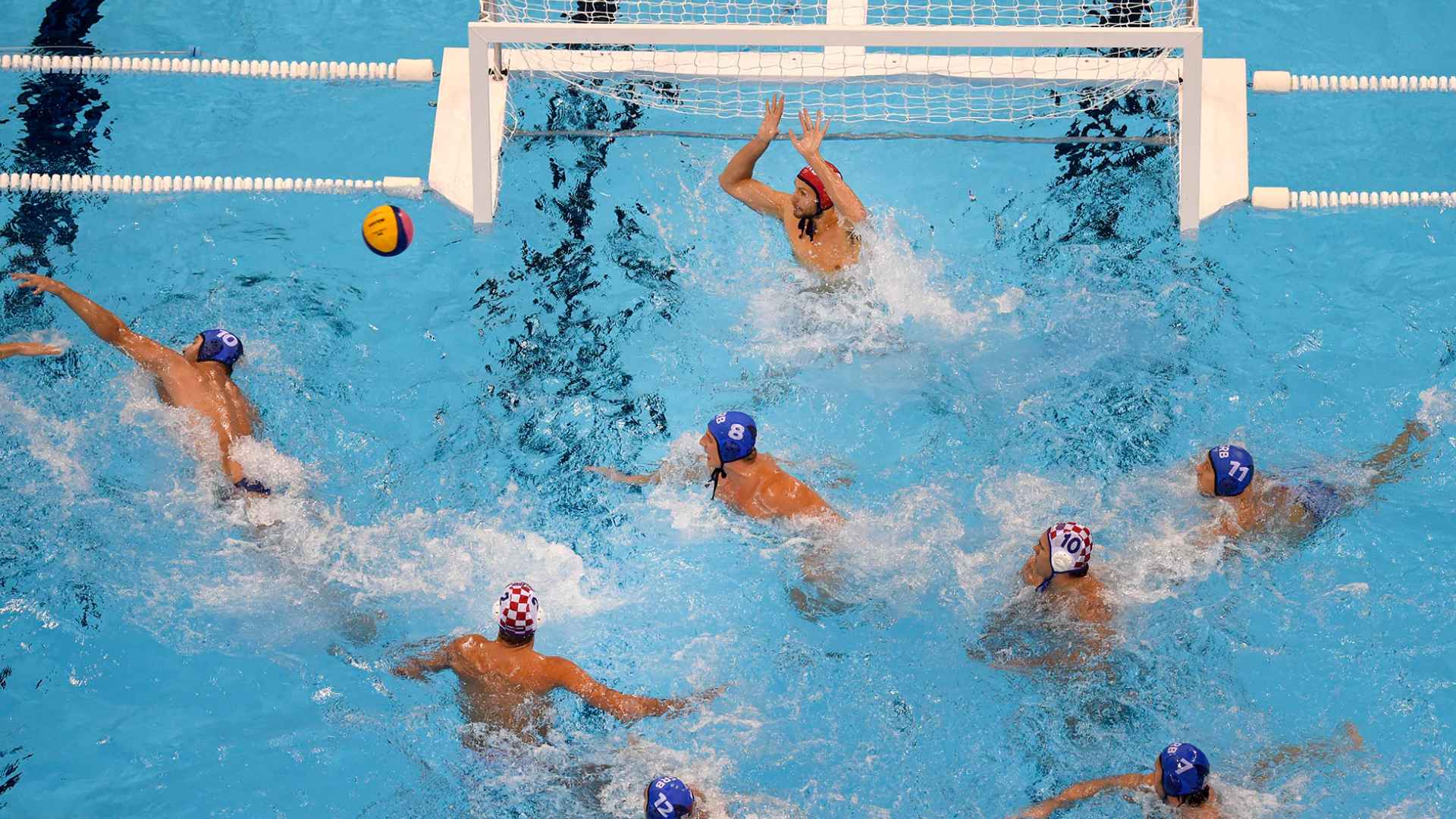
None of these roles work alone. On offense, the six field players spread out to form a horseshoe shape around the goal, with the hole set anchoring the middle and everyone else spaced along the perimeter.
On defense, that shape tightens: the hole D drops in close to guard the hole set, while wings, drivers, and point match up with whoever they are covering.
The moment possession changes, all of this flips almost instantly:
- The team that just lost the ball has to sprint back and set up defense within a few seconds.
- The team that just won the ball tries to push a fast counterattack before the defense gets organized.
- Whoever is closest to their own goal often becomes the temporary point or defender, no matter their usual position.
This back-and-forth is why water polo players need strong conditioning in addition to position-specific skills. Plenty of players build that base fitness with dryland or pool-based cross-training work, and this is where a routine like deep-water aqua jogging comes in handy, since it builds the same kind of low-impact endurance that keeps a tired player from breaking the whole defense late in a game.
How Positions are Numbered
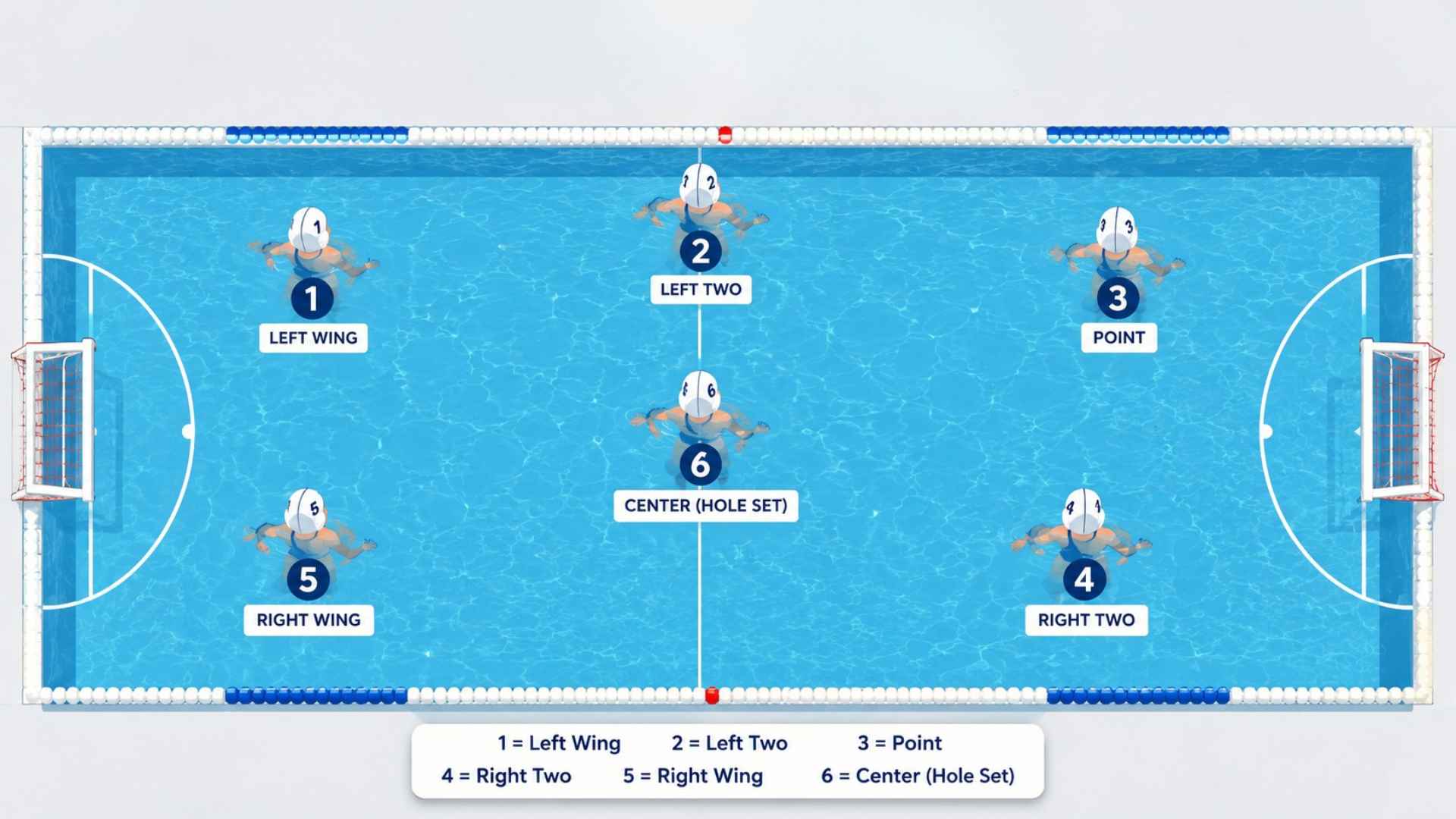
Coaches and players do not always use position names during a game. Instead, they often call out numbers, since it is faster to shout “two!” than “left wing!” during fast play. In the most common US system, positions are numbered from one side of the pool to the other.
The wing on one side is one, the next spot moving around is two, the point is three, then four, then the wing on the far side is five, and the hole set is six. European teams use a similar idea but often count in the opposite direction, which can confuse American players watching international games for the first time.
What Happens During a Power Play
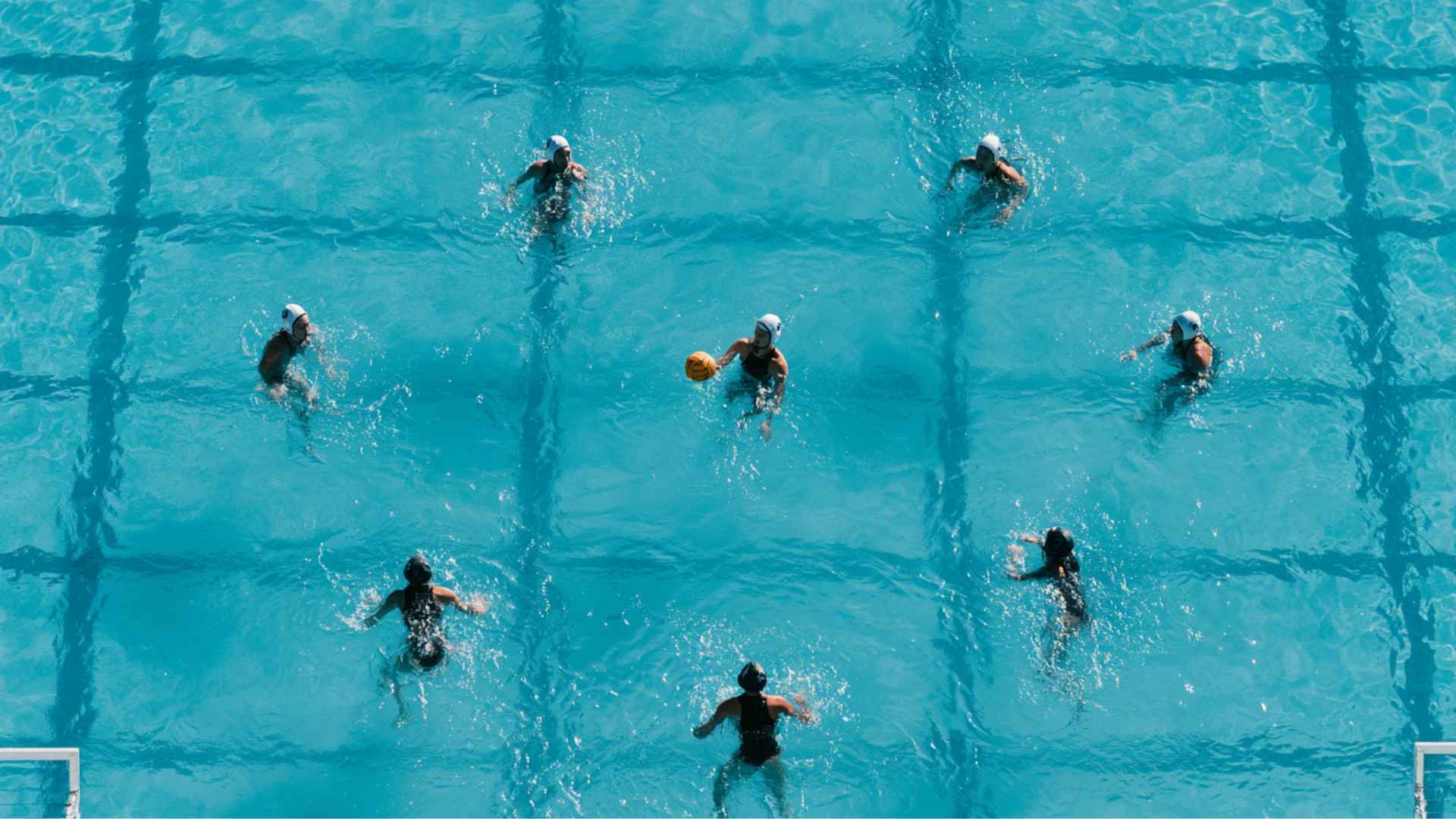
A power play, also called a man up, begins when a defender picks up an exclusion foul and leaves the pool for twenty seconds. During that time, the offense has one extra player and a chance to score.
The attacking team shifts into a set formation, with four players near the two-meter line and two more across the five-meter line.
This is often called a 4-2 setup, and it comes with its own numbering separate from a regular six-on-five lineup:
- 1. Strong Side Wing – the wing closest to the ball side of the pool
- 2. Two Post – the first inside post along the two-meter line
- 3. Three Post – the second inside post along the two-meter line
- 4. Top – one of two players spread across the outer perimeter
- 5. Top – the second perimeter player, mirroring position four
- 6. Weak Side Wing – the wing farthest from the ball side
The hole set stays central, creating passing and shooting options, while the rest of the attack rotates around this 4-2 shape to keep the defense stretched.
Meanwhile, the defense drops back toward the goal and tries to protect space with fewer players. Because of this advantage, teams spend plenty of practice time preparing power plays.
Common Things People Get Wrong
Water polo looks confusing at first, and a few mix-ups come up again and again among new fans and parents.
- Myth: The goalkeeper always stays glued to the goal line.
Goalkeepers can actually swim out past the five-meter line if needed. They just lose their special privileges, like using both hands, once they leave the goal area. - Myth: The center never moves.
The hole set actually swims in and out of position constantly, fighting for space the entire game instead of standing still in one spot. - Myth: An exclusion foul ends a player’s game.
An exclusion only lasts twenty seconds, and it ends early if the other team scores or the excluded player’s own team regains possession, whichever happens first. - Myth: Cap numbers show what position a player plays.
Cap numbers are mostly for tracking fouls and stats. A team’s numbering on the scoreboard rarely lines up with the position numbers coaches use to call plays.
Water polo positions come with plenty of misconceptions, but the reality is far more flexible, active, and strategic during games.
Finding Your Best Position
There is no single formula for picking a position, but a few things usually point players in the right direction:
- Size and strength matter most for hole set and hole D, since both spots involve constant physical contact.
- Speed tends to favor drivers and wings, who rely on quick bursts to get open.
- Shooting hand often decides which wing a player ends up on.
- Game awareness and passing are especially valuable at point, where reading the defense matters more than raw speed.
- Comfort under pressure is the biggest factor for goalkeepers, who face the most one-on-one moments in the game.
Younger or newer players benefit from trying every position at least once before settling into one. Understanding what a hole set feels like makes you a better passer as a wing, and knowing how a hole D thinks makes you harder to guard as a driver.
How to Spot Positions by Cap Color
If you are new to watching water polo, cap colors are the fastest way to tell who is who without knowing every position by heart.
| Player Type | Cap Color | Purpose |
|---|---|---|
| Goalkeeper | Usually red | Easy to identify |
| Field players | White or blue | Shows team membership |
| Opposing team | Different color | Separates both teams |
The number on a field player’s cap does not always match their position number in a coach’s playbook. Cap numbers are mostly there for referees and scorekeepers to track fouls and goals, not to tell you what position someone plays.
Conclusion
The biggest thing to remember about water polo positions is that they are starting points, not fixed jobs.
The players who improve the fastest are usually the ones who learn more than one role, since it makes them harder to guard and easier for a coach to trust in different situations.
Numbers, cap colors, and formations might seem like a lot to take in at first, but they all point back to the same seven roles covered here.
Plenty of that same instinct for spacing and timing carries over from other water sports too, including the reads a paddler makes when sharing a lake or channel with a personal watercraft or small boat.
Either you end up guarding the hole or running the offense from the point; understanding how each position fits into the bigger picture will make you a sharper player and a smarter fan the next time you watch a game.
Frequently Asked Questions
How Many Positions are There in Water Polo?
There Are Seven Main Positions: Goalkeeper, Hole Set, Hole D, Two Wings, Two Drivers, and Point. Players Often Shift Between Roles During a Game Based on Where the Ball Goes.
What is the Hardest Position in Water Polo?
Most Players Say Hole Set and Goalkeeper Are the Toughest, Since Both Involve Constant Physical Contact or Fast, High-Pressure Decisions with Little Time to React.
Can a Goalkeeper Leave the Goal Area?
Yes, a goalkeeper can swim out of the goal area, but they lose their special privileges, such as using both hands, once they leave the goal or five-meter area and become a regular field player.