
If you already spend your weekends on a stand up paddle board, an electric hydrofoil board can look like a big leap. The board rises above the water, the motor does the work your paddle used to do, and the speed is noticeably higher. The good news is that paddle boarders start with a real advantage. Many of the skills you built on flat water transfer directly, so the learning curve is often shorter than it is for someone who has never stood on a board.
This guide explains what carries over, what feels new, and how to set yourself up for a smooth first session.
What Paddle Boarding Skills Carry Over to eFoiling
Your time on a SUP has quietly trained the exact things an eFoil asks of you in the first few minutes.
- Balance on a moving platform: You already make small ankle and knee corrections without thinking. On an eFoil those same micro adjustments keep the board level as it starts to lift.
- Getting up from your knees: Most eFoil lessons start with riders on their knees or stomach before standing, which mirrors how many people first learned to stand on a paddle board.
- Reading the water: Spotting wind lines, boat wakes and shallow patches is second nature for paddlers. That awareness helps you choose a safe line once you are moving faster.
- Core strength and endurance: Research on paddle boarding has linked regular sessions to gains in core endurance and aerobic fitness. A six week study published in BMC Sports Science, Medicine and Rehabilitation reported improvements in both after a structured SUP program, and that base helps you hold a stable stance while riding.
- Comfort falling in: Paddlers are used to the occasional swim. Knowing how to fall away from the board calmly is one of the most useful habits you can bring to foiling.
What Feels New When You Step Onto an eFoil
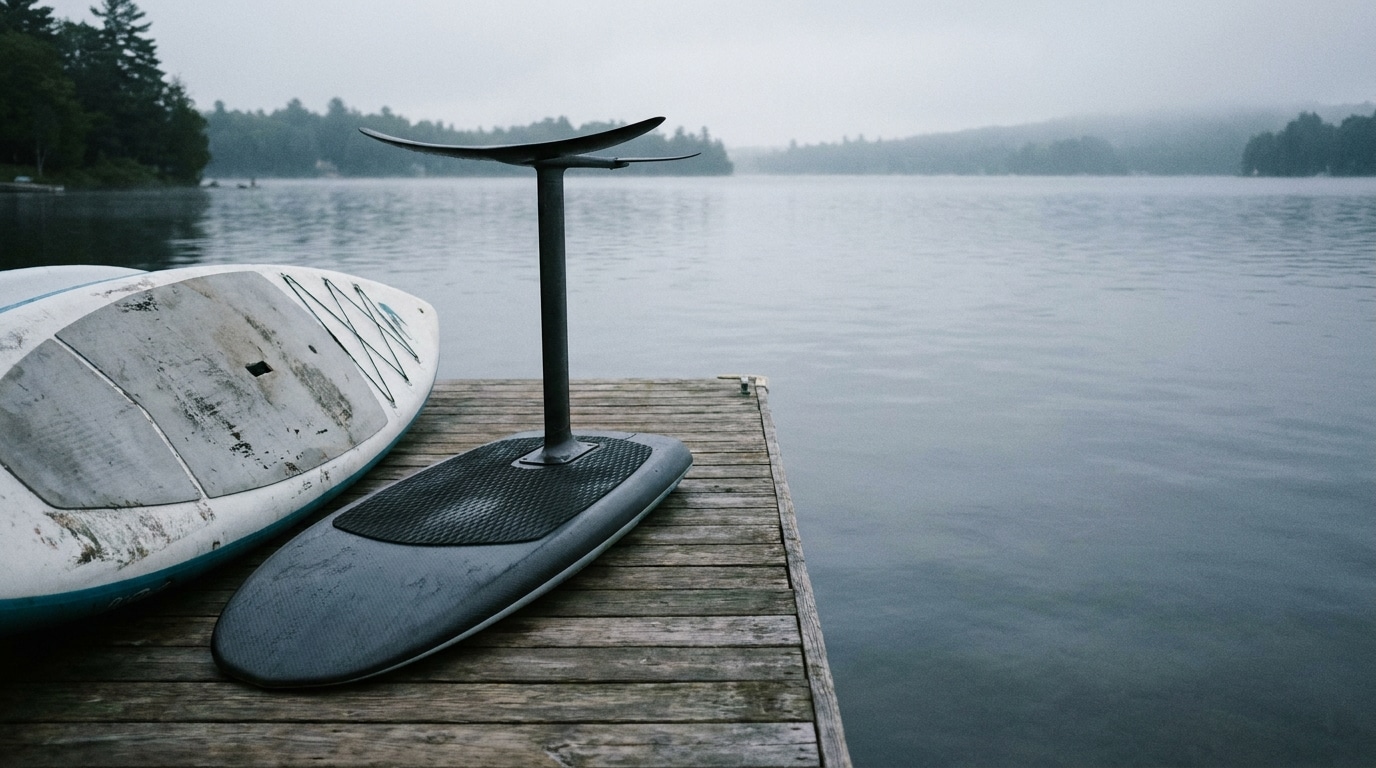
The biggest shift is that you are no longer riding on the water but above it. Once the hydrofoil wing generates enough lift, the board rises and the only thing touching the water is the mast and wing below you. That creates two new skills to learn.
Throttle control. Instead of a paddle, you hold a wireless hand controller. Squeezing too hard too early is the most common beginner mistake. Smooth, gradual throttle inputs keep the board stable and stop it from popping up too fast.
Pitch control. On a paddle board, you mostly manage side to side balance. On a foil, front to back balance matters just as much. Shifting weight onto your front foot lowers the nose, and easing onto your back foot raises it. Learning to find the middle point is what turns a wobbly ride into a smooth glide.
The feeling itself is also different. Riders often describe it as quiet and almost weightless, because the board stops slapping against small chop once it is flying.
So, Is It Easier for Paddle Boarders?
For most people, yes. Paddle boarders typically get up and ride sooner than first timers because the stance, balance and confidence on the water are already there. The parts that still take practice are throttle discipline and pitch, and those come from time on the board rather than from any previous sport.
A realistic progression for a confident paddler looks like this.
- Session one: Ride on your knees or stomach, get used to the throttle, then stand and cruise with the board still on the water.
- Session two: Add a little speed, shift your weight back slightly and feel the first short lifts.
- Session three onward: Hold longer flights, practice gentle turns and learn to come down smoothly by easing off the throttle.
Equipment makes a noticeable difference to how fast this happens. A stable, beginner friendly setup with a larger front wing and a shorter mast gives more lift at lower speeds and makes touchdowns more forgiving. Boards such as the Lift5 F eFoil are designed with this kind of progression in mind, so a paddler can learn on calmer settings and grow into faster riding over time.
SUP vs eFoil at a Glance
|
Factor |
Stand up paddle board |
eFoil |
|---|---|---|
|
Power source |
Your paddle stroke |
Battery powered electric motor |
|
Main balance challenge |
Side to side |
Side to side plus front to back (pitch) |
|
Typical speed |
Walking to jogging pace |
Gliding speeds well above paddling pace |
|
Effect of small chop |
Board bounces on the surface |
Board flies above most small chop |
|
Key new skill |
Paddle technique |
Throttle and pitch control |
|
Recommended gear |
PFD and leash |
PFD, helmet and impact vest are common |
Safety Tips Every Paddler Should Know Before Foiling
Higher speeds bring new risks, and a few habits make a big difference.
- Always wear a life jacket. According to the U.S. Coast Guard’s recreational boating statistics, drowning was the cause of death in about three quarters of fatal boating incidents in 2023 where the cause was known, and most of those victims were not wearing a life jacket.
- Wear a helmet. The foil wing and mast sit under the board, so falling away from the board, rather than onto it, is a skill to practice from day one.
- Respect cold water. The RNLI warns that cold water shock can affect anyone entering water below 15°C (59°F). Dress for the water temperature, not the air.
- Check depth before you go. A foil needs enough water under the board to clear the mast, so avoid shallow areas and launch points with hidden rocks or sandbars.
- Start in calm, open water. Pick a spot away from swimmers, moored boats and heavy traffic for your first few sessions.
How to Choose Your First eFoil as a Paddle Boarder
Think about where and how you paddle today. If you ride mostly on lakes or sheltered bays, a stable board with generous volume will feel familiar and forgiving. Look at battery ride time, available wing sizes for progression, the quality of the hand controller and how easy the setup is to carry and assemble. Lessons or a guided demo are also worth considering, since a short session with an instructor can save several frustrating hours of trial and error.
Conclusion
For paddle boarders, eFoiling is less a new sport and more a natural next step. Your balance, stance and water sense give you a head start, leaving throttle and pitch control as the main skills to learn. With the right board, calm water and proper safety gear, most paddlers find that the first flight comes sooner than they expected.
Frequently Asked Questions
Do I need to know how to surf to learn eFoiling? No. Surfing experience helps, but paddle boarding is an equally good foundation because it builds balance and comfort standing on a board.
How long does it take a paddle boarder to learn to eFoil? Many paddlers get short flights in their first or second session and ride confidently within a few sessions, depending on conditions, equipment and instruction.
Is eFoiling a good workout? It works the legs and core continuously to hold your stance, although the motor removes the upper body effort of paddling.
Can I eFoil on a lake? Yes. Calm lakes are often ideal for learning, as long as the water is deep enough and local rules allow motorized boards.