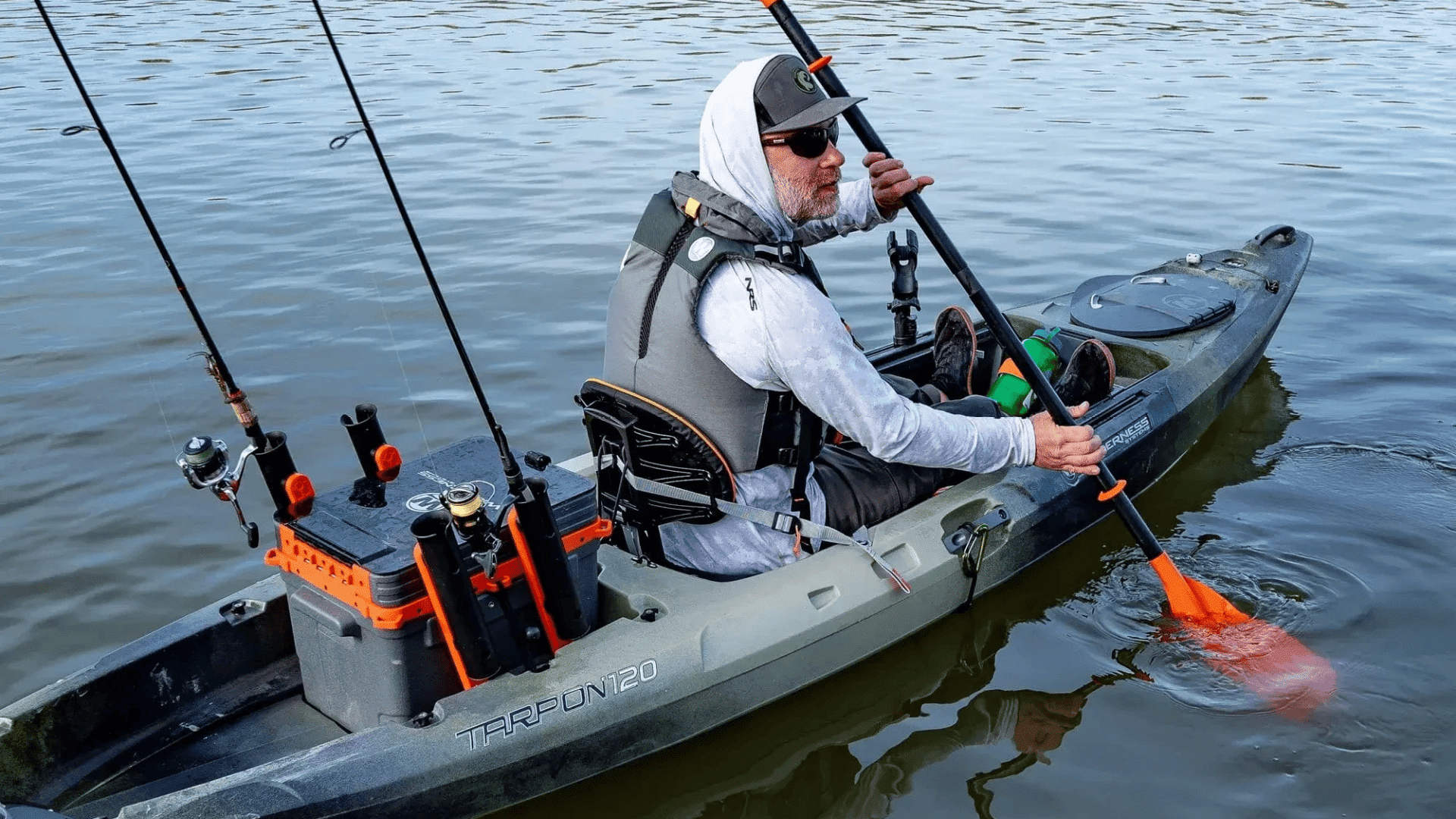

Coastal water does not behave like a lake or a river. Tides shift the shoreline while you paddle, offshore winds push you away from land faster than you can return, and rip currents form without warning near beach openings and tidal inlets.
If you are getting ready for your first saltwater trip and searching for sea kayaking safety tips for coastal paddling, this covers what keeps you out of trouble, based on U.S. Coast Guard standards, American Canoe Association training, and real coastal conditions.
You do not need years of experience to paddle coastal waters safely, though it helps to be steady with basic paddling fundamentals before tides and wind are added to the mix. You do need to prepare differently than you would for any flatwater trip.
What Is Coastal Paddling?
Coastal paddling refers to kayaking or canoeing in open saltwater environments, such as oceans, seas, bays, estuaries, and shorelines, rather than in calm inland waters like lakes or rivers.
Unlike flatwater paddling, coastal paddling involves constantly changing conditions influenced by tides, wind, waves, currents, and weather.
This makes it more variable and sometimes unpredictable, even over short distances.
For beginners, coastal paddling is less about distance and more about reading the water and staying aware of environmental changes that can quickly affect safety.
Why Does Coastal Paddling Require Different Preparation?
Most paddlers who get into trouble on coastal waters are not reckless. They simply did not account for how quickly conditions change when tidal flow, wind, and swell interact.
A calm morning launch can turn into a challenging return by early afternoon when the wind builds and the tide reverses.
The ocean is not a static environment. Three forces work against you simultaneously in ways flatwater never does:
- Tides: Water rises and falls predictably, but that movement creates currents that can run 2 to 5 knots in tidal channels, faster than most recreational kayakers can paddle.
- Swell: Ocean swell travels from distant storms and arrives at shore as breaking waves even on otherwise calm days.
- Offshore winds: Wind blowing from land toward open water can feel manageable when you launch but can create extremely dangerous conditions if you need to paddle back to shore.
River and lake experience helps, but it does not transfer completely. Plan for the coast on its own terms.
Choose the Right Kayak for Coastal Water
A recreational kayak, the short, wide sit-in or sit-on-top common on lakes and calm rivers, is not designed for open coastal conditions.
It sits lower in the water, has less directional stability in swell, and does not track well in wind. On the coast, that combination becomes a real problem.
| Kayak Type | Best For | Coastal Use |
|---|---|---|
| Recreational Kayak (under 12 ft) | Calm lakes, slow rivers | Not recommended for open coast |
| Touring / Sea Kayak (14–18 ft) | Open water, exposed coast, long distances | Recommended for coastal paddling |
| Sit-On-Top Sea Kayak | Warmer coastal water, surf launches | Suitable with proper training |
| Inflatable Touring Kayak | Travel, protected bays | Acceptable in sheltered conditions only |
Sea kayaks are longer and narrower, with a defined bow and stern that cut through chop rather than ride over it.
If you are renting, tell the outfitter you are paddling coastal or exposed water and ask specifically for a touring or sea kayak.
Pro tip : Before renting or buying, sit in the kayak in calm water for 20 minutes to test comfort for long coastal trips.
Coastal Paddling Safety Gear You Need
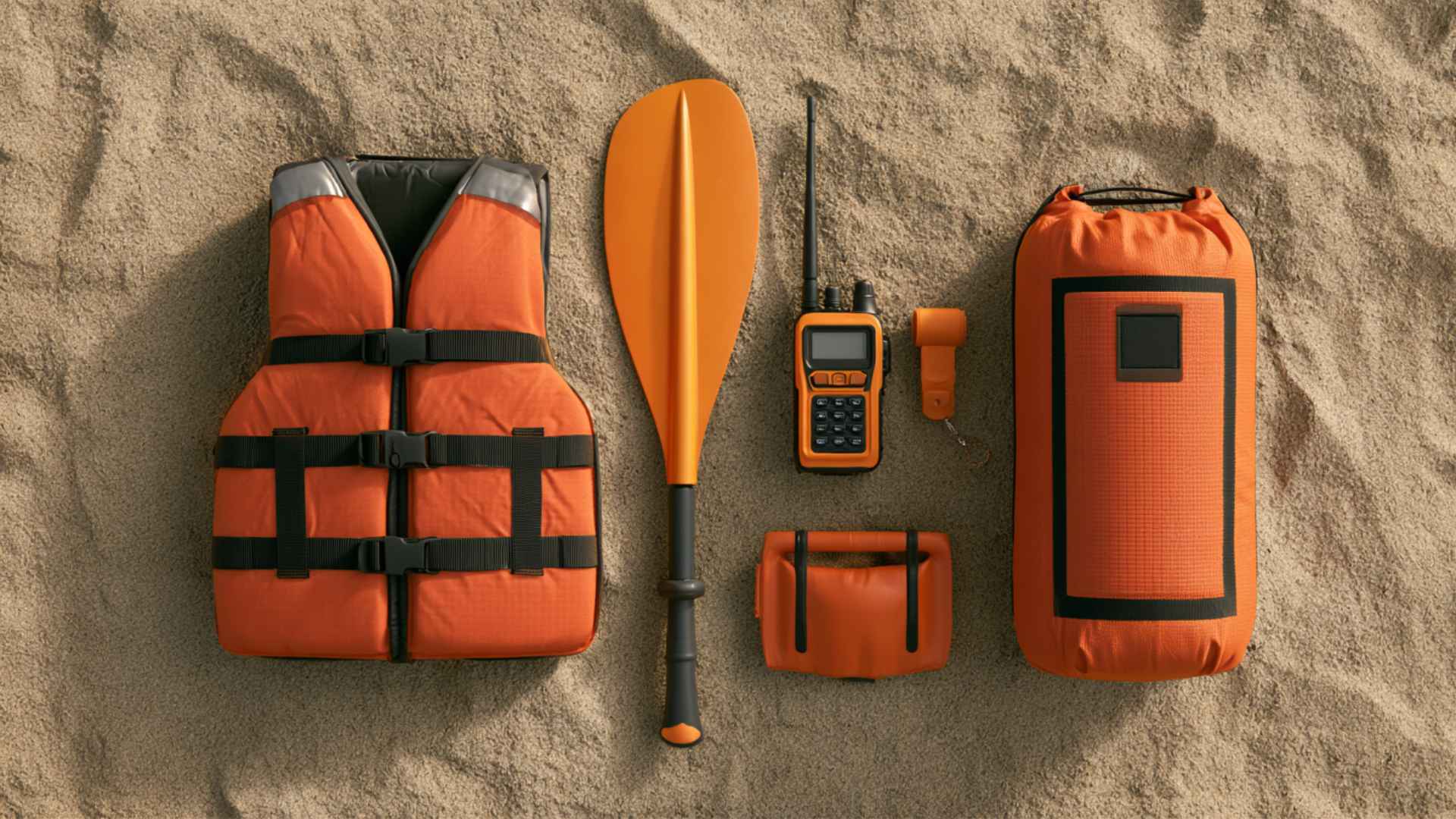
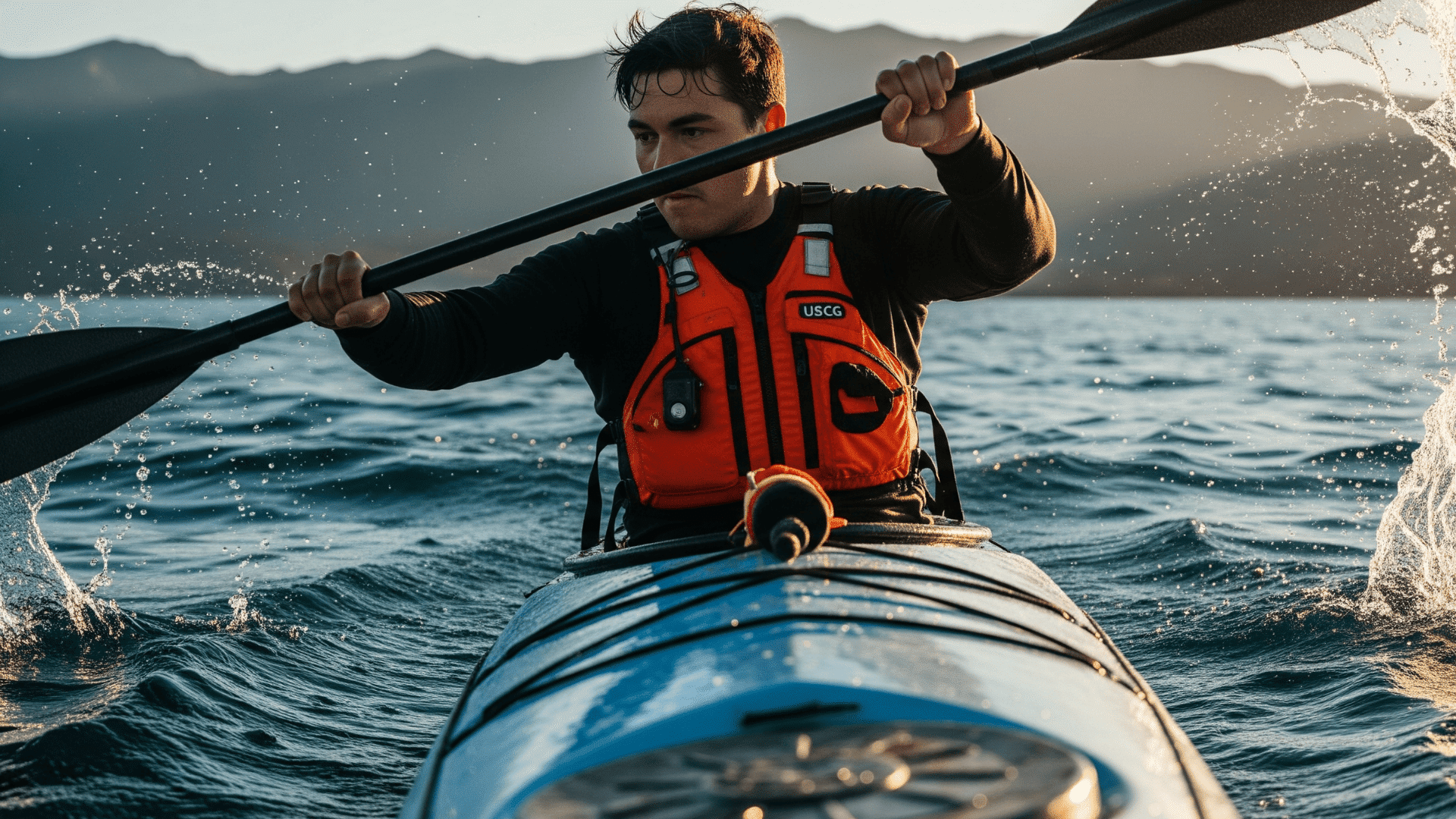
A Coast Guard–approved PFD is required and must always be worn, not just carried, since cold water shock can quickly reduce survival chances after a capsize.
Core coastal gear includes a bilge pump, tow line, spare paddle, and a VHF marine radio for emergency communication.
If you’re staying out overnight, it helps to know what to pack for longer trips before you load the boat. A personal locator beacon adds reliable satellite backup when help is needed offshore.
For current U.S. kayak equipment requirements by state, the U.S. Coast Guard Boating Safety Resource Center maintains up-to-date regulations.
- PFD (Type III or V): Wear it at all times for flotation; carrying alone is not enough in cold coastal water, where capsizes can quickly become life-threatening without immediate buoyancy support.
- Visual distress signal: Whistle, flare, or mirror helps attract rescuers in emergencies; particularly useful in coastal zones where quick visibility can determine rescue success.
- Navigation light: Required in low light conditions like dawn, dusk, or fog to stay visible to boats and avoid collisions in busy coastal waters.
- Spare paddle: A necessary backup if the primary paddle breaks or is lost; coastal wind and current make paddle failure a serious safety risk, not an inconvenience.
- VHF radio or PLB: Enables emergency communication with the Coast Guard or satellites when a cell signal is unavailable offshore, greatly improving rescue response time and accuracy.
In an emergency, your hands may be occupied managing the boat or holding onto a swimmer. You should be able to signal without having to search your pockets.
Dress for the Water Temperature, Not the Air
This is the most frequently ignored sea kayaking safety principle, especially on sunny spring and fall days when the air feels warm and comfortable.
Cold shock hits hardest between 50°F and 60°F, where most people briefly lose control of their breathing the moment they hit the water.
That reaction fades within a minute or two, but swimming failure, the point where your arms and legs stop responding well enough to self-rescue, can follow within about 10 to 15 minutes in that same range.
Hypothermia is actually the slowest of the three dangers, which is why survival-time charts that only account for hypothermia can be misleading; the National Center for Cold Water Safety has written directly about why those charts undersell the real risk.
| Water Temperature | Recommended Protection | Unprotected Swim Survival Window |
|---|---|---|
| Below 50°F (10°C) | Dry suit with thermal underlayer | Under 1 hour |
| 50–60°F (10–15.5°C) | Dry suit or 5mm wetsuit | 1–6 hours |
| 60–70°F (15.5–21°C) | 3mm wetsuit minimum | Varies; meaningful risk remains |
| Above 70°F (21°C) | Paddling layers, sun protection | Lower risk; heat exhaustion becomes the concern |
Check the NOAA buoy nearest your launch point for real-time sea surface temperature before every coastal trip. The NOAA National Data Buoy Center provides current readings from hundreds of U.S. coastal stations.
How to Read Coastal Conditions Before You Launch
Coastal paddling requires understanding wind, tides, and currents. Proper forecasting and awareness of hazards help ensure safer navigation and prevent dangerous situations offshore.
- Weather Forecasting for Paddlers: Accurate weather forecasting is essential for safe paddling. It includes wind, waves, and advisories. Offshore winds and small craft warnings can quickly create dangerous conditions that standard weather apps often fail to show.
- Wind Direction and Safety Impact: Wind direction determines paddling difficulty and safety more than speed alone. Offshore winds push paddlers away from shore, making return trips exhausting and risky, especially when fatigue builds during long excursions.
- Small Craft Advisory Warning: A small craft advisory indicates unsafe water conditions for small vessels, such as kayaks. It signals high winds and waves, meaning trips should be postponed immediately to avoid dangerous situations offshore.
- Understanding Tides and Currents: Tides directly influence water movement and paddling effort. Changing currents can either assist or oppose travel, so planning launch and return times using tide charts is key for energy conservation and safety.
- Tidal Races Awareness: Tidal races form where currents meet over shallow areas, creating turbulent and breaking water. These unpredictable zones require careful chart reading and avoidance, especially for beginners unfamiliar with coastal water dynamics.
- Rip Currents and Coastal Hazards: Rip currents are strong, seaward-flowing currents that pull paddlers away from shore. Instead of fighting the current directly, moving parallel to the beach helps escape it before safely returning to land.
- Boat Traffic Awareness: Kayaks sit low in the water and are easy for powerboats to miss. Watch an oncoming boat’s position against a fixed point on your kayak; if that position does not change, you are on a collision course and need to alter direction early.
Careful planning, reading forecasts, and respecting tides and wind conditions help paddlers stay safe, conserve energy, and avoid dangerous situations on every coastal trip.
Build a Paddle Plan Before Every Coastal Trip
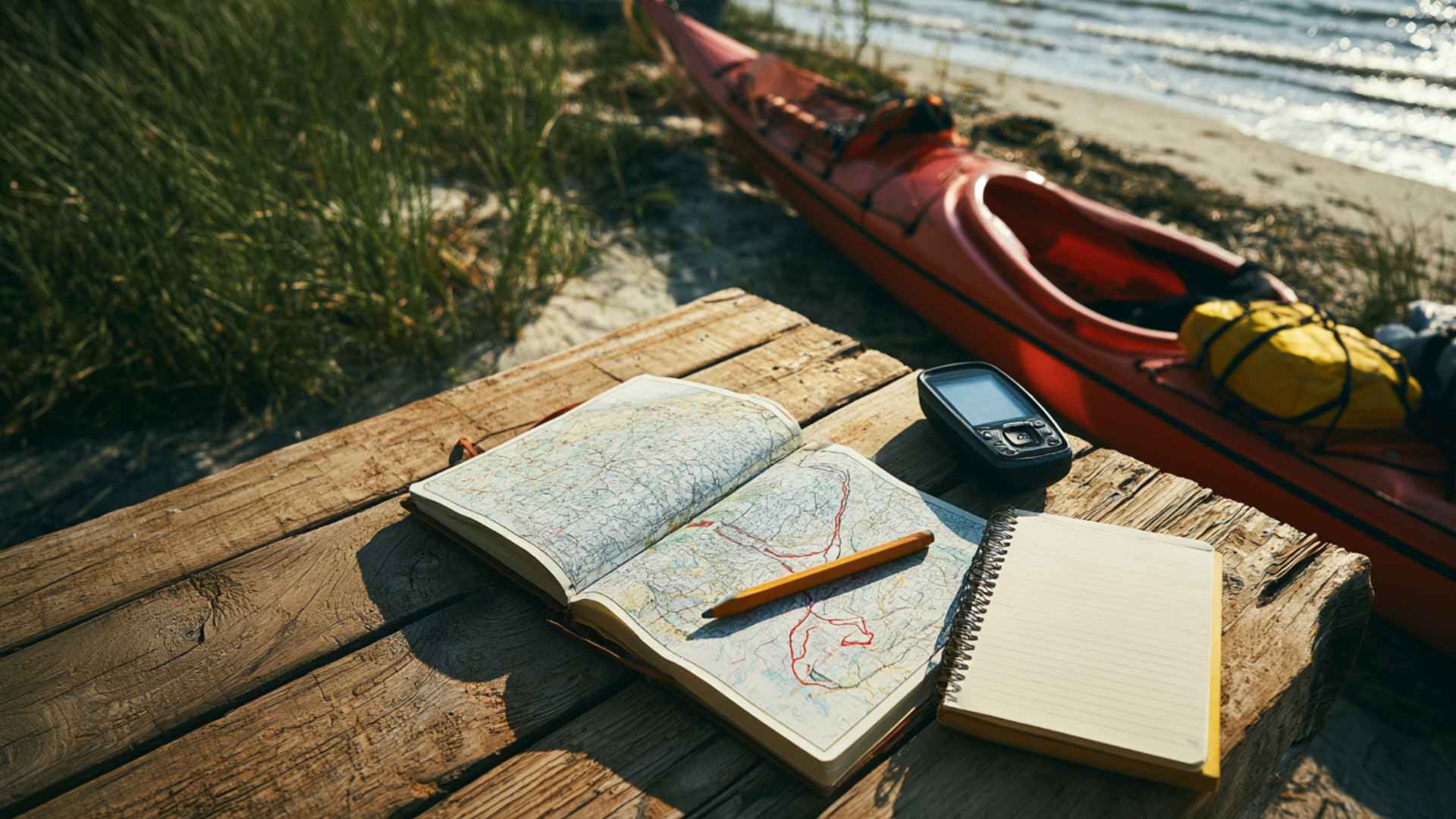
A paddle plan is a written record of your launch point, intended route, planned landing, expected return time, kayak description, and the name of the person who will call the Coast Guard if you do not check in, a habit worth building early if you’re eyeing longer routes down the line.
It takes you five minutes to write and can dramatically cut search-and-rescue response time if something goes wrong.
People who go missing on the water without a float plan can spend hours in the water while rescuers figure out where to start looking.
Leave your paddle plan with the person most likely to notice quickly if you do not return. A housemate who expects you home for dinner will notice sooner than a family member three states away.
Keep a copy in your vehicle and a waterproof copy inside your kayak hatch in case you and the boat get separated in a capsize. In the U.S., you can file a float plan directly with the U.S. Coast Guard Auxiliary Float Plan Central, a free online service.
Capsize Recovery and Self-Rescue
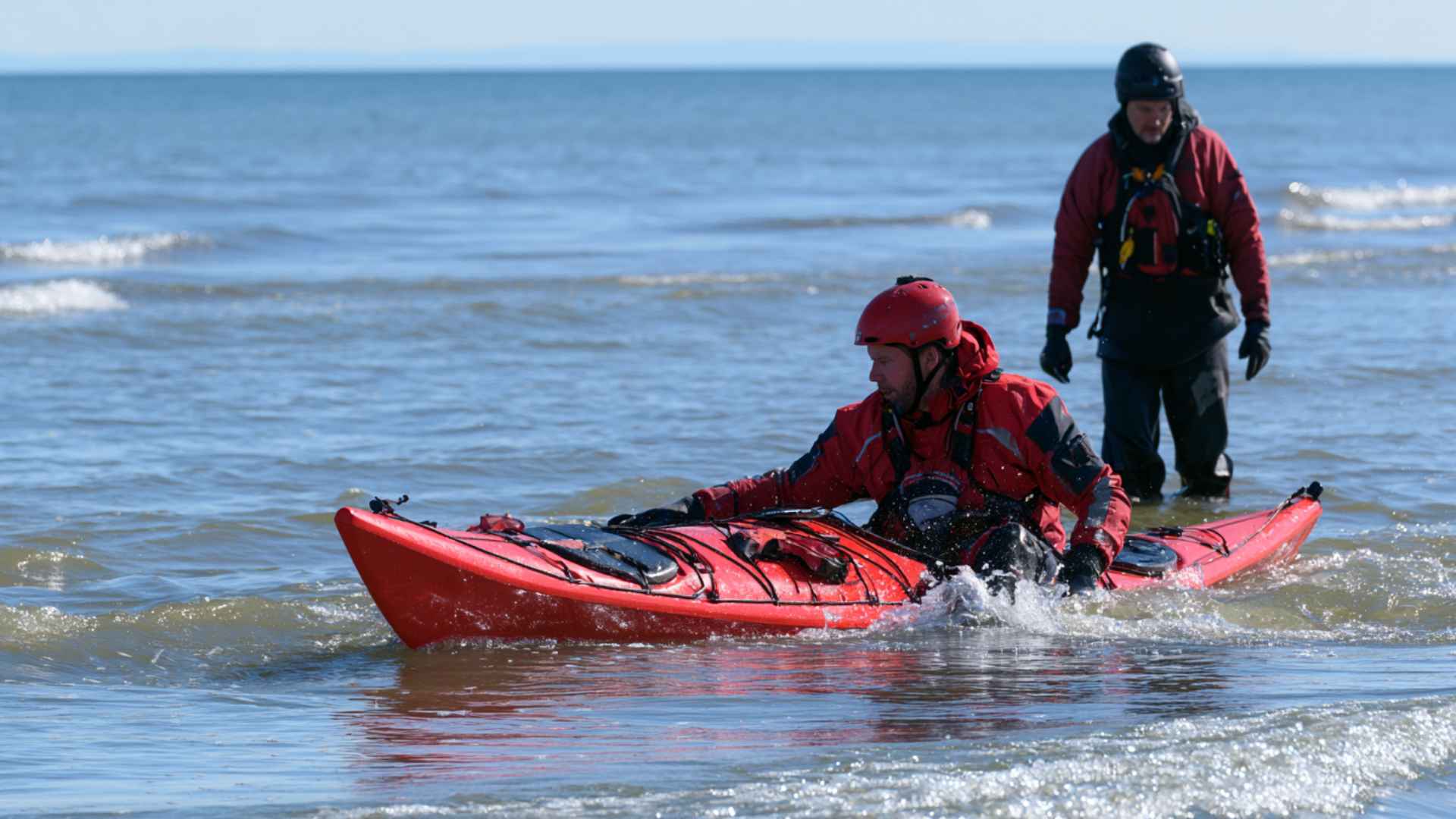
Coastal kayaking safety depends on mastering core rescue skills that enable quick recovery after a capsize in unpredictable water conditions. The first time I practiced a wet exit in open water, the cold hit before the panic did. That order matters. Expect the cold first, and the rest of the recovery gets easier to think through.
Wet Exit
- Tuck body forward to protect face before leaving the cockpit.
- Release the spray skirt using the front grab loop in one firm motion.
- Push yourself out of the cockpit, away from the kayak.
- Stay relaxed and let water assist your movement during exit.
Re-entry in Open Water (Paddle Float Rescue)
- Inflate the paddle float and secure it to one paddle blade.
- Position the paddle as an outrigger behind the cockpit for stability.
- Use a stabilized setup to pull yourself back into the kayak.
- Practice in calm water before attempting in real conditions.
T-Rescue (With Partner)
- Requires a second paddler for assistance and stability support.
- Rescuer positions kayak perpendicular to capsized paddler’s boat.
- The victim uses an assisted platform to climb back into the kayak safely.
- Team coordination and prior practice make this rescue work..
Practicing these recovery techniques in safe water builds confidence and leads to faster, safer responses during real coastal emergencies at sea
Group Paddling on the Coast
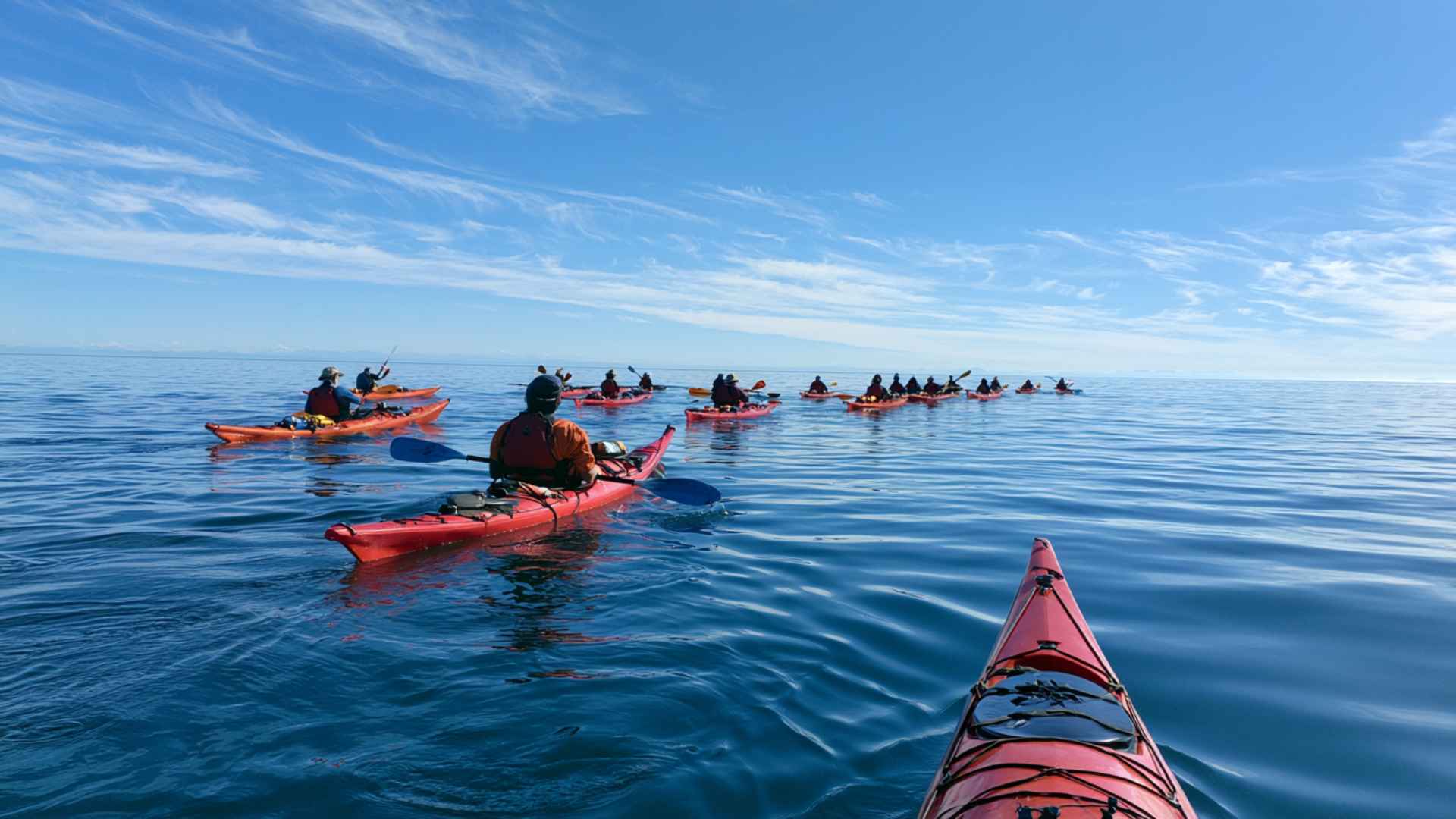
Solo coastal paddling is not recommended for beginners or for anyone paddling an unfamiliar stretch of coast. The safety arithmetic changes completely with a second paddler present.
A T-rescue requires two boats. Calling for emergency help is far more manageable when one person can handle the radio while the other manages the capsized paddler.
When paddling as a group, designate a lead and a sweep before launching. The lead paddler sets the pace and route.
The sweep stays behind every other paddler and never lets anyone fall behind them. Agree on whistle signals before launch: one blast for attention, three short blasts for emergency.
Keep the group close enough that everyone stays within visual range of the nearest paddler, not just within whistle range, because wind and wave noise on the coast can make a whistle harder to hear than it seems on land.
If you are new to coastal paddling and do not yet know other sea kayakers, the American Canoe Association maintains a club directory where you can find local paddling groups and guided coastal trips near you.
Pro tip: Before launching, quickly verify each paddler’s PFD, whistle, and emergency signals; this simple check catches safety oversights before you’re on the water.
Communication and Emergency Signaling
A phone is only a backup offshore. Signal, battery life, and wind limit reliability. A VHF radio is the primary tool for coastal communication, connecting directly to Coast Guard Channel 16 for distress calls.
A personal locator beacon provides satellite-based emergency alerts and GPS location to rescuers. Always register devices with NOAA before trips.
Register your PLB or EPIRB for free with the NOAA Beacon Registration Database. Registration links your device to your emergency contact information and vessel description, shortening response time when it matters most.
| Device | Range | How to Use in an Emergency |
|---|---|---|
| VHF Marine Radio (handheld) | 5–10 miles (line of sight) | Channel 16: say “Mayday” three times, name, location, distress description |
| Personal Locator Beacon (PLB) | Global via satellite | Pull pin to activate; sends GPS to NOAA COSPAS-SARSAT and U.S. Coast Guard |
| Satellite Messenger (Garmin inReach, SPOT) | Global via satellite | SOS functions with two-way messaging and requires an active subscription |
Good communication tools reduce offshore risk by ensuring reliable emergency contact, even when conditions or distance make a response difficult.
Beginner Mistakes in Coastal Paddling
Beginners often make predictable preparation mistakes in coastal paddling that increase risk, but these issues are easy to prevent early on.
-
Launching in Offshore Wind: Offshore wind feels weak near shore but strengthens offshore, pushing paddlers away from land. Always check wind direction in marine forecasts before launching to avoid dangerous drift and difficult return conditions.
-
Ignoring Water Temperature: Air temperature can be misleading in coastal areas. Cold water quickly causes shock and fatigue. Always check sea surface temperature, not just weather apps, before deciding on clothing or exposure level.
-
Misjudging Return Energy: Paddling out feels easy with wind or tide assistance, but returning against them is exhausting. Turn back early, ideally at one-third of the energy used, to ensure a safe and controlled return.
-
Skipping Self-Rescue Practice: Many beginners never practice wet exits or re-entry techniques before heading offshore. Without practice, capsizing becomes dangerous. Train in calm water first to build confidence and essential recovery skills.
-
Paddling Solo in Unknown Waters: Solo trips remove critical backup support if something goes wrong. Beginners should always paddle with a group or experienced partner, especially in unfamiliar coastal environments with changing conditions.
Avoiding these beginner mistakes significantly improves safety, making coastal paddling more predictable, controlled, and far less risky overall in practice.
Bottom Line
The coast rewards preparation in a way that flatwater paddling simply does not. Conditions change fast, tides do not wait, and the margin for error on open water is narrower than it looks from shore.
These sea kayaking safety tips for coastal paddling are not about limiting where you can go. They are about making sure you can go back the next time.
Dress for the water temperature, not the air. Build a paddle plan and leave it with someone who will notice if you are late. Practice your self-rescue before your first coastal trip rather than during it.
Start in protected water, build your skills progressively, and the coast becomes one of the most rewarding environments you will ever paddle.
Frequently Asked Questions
Is Sea Kayaking Safe for Beginners?
Yes, in protected coastal areas with proper gear, a paddle plan, and practiced self-rescue skills. Start in sheltered bays before exposed coastline.
What is the Most Important Safety Gear for Coastal Kayaking?
A paddling-specific PFD worn at all times. Cold water shock after a capsize can incapacitate a swimmer within minutes without flotation.
How Do I Handle a Capsize in The Ocean?
Stay with the kayak, perform a wet exit, then use a paddle float to re-enter. Never swim for shore and abandon the boat.
What Should I Check Before a Coastal Paddle Trip?
NOAA marine forecast, tide chart, sea surface temperature, small craft advisories, and rip current risk at your launch beach.