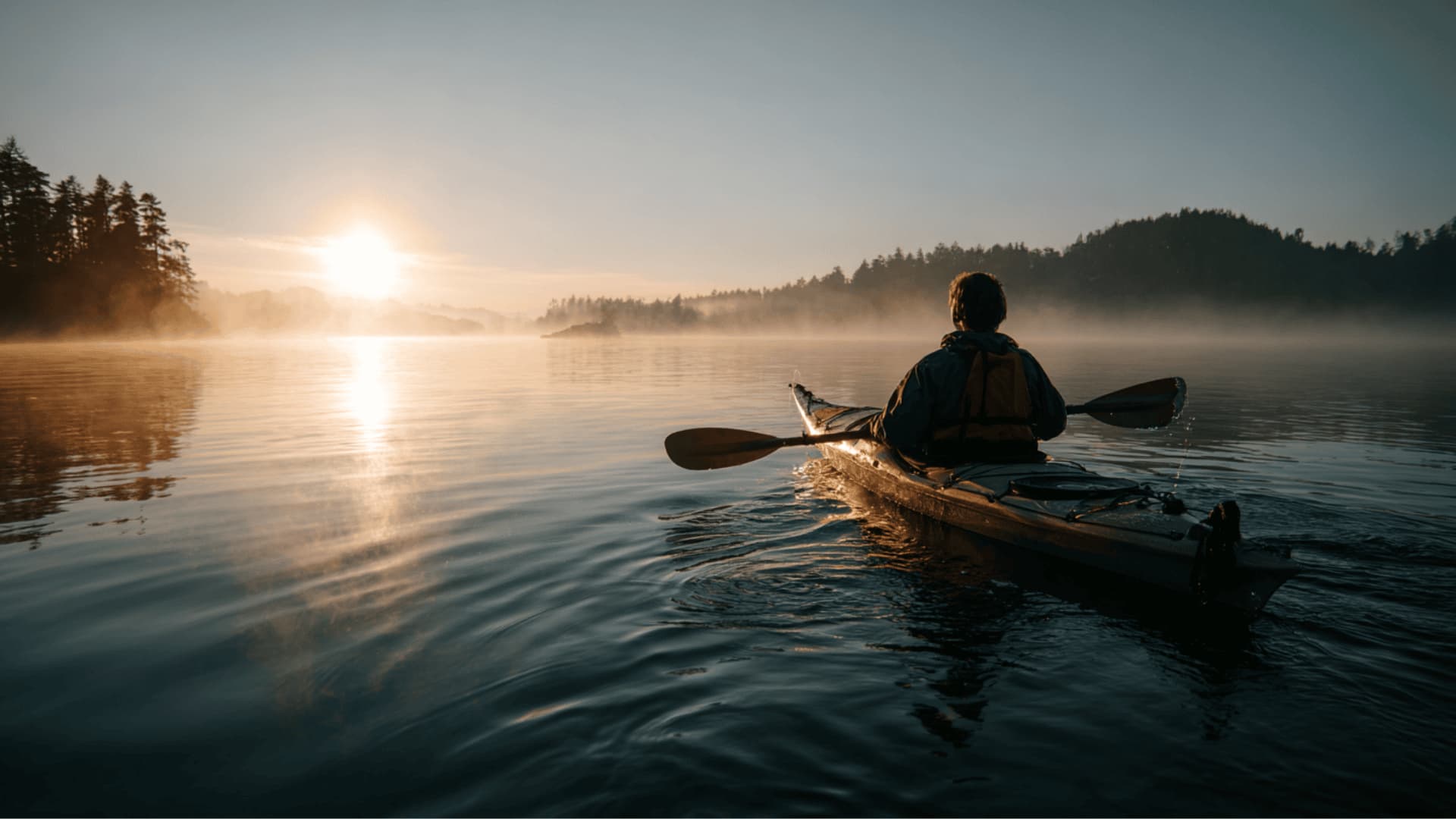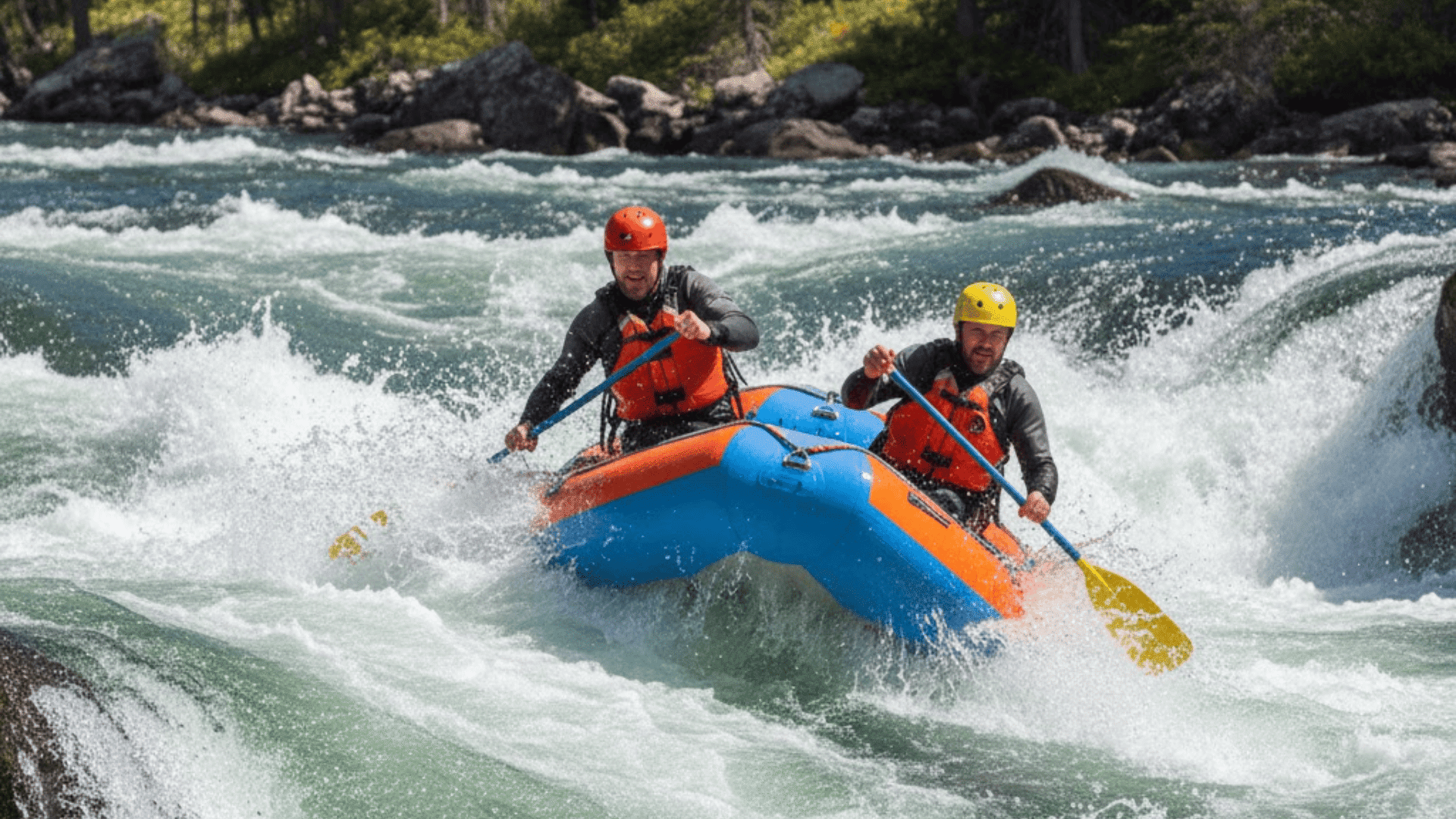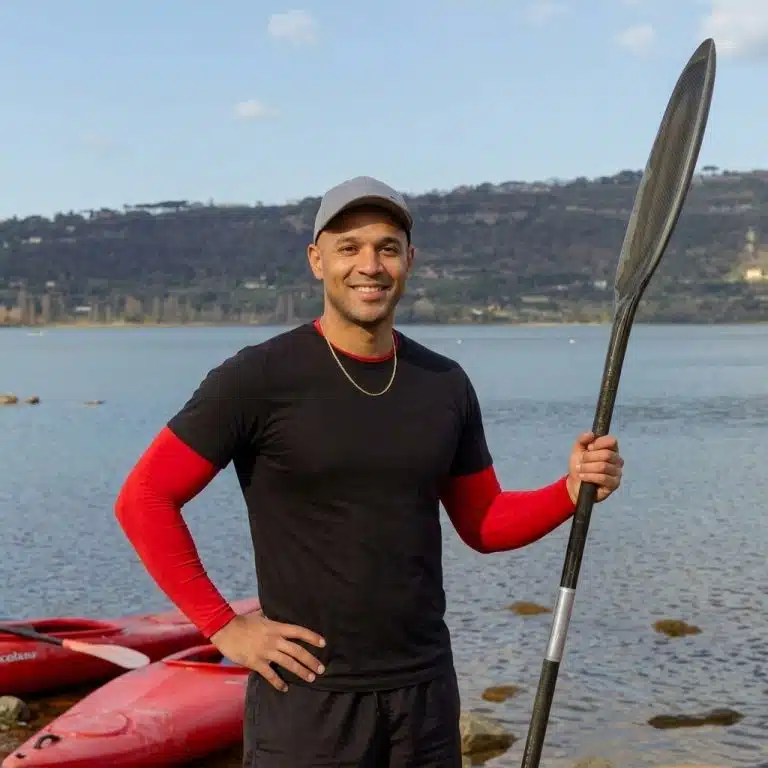

The launch was easy, the water is flat, and the scenery is the reason you came. Then somewhere around hour three, a dull ache settles between your shoulder blades and your lower back starts asking when you plan to stop. The paddle still has an hour to go.
Why Kayaking Can Take a Toll on Your Body
Most kayaking advice focuses on gear, routes, and safety, and those are the right priorities. The body that moves the boat gets less attention, even though it does the work on every single stroke. A paddle stroke looks gentle, but it repeats hundreds of times in an outing and loads the same few areas each time.
The stroke starts in the trunk, not the arms. Good technique rotates the torso, pushes against the footrests, and lets the shoulders and arms transfer that force through the blade. When the trunk stops doing its share, the shoulders pick up the slack, and that is when the ache begins.
Weekend paddlers feel this more than anyone. A person who sits at a desk all week and then covers fifteen kilometres on Saturday is asking a lot of untrained muscle. The enthusiasm is the easy part, and preparation is what makes the day enjoyable instead of merely survivable.
Preparation includes what goes into the body before and after the paddle. Protein is the nutrient most associated with maintaining and repairing muscle, and a day on the water is hard enough to make it worth planning for. An unflavored protein powder stirred into oatmeal at breakfast or a post-paddle smoothie is one simple way to get there without adding much to the cooler.
Naked Nutrition offers unflavored options for people who prefer to control what else goes into the cup. That flexibility suits outdoor days, when meals are improvised and a scoop of powder travels easily in a dry bag. It does not replace real meals, and nobody should expect a shake to fix a poor training base.
The same goes for any supplement. Consistent meals, enough water, and a body that has been prepared for the work matter far more than any single product. Think of protein as one small piece of a plan, not the plan itself.
The Role of Nutrition and Protein in Kayaking Recovery
So where do paddlers actually get hurt? A recent study gives a useful look at the pattern, even though it studied a narrow group. Researchers surveyed 140 elite adolescent flat-water kayak and canoe athletes in China about injuries over the previous year.
The study in Frontiers in Public Health found that 53.6 percent of the athletes reported at least one injury. In kayakers, the lower back was the most common site at 21.7 percent of injuries, with the shoulder second at 17.4 percent. In canoeists, the shoulder came first, at 23.2 percent of injuries.
That pattern matches what many recreational paddlers describe, a tired back and sore shoulders by the end of a long day. It is worth being honest about the limits of the study, though. Its subjects were young competitive athletes training far more than any weekend paddler, and the data came from self-reported questionnaires without medical verification.
The authors also noted that some figures were not perfectly consistent, so the numbers are best read as approximate. What the study can fairly say is that the shoulder and lower back are the two regions that take the most load in paddling. It cannot say how often a casual kayaker gets hurt.
Common Kayaking Injuries: What Research Reveals
That still gives recreational paddlers a clear target list. If the shoulders and lower back carry the stress, those are the areas worth strengthening and the areas worth protecting during long outings. The good news is that neither requires a gym membership or special equipment.
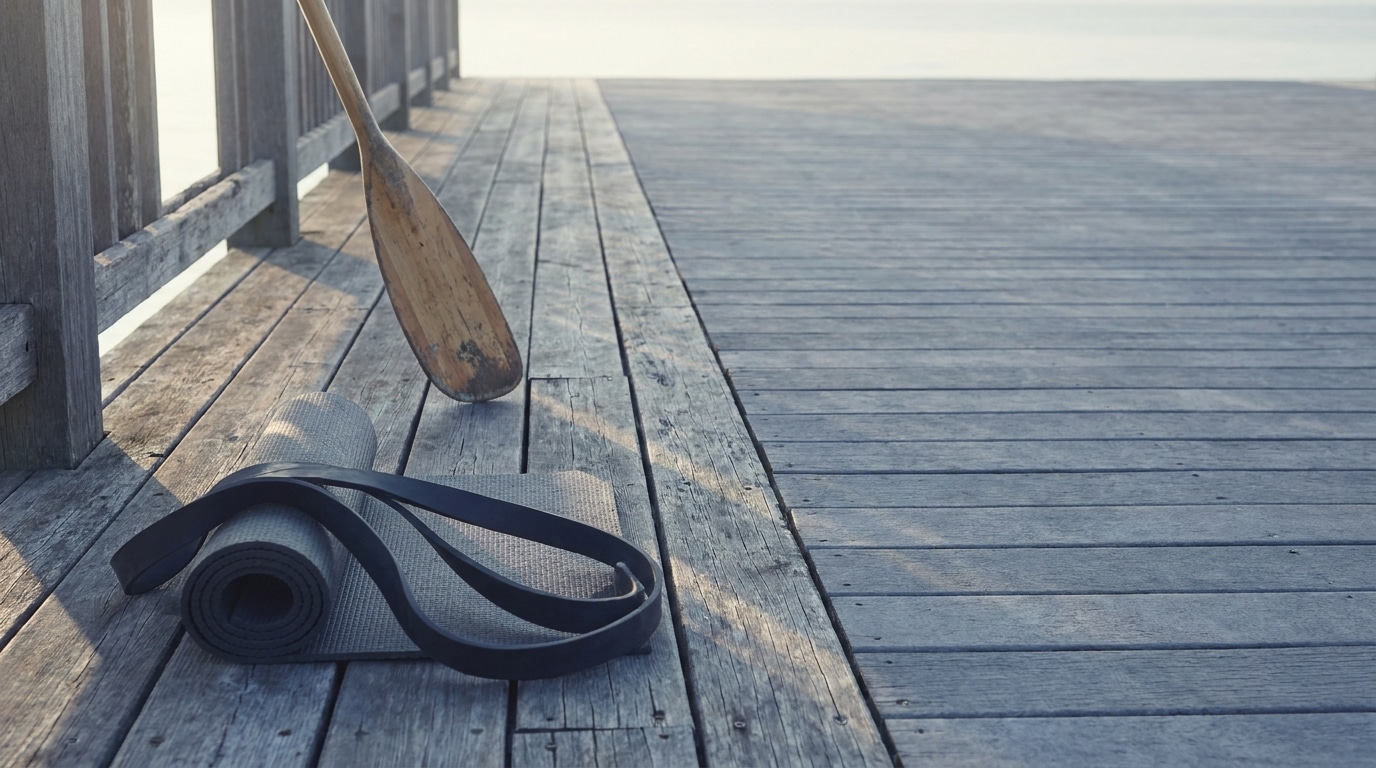
Rows, band pull-aparts, and rotational core work build the muscles the stroke depends on. Planks and hip hinges support the lower back, which spends hours in a fixed seated position. Two short sessions a week, started well before the season, are enough to make a visible difference to how a long day feels.
Technique matters just as much as strength. A paddler who pulls with the arms alone will tire far sooner than one who rotates the torso and drives from the legs. A lesson or a few minutes with an experienced paddler can save a season of sore shoulders.
Warm-ups are another habit that rarely makes it into a paddler’s routine. Five minutes of arm circles, trunk rotations, and light stretching before launch wakes up the muscles the stroke is about to use. Cold shoulders at the start of a long day are more likely to complain by the end of it.
Seat and boat setup deserve a look too. A seat that props the lower back well, footrests set to the right length, and a paddle that suits your height all reduce unnecessary strain. Small adjustments before a trip cost almost nothing.
Breaks help more than most people expect. Stopping every hour to stretch the chest, shoulders, and hips lets the muscles reset before fatigue turns into sloppy form. A short stop on a beach also makes the trip more enjoyable.
Hydration and food on the water deserve the same planning as the route. Dehydration makes fatigue arrive sooner, and a long paddle burns more energy than many people expect. A few snacks and a full bottle in easy reach keep the effort steadier from the first kilometre to the last.
Recovery is the part that gets skipped. After a long paddle, the shoulders and back are tired, and the next day’s soreness tells you how hard they worked. Sleep, food, water, and easy movement are the basics, and everything else is an add-on.
Some paddlers like to finish a weekend with heat. Time in one of the outdoor saunas that people now put in backyards or at lake cabins raises skin and core temperature, which increases blood flow to fatigued muscle tissue and triggers a mild activation of heat shock proteins that support cellular repair. That mechanism is why heat exposure is chosen for tired shoulders and backs, as opposed to the cold of an ice bath or the pressure of a massage, which work in different ways. It is one recovery tool among several, not a substitute for sleep and sensible training.
The setting helps as well. A cabin by the water, a warm session after a day outside, and a cool dip afterward is a ritual many paddlers already enjoy. Whether or not it speeds recovery, the pause and the warmth make the end of a paddling day feel like part of the trip.
How to Prevent Injuries and Improve Recovery After Kayaking
None of this makes a long paddle easy, and none of it removes the risk of overuse. Paddling is repetitive, and repetitive motion rewards the people who prepare for it. A bit of strength work, good technique, and respect for fatigue go a long way.
Anyone with a history of shoulder or back trouble should talk to a physiotherapist or doctor before adding new training. Pain that persists after a trip is a reason to rest and get checked, not to push through the next outing. The water will still be there next week.
So the next time hour three arrives and the ache starts to build, remember that it was never only about the paddle. The work that makes a long day enjoyable begins well before the launch and continues long after you reach the shore.