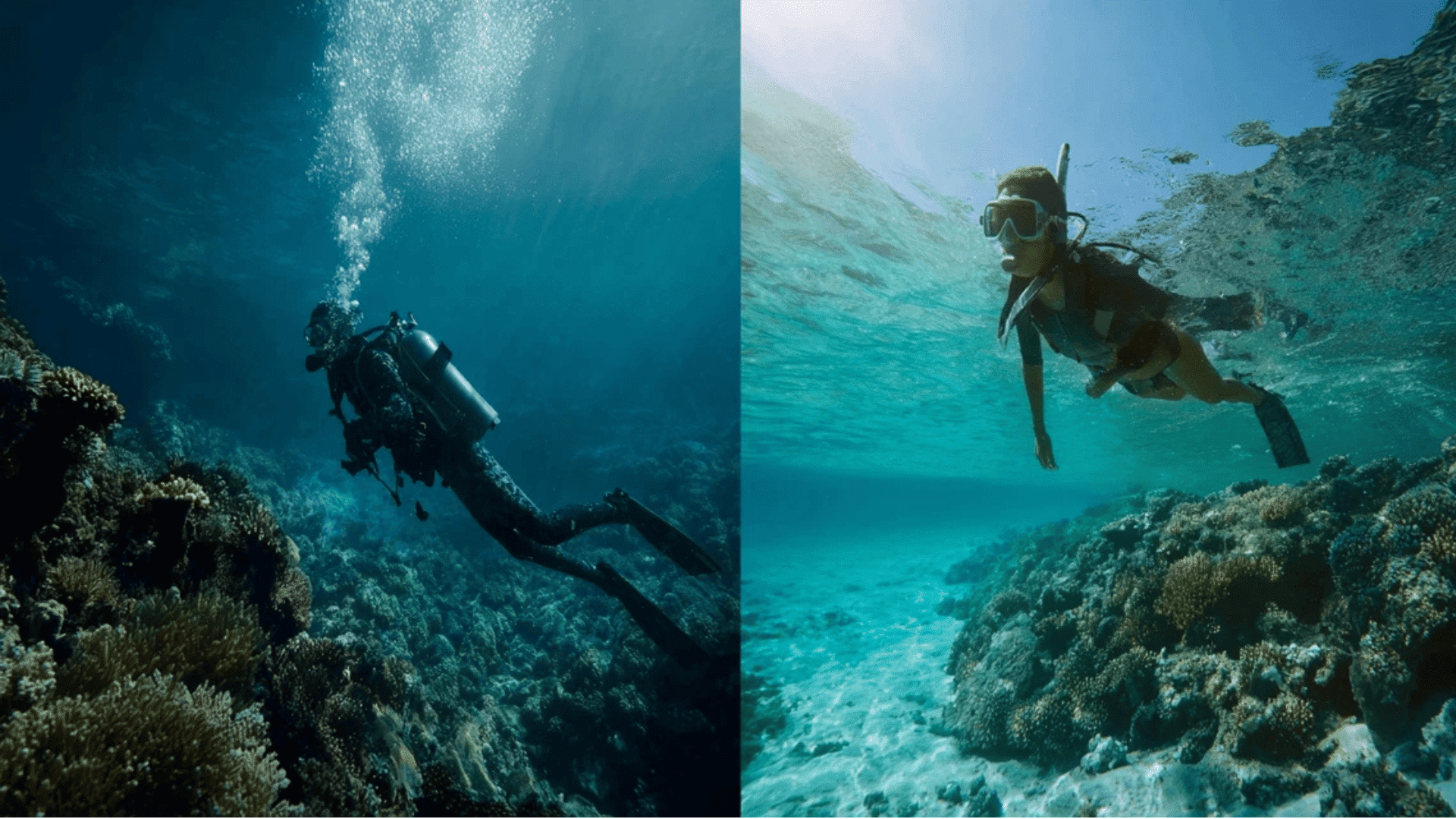

Caving is the sport of exploring natural cave systems on foot, crawling, or climbing through underground passages.
Both caves offer the same draw: darkness, silence, and a world most people never see.
A comparison of cave diving vs dry caving risks reveals that these two activities share a surface-level look but pose very different threats. Dry caving gives you air, time, and room to problem-solve.
Cave diving strips most of that away. Following cave diving safety tips is not optional; it is what keeps you alive when visibility drops to zero.
The hazards you face underwater are not just physical; they are psychological.
Knowing which risks belong where is the difference between a calculated challenge and a preventable tragedy.
What is Cave Diving?

It is not your average scuba trip. Cave diving takes you into flooded underground cave systems where the ceiling is rock rather than open water.
You are fully submerged in an overhead environment with no direct path to the surface.
Every movement depends on your equipment, your training, and your ability to stay calm under pressure.
Visibility can drop to zero in seconds. Air supply sets a hard limit on how long you can stay. There is no swimming straight up if something goes wrong.
Before stepping into this kind of environment, many people first build confidence through open-water experiences. It also helps to understand the risks of recreational scuba diving before moving into overhead environments like caves.
That is what makes it one of the most technical and demanding disciplines in the diving world.
What is Dry Caving?

No tanks, no wetsuit, no water. Dry caving is the exploration of natural cave systems entirely on foot, and it is far more accessible than most people expect.
You move through passages by walking, crawling, climbing, and abseiling.
One moment you are squeezing through a tight gap, the next you are rappelling down a vertical shaft.
Wet rock, unstable ceilings, sudden floods, and cold temperatures are all part of the deal. It is physical, technical, and deeply rewarding once you build the right skills.
How the Risks Stack Up?
The risks in each sport look different on paper, but they hit differently in practice. Understanding where they diverge can help you make smarter decisions.
| Factor | Cave Diving | Dry Caving |
|---|---|---|
| Environment | Fully underwater | Air-filled caves |
| Exit Access | No direct surface exit | Often multiple exits |
| Visibility | Often zero visibility | Limited but visible |
| Primary Risk | Drowning / gas loss | Falls/collapse |
| Equipment Dependence | Very high | Moderate |
Neither sport forgives poor planning. Cave diving puts a clock on your air, and dry caving wears you down slowly. Know your limits, prep your kit, and always have a plan for when things go sideways.
The Hazards You Need to Know
Hazards in both sports are real, and they can escalate fast. Knowing what you are walking into, or swimming into, puts you in a much better position to handle it.
Cave Diving: Major Hazards
- Running out of breathing gas: the most common fatal factor in cave diving
- Getting lost in zero visibility: guideline loss can disorient you instantly
- Equipment failure underwater: no surface access means no easy fix
- Silt-out conditions: one wrong fin kick and visibility drops to nothing
- Depth and decompression risks: go too deep for too long, and your body pays for it
Dry Caving: Major Hazards
- Slips and falls on wet rock: surfaces are uneven and often slick
- Rockfall and unstable ceilings: overhead terrain can shift without warning
- Flooding in cave passages: water levels can rise faster than you expect
- Hypothermia in cold environments: wet and cold is a dangerous combination
- Getting lost in complex systems: one wrong turn and familiar passages disappear
Both sports carry serious hazards, but none are unavoidable. Good training, the right gear, and a solid plan cut your risk down significantly.
Which One is Riskier?
Comparing the risks of these two is not straightforward. Both can kill you, but they do it differently and for different reasons.
| Factor | Cave Diving | Dry Caving |
|---|---|---|
| Risk Type | Technical and equipment-dependent | Physical and terrain-dependent |
| Error Margin | Very limited | Slightly more room to recover |
| Surface Access | None underwater | Often possible |
| Fatal Factor | Equipment or procedural failure | Falls, flooding, exposure |
| Overall Risk Level | Higher technical risk | Higher terrain risk |
Most cave diving fatalities come down to training gaps or procedural failure, not bad luck. Dry caving is no walk in the park either, but you do have slightly more options when something goes wrong. Respect both and treat neither as casual.
Cave Diving vs. Wreck Diving
Cave diving and wreck diving both put a ceiling above your head, and that changes everything about how you plan, move, and get out. Understanding what these two environments have in common helps you see why overhead diving demands a completely different mindset from open-water diving.
The moment you swim into any overhead environment, your direct path to the surface disappears. That single factor connects cave diving and wreck diving more than anything else.
Both require you to navigate using a guideline, because in zero visibility, that line is the only thing standing between you and disorientation. Both demand strict gas planning with no room for guesswork.
Wrecks tend to add entanglement hazards from rusted cables and fishing line, while caves bring sharp rock and sediment that silts out instantly. The distance traveled is typically longer in caves, but the procedural discipline you need is identical in both.
Whether it is rock walls or rusted steel above you, the rules do not change. Train for the environment you are in, not just the one you are comfortable with.
Safety Systems That Keep You Alive
Neither sport leaves room for winging it. The safety systems in both are built around one idea: if something goes wrong, you still have a way out.
Cave Diving: Safety Tips
- Redundant gas systems: always carry backup air, no exceptions
- Guideline navigation: your line is your lifeline back to the exit
- Multiple light sources: primary, backup, and tertiary lights are standard
- Rule of thirds: one third in, one third out, one third for emergencies
Dry Caving: Safety Tips
- Helmets and harnesses: non-negotiable on any vertical terrain
- Rope systems: tested, rigged properly, and checked before every descent
- Weather monitoring: flash floods move fast, and caves flood faster than you think
- Route marking: know your way in and your way back out
Good systems do not make you invincible, but they do stack the odds in your favor. Learn them, use them every time, and never cut corners underground.
Where Cenote Diving Fits Into This Comparison
If you have been researching cave diving, you have probably come across cenote diving in the same breath. The two are not the same thing, and knowing the difference matters before you decide which one you are ready for.
| Factor | Cave Diving | Cenote Diving | Dry Caving |
|---|---|---|---|
| Environment | Fully underwater, no light zone | Underwater, natural light is visible | Air-filled cave passages |
| Surface Access | No direct ascent possible | Cavern zones keep exit in sight | Often, multiple exit points |
| Skill Level Required | Advanced technical certification | Open water certification sufficient | Beginner to intermediate |
| Guided Structure | Self-guided with strict protocols | Professionally guided routes | Varies, often unguided |
| Navigation Aid | Permanent guidelines, self-managed | Permanent guidelines, guide-led | Route marking, personal judgment |
| Primary Risk | Gas loss, disorientation, equipment failure | Buoyancy errors, minor disorientation | Falls, flooding, hypothermia |
| Accessibility | Restricted to certified technical divers | Open to certified recreational divers | Open to most with basic prep |
If you are not yet ready for technical cave diving, cenotes are the most controlled way to experience an overhead environment without the full technical commitment.
Training Progression
You do not just show up and go underground. Both sports demand proper training, and both will quickly expose gaps in your skills if you skip steps.
Cave diving sits at the technical end of the spectrum. You need advanced certifications before you go anywhere near an overhead underwater environment.
Agencies such as PADI offer structured cave-diving courses, and each level builds on the last. There is no shortcut and no winging it.
Some divers develop an interest in cave systems after experiencing some of the most iconic underwater environments globally, where visibility, marine life, and depth all shape the experience in the top scuba diving destinations worldwide.
Dry caving is more accessible at the entry level. Beginner routes exist, and guided trips are a solid way to start.
But as caves get more complex, so do the skills you need. Rope work, navigation, and vertical techniques all require proper instruction.
Both sports reward patience. Build your skills progressively, get qualified, and find experienced mentors early on.
How Risk Is Shaped by Behavior, Not Just the Environment?
Most accidents underground do not happen because of bad luck. They happen because of bad decisions, and usually those decisions started well before the dive or the descent.
Overconfidence is one of the biggest patterns across both sports. You skip a gear check, ignore a warning sign, or push deeper than your training covers. That is where things unravel.
Poor preparation follows the same thread. Entering a cave system without proper planning, the right equipment, or a solid turnaround point is how manageable situations turn serious fast.
Panic is the third factor and arguably the hardest to train out. When something goes wrong underwater or deep in a passage, stress spikes quickly, and rational thinking takes a hit.
Understanding these patterns is the first step to breaking them. Train for pressure, prepare obsessively, and check your confidence at the entrance.
Safety Tips Every Beginner Needs
Starting in either sport is exciting, but the underground is not the place to learn things the hard way.
- Always go with a certified guide: your first few trips should never be solo, full stop.
- Never exceed your training level: if you are not certified for it, you are not ready for it.
- Use only proper equipment; borrowed, improvised, or worn-out gear is not worth the risk.
- Learn navigation basics first: knowing how to find your way back out is non-negotiable.
- Check environmental conditions: weather, water levels, and forecasts before every single trip.
These basics apply whether you are gearing up for a dive or lacing up for your first cave walk. Good habits built early stick around for life.
Conclusion
Both sports demand respect, preparation, and the right training. A comparison of cave diving vs dry caving risk is not really about which one is scarier. It is about understanding where each sport can go wrong and showing up ready for it.
Having explored the hazards, the safety systems, and the human factors behind most accidents, one thing is clear: the underground does not care how experienced you feel. It only responds to how well you have prepared.
Start slow, get certified, and never stop learning. The caves will still be there when you are ready.
Plan smarter for your next trip with our in-depth reads on cave diving safety tips and underground diving hazards.
Frequently Asked Questions
Is Cave Diving More Dangerous Than Dry Caving?
Generally yes. Cave diving carries a higher technical risk due to complete dependence on equipment and the absence of direct surface access.
What Is the Biggest Risk In Cave Diving?
Running out of breathing gas underwater. It is the most common fatal factor and entirely preventable with proper planning.
Can Beginners Try Dry Caving Safely?
Yes, but only on beginner-friendly routes with a certified guide. Never attempt complex systems without proper training first.
What Training Is Needed For Cave Diving?
You need advanced technical certifications from agencies like PADI or TDI before entering any overhead underwater environment.