
Choosing a 3-person canoe isn’t just about fitting three seats into one boat; it’s about finding the right balance between stability, space, and real-world usability.
With so many options available, it’s easy to get distracted by technical specs that don’t always explain how a canoe will actually perform on the water. That’s why this guide focuses on what matters most to everyday paddlers.
I’ll break down key features in simple terms, compare popular 3-person canoe types, and share common insights gathered from broader paddling communities and discussions.
The goal is to help you understand which designs work best for families, fishing trips, or casual touring, without overcomplicating the process. By the end, you should have a clear idea of what to look for and how to choose a 3-person canoe that truly fits your needs.
Best 3-Person Canoes for Your Needs
Choosing the best 3-person canoe gets easier when the focus stays on real use, not just technical specs. The right pick usually comes down to one main priority: stable family paddling, extra room for camping gear, or a steady platform for fishing.
For calm lakes and relaxed outings, a wider recreational canoe often feels more forgiving and confidence-building. For longer trips or heavier loads, higher weight capacity and straight tracking tend to matter more than speed.
When loading onto a vehicle is frequent, canoe weight and carry comfort can be just as important as on-water performance. Once the top priority is clear, narrowing down the right 3-person canoe becomes much simpler.
What to Look for in a 3-Person Canoe?
A 3-person canoe looks simple on paper, but the right one depends on real-world loading, carrying, and paddling. Treat each spec as a clue to comfort, stability, and effort.
- Capacity (People + Gear, Not Just a Number): A “3-person” label doesn’t guarantee three adults plus gear will feel comfortable. Choose a capacity that supports your crew and essentials without making the canoe feel tippy.
- Length & Width (Stability vs Speed): Longer canoes usually track straighter and glide better, while wider canoes feel steadier when people shift, or water gets choppy. For most groups, a slightly wider canoe is easier.
- Hull Shape (Confidence on the Water): Hull design affects how stable the canoe feels. Flat-bottom and shallow-arch hulls tend to feel more predictable on calm water, while V-shaped hulls handle chop better but feel less forgiving. And since stability ties directly back to how the hull and its structural parts work together, knowing the parts of a canoe makes these differences much easier to visualize.
- Material (Durability vs Portability): Material impacts toughness and transport effort. Polyethylene is rugged but often heavy; aluminum is durable but noisy; and composites are lighter but cost more and may require extra care.
Choosing the right 3-person canoe comes down to balancing comfort, stability, and practicality. Focus on how you’ll actually use it, and you’ll end up with a canoe that truly fits your adventures.
Tips for Paddling a 3-Person Canoe
Paddling a 3-person canoe is less about power and more about teamwork. With the right seating, balance, and rhythm, the canoe feels steadier, tracks straighter, and stays comfortable for everyone on board.
- Put the strongest paddler in the stern: The stern paddler controls direction and makes small corrections that keep the canoe running straight.
- Use the middle seat for balance: A steady middle paddler helps keep the canoe stable and prevents rocking when people shift or reach for gear.
- Keep the canoe trimmed level: Balance people and gear so the canoe sits flat in the water—this improves tracking, steering, and comfort in wind.
- Match your paddling rhythm: Staying in sync reduces wobble and fatigue, and it helps the canoe move smoothly without constant course corrections.
- Use small steering corrections: Gentle correction strokes work better than big sweeps, helping the canoe stay on line without killing momentum.
With a little teamwork, a three-person canoe feels smooth and steady. Focus on balance, timing, and simple communication, and you’ll paddle farther with less effort and more control.
Comparing the Best 3-Person Canoes
When several 3-person canoes seem similar, comparing them side by side helps highlight what actually sets them apart. Instead of getting caught up in marketing terms or long feature lists, focusing on a few core characteristics makes the decision clearer and faster.
The table below provides a high-level comparison of common 3-person canoe types, making it easier to narrow down options before reviewing them in detail.
| Canoe Type | Typical Length (ft) | Typical Weight (lbs) | Typical Capacity (lbs) | Common Material | Best For |
|---|---|---|---|---|---|
| Family / Recreational 3-Person Canoe | 14–15 | 80–95 | 750–900 | Polyethylene | Calm lakes, relaxed paddling, beginners |
| Touring / Trip-Ready 3-Person Canoe | 15–17 | 55–80 | 850–1,100 | Fiberglass / Composite | Longer distances, camping gear, efficient glide |
| Durable All-Around 3-Person Canoe | 14–16 | 70–95 | 800–1,000 | Aluminum | Low maintenance, rough use, mixed conditions |
| High-Capacity Gear Hauler Canoe | 15–18 | 85–110 | 950–1,200+ | Polyethylene / Composite | Heavy loads, multi-day trips, gear-focused outings |
| Fishing-Focused Stable Canoe | 14–16 | 80–105 | 800–1,100 | Polyethylene | Stability, coolers, tackle, slow, steady paddling |
Looking at the table as a whole, it becomes easier to see which canoe types align with specific needs, whether that’s casual family outings, extended trips with gear, or stable fishing setups.
Choosing a 3-Person Canoe Based on How You’ll Use It
How a 3-person canoe performs depends heavily on where and how it’s used. Matching the canoe’s design to real conditions makes a noticeable difference in comfort, control, and overall enjoyment.
For Lakes and Calm Water
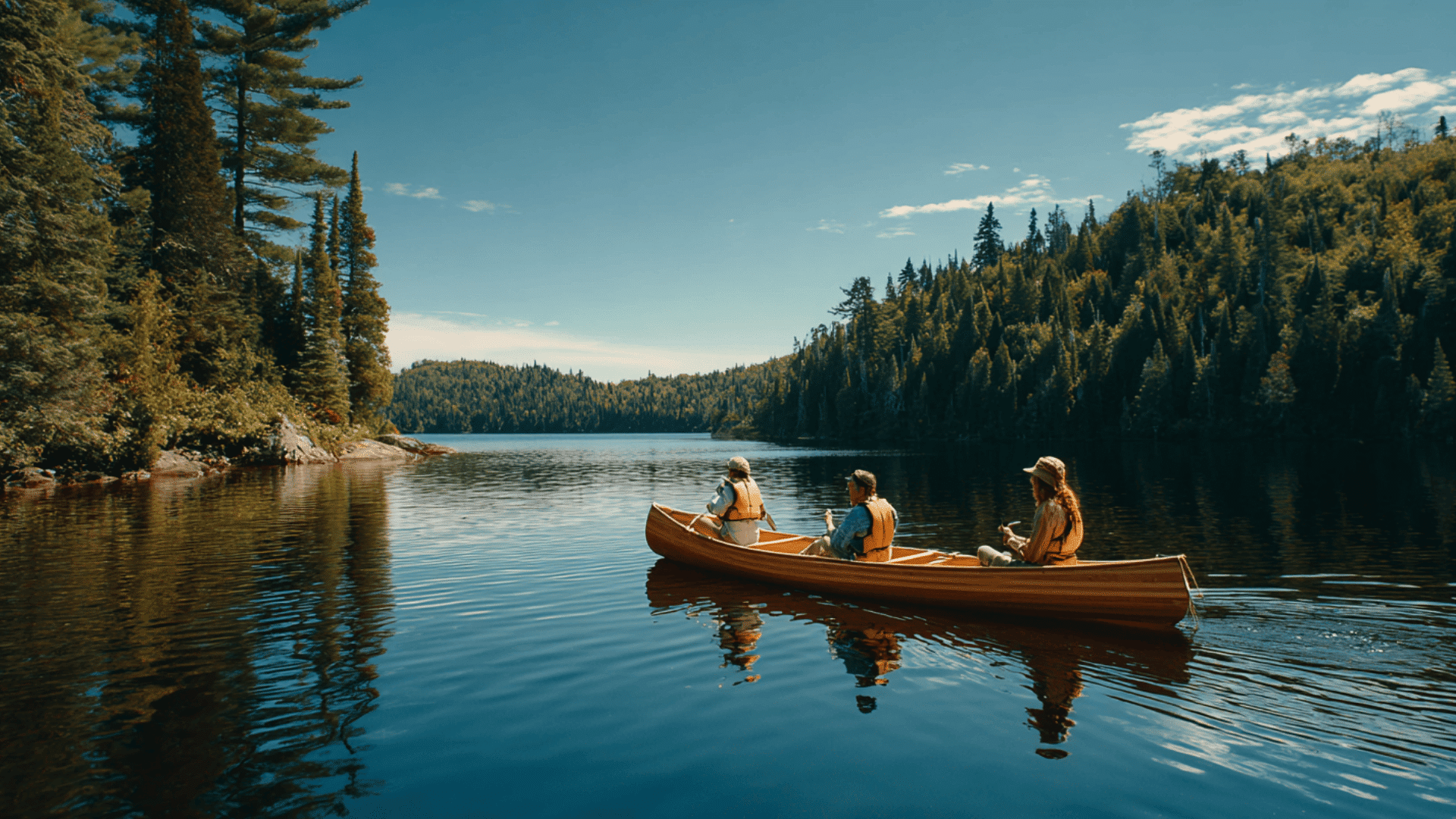
Calm water paddling is where most 3-person canoes feel at home. Stability and comfort tend to matter more than speed, especially when paddlers are relaxed or new to group paddling.
Canoes with flat or shallow-arch hulls usually feel steady and predictable, making them easier to manage during long, easy outings or casual family trips.
For Rivers or Moving Water
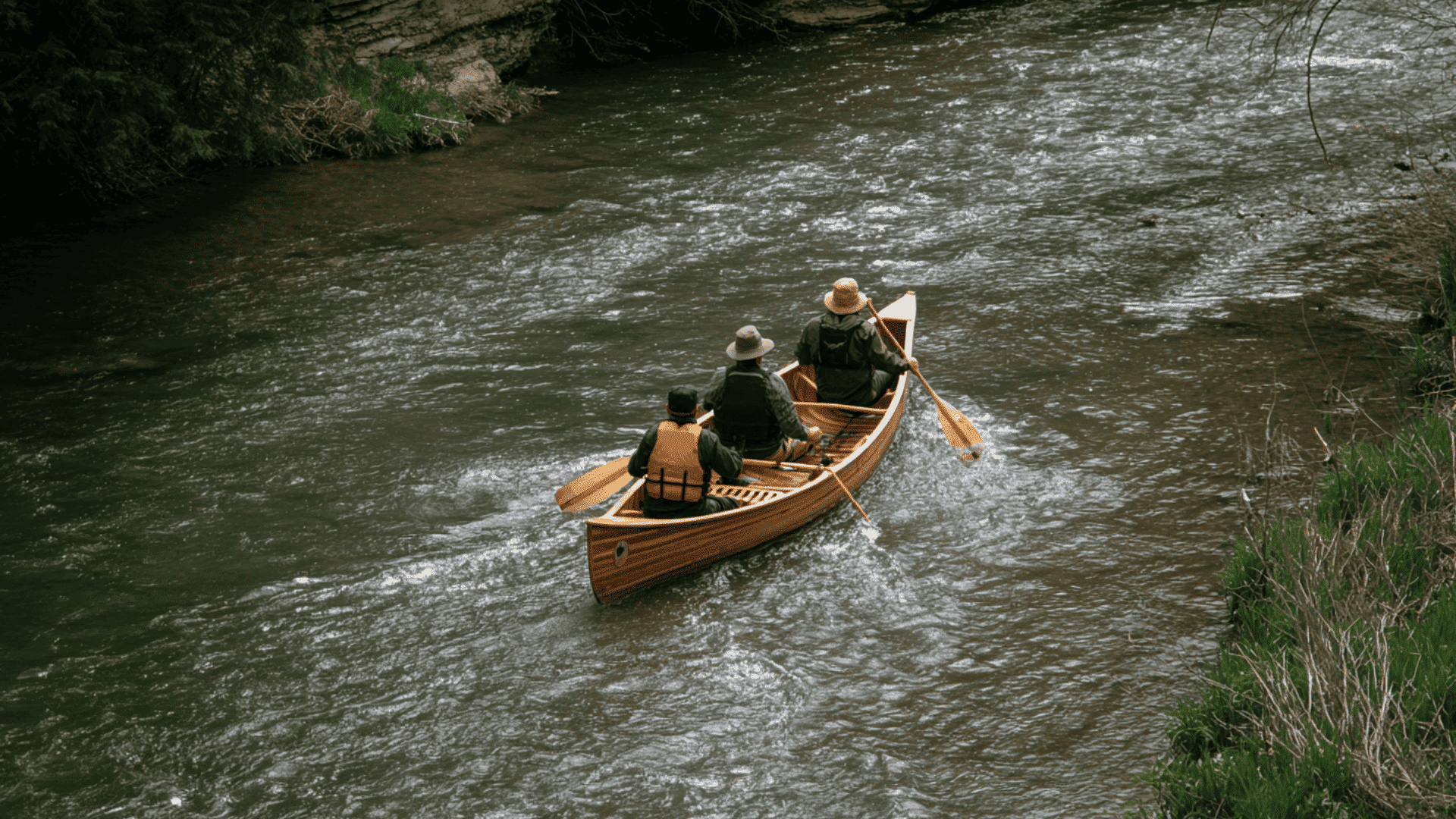
On rivers or flowing water, maneuverability becomes more important. Slightly narrower designs respond more easily to paddle input, which helps when navigating turns or adjusting to the current.
Durability also plays a bigger role here, as contact with rocks or shallow sections is more likely than on open lakes.
For Families, Kids, or Pets
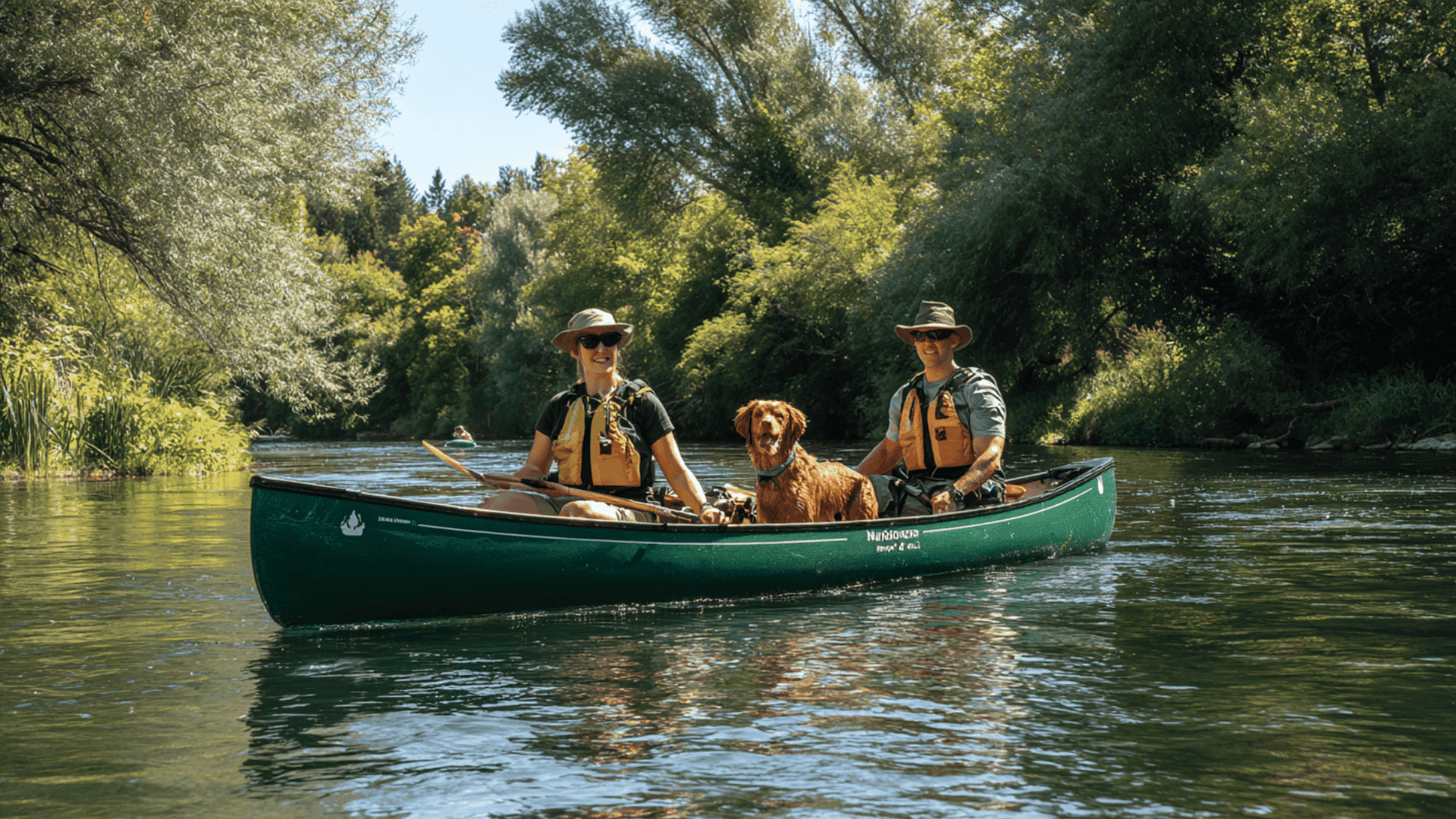
When paddling with children or pets, stability and security come first, and it’s one of the clearest reasons many families choose a canoe over a kayak.
Canoes with a wider beam, higher sides, and a stable seating layout help prevent sudden shifts and splashes. In these situations, safety and comfort usually matter far more than speed or efficiency.
What Paddlers Commonly Say After Using 3-Person Canoes
Paddler feedback on 3-person canoes is fairly consistent once people spend real time on the water, drawn from broader community discussions across the Reddit canoeing community and the Quora canoeing topic.
Many say that stability matters more than speed when three people share a boat, because a calm, predictable hull usually creates a better group experience even if it gives up a bit of glide, a point that comes up often in discussions about canoe paddling dynamics.
Canoe weight is another recurring tradeoff. Heavier builds can feel reassuringly solid on the water, but that same heft often becomes a drawback during loading, unloading, and portaging. Paddlers sharing their experience with multiple paddlers aboard note that transport effort gets mentioned nearly as often as on-water performance.
Paddlers also frequently note that three adults paddle best when weight is carefully balanced, since uneven loading, especially with gear, can quickly affect tracking and comfort. This comes through clearly in community views on seating positions, where even paddle placement is tied directly to how well the boat handles.
Overall, frustrations tend to stem from mismatched expectations, while satisfaction rises when the canoe’s design aligns with its intended use.
Wrap Up
Choosing the right 3-person canoe comes down to matching the design to real-life use. Capacity should account for people and gear, length and width, shape stability versus speed, hull design affects confidence on the water, and material determines how easy (or frustrating) transport will be.
A quick comparison of canoe types can narrow options fast, and paddler feedback reinforces the same lesson: stability, balance, and practicality matter more than perfect specs on paper.
With the right fit, every trip feels smoother, whether it’s a family paddle, a fishing day, or a gear-heavy outing.
If you found this helpful, bookmark this page for later and share it with someone planning a canoe buy. What kind of trip do you want your canoe to make easier?
Frequently Asked Questions
How Many People Can Safely Sit in A Canoe?
It depends on the canoe’s weight capacity and available space, not just the number of seats. Most recreational canoes can safely accommodate two to three people when the weight is balanced.
Can A Three-Person Canoe be Paddled by Two People?
Yes. A three-person canoe can be paddled by two, and even solo in calm conditions, but balance and weight distribution matter for stability.
What Determines How Many People Fit in a Canoe?
Capacity depends on weight limits, canoe size, and proper weight distribution, not just the number of seats.
Is it Safe to Paddle with Three Adults in One Canoe?
It can be safe if the canoe is designed for three, properly balanced, and used on appropriate water conditions.