
Imagine water jets shooting up from your feet, lifting you into the air like a superhero. You’re hovering above the lake, feeling the wind on your face.
That’s flyboarding. It looks wild, but it’s way more doable than you might think.
Flyboarding puts a twist on water sports. Instead of staying on the surface, you get to fly above it. The board connects to a jet ski through a long hose, and the water pressure does the rest.
Sounds complicated? It’s not. Most people get the hang of it within 20 minutes. Here you’ll learn what flyboarding really is, how the equipment works, and what gear you’ll need.
We’ll also walk through the basic moves and safety rules. By the end, you will know if flyboarding is your next water sport adventure.
What Is Flyboarding?
Flyboarding is a water sport where you stand on a board attached to a jet ski. Water shoots from a hose and sprays out under your feet, lifting you into the air. You can hover, spin, and even dive back into the water.
People flyboard at lakes, beaches, resorts, and water parks. Anywhere with calm water and jet skis works great. It’s popular at vacation spots where you can rent equipment and get lessons.
This sport fits anyone who loves trying new things. Beginners pick it up quickly with some practice. Water-sport fans and thrill-seekers especially enjoy the rush of flying above the waves.
Origin And History Of Flyboarding

French watercraft racer Franky Zapata invented flyboarding in late 2011. He wanted to build something that would let people fly over water using jet ski power.
His first design worked so well that people around the world wanted to try it. The sport caught on fast.
Videos of people flying above the ocean went viral online, and beaches began offering rentals and lessons. Within a few years, flyboarding reached countries across every continent.
Today, you can take flyboarding lessons at many beach destinations. With practice, riders can fly several meters above the water, and many operators limit height during lessons for safety.
Types Of Flyboarding
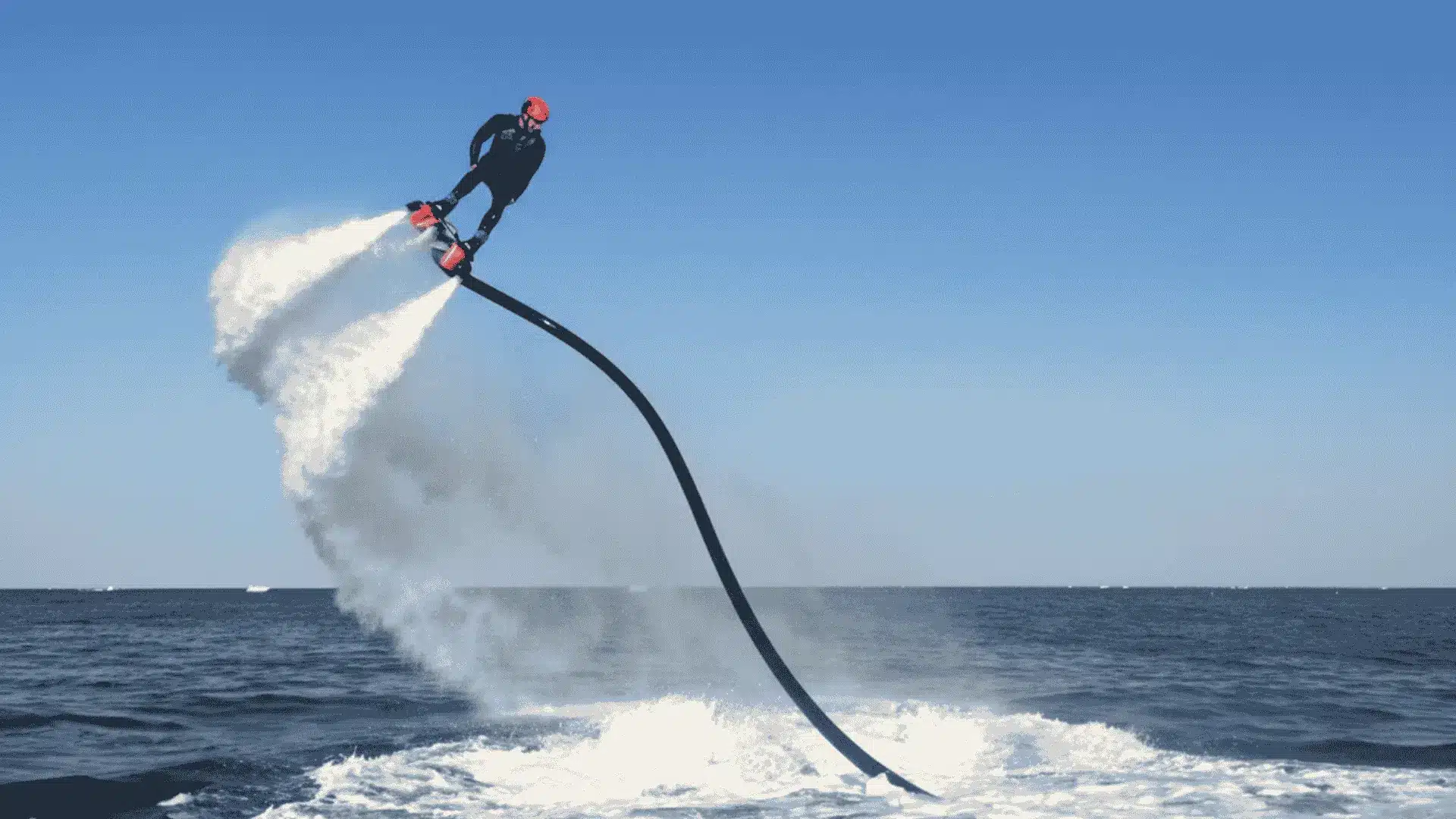
Flyboarding comes in different styles depending on what you want to do. Some riders focus on tricks, while others prefer speed or big air moves.
- Freestyle Flyboarding: This style focuses on simple tricks like spins, dolphin dives, and fun combos. Riders mix different moves to create their own routines. Best for comfortable hoverers.
- Race Flyboarding: Speed and control matter most here. Riders follow set courses and try to finish as fast as possible. This appeals to competitive people who enjoy setting and achieving goals and taking sharp turns.
- Acrobatic Flyboarding: Performance riders level things up with big air moves, flips, and show routines. These look impressive but need practice. Best for advanced riders with balance.
- Proximity Flyboarding: Expert riders fly close to objects, surfaces, or other people in controlled setups. This happens during demos or supervised sessions with strict spacing and safety rules.
Each style has its own skill level and thrills. Start with basic hovering, then pick the type that matches your interests and abilities.
Flyboarding Equipment Needed
Getting ready for flyboarding doesn’t require much from you. Most rental places provide the main equipment, but it helps to know what you’ll be using.
| Equipment | What You Need to Know |
|---|---|
| Flyboard and hose system | Board with boots attached, connected to a long hose (usually 50-60 feet) |
| PWC (Jet Ski) | Powers the water pressure that lifts you up |
| Life Jacket | Required at most locations to keep you floating |
| Helmet | Protects your head from falls and water impact (often required) |
| Impact Vest | Optional extra padding for chest and back |
| Rash Guard | Protects skin from the sun and rubbing |
| Swimwear | Comfortable suit or trunks that stay on |
| Water Shoes | Optional grip for feet inside board boots (depends on rental place) |
Most rental spots provide the flyboard, hose, jet ski, and safety gear. You just need to bring swimwear and maybe water shoes. Check with your rental location in advance to confirm what they supply.
How To Start Flyboarding?

Learning to flyboard follows a clear process. Your instructor will guide you through each step, but knowing what to expect helps you feel more confident before you start.
In most lessons, a trained jet ski operator controls the throttle and power, while the rider focuses on balance and steering with body position.
Before You Start
Your instructor covers hand signals for communication, how to fall safely, and spacing rules when riding with other riders.
Take a few minutes to warm up your ankles, knees, and shoulders with simple stretches and rotations.
Getting Up On The Flyboard
Start in the water with your knees slightly bent. Keep your feet level and your hips steady as the water pressure builds.
Look forward, not down at the board. Make small corrections instead of big jerks when you feel yourself tipping.
Staying Balanced And Steering
Lean gently in the direction you want to move. Keep your knees soft to absorb any wobble or shake.
Common mistakes include stiff legs, looking down, and overcorrecting with big leans. Relax your body and make tiny adjustments instead.
First Skills To Practice
Start with a low hover just above the water surface. Practice controlled landings by gently dropping back down.
Work on gentle turns by shifting your weight slightly. Try short forward movements once you feel stable, hovering in one spot.
Most beginners get comfortable with basic hovering in their first session. Take your time with each skill before moving on to the next.
Let’s Compare: Flyboarding Vs Hoverboarding Vs Jetpacking
People often mix these three up because they all involve flying or hovering. They look similar in videos, but they work very differently. Here is a quick breakdown to clear things up.
| Factor | Flyboarding | Hoverboarding | Jetpacking |
|---|---|---|---|
| How It Works | Water pressure from a jet ski lifts you through a hose | Air or water jets push the board off the surface | A wearable jet pack strapped to your back lifts you up |
| Power Source | Jet ski | Electric motor or water jet | Jet fuel or water jets |
| Skill Level | Beginner-friendly; most hover within 20 minutes | Moderate; balance takes practice | Advanced; steep learning curve |
| Where You Use It | Lakes, beaches, calm open water | Water or flat surfaces, depending on the model | Water or open land, depending on the model |
| Cost To Try | Affordable at most rental spots | Varies by model and location | Expensive with limited availability |
All three give you the feeling of flying, but flyboarding is the most accessible option for beginners. If you are trying an aerial water sport for the first time, flyboarding is the easiest place to start.
Medical Preconditions And Risks Associated With Flyboarding
Flyboarding is generally safe, but it’s not right for everyone. Certain health conditions can make this sport risky, and you should know what to watch out for.
Who Should Avoid Flyboarding?
- Recent surgery or injuries: Your body needs time to heal fully before handling the physical stress of flyboarding. Talk to your doctor first.
- Serious neck, back, knee, or ankle issues: These areas take constant stress during flyboarding. Existing problems can worsen due to landing impacts and balancing strain.
- Heart conditions or severe dizziness: The physical effort and height changes put stress on your heart. Dizziness makes balance difficult and significantly increases the risk of falls.
- Pregnancy: The falls, impacts, and body positioning aren’t safe for pregnant women. Wait until after delivery, and get your doctor’s clearance to resume activity.
Common Risks And How To Reduce Them
- Falls and water impact: Everyone falls when learning, and water feels hard from height. Start low and slow, keeping your first practice sessions very short.
- Sprains and strains: Your ankles, knees, and back work hard to keep you balanced. Wear proper safety gear and follow your instructor’s tips on correct posture.
- Fatigue from poor posture: Tensing up or standing wrong wears you out fast and leads to sloppy, dangerous form. Take breaks between attempts to rest properly.
- Spacing and timing mistakes: Avoid other riders, the jet ski, and objects in the water. Stop riding when you’re tired, because that’s when most accidents happen.
Know your limits and be honest about your health before trying flyboarding. A few minutes of caution can prevent injuries that last months.
What Is The Best Time To Flyboard?
The best time to flyboard is when the water is calm and the weather is clear. Early mornings are ideal since wind and boat traffic are usually low.
Summer months work well at most locations, but warm coastal destinations can be good year-round.
Avoid flyboarding in rough weather, strong winds, or choppy water as these conditions make it harder to balance and increase the risk of falls. Always check local weather and water conditions before booking a session.
Conclusion
Flyboarding lets you fly above water using jet ski power and a hose system. You’ve learned what it is, how the equipment works, and different styles from freestyle to acrobatic performances. The safety tips and basics set you up for your first session.
Start with a beginner lesson at a rental location that provides gear and instruction. Most people hover within 20 minutes, but control takes practice.
Once you master stable hovering, smooth landings, and gentle turns, you can try freestyle, race, acrobatic, or proximity flyboarding.
Safety comes first. Listen to your instructor, wear proper gear, and know your physical limits before stepping on the board.
Ready to feel what it’s like to fly? Share this guide with anyone planning their next water sport adventure.