

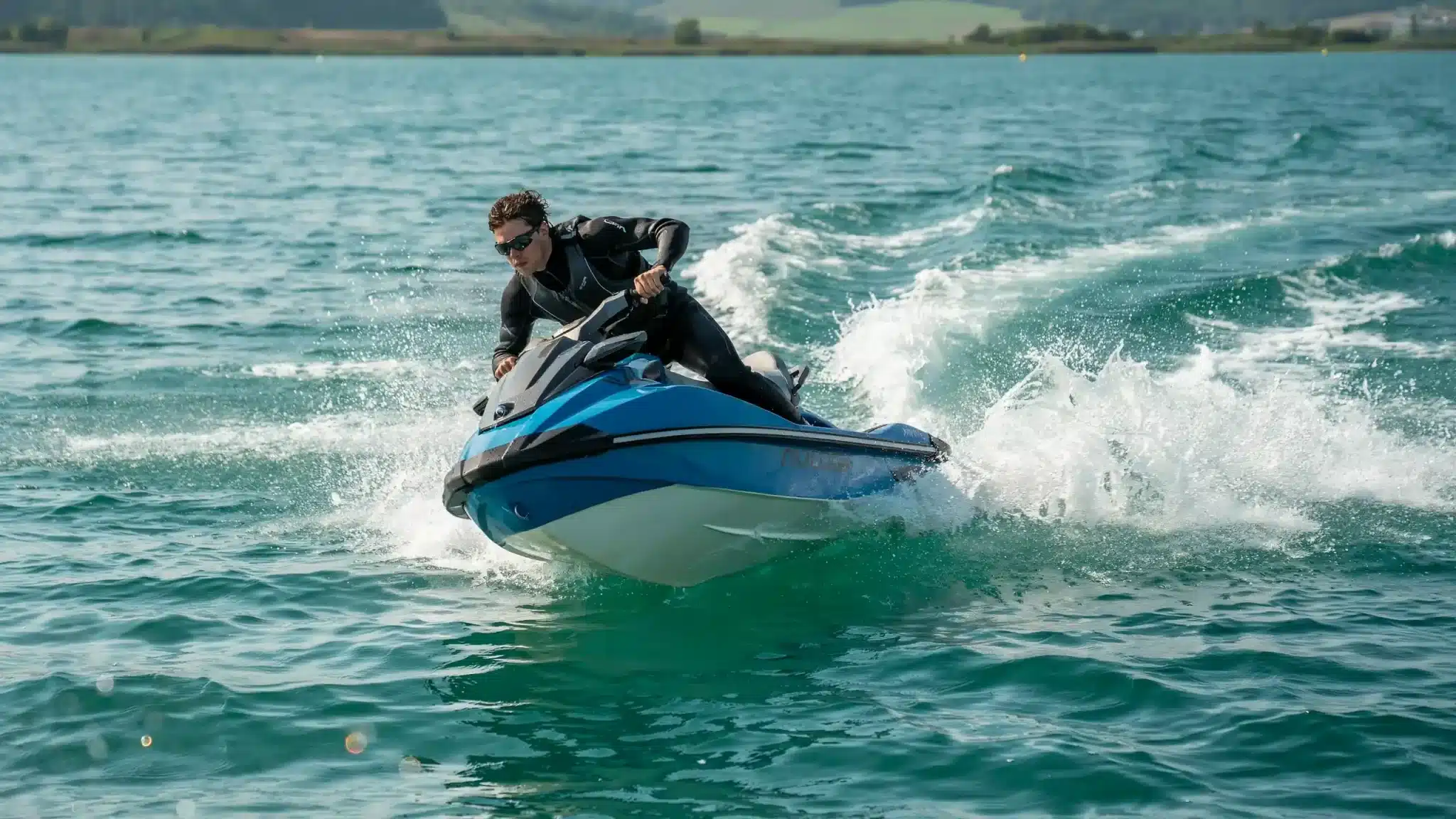
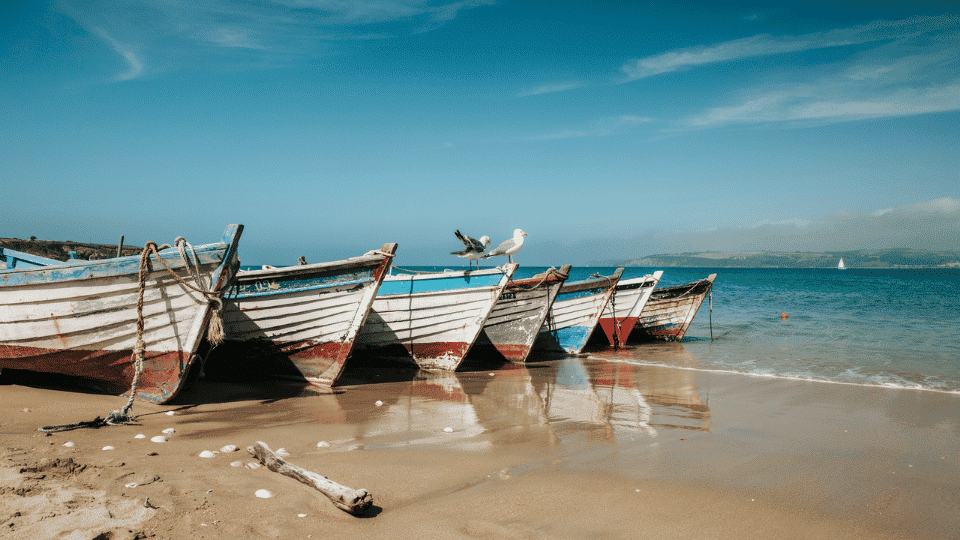
Picture a fishing boat, a pontoon, and a jet ski lined up at the same launch ramp. They look nothing alike, yet U.S. Coast Guard paperwork treats all three as siblings.
That’s because a personal watercraft is legally a powered vessel, specifically a Class A inboard motorboat, the same bracket as small motorboats under 16 feet.
This isn’t a technicality buried in a manual somewhere. It’s the reason a jet ski needs registration, a capacity plate, and the same safety equipment as any other motorboat on the water, despite having handlebars instead of a wheel and a seat you sit on top of rather than inside.
Find out what that classification covers, how a PWC actually differs from a traditional boat, the types available today, and the rules that come with owning one.
What is a Personal Watercraft?
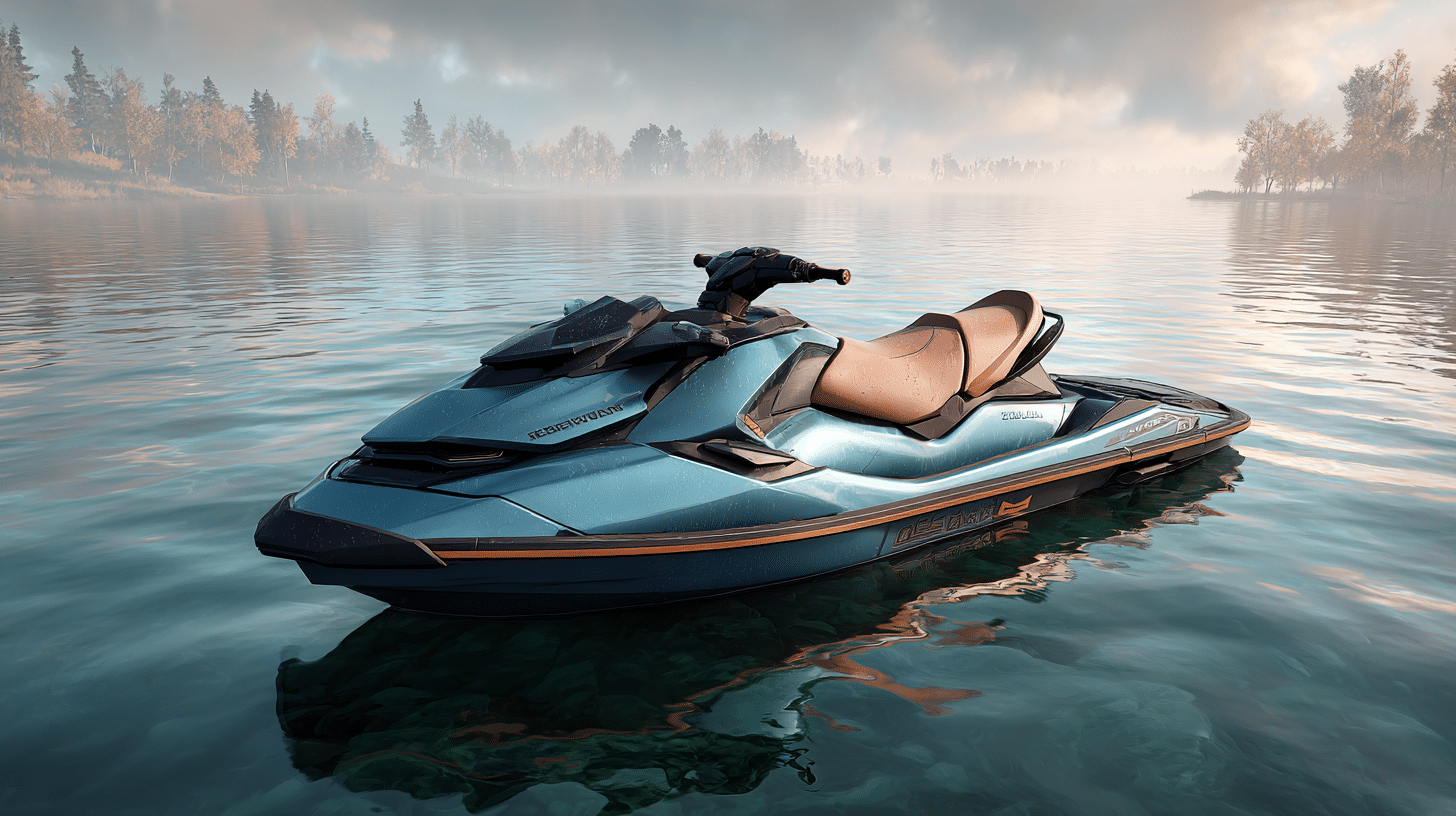
A PWC is a small motorized vessel ridden while sitting, standing, or kneeling on top of it, rather than seated inside a hull. Riders steer with handlebars, similar to a motorcycle, using thrust from a jet pump instead of a rudder.
Jet Ski, WaveRunner, and Sea-Doo are trademarked names owned by Kawasaki, Yamaha, and BRP.
All three fall under the same Class A inboard motorboat classification.
What Type of Vessel is a Personal Watercraft?
A personal watercraft is a powered vessel, and the U.S.
Coast Guard classifies it as a Class A inboard motorboat, the same bracket as small fishing boats and pontoons under 16 feet.
That classification is why a jet ski follows the same registration, safety equipment, and navigation rules as any other motorboat, even though it looks nothing like one.
This guide covers that classification, how a PWC differs from a standard boat, the types on the market, how the jet-drive system works, and the legal rules that come with owning one.
Coast Guard Classification of a Personal Watercraft
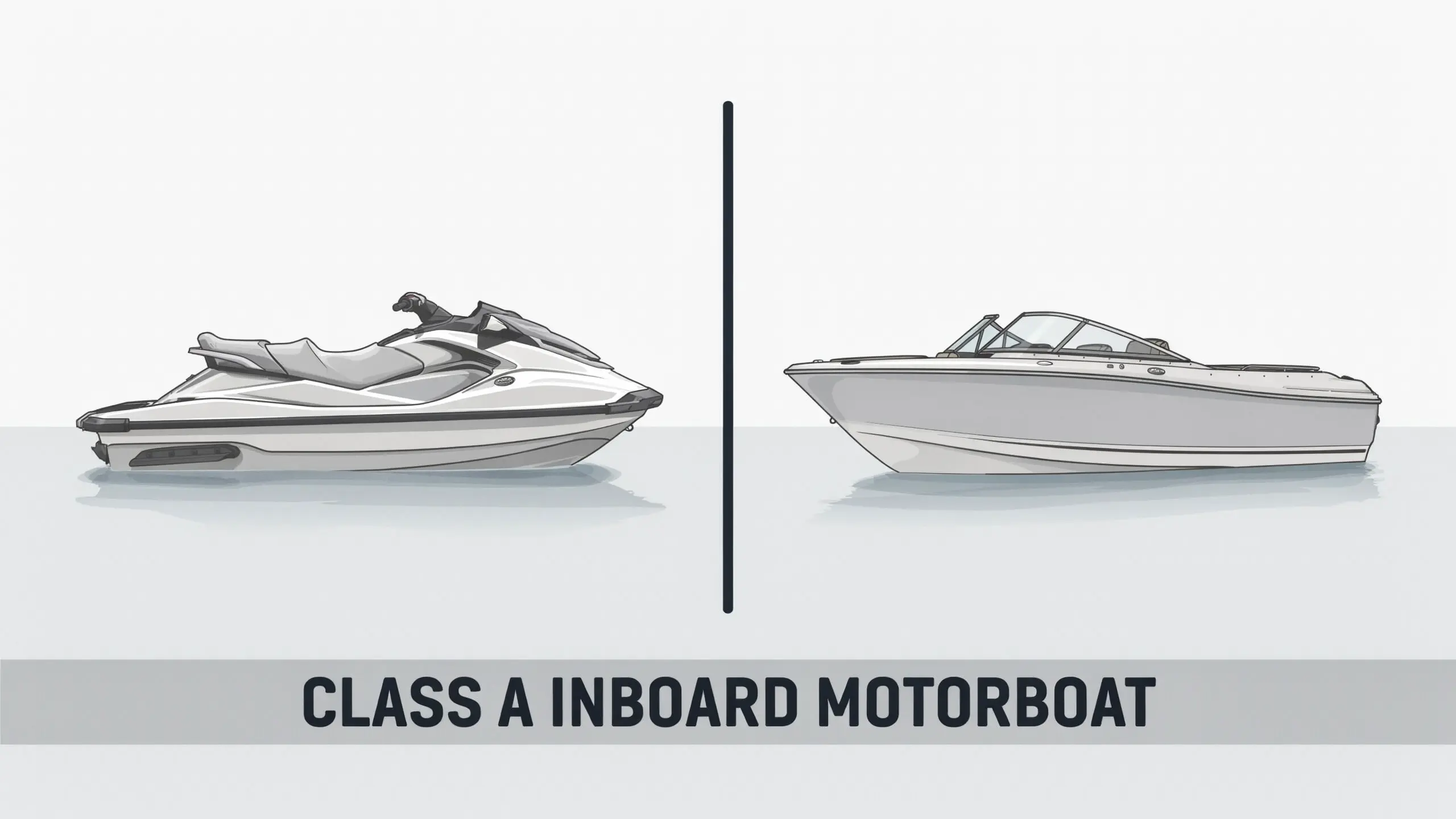
A PWC moves through the water using an engine rather than oars, paddles, or wind, which is what separates it from canoes, kayaks, and sailboats.
The Coast Guard classifies it as a Class A inboard motorboat: a power-driven vessel under 16 feet with the engine mounted inside the hull, driving a water pump instead of an exposed propeller.
Class A also covers other small motorboats, such as dinghies and fishing skiffs, under the same length threshold.
| Classification Factor | Personal Watercraft |
| PropulsionEngine | Engine-driven (powered vessel) |
| Coast Guard Class | Class A inboard motorboat |
| Length | Under 16 feet (most PWCs run under 12 feet) |
| Drive Type | Inboard jet drive |
Because of this classification, a PWC needs registration, a capacity plate, and the same safety equipment inspections as any other motorboat. The U.S. Coast Guard’s boating safety division is the authoritative source for these requirements.
Is a Jet Ski Legally a Boat?
Yes. A jet ski is legally classified as a boat under U.S. Coast Guard regulations, specifically as a Class A inboard motorboat.
It can be called a jet ski, WaveRunner, or Sea-Doo; it’s subject to the same registration, safety equipment, and navigation rules as any other powered vessel under 16 feet.
The confusion usually comes from how different a PWC looks and feels compared to a traditional boat.
You ride on top of it rather than sitting inside a hull, and you steer with handlebars rather than a wheel.
Personal Watercraft vs. Boat: Key Differences
A PWC is legally a boat, but three design differences set it apart.
Operator position: Boat operators sit or stand inside an enclosed hull. PWC riders stay on top of an open deck, more exposed to spray and wake.
Propulsion: Most boats use an exposed propeller. A PWC uses an inboard jet pump that draws in water and forces it out through a steering nozzle, so there’s no exposed blade to cause injury.
Steering without throttle: A boat with a propeller can often still steer at low speed. A PWC loses steering the moment the throttle is released, since the nozzle needs thrust to redirect the craft.
Design and Operator Position
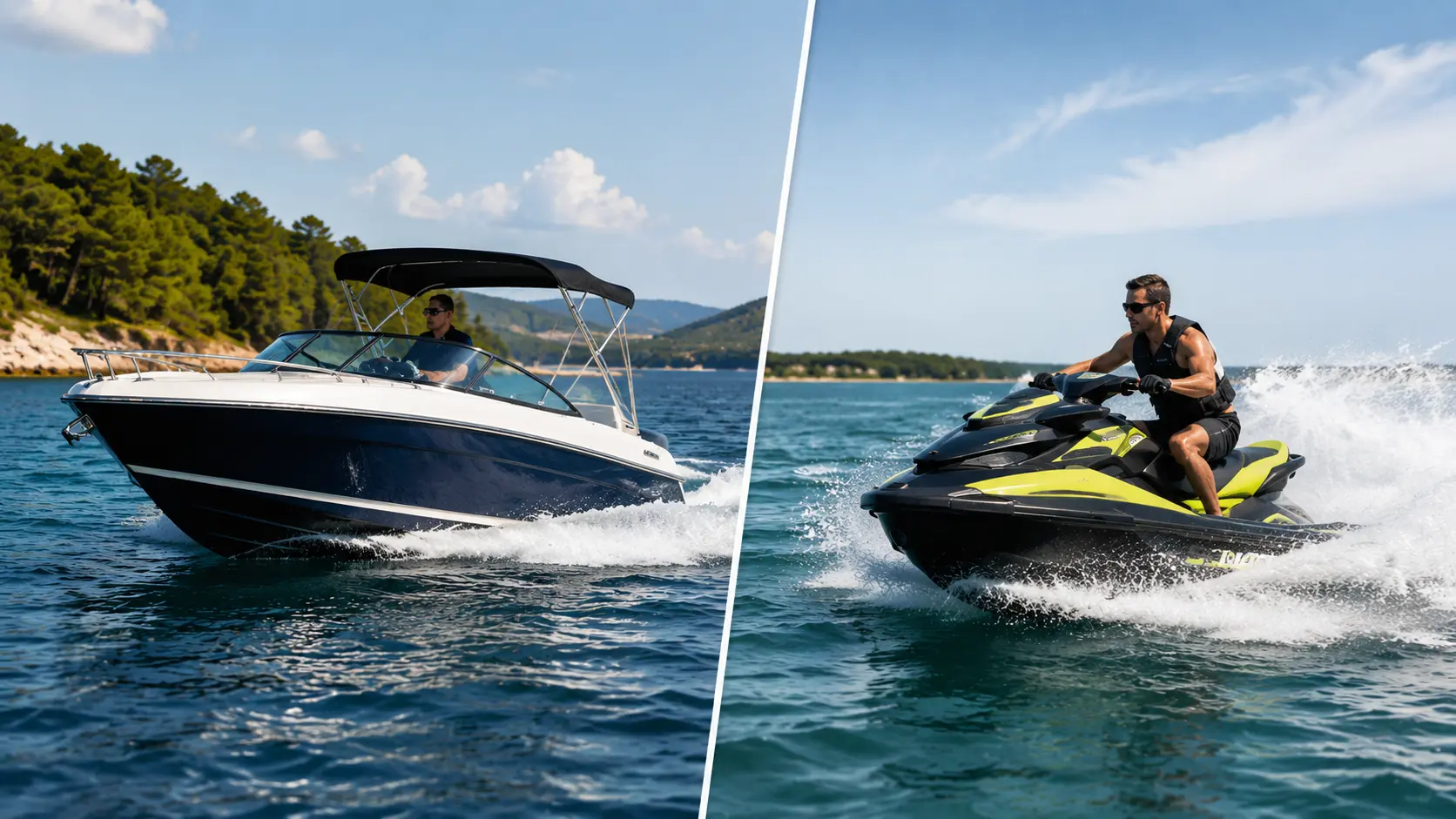
Boats are generally larger and enclosed, while PWCs are compact and designed for the rider to stay on top of the craft, leaving them more exposed to spray and wake.
Propulsion Differences (Jet Drive vs. Propeller)
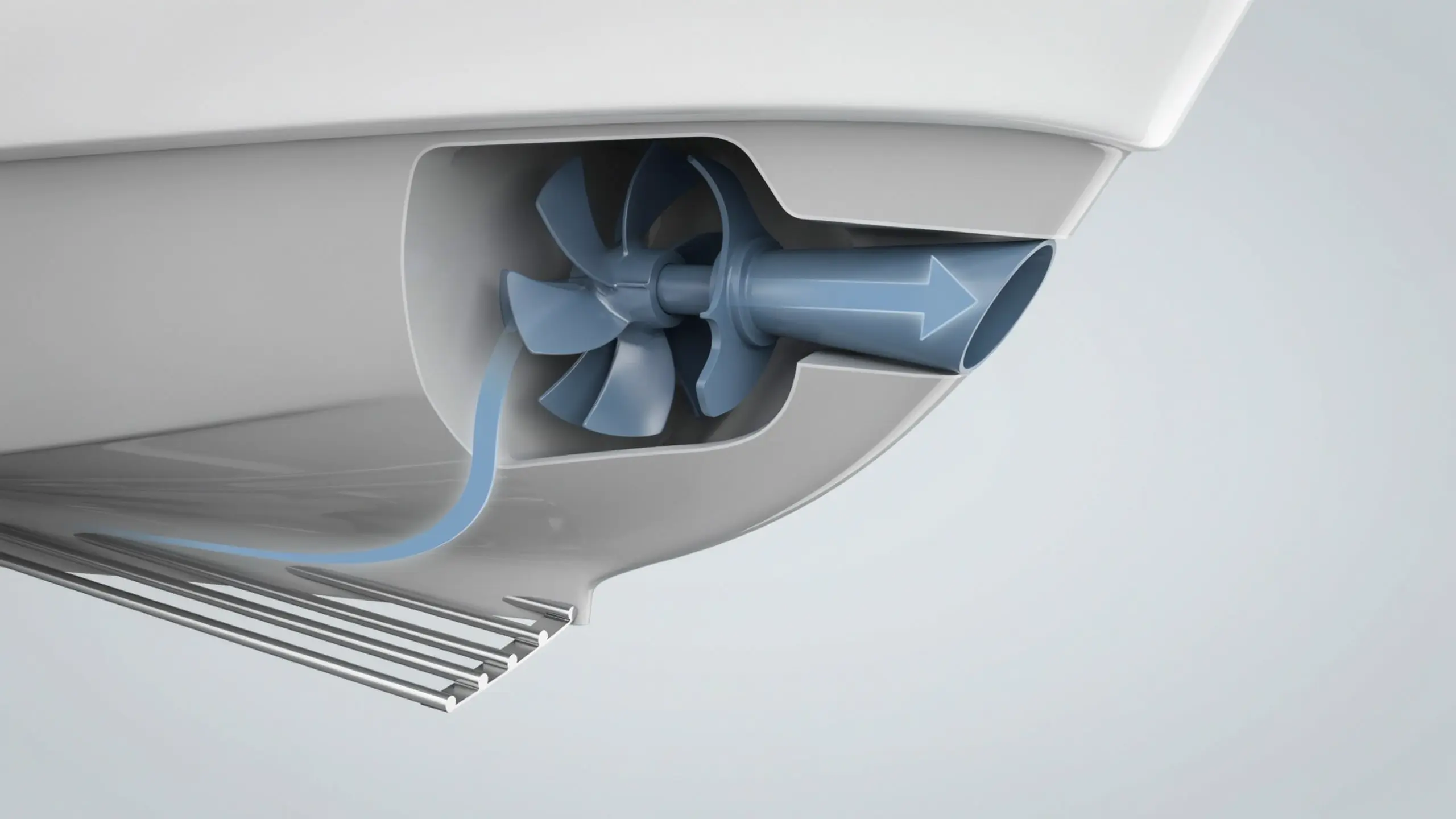
Most boats use an exposed propeller for propulsion, while PWCs rely on an inboard jet pump that draws in water and forces it out through a steering nozzle.
This is a real safety advantage: there’s no exposed blade to cause injury, though the lack of a propeller also means a PWC loses steering control the moment the throttle is released.
| Feature | Personal Watercraft | Traditional Boat |
|---|---|---|
| Operator Position | On top of the craft | Inside the hull |
| Propulsion | Inboard jet pump | Propeller (usually) |
| Typical Size | Under 12 feet | Varies widely, often 16+ feet |
| Steering Without Throttle | Not possible | Often still possible |
Understanding these differences naturally leads to the different types of PWCs available today, since design varies more within the category than most riders expect.
Throttle and Steering Behavior
PWCs rely on jet thrust for steering, so directional control only works with the throttle engaged.
If the rider releases the throttle, the jet pump stops pushing water, and the craft loses steering ability while it coasts forward.
Traditional boats operate differently because propeller wash and rudder flow can still provide some control at low speeds.
This makes boats more manageable during slow maneuvers such as docking, whereas PWCs require continuous throttle input to maintain steering response.
Types and Classifications of Personal Watercraft
PWCs aren’t a one-size-fits-all product. Manufacturers build them around riding style, engine size, and intended use, which is why the market splits into a few distinct categories.
Sit-Down vs. Stand-Up PWCs
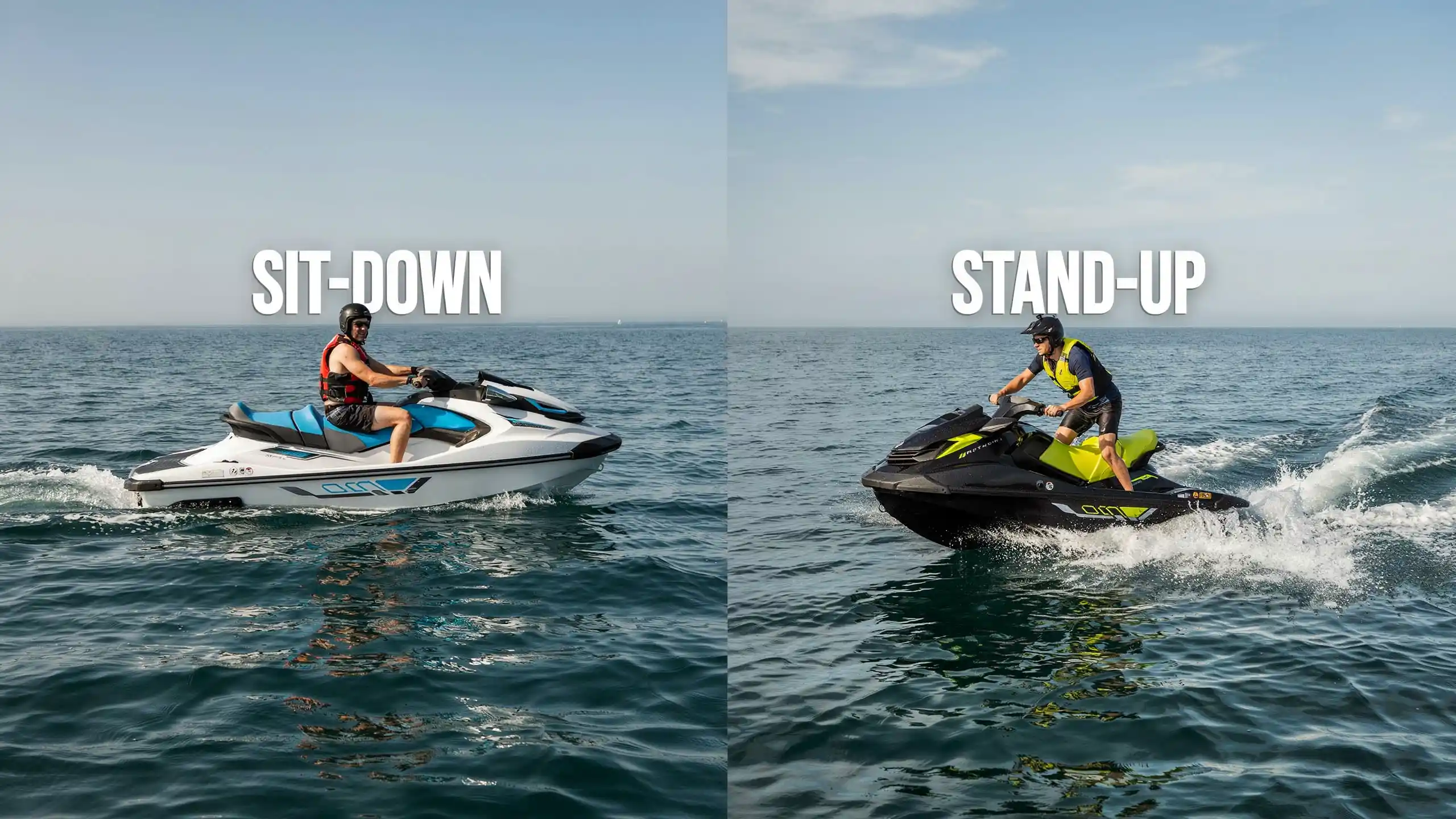
Sit-down models are the more common design, built for one to three riders seated on a saddle-style seat. They’re used for cruising, towing, and recreational riding.
Stand-up models are smaller, built for a single rider who operates the craft while standing or kneeling, and they’re favored for tricks, racing, and more athletic riding, since they demand greater balance and skill.
Rec-Lite, Recreation, and Luxury/Touring Models
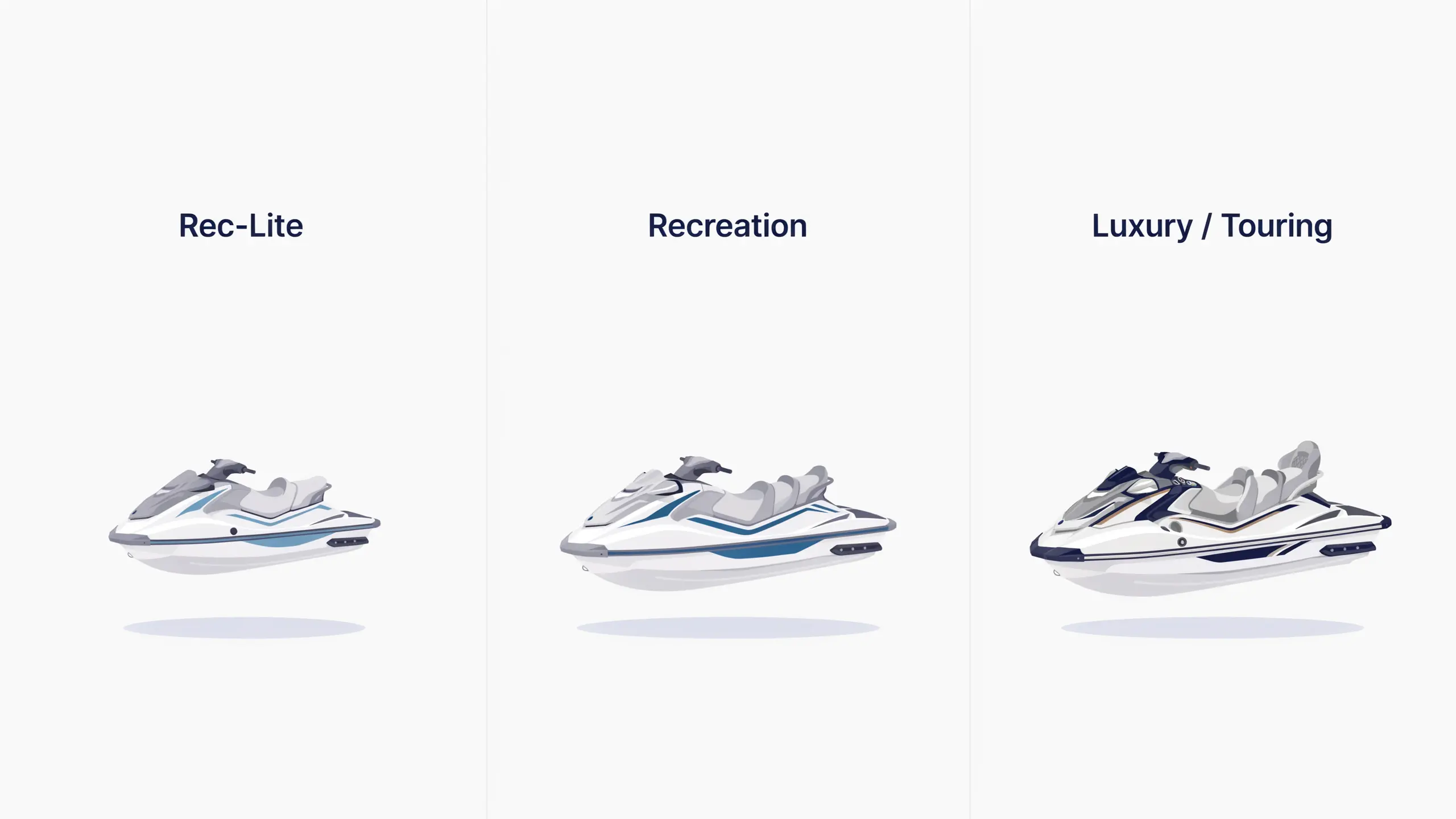
Rec-Lite: lightweight and affordable.
Recreation: balanced speed and comfort.
Luxury/Touring: built for long rides with extra comfort features.
Once a rider picks a type, the next natural question is how the engine and jet system actually move the craft through the water.
How Personal Watercraft Work An engine turns an impeller inside a pump housing, which pulls water in through an intake grate on the hull’s underside and forces it out through a rear nozzle at high pressure. That’s the thrust that moves the craft. Turning the handlebars redirects the nozzle, so steering only works while the throttle is engaged. Losing throttle means losing steering, a detail that causes many PWC collisions. |
A Brief History of Personal Watercraft
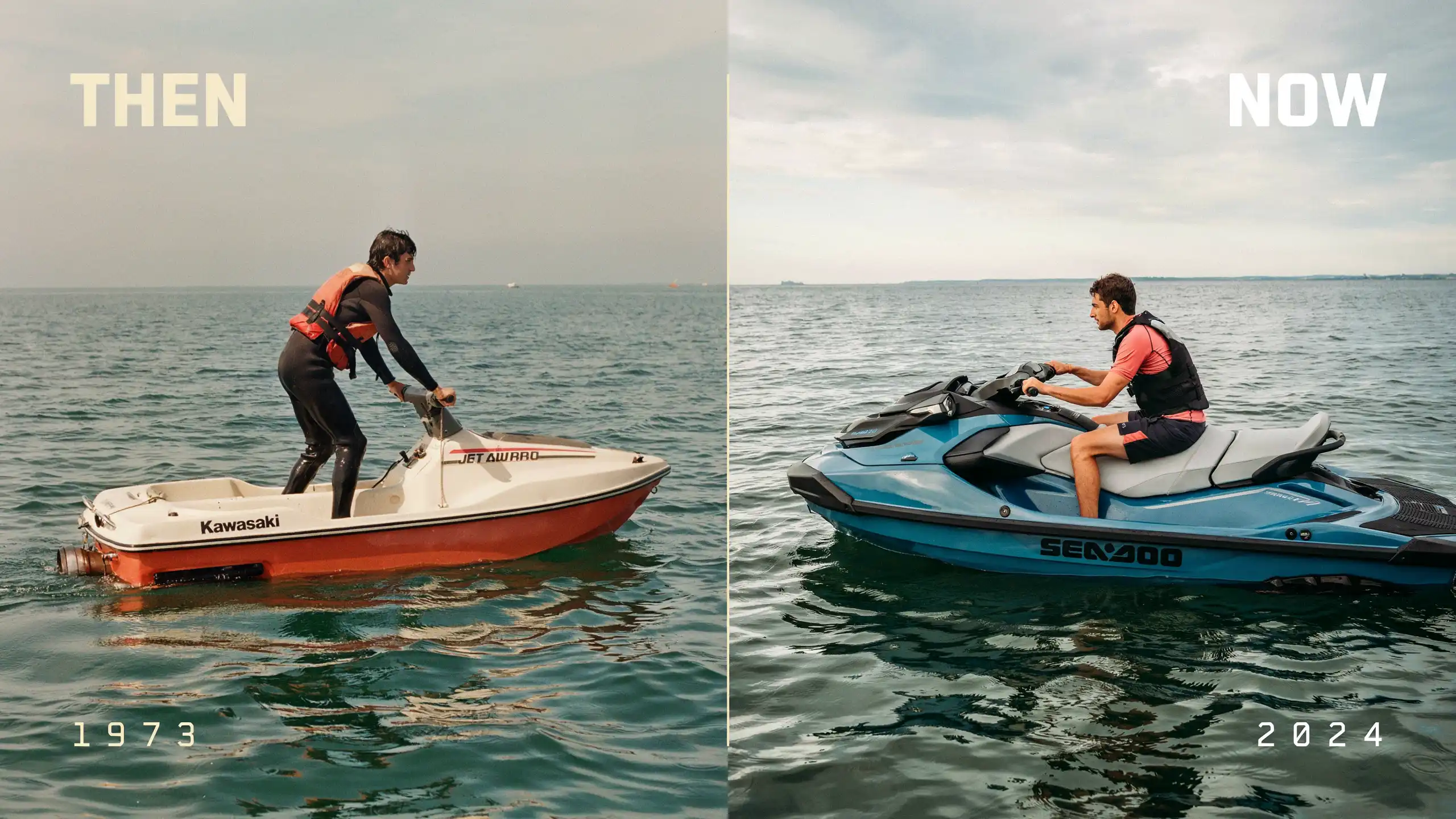
American inventor Clayton Jacobson II built the first working PWC prototype in 1965.
Bombardier licensed his sit-down design and sold the first Sea-Doo from 1968 to 1970, though it didn’t sell well.
Jacobson then licensed his stand-up design to Kawasaki, which released the first commercially successful Jet Ski in 1973.
Yamaha entered the market in 1986 with its own sit-down model, and Bombardier relaunched Sea-Doo in 1988.
Since then, engines have moved from smoky two-stroke motors to cleaner four-stroke, direct-injection designs.
| Year | Milestone |
|---|---|
| 1965 | Clayton Jacobson II builds the first PWC prototype |
| 1968–1970 | Bombardier releases the first sit-down Sea-Doo |
| 1973 | Kawasaki launches the first commercially successful Jet Ski |
| 1986 | Yamaha enters the market with its first sit-down model |
| 1988 | Bombardier relaunches Sea-Doo as an ongoing product line |
That history explains how the craft evolved, but the legal framework around PWCs has its own separate track worth understanding.
Personal Watercraft and Boating Law
Because a PWC is legally a motorboat, it’s subject to the same core boating laws as any other vessel, with a few PWC-specific additions layered on top.
Federal and state law treat PWC operation the same as operating any small powerboat for navigation rules, right-of-way, and penalties for reckless operation.
States add extra requirements on top of the federal baseline, which is where most confusion comes from.
Registration and Equipment Requirements
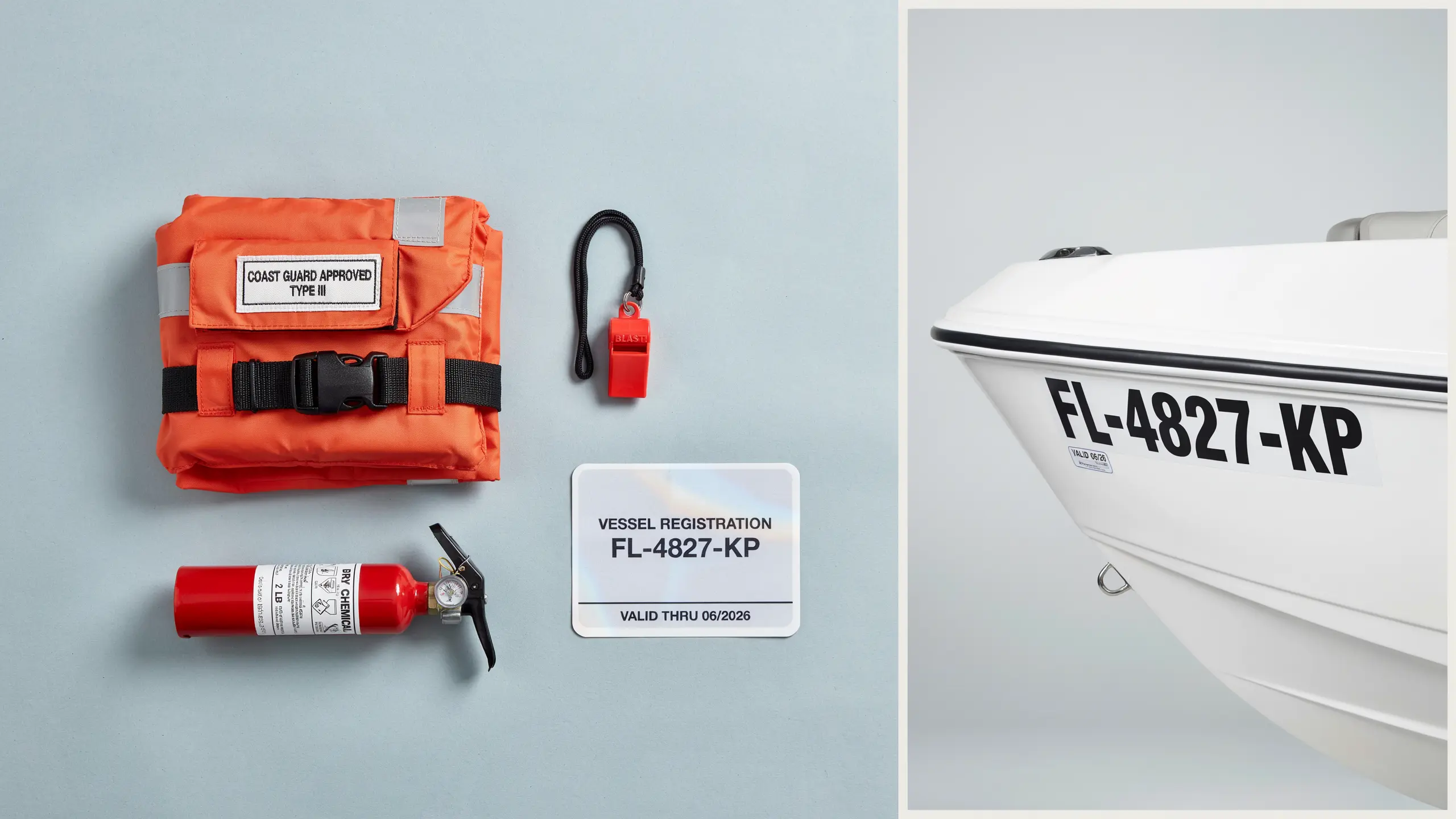
Most states require PWCs to be registered like any other motorboat, with a visible registration number and validation sticker.
Many manufacturers also install an engine cutoff lanyard, which stops the engine if the rider falls off, and a growing number of states now require it to be worn.
Do You Need a Boater ID Card for a PWC?
In most states, yes, though the exact rule depends on where you ride. States commonly require a boater education card for anyone operating a motor over a set horsepower threshold, and PWCs almost always fall above that line.
Some states set the requirement by birth year rather than age, meaning anyone born after a specific date must complete a course regardless of their current age.
Because the threshold, age cutoff, and exemptions differ by state, checking your state marine agency’s website before riding is the only reliable way to confirm what applies to you.
Legal Requirements for Operating a PWC
Beyond registration and the boater card question, several operating rules apply specifically to PWCs in many states.
- Minimum age: Ranges from no minimum in a few states to 16 in others, with many states setting it at 14 for unsupervised operation.
- Horsepower and supervision rules: Some states allow younger riders to operate a PWC only if supervised by a licensed adult on board.
- Life jacket use: Nearly all states require every person on a PWC to wear a Coast Guard-approved life jacket at all times, not just carry one.
- Night operation: Most manufacturers advise against it, and many states prohibit PWC use between sunset and sunrise since most models lack navigation lights.
Since state rules vary this much, confirming local law before heading out matters more for PWCs than for most other boat types.
That same variability carries over into how risk and safety play out on the water.
Safety Hazards to Know
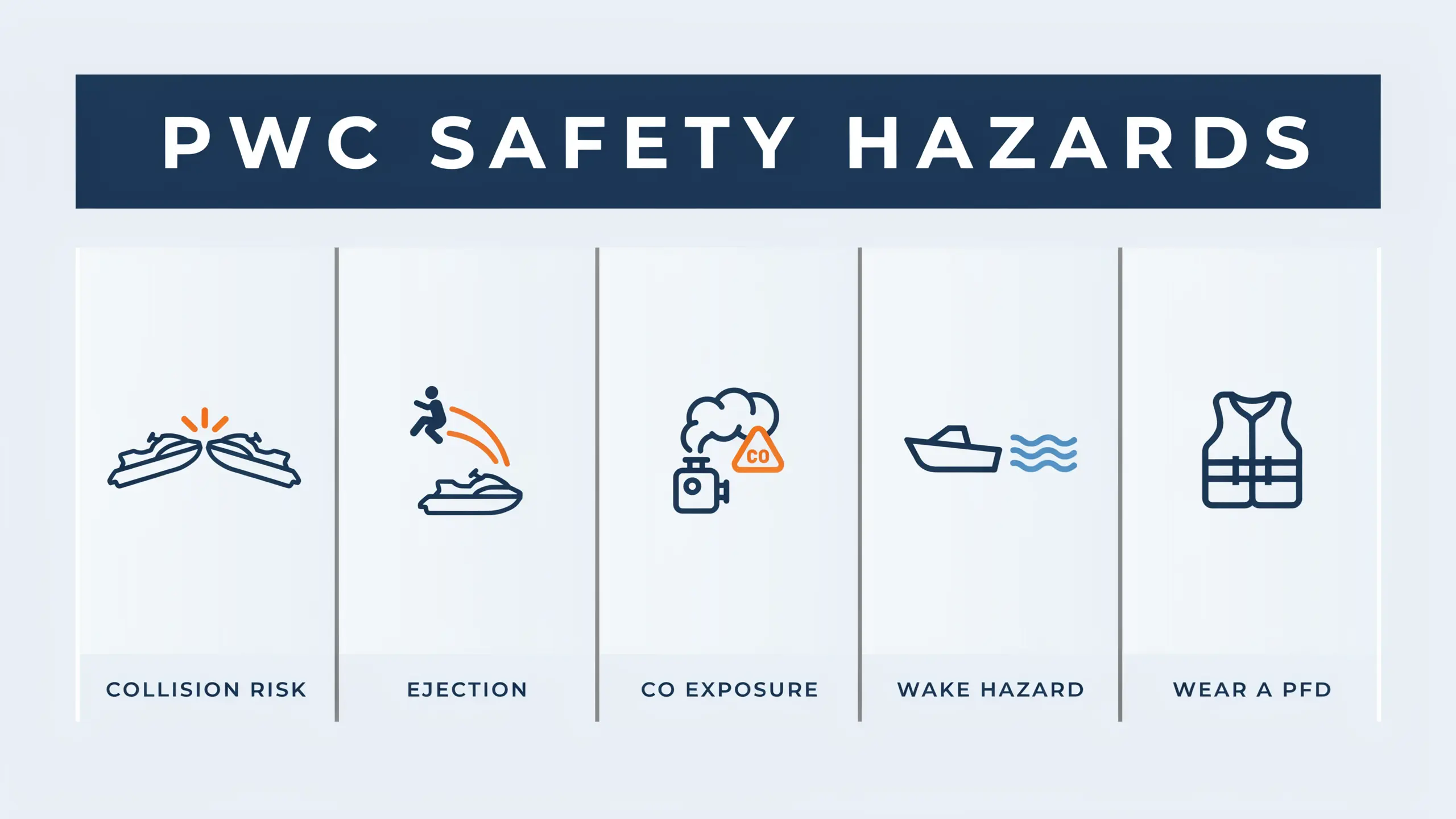
PWCs are agile and quick to accelerate, which is part of the appeal, but it also creates specific risks that differ from standard boating hazards.
These risks are also part of why PWCs draw more environmental scrutiny than other small boats, which is the last piece of the classification picture.
Environmental Impact of Personal Watercraft
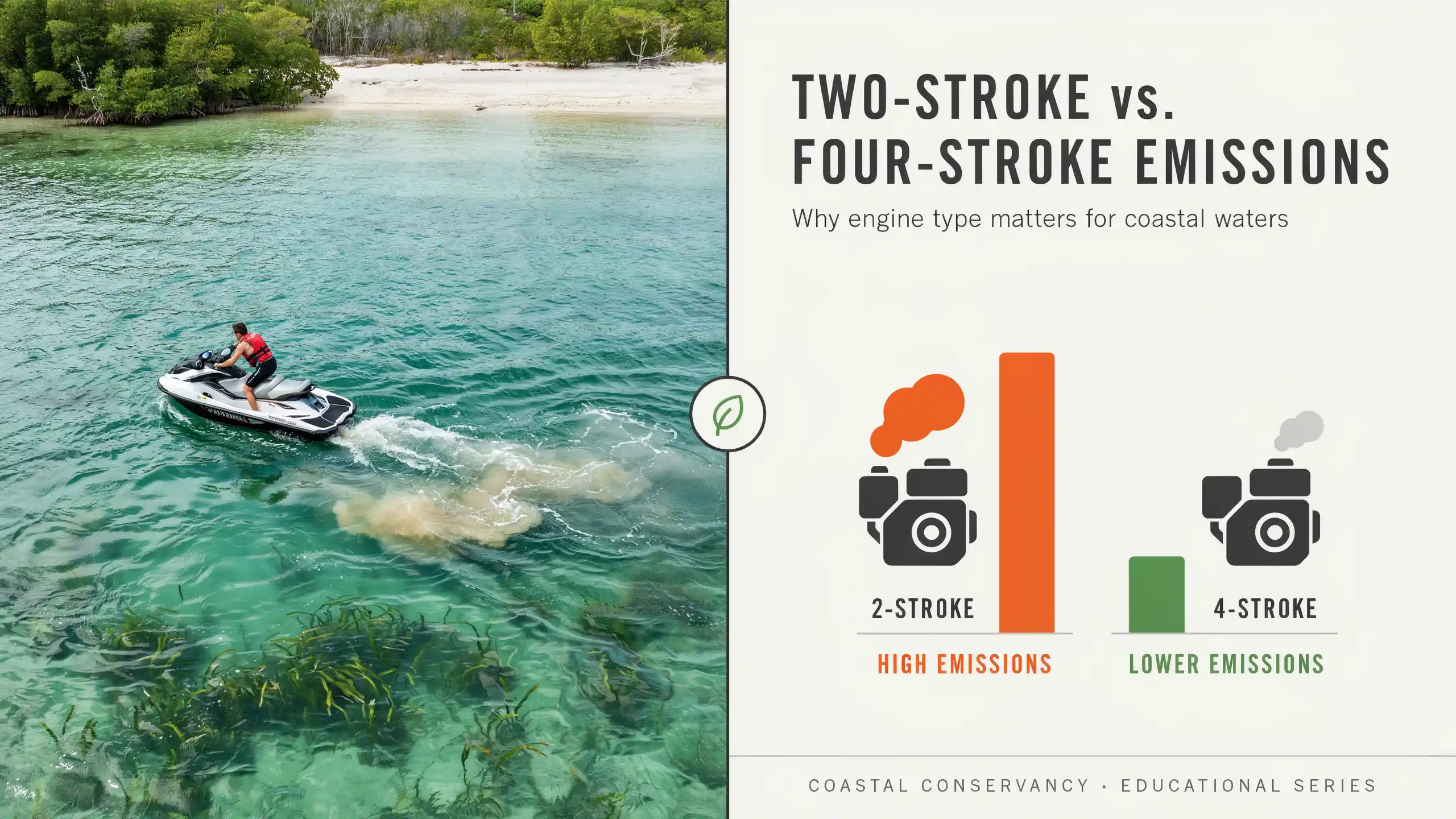
PWCs operate closer to shore and in shallower water than most motorboats, so their environmental footprint receives outsized attention relative to their size.
Older two-stroke engines released a meaningful share of unburned fuel directly into the water.
Modern four-stroke, direct-injection engines cut those emissions substantially.
Noise is a separate issue. PWCs generate underwater sound that can disturb fish and marine mammals, leading some parks and marine sanctuaries to restrict or ban their use.
Their shallow draft also lets them reach nesting bird habitat, seagrass beds, and shallow-water wildlife that other boats can’t access.
Summing Up
A jet ski might not look like anything else at the dock, but the paperwork says otherwise.
Once you know a PWC is a Class A inboard motorboat, the rest of the rules stop feeling random: the registration, the life jacket requirement, the boater education card.
We’d rather you know this before you’re at the ramp than after a warden asks for your registration.
Check your state’s specific age and horsepower thresholds, get the right safety gear on board, and the classification stops being a technicality and starts being the thing that keeps your ride legal and your day on the water uncomplicated.
Frequently Asked Questions
Personal Watercraft Are Considered What Type of Vessel?
A personal watercraft is considered a powered vessel, specifically a Class A inboard motorboat under U.S. Coast Guard classification. It follows the same boating laws as any other motorized boat under 16 feet.
Do Personal Watercraft Need to Be Registered?
In nearly every state, yes. PWCs require registration and a visible number just like other motorboats, since they’re classified under the same Coast Guard category.
What Is the Minimum Age to Operate a PWC?
It depends on the state, ranging from no minimum age to 16 years old. Many states set the age at 14 for unsupervised riders, so checking local law is essential before letting a minor operate one.




One Response