
Kayakers spend plenty of time thinking about paddles, boats, life jackets and weather conditions, but what goes on inside their footwear rarely gets the same attention. That oversight can lead to uncomfortable surprises halfway through a long day on the water. Socks can reveal problems with moisture, friction, circulation and footwear fit before those issues become serious enough to interfere with paddling. Whether you’re navigating rocky shorelines, spending hours in a touring kayak or carrying equipment across muddy launch sites, paying attention to what your socks are telling you can help keep your feet comfortable and healthy.
Damp Socks Can Reveal Problems
Wet feet are practically unavoidable in kayaking, but persistent moisture deserves attention. When socks remain damp for hours, the skin becomes softer and more vulnerable to friction, increasing the likelihood of blisters and irritation. Prolonged exposure to wet conditions can also contribute to skin maceration, which leaves feet looking pale, wrinkled or unusually tender.
After paddling, check whether your socks are wet throughout or concentrated around particular areas. Moisture near the toes might indicate water entering through footwear, while dampness around the soles could reflect perspiration trapped inside poorly ventilated shoes. Recognizing these patterns can help you choose better footwear and manage moisture during longer outings.
Fabric Choices Affect Foot Health
The material against your skin influences how comfortable your feet remain during extended paddling sessions. Cotton absorbs moisture and dries slowly, making it less suitable for activities involving repeated water exposure. Synthetic performance fabrics generally dry faster, while wool can help regulate temperature and manage perspiration.
There’s a reason men’s or women’s work socks made with Merino wool are the best because the fiber can absorb moisture vapor, provide insulation and remain comfortable across changing temperatures. That same combination makes Merino wool worth considering for kayaking, particularly when paired with appropriate water footwear. However, even wool socks can become saturated, and they shouldn’t replace neoprene booties or other protective gear when conditions demand additional insulation.
Wear Patterns Reveal Footwear Issues
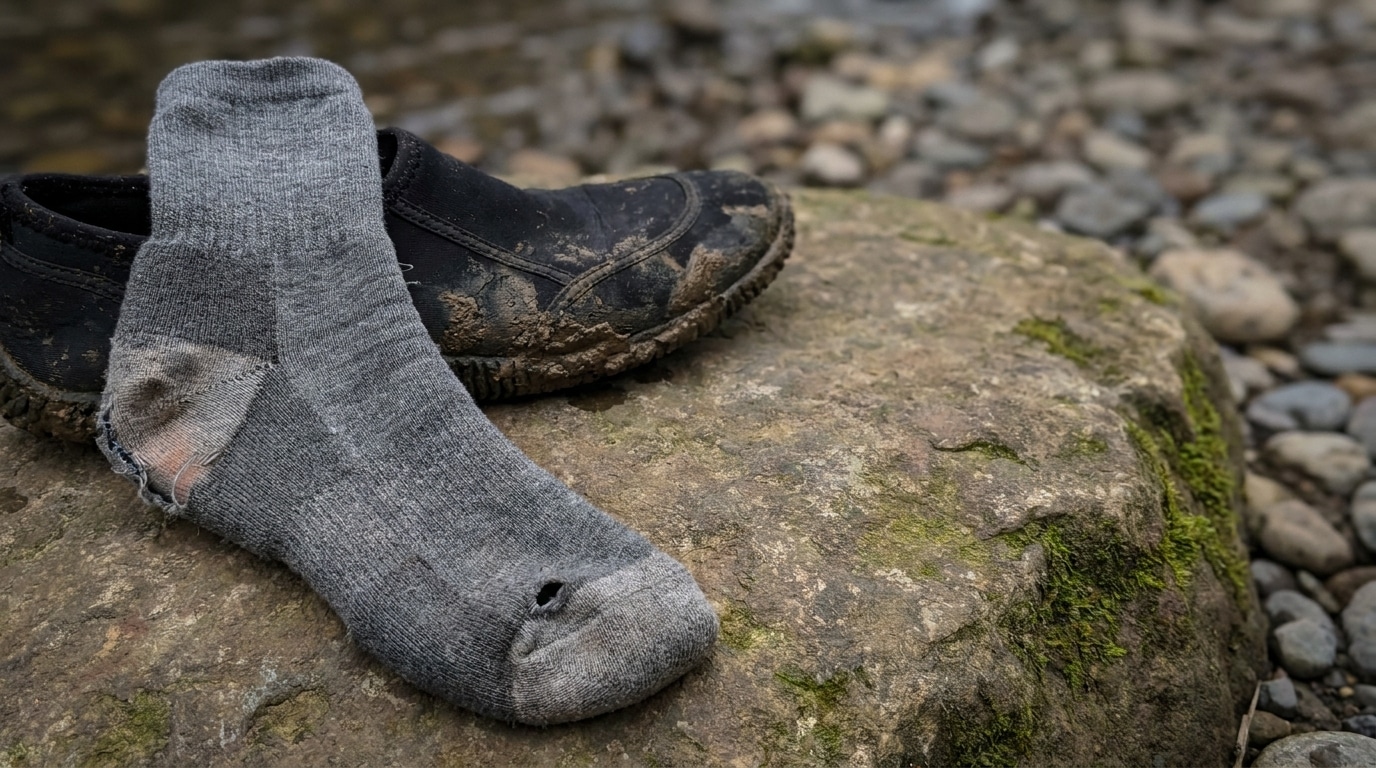
A sock that repeatedly develops holes in the same location may be revealing more than ordinary wear. Thin patches around the heels can indicate excessive rubbing, while damage near the toes may suggest footwear that’s too short or insufficient room for natural foot movement. These problems become especially noticeable when kayakers walk over uneven terrain or carry loaded boats.
Different kayaking destinations also expose feet to different demands. A sandy beach launch requires less protection than a rocky riverbank, where stiff footwear may be necessary. Inspecting socks after trips can help identify recurring pressure points and determine whether your shoes, booties or sock thickness need adjusting before your next outing.
Elastic Marks Deserve Attention
Removing your socks after paddling may reveal indentations around your ankles or calves. Mild marks that disappear relatively quickly are common, particularly when socks have snug elastic bands. However, deep impressions, persistent swelling or discomfort can indicate that the fit is too restrictive or that another issue deserves medical attention.
Kayakers often remain seated with their knees bent for extended periods, making it important to notice changes in foot comfort and sensation. Socks that feel comfortable while standing may become irritating after several hours inside a cockpit. Choose cuffs that stay in place without digging into the skin, and make adjustments if you experience tingling, numbness or persistent pressure. Sudden one-sided swelling or significant pain warrants prompt medical evaluation.
Skin Changes Offer Important Clues
Your socks can also draw attention to changes in the skin underneath. Redness, peeling, itching or unusual odors after repeated paddling trips may indicate irritation or a fungal infection, particularly when feet spend hours inside damp footwear. Small blisters or tender areas between the toes can develop when moisture and friction occur together.
Inspect your feet after longer outings, paying particular attention to the spaces between your toes and areas where footwear makes contact. Wash and dry your feet thoroughly, change into clean socks and allow wet footwear to dry completely before storing it. Persistent itching, cracked skin or worsening irritation should be assessed rather than dismissed as an unavoidable part of kayaking.
Protect Your Feet Between Trips
Good foot care continues after you’ve packed away your kayak. Rotating footwear, replacing worn socks and carrying a dry pair for the journey home can prevent minor discomfort from becoming a recurring problem. On cold-water trips, remember that ordinary socks cannot provide the protection of properly fitted drysuit systems or suitable thermal footwear.
Your socks may seem like an insignificant part of your paddling equipment, but their condition can reveal useful information about how your feet handle time on the water. A quick inspection after each trip can help you recognize problems early and paddle more comfortably.