There’s a particular kind of frustration that comes from owning good gear you barely use. Three boats hanging in the garage, a trailer that needs its tires checked, and four weekends last year when it all actually touched water. Not because the interest faded. Because every paddle began with loading, driving ninety minutes, finding parking at a launch that fills by eight, and doing the whole sequence backward at the end of the day.
That math is fixable, and the fix is geographic rather than motivational. Choosing where to live around what you want to do most days, instead of squeezing what you love into whatever address you happen to own, changes how many days you spend outside by a factor most people would find hard to believe until they’ve done it.
Audit the Year You Actually Had
Start with an honest accounting rather than an aspirational one. Go through last year month by month and count the real days. Days on the water, days on snow, days on the bike. Then count the trips that got planned and abandoned, and write down why each one died.
The answer is almost always friction. Drive time, gear loading, a launch permit nobody remembered to renew, a forecast that turned marginal and tipped the decision toward staying home. Thirty minutes seems to be the threshold where an activity shifts from something you do casually to something you have to commit to, and anything requiring commitment happens perhaps a fifth as often.
Separate out the sports you’d do on a random Tuesday evening from the ones you do on holiday. Those two lists point toward completely different towns, and conflating them is how people end up somewhere beautiful that doesn’t fit their week.
“Near the Water” Means Almost Nothing
Waterfront on a listing covers an enormous range. It might mean a protected cove where you can slip out at six in the morning in flat calm, or an exposed shoreline that’s paddleable about a dozen days a year and miserable the rest.
The details that actually determine use are unglamorous. How long does it take to get from your door to the put-in, measured with a boat on the roof rather than in an empty car? Is the launch public, permitted, private, or technically public but with eleven parking spots? What does the wind do between noon and five? On most inland lakes and much of the coastline, the afternoon is a different body of water than the morning. On tidal water, how wide is the window, and does it line up with the hours you’re free? On rivers, is flow dam-controlled, which means scheduled releases on something like the Ocoee or the Nantahala, or is it rain-dependent and therefore unpredictable?
Water temperature sets your season more than air temperature does. The difference between somewhere you paddle comfortably from April to November and somewhere that demands a drysuit eight months of the year is the difference between a lifestyle and a hobby.
And the three main versions of paddling, protected flatwater, open coast, and whitewater, are genuinely separate lives that happen to share a roof rack. Know which one you’re actually buying into.
Paddle the exact stretch you’d be living on before making an offer, at the hour you’d realistically go. Not on the perfect July afternoon the agent suggests.
Look for Overlap, Not One Perfect Sport
Towns that hold up over years tend to serve two or three activities inside a short radius. Hood River gives you the river, the wind, and Mount Hood close enough for a morning lap. Bellingham puts protected Salish Sea paddling and Mount Baker in the same week. Bend has river access, climbing, and snow. Chattanooga combines serious whitewater with sandstone. Midcoast Maine and Charleston are both excellent and almost nothing alike.
Overlap is also insurance. A thin snow year or a drought summer doesn’t invalidate the whole reason you moved, because there’s somewhere else to go on a given morning.
Moving the Quiver
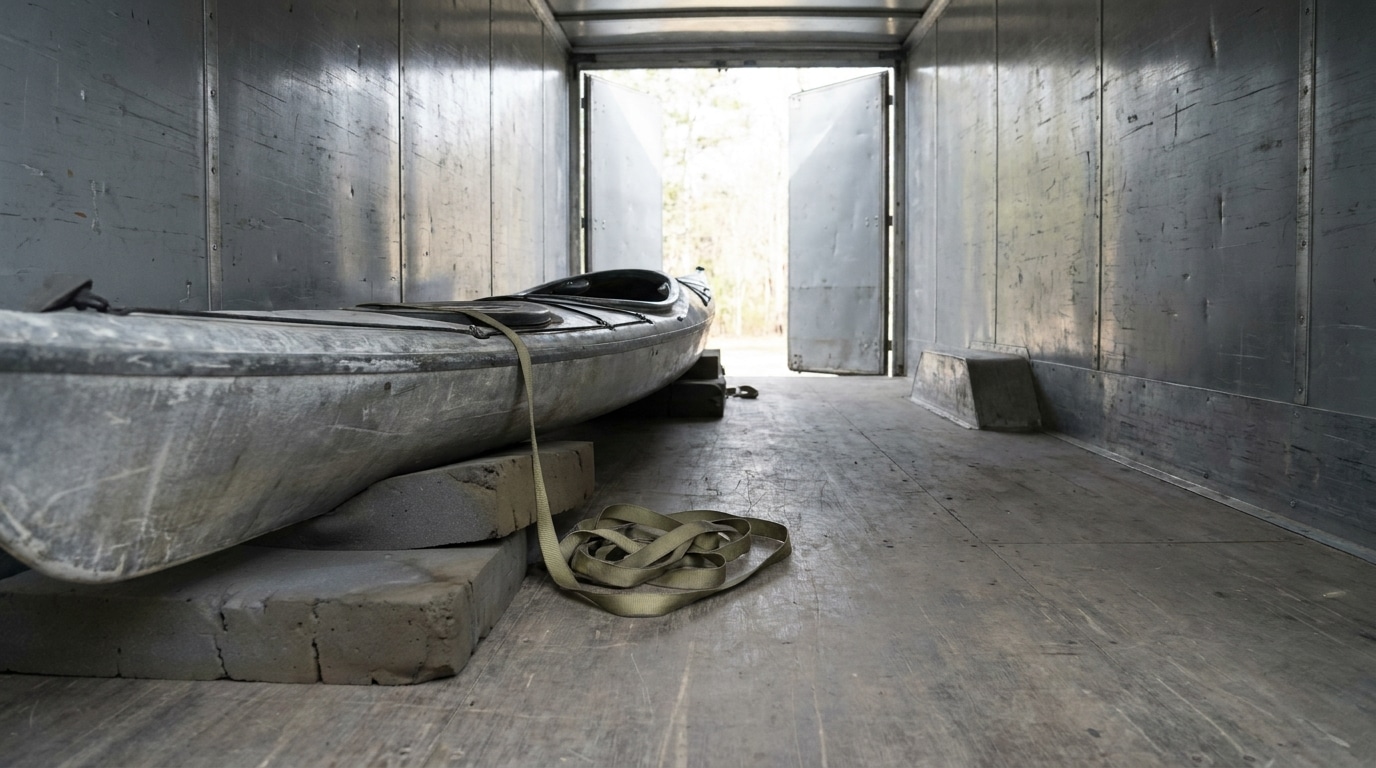
Household movers are competent with sofas and reliably bad with sporting equipment. Sea kayaks deform if they’re strapped down wrong or supported in the wrong place; composite hulls scratch and spider-crack; carbon paddles snap under a dresser; and bikes get treated as furniture-shaped objects rather than precision machines.
Ask professional long-distance movers specific questions before signing anything. Will long hulls be custom-crated or cradled rather than stacked? Who packs the bikes, and would shipping them separately through a bike-specific service be smarter? Is there a written inventory with condition photographs of every hull, frame, and ski, taken before loading? Without that, a damage claim becomes an argument you lose.
Trailers and roof racks need their own arrangements and are often excluded from the main quote. Vehicles belong in enclosed transport.
The insurance piece deserves real attention. Valuation by weight is nonsense for a thirty-pound composite kayak or a titanium frame, and standard coverage would not replace either. Get replacement-value coverage confirmed in writing, for the specific transit period, before anything leaves the garage.
The House Has to Cooperate
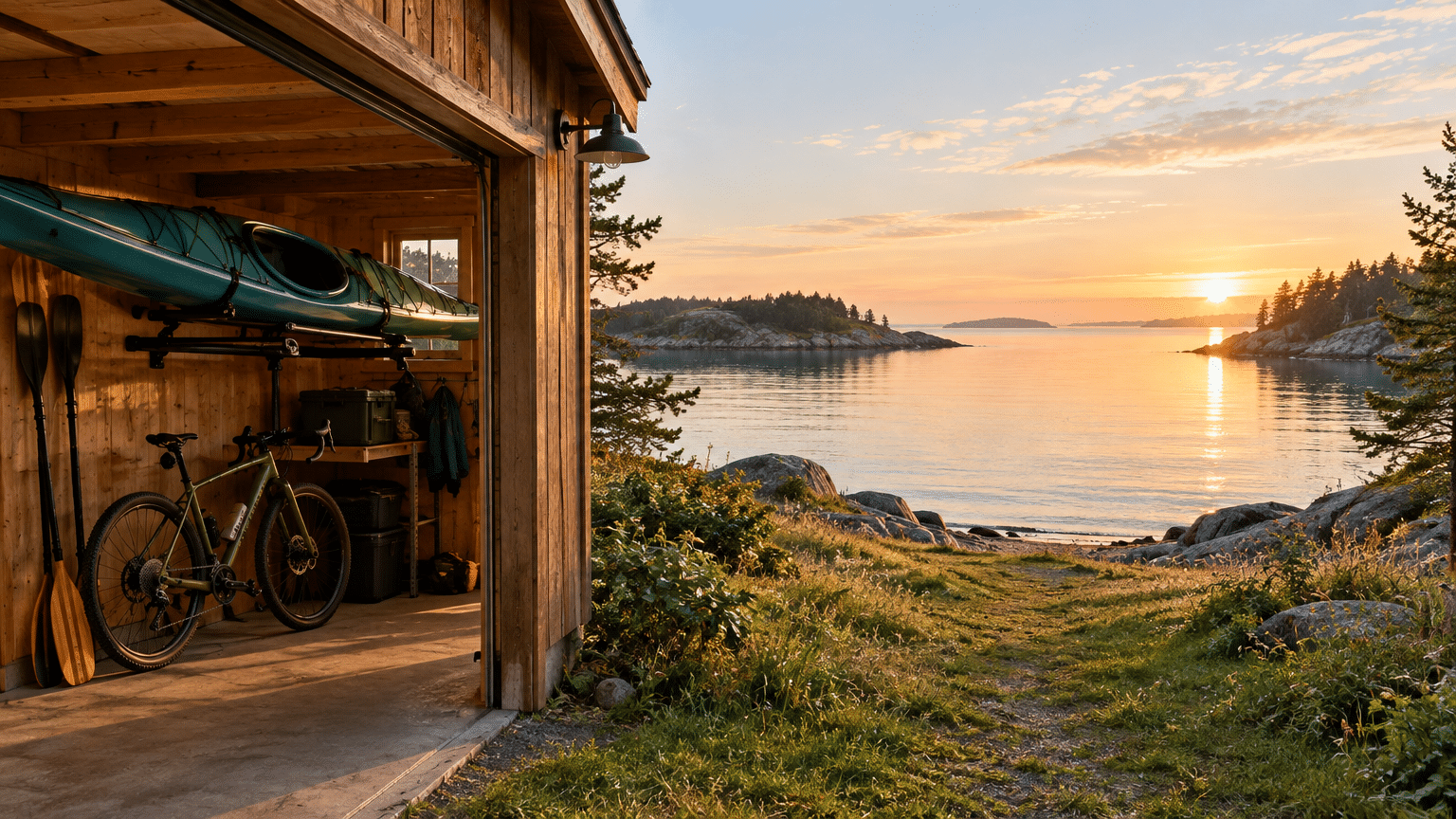
Storage quietly decides how much you use your gear. Garage depth for an eighteen-foot hull, ceiling height for a hoist system, a mudroom that doesn’t mind being wet, an outdoor shower that works in cold weather.
Then check the permissions. Dock and mooring permits are frequently capped by the municipality and slow or impossible to transfer. Plenty of HOAs prohibit visible trailers, roof racks on parked cars, or boats stored outside, which is a detail that surfaces after closing if nobody reads the covenants.
A hand-launch beach you can walk to beats a world-class ramp fifteen minutes away. Being able to carry a boat down to water without starting a car is the single feature that changes behavior most.
Who Fixes Things When They Break
An active town needs a support network, and some very scenic places don’t have one. Look for a genuine outfitter rather than a rental kiosk, somebody who repairs composite hulls and services bikes locally, and a paddling club with a weekly schedule, since that’s how you learn the water fast and find people to go out with.
Worth checking too: distance to trauma care and whether there’s air access. Remote and active in combination raises the consequences of an ordinary bad day.
Everything above comes down to shortening the distance between your front door and the thing you actually want to be doing. Count the year you had, go paddle the water you’re considering at an ordinary hour on an ordinary day, and then buy the house that stores the boats properly.