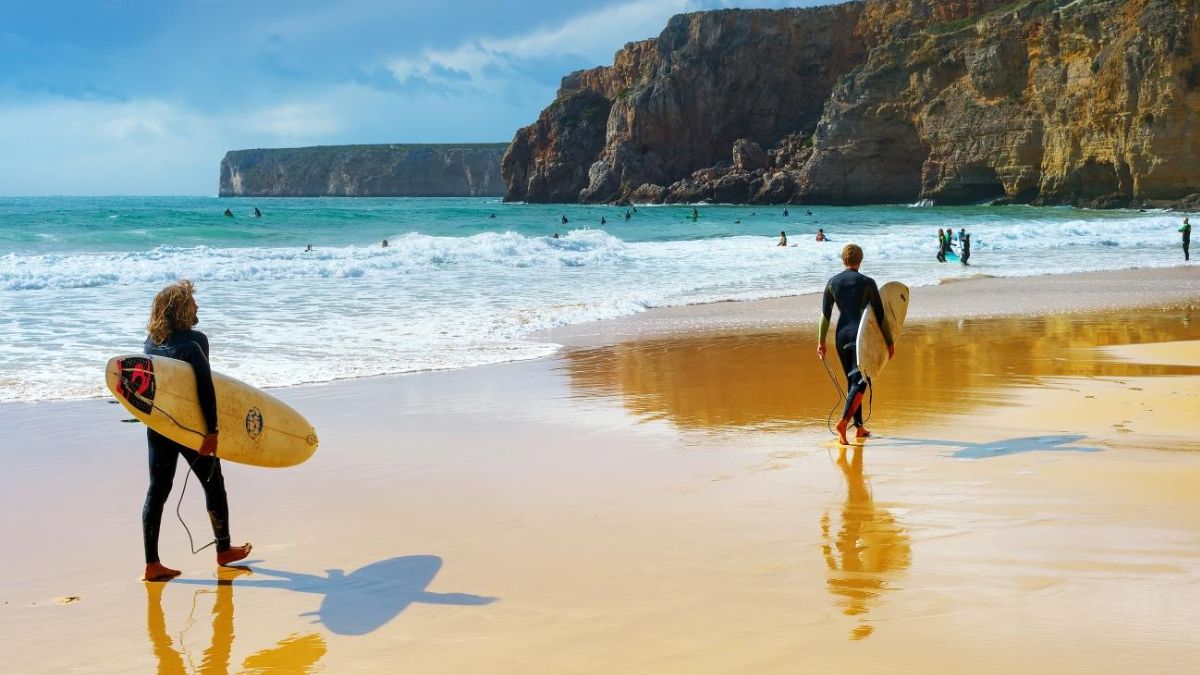
Portugal surfing draws visitors for one simple reason. Few countries pack this much variety into one coastline.
Its Atlantic shoreline runs long enough that conditions barely repeat from one region to the next, calm and forgiving in some bays, powerful and fast-moving once autumn and winter swells roll in elsewhere.
A few names come up again and again when planning a trip: Ericeira, Peniche, Baleal, the Lisbon coast, and the Algarve’s Costa Vicentina and Sagres coastline. The right pick depends on your skill level and the season.
Nazaré is different from the rest. It’s more of a spectacle than a normal surf stop, and that’s covered further down.
Where Should You Surf in Portugal?
Here’s a quick way to match trip style to location before getting into the details.
|
Trip Style |
Best Choice |
|---|---|
|
Beginner surf trip |
Baleal |
|
Surf-focused vacation |
Ericeira |
|
Wide choice of breaks |
Peniche |
|
Lisbon plus surfing |
Costa da Caparica or Cascais |
|
Coastal road trip |
Costa Vicentina |
|
Southwest surf base |
Sagres |
|
Big wave watching |
Nazaré |
|
Quieter central option |
Figueira da Foz |
|
Island surf trip |
São Miguel, Azores |
Central Portugal has the highest number of established surf towns, so that’s the zone for anyone who wants everything close together.
The Lisbon area beaches work well for splitting time between city sightseeing and surfing.
Southwest Portugal, the western Algarve, suits travelers who don’t mind driving a bit further to chase better conditions from beach to beach.
Best Places for Portugal Surfing
Portugal’s coastline offers a range of surf experiences. Some destinations are built around surf culture, others make learning easier, and some suit travelers who want a road trip or a chance to watch world-famous waves.
1. Ericeira: The Surf Town Built Around Waves
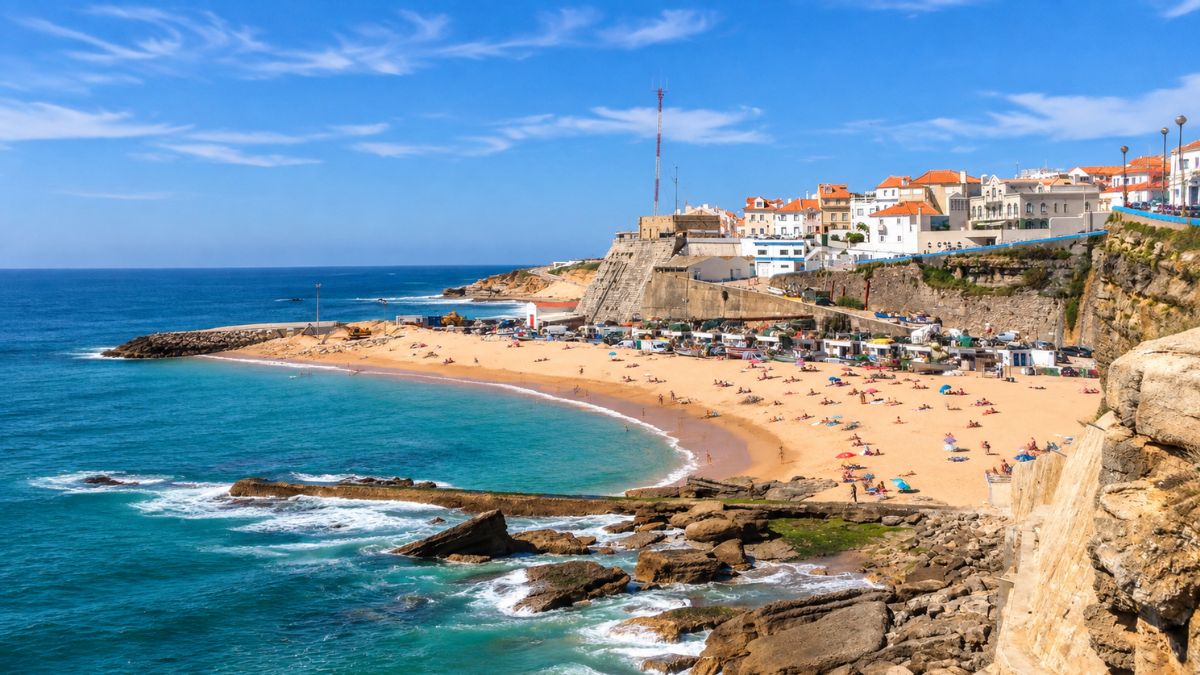
Ericeira is one of Portugal’s most established surf destinations, where the ocean influences much of daily life. The town earned its World Surfing Reserve status because of the variety and quality of breaks along its coastline.
Ribeira d’Ilhas is the most recognized surf spot, while Coxos attracts experienced surfers looking for more demanding waves. Foz do Lizandro offers a more approachable beach setting for surfers still improving their skills.
The biggest advantage of Ericeira is variety. You can stay in one town and access completely different surf experiences without constantly changing accommodation.
2. Peniche: A Peninsula Full of Surf Choices
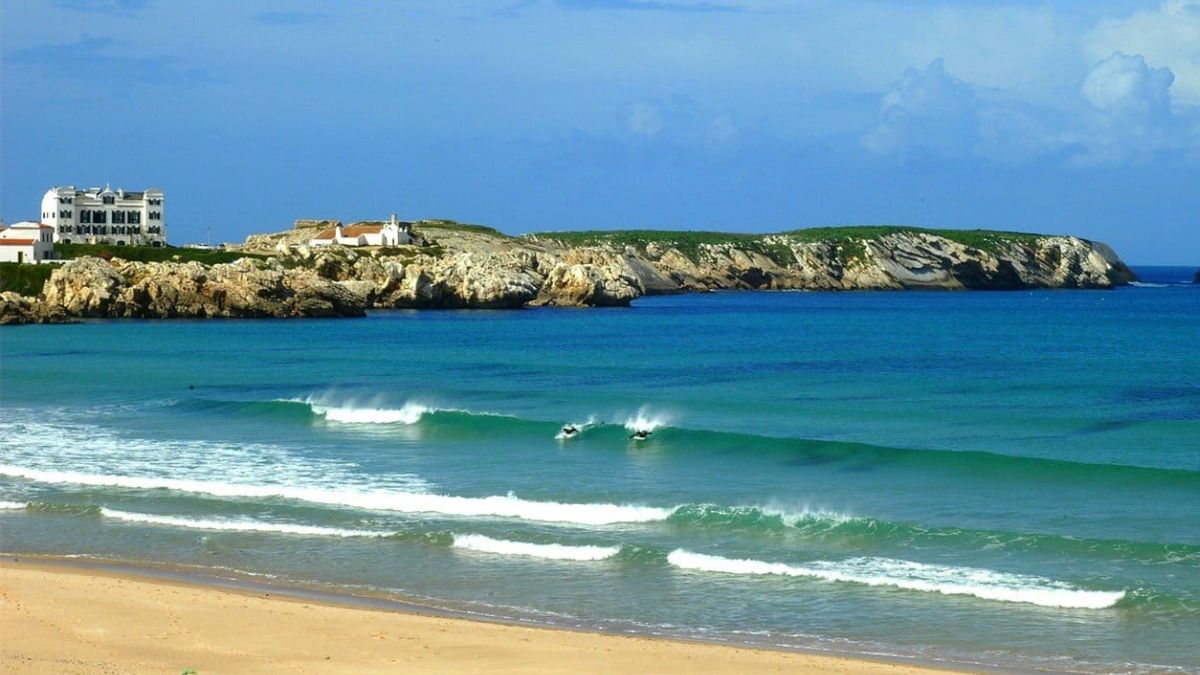
Peniche’s location is the reason surfers return here. The peninsula creates different coastal exposures, meaning conditions can vary greatly from one beach to another.
Popular surf areas include:
- Supertubos: Known for powerful barrels and professional competitions
- Lagide: A rocky point break reef nearby, with a slower, longer-running wave than the peninsula’s main beaches
- Consolação: Offers another nearby option when conditions change
This variety makes Peniche practical for surfers who do not want to depend on a single break. A short drive can completely change the type of wave you find.
3. Baleal: A Starting Point for New Surfers
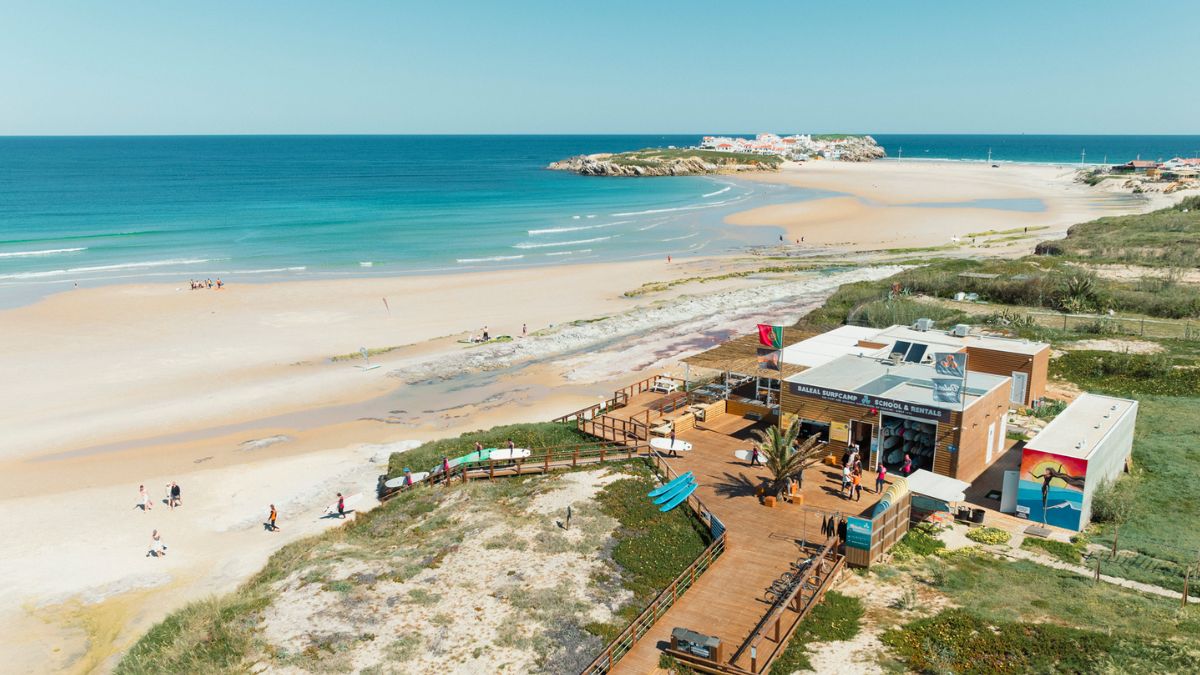
Baleal has become one of Portugal’s most popular places for beginners because it removes many of the challenges of learning somewhere unfamiliar.
The area offers:
- Sandy beaches that suit surf lessons
- Plenty of local surf schools
- Easy board and wetsuit rentals
- Nearby breaks for progression
Its relaxed atmosphere makes it especially appealing for travelers who want to spend several days learning rather than taking one quick lesson. As confidence grows, nearby Peniche offers more advanced options.
4. Costa da Caparica: Surfing Close to Lisbon
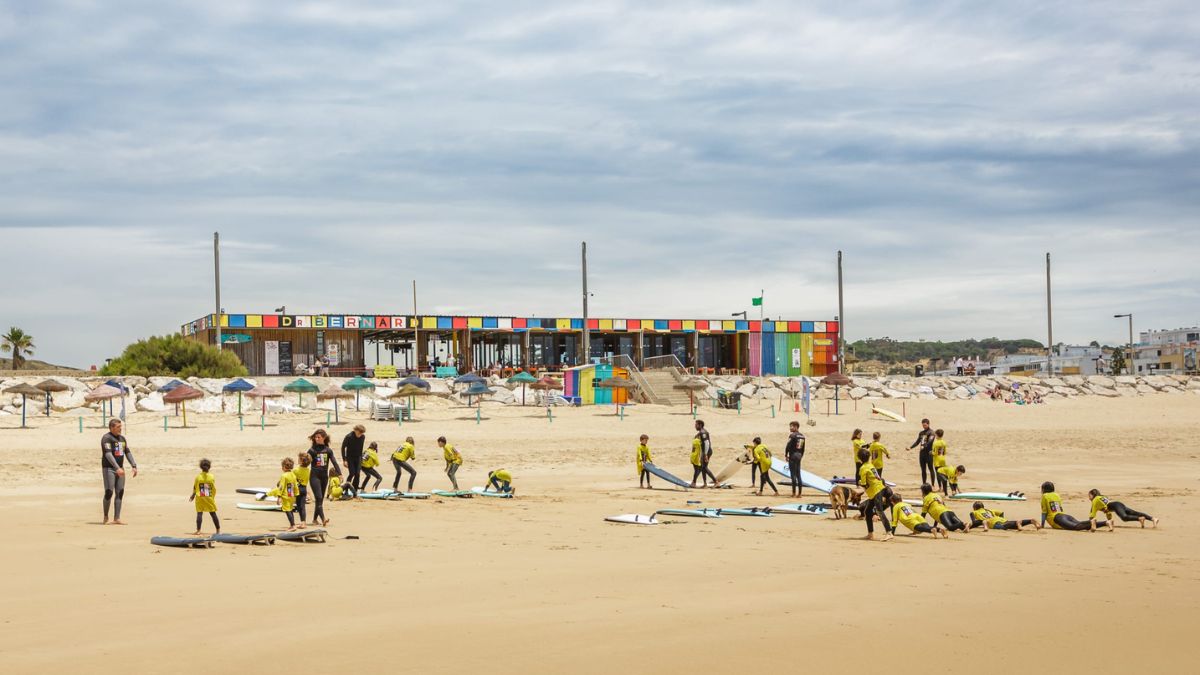
Costa da Caparica lets travelers combine a Lisbon trip with regular time in the ocean. The coastline stretches across multiple beach breaks rather than one main surf spot, giving visitors more flexibility throughout the day. It works well for:
- First-time surfers taking lessons
- Intermediate surfers looking for convenient sessions
- Travelers staying in Lisbon without renting a car
Its biggest advantage is accessibility. You can enjoy a morning surf session and still spend the afternoon exploring the city.
5. Cascais: Carcavelos and Guincho Offer Different Experiences
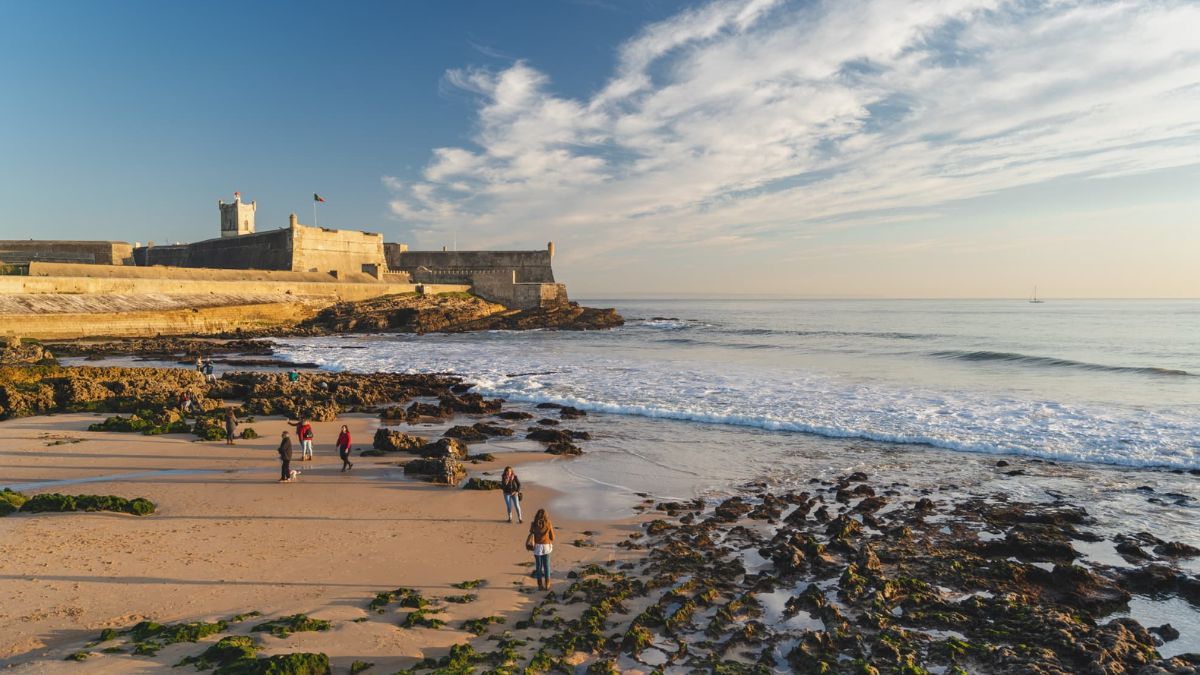
Cascais stands out because two nearby beaches can feel completely different. Carcavelos sits right in town, an easy stop for anyone based in Lisbon who doesn’t want to drive far for a session.
Carcavelos
- Easier access from Lisbon
- Popular with local surfers
- A familiar choice for regular surf sessions
Guincho
- More exposed to Atlantic winds
- More sensitive to changing conditions
- Better suited to surfers comfortable with stronger variables
Choosing Cascais isn’t just about the location; it is about picking the beach that matches the conditions that day.
6. Figueira da Foz: A Less Crowded Surf Stop
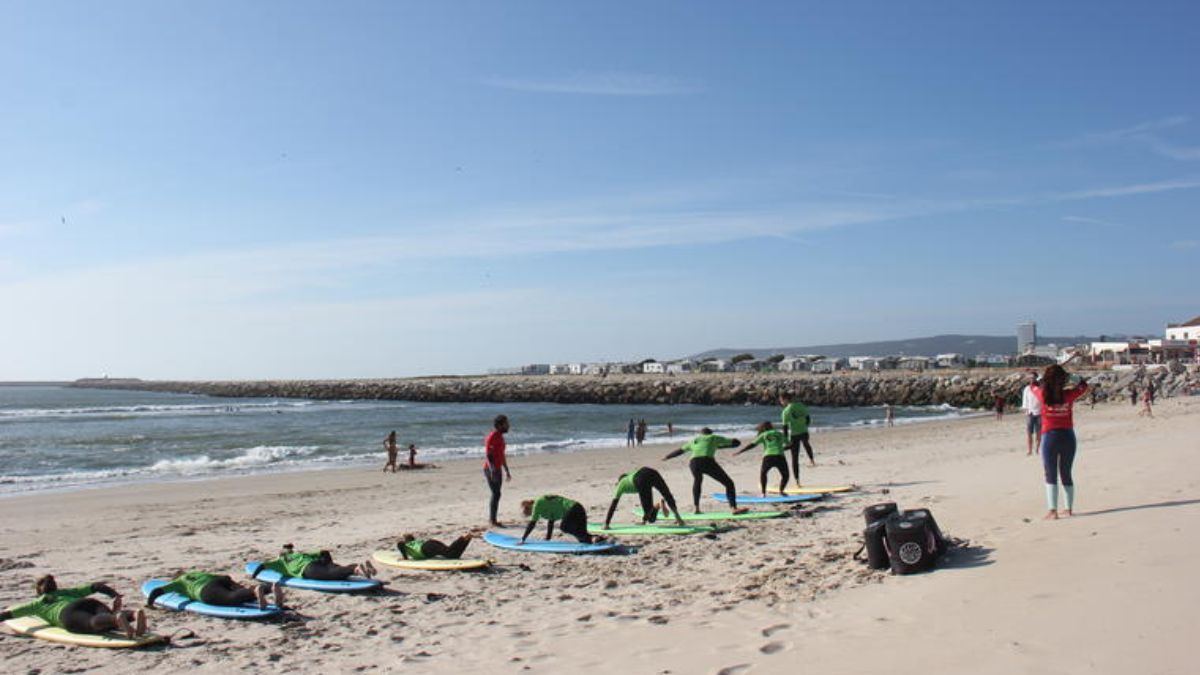
Figueira da Foz offers a quieter alternative to Portugal’s better-known surf towns.
Cabedelo and Buarcos provide wide beaches, surf schools, and a slower pace than places like Ericeira or Peniche. It works well for travelers exploring central Portugal who want surfing included in their route without making it the only focus of the trip.
The lower profile is part of the appeal for visitors looking for more space and fewer crowds.
7. Costa Vicentina: The Coast for Surf Road Trips
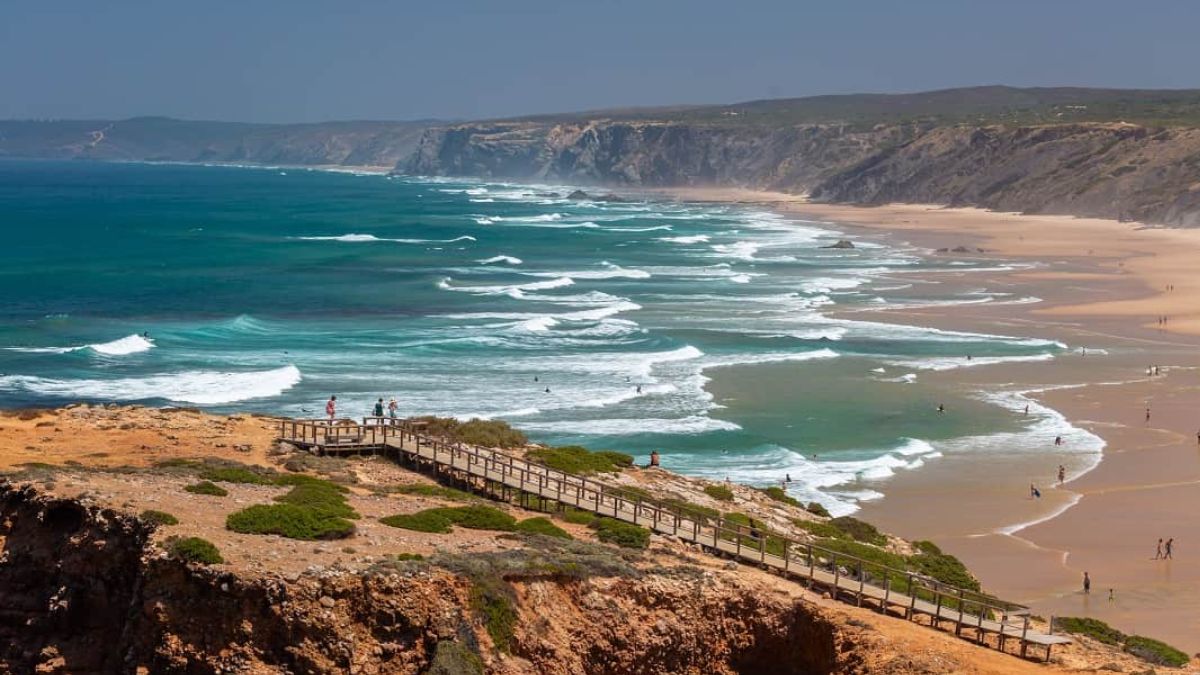
Costa Vicentina is best experienced as a region, not a single surf spot.
The coastline includes several notable stops:
- Praia da Arrifana: A sheltered beach surrounded by dramatic cliffs
- Praia do Amado: A well-known surf destination with established facilities
- Carrapateira area: Multiple nearby beaches worth exploring
The main attraction is flexibility. This stretch of coastline sits inside the Southwest Alentejo and Vicentine Coast Natural Park, spanning the western Algarve and southern Alentejo, and a car makes it much easier to follow the swell up and down the coast.
8. Sagres: A Base for Changing Conditions
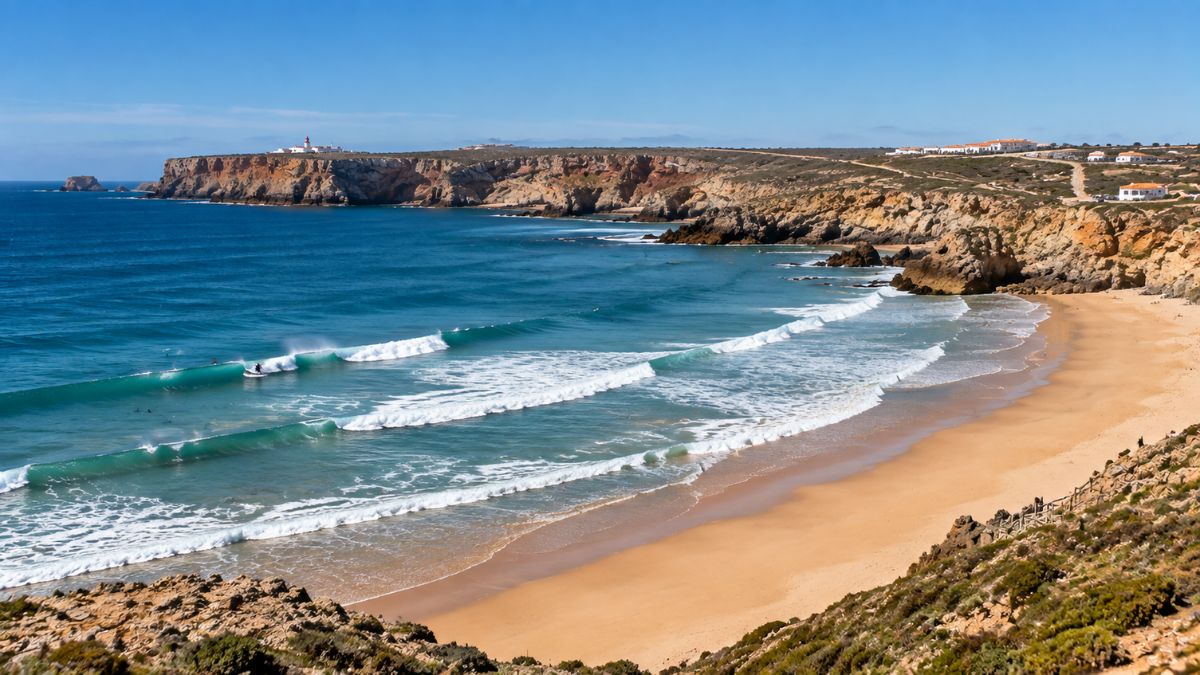
Sagres sits where Portugal’s west and south-facing coastlines meet, giving surfers more options when conditions shift.
Why surfers choose Sagres:
- Different beaches respond differently to wind and swell
- Mareta offers a more sheltered option in certain conditions
- Beliche and Tonel provide more exposed setups
The area rewards travelers who check conditions daily and choose their beach accordingly rather than committing to one surf spot for the entire trip.
9. Nazaré: Where Surfing Reaches Another Scale
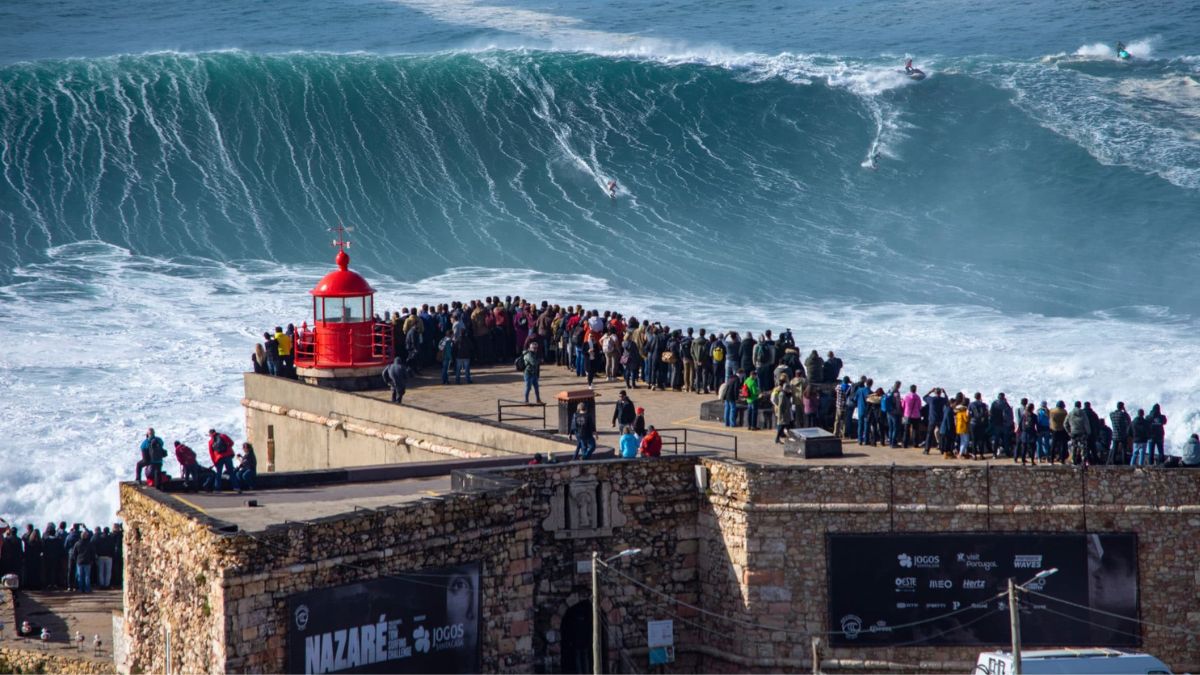
Nazaré is famous for a completely different reason than most Portuguese surf destinations.
Praia do Norte became known worldwide because of its giant waves, created partly by the underwater Nazaré Canyon.
The biggest swells generally arrive from October through March, when the canyon channels the strongest North Atlantic storms straight into the bay. During these months, professional big-wave surfers arrive to take on conditions that are beyond normal recreational surfing.
In October 2020, big-wave surfer Sebastian Steudtner rode a wave here that was later measured at 26.21 meters (86 feet). The ride was officially certified as a Guinness World Record in 2022, cementing Nazaré’s reputation as one of the most extreme waves on the planet. The certification followed an 18-month review by the World Surf League and a team of scientists who analyzed the wave’s height from trough to crest.
For most visitors, Nazaré is a place to watch rather than surf. The cliffs above the beach offer one of the best perspectives of this extreme side of the ocean.
10. São Miguel, Azores: Surfing With an Island Setting
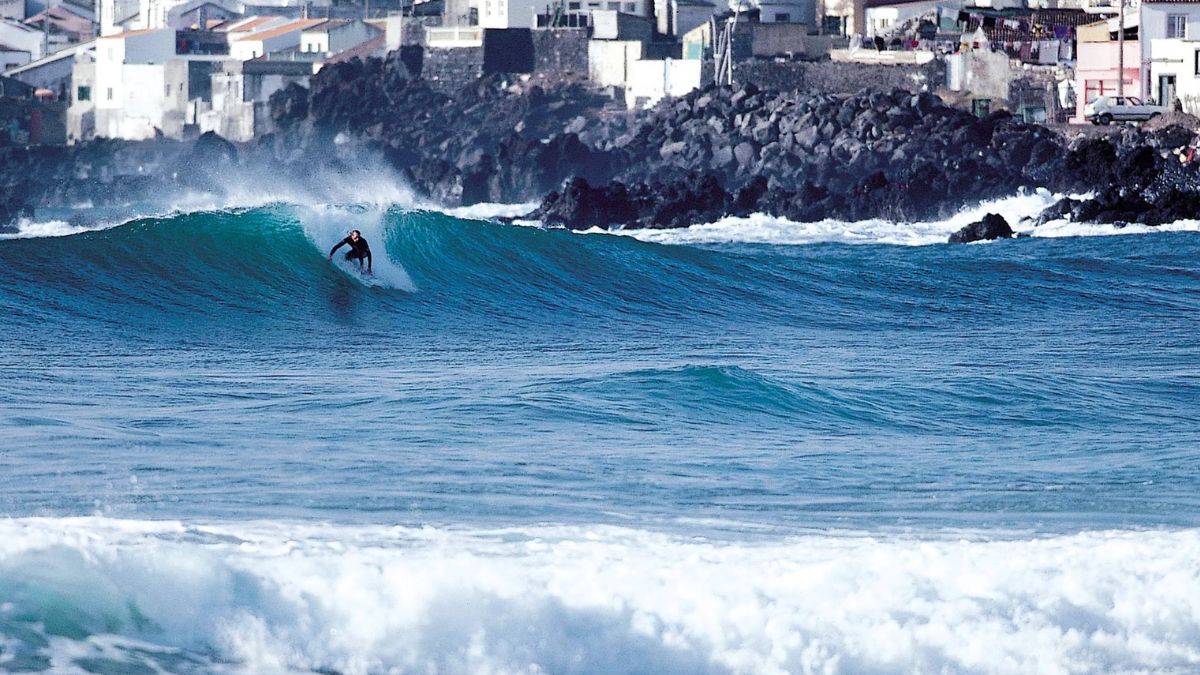
São Miguel offers a different type of surf trip from mainland Portugal.
The island combines:
- Atlantic surf conditions
- Volcanic landscapes
- Santa Bárbara surf area
- A quieter natural setting
Because the Azores require separate flights and local transport planning, they suit travelers seeking a dedicated island adventure rather than a short stop on a mainland surf route.
Two More Regions Worth Knowing About
Two areas come up often once you look past the classic surf towns above.
Northern Portugal, around Porto and the Minho and Douro coastlines, holds swell well but tends to run rougher and windier, especially in winter, with fewer surf schools than the central coast.
Madeira, an island off the African coast rather than the mainland, is a trip of its own. Its point breaks and reef setups have earned it a reputation as one of Europe’s most respected big-wave venues, alongside Nazaré.
Why Portugal Works So Well for Surfing
Portugal’s direct exposure to the North Atlantic, combined with a long coastline facing both west and south, gives it beach breaks, reef breaks, and point breaks all within reach of each other.
That variety is part of what makes surfing destinations so interesting worldwide. From famous waves to lesser-known breaks, surfers often look for locations that match their experience level and the type of session they want. You can also compare Portugal’s coastline with other standout destinations through thisbest surf spots resource.
That mix means there’s usually something workable for whatever level you’re surfing at, and conditions hold up across most of the year rather than disappearing for months at a time.
The surf infrastructure backs this up too. Established surf schools, easy board rental, and surf camps are common in every major town, so you don’t need to bring your own gear or already know the coastline to have a good trip.
And because so many surf towns sit close together, it’s realistic to build a road trip that mixes surfing with Lisbon, smaller coastal towns, hiking, good food, and plenty of beach time without losing wave quality along the way.
Best Time to Surf in Portugal
Conditions shift noticeably across the year, and knowing the general pattern helps you plan around your skill level.
|
Season |
Typical Conditions |
Best For |
|---|---|---|
|
March to May |
Mixed spring conditions and fewer peak crowds |
Improving surfers |
|
June to August |
Generally smaller surf and busy beaches |
Beginners |
|
September to November |
More consistent Atlantic swell |
Intermediate and advanced surfers |
|
December to February |
Bigger and more powerful conditions |
Experienced surfers |
Summer is usually the easiest window for first lessons, since the waves are smaller and more forgiving.
September and October are where a lot of recreational surfers find their sweet spot, with swell that’s stronger but still manageable on the right beach.
Winter is when Portugal shows its full power, and beaches that felt easy in July can turn genuinely unsuitable for beginners once a larger swell rolls through.
The month matters less than the daily conditions, though. Wind direction, tide, swell period, and a beach’s orientation can change a session from easy to overwhelming, sometimes within a few hours.
Surfing Portugal by Skill Level
Matching your ability to the right break makes a bigger difference in Portugal than in most surf destinations, given how much conditions vary from one beach to the next.
|
Skill Level |
Strong Starting Choices |
|---|---|
|
Beginner |
Baleal, Costa da Caparica, Foz do Lizandro, selected Sagres beaches |
|
Intermediate |
Ericeira, Peniche, Cascais, Costa Vicentina, Sagres |
|
Advanced |
Supertubos, experienced Ericeira reef breaks, exposed Atlantic beaches |
|
Big wave specialist |
Praia do Norte, Nazaré |
A beach that feels easy on a small day can turn difficult fast once swell picks up. Check conditions before every session rather than assuming yesterday’s forecast still applies.
Understanding the risks is part of becoming a better surfer. Waves, currents, crowded lineups, and personal ability all affect how safe a session can be. Before your first lessons or unfamiliar breaks, learn more about surfing safety tips.
If you’re new to surfing, a lesson or a conversation with a local school beats guessing.
Choose the break for your ability and the conditions that day, not simply because it is famous.
What to Know Before a Portugal Surf Trip
A good surf trip depends on more than choosing the right beach. Transport, equipment, local conditions, and timing can all affect how easy it is to move between surf spots and enjoy your time in the water.
Plan your transport around your surf route: Getting around is simple near Lisbon and major surf towns, where public transport can reach some popular beaches.
Pack for cooler Atlantic water: Portugal can feel warm on land, but the ocean stays chilly. Water temperatures generally run from around 14°C (57°F) in winter to about 21°C (70°F) at the height of summer, so most surfers wear a 3/2mm wetsuit through the warmer months and step up to a 4/3mm or 5/4mm for winter sessions.
Check the Beach Before You Paddle Out
Surf conditions can change quickly, even at beaches that seem beginner-friendly one day. Before entering the water, check:
- Swell size and direction
- Wind speed and direction
- Tide timing
- Currents near the beach
- Warning flags or local notices
- Advice from local surf schools or experienced surfers
Leave reef breaks and powerful exposed beaches to surfers with the right experience. Choosing a break that matches your ability is just as important as choosing the right destination.
Book ahead during busy periods: Summer brings more visitors to Portugal’s popular surf towns, so lessons, board rentals, and accommodation can fill up faster. Planning early helps avoid limited choices during peak travel months.
Final Thoughts on Portugal Surfing
Most of these regions sit close enough together that a single trip doesn’t have to mean picking just one. A beginner base in Baleal pairs easily with a day trip down to Ericeira once your confidence builds, and travelers splitting time in Lisbon can still reach the Algarve’s Costa Vicentina and Sagres coastline within a few hours’ drive.
Experienced surfers can plan around the stronger autumn and winter swells, when Ericeira, Peniche, and the exposed Algarve beaches all pick up more consistent size.
Whatever level you’re at, check local conditions before entering the water every time. Portugal rewards a plan built around that day’s coastline, not the beach that looked best online.
Frequently Asked Questions
Is Portugal Good for Beginner Surfers?
Yes. Baleal, Costa da Caparica, and Foz do Lizandro all have strong surf school networks and manageable seasonal conditions suited to first-time surfers.
What Is the Best Month for Surfing in Portugal?
Summer suits beginners best; spring, from March to May, works well for surfers looking to progress; and September and October generally appeal most to intermediate and experienced recreational surfers chasing stronger swell.
Is Ericeira or Peniche Better for Surfing?
Ericeira suits surf town stays with varied breaks nearby, while Peniche offers several beaches facing different directions within a compact area.
Can You Surf in Portugal Without Renting a Car?
Yes, around certain surf towns and beaches near Lisbon. A car becomes much more useful once you’re heading toward Costa Vicentina or Sagres.