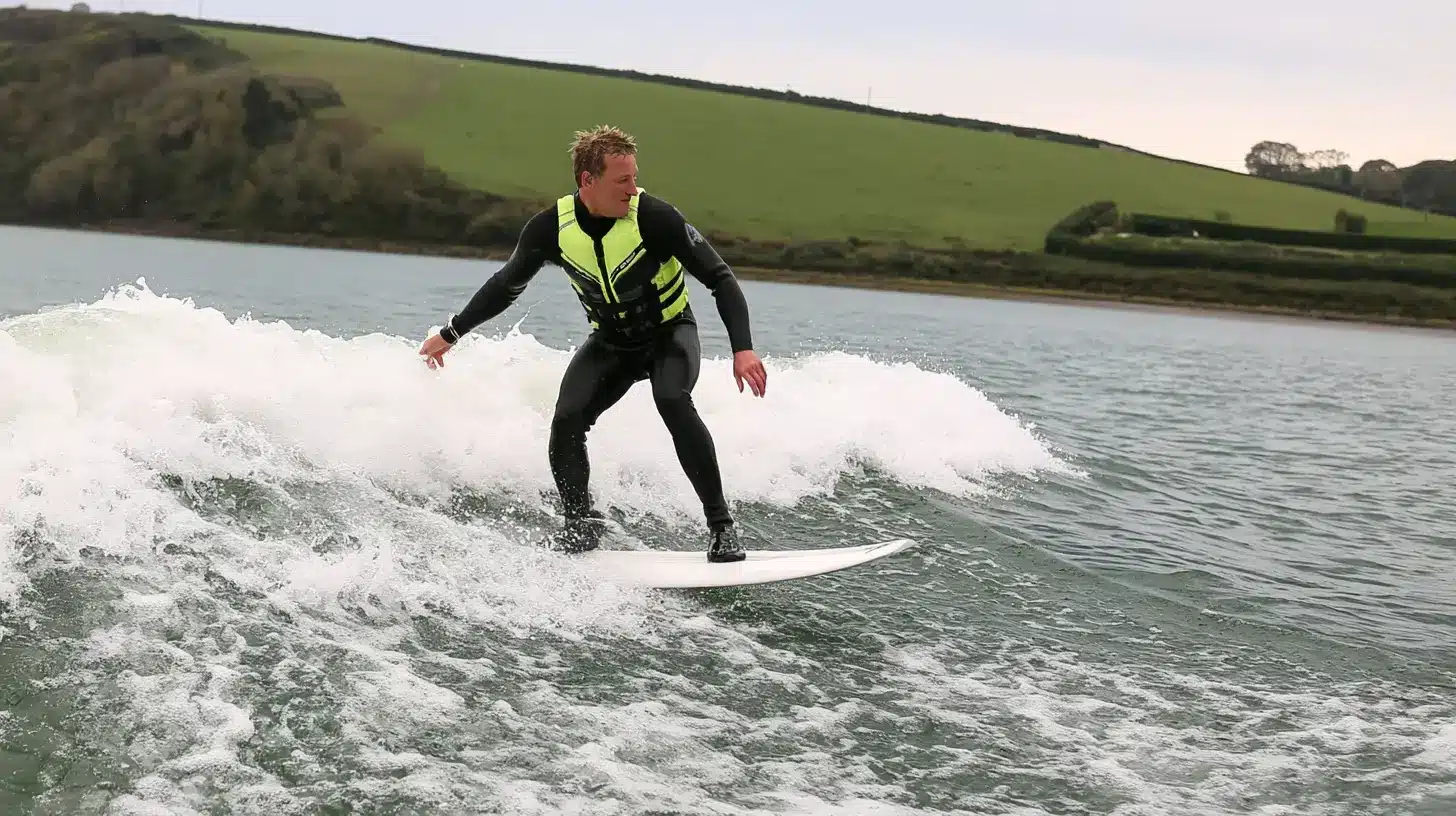
Wake surfing is a water sport where you ride the wave a boat creates, using a board shaped more like a surfboard than a wakeboard. You use the tow rope only to get up.
Once you find the sweet spot on the wave, you toss it back and ride hands-free.
The boat pulls you up out of the water and onto the board.
Once you find your balance and settle into the wave, you let go of the rope and surf on your own, using the wave itself to keep you moving instead of the boat’s pull.
Getting started really comes down to four things. First, you gather the right gear.
Then the boat pulls you up onto the board. Once you’re up, you find your stance and your balance. After that, you drop the rope and start surfing the wave.
What is Wake Surfing?
Wake surfing is a water sport that involves riding the wave that forms directly behind a moving boat. It’s a close cousin of wakeboarding, but the two aren’t the same thing.
With wakeboarding, you stay clipped to the rope the entire time and get pulled at higher speeds.
With wake surfing, the rope is just there to help you stand up. Once you’re riding the wave, you drop it and surf under your own balance, closer to the back of the boat than most people expect.
What You Need to Wake SurfBefore you get in the water, here’s the basic gear list that will get you started safely and comfortably.
Once you’ve got this gear together, you’re ready to move on to actually getting up on the board. |
How to Wake Surf Behind a Boat for the First Time
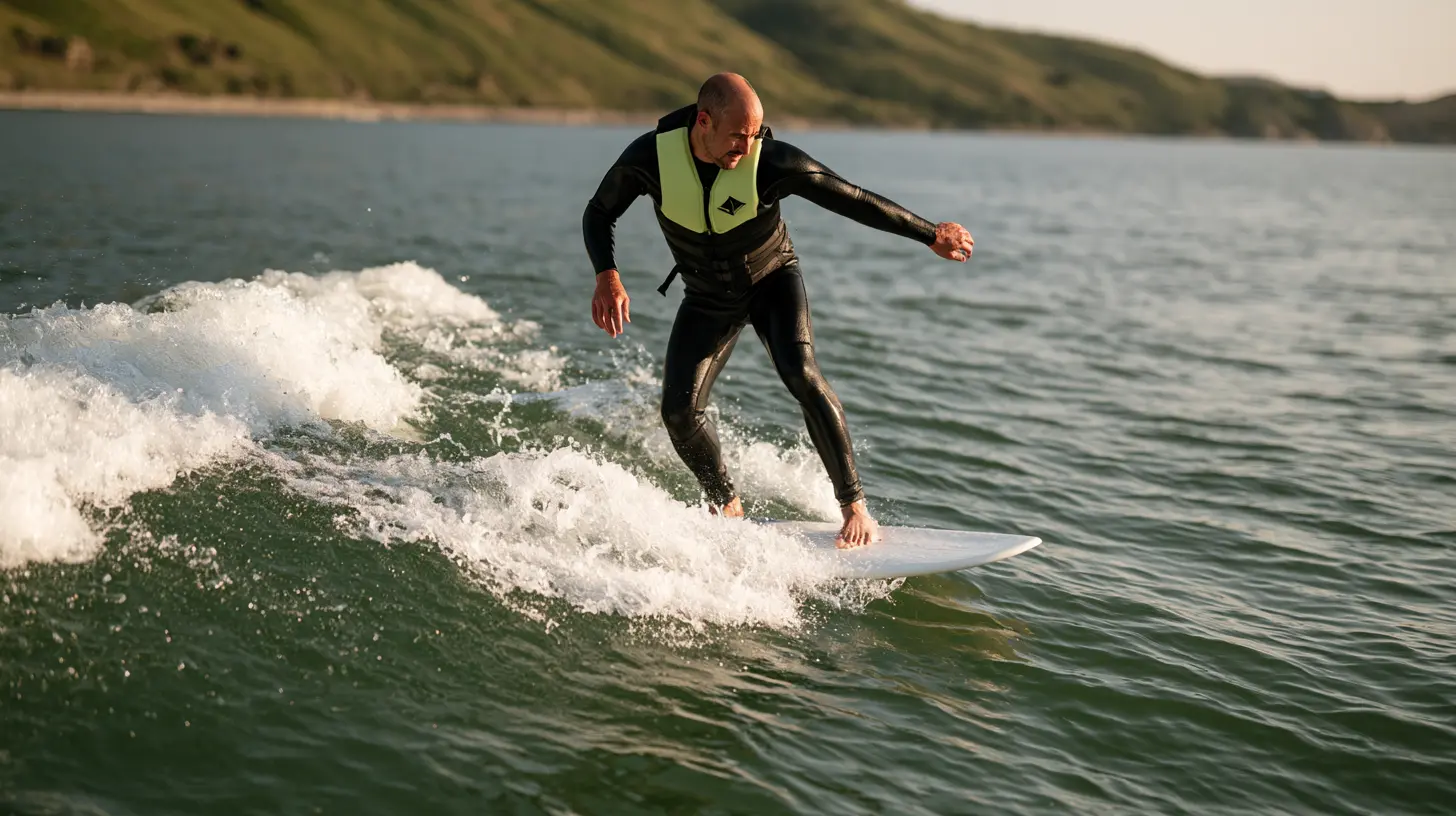
Getting up and riding your first wave breaks down into a handful of steps.
I’ve found that sticking to this same order every time shortens the learning curve, since your body starts to recognize the pattern.
Step 1: Gear Up
Put on a properly fitted life jacket, grab your beginner-friendly wakesurf board, and connect the rope to the boat. Check your fins and rope length before you get in the water; it’s a lot easier to fix on the dock than mid-ride.
Step 2: Set the Boat Speed and Rope Length
For most beginners, a boat speed of 10 to 13 mph creates a clean, surfable wave, though this can shift slightly depending on the boat and the rider’s weight. Keep the rope short enough that you’ll sit near the front of the wave, not too far back and not crowding the boat.
Step 3: Get Into Position in the Water
Sit in the water with your knees bent, heels resting on the edge of the board, and toes pointed up. Hold the rope handle with both hands and keep the board steady and perpendicular to the boat.
Step 4: Stand Up as the Boat Pulls You
As the boat starts moving, let the board rise up to meet your feet instead of pushing down into it. Keep your knees bent and your heels close to your body. If the board shoots out from under you, that’s usually a sign you pushed too hard, too early. Stay low, stay patient, and let your weight shift forward naturally.
Step 5: Find Your Stance and Balance
Set your front foot closer to the nose of the board and your back foot near the tail. Your front foot controls speed, and your back foot helps you slow down or hold your balance as you settle in.
Step 6: Drop the Rope and Settle Into the Wave
Once you feel the wave carrying you on its own, toss the rope back toward the boat or off to the side. This is the moment wake surfing is really about; it’s just you, your board, and the wave doing the work.
Step 7: Control Your Speed and Stay in the Pocket
To stay locked into the wave, shift your weight from one foot to the other. Turning slightly up the face of the wave, then back down, helps you hold a steady speed instead of drifting out of the pocket.
The more time you spend on the water, the faster your timing and balance come together. Next, let’s cover the mistakes beginners run into most, so you can skip a few frustrating sessions.
Common Beginner Mistakes to Avoid
Even when you follow every step, a few habits tend to trip up beginners. Knowing what they are ahead of time makes it easier to catch yourself before they become patterns.
- Standing Up Too Fast: Rushing the stand-up almost always ends in a backward fall. Let the boat do the lifting instead of forcing it with your legs.
- Leaning Back Too Far: Too much weight on your heels pushes the board down and drags you away from the wave instead of into it.
- Not Communicating With the Driver: Skipping hand signals or clear calls to the driver can lead to sudden speed changes or an uneven wake right when you need it steady.
Steering clear of these three alone will save you a good number of falls, and a good bit of frustration, in your first few sessions.
Wake Surfing Safety TipsWake surfing is a blast, but safety comes first, every time you get on the water.
Sticking to these basics significantly reduces your risk of injury. Next, let’s run through a few questions beginners ask most often. |
Final Thoughts
Learning to wake surf really comes down to patience and repetition. Your first few tries might feel shaky, and that’s completely normal; nobody rides clean on their first attempt.
Every session teaches your body a little more about balance and how to read the wave underneath you.
Stick to the basics, stay calm on the board, and let the boat do the work while you focus on standing up smoothly. Before long, you’ll be riding waves and dropping the rope like it’s second nature.
Grab your board, get out on the water, and give it a shot this weekend. The more you practice, the quicker it clicks.
Frequently Asked Questions
How Long Does It Take to Learn to Wake Surf?
Most beginners get up and riding within a few tries, often within one or two sessions on the water.
What Speed Should the Boat Go?
Boat speed usually falls between 10 and 13 mph, depending on the rider’s weight, the board, and the boat itself.
Do I Need a Wetsuit?
Not always, but a wetsuit adds warmth and a bit of cushioning if you’re riding in cold water or expect to fall a fair amount early on.
Can Kids Wake Surf?
Yes, kids can wake surf with proper supervision, a well-fitted life jacket, and a beginner-friendly board sized for their weight.
Do You Need a Special Boat to Wake Surf?
Yes. Wake surfing requires an inboard direct drive boat or V-drive engine, since riders stay close to the stern and propeller. Outboard and sterndrive boats create safety risks and generally can’t produce a clean, surfable wake.