
Someone asks how many laps are in a mile of swimming almost every week at the pool.
Usually they’re standing at the wall, doing math in their head, trying to figure out how many times they need to go down and back before they can call it a mile.
Truth is, there’s no single number. It comes down to your pool, and honestly, half the confusion isn’t even about the math.
It’s that laps, lengths, and miles don’t mean the same thing to everyone who says them.
So here’s what I’ve put together: the real numbers for the pools you’ll actually swim in, plus a formula so you’re not stuck guessing next time.
Quick Answer: How Many Laps Are in a Mile?
If you just need the number, it is: 70 lengths for a 25-yard pool, which is 35 laps.
Switch to meters, and it drops. A 25-meter pool only needs 64 lengths, 32 laps. And an Olympic-length pool? Just 32 lengths total. Sixteen laps, because each wall is twice as far from the last one.
| Pool Length | Lengths in 1 Mile | Laps (Down & Back) |
|---|---|---|
| 25-yard pool | 70.4 | 35.2 |
| 25-meter pool | 64.4 | 32.2 |
| 50-meter pool | 32.2 | 16.1 |
Nobody actually swims a partial length, so most swimmers round up to 36 laps in a yard pool. That way it’s easy to know how many laps are left to finish the mile.
One thing worth flagging before you build a workout off these numbers: some pools and swim watches call a single length a “lap.” Check yours first, or you’ll end up way off from what you planned.
What Is a Lap in Swimming?
Before calculating how many laps make a mile, it helps to understand what a “lap” actually means. Many swimmers use the terms lap and length interchangeably, but they don’t always refer to the same thing.
Lap vs Length
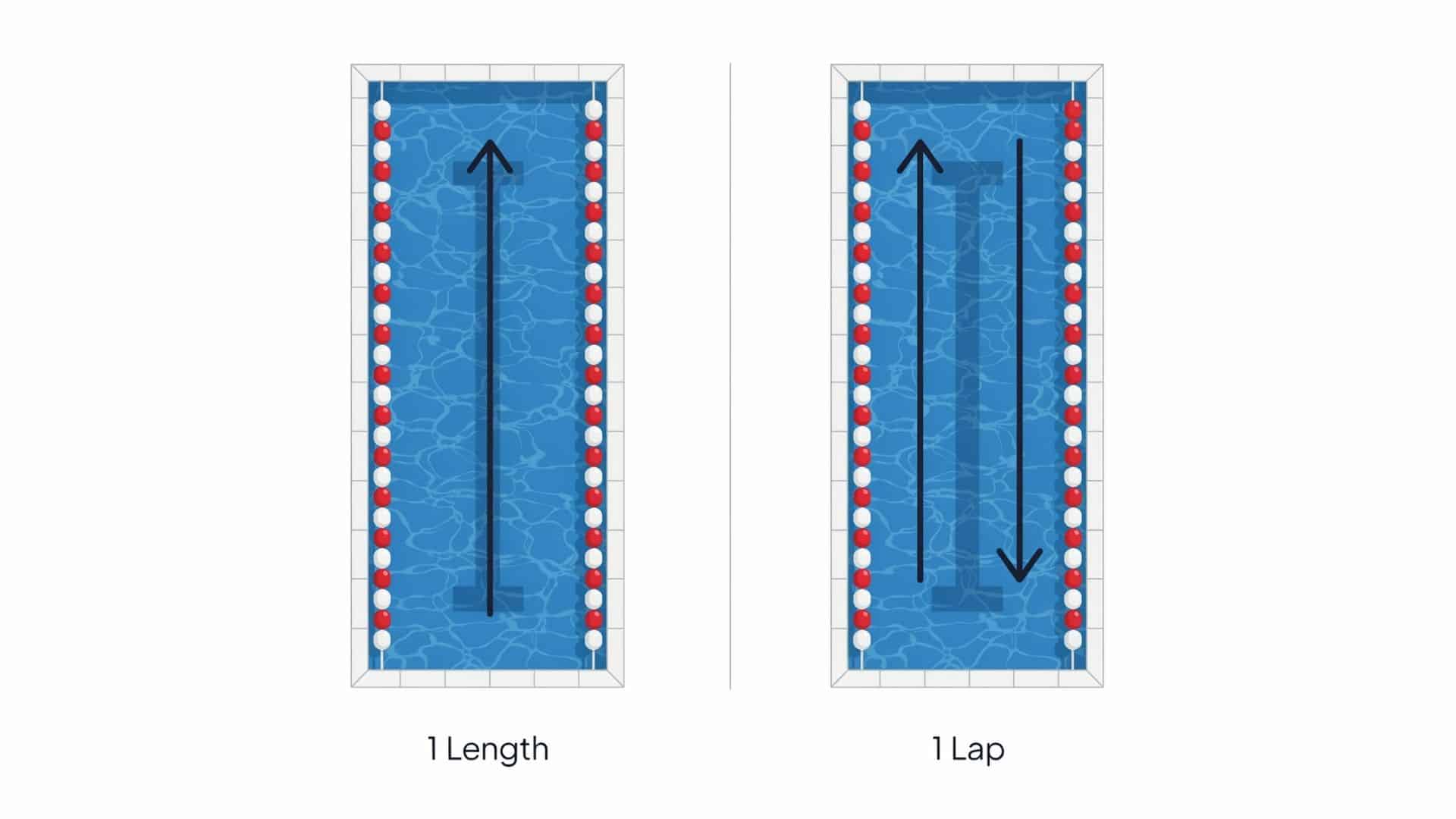
A length is one trip across the pool. Wall to wall, that’s it. A lap, at least the way it’s defined here, means going down and coming back. So one lap equals two lengths. This trips people up more than you would think, especially when a coach yells out a number that does not match what you counted.
Why the Definition Matters
Not everyone agrees on this. Some pools count every length as a lap. According to U.S. Masters Swimming, competitive circles often use the down-and-back version defined here, while others treat one length as one lap.
Neither is wrong, honestly; they are just different habits from different facilities. But it matters for your training because getting it backward means you either swim half of what you meant to, or double it without realizing.
How Many Laps Are in a Mile for Different Pool Sizes?
25-Yard Pool (Short Course Yards)
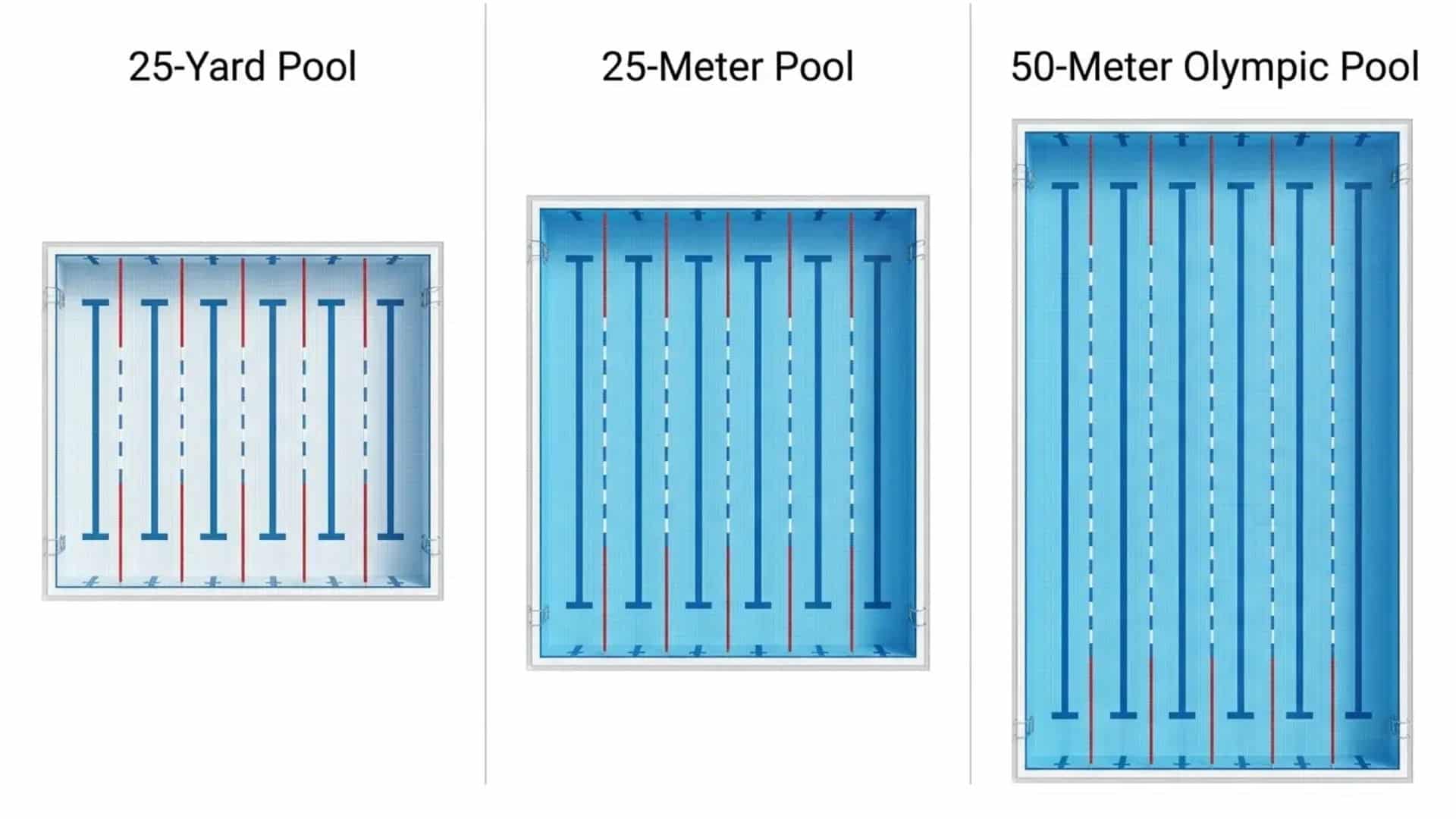
This is the pool most people have swum in from lessons or high school. Most gyms and community centers in the US default to this length. A mile works out to about 70 lengths, or 35 laps.
25-Meter Pool (Short Course Meters)
These show up more outside the US, and at some international training centers here, the kind of pool often shared with water polo lap drills during off-peak hours.
A mile comes to around 64 lengths, 32 laps. Slightly fewer laps than the yard pool, since a meter is a little longer than a yard.
50-Meter Olympic Pool (Long Course)
This is the pool from the Olympics, the one on TV every four years. Each length covers double the ground of a 25-meter pool, so the lap count drops fast. A mile here is roughly 32 lengths, or 16 laps.
| Pool Length | Lengths per Mile | Laps per Mile |
|---|---|---|
| 20-yard pool | 88 | 44 |
| 25-yard pool | 70.4 | 35.2 |
| 25-meter pool | 64.4 | 32.2 |
| 50-meter pool | 32.2 | 16.1 |
Swimming Mile vs. Metric Mile
This trips up plenty of swimmers. Runners and swimmers don’t use the same mile.
If you’ve looked up swimming distances before, you’ve probably come across the term metric mile. Although it’s called a mile, it isn’t the same distance as a standard land mile.
A metric mile is 1,500 meters and is the standard distance used in competitive swimming events like the 1,500-meter freestyle.
Swum out, that’s 60 lengths, or 30 laps, in a 25-meter pool, and 30 lengths, or 15 laps, in a 50-meter pool, about 6.8% shorter than a true mile.
A swimmer’s mile, commonly used in 25-yard pools, is 1,650 yards. That works out to 66 lengths, or 33 laps, roughly 6.25% shorter than a true mile. Both fall a little short of a standard mile, but they’ve become the accepted benchmark distances in the swimming world.
For most recreational swimmers, the difference is small and won’t change everyday swim workouts. But if you’re training for a race or following a competition-based training plan, it’s important to know which distance your program refers to before planning your swims.
How to Calculate How Many Laps Make a Mile
There is a simple formula behind all of this, and once you know it, you don’t need a chart.
Number of lengths = Total distance ÷ Pool length
If you count laps as a round trip, just take that number and divide by two.
Here is what that looks like for a true mile, 1,609 meters or 1,760 yards:
25-yard pool: 1,760 ÷ 25 = 70.4 lengths, or 35.2 laps.
25-meter pool: 1,609 ÷ 25 = 64.4 lengths, or 32.2 laps.
50-meter pool: 1,609 ÷ 50 = 32.2 lengths, or 16.1 laps.
Swimming Lap Conversion Chart
Here is a chart for other distances you might be training for, not just the mile.
| Distance | 25 yd (lengths) | 25 m (lengths) | 50 m (lengths) |
|---|---|---|---|
| 500 m | 21.9 | 20 | 10 |
| 800 m | 35 | 32 | 16 |
| 1,000 m | 43.7 | 40 | 20 |
| 1 mile (1,609 m) | 70.4 | 64.4 | 32.2 |
| 2 miles (3,218 m) | 140.8 | 128.7 | 64.4 |
Tips for Keeping Track of Your Laps
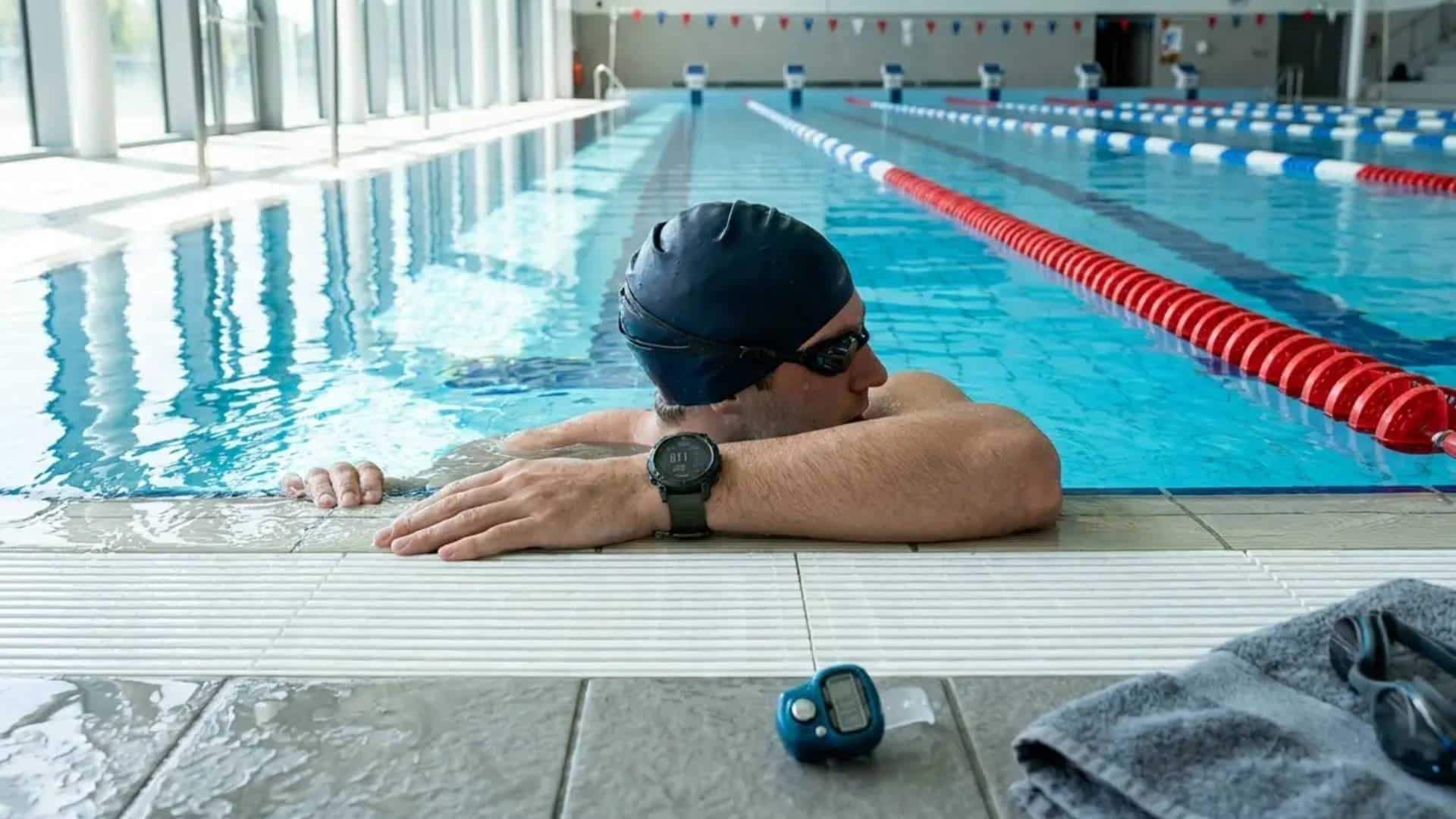
Losing count on a long swim happens to just about everyone at some point, usually once the mind starts to wander around lap 20. A swim watch handles this automatically if you want to stop thinking about it altogether.
Breaking the mile into smaller chunks helps too. Four rounds of 400 meters feels a lot less daunting than staring down 1,600 meters straight through, and it gives you a natural place to check in on your count.
Sharpening your swim stroke efficiency technique also cuts down how often you lose count, since smoother turns and steadier breathing keep your mind on the swim instead of the math.
Finger counters work if you would rather keep it simple and skip the tech. Clip one on, click it every time you touch the wall.
Whatever you use, stay consistent about when you count, whether that is on the push-off or the wall touch. Following a set plan instead of just swimming straight through makes the whole thing easier to track and easier to pace.
Final Thoughts
At the end of the day, how many laps make up your mile depends on two things. Your pool length, and how you are defining a lap. Once you have those locked down, it is just simple math.
Keep the formula or a chart like this one nearby, and you can figure out any distance, not just a mile, from your first lap session to a full training block down the road.
Next time you head to the pool, check the length on the wall and decide how you are counting before you push off. Small step, but it saves you from losing track halfway through your set.
Frequently Asked Questions
Is 64 Laps a Mile?
Depends on the pool. In a 25-meter pool, 64 laps (down and back) is nearly two miles, since a true mile is closer to 32 laps there. If “lap” means one length instead, 64 gets close to a mile.
How Many Laps are in an Olympic Swimming Pool?
About 32 lengths, or 16 laps, since each length is 50 meters. That’s roughly half the laps needed in a standard 25-yard pool.
Is Swimming a Mile Harder than Running a Mile?
Hard to compare directly. Water resistance works the arms, core, and lungs in ways running doesn’t, and most swimmers say the pool mile feels longer, even if the clock says otherwise.
How Long Does it Take to Swim a Mile?
Roughly 40 to 60 minutes for newer swimmers, closer to 30 for fitter recreational swimmers, and under 20 for competitive swimmers.
How Many Calories Do You Burn Swimming a Mile?
Usually 400 to 700 calories, depending on weight and effort. Butterfly and hard freestyle burn more than a relaxed breaststroke pace.