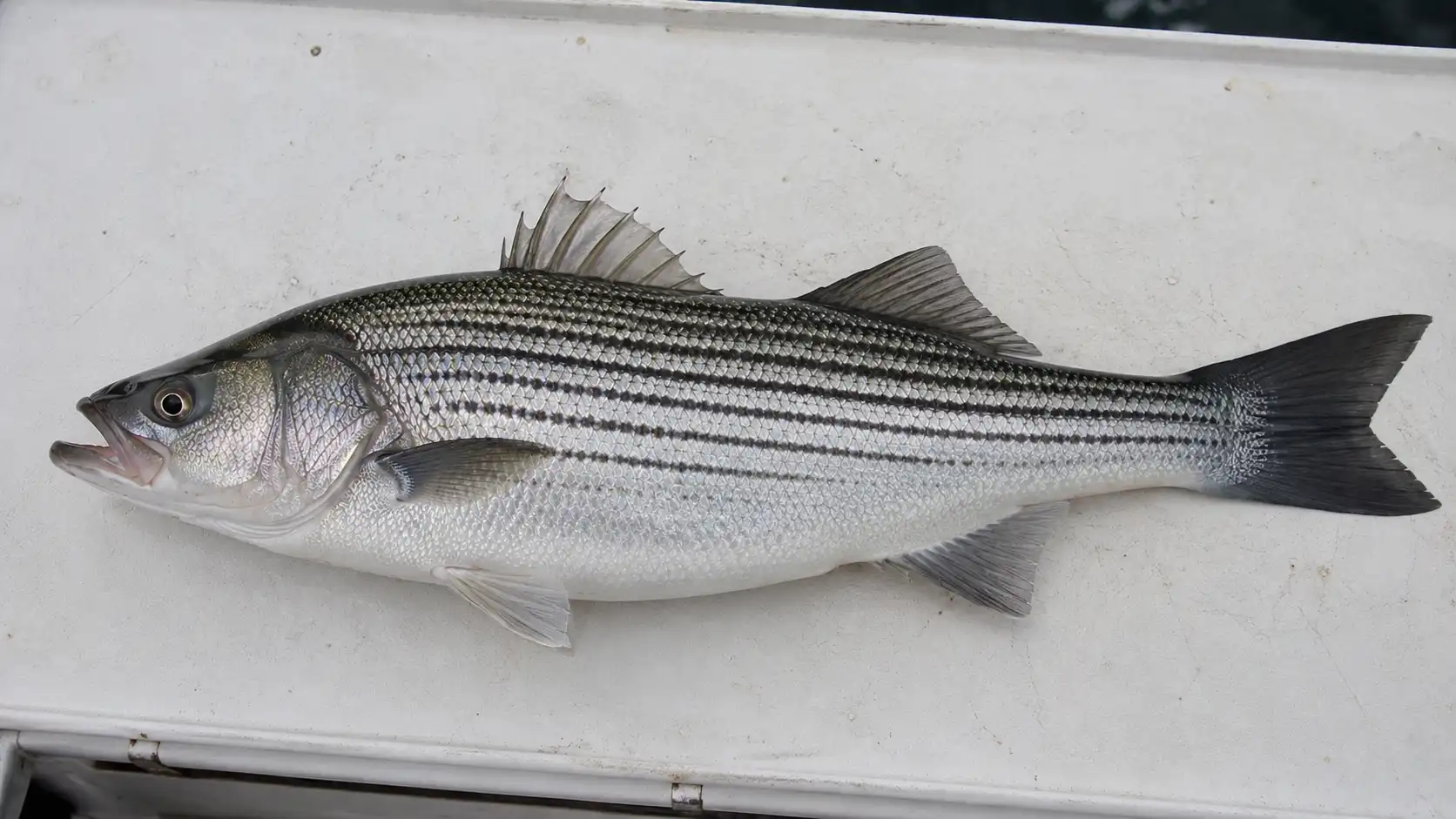
Striper fish, or striped bass (Morone saxatilis), also commonly called rockfish, linesider, or Atlantic striped bass, are one of the most sought-after sport fish in freshwater reservoirs.
Native to the Atlantic coast from Georgia to Maine, they are anadromous by nature, spawning in freshwater rivers before returning to salt water.
Fisheries departments have since stocked them widely in landlocked reservoirs, where they thrive and grow to impressive sizes.
Anglers target stripers for the hard fight they put up and the challenge of tracking them across open water.
From major reservoirs to local lakes, the same core approach puts more fish on the line.
What is a Striper Fish?
Striped bass are native to the Atlantic coast of North America, ranging from the St. Lawrence River in Canada down through the Gulf of Mexico.
They are anadromous by nature, meaning they spawn in freshwater rivers, but fisheries departments have stocked them widely in artificial reservoirs across the United States.
Freshwater and saltwater striped bass are the same species, but landlocked fish tend to run smaller, with most weighing between 5 and 20 pounds.
Some top reservoirs do produce trophy fish over 40 pounds. The striped bass holds the honor of being a state fish or state saltwater fish in at least six US states.
Anglers target them for the hard fight they put up and the challenge of tracking them across open water.
They are pelagic fish that live within the water column rather than holding around cover, which makes locating them a real skill.
Freshwater Striper Fish HotspotsThese are some of the most popular and proven freshwater striped bass destinations across the United States.
|
How to Catch Striped Bass in Freshwater

Catching striped bass in freshwater takes a clear plan. Work through these steps to set yourself up for success.
Step 1: Find open water near schools of baitfish. Stripers usually go where their food goes. Looking for schools of baitfish, such as shad, is often one of the best ways to locate them in any reservoir.
Step 2: Match your depth to the season. In summer, go deep; in spring and fall, stripers move shallower.
Step 3: Choose live bait first. Shad, herring, and skipjack are the top choices in most USA reservoirs.
Step 4: If live bait is not available, switch to swimbaits or spoons that match the local forage fish in size and color.
Step 5: Work your presentation horizontally. Stripers want the bait swimming almost horizontally rather than vertically jigged.
Step 6: Time your session around dawn or dusk for the best bite windows.
Stick to this order on every outing, and you will spend less time searching and more time with a bent rod and a striper on the line.
The more time you put in reading the water and matching conditions to your approach, the faster your results will improve.
Where to Find Striper Fish in Freshwater
Striped bass prefer cleaner water and tend to move away from muddy areas. In summer, look for the deepest, coolest water in the lake, such as main-lake basins and deep creek channels.
Drop-offs near the dam faces hold stripers year-round because of the cooler, oxygenated water.
Current breaks below dams are also reliable spots where baitfish stack up, and stripers follow.
In warm water, stripers are more active in the early morning and evening.
As temperatures cool in fall, fish move into shallower open water to feed more freely.
Baitfish movement is your best tool for locating. Watch the surface for nervous water or bird activity, and scan with sonar to find the depth where baitfish schools are holding.
Seasonal depth changes in reservoirs are steady and predictable once you know the water.
Best Time to Catch Striper Fish
Striper fish follow predictable seasonal patterns, and knowing those patterns puts you in the right spot at the right time.
Plan your trips around these windows, and you will find active fish far more often.
- Spring pre-spawn feeding: Stripers become more active as water warms above 45°F. They move shallower to feed while remaining in open-water areas.
- Summer deep-water patterns: The higher the surface temperature, the deeper you will find stripers. They move into deep basins and main-lake areas.
- Fall blitz feeding season: Peak activity. Stripers feed hard before winter in shallow open water, and surface blitzes are common.
- Dawn and dusk feeding windows: In warm waters, stripers bite best in the early morning and evening. At Lake Texoma, for example, there is a 45-minute to one-hour window at first light before the sun heats the water and fish move off.
Seasonal timing is one of the biggest factors separating consistent anglers from those who struggle to find fish.
Fish the right window, and the striper bite can be fast and steady.
Best Bait and Lures
In most reservoirs, threadfin shad and gizzard shad top the menu for striped bass.
Blueback herring and skipjack herring are also key forage, particularly in southern reservoirs.
Skipjack herring are often preferred by anglers wherever available, as larger stripers tend to favor them.
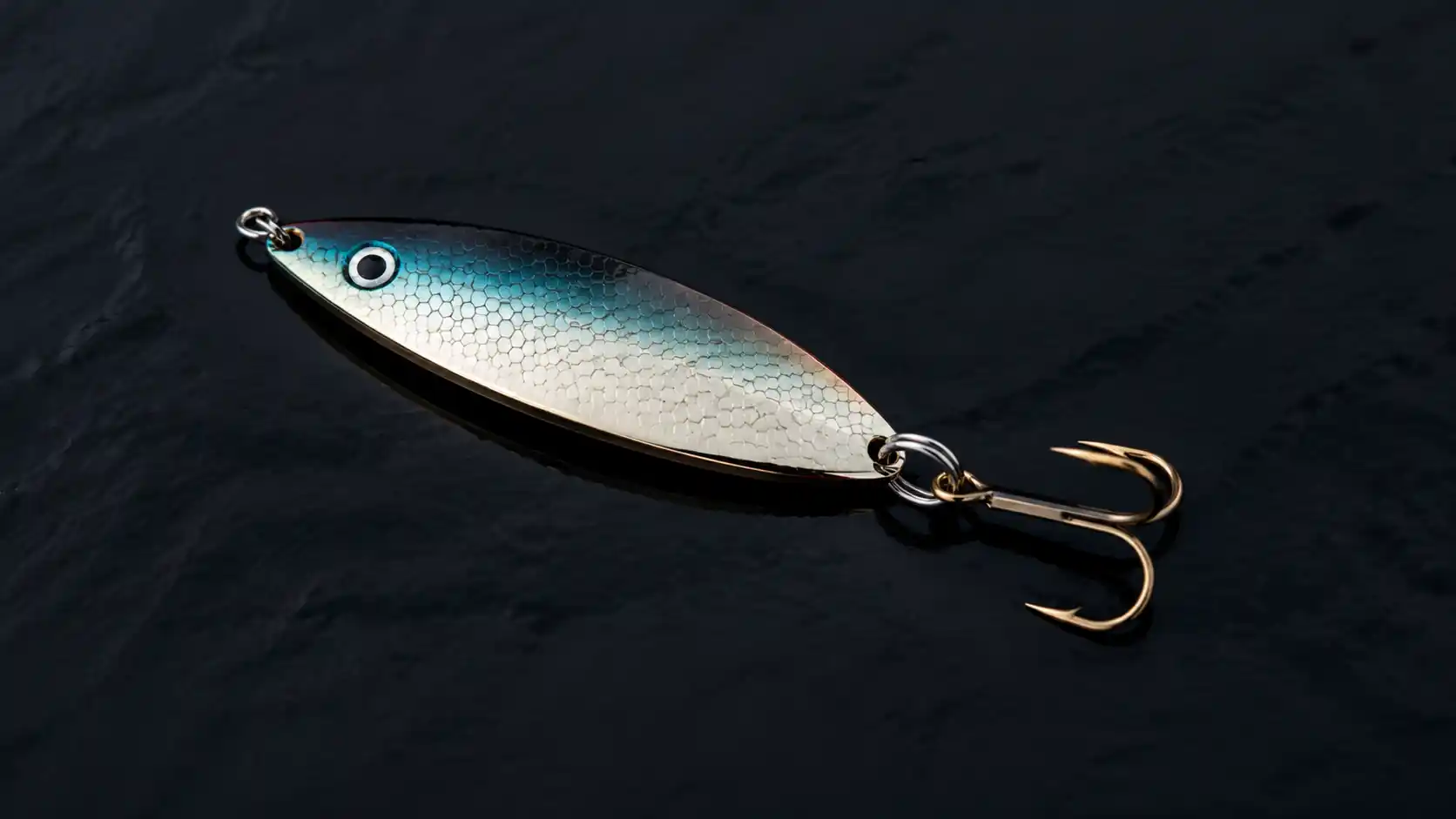
For artificial options, a 4- to 6-inch spoon is hard to beat for warm-season stripers in open water.
It can be cast a long distance and sinks fast. Soft plastic swimbaits in shad-type colors are popular for subsurface fish.
For deeper fish, spoons and bucktail jigs work well. Lures should look like the local baitfish, whether that is threadfin shad, gizzard shad, or rainbow trout.
Topwater walking baits work well during surface blitzes in low-light conditions.
Rod and Reel for FishingGood gear makes a real difference when a 20-lb striper runs hard.
|
The Striper Feeding Signal System
Learning to read pre-bite signals puts you on fish before anyone else.
When stripers push baitfish to the surface, diving birds are the clearest sign of active feeding.
Seagulls and terns circling low over the water often mark a blitz before it fully breaks.
Wind-driven current concentrates baitfish along windward banks and points, pulling stripers in behind them.
Stripers prefer water between 55°F and 68°F. When water hits that range in spring or fall, feeding activity picks up. Watch for nervous water at the surface, where baitfish scatter in quick bursts just before stripers push up from below.
A surface feeding window at daylight typically lasts 45 minutes to one hour before heat or light pushes fish back down.
Being on the water at first light, with gear ready, is the best way to make the most of these short, productive windows.
Proven Techniques to Catch Striped Bass
Matching your technique to the conditions on the water is what puts stripers in the boat consistently. Each method below works best in specific situations, so pick the one that fits your conditions.
| Technique | Best Condition | Key Tip |
|---|---|---|
| Trolling | Open water, unfamiliar lake | Drag 2 to 4 lures behind the boat at varying depths |
| Vertical jigging | Deep water, winter slowdown | Use electronics to pinpoint the exact depth before dropping |
| Casting into schools | Active surface schools | Cast ahead of the school, retrieve horizontally |
| Drifting live bait | Current breaks near dams | Use a three-way rig with live shad or herring |
| Topwater | Early morning shallow feeds | Walking baits like a Zara Spook work best at first light |
Rotate between these techniques as conditions shift through the day or season.
Anglers who adapt their approach rather than sticking to one method will consistently catch more fish.
Using Electronics to Locate Striper Fish
Modern fish finders and depth sounders have changed how anglers locate striped bass in open water.
A quality sonar unit lets you mark baitfish schools and identify the depth where stripers are holding before a cast.
Look for dense baitfish clouds in the water column, then watch for larger arcs sitting just below them.
Those arcs are strippers. Down-imaging and side-imaging sonar cover more water faster on large reservoirs.
According to the U.S. Geological Survey, side-scan sonar effectively detects fish distribution across open-water systems. Pair sonar readings with bird activity and nervous water for faster results.
Common Mistakes When Fishing
Even experienced anglers lose fish time by making the same avoidable errors. Knowing what not to do is just as important as knowing the right technique when targeting striped bass.
- Wrong depth selection in summer: The hotter the surface, the deeper stripers go. Fishing shallow in summer means missing the main school entirely.
- Ignoring baitfish movement: Stripers follow bait. If you are not reading the water for shad schools or bird activity, you are fishing blind.
- Poor lure sizing: Lures should match the size of the local baitfish. If the fish are eating large gizzard shad, a small swimbait will get ignored.
- Fishing at low-activity times: Midday in summer is the worst time to fish. Dawn, dusk, and overcast days produce far better results.
Cutting out these mistakes will save you hours of unproductive fishing and put you on fish faster.
Small adjustments in depth, timing, and lure choice add up to a much better day on the water.
Can You Eat Striped Bass?
Striped bass are good eating when handled properly. The flesh is white, firm, and mild, with wild fish carrying a slightly stronger flavor than stocked fish.
The national average mercury level in striped bass is 0.27 ppm, just under the EPA’s freshwater fish criterion of 0.30 ppm.
Older, larger fish accumulate more mercury, so it is wise to release trophy-size stripers and keep fish in the 18- to 24-inch range for eating.
Bag limits and size rules change by state, so always check your state fish and wildlife agency before you keep fish.
In terms of cooking, striped bass holds up well to grilling, baking, and pan-searing.
Removing the skin and trimming the darker lateral line meat reduces strong flavors and cuts down on fat, where contaminants can concentrate.
Note: The FDA’s separate action level for commercial fish is set higher, at 1.0 ppm.
Final Thoughts
Catching striper fish in freshwater is about matching your approach to the season, depth, and local baitfish.
Fish deep in summer, shallow in spring and fall, and always follow the shad.
A solid rod-and-reel setup with braided line and a fluorocarbon leader gives you the backbone to handle hard runs.
Watch for bird activity and surface disturbance to predict feeding windows before they start.
Whether you fish Lake Texoma or a local reservoir, the same core approach applies.
Start with live shad, work the right depth, and get on the water at first light.
Try these tips on your next outing and see how quickly your striper count climbs.
Frequently Asked Questions
What is the Best Hook Size for Striper Fish in Freshwater?
Circle hooks in the 5/0 to 10/0 range are standard for live or cut bait, with larger baits requiring bigger hooks. Some freshwater fisheries also require the use of circle hooks by regulation.
Do Freshwater Striper Fish Reproduce Naturally in Lakes?
In most freshwater systems, stripers lack the necessary habitat to spawn successfully. Lake Texoma and Kerr Lake in Virginia and North Carolina are among the few exceptions where natural reproduction occurs.
What Water Temperature Do Striper Fish Prefer in Reservoirs?
Striped bass prefer water temperatures between 55°F and 68°F and will actively seek out that range whenever possible throughout the year.
How Fast Do Freshwater Striper Fish Grow Each Year?
Striped bass can grow up to 5 feet long and reach 77 pounds over their lifespan of up to 30 years, with males reaching sexual maturity between ages 2 and 4.
Can You Catch Striper Fish from Shore in Freshwater Lakes?
Shore fishing for striped bass works best near structure like points, jetties, and sandbars where baitfish gather, especially during low-light hours at dawn or dusk.