

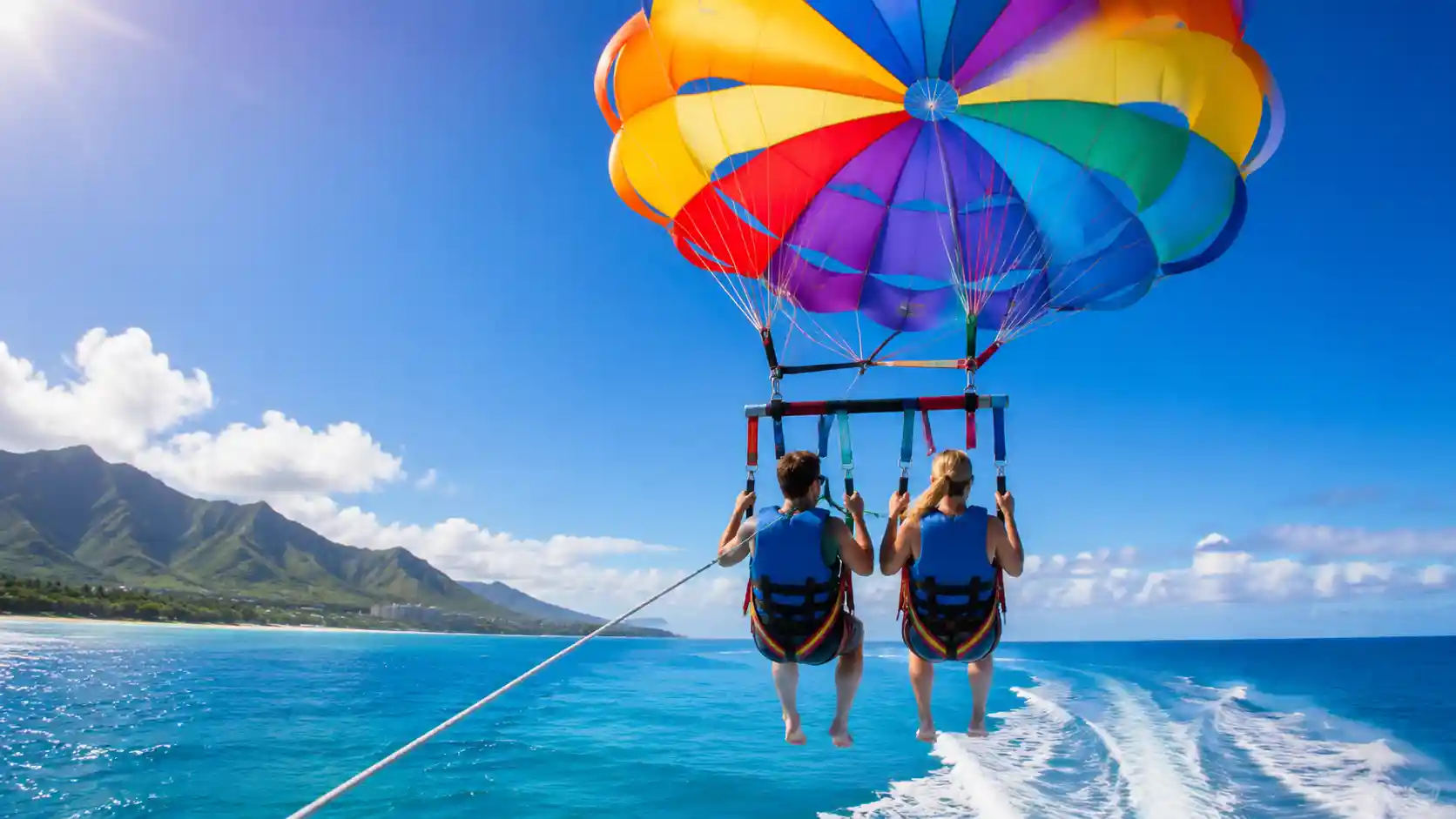
Parasailing safety tips for first-timers can make the difference between a smooth, memorable ride and a stressful one.
Flying above open water while attached to a parachute and towed by a boat sounds intense, but the activity is well-regulated and beginner-friendly when done right.
Most incidents happen not because parasailing is inherently risky, but because riders skip basic safety steps or book with the wrong operator.
Knowing what to expect, what to check, and how to prepare gives you full confidence before your feet even leave the deck.
What does Parasailing Safety mean?
Parasailing involves being towed behind a boat while attached to a parachute and parasail wing.
As the boat gains speed, you are lifted into the air, typically reaching heights between 300 and 500 feet. Most rides last 10 to 15 minutes.
Safety during this process depends on three main things: the crew running the operation, the condition of the equipment in use, and your own preparation before the ride begins.
A trained crew controls boat speed, line tension, and your position throughout the flight.
Regulated gear, including your harness and tow rope, is built and tested to safely carry specific weight loads.
Note: For beginners, the most important factor is choosing the right operator and following their instructions from the moment you arrive. Most rides are calm and quiet once airborne.
Parasailing Safety Tips for First Timers
Knowing a few extra safety tips before your first parasailing trip keeps the experience stress-free from start to finish.
These practical pointers cover what most pre-flight briefings leave out.
1. Stay Hydrated Before You Fly
Dehydration affects your focus and comfort more than most people realize.
Drink water before heading to the dock, but avoid alcohol entirely on the day of your flight.
Alcohol impairs balance and judgment, and operators have the right to turn you away if they suspect you have been drinking.
2. Tell the Crew About Medications
Certain medications cause dizziness, drowsiness, or sensitivity to the sun and motion.
Before your flight, inform the crew of any prescription drugs you take regularly.
This is not about disqualifying you from flying. It helps the crew make small adjustments to your ride height or duration if needed.
3. Keep Your Body Relaxed at Takeoff
Tensing up during takeoff puts unnecessary strain on your body and makes the harness feel tighter than it is. Take slow, steady breaths as the boat picks up speed.
Relaxed muscles help you absorb the gentle lift naturally, and the transition from deck to air feels far smoother when you are not bracing against it.
4. Protect Your Eyes at Altitude
Wind speed increases noticeably once you reach altitude, especially approaching the 400 to 500-foot range.
Bring sunglasses with a secure strap, or wear contact lenses if you are sensitive to wind exposure.
Dry, watering eyes make it harder to enjoy the view and to follow crew signals during your descent.
5. Understand the Cancellation Policy First
Weather cancellations are more common in parasailing than in most water activities.
Before paying a deposit, confirm whether the company offers a full refund or a flexible reschedule window.
Some operators charge cancellation fees even for weather-related postponements.
Knowing the policy in advance protects your money and prevents frustration on the day.
6. Go Earlier in the Day
Booking a morning slot gives you steadier wind conditions, shorter wait times, and cooler temperatures on the boat.
Afternoon sessions often face stronger gusts as the day heats up, which can affect flight stability.
Early slots also give you a buffer to reschedule the same day if the operator experiences a brief weather delay.
7. Listen During the Full Safety Briefing
Many first-timers zone out during the pre-flight walkthrough because the ride looks simple from the dock.
Pay close attention to the hand-signal demonstration, the harness-fitting steps, and the landing sequence.
Staff go through this briefing for a reason, and the few minutes you invest in listening make every part of the experience easier to manage.
Tuck these tips alongside the basics, and you will head into your first parasailing session fully prepared, confident, and ready to enjoy every second in the air.
How to Choose a Licensed Parasailing Operator
Picking a licensed operator with a solid safety record is the single most important step in your preparation. A good company sets the tone for everything that follows.
Before booking, verify that the company holds valid licenses and current insurance, and always choose a business that operates from an established, fixed location.
Read reviews from past riders on platforms like Yelp or social media to get a clear picture of their service and safety history.
A reliable operator will always run a full safety briefing before your flight without skipping steps or rushing through it.
Membership in the Water Sports Industry Association (WSIA) is also a strong sign that the company adheres to strict safety and operational standards.
Red Flags to AvoidSkip any operator that offers no pre-flight safety briefing or uses visibly worn, poorly maintained gear. Always walk away from companies that cannot clearly state their weight and age rules. Never fly with an operator that pressures you to go up in poor or uncertain weather conditions. |
Parasailing Safety Gear and Equipment
Understanding the gear and clothes you wear before you board helps you feel more prepared. These are the key pieces of equipment used during a standard parasailing session:
| Equipment | Purpose | What to Check |
|---|---|---|
| Life jacket | Keeps you afloat in case of a water landing | Must fit snugly; confirm it is US Coast Guard approved |
| Harness | Connects you securely to the parasail | Check for fraying, worn buckles, or loose stitching |
| Tow rope | Links the parasail to the boat | Should show no signs of fraying, kinking, or wear |
| Parasail canopy | Catches wind to lift and carry you | Look for tears, patches, or faded, weakened fabric |
| Boat winch system | Controls how high you go and reels you back in | Should operate smoothly with no grinding or delay |
All parasailing equipment undergoes regular inspections for safety.
If you are unsure about life jacket types, the crew can walk you through the fit before boarding.
Weather Conditions Affecting Your Safety
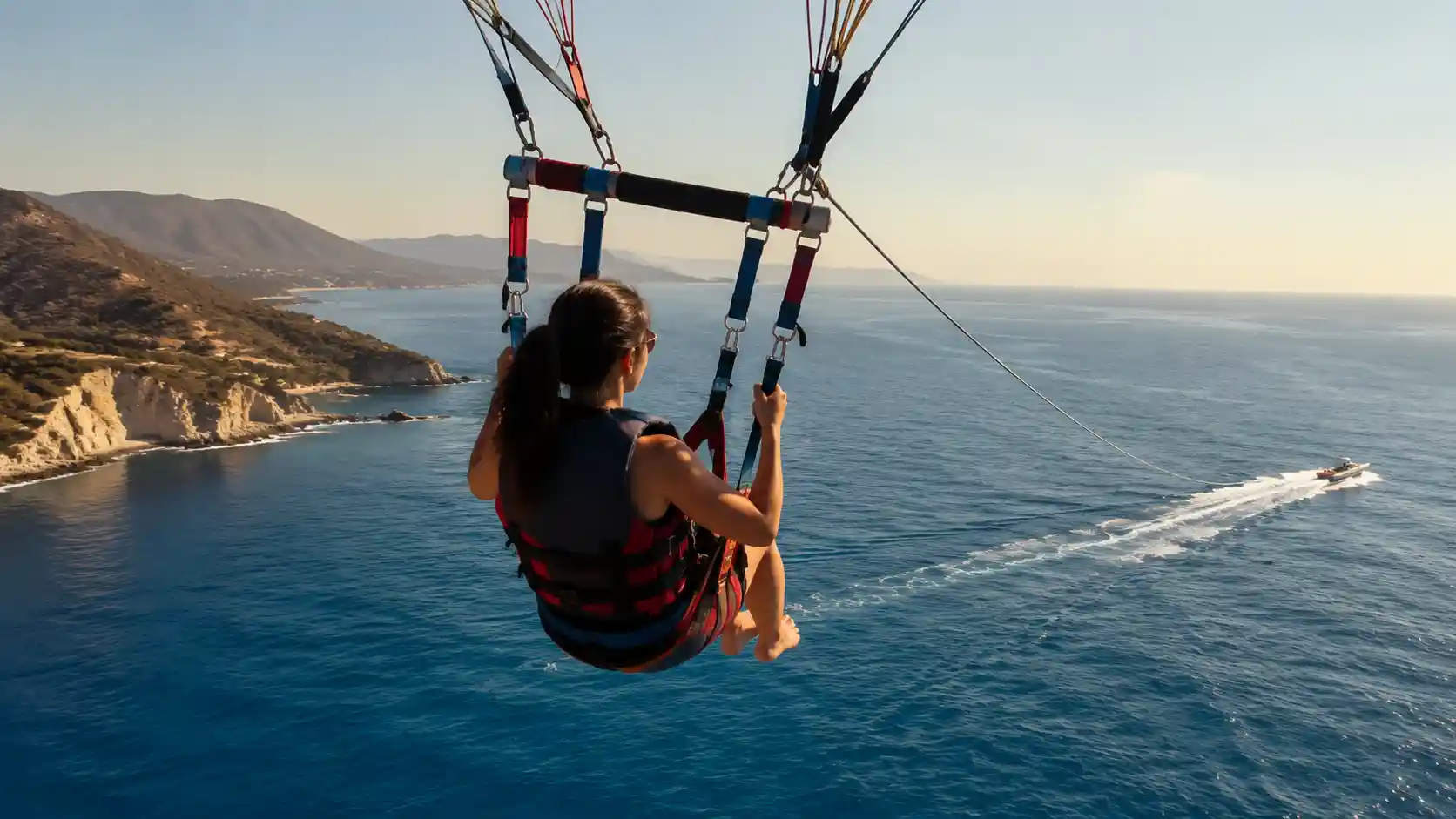
Weather is one of the leading causes of parasailing incidents, and first-timers should understand how conditions affect the ride.
Ideal conditions include clear skies, light winds between 5 and 15 mph, and calm seas.
High winds cause the parasail to spin out of control, so avoid flying in winds over 15 mph, rain, fog, or approaching storm fronts.
Morning and early afternoon are the safest windows because wind speeds tend to be steadier and lower during those hours.
If your operator delays or cancels due to weather, respect that call without pushing back.
A reputable company offers rescheduling or a full refund when conditions are not safe to fly, with no pressure applied either way.
Requirements and Restrictions
Every licensed parasailing operator sets rules around weight, age, and clothing. These exist to keep riders safe, not to create obstacles.
- Weight limits: Harnesses and towlines have rated weight limits. Weight limits vary by operator, though most set individual limits somewhere between 250 and 300 pounds. Always confirm the exact limit with your chosen company before booking.
- Age minimums: Most operators set the minimum age between 6 and 10 years old. Most operators require a parent or guardian to sign a waiver for anyone under 18.
- Health restrictions: Heart problems, recent surgeries, back injuries, and pregnancy are common restrictions that increase risk during takeoff and landing. Always check with the operator about any health concerns before booking.
- What to wear: A swimsuit or quick-drying clothes, with a light jacket. Secure footwear is recommended but may need to be removed before takeoff.
- Items to leave behind: Avoid loose jewelry, open bags, and unsecured items. Sunglasses must have a strap to stay in place during flight.
Reviewing these rules before booking saves time on the day and keeps your group safe from the moment you arrive at the dock.
Sun exposure is stronger at altitude, so apply water-resistant sunscreen for adequate skin protection from UV rays, as recommended by the Skin Cancer Foundation, before you board.
Your First Parasailing Flight from the Start
Knowing the flight process in advance removes most of the anxiety first-timers feel.
On arrival, the crew briefs you on harness fitting, communication signals, and basic dos and don’ts.
Once your harness is checked, you board the boat and head to open water.
The takeoff is a gentle lift as the boat gains speed, not a sudden jolt. The flight is calm and quiet, with a clear view of the coastline below.
The crew uses hand signals throughout to guide your position.
Landing involves the boat slowing down while the winch gradually reels you back, with the crew guiding your feet safely onto the platform.
Parasailing Safety ChecklistUse this checklist before confirming any reservation:
|
Common Parasailing Mistakes to Avoid
A few avoidable mistakes account for most beginner problems on the water. Keep these in mind before and during your session.
- Ignoring safety instructions: Missing or ignoring crew signals is one of the most common mistakes first-timers make. Ask the crew to repeat anything unclear during the pre-flight walkthrough.
- Choosing the cheapest operator: Price should never be your only filter. Research how long the company has been operating and check their full safety track record before booking.
- Underestimating weather risks: Do not assume the operator will always cancel borderline conditions. Check the forecast yourself and raise concerns if something feels off on the day.
- Wearing unsafe or loose items: Loose clothing, unsecured accessories, and open footwear create real hazards during takeoff and landing. Always dress specifically for the activity.
- Panicking during takeoff or flight: The harness keeps you fully secured at all times. Almost every nervous first-timer comes back down smiling once the ride begins.
Going up informed and prepared is the best thing you can do. Small mistakes are easy to avoid when you know what to watch for in advance.
Conclusion
Following the right parasailing safety tips for first-timers puts you in a position to fully enjoy the experience rather than worry through it.
From choosing a licensed operator and checking the gear to dressing appropriately and reading the weather, preparation is what keeps a parasailing session safe and fun.
The actual ride is far calmer than most people expect, and the view makes every step of planning worthwhile.
Book with a company that takes safety seriously, show up for your briefing, and trust the crew once you are in the air.
Do your homework on the operator, confirm the weather, and go with confidence.
Frequently Asked Questions
Is Parasailing Safe for People Who Cannot Swim?
Yes. You do not need to know how to swim to parasail. A life jacket is worn throughout the entire ride for safety.
Can You Parasail Alone on Your First Time?
Yes, solo parasailing is an option. Tandem and triple flights are also available, making it easier for nervous first-timers to fly with a companion.
How Far in Advance Should You Book a Parasailing Trip?
Book at least two to three days in advance during peak season. For large groups, booking four to five days ahead is recommended to secure your slot.
What Hand Signals Do Parasailing Crews Use During the Flight?
Crews use hand and arm signals to communicate changes in speed and retrieval requests. Ask the crew to walk you through all signals before takeoff in case the microphones malfunction.
Should You Avoid Parasailing if You Have a Fear of Heights?
You should not parasail if you panic easily or feel strong discomfort with heights. The experience involves flying hundreds of feet above open water, which may worsen fear responses.





One Response