
There is something relaxing about spending a day on the water, especially on a pontoon boat.
With plenty of space, a smooth ride, and simple controls, these boats are a popular choice for families, anglers, and first-time boat owners.
Even so, learning how to drive a pontoon boat can feel a little intimidating at first. Steering, docking, speed control, and safety can all raise questions for beginners.
Pontoon boats are among the easiest boats to learn on, but there are still a few things to know about pontoon boats before you take the wheel.
From understanding the controls to leaving the dock safely, each step helps new drivers feel more prepared, calm, and ready for time on the water.
What Is a Pontoon Boat?
A pontoon boat is a flat-deck boat supported by two or three large aluminum tubes running along the bottom. These tubes, called pontoons, sit on the water and keep the boat stable and level.
Unlike traditional boats with a V-shaped hull, pontoons sit flat on the surface. This makes them incredibly steady, even when passengers move around.
Most pontoon boats are powered by an outboard motor attached to the back, also called the stern. The motor handles both propulsion and steering, which is one of the first things to understand before you drive one.
Many recreational pontoon boats cruise comfortably between 15 and 25 mph, although speeds vary depending on engine size and boat design.
Things to Know About Pontoon Boats Before You Drive One
Before leaving the dock, take a few minutes to prepare your boat and review basic safety items. A simple pre-departure check can help prevent breakdowns, reduce risks on the water, and make your trip more enjoyable.
Check the Weather Before Going Out
Review the latest marine weather forecast before every trip. Wind, storms, fog, and changing water conditions can affect safety quickly.
Run Through a Pre-Departure Safety Checklist
Before leaving the dock, check your safety gear, fuel, lights, and communication tools so everyone starts the trip prepared.
- Life jackets for every passenger: Ensure a properly sized, U.S. Coast Guard-approved life jacket is available for every person on board before departure.
- Fire extinguisher on board: Verify your fire extinguisher is accessible, fully charged, and suitable for marine use in emergencies.
- First aid kit: Carry a stocked first aid kit with basic supplies to handle minor injuries while away from shore.
- Marine radio or a charged phone: Bring a reliable way to contact emergency services or other boaters if needed.
- Fuel check: Confirm you have enough fuel for the trip, including extra reserve fuel for unexpected delays.
- Navigation lights check: Test all navigation lights before departure to ensure visibility and compliance during low-light conditions.
Good preparation improves safety, helps avoid common boating problems, and allows you to focus on enjoying your time on the water.
How To Drive a Pontoon Boat
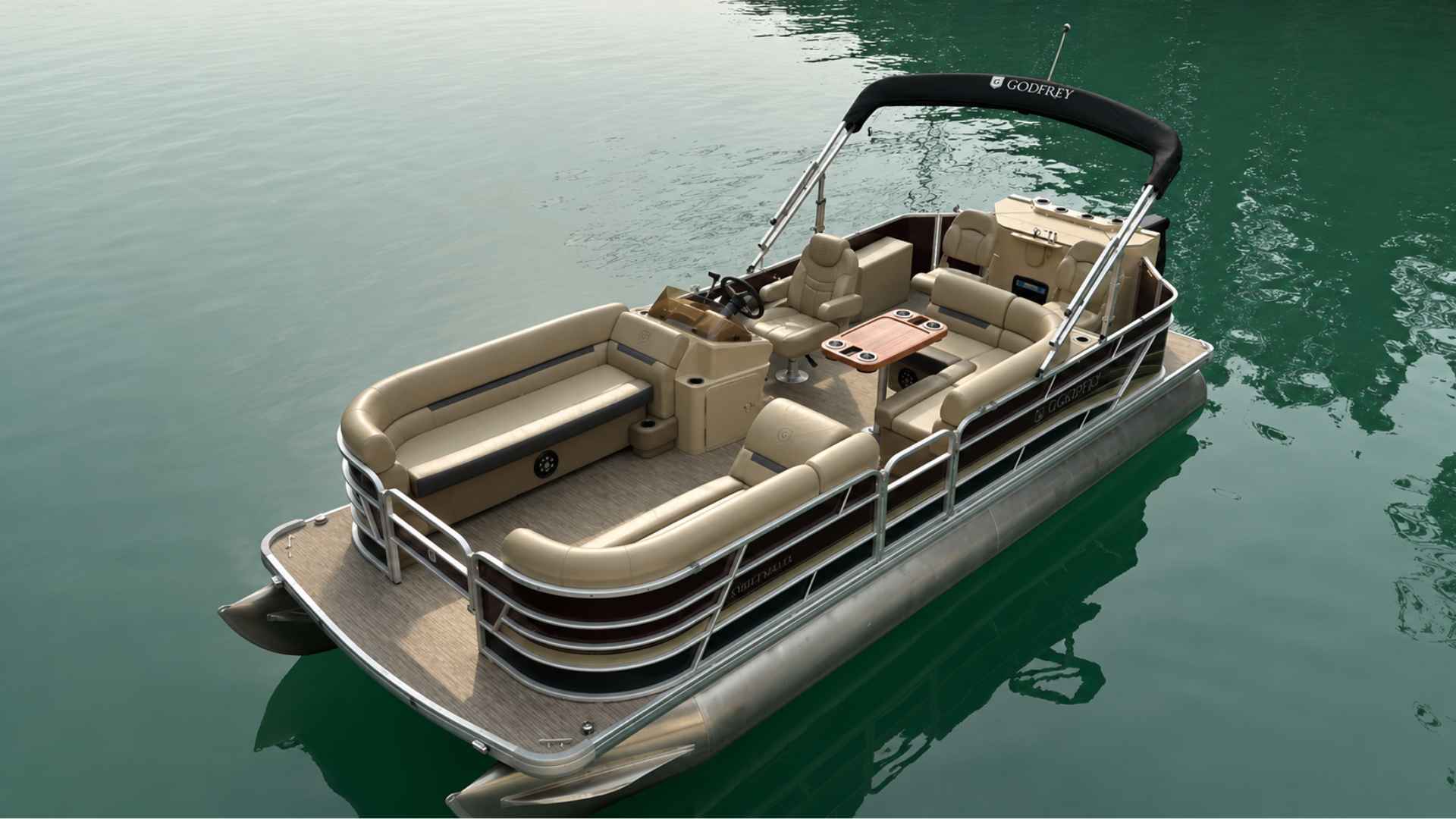
Driving a pontoon boat is easier than many beginners expect, but it takes practice to develop confidence. Learning the controls, handling speed correctly, and understanding how the boat reacts to wind and water conditions will help you stay safe and enjoy your time on the water.
Step 1: Get Familiar With the Controls Before Starting
Before starting the engine, sit in the captain’s seat and take a few minutes to identify all the main controls. Locate the steering wheel, throttle lever, gear selector, ignition switch, and any dashboard gauges.
Check fuel, engine, and battery indicators if equipped. Read any labels around the helm and review the owner’s manual if you’re unfamiliar with the layout.
Step 2: Start the Engine the Right Way
Before turning the key, make sure the battery switch is on and the gear selector is in neutral. Attach the engine kill switch lanyard to your wrist or life jacket so the engine stops if you fall overboard.
Check that the area around the boat is clear, then turn the ignition and allow the engine to idle briefly.
Step 3: Leave the Dock Slowly
Remove and secure all dock lines before moving away from the dock. Shift into gear and apply the throttle gently in short bursts rather than accelerating continuously.
Keep your steering movements small and controlled. Pontoons are heavier and less responsive than smaller boats, so allow extra time for the boat to react to your inputs.
Step 4: Steer and Control Speed on Open Water
Once you’re clear of the marina, gradually increase speed by pushing the throttle forward. Reduce speed by pulling it back toward neutral.
Practice accelerating and slowing down in open water to understand how your boat responds. Make turns early and wider than you would in a car, since pontoons require more space to change direction.
Step 5: Handle Wind and Current
Wind and current can affect a pontoon boat more than many new boaters expect. The large side profile acts like a sail, allowing strong winds to push the boat sideways.
Watch how the boat drifts and make steering corrections early. Small adjustments made in advance are usually more effective than sudden movements at the last moment.
Step 6: Drive in Reverse
Operating in reverse can feel awkward at first because the boat handles differently than when moving forward. Practice in a wide, open area away from docks and other boats.
Use short bursts of throttle instead of constant power. As a general rule, steer opposite the direction you want the bow to move and make small adjustments as needed.
Step 7: Dock the Boat
Approach the dock slowly and at a shallow angle to maintain control. Reduce speed well before reaching your stopping point and avoid making sudden steering movements.
If necessary, shift briefly into reverse to slow the boat further. Once alongside the dock, secure the boat with properly tied lines before turning off the engine.
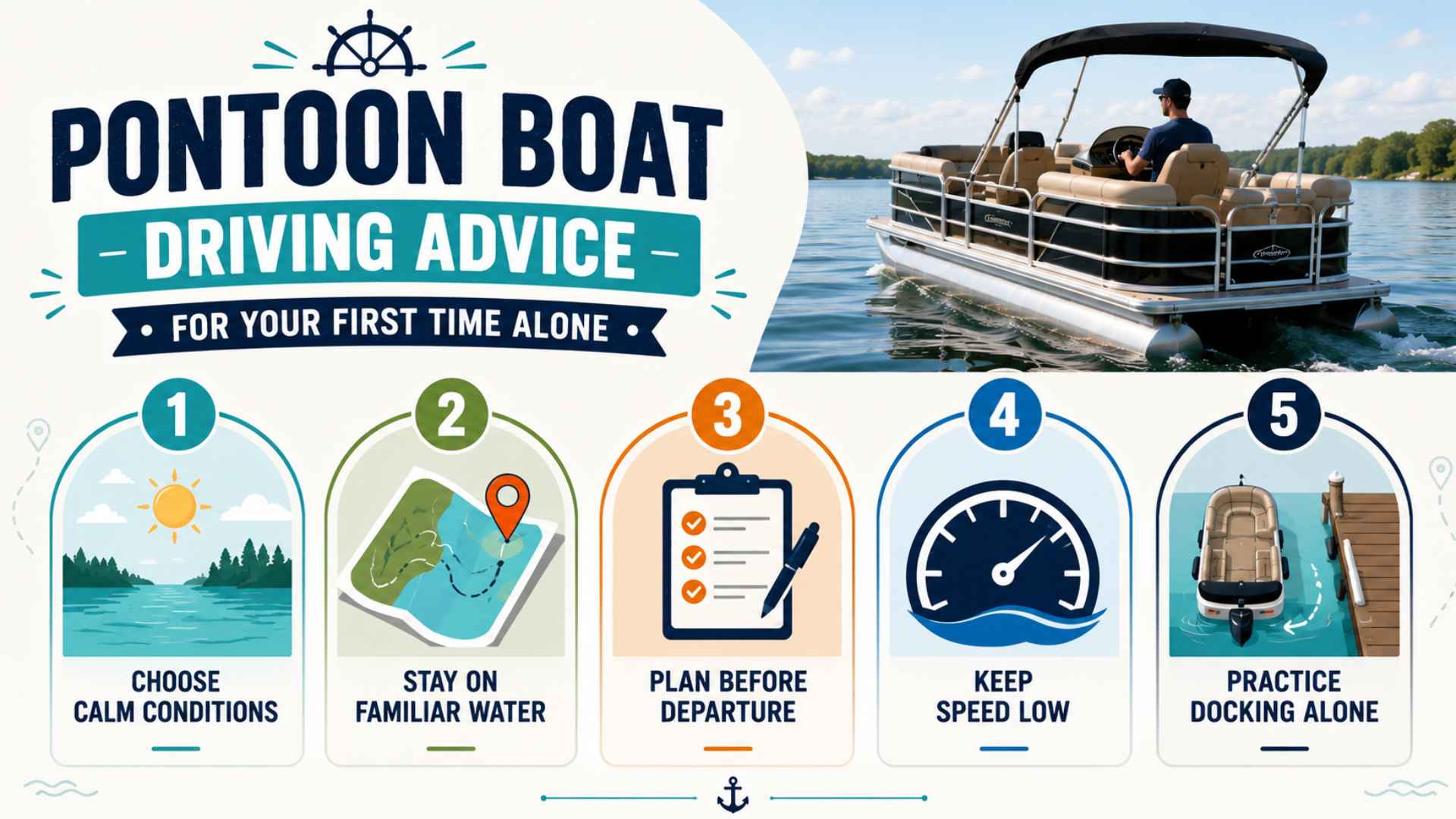
Pontoon Boat Safety Tips for New Drivers
Safe boating starts with good habits. These beginner-friendly safety tips can help reduce risks, protect passengers, and make every trip more enjoyable.
-
Always Wear a Life Jacket: Keep a properly fitted, U.S. Coast Guard-approved life jacket available for every passenger and wear one whenever possible.
-
Never Boat Under the Influence: Alcohol and drugs slow reaction time, impair judgment, and make boating dangerous. Operating under the influence is illegal.
-
Learn Basic Navigation Rules: Understand right-of-way rules, channel markers, and no-wake zone requirements to help prevent accidents and maintain safe operation.
-
Watch for Swimmers and Divers: Slow down near swimming areas and remain alert for divers, floating markers, and people entering the water.
-
Maintain a Constant Lookout: Scan all directions regularly, not just ahead. Conditions and nearby boat traffic can change quickly.
-
Monitor Weather Conditions Continuously: Weather can shift rapidly on the water. Watch for strong winds, storms, and changing visibility throughout your trip.
-
Keep Emergency Equipment Accessible: Store safety gear where it can be reached quickly, including a fire extinguisher, first aid kit, and communication device.
- Understand the Water Before Departure: Review the body of water before you launch. Know local hazards, shallow areas, current, speed zones, and restricted areas.
Following these safety practices every time you boat can help prevent common accidents and build confidence as a new pontoon boat driver. Before leaving the dock, check your safety gear and emergency equipment.
Common Mistakes First-Time Pontoon Boat Drivers Make
New pontoon drivers often struggle with timing, speed, wind, and balance. Knowing these common mistakes early can help you stay calmer, safer, and more in control.
- Turning too late: Pontoons need wider turns than many beginners expect. Start turning earlier and give the boat extra room to respond.
- Going too fast near the dock: Speed makes docking harder and increases the risk of accidents. Approach slowly, use short bursts of throttle, and reduce speed early.
- Not accounting for wind while docking: Wind can push a pontoon sideways quickly. Watch your drift and correct early, rather than waiting until the last second.
- Forgetting the kill switch lanyard: Always attach the kill switch lanyard before starting. It can stop the engine if you fall away from the controls.
- Uneven weight distribution: Too much weight on one side affects balance and handling. Spread passengers and gear evenly before leaving the dock.
Most beginner mistakes come from rushing or reacting too late. Slow down, plan your movements in advance, and practice in open water before navigating tight spaces.
Conclusion
Learning how to drive a pontoon boat is mostly about patience, preparation, and practice.
By understanding the controls, handling speed carefully, accounting for wind and current, and following basic safety rules, you can build confidence every time you leave the dock.
For additional guidance, consider taking a boating safety education course before spending extended time on the water.
These courses cover navigation rules, emergency procedures, and safe operating practices that can help new pontoon drivers build confidence.
Start slow, stay aware of your surroundings, and focus on smooth, controlled movements. Have a pontoon boating tip or beginner experience to share?
Leave a comment below or save this for your next day on the water.
Frequently Asked Questions
Is a Pontoon Boat Easy for Beginners to Drive?
Yes, pontoon boats are beginner-friendly because they are stable, easy to steer, and designed for comfortable cruising on water.
How Fast Should I Drive a Pontoon Boat Near a Dock?
Always approach docks at idle speed. Slow movements provide better control and reduce the risk of collisions or damage.
Can Wind Affect a Pontoon Boat While Docking?
Yes, strong winds can push pontoons sideways. Make steering corrections early and approach docks slowly for better control.