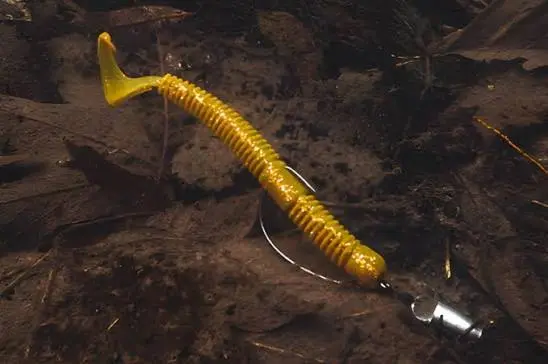
A Texas rig worm is a soft plastic bait threaded onto a hook and paired with a bullet weight, with the point buried back into the plastic so the whole rig slides through grass, brush, and rock instead of snagging.
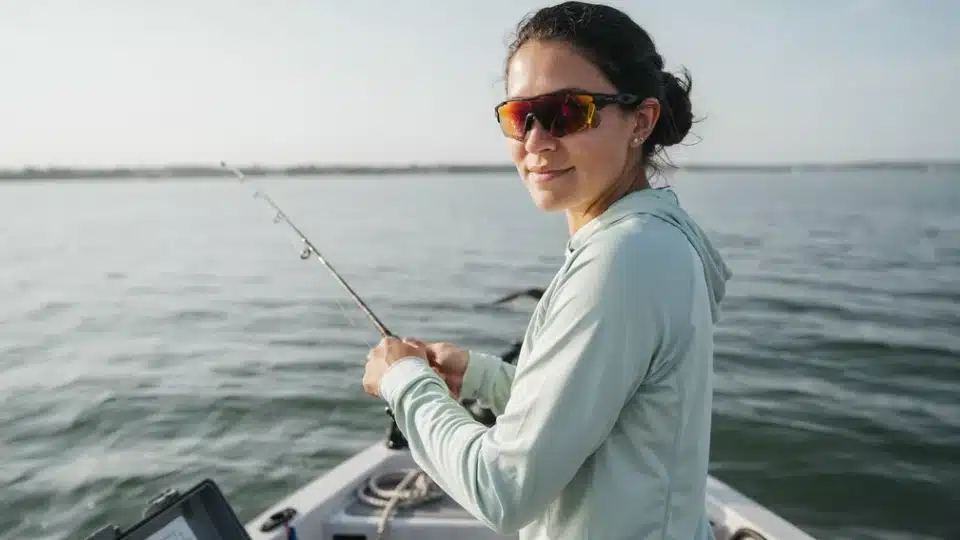
It’s the most common way anglers fish a Texas rig, and it works especially well from a kayak. Sitting low and close to the water lets you paddle right up to docks, stumps, and grass lines that a bass boat has to idle past.
Getting the hook, weight, line, and plastic sized right is what separates a rig that fishes clean from one that hangs up on every other cast.
Texas Rig Worm: The Classic Way to Fish a Texas Rig
A soft plastic worm is the bait most anglers reach for first when they tie on a Texas rig, and it’s the pairing the whole technique was built around.
A Texas rig worm is simply a soft plastic worm threaded weedless onto a hook, with a bullet weight riding just ahead of it so the point tucks back into the plastic instead of hanging out.
Straight-tail worms fall with almost no action, ribbon-tail worms kick and swim on the drop, and stick worms glide with a subtle shimmy on their own.
Whichever style you pick, this pairing covers nearly every situation a kayak angler runs into, from clear water finesse bites to grass and brush that would snag anything else.
Once you’ve picked a worm style, the next step is building out the rest of the rig around it, starting with the hook, weight, and line that make it work.
Texas Rig Fishing for Kayak Bass: How to Set It Up
Before you fish a Texas rig from a kayak, you need to know what goes into it and why each part matters. This section walks you through the setup from the hook to the knot.
Why It Works for Kayak Anglers
The rig itself was covered above, so here’s what makes it worth carrying on a kayak specifically. Bass anglers reach for it because it does three things well:
- It slides through heavy cover without snagging.
- It works in open water just as easily.
- It can be fished as slow as the bite calls for.
Best Texas Rig Weight for Kayak Bass Fishing:
Weight size affects bait fall speed and depth. Use lighter weights for shallow water and heavier ones for deep areas or thick cover. Tungsten offers better sensitivity and a smaller profile, while lead provides a budget-friendly option for everyday Texas rig kayak bass fishing.
How to Rig a Texas Rig Worm Step by Step
Rigging a Texas rig correctly helps your bait move naturally and stay weedless around cover. Follow these simple steps to build a setup that casts smoothly and attracts bass.
Step 1: Slide the Bullet Weight Onto the Line
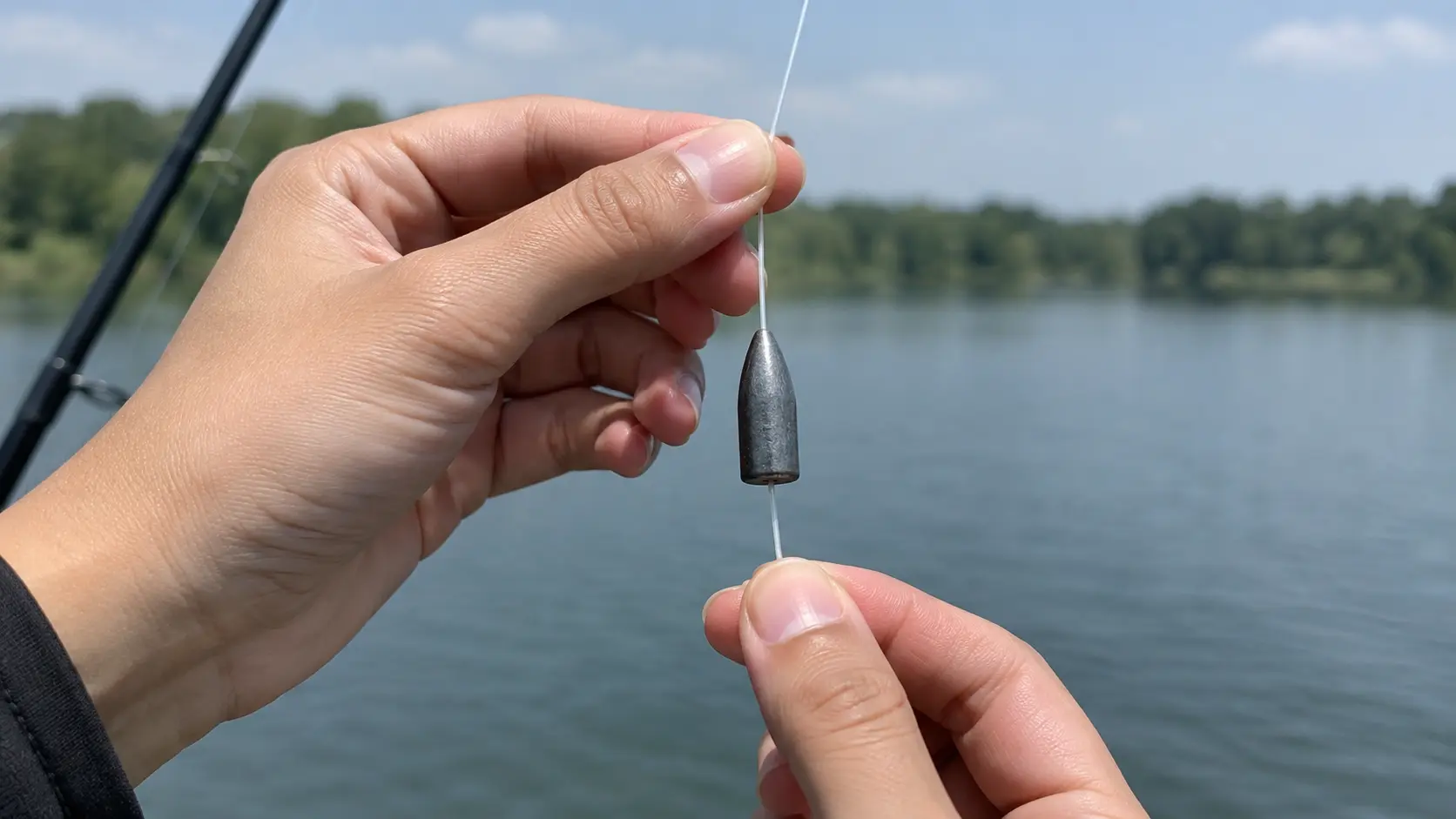
Thread the bullet weight onto your main line before you tie on anything else, with the point of the weight facing away from your rod tip.
This lets the weight ride snug against the nose of the bait once it’s rigged, so the whole setup casts and falls as one unit instead of two separate pieces banging around on the line.
Step 2: Tie the Hook to the Line
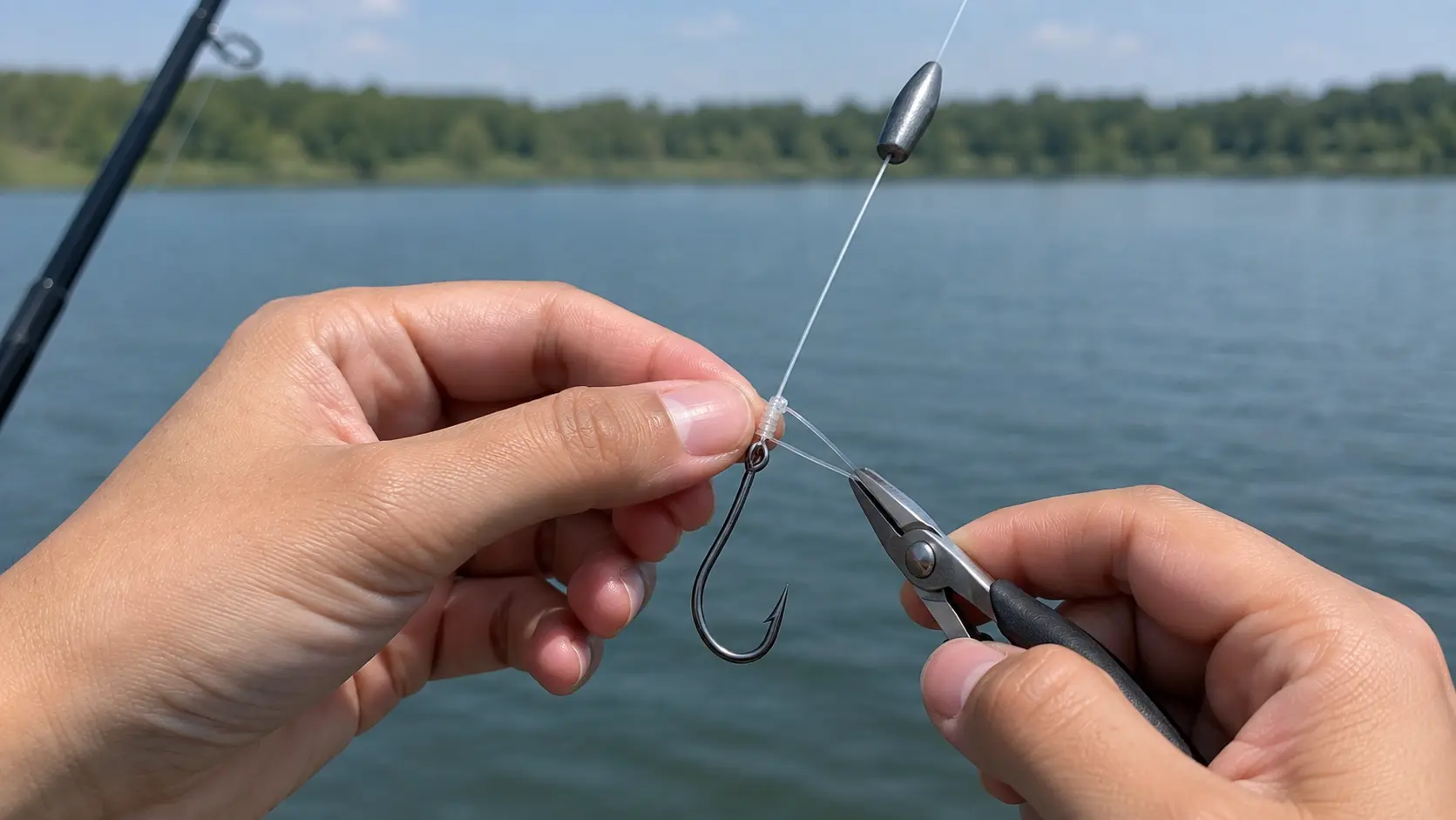
Pass the line through the hook’s eye. Tie a Palomar or improved clinch knot, pull it tight, and trim the extra line. Wet the knot before tightening it to reduce friction. Leave a short end so you don’t cut too close to the knot. Give the line a gentle tug to check that the knot holds.
Step 3: Insert the Hook Point Into the Nose of the Worm
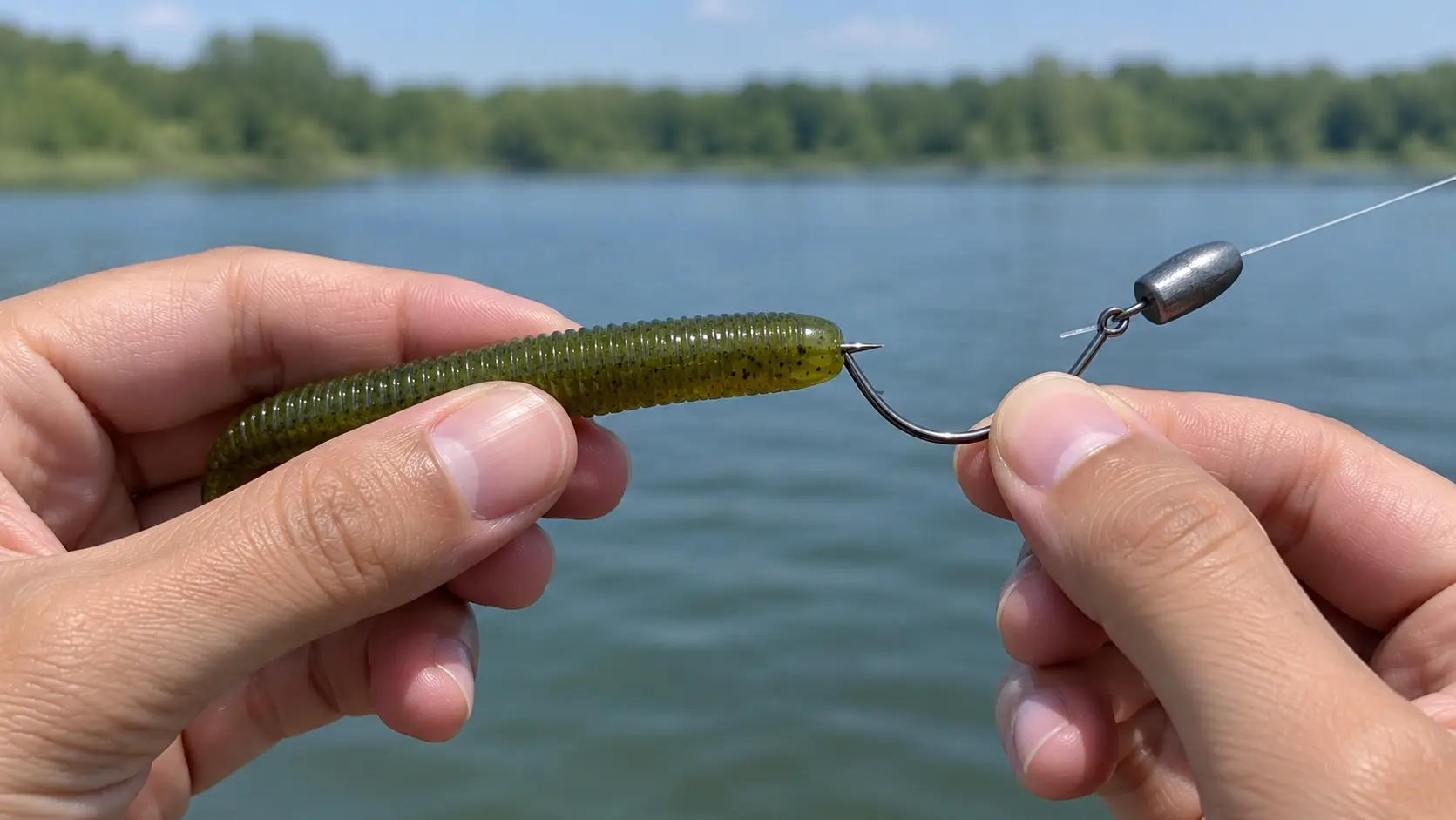
Push the hook point straight into the very tip of the worm’s head, keeping it centered so the bait doesn’t sit crooked.
Drive it in about a quarter inch before angling it out. A centered entry point keeps the worm running straight through the water instead of spinning or veering off to one side.
Step 4: Push the Hook Through the Body and Out the Side
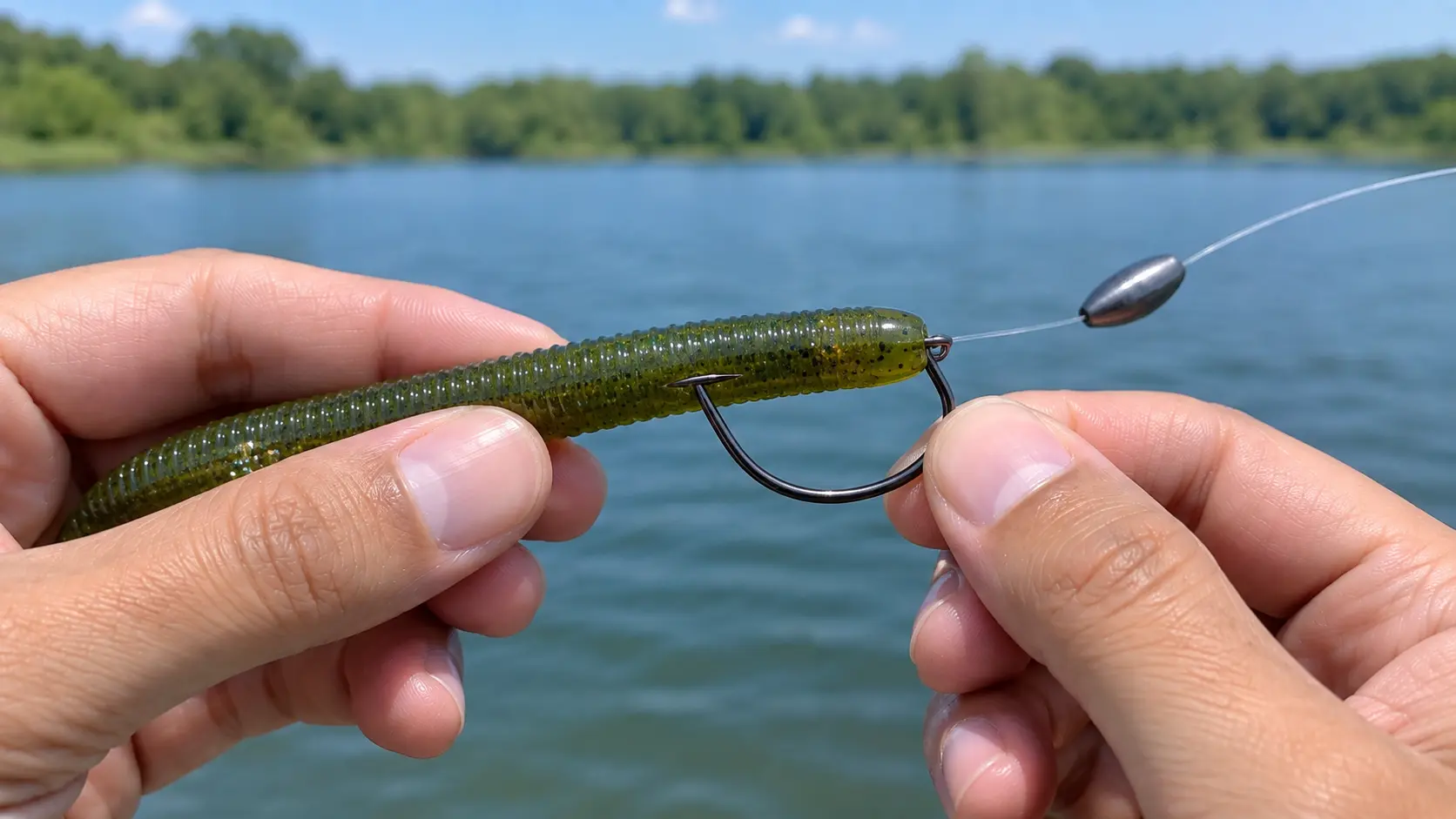
Guide the hook through the worm’s body and bring the point out through the side, roughly a quarter to half inch down from the nose.
Pull the hook through until the eye sits just inside the plastic. This exposes enough hook to rotate it back in without tearing the bait apart.
Step 5: Rotate the Hook and Bury the Point Back Into the Plastic
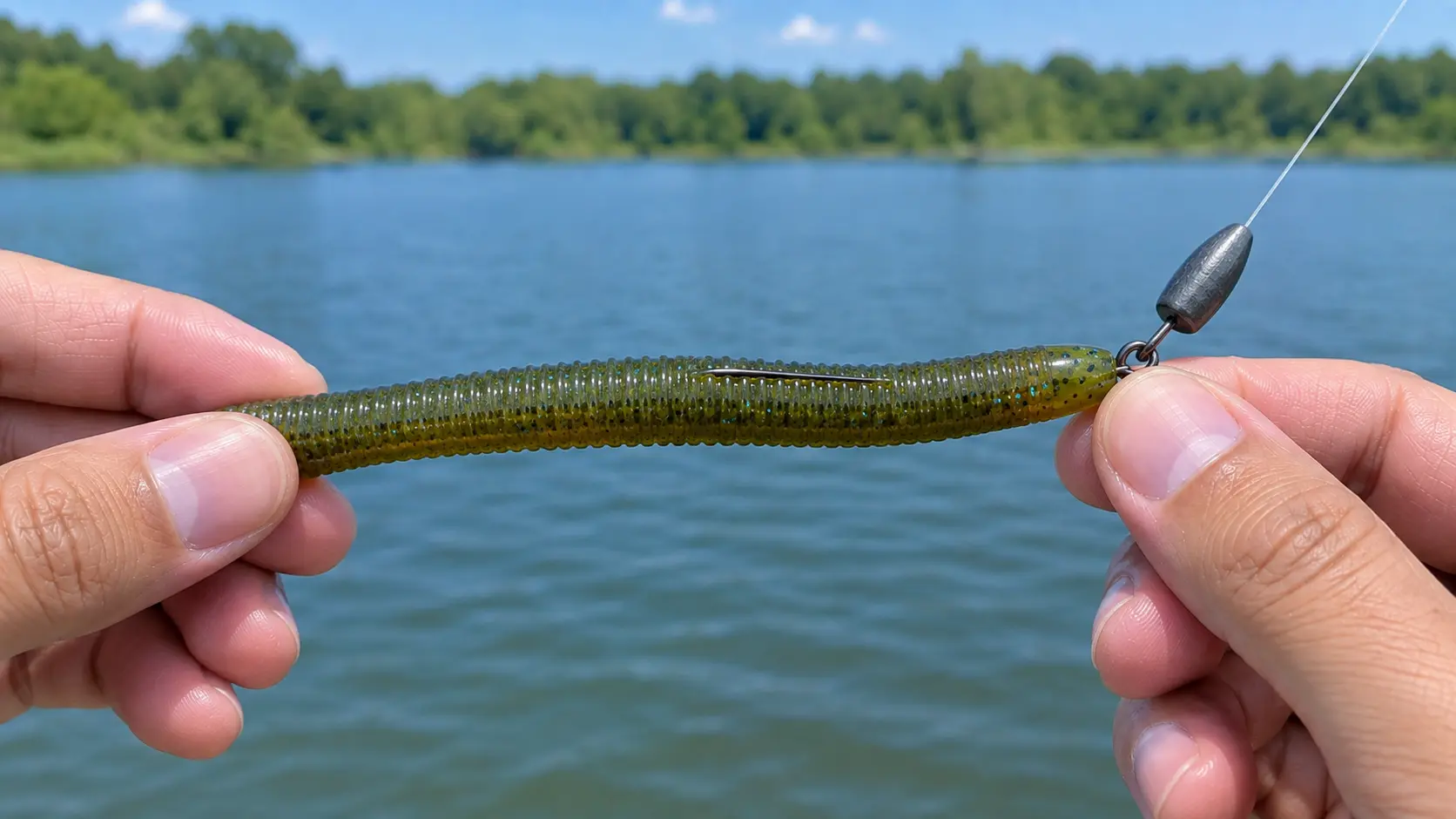
Turn the hook 180 degrees and press the point back into the worm’s body so it sits flush against the plastic with nothing exposed.
Check that the bait hangs straight, not bunched or twisted. A clean, flush point is what makes the rig weedless and able to slide through cover without snagging.
Texas Rig Setup for Kayak Bass Fishing
A proper Texas rig setup helps kayak anglers present soft plastics naturally while handling weeds, rocks, and cover. Each component, from hooks to line, affects casting, control, and hooksets.
- Hook: Use an offset worm hook for thinner baits like standard worms. Switch to a wide gap (EWG) hook for bulkier baits like creature baits, beaver-style plastics, and tubes. The wider gap on an EWG hook lets the point clear both the plastic and the fish’s mouth on the hookset.
- Weight: Sizing follows the same tungsten-vs-lead tradeoff covered above: tungsten for a smaller profile and better feel, lead for cost, sized to your depth and cover.
- Soft plastic bait: Stick worms, creature baits, and craw-style plastics all work on a Texas rig. Pick based on the cover and how aggressively the bass are acting.
- Line: Fluorocarbon works well in clear water because it’s low-visibility with good sensitivity, and braided line offers zero stretch and strong abrasion resistance for heavy cover, though it usually needs a fluorocarbon leader in clear water.
- Rod and reel: A medium-heavy rod with a fast-action tip gives you the backbone for a solid hookset. Most Texas rig anglers reach for a baitcasting reel geared at least 7:1, since a fast reel helps you catch up on slack and drive the hook home even at the end of a long cast. Many strikes happen as the bait falls, so reel speed matters more than raw retrieve power here.
Choosing the right Texas rig components makes kayak fishing easier and more effective. Once your setup is ready, the next step is learning how to rig your bait correctly.
Texas Rig Bass Fishing Techniques From a Kayak
A Texas rig becomes more effective when you know where to cast and how to move the bait. From a kayak, focus on cover, quiet approaches, and controlled presentations to reach bass hiding spots.
|
Technique |
How to Fish It |
Best Time to Use |
|---|---|---|
|
Slow dragging |
Pull the bait across the bottom in short movements. Pause often and stay alert for subtle bites. |
Cold water or when bass are less active |
|
Lifting and dropping |
Raise the rod tip, then allow the bait to fall naturally while keeping contact with the line. |
Around rocks, grass, and deeper cover where bass strike on the fall |
|
Swimming the worm |
Move the bait steadily above grass or through open water instead of letting it settle completely. |
When bass are actively feeding near vegetation |
|
Flipping and pitching |
Make short, accurate casts into tight areas like docks, brush piles, and fallen trees. |
Heavy cover where bass hide close to structure |
Knowing where to cast and how to work the bait helps you get more from a Texas rig. Next up: the specific spots worth targeting from a kayak.
Best Places to Fish a Texas Rig From a Kayak
A Texas rig works best around cover where bass hide and hunt. A kayak helps you reach tight areas quietly, making these spots easier to target.
- Weed edges: Bass often stay along grass lines to ambush passing prey. A Texas rig can move through these areas without frequent snags.
- Submerged grass: The weedless design lets you work the bait through vegetation and reach bass hiding below the surface.
- Fallen trees: Wood cover attracts bass, and a Texas rig can be pulled around branches and openings where fish hold.
- Dock edges: A kayak lets you position quietly near docks, helping you make accurate casts into shaded areas where bass wait.
- Rocky banks: The rig can crawl along the bottom and imitate natural prey moving around rocks.
- Brush piles: The protected hook point helps you fish through dense cover where bass often hide.
A quiet kayak approach can help you reach shallow flats, stump fields, and flooded timber with less disturbance. These areas often hold bass that are harder to reach from shore or larger boats.
Choosing Texas Rig Colors for Different Water Conditions
Choosing the right Texas rig color helps your bait look more natural in different water conditions. Water clarity, light, and visibility should guide your color selection when targeting bass.
|
Water Condition |
Recommended Colors |
|---|---|
|
Clear water |
Green pumpkin, watermelon |
|
Stained water |
Junebug, black and blue |
|
Muddy water |
Dark colors with contrast |
A tight color rotation built around water clarity beats a tackle box full of options you never use. Most confidence-bait anglers get by carrying two or three shades, green pumpkin, junebug, maybe a solid black or white, and rotate based on water color rather than chasing every new pattern on the shelf.
Best Texas Rig Baits for Kayak Bass Fishing
Picking the right plastic changes how a Texas rig performs in the water. Here’s how to match your soft plastic choice to the situation.
1. Texas Rig Worms
As covered above, straight-tail and stick worms shine over open bottom with a slow, subtle presentation, while ribbon-tail worms need more weight behind them to activate their built-in swimming action, so they’re the better call when you want extra movement in the water.
2. Texas Rig Creature Baits and Craws
Creature baits and craw-style plastics draw more aggressive bites than a straight worm. They hold up well around rocks, wood, and thick vegetation, where a bulkier profile stands out.
A craw imitation mimics a fleeing crawfish, while a beaver-style bait like a Flappin’ Hog can be flipped, pitched, or cast, which makes it a solid all-around choice around cover.
How to Detect a Bass Bite on a Texas Rig
Because the weight and hook ride with the bait, a Texas rig bite often feels subtle rather than a hard thump. Watch for:
- The line moving sideways with no direction from you
- Extra weight on the fall, like the bait suddenly feels heavier
- A tap, then the line going slack or stopping mid-fall
Stay in contact with the bait through the whole cast and don’t rush the retrieve. A slow, deliberate pace gives you time to feel these signs before the bass drops the bait.
Detecting the bite is only step one. Getting a hookset to stick from a kayak seat takes a few adjustments of its own, which the next section covers.
Texas Rig vs Other Bass Fishing Rigs From a Kayak
A Texas rig isn’t always the best tool. Here’s how it compares to three other rigs kayak anglers commonly carry.
|
Rig |
Best Use |
|---|---|
|
Texas Rig |
Cover, weeds, bottom fishing |
|
Carolina Rig |
Deep water searching |
|
Wacky Rig |
Slow fishing around open areas |
|
Ned Rig |
Finesse fishing |
A Carolina rig separates the weight from the bait with a leader, which covers deep, open flats faster than a Texas rig can. A Wacky rig fishes weightless and falls with a shimmy that works well over docks and open pockets.
None of them match a Texas rig for punching through heavy cover, which is exactly why it stays the go-to setup for kayak anglers working brush, grass, and wood.
Kayak Fishing Tips for Texas Rig Bass Fishing
A kayak changes how you position yourself, cast, and set the hook with a Texas rig. These simple adjustments help you fish more effectively from a smaller platform.
- Control Your Kayak Before Casting: Position against the wind, use suitable anchor systems, and avoid drifting over areas before making your first casts.
- Use Quiet Approaches Around Bass: Move slowly near shallow water, reduce paddle noise, and avoid hitting cover to prevent spooking nearby bass.
- Manage Your Line and Hooksets From a Kayak: Keep line tension before setting the hook, use controlled hooksets, and avoid movements that can affect kayak balance.
These kayak-specific habits improve control and help you present a Texas rig naturally. A few common mistakes undo all of it, covered next.
Common Mistakes to Avoid
A handful of avoidable habits account for most of the missed fish and lost gear on a Texas rig, kayak or otherwise:
Setting the hook on the first tap: most Texas rig bites need a beat to let the fish take the bait before you sweep the rod.
Using a weight that doesn’t match the cover: too light and you can’t punch through grass or mats; too heavy and you lose the natural fall that gets bites in open water.
Skipping the line check after fishing rock or wood: a nicked line is the most common reason for a lost fish on a rig that’s otherwise rigged correctly.
Fishing it too fast: a Texas rig worm is a slow-presentation bait; racing the retrieve is the easiest way to turn a confidence bait into a dead one.
Is the Texas Rig Worm Still Worth Throwing?
Ask around any bass fishing forum and the answers split. Plenty of anglers call it foundational, the one setup they’d keep if every other bait got taken away, and say it teaches patience, bottom contact, and hookset timing that carries over to everything else they throw.
Others have mostly moved on to shaky heads, wacky rigs, or jigs, sometimes because bass on pressured water seem to have caught on to it, sometimes just because those techniques get them more bites day to day.
A few anglers say it works everywhere except their home water, which says less about the rig and more about how confidence in any bait usually comes from repetition rather than the rig itself.
The honest answer: It still catches bass. It works best in the hands of someone who fishes it often enough to trust it on the first cast of the day, not just the last one.
Final Thoughts
A Texas rig for kayak bass fishing rewards patience over power. Once you dial in your hook, weight, and worm, the rig does most of the work, sliding through cover that would snag anything else.
From a kayak seat, small adjustments matter most: a lighter weight for a natural fall, a controlled hookset, and a quiet approach into shallow water.
Texas rig bass fishing rewards anglers who slow down and stay in contact with the bait rather than chasing distance or speed.
Tie one on, pick a worm that matches the water clarity, and start working the edges of grass, wood, and rock closest to you. The bass holding there rarely see a bait presented this well.
Frequently Asked Questions
What’s the Best Line Strength for a Texas Rig from a Kayak?
Most anglers use 12 to 20 pound fluorocarbon in clear water or 30 to 65 pound braid in heavy cover, sized to the cover and fish.
Do You Need a Swivel on a Texas Rig?
No. A Texas rig ties straight to the hook. A swivel adds unnecessary weight and can affect the bait’s natural fall.
Should You Peg the Weight on a Texas Rig?
Pegging keeps the weight snug against the bait for punching cover. Leaving it unpegged lets the bait fall more slowly and naturally.
What’s the Difference Between a Texas Rig and a Punch Rig?
A punch rig is a heavier Texas rig, often 1 ounce or more, built specifically to punch through thick matted vegetation.