Choosing the right trolling motor battery size is one of the most important factors in achieving reliable performance on the water.
A battery that’s too small can run out of power before your trip ends, while one that’s too large adds unnecessary cost and weight to your boat.
The right battery depends on four key factors: your motor’s voltage, thrust rating, amp-hour capacity, and how long you plan to fish.
Once you understand how these work together, selecting the correct trolling motor battery becomes a straightforward process that gives you longer runtime and more time fishing.
Use the information below to match the right battery to your trolling motor and get more time on the water.
What Size Battery Does a Trolling Motor Need?
There is no single battery size that works for every trolling motor. The right size depends on your motor’s voltage, its thrust rating, how many amp-hours (Ah) the battery holds, and how long you plan to be on the water.
Here is a quick way to think about it. Once you know these four factors, choosing the right battery becomes much easier.
- Motor voltage tells you how many batteries you need and how they should be wired.
- Thrust rating tells you how much power the motor pulls, which affects how fast your battery drains.
- Battery capacity (Ah) tells you how much energy the battery can store.
- Fishing duration tells you how big that capacity needs to be.
Quick Recommendation Table
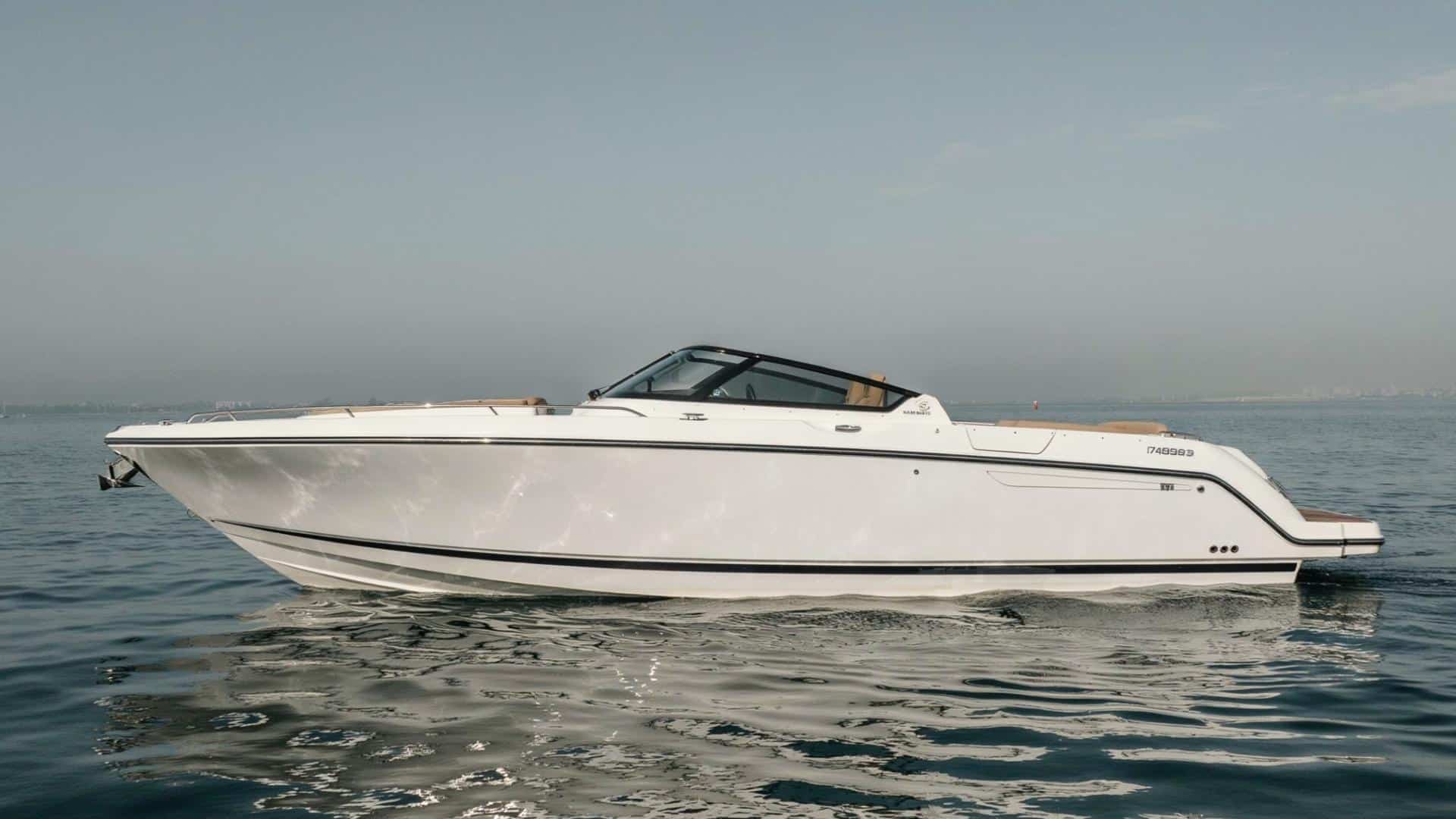
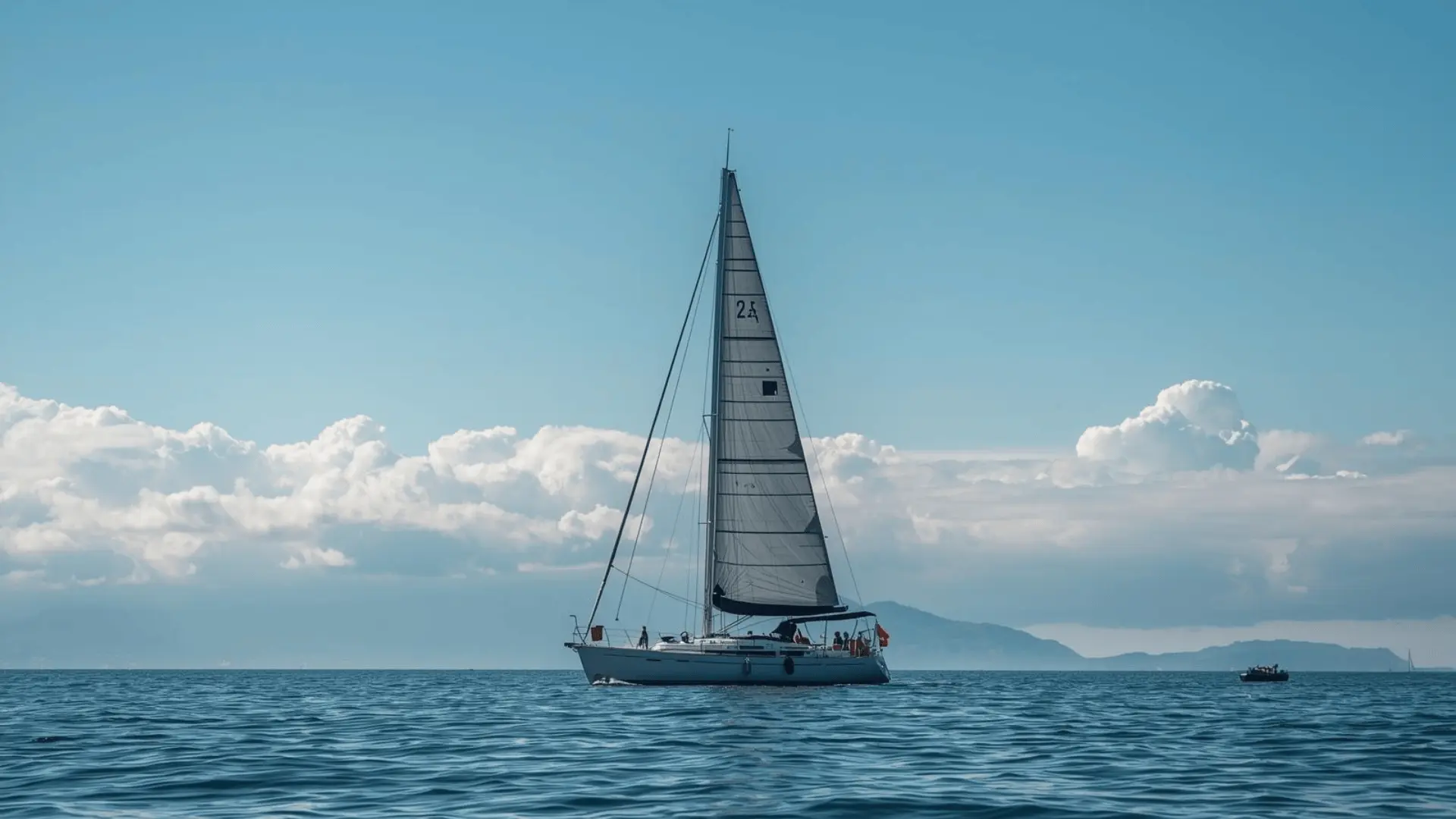
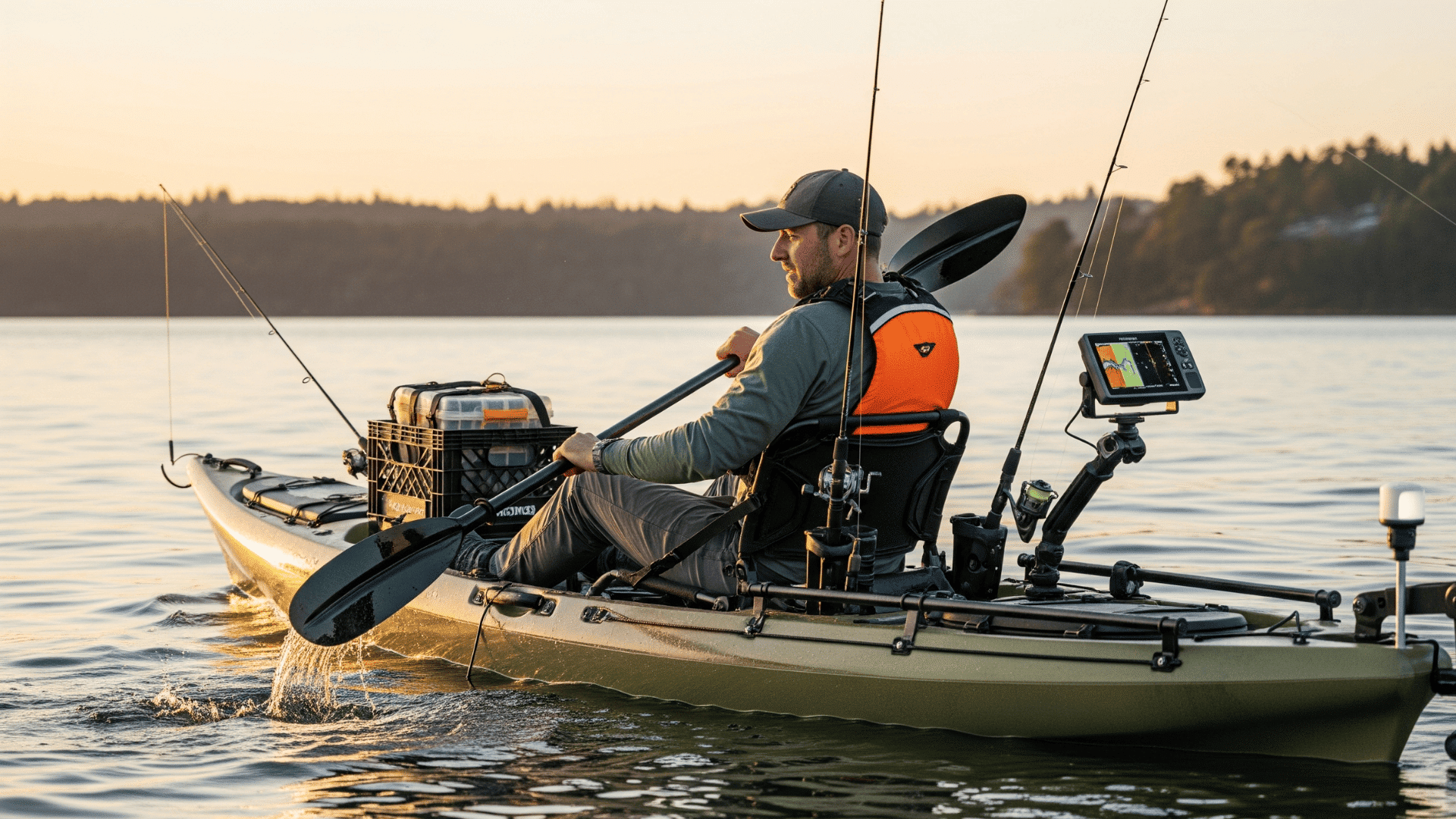
This table gives a quick starting point based on the type of boat you use, including stable fishing kayaks built with motor mounts in mind.
| Trolling Motor Setup | Recommended Battery |
|---|---|
| Small kayak or canoe | 12V 50Ah–100Ah |
| Small jon boat | 12V 100Ah |
| Medium fishing boat | 24V (2 x 100Ah) |
| Large bass boat | 36V (3 x 100Ah) |
These recommendations work well for most common setups. Next, let’s look at how to choose the right battery size for your specific trolling motor.
How to Choose the Right Battery Size for a Trolling Motor
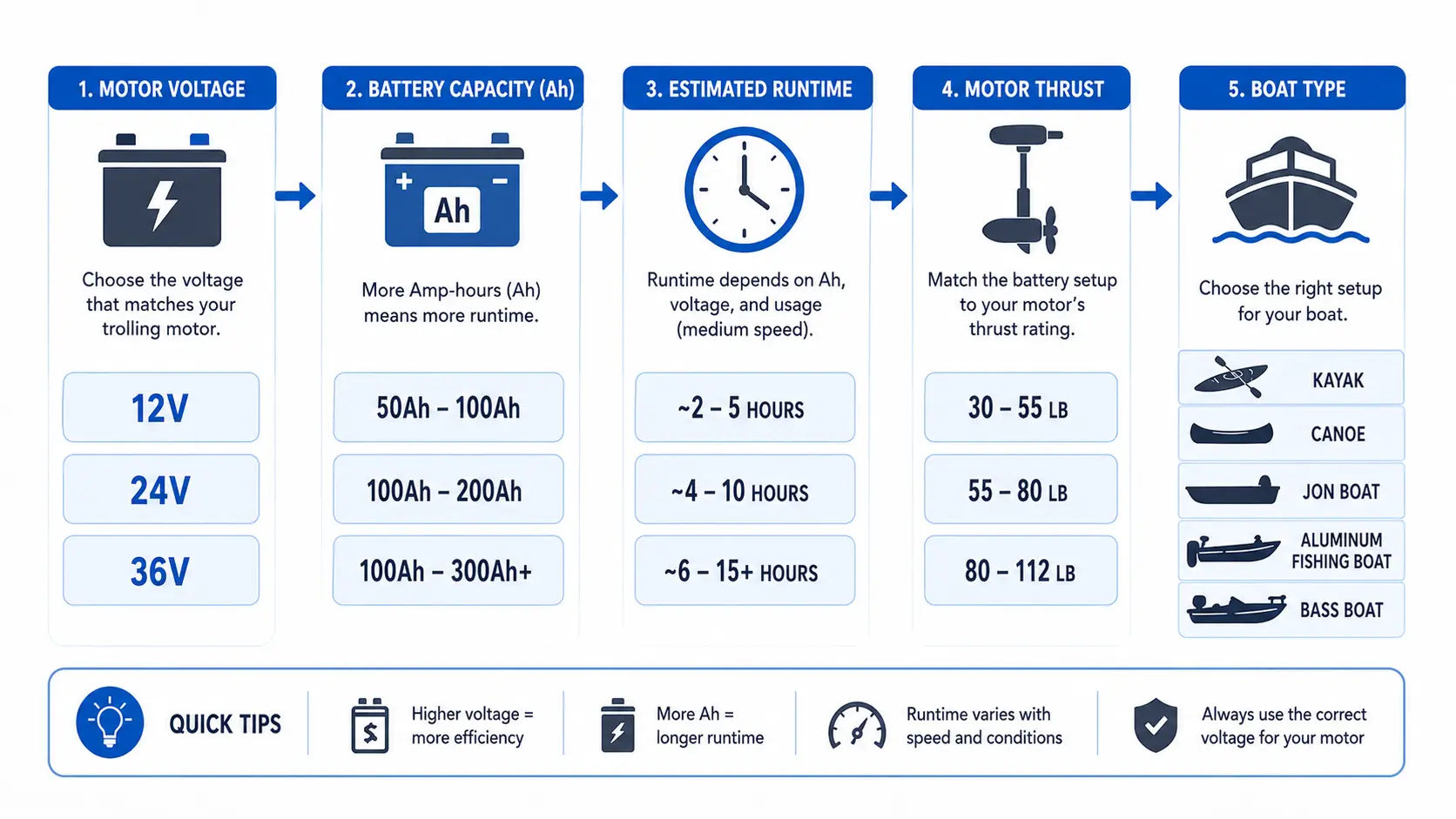
Picking the right battery gets a lot easier once you break it down into a few simple steps.
1. Match Your Trolling Motor Voltage
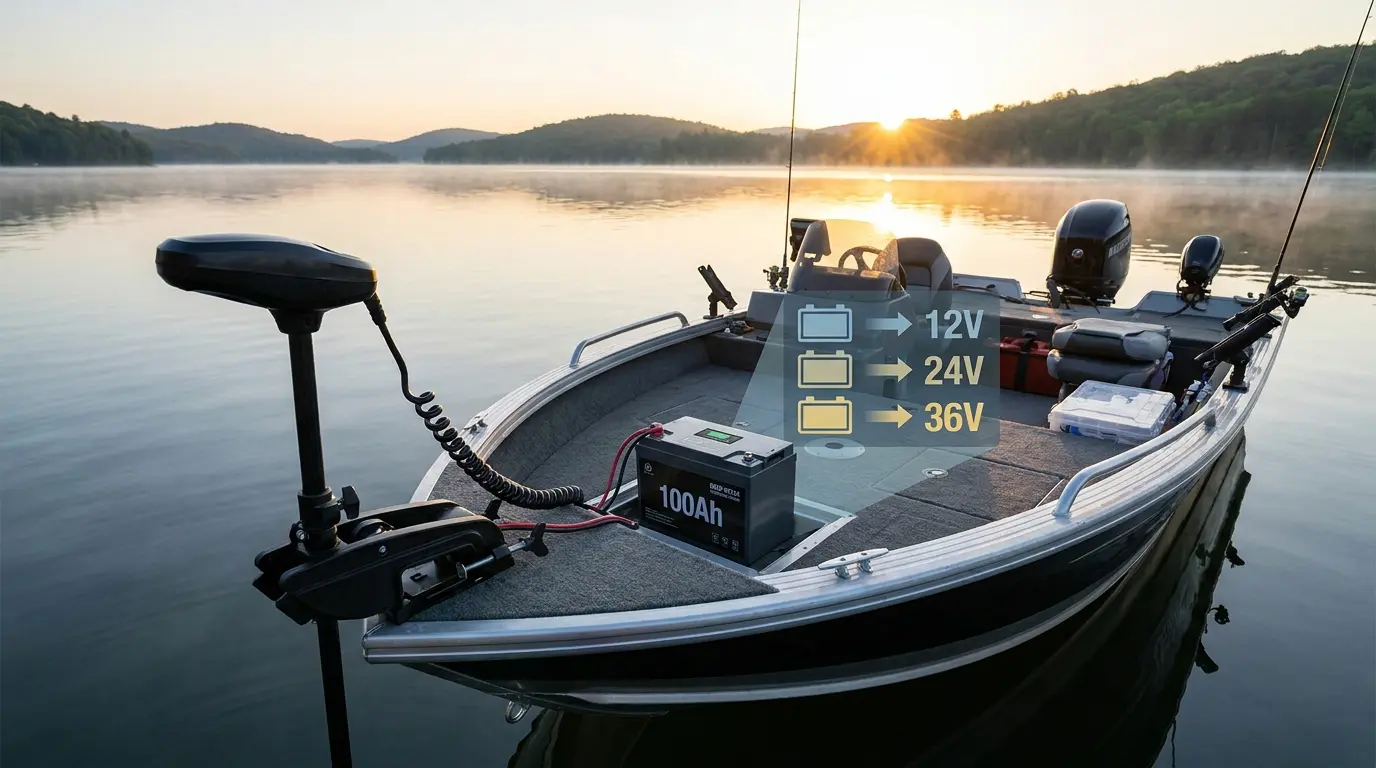
Trolling motors usually come in three voltages: 12V, 24V, and 36V.
- 12V motors are common on kayaks, canoes, and small jon boats. They typically run on lighter thrust ratings, usually under 55 pounds.
- 24V motors are found on mid-size boats and usually handle thrust ratings between 55 and 80 pounds.
- 36V motors power larger bass boats and heavier rigs, often with thrust ratings over 80 pounds.
Your battery voltage has to match your motor voltage, which is one of the first things to sort out when choosing a kayak motor for your setup. A 24V motor needs two 12V batteries wired together, and a 36V motor needs three.
Mixing this up will damage your motor or keep it from running at full power, so always check your owner’s manual first.
2. Choose the Right Battery Capacity (Ah)
Amp hours, or Ah, tell you how much energy a battery can hold, and understanding battery chemistry basics helps explain why lithium and lead-acid batteries perform so differently.
More Ah means more fishing time, but it also means a heavier and pricier battery. You do not need to buy the biggest battery on the shelf.
Buying more capacity than you actually use adds extra weight to your boat and extra cost to your wallet.
A simple formula helps here:
Battery Runtime = Battery Capacity x Usable Capacity ÷ Average Amp Draw
For example, a 100 Ah lithium battery with 100 percent usable capacity, used to power a motor drawing 20 amps on average, gives you roughly 5 hours of runtime.
AGM batteries usually offer only about 50 percent usable capacity before performance drops, so that same 100 Ah AGM battery would give you closer to 2.5 hours under the same draw.
3. Estimate How Long You Fish
Your fishing habits play a big role in battery size. The longer you expect to stay on the water, the more battery capacity you’ll need to avoid running out of power before the day is over.
- Short trips of 2 to 4 hours can usually get by with a smaller battery.
- Half-day trips need a bit more capacity to avoid running out mid-fish.
- Full-day trips call for a larger battery or a backup on hand.
- Heavy current, strong wind, or rough water forces your motor to work harder, which drains the battery faster than calm conditions.
4. Match Battery Size to Motor Thrust
Higher-thrust motors draw more current, so they need larger batteries to run for the same amount of time.
Battery Size Chart by Thrust
Your motor’s thrust rating is one of the biggest factors when choosing a battery. Use the chart below as a quick reference for matching common trolling motors with the right battery capacity.
| Motor Thrust | Voltage | Recommended Battery Capacity |
|---|---|---|
| 30 lb | 12V | 50–60Ah Lithium or 75–100Ah AGM |
| 40–45 lb | 12V | 60–100Ah |
| 55 lb | 12V | 100Ah |
| 70–80 lb | 24V | 2 x 100Ah |
| 100–112 lb | 36V | 3 x 100Ah |
As a rough guide, most trolling motors pull about half an amp to three-quarters of an amp per pound of thrust at full power.
So a 55-lb thrust motor might draw around 40-50 amps at top speed, though this varies by brand and model.
5. Recommended Battery Size by Boat Type
Many anglers find it easier to size a battery based on the type of boat they own rather than doing the math on thrust and amp draw every time.
| Boat Type | Recommended Battery |
|---|---|
| Kayak | 12V 50Ah Lithium |
| Canoe | 12V 50–100Ah |
| Jon Boat | 12V 100Ah |
| Aluminum Fishing Boat | 24V (2 x 100Ah) |
| Bass Boat | 24V or 36V (100Ah batteries) |
These recommendations are a great starting point for most anglers who are just getting started with rigging a fishing kayak for motor use.
If your boat carries extra gear or you regularly fish all day, consider moving up to a higher-capacity battery for longer runtime.
Which Battery Type Is Best for a Trolling Motor?
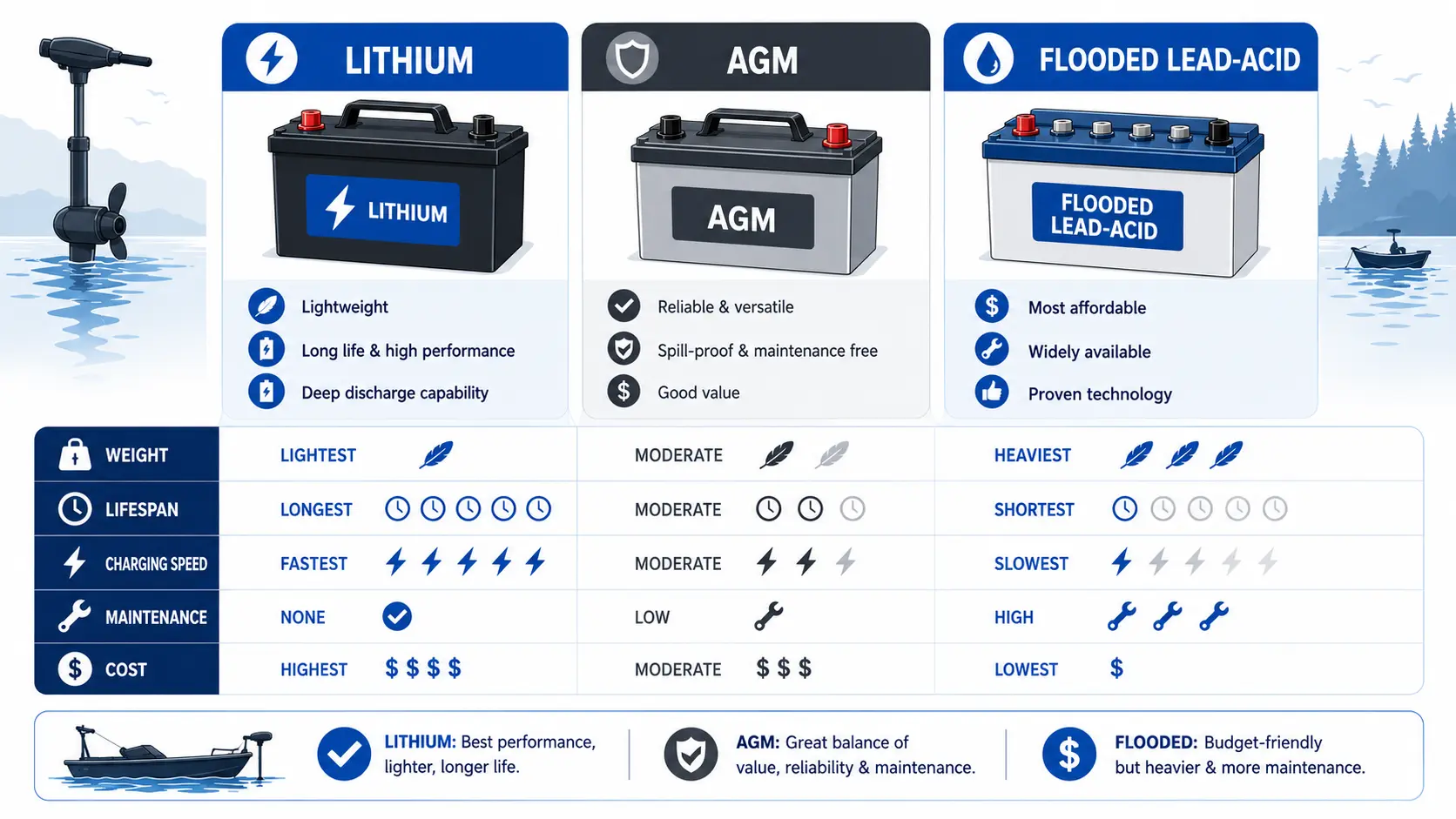
The right battery type depends on your budget, fishing style, and how much maintenance you’re willing to do, especially if you spend long hours bass fishing from a kayak. Each option has its own strengths, so it’s worth comparing them before you buy.
Lithium Batteries
Lithium batteries have become popular with anglers for good reason. They offer longer runtime, weigh much less, and require almost no maintenance, making them the top choice for many boaters.
- Lightweight, often less than half the weight of a lead-acid battery.
- Longer lifespan, often lasting several years longer than AGM or flooded batteries.
- Faster charging times.
- Higher usable capacity means you can draw most of the rated Ah without damaging the battery.
- Higher upfront cost compared to other types.
AGM Batteries
AGM (absorbed glass mat) batteries are a solid middle-ground option. They provide dependable performance with little maintenance while costing less than lithium batteries.
- Maintenance-free, no need to check or refill fluid.
- Reliable performance in most weather conditions.
- Lower cost than lithium.
- Heavier than lithium batteries of the same capacity.
Flooded Lead-Acid Batteries
Flooded batteries are the traditional choice and still work well for many budget-conscious anglers. Although they require more maintenance, they remain one of the most affordable ways to power a trolling motor.
- Lowest purchase price of the three types.
- Requires regular maintenance, including checking water levels.
- Heaviest option of the three.
- A good fit for budget-conscious anglers who do not mind the upkeep.
Lithium vs AGM vs Flooded Battery Comparison
Seeing the key differences side by side makes it easier to choose the right battery. Use the comparison below to find the option that best fits your budget and fishing style.
| Feature | Lithium | AGM | Flooded |
|---|---|---|---|
| Weight | Lightest | Moderate | Heaviest |
| Lifespan | Longest (often 8–10+ years) | Moderate (4–6 years) | Shortest (2–4 years) |
| Charging Speed | Fastest | Moderate | Slowest |
| Usable Capacity | Highest (close to 100 percent) | Moderate (around 50 percent) | Lowest (around 50 percent) |
| Maintenance | None | None | Regular |
| Price | Highest | Moderate | Lowest |
No single battery type is the best choice for everyone. The right option depends on how often you fish, how much weight you can carry, and how much you’re willing to spend.
How Many Batteries Does a Trolling Motor Need?
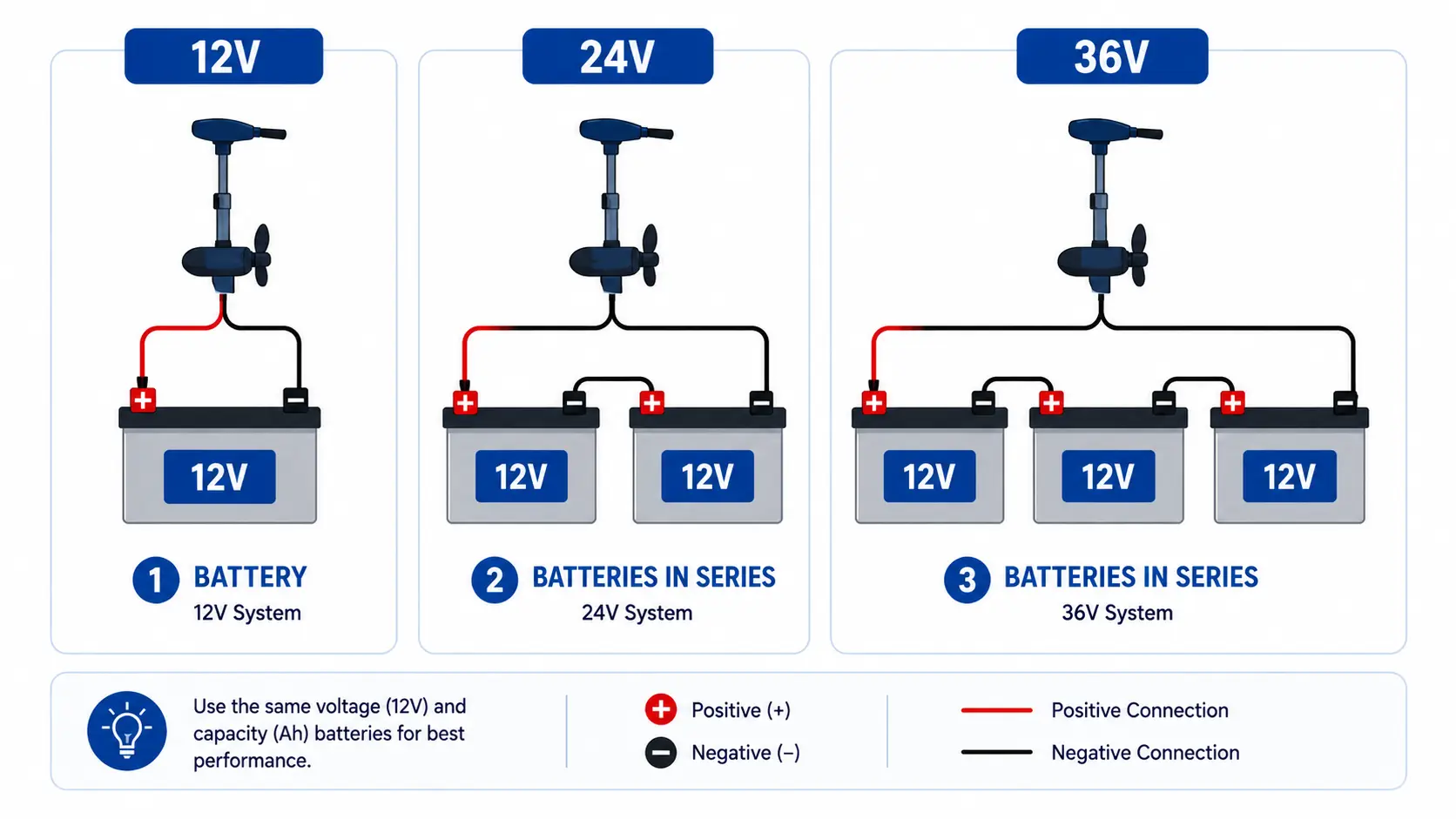
The number of batteries your trolling motor needs depends entirely on its voltage. A 12V trolling motor runs on a single 12V battery, making it the simplest setup for kayaks and small boats.
A 24V trolling motor requires two 12V batteries connected in series to produce 24V, while a 36V trolling motor requires three 12V batteries connected in series.
Always match your battery setup to your motor’s voltage, as using the wrong configuration can reduce performance or even damage the motor.
Understanding Marine Battery Group Sizes
Battery group size refers to the physical dimensions and the general capacity range of a battery group.
Knowing your group size helps ensure the battery fits your boat’s battery box and meets your power needs.
| Group Size | Typical Capacity | Best For |
|---|---|---|
| Group 24 | 70–85Ah | Small boats |
| Group 27 | 85–100Ah | Most recreational anglers |
| Group 31 | 100–125Ah | Long fishing trips and larger boats |
How Long Will a Trolling Motor Battery Last?
Battery runtime depends on more than just the size of the battery. Several other factors come into play:
- Speed setting: running at full power drains a battery much faster than at a low or medium setting.
- Motor amp draw, which varies by brand and thrust rating.
- Boat weight, since heavier boats need more power to move.
- Wind and current, which force the motor to work harder.
- Water conditions, since saltwater and choppy water increase resistance.
- Battery age, since older batteries hold less charge than they did when new.
Runtime Examples
The examples below show roughly how long common battery sizes can last under typical conditions.
If you’re considering a lighter, longer-lasting option, it’s worth learning how lithium batteries compare to other options before making a decision.
| Battery | Moderate Speed | High Speed |
|---|---|---|
| 50Ah Lithium | 5–6 hours | 2–3 hours |
| 100Ah Lithium | 10–12 hours | 4–5 hours |
| 100Ah AGM | 5–6 hours | 2 hours |
These numbers are estimates. Actual runtime will shift based on your specific motor, boat, and conditions on the water that day.
Can You Use a Car Battery for a Trolling Motor?
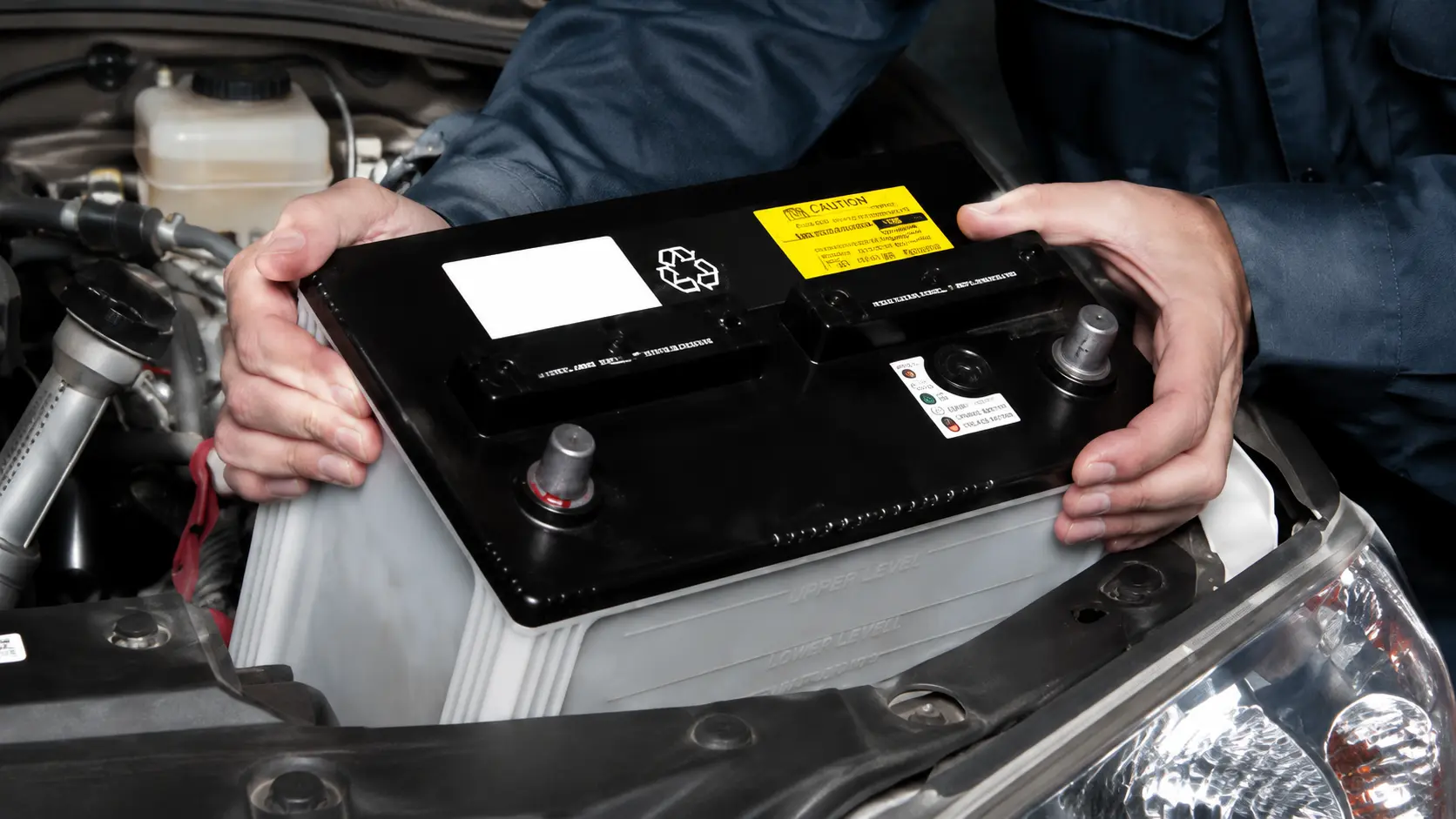
It is best to avoid this. Car batteries, also called starting batteries, are built to deliver a quick, powerful burst of energy to start an engine. They are not built to provide steady power over several hours.
Trolling motors need deep-cycle batteries, which are designed to discharge slowly and steadily over long periods without damage.
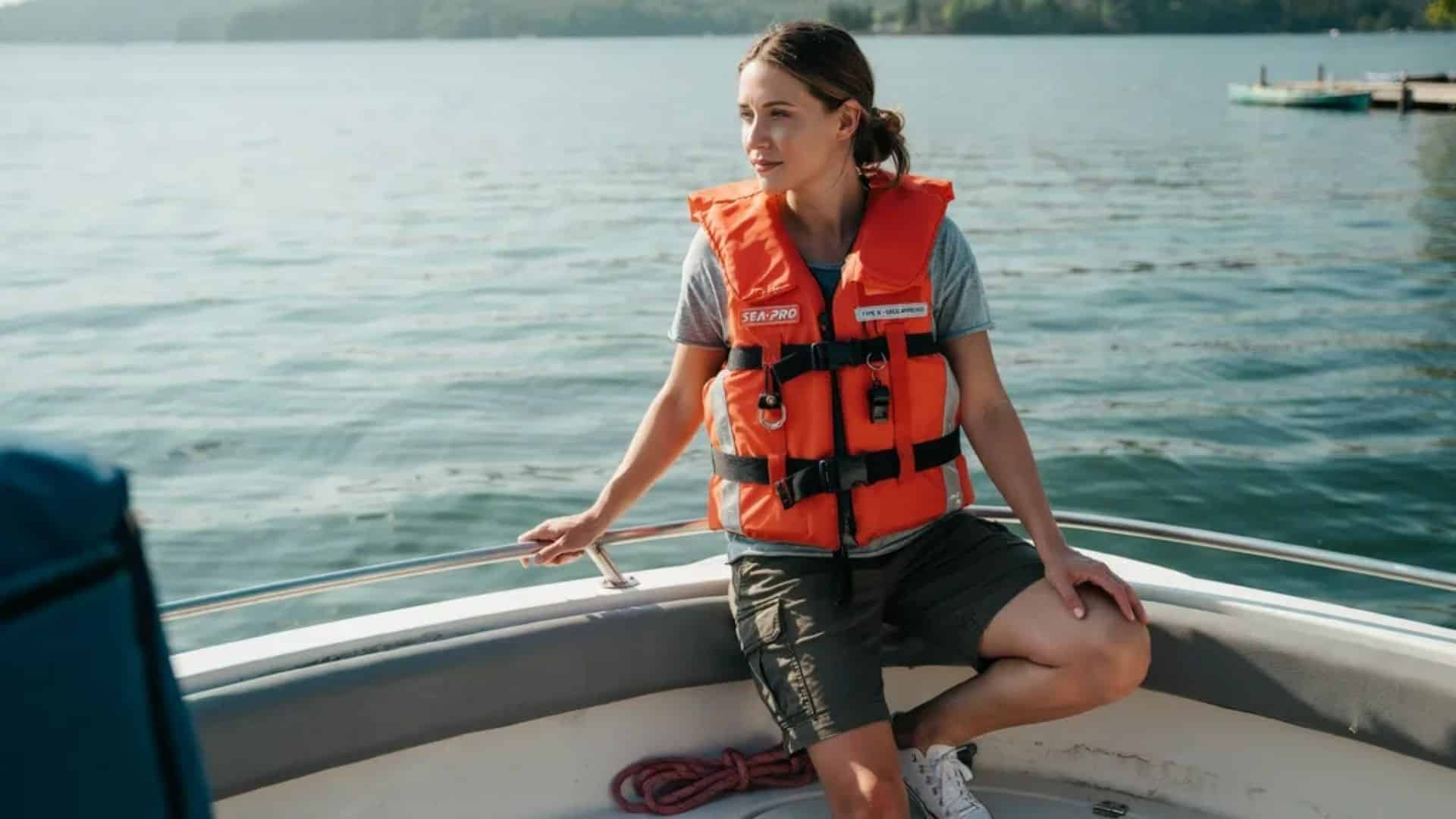
Using a car battery for a trolling motor will quickly drain it. It can shorten its lifespan or cause permanent damage, which is why recreational boating safety guidance always points anglers toward marine deep-cycle batteries instead.
How to Calculate the Right Battery Size
Here is a simple process to follow. By gathering a few basic details about your trolling motor and fishing habits, you can quickly narrow down the right battery for you.
- Find your trolling motor’s voltage (12V, 24V, or 36V).
- Check the motor’s maximum amp draw, usually listed in the owner’s manual.
- Decide how many hours you plan to fish on a typical trip.
- Calculate the amp-hour capacity you need by multiplying your average amp draw by your fishing hours.
- Choose a battery type that fits your budget, weight limits, and how long you want it to last.
Taking a few minutes to do these calculations can save you from poor runtime and unnecessary expense. You’ll end up with a battery that’s better matched to the way you fish.
Online Communities Share Practical Battery Advice
Experienced boaters often agree on a few habits that help batteries last longer and avoid problems on the water. While every setup is different, the advice below comes up repeatedly in boating communities.
“There is a difference between a starting battery and a deep-cycle battery. A starter battery is designed to deliver a large burst of power for a short time… A deep-cycle battery is built to provide steady power over extended periods and can be repeatedly discharged and recharged without damage.” Reddit
“100% get a maintainer. Your batteries will last way longer… Battery disconnect and a float charger solves all problems.” Reddit
“Keep it charged up after trips, not just before.” iBoats Forum
As you can see, experienced boaters focus less on buying the most expensive battery and more on proper maintenance.
Charging the battery after every trip, using the correct charger, and choosing the right battery type for your setup will usually have a bigger impact on battery life than the brand name alone.
Common Battery Sizing Mistakes to Avoid
One of the most common mistakes is buying a starting battery instead of a deep-cycle battery, since starting batteries aren’t designed to provide steady power over long periods.
It’s also important to match the battery voltage to your trolling motor, as the wrong voltage can affect performance or damage the motor.
Choosing too little battery capacity may leave you without enough power before your trip ends, while ignoring battery weight can make a noticeable difference on kayaks and other small boats.
If your setup uses multiple batteries, avoid mixing old and new ones because they charge and discharge unevenly, reducing overall battery life.
Finally, always use a charger that’s compatible with your battery type, as the wrong charger can damage the battery and shorten its lifespan.
Conclusion
Choosing the right trolling motor battery size is simpler when you match the battery voltage to your motor, select enough amp-hour capacity for your typical fishing trips, and choose the battery type that fits your budget and weight preferences.
Whether you go with a lithium, AGM, or flooded battery, using the correct trolling motor battery will give you better runtime, reliable performance, and fewer interruptions on the water.
Take a few minutes to calculate your power needs before you buy, and you’ll save money while making every fishing trip more enjoyable.
Frequently Asked Questions
What Battery Size Is Best for a 55-lb Thrust Trolling Motor?
A 12V 100Ah battery is a solid choice for most 55 lb thrust motors, whether you go with lithium or AGM.
How Long Will a 100 Ah Battery Run a Trolling Motor?
A 100 Ah lithium battery can run a moderate-thrust motor for roughly 5 to 12 hours, depending on the speed setting and conditions. In contrast, a 100 Ah AGM battery will typically last about half as long under the same use.
What Size Lithium Battery Do I Need for a Trolling Motor?
Most kayaks and small boats do well with a 50Ah to 100Ah lithium battery, while larger boats may need multiple 100Ah lithium batteries wired for higher voltage.